

Latin America’s top court of human rights has decided for the first time that people have the right to a “healthy climate” without “dangerous” human interference, and has urged states to regulate fossil fuel extraction and exploration, in a landmark climate decision.
Culminating a two-year process that involved more than 260 submissions from governments, companies and local communities, the Inter-American Court of Human Rights (IACHR) on Thursday handed down an advisory opinion requested in 2023 by Chile and Colombia to clarify state obligations related to the climate crisis.
In a public hearing held at the court’s headquarters in the Costa Rican capital of San José, Judge Nancy Hernández read out the trailblazing decision on climate change, which for the first time in IACHR history stated a clear link between the “climate emergency” and human rights. The opinion also recognises that states and companies have an obligation to mitigate global warming and its impacts.
“The evidence we saw during the hearings and written submissions shows us that there is no more margin for indifference,” said Judge Hernández. “This is a contribution from law, but law alone is not enough. Success depends on what each one of us can do.”
The Inter-American Court of Human Rights holds jurisdiction over 20 Latin American and Caribbean states, where its advisory opinions are binding. But the strongly-worded climate ruling states that it is binding for all signatories of the Organization of American States, including the US and Canada.
The Peruvian farmer who has changed the climate litigation landscape forever
What does the advisory opinion say?
The landmark 230-page ruling mentions for the first time a subcategory of the human right to a healthy environment, by introducing a “right to a healthy climate”. Court judges said that this is defined as a climate system “free of anthropogenic interference dangerous” for nature and people.
According to the court ruling, states are also expected to cooperate to take actions to reduce emissions that are “as ambitious as possible”, and are obliged to prevent harm by carrying out environmental impact studies.
Recognising the significant climate impact of specific industries, the judges said states have a “minimum” duty to “supervise and control” exploration, extraction and processing of fossil fuels, as well as the cement and agriculture industries.
The advisory opinion also states that governments must establish “differentiated obligations” for companies with higher historical emissions, and impose stricter “duties on companies that carry out activities that generate greater GHG emissions”.
Sergio Diaz, legal director of the Fossil Fuel Non-Proliferation Treaty Initiative, said the opinion makes clear that governments in the Americas must take more ambitious measures against climate change, including addressing the main source of planet-heating emissions: fossil fuels.
“In this context, the adoption of new binding norms that clearly regulate the non-proliferation of fossil fuels is essential if states hope to comply with their human rights obligations,” he said in a statement.
What could a Fossil Fuel Non-Proliferation Treaty look like?
Luisa Gómez, senior attorney at the Center for International Environmental Law (CIEL), said the court decision was innovative – not only because of what it says, but also because there was a very extensive process behind it.
Aside from the 263 written submissions, the court judges carried out three site visits, holding one hearing in Barbados and two in Brazil, with the aim of reaching communities most affected by climate change. The court said it was “the advisory process with most participation in the tribunal’s history”.
“Historic” moment for climate litigation
CIEL’s Gómez hailed the court decision as “historic” and a “watershed moment”, due to the detailed new tools it creates for litigation and policy-making, and the potential for influencing other human rights courts.
Catalina Fernández, head of Multilateral Human Rights at Chile’s Ministry of Foreign Affairs, told Climate Home that the court decision sets a “more demanding standard” that can help governments and civil society push climate action forward.
“Each state has different realities and there is no unique recipe for everyone. But we hope that this decision can set a minimum standard,” Fernández said. “The court gives us a hand in this process but we still need political will from governments and civil society.”
UN development conference backs innovative ways to boost climate finance
The advisory opinion also provides a clear set of guidelines for countries to bring to the COP30 summit in Belem later this year, said Liliana Ávila, director of human rights and environment at the nonprofit Interamerican Association for Environmental Defense (AIDA).
Gómez, of CIEL, said that the court decision “makes life easier for everyone”, including states and communities wanting to bring forward more climate cases.
“There’s less room for impunity. It’s clear now where climate change comes from – and it’s clear that those responsible need to take measures,” said Gómez.
Other human rights courts have recognised that the failure of states to address climate change can breach human rights, with climate cases increasingly making it to the world’s highest courts, according to a 2025 report by the London School of Economics (LSE).
Last year, the European Court of Human Rights ruled that Switzerland had breached the human rights of its citizens by not doing enough to cut planet-warming emissions.
The International Court of Justice (ICJ) is expected to deliver an advisory opinion on the legal obligation of states to limit climate change later this year. Experts said the ICJ ruling is expected to be influenced by the Inter-American Court of Human Rights’ decision.
The climate-vulnerable Pacific island nation of Vanuatu, which led the global push for an ICJ opinion, also participated in the IACHR proceedings by making a written submission.
Responding to the Americas ruling, Ralph Regenvanu, Vanuatu’s Minister of Climate Change Adaptation, Energy and Environment, noted that all regional and international courts have an important role to play in advancing climate justice.
“Together, they can pave the way for a more integrated approach to international law that addresses the human rights dimensions and remedy the historical climate injustices that the Global South increasingly suffer from in the climate emergency,” he said in a statement.
The post Top Latin American court upholds right to “healthy climate”, urges fossil fuel control appeared first on Climate Home News.
Top Latin American court upholds right to “healthy climate”, urges fossil fuel control

Following the close of COP31 in Antalya, Turkey, Carbon Brief’s journalists answered a range of questions in a CB Live panel discussion.
COP31 came to a dramatic conclusion nearly 50 hours after its scheduled close – making it the longest COP in history.
Less than 24 hours later, Carbon Brief published its 21,000-word summary, capturing everything that happened in the negotiations, the cover decision and more.
This includes the “Antalya pact”, proposed by the joint Turkish-Australian presidency, being rejected in the final hours of the summit by the EU, the UK and several climate-vulnerable nations.
There was some progress at COP31, including an agreement on the adaptation fund, as well as a raft of announcements within the “action agenda”.
Carbon Brief journalists – who followed every detail of the summit on the ground in Antalya and remotely answered a range of questions, including those sent ahead of time by CB+ members on CB Connect.
These covered climate finance, China, the “just transition mechanism”, the potential for COP reform and much more.
The discussion was moderated by Carbon Brief’s senior policy editor Dr Simon Evans and featured the following journalists:
- Daisy Dunne, associate editor
- Josh Gabbatiss, associate editor
- Aruna Chandrasekhar, policy journalist
- Molly Lempriere, policy section editor
- Anika Patel, China section editor
- Dr Giuliana Viglione, associate editor
A recording of the CB Live (below) is now available to watch on YouTube.
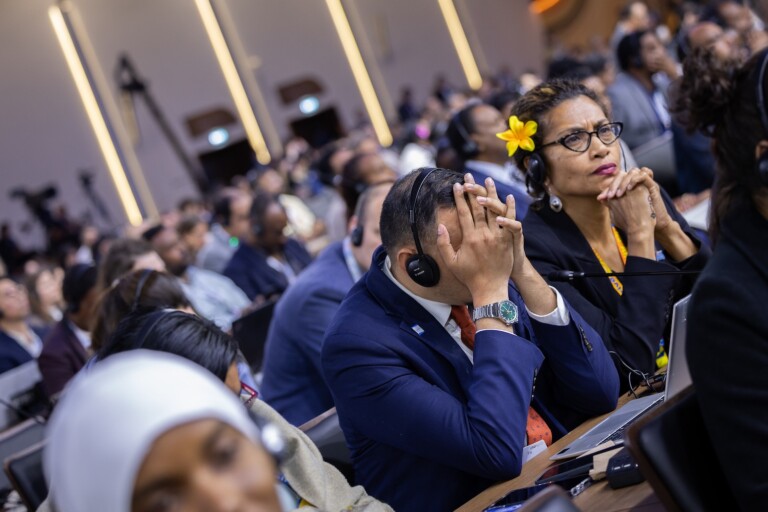
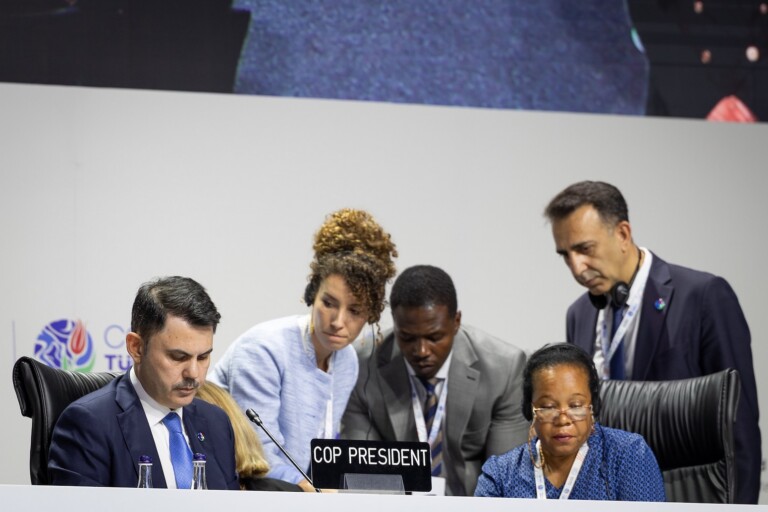
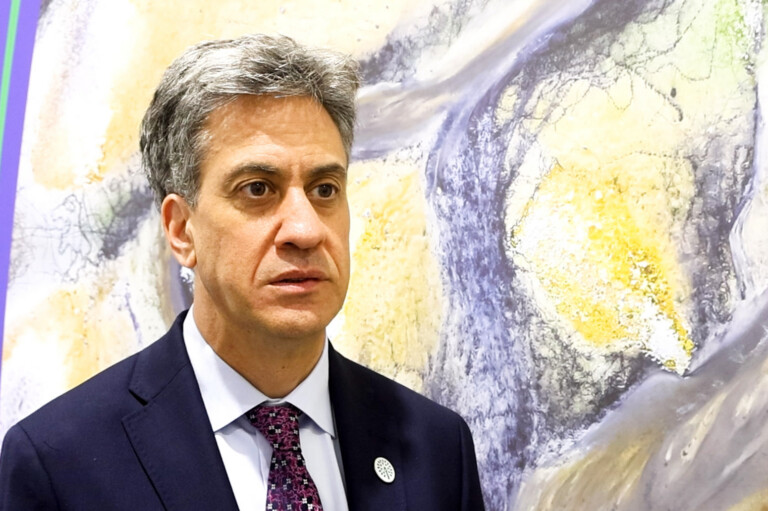
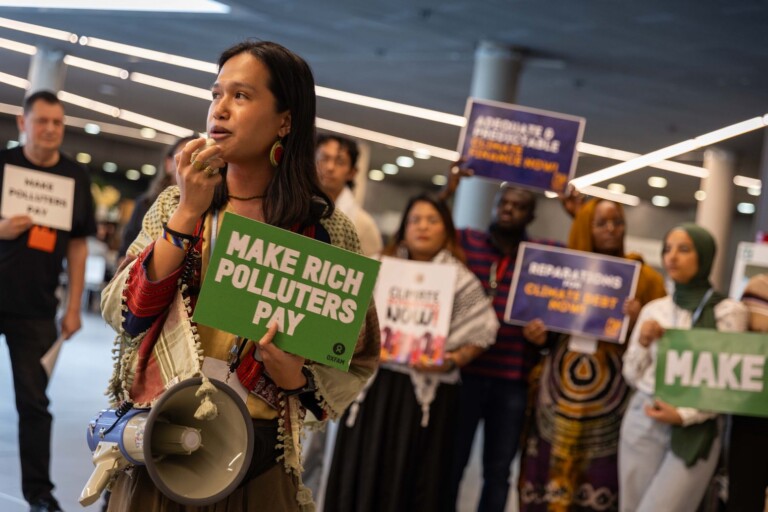
The post CB Live: Carbon Brief journalists discuss key COP31 outcomes appeared first on Carbon Brief.
CB Live: Carbon Brief journalists discuss key COP31 outcomes
Climate Change
COP31: Key outcomes for food, forests, oceans and nature at the UN climate talks in Antalya
The COP31 climate talks in Antalya, Turkey, failed to agree on a “pact” that – despite making no clear reference to fossil fuels or adaptation finance – had contained strong signals for oceans.
The “Antalya pact” took up much of the two weeks of negotiating time in Turkey, only to be rejected during the closing plenary by the EU, the UK and several climate-vulnerable countries.
Several countries expressed their regret during the plenary that significant work on advancing ocean-climate action would be lost.
The COP ran nearly 50 hours over time, but did not end with substantive outcomes on several key topics.
For the second year in a row, negotiations on agriculture and food security broke down and will now have to resume next year.
Food-systems advocates were, however, heartened by the explicit inclusion of “agroecology” in a decision within the “just transition work programme”.
Ocean-conservation groups noted an increased focus on ocean-climate links at this year’s COP, but said COP31 did not live up to its promise of being a “blue COP”.
There was also scant new funding for food systems and nature, with just a handful of small pledges to ocean initiatives and two newly announced contributions to the Tropical Forest Forever Facility.
Here, Carbon Brief analyses all of the key outcomes for food, forests, oceans and nature at COP31 – both inside and out of the negotiating rooms.
(See Carbon Brief’s coverage of food, forests, oceans and nature at COP30, COP29, COP28, COP27 and COP26.)
Formal negotiations
Cover decision
The final draft of a COP31 “cover decision” was rejected by at least 32 countries during a chaotic – and, at times, acrimonious – closing plenary in Antalya.
Other recent COPs have issued cover decisions, setting a firm precedent.
However, many parties remained unhappy about the existence of the cover decision, the process by which it was put together and the impact it had on time for other negotiations.
Ultimately, parties did not find consensus on the text, particularly around the removal of any reference to fossil fuels and the lack of concrete climate-finance targets.
The cover text was one of the places in the negotiations where ocean advocates were hoping to see ocean-climate linkages highlighted.
Marine Lecerf, head of international policy at Ocean & Climate Platform, told a press huddle:
“What we’re really asking for right now is to make sure we can recognise ocean-based interlinkages…We’re not asking for a new mandate. We are asking for acceleration of the work that is already undertaken.”
The first draft of the cover decision, published on 16 November, was a compilation of all the issues that parties had put forward for inclusion. It was accompanied by a short “presidency note” explaining that all elements were still in play, including whether or not they should appear in a final text.
This lengthy first draft had 21 references to the ocean, including recognising the impacts of climate change, support for ocean-observing systems, encouraging parties to strengthen ocean-climate action and a multi-year plan for the “ocean and climate change dialogue”, which occurs annually at the Bonn intersessional meetings in June.
Regarding that draft, Steven Guilbeault, former environment minister of Canada, told Carbon Brief:
“I don’t see why the elements that are in the cover decision right now on oceans should be controversial or problematic to any nations. If you’re serious about fighting climate change, there’s nothing in this text regarding oceans that should be problematic for you.”
(Earth Negotiations Bulletin reported that Russia opposed mentions of the ocean in the cover text during the ocean ministerial consultation.)
The next iteration of the text, on 19 November, retained many of the ocean elements, albeit with less detail than the first draft. The second text also removed references to post-2028 ocean work and a proposed high-level ministerial ocean dialogue.
In the end, oceans had 19 mentions in the rejected Antalya pact.
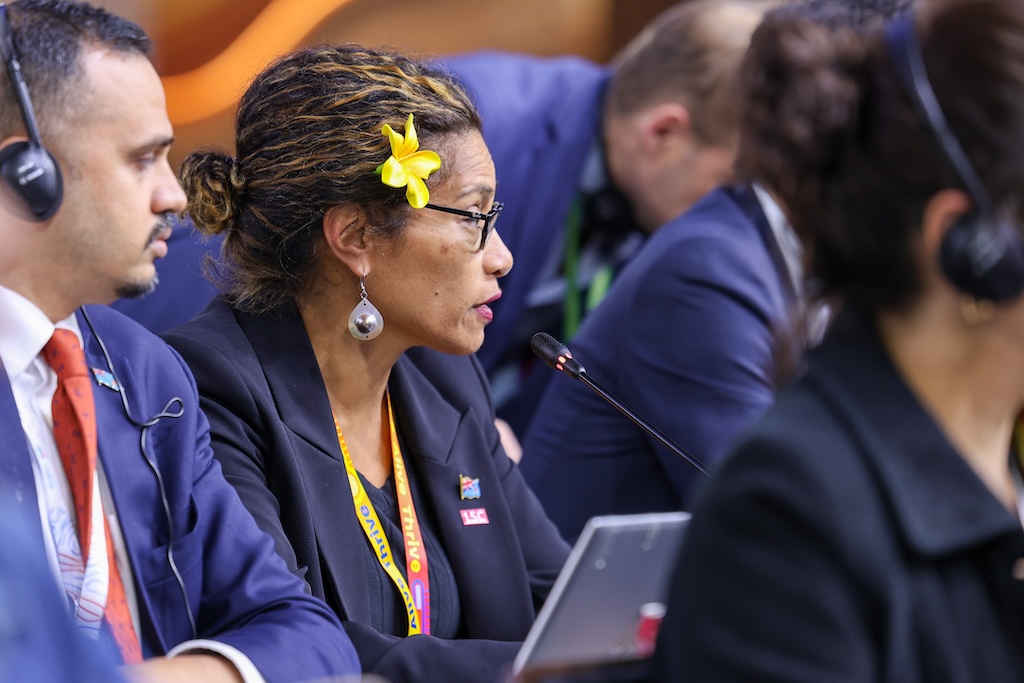
During the final plenary, Fiji’s Dr Sivendra Michael – co-chair of the ocean and climate change dialogue – appealed to the COP31 president to “humbly consolidate” the consensus on ocean as a “standalone ocean decision” and “directly submit” ten paragraphs with no objections in text as a “way to preserve” work done.
Lynda Tabuya, Fiji’s environment and climate