

As a testament to the exquisiteness of the ocean and the art of photography, the winners of the 2025 United Nations World Oceans Day Photo Competition were selected from thousands of submissions from around the world, inspired by this year’s theme, “Wonder: Sustaining What Sustains Us.”
The world’s oceans are ever-changing places of magnificent vastness and beauty. The images the winners of this year’s competition captured give us a glimpse into a liquid world of myriad colors, characters and struggles to survive in marine habitats that present many challenges, including heat waves, plastic pollution and anthropogenic pressures.
“Since its inception in 2008, United Nations World Oceans Day (UN WOD) has been celebrated on June 8 to underscore ocean’s importance to the planet and our lives. In honor of the 2025 UN WOD theme, ‘Wonder: Sustaining What Sustains Us,’ the United Nations is spotlighting the ocean’s essential wonder — from the wonders it consists of to the wonders it ignites — through a series of celebratory activations in Nice, France,” a press release from Oceanic Global said.
Historically, UN WOD has been hosted at the UN headquarters in New York, but moved overseas this year to take place ahead of the UN Ocean Conference (UNOC), held June 9 to 13 in Nice.
The winners of the photo competition — chosen by a panel of world-renowned judges from thousands of entries submitted by amateur and professional photographers — were announced on World Oceans Day as part of the UN WOD celebration in Nice.
This year’s judges were Ipah Uid Lynn, an underwater photographer from Malaysia; wildlife photographer Vanessa Mignon from France; William Tan, an underwater photographer from Singapore; and underwater photographer Marcello Di Francesco of Italy. Since the competition began in 2014, Ellen Cuylaerts, an underwater and wildlife photographer, has been its curator.
The 2025 photo competition featured three recurring categories: Big and Small Underwater Faces; Underwater Seascapes; and Above Water Seascapes, as well as a fourth category added to celebrate the 2025 UN World Oceans Day theme of the same name: Wonder: Sustaining What Sustains Us.
The four first-place winners — each from a different country — were Andrey Nosik of Russia, Dani Escayola of Spain, Leander Nardin of Austria and Rachel Moore of the United States.
The first-, second- and third-place winners from each category are featured in a virtual gallery.
The winners of the photography competition will be presented live during a conference panel on June 11. The images will also be on display throughout the week in gallery exhibitions at Nice’s NEO VogelART LAB and The Explorer’s Club in New York.
“With the two UN ocean events taking place back-to-back, the UN WOD celebration sets the stage for decision-makers at UNOC and around the world to honor the ocean’s wonder when determining its fate,” the press release said.
Here are the stunning photos by the winners of the 2025 UN World Oceans Day Photo Competition!
Category 1: Wonder: Sustaining What Sustains Us
First Place: Rachel Moore, United States @moore_rachel

“This photo, taken in Mo’orea, French Polynesia in 2024, captures the eye of a humpback whale named Sweet Girl, just days before her tragic death. Four days after I captured this intimate moment, she was struck and killed by a fast-moving ship. Her death serves as a heartbreaking reminder of the 20,000 whales lost to ship strikes every year. We are using her story to advocate for stronger protections, petitioning for stricter speed laws around Tahiti and Mo’orea during whale season. I hope Sweet Girl’s legacy will spark real change to protect these incredible animals and prevent further senseless loss.”
Second Place: Luis Arpa Toribio, Spain @luis.arpa.photo

“A juvenile pinnate batfish (Platax pinnatus) captured with a slow shutter speed, a snooted light, and deliberate camera panning to create a sense of motion and drama. Juvenile pinnate batfish are known for their striking black bodies outlined in vibrant orange—a coloration they lose within just a few months as they mature. I encountered this restless subject in the tropical waters of Indonesia’s Lembeh Strait. Capturing this image took patience and persistence over two dives, as these active young fish constantly dart for cover in crevices, making the shot particularly challenging.”
Third Place: Steven Lopez, United States @explorersphotography

“Shot in Cuba’s Jardines de la Reina—a protected shark sanctuary—this image captures a Caribbean reef shark weaving through a group of silky sharks near the surface. Using a slow shutter and strobes as the shark pivoted sharply, the motion blurred into a wave-like arc across its head, lit by the golden hues of sunset. The abundance and behavior of sharks here is a living symbol of what protected oceans can look like.”
Honorable Mention: Ollie Clarke, United Kingdom @ollieclarkephoto

Ollie Clarke
“Humpback whales in their thousands migrate along the Ningaloo Reef in Western Australia every year on the way to and from their calving grounds. In four seasons of swimming with them on the reef here, this is the only encounter I’ve had like this one. This pair of huge adult whales repeatedly spy hopped alongside us, seeking to interact with and investigate us, leaving me completely breathless. The female in the foreground was much more confident than the male behind and would constantly make close approaches, whilst the male hung back a little, still interested but shy. After more than 10 years working with wildlife in the water, this was one of the best experiences of my life.”
Category 2: Big and Small Underwater Faces
First Place: Andrey Nosik, Russia @andreynosik

“This photo of a Japanese warbonnet (Chirolophis japonicus) was captured in the Sea of Japan, about 50 miles (80 kilometers) southwest of Vladivostok, Russia. I found the ornate fish at a depth of about 30 meters (100 feet), under the stern of a shipwreck. This species does not appear to be afraid of divers—on the contrary, it seems to enjoy the attention—and it even tried to sit on the dome port of my camera.”
Second Place: Giacomo Marchione, Italy @marchione.giacomo

“On one of my many blackwater dives in Anilao, in the Philippines, my guide and I spotted something moving erratically at a depth of around 20 meters (65 feet), about 10 to 15 centimeters in size. We quickly realized that it was a rare blanket octopus (Tremoctopus sp.). As we approached, it opened up its beautiful blanket, revealing its multicolored mantle. I managed to take a few shots before it went on its way. I felt truly privileged to have captured this fascinating deep-sea cephalopod. Among its many unique characteristics, this species exhibits some of the most extreme sexual size-dimorphism in nature, with females weighing up to 40,000 times more than males.”
Third Place: Lars von Ritter Zahony, Germany @larsvonritterzahony

“Trips to the Antarctic Peninsula always yield amazing encounters with leopard seals (Hydrurga leptonyx). Boldly approaching me and baring his teeth, this individual was keen to point out that this part of Antarctica was his territory. This picture was shot at dusk, resulting in the rather moody atmosphere.”
Category 3: Underwater Seascapes
First Place: Dani Escayola, Spain @daniescayola

“This year, I had the incredible opportunity to visit a jellyfish lake during a liveaboard trip around southern Raja Ampat, Indonesia. Being surrounded by millions of jellyfish, which have evolved to lose their stinging ability due to the absence of predators, was one of the most breathtaking experiences I’ve ever had.”
Second Place: Gerald Rambert, Mauritius @gerald_rambert

This shot captures a school of rays resting at a cleaning station in Mauritius, where strong currents once attracted them regularly. Some rays grew accustomed to divers, allowing close encounters like this. Sadly, after the severe bleaching that the reefs here suffered last year, such gatherings have become rare, and I fear I may not witness this again at the same spot.”
Third Place: Pedro Carrillo, Spain @pedrocarrillophoto

“La Rapadura’ is a natural hidden treasure on the northern coast of Tenerife, in the Spanish territory of the Canary Islands. Only discovered in 1996, it is one of the most astonishing underwater landscapes in the world, consistently ranking among the planet’s best dive sites. These towering columns of basalt are the result of volcanic processes that occurred between 500,000 and a million years ago. The formation was created when a basaltic lava flow reached the ocean, where, upon cooling and solidifying, it contracted, creating natural structures often compared to the pipes of church organs. Located in a region where marine life has been impacted by once common illegal fishing practices, this stunning natural monument has both geological and ecological value, and scientists and underwater photographers are advocating for its protection. (Model: Yolanda Garcia).”
Honorable Mention: Lars von Ritter Zahony, Germany @larsvonritterzahony

“With only orcas as their natural predators, leopard seals are Antarctica’s most versatile hunters, preying on everything from fish and cephalopods to penguins and other seals. Gentoo penguins are a favored menu item, and leopard seals can be observed patrolling the waters around their colonies. For this shot, I used a split image to capture both worlds: the gentoo penguin colony in the background with the leopard seal on the hunt in the foreground.”
Category 4: Above Water Seascapes
First Place: Leander Nardin, Austria @akela.world

“A serene lake cradled by arid dunes, where a gentle stream breathes life into the heart of Mother Earth’s creation: Captured from an airplane, this image reveals the powerful contrasts and hidden beauty where land and ocean meet, reminding us that the ocean is the source of all life and that everything in nature is deeply connected. The location is a remote stretch of coastline near Shark Bay, Western Australia.”
Second Place: Nur Tucker, United Kingdom/Turkey @nurtuckerphotography

Nur Tucker
“Northern gannets (Morus bassanus) soar above the dramatic cliffs of Scotland’s Hermaness National Nature Reserve, their sleek white bodies and black-tipped wings slicing through the Shetland winds. These seabirds, the largest in the North Atlantic, are renowned for their striking plunge-dives, reaching speeds up to 100 kph (60 mph) as they hunt for fish beneath the waves. The cliffs of Hermaness provide ideal nesting sites, with updrafts aiding their take-offs and landings. Each spring, thousands return to this rugged coastline, forming one of the UK’s most significant gannet colonies. It was a major challenge to take photos at the edge of these cliffs at almost 200 meters (650 feet) with the winds up to 30 kph (20 mph).”
Third Place: Andrey Nosik, Russia @andreynosik

Andrey Nosik
“Paradise Harbour is one of the most beautiful places on the Antarctic Peninsula. When I visited, the sea was extremely calm, and I was lucky enough to witness a wonderfully clear reflection of the Suárez Glacier (aka Petzval Glacier) in the water. The only problem was the waves created by our speedboat, and the only way to capture the perfect reflection was to lie on the bottom of the boat while it moved towards the glacier.”
Honorable Mention: Ken Findlay, South Africa @kenfinphoto

“Ken Findlay
A South Atlantic swell breaks on the Dungeons Reef off the Cape Peninsula, South Africa, shot while photographing a big-wave surf session in October 2017. It’s the crescendoing sounds of these breaking swells that always amazes me.”
The post Meet the Winners of the 12th Annual UN World Oceans Day Photo Competition appeared first on EcoWatch.
https://www.ecowatch.com/un-world-ocean-day-photo-contest-2025.html

Doorframes decorated with fresh pine garlands are downright magical. But they sure cost a pretty penny.
Why spend all that money when you can make your own for free (or at a discount)? Not to mention, you’ll have way more fun getting creative and making it your own.

I’m all about slowing down and getting crafty during the holidays. After all, is it really the gifts we remember every year, or the memories we make with people we love?
Speaking of, it’s even better if you invite friends or family to help make a DIY garland! Put on some Christmas tunes, grab some hot cocoa, and it’s a Christmas memory you’ll be talking about for years.
Pine is also zero waste decor because it’s all compostable at the end of the season. Here’s how to make a DIY garland you’ll never forget.
materials you’ll need:
- Evergreens (you can get these while foraging, at a local nursery, or some from your own tree)
- 22-gauge floral wire (or dyed green twine)
- Heavy duty scissors
- Gloves (to protect your hands)
step 1 – measure your space
Where do you want your garland to hang? Above a doorway? A window? A fireplace? Measure the space so you know how long the garland will need to be. This will give you a better idea of how much pine you’ll need to bring your vision to life.
step 2 – find your pine
Now’s the time to decide if you want to forage or buy your pine. Faser Fir is a great option when it comes to garlands because of how sturdy the pine is, but any Fir will hold up great.
If you’re planning on foraging, try renting a book from the library that identifies the different types of native pine near you. This will help familiarize you on what to look for and what kind of effect different pines will have for your garland.
Generally, pines, firs, boxwoods and cedars make for good indoor decoration because they dry out more slowly.
Fraser fir, red pine, eastern white pine, and western red cedar are some great choices. You can use a mix of them to achieve a whimsical effect.
It’s a good idea to know how to identify different pine if foraging outdoors. Bring a reusable bag, gloves and heavy duty scissors with you while foraging. Be aware some pine trees are spikey and their needles can hurt! And never take too much off one plant.
If foraging isn’t for you, try hitting up a local nursery. They will likely have excess pine they’ll be happy to sell you for your garland. Christmas tree lots will often have a bunch of leftover greens they’ll likely part with for free too.
When in doubt, trimming some off your own tree works too (just be careful not to leave any bald spots).

step 3 – organize
Now’s the fun part – once you have all the evergreens you want, you’ll want to lay it out before you in the style of your choosing. The beauty of foraging for pine is that everything won’t be uniform – so embrace the imperfection.
You’ll want to make sure the sturdiest pieces are in the center. And make sure to pick which pine goes on the end – something with the right drip is always good. And don’t be afraid to prune them as needed.
When you have a structure you like, start layering and lining up your pieces properly. Then use the floral wire to secure them in place. You can also use dyed green twine if you’d like to compost the whole thing without hassle of removing the wire. But note that twine may be less subtle compared to wire.
Also, you’ll want to secure each end with a knot so nothing unravels. To make it easier to mount your garland, create loops with your wire or twine. Do this by simply making a loop and twisting the base until the loop is securely closed.
You can also add decorative elements if you wish, like upcycled ribbons, dried citrus, pinecone, and winter berries. It’s good to add these to any gaps you discover to help fill it in.
step 4 – hanging and display
Now you’ll want to mount your garland. You should set your hooks first (try two for single doorways, three for double, and four for triple width doorways).
Once your hooks are set in place, mount your garland using the loops you created earlier. Or, just by the wire you find – letting things shape naturally.
Don’t be afraid to add to it as needed. If you notice any gaps, this is a good time to fill them with more pine or decorative elements. And if you’d like, you can even entwine some battery operated string lights into the garland for added wow.
Have you ever made a DIY garland before? Drop your tips in the comments!
The post Easy DIY Garland: Step-By-Step Instructions appeared first on Going Zero Waste.
For 15 years, Toronto showed North America what a green roof mandate could build. Its 2009 bylaw, the first on the continent to both require green roofs and set a construction standard for them, produced more than 1,200 green roofs across the city. On November 3, 2025, the Ontario government revoked the provision of the City of Toronto Act that allowed the bylaw, with no advance notice or phase-out period.
That reversal represents the state of green roof policy in 2026. It’s a time of backlash against environment-minded construction practices. Housing-cost pressure is pushing some governments to loosen or drop requirements, while other cities keep adding them, and most of the newer laws let owners choose solar panels, vegetation, or both.
For building owners, advocates, and homeowners, the practical question now is which roof, under which local rule, delivers the most value for a specific building.
What Are Green Roofs?
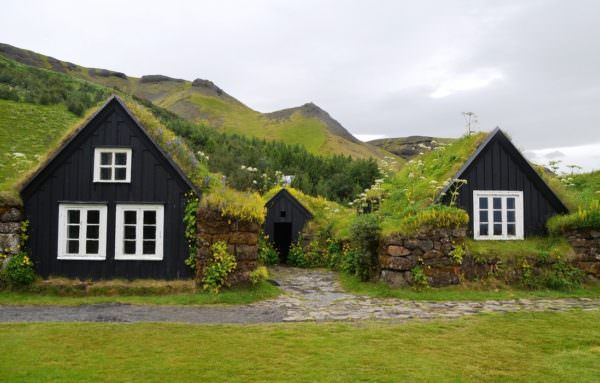
A green roof, also called a living roof or ecoroof, is a roofing system that supports living plants. Sod roofs have existed since at least the Middle Ages. The modern version is engineered: Toronto’s definition calls for, at minimum, a root repellent layer, a drainage system, a filtering layer, a growing medium, and plants, all installed over a waterproof membrane.
Today’s ecoroof systems fall into two broad families. Extensive roofs use a few inches of lightweight media and hardy, drought-tolerant plants such as sedums. Intensive roofs, on the other hand, use deeper soil that can hold grasses, shrubs, and even trees. The difference is the price: the Environmental Protection Agency noted in January 2025 on a page now removed that a simple extensive roof without public access can cost one-tenth to one-third as much as an intensive roof built for public access.
A modern green roof involves more than just plants. It needs high-quality waterproofing and protection against root damage, a drainage system, filter cloth, and a lightweight growing medium. The plants may be small, drought-tolerant ones like sedums, or larger grasses. The system can be modular or site-built, and depending on the planting medium depth, may even resemble a natural meadow or a garden with shrubs and trees.
Project Drawdown ranks green roofs and cool roofs as #73 in their list of solutions to global warming, with an anticipated 0.77 gigaton reduction in carbon dioxide by 2050. If green roofs cover 30% of roof space by 2050 and cool roofs cover 60%, approximately 407 billion square feet of efficient roofing would be in place globally.
A 2024 study published in Nature Cities reports that Seoul’s city-wide green roof implementation could reduce building energy use intensity by up to 7.7%. Another comprehensive 2024 study in Nature Urban Sustainability projected that by 2100, green and cool roofs could reduce HVAC use by up to 71.72% in six cities studied. A 2023 meta-analysis found that green roofs reduce rooftop surface temperatures by an average of 30°C during summer months.
A U.S. General Services Administration study that was removed from its website following the Trump Administration’s anti-green guidance estimated that the heating and cooling savings from green roofs on commercial and public buildings paid back the cost of installation in about 6.2 years.
Residential and Commercial Applications
Green roofs on private residences are very efficient. Despite the high cost of design and installation, which has slowed their adoption as a standard roofing option, they can provide lifetime savings.
Single-family homes accounted for less than 2 percent of green roofs in the U.S. in 2015. Multifamily homes, on the other hand, provide economies of scale that can justify the expense (and sometimes have the square footage to trigger green roof requirements), accounting for 22 percent of green roof projects. That still leaves the vast majority of green roofs to industrial and commercial buildings.
But private homeowners need not despair. Many of the incentives for green roof construction are also available for single-family residences.
Several impressive green roof installations have been completed in recent years:
Will’s Garden at Carle Foundation Hospital is a 2023 Award of Excellence winner that features a therapeutic garden in Urbana, Illinois. The immersive, wheelchair-accessible rooftop included significant technical achievements that allow the plants to grow in only six inches of media.
Construction began on the LXK Office and Residential Campus in Berlin. A designed development, it includes green rooftops and terraces.
Kö-Bogen II, in Düsseldorf, Germany, is a commercial complex features one of Europe’s largest green façades with over 30,000 hornbeam plants that provide a “green heart” and “urban mountain” in the city.
The Vancouver Convention Centre’s six-acre living roof remains the largest in Canada.
The California Academy of Sciences in San Francisco features 1.7 million plants in its living roof.
Chicago City Hall’s green roof remains one of the most studied examples, with more than 20,000 plants from 150 species.