


 It’s easy to understand how Trump has great appeal to the hateful idiots and the amoral rich.
It’s much harder to see how it’s possible that a huge number of eligible voters are uninvolved in guiding the future of the United States, with many of them saying that “both sides are the same.”
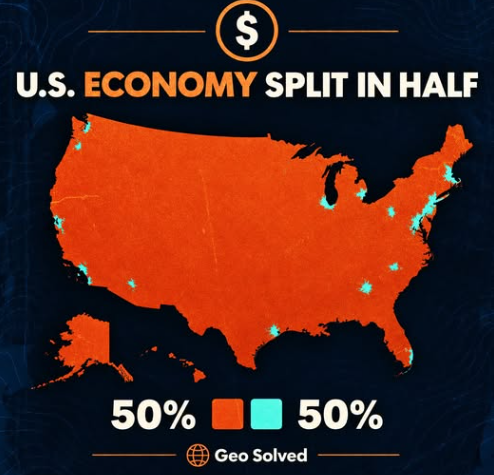 We often hear the MAGA folks claim that voting in the U.S. disproportionate favors the people in big cities, mostly along the coasts.
The obvious response: People vote, not acres of land.
And yes, it’s true that Trump has little appeal to the well-educated, highly productive people in Southern California, the Bay Area, the Mid-Atlantic, New England, other large cities like Chicago, Phoenix, Houston, and Seattle.
Weather Guard Lightning Tech
Global fleet, local knowledge: closing wind’s expertise gap
This exclusive article originally appeared in PES Wind 3 – 2026 with the title, Global fleet, local knowledge: closing wind’s expertise gap. It was written by Allen Hall and other members of the Weather Guard Lightning Tech team.
As wind fleets expand across increasingly diverse operating environments, the expertise needed to solve their problems is becoming more dispersed. Closing the industry’s knowledge gap means connecting local challenges with specialist experience from across the global wind sector and beyond.
An operator finds something on a blade they have not seen before. Who do they call? The engineer who designed that blade moved on years ago. The service provider has not seen the problem either. Somewhere in the world, there’s probably a person who has spent 15 years working on precisely that failure mode. But there’s no reliable way to find them.
That scenario plays out again and again. It’s rare that a problem is unsolvable. A solution exists somewhere. The bigger problem is finding that solution, or the person close to solving it.
Wind has become a large, geographically dispersed industry with roughly 1.3 TW of installed capacity. The technical knowledge required to keep it running has dispersed with it. The knowledge is real, deep and often highly specialized, but it is scattered across the globe in small teams working in different markets.
This is not the first global industry to discover that no single organization can hold every discipline, and that different parts of the world present different problems.
Two answers, one problem
In January 2023, Andrew Billingsley took a call from Ørsted asking whether his company could recycle wind turbine blades. Billingsley is CEO of Plaswire, a polymer processor in Northern Ireland. It was not a wind company. Plaswire’s business had been built on finding a way to use plastics from aircraft seat manufacturing and other waste nobody else would handle: residue pulled out of biodigesters and municipal waste plants.
He said yes before he was certain the company could do it.
Plaswire had a proprietary process for combining polymers that materials engineers said couldn’t be combined. Ground blade fiber mixed well with the combined polymer. Plaswire says it now has capacity to process up to 11,000 tonnes of blades a year and has increased blade content in its product from ten percent to thirty percent. The company also reports that the resulting structural components can outperform the concrete and timber alternatives they replace.
The same waste stream produced an entirely different answer on the other side of the Atlantic. Everpoint Services in Houston, Texas decommissions wind and solar assets, leaving the company tasked with repurposing fiberglass blades. At a birthday party, Everpoint CEO Tyler Goodell put that problem to James Timmins, a drilling engineer who had spent his career planning and overseeing drilling operations for major oil companies.
Timmins realized that ground blade fiber might work as a fluid loss additive in oil, gas, and geothermal drilling, where fluid escaping into the formation can cost tens of thousands of dollars a day. Everpoint spent the next two years turning that idea into a product. The company says BladeBlok is patented and shipping globally from Houston.
Two regions, two answers, both effective. And in