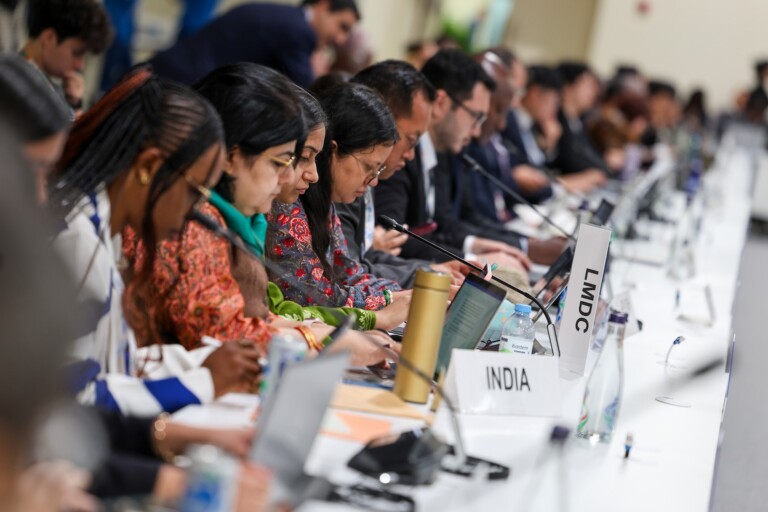
Carbon credit certifiers from the much-criticized voluntary market could be the big winners of a failure to strike a deal on the exchange of offsets between countries at Cop28, experts told Climate Home.
Talks over Article 6.2 of the Paris Agreement – allowing for bilateral deals – collapsed in Dubai following a bitter fight over integrity between the European Union and the United States.
But willing countries can still move ahead with agreements in a vacuum that is increasingly being filled by independent certifiers from the voluntary market. Some observers are raising questions on whether they are fit for purpose.
Transatlantic fight
When the EU led a push at Cop28 for tighter controls over the bilateral exchange of carbon credits, one of its main goals was to restrict the role of operators from the voluntary carbon market.
In the year leading up to the summit, criticism of the market, which sells offsets mainly to corporate emitters, intensified. The climate credentials and the social and environmental integrity of several of its projects were being questioned. The nascent mechanism should draw a blank slate – the EU argued – and rely on a new standard directly supervised by the UN.

US Climate envoy John Kerry is a major proponent of carbon markets. Photo: COP28 / Christophe Viseux
The US went into the talks with a polar opposite vision. It wanted a light-touch approach built on the existing voluntary standards, accepting their requirements and using their infrastructure, according to a leaked EU memo prepared before Cop28 and seen by Climate Home.
The two forces clashed during deeply divisive marathon negotiations in Dubai, failing to find common ground. “Views have become more polarised,” said Pedro Martins Barata, an expert at EDF and a former carbon markets negotiator. “There’s more dissent on an almost philosophical level on what carbon markets should be like.”
After no deal
As the summit drew to a close, the Cop presidency put a ‘take it or leave it’ text on the table. It contained provisions the EU and other groups found unacceptable and was roundly rejected. Negotiators will try again to land a deal at Cop29 next year.
In the meantime, countries can still go ahead with bilateral deals under an initial rulebook agreed two years ago in Glasgow. “Nothing that happened in Dubai prevents countries from moving forward and some will certainly do so,” said Martins Barata.
Switzerland is developing projects with Ghana, Thailand and Vanuatu that will help achieve its climate goals. Singapore inked a similar deal with Papua New Guinea during the summit.
How Russia won a ‘dangerous loophole’ for fossil gas at Cop28
The political stalemate has opened up a big opportunity for players from the voluntary market. They are expected to take a leading role in filling the regulatory gap, experts told Climate Home.
“If a voluntary standard or its projects are given preference by certain countries, it will be a significant stamp of approval and could generate lots of investment,” said Jonathan Crook from Carbon Market Watch.
Voluntary market eyes opportunity
Some are wasting no time. Singapore, a pioneer in bilateral offsets, is partnering up with Verra and Gold Standard, the leading carbon credit registers. Their goal is to create a “playbook” with rules and procedures for countries to use existing carbon credit programs to achieve their climate plans under Article 6.
Hugh Salway, a senior director at Gold Standard, sees an important role for existing operators to speed up the implementation of deals. “A government can create its standard which would take time to develop and would be complicated to maintain,” he told Climate Home. “Or it can use our standard which is already set up with rules, methodologies, and auditors.”
‘Car without wheels’: Adaptation playbook lacks finance target
Another register, the Qatar-based Global Carbon Council (GCC), is also working with a series of credits-producing countries, including Oman and Ghana. They are looking to sell article 6.2 offsets in a first-of-its-kind auction at the beginning of 2024.
“We have been doing this for years, we have the necessary capacity to make it work,” said Kishor Rajhansa, chief operating officer of GCC. Limiting the role of the private sector “would kill off the potential of article 6.2,” he added in an interview at Cop28.
Integrity concerns raised
But some observers are concerned by an outsized influence of existing standards given their chequered record.
Some flagship projects certified by Verra have come under fire for making exaggerated climate claims and for causing alleged environmental and human rights violations. The GCC has been accused of breathing new life into offsets that hardly make any difference to global emissions and would not be accepted anywhere else.
Using voluntary market systems “may simplify things, but it raises many questions about how suitable it is, both for countries and the climate, given all the issues that have been flagged,” said Carbon Market Watch’s Crook.
The post Countries go ahead with carbon deals despite Cop28 standoff appeared first on Climate Home News.

Confusion reigned in Antalya on Wednesday morning as some delegates heeded the Turkish organisers’ warning to get to the COP31 venue before 7am today. Others saw a later UN clarification that this wasn’t necessary, and many more decided not to chance it and work from their hotel rooms.
Additional restrictions seem to have been put in place so that the 40 or so world leaders due to speak could be ferried from the airport to the venue and so that President Recep Tayyip Erdoğan could plant some symbolic olive trees without ordinary COP delegates ruining the photo op.
The list of world leaders speaking today is considerably shorter than the (already short) list from just six days ago, with the leaders of Nigeria, Kenya, Egypt, the Netherlands and Sweden among those dropping out.
Still on there are the co-hosts Erdoğan and Australia’s Albanese plus Brazil’s recently re-elected President Lula and the European Commission head Ursula Von der Leyen. The leader of rainforest-rich DR Congo and the vice president of clean energy and coal superpower China will also speak, as well Barbados’s Mia Mottley and Saudi Arabia’s energy minister Abdulaziz bin Salman.
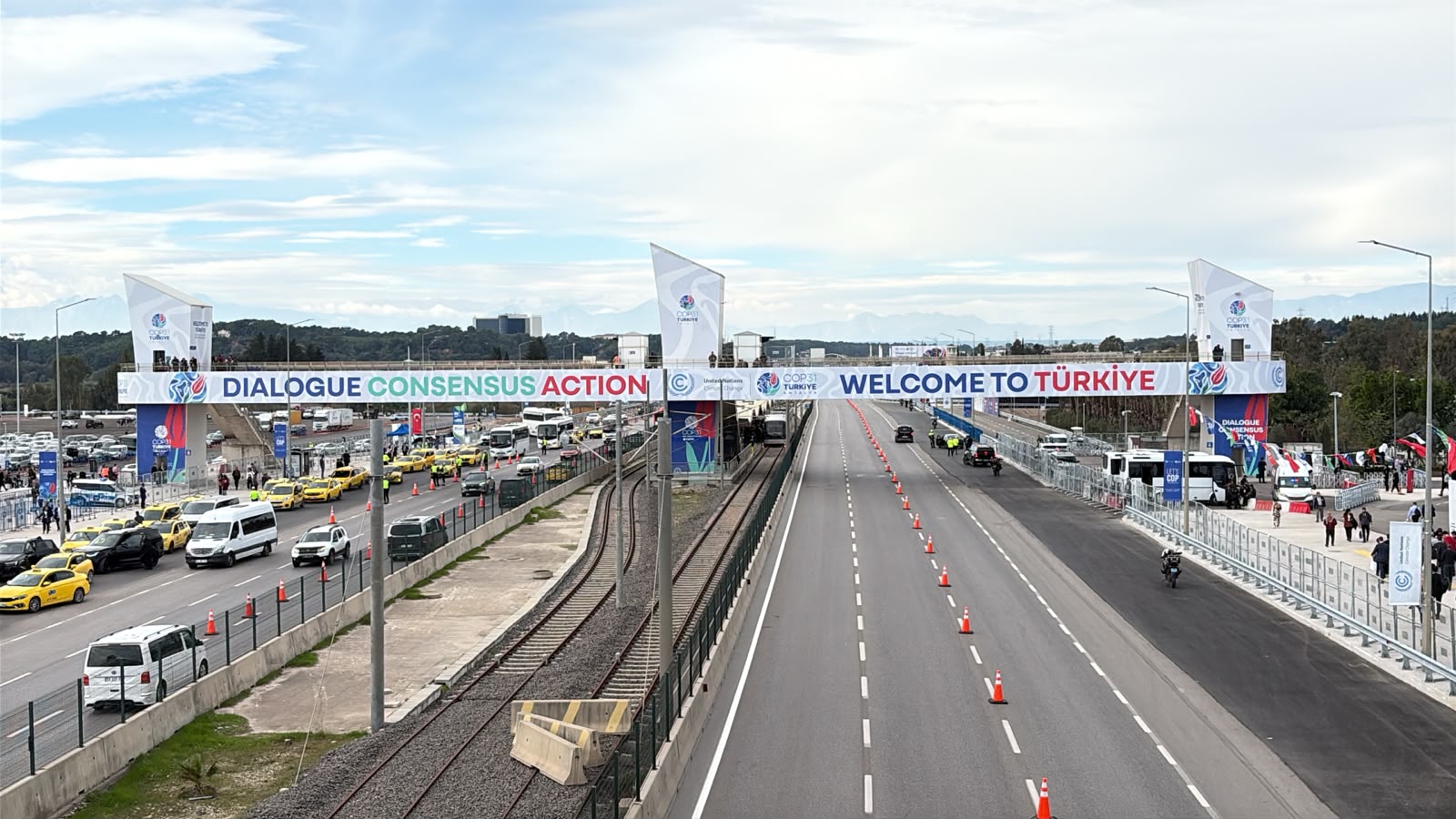
While the leaders of big-emitting countries have not turned up, there will be plenty of voices from the frontlines of climate change with heads of government from desertifying Mauritania, water-stressed Iraq, the sinking Marshall Islands and drought-hit Somalia all speaking.
Today is also “Zero Waste” Day, with First Lady Emine Erdoğan holding an afternoon roundtable on her pet topic. Before COP, Climate Home News visited a landfill and zero waste education centre in Ankara to find out how well – or otherwise – Türkiye is doing in its pursuit of waste reduction.
Türkiye pushes “zero waste” at COP31, but is it delivering at home?
We’re watching out for any news on the country’s single-use plastics ban, which has been introduced to parliament but not yet – after some lobbying from the plastics industry – got the president’s signature.
The post COP31 Bulletin Day 3: With the people stuck outside, world leaders jet in appeared first on Climate Home News.
COP31 Bulletin Day 3: With the people stuck outside, world leaders jet in
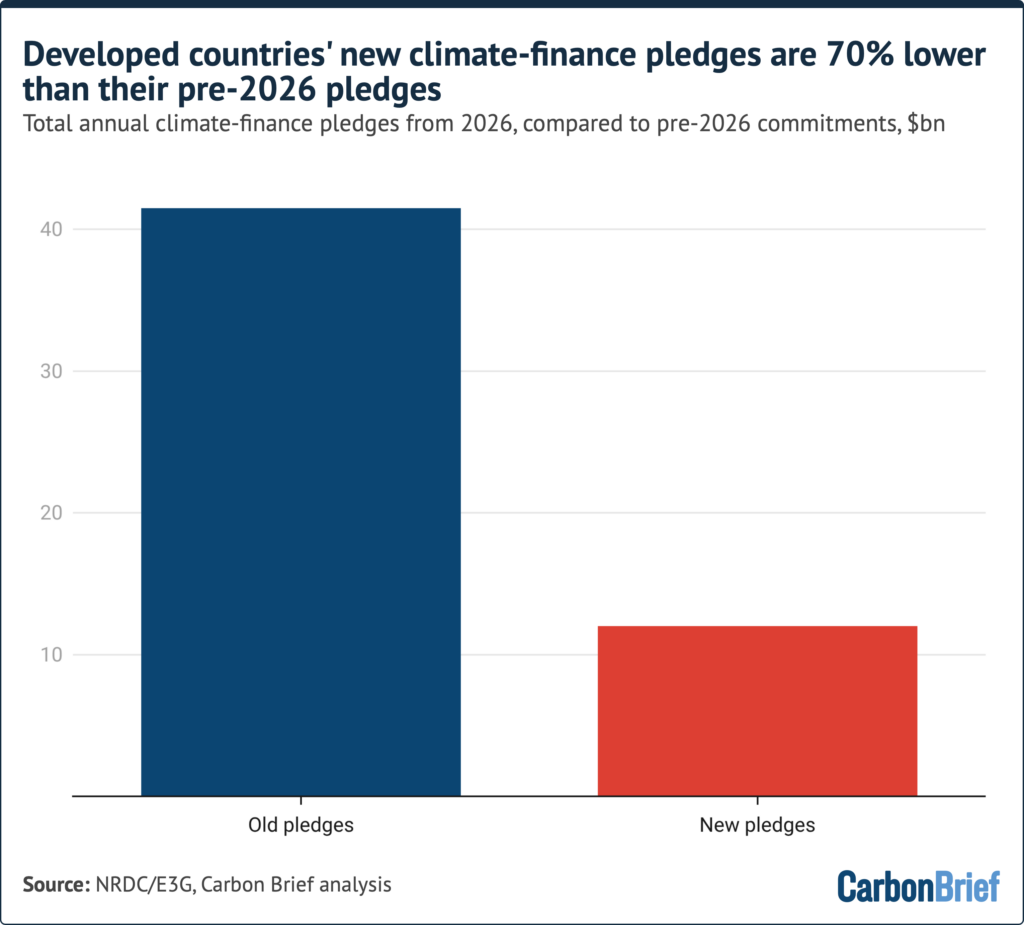
The amount of public funding pledged to help developing countries tackle climate change has dropped by more than 70% in 2026, according to Carbon Brief analysis.
Developed countries are required under UN climate treaties to provide “climate finance” and have traditionally announced multi-year pledges to feed into their global commitments.
Most of these pledges expired in 2025 and, since then, the US has withdrawn from international climate efforts and many European aid budgets have been cut.
A civil-society tracker shows that only five nations have announced new multi-year pledges, including just one major donor – the UK.
Germany, France and Japan are among the key contributors that have so far failed to set out plans for new climate finance, while none is expected from the US.
As a result, the total amount of public climate finance pledged over the next few years amounts to just $11.7bn a year in spending, down from recent levels of around $40bn.
Experts tell Carbon Brief that global conflict, fiscal constraints and the rise of the far right are all making it harder for developed-country governments to pledge new funds.
As the COP31 summit in Turkey gets underway, developing countries are stressing their urgent need for new finance, after nations agreed to a new global target just two years ago.
Missing pledges
Under the Paris Agreement, developed countries are obliged to provide climate finance to help developing countries cut their emissions and prepare for climate disasters.
This financial assistance can be channelled through multilateral development banks, UN climate funds and investments “mobilised” from the private sector.
But a large chunk is also expected to come directly from the public coffers of developed countries – primarily their foreign-aid budgets. This public spending has made up roughly a third of climate finance flowing to developing countries in recent years.
The EU, the US and others agreed just two years ago that they would “take the lead” on scaling up annual climate finance from $100bn in the early 2020s to $300bn by 2035.
Donor countries have traditionally supported such goals by announcing multi-year targets that indicate how much they plan to spend on climate finance.
Nearly all of these pledges expired in 2025 – and hardly any major donors have announced new ones to replace them, covering the period out to 2030.
This lack of new commitments is captured in a tracker of old and new financial commitments by climate NGOs NRDC and E3G.
Carbon Brief analysis of this data, based on an annualised breakdown of targets, shows that developed countries had previously pledged around £42bn a year in public finance.
As the chart below shows, based on current pledges, this has fallen by around 71% to £11.8bn, on average, over the remainder of the 2020s.
Not all contributors announced public climate-finance pledges in advance for the pre-2026 period. Some did not hit their stated targets, while others exceeded them.
While official data for 2025 is not yet available, bilateral public finance reached £43.9bn in 2024, broadly in line with the amount pledged by developed countries.
Big contributors
International climate finance has been consistently dominated by five nations – Japan, Germany, France, the US and the UK.
These countries – together with the EU – have provided around 90% of all the bilateral, public climate finance going to developing countries in recent years.
Of these key players, only the UK has announced a new pledge, committing £6bn ($8bn) of aid between 2026-27 and 2028-29, plus £6.7bn ($8.9bn) from outside its aid budget.
This accounts for half of all the annual funds pledged from 2026 onwards – averaging $5.7bn a year.
The European Commission makes up most of the remainder, with an average annual contribution of $4.5bn promised out to 2027.
Rather than a new pledge, this is due to the commission promising to spend €28bn ($31.8bn) over its 2021-2027 budget period. Its post-2027 contribution is currently being discussed as part of wider EU budget negotiations.
Canada has promised to spend CA$5.3bn ($4.1bn) by 2030, averaging $860m a year. The Netherlands, Switzerland and Belgium have also pledged relatively small sums.
Overall, despite developed countries committing to scale up climate finance, these new pledges are either less ambitious – or only slightly more ambitious – than previous ones. This can be seen in the chart below.
The UK’s pledge appears more ambitious, but this is because the government has changed how it counts climate finance to include $8.9bn in “additional” public finance. When only the like-for-like aid components are compared, the new pledge amounts to a drop in ambition. (For more details, see the methodology.)
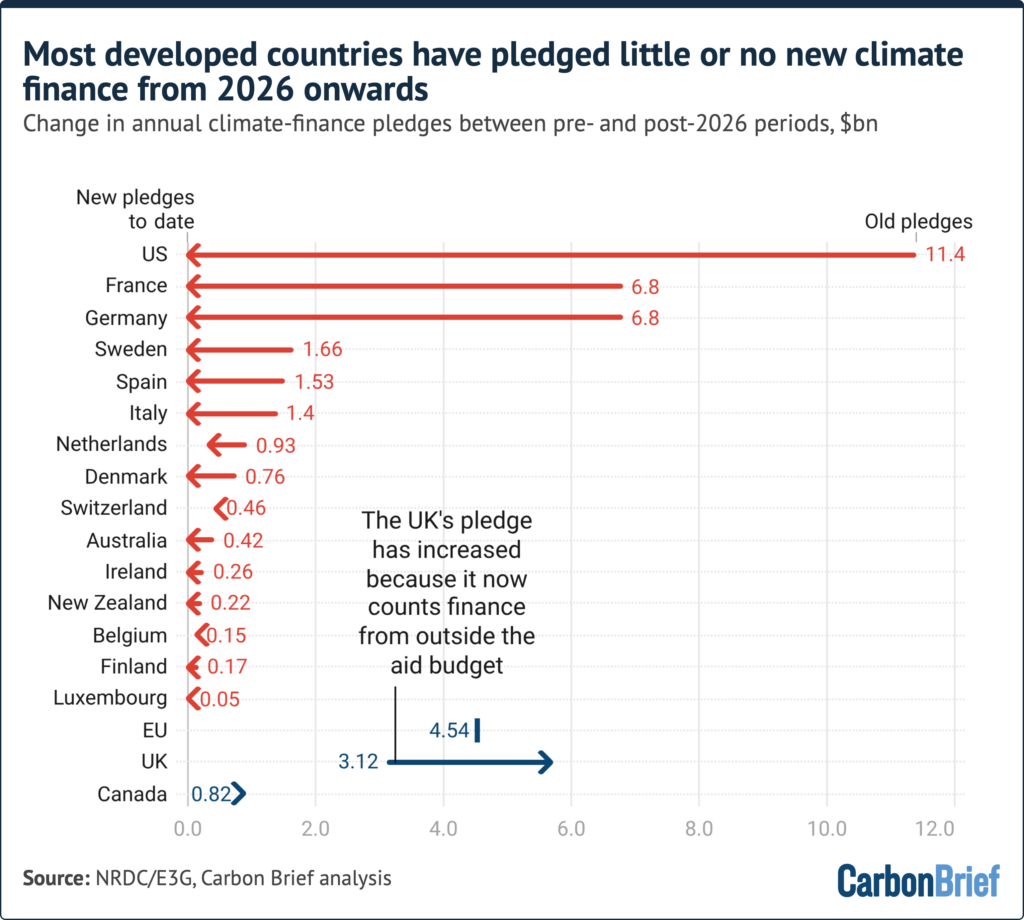
The most significant absence is the US, which committed to reaching $11.4bn in annual support by 2024 under the Biden administration.
Since president Donald Trump took power, the US has – for the second time – withdrawn from the Paris Agreement and shrunk its aid budget. It will not provide any official climate finance in the coming years.
Another notable absence is Australia, which is jointly hosting the upcoming COP31 summit, alongside Turkey. Josie Lee, policy and advocacy lead at Oxfam Australia, tells Carbon Brief:
“If Australia fails to announce a climate-finance pledge as president of negotiations, it would send a problematic message to those resisting action on climate change that might serve to embolden their agenda.”
Japan is the largest overall contributor of public climate finance, but it has not traditionally announced targets for this type of spending. Instead, the government set out overall goals that also bundle in finance “mobilised” from the private sector.
As a result, its public-finance ambitions have not been included in this analysis.
So far, the Japanese government has not announced any new multi-year climate-finance pledges, from either the public or the private sector.
European cuts
Europe provides the majority of international climate finance, but European governments have massively cut their aid spending in recent years, citing economic strain and defence spending needs.
Germany and France, the two largest European climate-finance contributors, both pledged to reach €6bn ($6.8bn) per year by 2025. Neither has committed to anything beyond that.
Both nations have slashed their aid budgets in recent years, including funding for climate programmes. Germany missed its 2025 climate-finance goal due to these cuts.
Dr Anja Carolin Gebel, a senior policy advisor at Germanwatch, tells Carbon Brief that this issue has become more politically fraught since the centre-right Christian Democratic Union (CDU) won the 2025 election and began leading a coalition government:
“The issue of climate change – and, subsequently, climate finance – has taken a back seat in the current government coalition.”
There has also been a political shift in France, Gaïa Febvre, international policy coordinator at Réseau Action Climat, tells Carbon Brief. She adds:
“The upcoming presidential election and the growing influence of the far right are likely to make new international financial commitments politically more difficult.”
Other significant European donors are also undergoing political turmoil.
Spain’s centre-left government has triggered a snap election for the end of November, making a new climate-finance pledge during COP31 less likely.
Following a narrow election win, a centre-left bloc in Sweden is still in the process of trying to form a new coalition government.
Some nations have signalled that their climate finance will continue flowing, even though they have not officially set out specific new pledges.
The Dutch government, for example, has said it will provide “at least” €300m ($334m) of specific climate funding annually out to 2031. However, it has also indicated that its total public climate finance is likely to be considerably higher in both 2026 and 2027.
To highlight the lack of new pledges, developing countries are championing a “climate-finance work programme” at COP31, which could provide a space to discuss scaling up public climate finance from developed countries.
In response, the EU has stressed that its member states are the “largest providers” of public climate finance and called on developing countries to submit overdue plans for cutting emissions. The EU and its member states provided a record €32.3bn ($40bn) in 2025.
Membership
Support award-winning climate journalism
Against this backdrop, EU climate chief Wopke Hoekstra recently told Bloomberg that “any conversation on new fresh money is dead in the water”.
Joe Thwaites, international climate finance director at NRDC, who runs the commitment tracker, tells Carbon Brief that “developed countries would be wise to show how they are continuing to lead on climate finance”. He says:
“The lack of new announcements is making the finance negotiations tougher than they need to be. The debate around the climate-finance work programme is arising because developing countries have little clarity about how much public climate finance there will be in coming years.”
Methodology
This analysis is based on the climate-finance commitments tracker, run by the NGOs NRDC and E3G, supplemented with additional research.
Only the 23 “developed” countries that are obliged to provide climate finance are considered in this analysis, plus the EU. This includes western Europe, the US, Australia, Canada and New Zealand. Japan and Norway both provide substantial sums of climate finance, but have not announced specific public-finance pledges and therefore are not included.
Carbon Brief converted multi-year pledges into single years, with 2025 used as the baseline “pre-2026” year. Some countries committed to reaching a certain amount “by 2025”, in which case that value is used. Others said they would provide a total amount over several years, in which case the average value per year is used. Belgium, Switzerland and the US only set initial targets as far as 2024, so their 2024 values were used instead of 2025.
These values were compared with the average annual contribution for the remainder of the 2020s, based on the new pledges from the UK, Canada, Belgium, Switzerland and the Netherlands. Some climate finance has been committed by the Netherlands, but this is not expected to be its total contribution. The EU, Portugal and Greece have earlier pledges that extend into the latter half of the 2020s, although the latter two make very small contributions.
NRDC and E3G include all the UK’s newly pledged public finance in their tracker, including $8.9bn in “additional” public finance, which covers “equity, debt, guarantees, insurance and export credit” to mobilise private finance.
In previous Carbon Brief analysis comparing the UK’s new climate-finance target to its old one, this funding was not included. This is because the government did not previously count these funds towards its climate-finance goals, instead focusing exclusively on aid spending.
This analysis does not include pledges that some countries, including Germany and France, have made to the Tropical Forest Forever Facility (TFFF). However, these pledges would not substantially change the main finding, shifting the overall reduction from 71% to 70%.