

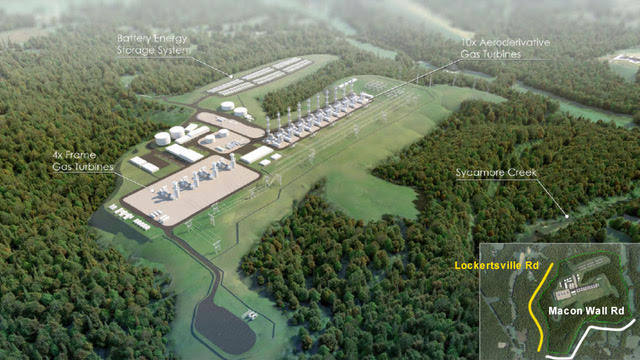
A rendering of the Cheatham Methane Gas Plant from the Town Hall meeting on February 13, 2024.
The Tennessee Valley Authority (TVA) was established to serve the people of the Tennessee Valley and uplift communities with affordable, reliable power, a mission that has fostered community trust for decades. However, recent developments surrounding a proposed methane gas plant in Cheatham County have exposed TVA’s troubling pattern of secrecy, backroom deals, and an ongoing disregard for public accountability. This story shows how TVA’s actions are eroding trust in Cheatham County and beyond—and why residents are rightfully demanding better.
TVA’s Authority Shift: Unchecked Power in CEO Hands
Unlike private companies, TVA is a unique public utility that isn’t subject to state utility commission oversight. The TVA Board of Directors acts as its only regulatory authority. However, in a move that has alarmed many, the Board delegated its powers to approve or deny large capital projects to TVA CEO Jeff Lyash. This shift means that Lyash alone has the authority to approve certain large-scale projects, like the Cheatham County methane gas plant, without formal Board input or approval. For a public utility, such unchecked authority in a single executive’s hands is a troubling departure from TVA’s democratic mandate to serve the interests of the Valley’s residents.
Adding to these concerns, the November 7 TVA Board meeting agenda contained several items that raised hopes for increased oversight and community protection. These agenda points included discussions of a “Natural Gas Transportation Capacity Contract,” “Incentive Metrics,” and a potential revision to the Board’s role in “Capital Project Approvals” — topics which sparked speculation that the Board might rein in CEO powers over capital projects and reintroduce checks on new development decisions. Yet, to the surprise of many, the Board skipped this agenda section without explanation, leaving these critical issues unaddressed.
The recent shift in TVA’s approval process, granting unchecked power to the CEO, raises serious questions about the organization’s commitment to public accountability. For residents in Cheatham County and every community in the Tennessee Valley, this situation is a reminder of the importance of demanding transparency from those in power. Ultimately, every community deserves honesty from TVA — not just empty promises and secret deals.
Early Assurances and Broken Promises
In September 2020, TVA spokesperson Scott Fiedler was quoted in the Cheatham County Exchange stating there were “no specific plans” for a property TVA had quietly acquired. Just weeks later, TVA reiterated this message to The Tennessean, claiming no clear vision for the property and suggesting it could be years before any plans materialized. But documents obtained through a Freedom of Information Act (FOIA) request revealed that TVA had commissioned an archaeological survey of the land as early as July 2020. The survey specifically referenced an “anticipated power plant,” exposing that TVA had plans for the property long before their public denials. Despite telling the community that no plans existed, TVA had already begun laying the groundwork. This revelation left Cheatham County residents questioning TVA’s integrity and wondering what else might be hidden.
More Than A Coincidence: Convenient Connections and Insider Bias
One of the murkiest parts of the Cheatham County project is how TVA acquired the land. Officially, the property wasn’t on the market. Yet TVA managed to secure it with remarkable speed and precision. At the time, while TVA was not in communication with the community or local elected officials, TVA was coordinating directly with the Cheatham County Economic and Community Development (ECD) Director, who recently retired from TVA himself, where he worked in an economic development role. His TVA connections raise significant questions. As a former insider, he would have had unique knowledge of TVA’s needs and operations, and his proximity to both TVA and Cheatham County’s development planning seems more than coincidental. Interestingly, the ECD Director was quoted in articles early in the project’s timeline stating that TVA would likely use the property for solar power to support Middle Tennessee’s tech industry—an idea that resonated with residents and would have aligned with TVA’s stated commitment to clean energy. Yet, instead of the solar farm, residents were blindsided with plans for a massive 75-acre methane gas plant, with far-reaching environmental and health implications.
This arrangement raises concerns over whether or not local communities have their interests ignored in favor of the interests of TVA by former TVA insiders with deep institutional biases.
Secret Deals with Tennessee Gas Pipeline Company
The mystery deepened when another FOIA request revealed that TVA signed an agreement with Tennessee Gas Pipeline (TGP) for TGP to perform “discreet due diligence” in preliminary work for the gas pipeline to supply the proposed power plant. The contract spelled out in multiple ways that local residents should be kept in the dark. For example, “TGP shall not discuss the project with public stakeholders and shall take reasonable care to maintain confidentiality during its due diligence efforts” and “The Parties agree to keep the Cheatham County Project, including the Work and the fact that TGP may be, or has been, participating in discussions with TVA regarding the Cheatham County Project confidential…”
The timing of the contract reveals another way that TVA has kept us in the dark. As I’ve written about before, TVA failed to let essentially anyone in the local community know that they were proposing to build a methane gas plant. Not one person from TVA reached out to the County Mayor, members of the County Commission, or even adjoining and adjacent landowners to inform them of their plans to build the plant. It wasn’t until a representative of an environmental group who was monitoring arcane documents on the Federal Register contacted me that any of us were aware that TVA was going to be hosting an informational open house just a few days later. That open house, hosted June 21, 2023, was the first that any of our county leaders heard from TVA about the gas plant.
That same day, June 21, 2023, TVA signed the agreement with TGP, which raises serious concerns. Why did TVA wait until the last possible moment to inform the community about the plant while privately advancing deals with TGP? It appears TVA was moving forward with its plans behind closed doors while keeping the community in the dark.
Ignoring Infrastructure and Environmental Concerns
Cheatham County residents have repeatedly expressed concern over the strain a project of this scale would place on local infrastructure, particularly the narrow roads and aging bridges that won’t support the heavy machinery TVA will need to build the plant. TVA largely ignored these warnings and a roads survey — obtained not through TVA, but independently — confirmed that extensive road and bridge widening would be required to build the gas plant. This would mean additional land seizures from residents, even beyond those already contemplated for gas pipelines and power transmission lines, and potential environmental damage to the rural landscape. Yet, TVA’s decision-makers are disregarding these realities in their bull-headed pursuit of building this plant, further showing a lack of respect for local residents’ concerns about our infrastructure and environment.
Additionally, Cheatham County’s dense woodlands and rich wildlife habitats are rare assets in Middle Tennessee, but TVA would clear thousands of acres for 45 miles of new high-voltage transmission lines to support a gas plant that doesn’t move TVA closer to a cleaner grid. The environmental toll of clear-cutting these woodlands and eliminating managed timberlands is enormous, permanently altering the area’s hills, hollows, and habitats. Recently, TVA has been pressuring landowners to allow survey access for these transmission lines. Some landowners, concerned about TVA’s overreach, filed formal objections in court to protect their properties. Yet, TVA’s surveyors nonetheless entered these properties without consent—a blatant disregard for both property rights and constitutional protections.
Purchasing Equipment Before Due Diligence
In a move that stunned many, TVA Chief Operating Officer Don Moul revealed during a recent Board meeting in Florence, AL, that TVA is already purchasing turbines and other equipment for the proposed Cheatham County plant. This announcement comes despite incomplete key reviews and approvals required under the National Environmental Policy Act (NEPA). As a federal agency, TVA is required to adhere to NEPA’s mandate to “assess the environmental effects of proposed major Federal actions prior to making decisions” such as the construction of a new power plant, especially in a location that appears ill-suited for such a project. However, TVA appears to have bypassed critical steps in this process, signaling a premature decision to proceed with the plant. For many local residents, Moul’s statement confirmed their fears: TVA has effectively predetermined its course of action, sidelining any economic analysis, environmental considerations, or public input that might emerge through the NEPA review. This pre-commitment raises serious questions about TVA’s commitment to public engagement, environmental stewardship, and transparency, as the agency is purchasing equipment for a project that is still officially “under review.”
“Community Engagement” in Name Only
TVA repeatedly insists it values community engagement and won’t impose projects where they’re not wanted. But Cheatham County residents have experienced the opposite. When residents and elected officials, who have passed resolutions opposed to the plant, have stood before TVA representatives, detailing concerns about infrastructure, environmental degradation, and transparency, they have been met with vague responses or outright dismissals. Every warning voiced by the community has been disregarded, and every promise of transparency has been broken.
TVA’s Erosion of Public Trust
The situation in Cheatham County is more than just a dispute over a power plant. It’s a case study of how a public institution can lose the trust of the people it serves. TVA’s disregard for local voices, their lack of transparency and secret agreements, and aggressive project advancement are clear indicators of a utility failing the people it serves.
TVA’s recent shift in oversight—granting CEO Jeff Lyash unchecked authority over project approvals—further highlights the need for public vigilance. TVA has failed in its responsibility to serve the community openly and honestly. Cheatham County deserves more than an agency that talks about transparency but acts in secrecy.
The Way Forward
If TVA wants to restore any sense of trust, it must halt the Cheatham County project, engage openly with the residents, and genuinely consider sustainable alternatives. Public trust is earned, not assumed, and TVA has squandered it with each backroom deal and unapproved trespass. The people of Cheatham County, and the entire Tennessee Valley, deserve a TVA that is transparent, accountable, and respectful of the communities it serves. Only by changing its approach to projects like this can TVA begin to mend its damaged relationship with the public.
The post TVA’s Secret Deals and Lack of Transparency: What Valley Residents Deserve to Know appeared first on SACE | Southern Alliance for Clean Energy.
TVA’s Secret Deals and Lack of Transparency: What Valley Residents Deserve to Know

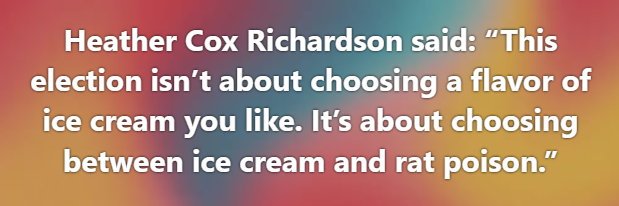 It’s easy to understand how Trump has great appeal to the hateful idiots and the amoral rich.
It’s much harder to see how it’s possible that a huge number of eligible voters are uninvolved in guiding the future of the United States, with many of them saying that “both sides are the same.”
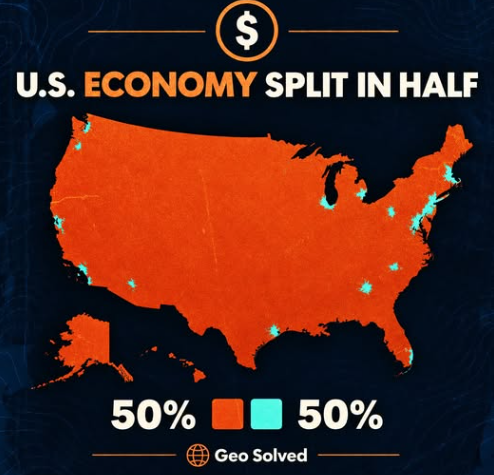 We often hear the MAGA folks claim that voting in the U.S. disproportionate favors the people in big cities, mostly along the coasts.
The obvious response: People vote, not acres of land.
And yes, it’s true that Trump has little appeal to the well-educated, highly productive people in Southern California, the Bay Area, the Mid-Atlantic, New England, other large cities like Chicago, Phoenix, Houston, and Seattle.
Weather Guard Lightning Tech
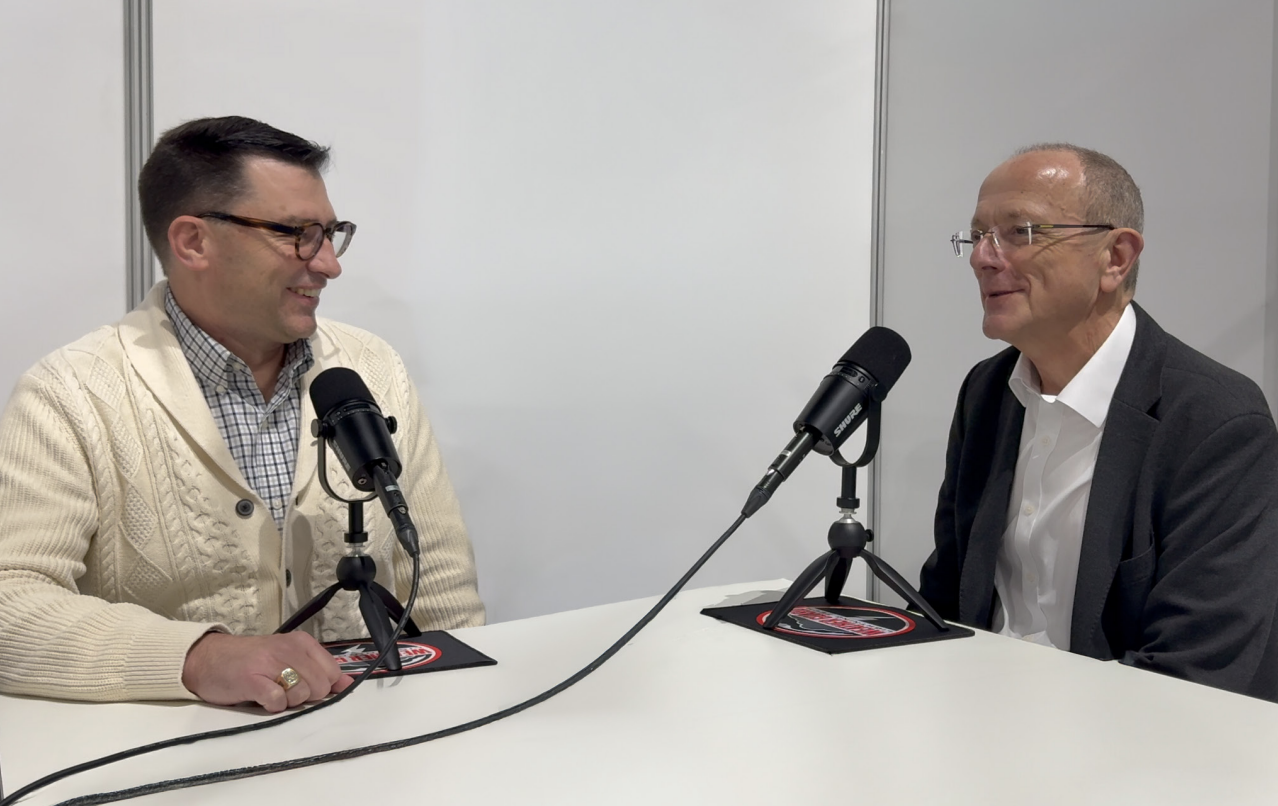
Global fleet, local knowledge: closing wind’s expertise gap
This exclusive article originally appeared in PES Wind 3 – 2026 with the title, Global fleet, local knowledge: closing wind’s expertise gap. It was written by Allen Hall and other members of the Weather Guard Lightning Tech team.
As wind fleets expand across increasingly diverse operating environments, the expertise needed to solve their problems is becoming more dispersed. Closing the industry’s knowledge gap means connecting local challenges with specialist experience from across the global wind sector and beyond.
An operator finds something on a blade they have not seen before. Who do they call? The engineer who designed that blade moved on years ago. The service provider has not seen the problem either. Somewhere in the world, there’s probably a person who has spent 15 years working on precisely that failure mode. But there’s no reliable way to find them.
That scenario plays out again and again. It’s rare that a problem is unsolvable. A solution exists somewhere. The bigger problem is finding that solution, or the person close to solving it.
Wind has become a large, geographically dispersed industry with roughly 1.3 TW of installed capacity. The technical knowledge required to keep it running has dispersed with it. The knowledge is real, deep and often highly specialized, but it is scattered across the globe in small teams working in different markets.
This is not the first global industry to discover that no single organization can hold every discipline, and that different parts of the world present different problems.
Two answers, one problem
In January 2023, Andrew Billingsley took a call from Ørsted asking whether his company could recycle wind turbine blades. Billingsley is CEO of Plaswire, a polymer processor in Northern Ireland. It was not a wind company. Plaswire’s business had been built on finding a way to use plastics from aircraft seat manufacturing and other waste nobody else would handle: residue pulled out of biodigesters and municipal waste plants.
He said yes before he was certain the company could do it.
Plaswire had a proprietary process for combining polymers that materials engineers said couldn’t be combined. Ground blade fiber mixed well with the combined polymer. Plaswire says it now has capacity to process up to 11,000 tonnes of blades a year and has increased blade content in its product from ten percent to thirty percent. The company also reports that the resulting structural components can outperform the concrete and timber alternatives they replace.
The same waste stream produced an entirely different answer on the other side of the Atlantic. Everpoint Services in Houston, Texas decommissions wind and solar assets, leaving the company tasked with repurposing fiberglass blades. At a birthday party, Everpoint CEO Tyler Goodell put that problem to James Timmins, a drilling engineer who had spent his career planning and overseeing drilling operations for major oil companies.
Timmins realized that ground blade fiber might work as a fluid loss additive in oil, gas, and geothermal drilling, where fluid escaping into the formation can cost tens of thousands of dollars a day. Everpoint spent the next two years turning that idea into a product. The company says BladeBlok is patented and shipping globally from Houston.
Two regions, two answers, both effective. And in retrospect, it makes perfect sense. Northern Ireland has decades of depth in polymers and injection molding, so its answer was a polymer. Houston is a center of the global oil and gas industry, so its answer was drilling mud. Neither answer came out of the wind industry. Both came from regional industrial expertise meeting a problem that happened to land next to it.
Looking beyond Denmark
Modern wind turbine engineering grew up in Denmark, and in many ways it still lives there. The most prevalent turbine design was refined by Danish engineers. DTU Wind and Energy Systems still anchors much of the research on wind turbines. Ask a hard aerodynamic question today and there is a fair chance the answer comes from within Denmark.
What has changed is that designing turbines and operating them are different problems. They no longer happen in the same places. A machine is designed in a small number of locations. It is then operated wherever the wind blows: West Texas, Queensland, Gujarat, the North Sea, and the Spanish meseta.
The fleet is also getting older and more varied as it grows. Machines commissioned during the last boom are aging in ways nobody modeled, on sites with conditions nobody anticipated. That combination generates operational questions faster than any single organization can answer them. Those questions are local, specific, and urgent. Now, companies all over the world are being asked to solve wind’s problems with legacy knowledge, often from an adjacent industry, that originated a long way from where the turbine was built.
The same blade, four climates
The industry’s leading-edge erosion wisdom is shaped largely by northern European conditions. It is a real problem, well studied and well understood. It is also not the same problem in West Texas, where the air carries dust and insects, and where inspections routinely find turbines one to three years old that look as though they have run for far longer. Will Howell of Armour Edge describes one site near an open-cast mine where airborne marble particulates were destroying blades within two seasons.
India produces a variant that exists nowhere in Europe. During the northern dry season, a sticky, tar-like dirt builds on the blades until the flow separates and the blade effectively stalls. The monsoon washes it away. PowerCurve reports that the use of vortex generators in India has produced some of the largest energy gains it has recorded, exceeding five percent across a full year. India is now the fourth-largest wind market on earth, surpassing 56 GW; last year it added more capacity than Germany did.
Rosemary Barnes worked for a Danish blade manufacturer before returning to Australia in 2021 to work in operations. There, she found blades behaving unlike the ones she had known in Europe. The standard method of predicting erosion severity combines annual rainfall with tip speed. But when Barnes plotted Australian sites with known erosion problems against those two axes, she got a random scatter. The model had no predictive value in Australia.
Her firm, Pardalote Consulting, is now placing scientific-grade sensors in Australian wind farms to establish what actually drives erosion there. [Barnes is also a regular host of The Uptime Wind Energy Podcast.]
A library of experts
Today, finding the right specialist can be difficult.
After six years hosting the Uptime Wind Energy Podcast, I increasingly think of the podcast as a library. In the past year alone, we’ve highlighted solutions from companies in Latvia, Denmark, Northern Ireland, Spain, Australia, Scotland, and the United States. As an organizer of the Wind O&M Australia event, one of our goals has been to bring international expertise to the local market. And similarly, to allow the global market to learn from knowledge that has been internal to Australia.
The answers are out there
The wind industry does not have time to solve the same problem twice. Fleets are aging, budgets are tight, and a blade defect that sits unresolved for a season costs real production. The pressure is to move faster, and the fastest way to solve a problem is rarely on your own. The fastest way to solve a problem is to find the person who has solved it. That search has to be a global one. The specialist who understands your failure mode may be in Copenhagen, Riga, Edinburgh, or Houston, working for a company you have never heard of. Geography is not a reason to rule them out. Increasingly it is the reason to go looking. The Uptime Wind Energy Podcast has become one way of documenting that dispersed expertise, bringing together specialists working on specific problems across different markets.
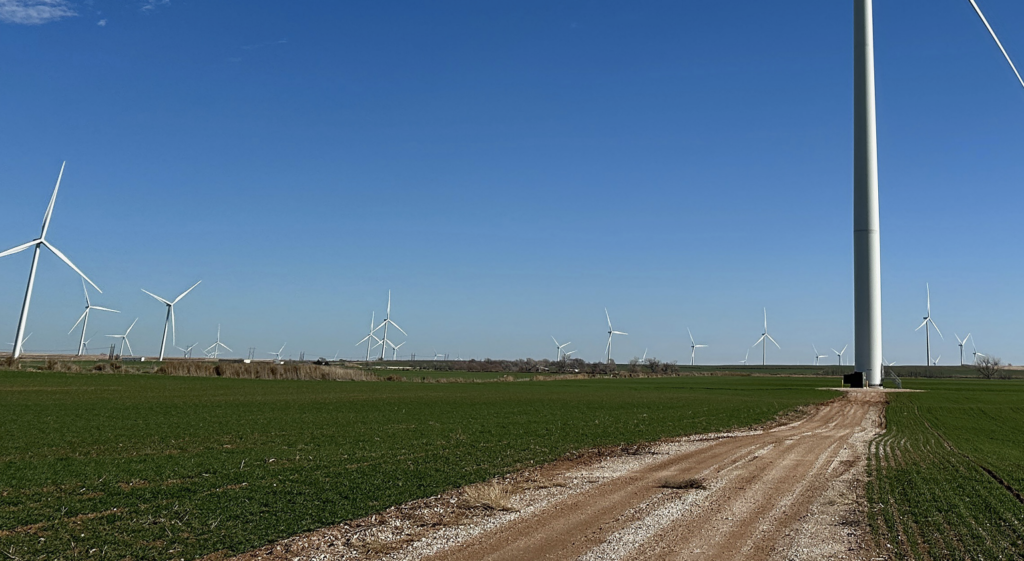
The answers are out there.
Unless otherwise noted, images here are from The Uptime Wind Energy Podcast.
Contact us for help understanding your lightning damage, future risks, and how to get more uptime from your equipment.
Download the full article from PES Wind here. Previous articles you may want to read:
Find a practical guide to solving lightning problems and filing better insurance claims here
See how a cohesive operational strategy can dramatically improve reliability and profitability



