

The bulk of steelmaking around the world still relies on coal-based blast furnaces.
As a result, the steel and iron industry is responsible for 7% of greenhouse gas emissions and 11% of carbon dioxide emissions globally, according to the consultancy firm Global Efficiency Intelligence.
This is more than the total emissions from all the world’s cars and vans.
With steel critical to the building out of decarbonised energy infrastructure, production is expected to continue to rise over the coming years, meaning the potential for decarbonisation is “enormous”, according to not-for-profit data organisation Global Energy Monitor (GEM).
GEM’s annual “Pedal to the Metal” report reveals that 93% of new steelmaking capacity announced thus far in 2024 promises to use lower emission electric arc furnaces (EAFs).
It also shows that 49% of the world’s steelmaking capacity under development now uses EAFs, up from just 43% in 2023 and 33% in 2022.
Of this, nearly all of the capacity announced since the beginning of 2024 operates using EAFs, the non-governmental organisation’s Global Steel Plant Tracker (GSPT) shows.
The tracker covers 2,207m tonnes per year (mtpa) of operating steelmaking capacity and an additional 774mtpa of steelmaking capacity under development globally, across 1,163 individual plants in 89 different countries, analysis of which is captured in its annual report.
However, while the report suggests a positive progression towards lower emission technologies in the sector, the increase in the announced projects is not yet leading to a construction of EAF overtaking coal-based production methods.
Coal-based blast furnace-basic oxygen furnaces (BF-BOFs) – where blast furnaces are used to produce iron from ore and oxygen converters then turn this, with some additional elements, into steel – continue to dominate the projects under construction, meaning “pressure must be maintained all the way through to project completion if real progress is to be seen”, the report finds.
Growth of EAFs
Incoming steelmaking capacity is more heavily EAF-based than ever before, according to GEM’s new report.
There is currently 774mtpa of steelmaking capacity under development, of which 223mtpa is in the advanced development stage.
Based on data from April 2024, the GSPT shows that nearly half of the capacity under development (337mtpa) is EAFs.
Just 36% of steelmaking capacity announced in 2020 with a known production route used EAFs, while in 2023 that number had increased to 92% according to GEM. This grows to 93% of capacity when looking at steelmaking capacity under development announced in 2024.
This “indicates a significant shift toward electric arc furnace steelmaking in the years to come”, the report notes.
Meanwhile, of the 212mtpa of steelmaking capacity slated for retirement, 88% if BOF-based.
However, a net increase in BOF-based capacity is expected over the coming years. If all planned developments and retirements take effect, an additional 171mptpa of BOFs is expected to be added to the global fleet, along with 310mtpa of EAF and 80mtpa of unknown technologies.
Despite this growth in BOFs, the surge of EAF means the steel sector is getting increasingly close to meeting the International Energy Agency’s (IEA) suggested 2030 target.
In its net-zero by 2050 roadmap, the IEA suggests that the share of steel produced by EAF should grow from 24% in 2020, to 37% by 2030 and then 52% by 2050.
Considering all planned capacity and retirements, GEM now estimates that the global steel fleet is expected to reach 36% EAF by 2030, noting: “This is still not sufficient to meet the IEA [net-zero] climate target, but with heightened momentum the goal is increasingly attainable.”

Continuing to construction
While EAF-steelmaking is being announced at “record rate”, GEM finds that less than 14% of this potential capacity has moved into construction.
Of those that have moved into construction, around 46% are still BOF-based. As such, “while we may be within reach of net-zero targets based on proposed electric arc furnace capacity, actually achieving these goals requires follow-through”, the report notes.
Caitlin Swalec, program director for heavy industry at GEM, said in a statement:
“The progress is promising for a green steel transition. Never before has this much lower-emissions steelmaking been in the pipeline. At the same time, the buildout of coal-based capacity is concerning. What the industry needs now is to make these clean development plans a reality, while backing away from coal-based developments.”
As well as the buildout of new coal-based capacity being out of alignment with a net-zero future, it poses a threat of carbon lock-in and stranded assets, GEM notes.
Blast furnaces are becoming riskier investments given the limited options to mitigate emissions from both the furnaces themselves and the upstream emissions from the metallurgical coal mining, it adds.
Estimating an investment of $1-1.5bn per mtpa capacity at an integrated BF-BOF site, GEM found that the future stranded-asset risk could be as high as $554bn in 2023, falling to $400bn in 2024 due to the continued fall in BOF capacity under development.
Astrid Grigsby-Schulte, project manager for steel at GEM tells Carbon Brief:
“As we grow closer to key decarbonisation milestones, coal-based developments get further out of alignment with the direction the industry is moving and present a greater risk of stranded assets to steelmakers. Coal-based, emissions-intensive blast furnaces represent significant investments that often require decades to recoup. This makes them extremely risky for developers, particularly in countries with stated net zero commitments.”

The limited options for mitigating the climate impact of BOF-steelmaking was also highlighted within a recent report from the thinktank Sandbag.
While carbon capture, utilisation and storage (CCUS) is often touted as a “catch all” solution, its effectiveness varies widely across applications, Sandbag’s “Steel & CCS/U” report finds.
For steel production, BF-BOFs with carbon capture are unlikely to be cost-competitive with EAFs, the report finds. Although given the slow pace of technological and market development, Sandbag anticipates capturing carbon will play a limited role in the steel industry.
China transitions to EAFs
India has now replaced China as the top steel developer globally, with a pipeline of 258mtpa of capacity, of which 177mtpa is BOFs, according to GEM.
China has a pipeline of 150mtpa meaning, collectively, China and India are responsible for 53% of all developments globally.
Asia operates 68% of all steelmaking capacity (1,508mtpa), the majority of which is in China (1,075mtpa), India (123mtpa) and Japan (109mtpa).
When looking specifically at emissions-intensive BOF production, Asia’s share of total operating capacity increases to 80% (1,181mtpa), of which 918mtpa is in China.
Currently, China has 157mtpa of operating EAFs (22% of the global capacity), followed by the US, Turkey, Iran and then India.
According to a new report from the Centre for Research on Energy and Clean Air (CREA), China did not issue any new permits for coal-based steelmaking in the first half of 2023. This is the first time this has happened since the nation’s “dual carbon goals” were announced in September 2020.
During the first six months of 2024, Chinese provincial governments permitted 7.1mtpa of steelmaking capacity, all of which were EAFs marking a “turning point” for the country’s steel industry, CREA notes.
Xinyi Shen, researcher at CREA and the report’s lead author, tells Carbon Brief: :
“China’s EAF steelmaking has been developing rather slowly in the past few decades, mainly due to the constraint of scrap supply. However, as China’s steel demand reaches its peak and more scrap becomes available, a major opportunity arises to reduce emissions in the next 10 years. The government has accelerated plans to expand the national ETS to include the steel sector by the second half of 2024. By implementing carbon pricing on carbon-intensive products, EAF steelmaking would become more economically competitive and continue the growth.”
Despite India now overtaking China in terms of announced steelmaking capacity, China remains the biggest developer of EAF capacity overall, GEM’s report states. And while India has the most steel in development, 84% has not moved into construction.
As such, there is still an opportunity for India’s plans to change, with the percentage of BOFs to EAFs less set.
Chris Bataille, adjunct research fellow at the Columbia University Center on Global Energy Policy and lead author at the global Net Zero Steel project tells Carbon Brief:
“India’s core demand for steel is set to increase from 125mtpa to ~450mtpa by 2050, especially to meet key building and infrastructure needs. Our modelling suggests EAFs consistently rise from ~35 to 150mtpa by 2050. So the +250mtpa BF-BOFs is just barely feasible, but only over ~25 years and with some exports of BF-BOF steel.
“The difference will be between a world where strong climate policy succeeds and fails. If it fails and coal based BF-BOFs are built, then the +258mtpa looks barely feasible. If it succeeds, India is short on the necessary gas and especially clean electricity to power this amount of steel production. While the country does build a lot of EAFs, it builds up to 250mtpa of clean iron making over time, making the short term shortfall with clean HBI iron imports.”


The post ‘Significant shift’ away from coal as most new steelmaking is now electric appeared first on Carbon Brief.
‘Significant shift’ away from coal as most new steelmaking is now electric

Climate Change
Large flotilla brings Pacific voices and message to leaders at Pre-COP meeting: Keep 1.5C Alive
NADI, FIJI Wednesday 7 October 2026 — Around 80 people including Pacific and Torres Strait community members, Elders and youth activists travelled as part of a colourful flotilla past the Pre-COP venues with a message for leaders: ‘Keep 1.5°C Alive’.
High res footage and images available here
The large flotilla included traditional Fijian voyaging vessel the Uto Ni Yalo, six 6-person outrigger canoes, and Greenpeace campaigning vessel the Oceania which sailed from Sydney to the Pre-COP in Nadi. On board were Elders, climate-vulnerable communities members from across the Pacific and Torres Strait, youth activists and poets, and campaigners and climate experts from across the region.
Messaging on canoes and banners said ‘Hold the Line at 1.5°C’ and ‘Keep 1.5°C Alive’ — a reminder to leaders that the climate limit established under the Paris Agreement is a non-negotiable survival line.
Shiva Gounden, Head of Pacific at Greenpeace Australia Pacific, said: “People from across the Pacific and Australia have come together today to make sure the voices of our communities are heard by leaders meeting here in Nadi for the Pre-COP climate talks. The Taku Pakasoa Declaration adopted here at Pre-COP means ‘Strength in Unity’, and that’s how we’re coming together today.
“Our message is clear: Hold the Line on 1.5°C and centre those most impacted by the climate crisis in your decision-making. Our children’s futures must not be stolen away so that polluting nations can continue down the fossil-fuel path.
“Limiting global heating to 1.5°C is a non-negotiable survival line for Pacific communities and for humanity. Every cyclone, every storm now blows with the deadly force of accumulated emissions and gives a warning of what is to come as we face a dangerous summer of climate-fuelled extreme weather. Do not ignore our voices.”
On board, Aigagalefili Fepulea’i-Tapua’i, Pacific youth climate advocate and poet from Aotearoa Climate Action Network, said: “To hold the line on 1.5C for our Pacific family, New Zealand, as the only country where the connection between environmental protection and indigenous rights is legally validated by our constitutional document, must protect the rights of Māori.”
ENDS
Media contact: Kate O’Callaghan in Nadi on +61 406 231 892 (Whatsapp/Signal)
Large flotilla brings Pacific voices and message to leaders at Pre-COP meeting: Keep 1.5C Alive
Climate Change
A ‘victory’ for communities as High Court rules climate impacts from coal and gas must be considered even where fossil fuels are exported
SYDNEY, Wednesday 7 October 2026 — In response to the landmark High Court ruling that climate impacts of fossil fuel projects must be considered by NSW planning authorities, the following lines can be attributed to Joe Rafalowicz, Head of Climate and Energy at Greenpeace Australia Pacific
“The High Court decision today is a victory for communities that bear the brunt of the storms, bushfires and extreme weather fuelled by Australian fossil fuel corporations.
“Coal and gas companies have claimed they are not responsible for their pollution because it happens overseas, but today Australia’s highest court sided with common sense and scientific evidence to find that every new coal and gas approval in this country could put us at risk, no matter where it is sold or burnt.
“As leaders meet at the Pre-COP talks in Fiji this week, Pacific communities are reaffirming the importance of the 1.5C temperature limit as a survival line for humanity, and is a scientific, moral and legal obligation as affirmed by the landmark Pacific-led ICJ Advisory Opinion. The highest court in the world, and now in Australia, have been clear: it is legally imperative that all of the pollution from fossil fuel projects be considered before approving a new project.
“Now is the moment for the Australian Government, as COP31 President of Negotiations, to find the courage, leadership and grit our country is known for to chart a new course away from fossil fuels. This begins with showing leadership at home by ending new coal and gas approvals.”
-ENDS-
After witnessing the effects of sea-level rise in the low-lying island nation of Tuvalu, Pacific leaders on Tuesday used the pre-COP31 summit in Fiji to voice their frustration at the difficulties they have experienced in tapping the global climate finance system.
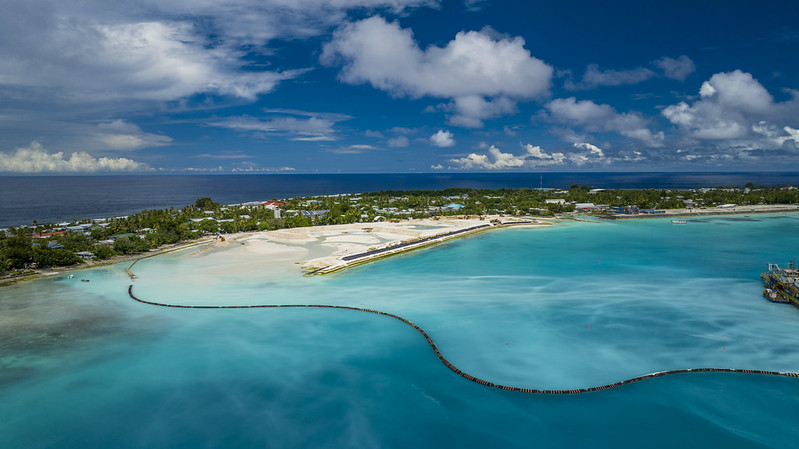
A small group of government leaders, climate negotiators and heads of development banks and climate funds took a trip to Tuvalu’s Funafuti atoll on Tuesday morning, travelling by road over land just 10-20 metres wide to visit a project that is building barriers to keep the sea from the land.
They then flew to Fiji for the pre-COP summit, where several Pacific leaders said they had been let down by the insufficient quantity, bad terms and slow speed of international finance to help them adapt to a warming climate that is bringing higher oceans, drought and more powerful storms to their shores.
“Right now, our islands are like a canoe that has been rammed by a massive foreign ship. Our canoe is taking on water, we are sinking, and what is the world’s response?” asked Palau’s President Surangel Whipps Jr.
“They hand us a tiny patch to cover a gaping hole,” he continued, “but the bureaucratic process just to receive that patch is so slow that the water fills the hole while we wait. Then to rebuild the vessel so that we can survive the next storm, we are offered loans, debt that adds weight to a sinking boat packaged in red tape so thick we can barely access it. And while we wait, the water continues to fill.”
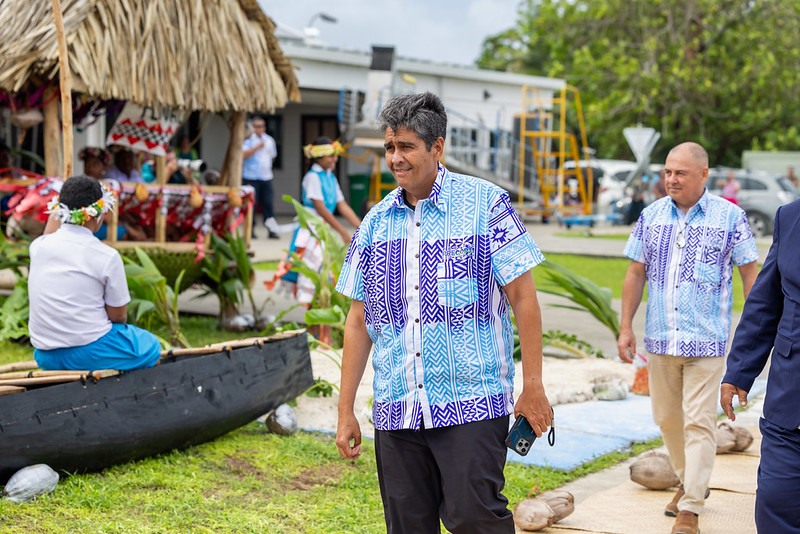
Pacific leaders and Australia called again on governments to invest in the new Pacific Resilience Facility (PRF), which has been designed by the Pacific Islands Forum and is seeking $500 million in investments by COP31 in November.
It has around $180 million so far, but did not receive additional pledges during the UN General Assembly in New York. The PRF aims to invest to generate annual returns which it can give to projects like water tanks for drought-hit communities.
Witnessing sea level rise
The annual pre-COP gathering is usually a low-profile technical meeting of climate negotiators. But this year, Australia – which is the president of negotiations at COP31 – partnered with the Pacific to introduce a “leaders segment” in an attempt to shine a spotlight on climate issues affecting the region.
Fourteen government leaders – from Australia, Timor-Leste, Mauritius and the Pacific – made the trip. They were joined by the European Union’s climate commissioner Wopke Hoekstra, the heads of the Green Climate Fund and the Asian Development Bank and former Australian prime minister Julia Gillard.
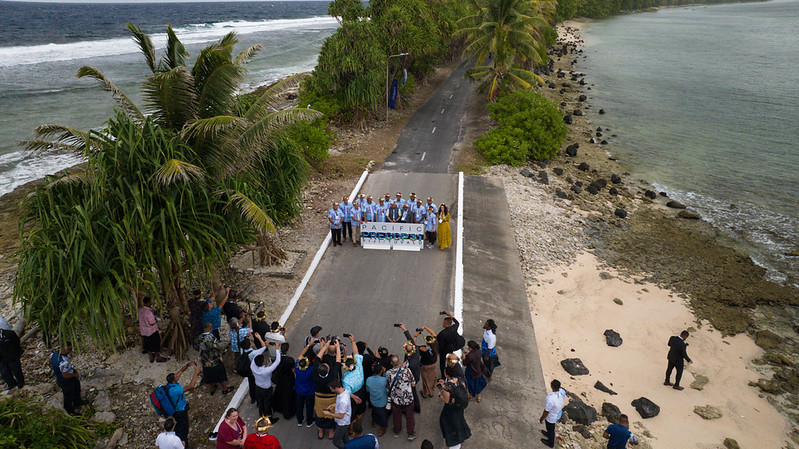
On their return to Fiji, Solomon Islands Prime Minister Matthew Wale told the pre-COP leaders roundtable that the sea level rise they had witnessed was personal for him.
“Tuvalu was not just a site visit for me. I saw the story of my own saltwater people,” he said, adding that he, his daughter and his grandfather had lost their houses to sea level rise and that three-quarters of his electorate live on land that will be underwater in the next 30 years.
From the other side of the world, Antigua and Barbuda’s environment minister Michael Joseph said Tuvalu’s problems felt similar to those of his own Caribbean islands. “I saw vulnerable communities… just metres from the sea and people determined to remain on their land, preserve their culture and way of life,” he said.
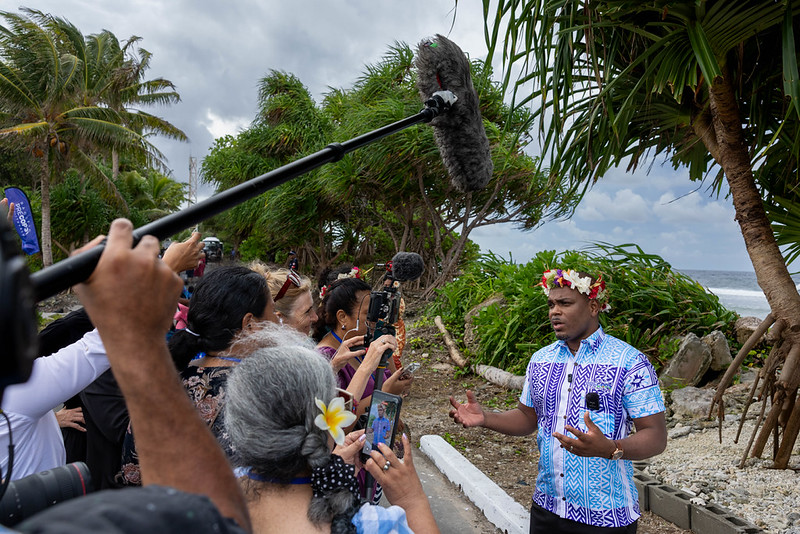
A group of Fijian schoolchildren told the leaders it was not just sea level rise the Pacific struggles with but also heatwaves, droughts and storms, which worry their families and prevent them from learning.
Climate finance red-tape
Several Pacific leaders criticised the world’s leaders for not doing enough to combat climate change. Cook Islands Prime Minister Mark Brown expressed disappointment that only two non-Pacific leaders had come to the pre-COP, a fact Australian media widely picked up on to label the event a flop and question its A$20 million (US$14m) price tag.
“We’ve heard a lot of numbers these last two days,” Brown said. “Let me share one of my own. More than 50 invitations extended to world leaders… to see for themselves what high emissions are doing to our nations and our ocean – an ocean that covers nearly one-third of the Earth’s surface.”
-
Pacific islands seek backing for new regional fund ahead of COP31
Pacific leaders will appeal for pledges to a new regional fund designed to swiftly channel climate finance to local communities -
The Pacific made history in the courts – now we must do it in the negotiations
Legal clarity alone will not lead to reduced emissions, more finance or stronger national climate plans – political will is key to meeting states’ obligations -
Civil servants warn fossil fuel exploration could harm New Zealand’s climate reputation
Advice to politicians says revoking a ban on oil and gas drilling could damage relations with Pacific neighbours and risk lawsuits
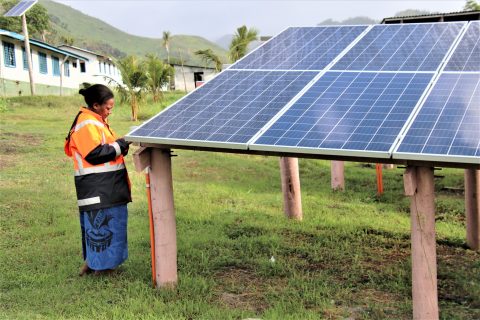


He called for more climate finance for the Pacific, asking “if the world is prepared to assess our suitability for climate finance, why is it not equally prepared to scrutinise whether those responsible for delivering it are meeting their obligations?”
Like Palau’s president Whipps, Naoero’s President David Adeang criticised the red tape that is hindering access to climate finance as well as a lack of money, complaining especially about “complicated procedures, heavy reporting, delays in approval and disbursement”.
Adeang added that “the way we assess vulnerability matters”, adding that it should be measured by more than income. Naoero, for example, is classified by the World Bank as high-income, restricting which climate finance it is eligible for.
Action plan to improve access
On Thursday, the Australian government will present a statement and action plan on improving access to climate finance for small island developing states and least developed countries, which it is asking other countries and organisations to endorse.
The statement addresses some of these Pacific complaints as well as acknowledging that progress has already been made on simplifying access by multilateral development banks and climate funds.
In Fiji, Asian Development Bank head Masato Kanda said his institution is “tailoring our finance and operations to island realities” because “your children and their children should be able to grow old in the countries their ancestors have called home for millennia”.
The executive director of the Green Climate Fund (GCF), Mafalda Duarte, said that the GCF-backed coastal adaptation project leaders visited in Tuvalu shows that “climate finance works” although – as the project took eight years to implement – “it takes time, and therefore we have no time to waste”.
Australia calls for optimism
While Pacific leaders expressed concern that the world is set to blast past its agreed 1.5C warming limit, endangering their nations, Australia’s Prime Minister Anthony Albanese called for “optimism”. “If people think there is no hope, then they will not strive to get the change that we need,” he said.
He said that when he attended his first COP in 2005, Australia’s renewable energy target was 2%. Its target is now 82% renewable electricity by 2030