



- What timeline options were delegates debating?
- How did the timeline discussions unfold?
- What were the main points of disagreement?
- Why is the IPCC in a ‘serious funding crisis’?
- How have scientists reacted?
- What other issues remain unresolved?
- How are the IPCC AR7 reports progressing?
- How might the IPCC use AI and enhance gender inclusivity?

Picture this: The lush rice fields of South and Southeast Asia are withering away due to prolonged droughts, causing a significant drop in rice yields.
In a bid to prioritise their own citizens’ needs, several countries make the difficult decision to either restrict or ban rice exports entirely.
The domino effect is swift. Countries far from these drought-stricken areas, relying on rice imports, are hit with soaring prices and food scarcities.
World Bank controversy sends loss and damage talks into overtime
Such a disruption, caused by weather extremes,exemplifies a transboundary climate risk. These risks don’t respect national borders.
They ripple across continents, creating a cascade of global repercussions. And this isn’t a mere hypothetical situation.
Back in 2008, this exact scenario unfolded, leading to hunger and food riots in West African countries that heavily depend on rice imports.
Global goal on adaptation
At Cop28, government negotiators are expected to approve a framework to operationalise the Paris Agreement’s global goal on adaptation (GGA) to climate threats like this.
It will do this by enhancing adaptive capacity, strengthening resilience and reducing vulnerability, and thus ensuring an adequate adaptation response and contributing to sustainable development.
The Paris Agreement clearly identifies adaptation as a priority on par with emissions-reduction, yet tracking progress towards the adaptation goal has posed “methodological, empirical, conceptual and political challenges”, as noted by the Adaptation Committee in 2021.
Climate diplomats pay tribute to Pete Betts, EU negotiator who helped land Paris Agreement
The two-year Glasgow–Sharm el-Sheikh work programme on the global goal on adaptation was agreed at Cio26 to address these challenges.
The work programme is expected to present a draft framework for approval at COP28. One issue that several Parties, country groups and observer organizations have sought to call attention to is the need to consider transboundary climate risks across the adaptation cycle and in adaptation support, along with risks arising at the local and national levels.
Such an approach would reflect the spirit of the Paris Agreement, which recognizes adaptation as global challenge with local, subnational, national, regional and international dimensions.
Transboundary climate risks – which arise when countries share natural resources (e.g. a river basin) or are connected through trade or the movement of people or finance – highlight the importance of international cooperation to build global resilience.
Small islands struggle to get help from UN’s flagship climate fund
The framework to be approved in Dubai thus presents an opportunity to enhance the world’s understanding of the complexity of climate risk, and to bring that perspective to the global stocktake and to future discussions on adaptation finance and capacity-building.
It is also a chance to send a strong message about the need for countries to work together to find adaptation solutions that truly reduce climate risks, and don’t simply shift them.
In a new Adaptation Without Borders discussion brief, we identify entry points for integrating transboundary climate risks in the framework.
Recognising that key decisions about the framework have yet to be made, and different governments and negotiating groups have different priorities, we considered a range of options, taking into account the stages of the adaptation cycle and themes to be covered by the framework.
Our main message is that it’s time to address transboundary climate risks at the highest levels of global climate cooperation, recognizing them as a vital aspect of global adaptation efforts.
For Cop28, this means:
- Including an overarching statement on the specific need to build global resilience to transboundary climate risks in the decision on the GGA;
- Integrating transboundary climate risks in the GGA framework’s articulation of each stage of the adaptation cycle – impact, vulnerability and risk assessment; planning; implementation; and monitoring, evaluation and learning; in the cross-cutting discussion on means of implementation, and in addressing the themes covered by the framework; and
- Adopting specific targets and indicators on transboundary climate risks and cross-border collaboration, as these are developed.
A detailed GGA framework with clearly articulated targets and indicators would provide a strong foundation for the global stocktake and for efforts to accelerate and scale up action to build resilience to climate risks at all levels.
Agreeing on the details will take time, however, and the work is expected to continue after Cop28. Explicitly addressing transboundary risks in the Dubai decision is thus an essential first step. Ideally, this would be done in two ways:
- Recognising that countries face climate risks not only at the local and national levels, but also – through shared resources, trade, and the movement of people and finance – at the regional and global scales, and enhanced dialogue and cooperation are needed to ensure effective adaptation that is equitable and inclusive and protects the most vulnerable people.
- Including a specific call for follow-on work on the GGA to consider transboundary risks along with local and national-level risks, with a view to enhancing cooperation at all stages of the adaptation cycle and across the themes covered by the GGA framework.
In anticipation of a more detailed framework, we examined how transboundary climate risks could be addressed at each stage of the adaptation cycle.
China’s Belt and Road gets ‘green’ reboot and spending boost
We used sample targets, such as “impact, vulnerability and risk assessments account for transboundary climate risks” and “adaptation policies and planning instruments include measures that aim to strengthen resilience to transboundary climate risks,” and potential indicators. We also stressed the need to provide additional resources and initiate new partnerships to tackle these risks.
The dialogue initiated by the Glasgow–Sharm el-Sheikh work programme has already encouraged the Parties to think more deeply about what it means to ensure “an adequate adaptation response” to the global climate crisis.
The GGA framework that is approved in Dubai will not be the end of this process, but the messages it sends still matter profoundly for incentivizing and informing future adaptation policies. It is thus essential that the framework explicitly address the need to assess and adapt to transboundary climate risks.
Richard Klein is a Senior Research Fellow at the Stockholm Environment Institute and leads the team “International Climate Risk and Adaptation”
The post At Cop28, neighbouring nations must work together to tackle their shared climate threats appeared first on Climate Home News.
https://www.climatechangenews.com/2023/10/26/at-cop28-neighbouring-nations-must-work-together-agaisnt-climate-threats/
Continue Reading
Three countries have been named by the Paris Agreement’s compliance committee for failing to submit a nationally determined contribution (NDC) and repeatedly snubbing offers of help with their climate plans.
After months of internal debate over whether to identify serial non-responders, the Paris Agreement’s Implementation and Compliance Committee (PAICC) named the three countries which have failed to engage with it over their NDCs on Friday.
It named Democratic Republic of Congo, Senegal and North Korea in a footnote of its annual report, adding that it decided to name them “with a view to facilitating engagement”, adding that representatives of the three nations had been invited to its meeting in early 2027 “with the purpose of identifying any challenges and constraints”.
“The Committee noted the importance of Parties engaging with the Committee in a timely manner, while noting that some delays may be due to the national capabilities and circumstances of the Parties”, the report said.
-
Under US pressure, World Bank says it will back gas “where appropriate”
The US wants the World Bank to expand its gas support while climate campaigners are pushing for it to end – its head spoke this week of limited backing for the fossil fuel -
IPCC scientists vow to press on with climate reports despite political deadlock
After governments again failed to agree a timeline, nearly 120 IPCC authors pledged to complete their assessment on time and with full scientific rigour -
Paris Agreement committee snubbed over missing NDC climate plans
Many governments have still not submitted a nationally determined contribution to the UN, breaching a key requirement of the Paris Agreement
In July, PAICC said 12 countries had ignored its repeated attempts to discuss why they had not published an NDC as required every five years under the 2015 Paris accord.
Members of the committee had been divided over whether to name them, but at a September meeting decided to do so in their annual report to the annual climate COP summit.
By the time the report was published on Friday, only Congo, Senegal and North Korea “had not communicated an NDC or submitted a [Biennial Transparency Report] and had not yet responded to any of the Committee’s notifications, despite several reminders issued by the Committee in this regard”.
Rainforest and renewable energy ambitions
The silence from Congo and Senegal is notable because the former is home to much of the Congo Basin rainforest while the latter has sought billions of dollars in climate finance to support its renewable energy ambitions.
After Brazil, Congo has more rainforest than any country in the world. This forest, and the country’s peatlands, absorb huge amounts of greenhouse gas but are fast being lost to expanding farmland, charcoal production, logging and mining.
Senegal signed a Just Energy Transition Partnership with Canada and wealthy European nations in 2023, to help it meet its renewable energy targets under the-then government of Macky Sall. It was chair of the Least Developed Countries group between January 2022 and December 2023.

Tejas Rao, who is researching the PAICC as part of a doctoral thesis at Cambridge University, said the governments of the three countries should engage with the committee.
“Engagement costs these governments very little and the committee has shown it will listen,” he said.
“Silence leaves the committee with no basis to help, and it leaves the [governments] exposed to the narrative that they are simply disengaged,” he told Climate Home News.
Paris Agreement requirement
The 2015 Paris Agreement requires all parties to publish an NDC every five years outlining their emissions reduction targets, with each plan meant to be more ambitious than the country’s last NDC.
The latest set – the third round of plans, with new targets for 2035 – was due in February 2025. While most countries missed this deadline, all but around 30 – mostly small emitters but including Egypt, Vietnam and Argentina – have now submitted them.
Over the year, the PAICC – which is made up of government climate officials from developed and developing countries – has been communicating with governments that have not submitted NDCs and trying to overcome barriers to them doing so.
Some nations have cited exceptional circumstances as the reason for not submitting an NDC, a process that requires a significant amount of work in tracking emissions and consulting on how to curb them across the economy. For example, a letter from a Sudanese official to the PAICC, seen by Climate Home News, said that the country’s civil war had led to the suspension of its NDC preparation.
-
IPCC scientists vow to press on with climate reports despite political deadlock
After governments again failed to agree a timeline, nearly 120 IPCC authors pledged to complete their assessment on time and with full scientific rigour -
Under US pressure, World Bank says it will back gas “where appropriate”
The US wants the World Bank to expand its gas support while climate campaigners are pushing for it to end – its head spoke this week of limited backing for the fossil fuel -
Who shapes climate science? The equity question facing the IPCC
Early completion of the next global climate science assessment reports risks excluding research from the Global South, which is key to ensuring the findings are fair
The US and Iran are not signed up to the Paris Agreement and so do not have active NDCs, nor does Taiwan, which is not a UN member state.
Rao said that because the PAICC is “facilitative and non-punitive”, naming the countries “is meant to open a door, not close one – the invited consultation is the point”.
“In recent months, governments that explained their constraints, whether capacity, finance or domestic process, have been met with follow-up and support rather than sanction, and the number of silent governments has fallen sharply,” Rao said.
The post Paris Agreement committee names three countries snubbing it over NDCs appeared first on Climate Home News.
Paris Agreement committee names three countries snubbing it over NDCs
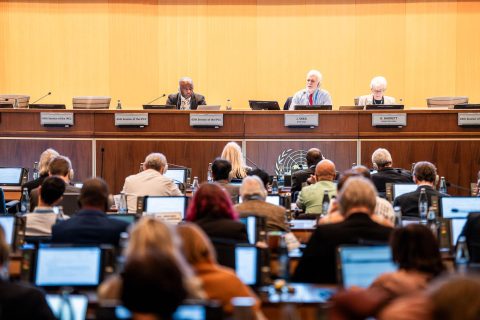
Countries have failed – for the sixth time running – to agree on the timeline for publishing the Intergovernmental Panel on Climate Change’s (IPCC) next set of influential reports.
The IPCC’s 65th session (IPCC-65) was seen by many to be the final opportunity for countries to agree on a schedule where its seventh assessment report (AR7) would be published in time for the UN’s second “global stocktake” of climate action.
Before last week’s meeting in Addis Ababa, Ethiopia, IPCC chair Prof Sir Jim Skea had warned that releasing the reports in time for the stocktake in 2028 would depend on a timelines being agreed by the end of 2026.
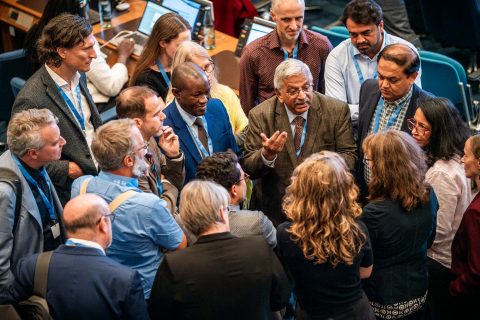
But the week-long meeting descended into fraught disagreements between governments, resulting in Skea “suspending” the talks on Friday evening with no decision made.
Countries were also unable to agree on the IPCC’s budget for the rest of the AR7 cycle, leaving the body with a “serious funding crisis”.
The IPCC has pledged to reconvene the meeting at the “earliest opportunity”; however, it has not yet given an indication of when this will be.
In his concluding remarks, Skea described the Addis Ababa summit as a “profound disappointment” and “among the most difficult IPCC meetings”, according to reporting from the Earth Negotiations Bulletin (ENB).
Some countries have reacted with dismay to the breakdown of negotiations, warning that a failure to have the IPCC’s latest assessments on climate adaptation and mitigation ready for the UN stocktaking exercise would undermine global climate action.