

On Sunday, Mexicans chose Claudia Sheinbaum as their new leader – blazing a trail not just by electing the country’s first female president but also by putting a climate scientist at the helm of a major nation.
Sheinbaum, an energy engineer who worked unpaid on two major reports issued by the Intergovernmental Panel on Climate Change (IPCC), will take control of the world’s 14th biggest economy on December 1, for a term due to last until 2030.
While IPCC climate scientists have been appointed as environment ministers in countries like Chile and Egypt, Climate Home was unable to identify any who have served as a national leader.
As Sheinbaum courted votes across the country of 127 million grappling with a drought, heatwave and smog, she promised to invest nearly $14 billion in clean energy and boost electric buses and trains.
“We have to speed up the promotion of renewable energies,” she told a group of Mexican businessmen in April. “We are working on the national energy plan not only through 2030, but to 2050”.
Deep scepticism
But some fellow Mexican climate scientists and political analysts told Climate Home they were sceptical about whether she will deliver on her green promises.
They criticised her record as mayor of Mexico City, a position she held from 2018 to 2023, and said her climate ambition would be held back by her close ties to current pro-fossil fuel President Andrés Manuel López Obrador (known as AMLO) and her ideological aversion to private-sector energy.
Despite exit, EU seeks to save green reforms to energy investment treaty
Political risk analyst Carlos Ramirez, a partner at Integralia Consultants, told Climate Home that “there is no question that her commitment to climate change is real”, adding “that is a welcome shift from what we have seen so far [under the current government]”.
But, he said, “there will be López Obrador ghosts haunting her – his legacy will mean that she cannot move much from what we are seeing now, and the people who surround him will be watching her closely.”
If she did opt for bigger green changes, “she would have to pay a political price for that,” he noted. “So far she has not given any evidence that she will do so.”
Emissions expert
Sheinbaum grew up in Mexico City with scientists for parents. She signed up to study physics herself, earning undergraduate and masters degrees at the National Autonomous University of Mexico (UNAM).
In the early 1990s, she spent four years at the Lawrence Berkeley National Laboratory in California, doing a PhD on energy emissions and environmental problems in Mexico City’s transport sector before joining UNAM’s staff.
Rich nations meet $100bn climate finance goal – two years late
Following a stint as the environment secretary of then Mexico City Mayor López Obrador, she returned to UNAM and helped write the emissions reduction sections of the flagship IPCC assessment reports in 2007 and 2014. Her research on Mexican manufacturing and cement emissions was cited and – like all IPCC authors – she worked long hours unpaid.
Mexico City Mayor
Sheinbaum then went back into politics with López Obrador’s new left-wing party MORENA and was selected as its candidate for mayor of Mexico City in 2018, a position she held until she resigned last year in order to run for the national presidency.
As mayor, she promoted solar power. But UNAM climate scientist Ruth Cerezo-Mota said she had seen no sign of Sheinbaum attempting to solve the city’s serious air pollution problem.
Another UNAM climate scientist, Xochitl Cruz Núñez, who worked with Sheinbaum on the IPCC’s fifth assessment report, told Climate Home that Sheinbaum’s climate work as mayor was “minimal”.

Greenpeace activists protest with mariachi musicians and a cake with bicycle lanes, outside Mayor Sheinbaum’s office in March 14, 2019. (REUTERS/Henry Romero)
Cruz Núñez criticised the city’s diesel-powered bus system, water scarcity and increased urbanisation under Sheinbaum’s leadership, saying it had caused “uncontrolled” construction in surrounding conservation areas.
AMLO’s legacy
Mexico previously enjoyed a reputation as a front-runner on climate action, passing one of the developing world’s earliest climate change laws in 2012. But some of that progress was reversed during López Obrador’s presidency.
The outgoing president dismantled climate policies and institutions and promoted energy sovereignty through domestic fossil fuel production, putting power back into the hands of state-owned companies: electricity utility CFE and oil and gas giant PEMEX.
His government invested billions of dollars into oil and gas infrastructure, and blocked private investment into renewables. Today, Mexico is one of only two G20 countries without a net zero emissions target and has watered down its 2030 emissions reduction goal.
Sheinbaum became MORENA’s candidate for the presidency largely because of López Obrador’s support for her, winning the national election on Sunday partly thanks to his track record as the country’s most popular modern president.

Lopez Obrador and Sheinbaum before a manifesto presentation on November 20, 2017. (REUTERS/Henry Romero)
Political analyst Ramirez said Sheinbaum’s political alignment with López Obrador hinders the chances of her pursuing more ambitious climate action.
“Sheinbaum is speaking loudly about bringing renewables back into the system but at the same time – and here is where the problems begin – she wants to give continuity to the energy policy of López Obrador,” he said.
“She has a strong ideological view that [state-owned] CFE and PEMEX should lead the energy transition,” he added. “This is a contradiction. I think it will be a very slow process and eventually fail.”
Cruz Núñez noted that Sheinbaum intends to maintain state stewardship over oil and electricity, while mobilising public resources for renewables, but questioned whether this alone could work. “My opinion is that private investment is required if renewable energy is to be introduced at the level needed for Mexico to fulfill its promises under the Paris Agreement,” she added.
Despite her alliance with AMLO, Sheinbaum has disagreed with him in the past. During the Covid-19 pandemic, for example, she promoted mask-wearing, testing and vaccinations in Mexico City while the president played down the risks.
Cruz Núñez expressed hope that, having won the election, Sheinbaum will take advantage of her new independence from López Obrador to establish a clear programme for cutting Mexico’s emissions and adapting to climate change.
“I believe she knows enough about climate change and the need to solve it,” she added.
(Reporting by Daisy Clague, editing by Joe Lo and Megan Rowling)
The post Mexico elects a climate scientist as president – but will politics temper her green ambition? appeared first on Climate Home News.
Mexico elects a climate scientist as president – but will politics temper her green ambition?

Climate Change
Kevin Parker, Hugh Jackman, Tina Arena and over 150 Australian artists sign open letter to save Scott Reef from Woodside gas plans
SYDNEY, Monday 16 November 2026 — More than 150 Australian entertainers and creatives have signed an open letter calling on Federal Environment Minister Murray Watt to reject oil and gas drilling plans at Scott Reef, Australia’s largest oceanic reef system.
- Artists have supplied images for use here
- High res images and footage of Scott Reef can be found here
The open letter to Minister Watt concerns risks to Scott Reef, 270 kilometres from the Kimberley coast of Western Australia, posed by multinational Woodside which plans to drill up to 57 wells for its Browse gas project. The project is forecast to emit 1.6 billion tonnes of climate pollution and risk a catastrophic oil spill in endangered whale migratory pathways.
Australian signatories calling on the government to save Scott Reef include 2026 ARIA nominees Kevin Parker (Tame Impala), Tkay Maidza and G Flip, Hollywood actors Hugh Jackman and Simon Baker, and prolific musicians Tina Arena, Paul Kelly and “Down Under” legends Men at Work.
About the open letter, Australian musician Jessica Mauboy said: “Caring for Country means caring for our oceans and all the life they hold. Places like Scott Reef are precious, and we have a responsibility to protect them for future generations. I’m adding my voice to the call to protect Scott Reef and keep it safe from gas drilling.”
Australian singer-songwriter and ARIA award winner Missy Higgins signed the open letter and said: “Scott Reef is an ancient coral reef off WA’s Kimberley coast, home to endangered whales, vulnerable turtles and hundreds of other marine species. Woodside’s plans to drill up to 57 wells under and around it put this extraordinary place at risk. We need to preserve these beautiful places for our kids. If not now, then when?”
Australian singer-songwriter Sarah Blasko said: “Scott Reef off Western Australia’s Kimberley Coast is not the place for a massive new gas project by Woodside. It’s our responsibility to protect our beautiful reefs and rare marine life. They are, after all, what this country is best known for around the world. If we don’t protect them, what does it say about us to our children and the world?”
Scott Reef supports thousands of species including vulnerable turtles and endangered whales that are particularly threatened by Woodside’s proposal. Greenpeace has nominated Scott Reef for National Heritage listing for its ecological and scientific importance, and the WA Environment Protection Authority (WA EPA) has warned Woodside’s plans could cause “serious, significant and irreversible” harms to the 15-million-year-old ecosystem.
Senior Campaigner at Greenpeace Australia Pacific, Hannah Schuch, said: “I am heartened to see so many Australian artists amplifying the call for a better future, one where places like Scott Reef are rightfully protected from greedy corporate interests.
“Scott Reef is an iconic, irreplaceable piece of Australian nature, and Woodside’s plans to drill 57 toxic wells and turn Scott Reef into an industrialised gas zone risk threatened species and this unique, ancient ecosystem.
“Murray Watt and the Albanese Government have an opportunity to make history and write their legacy: save Scott Reef and stop Woodside’s reckless gas plans. Australia is watching.”
-ENDS-
Media contact
Emma Sangalli on 0431 513 465 or emma.sangalli@greenpeace.org
Efe Baysal leads the Türkiye team of global climate advocacy group 350.org.
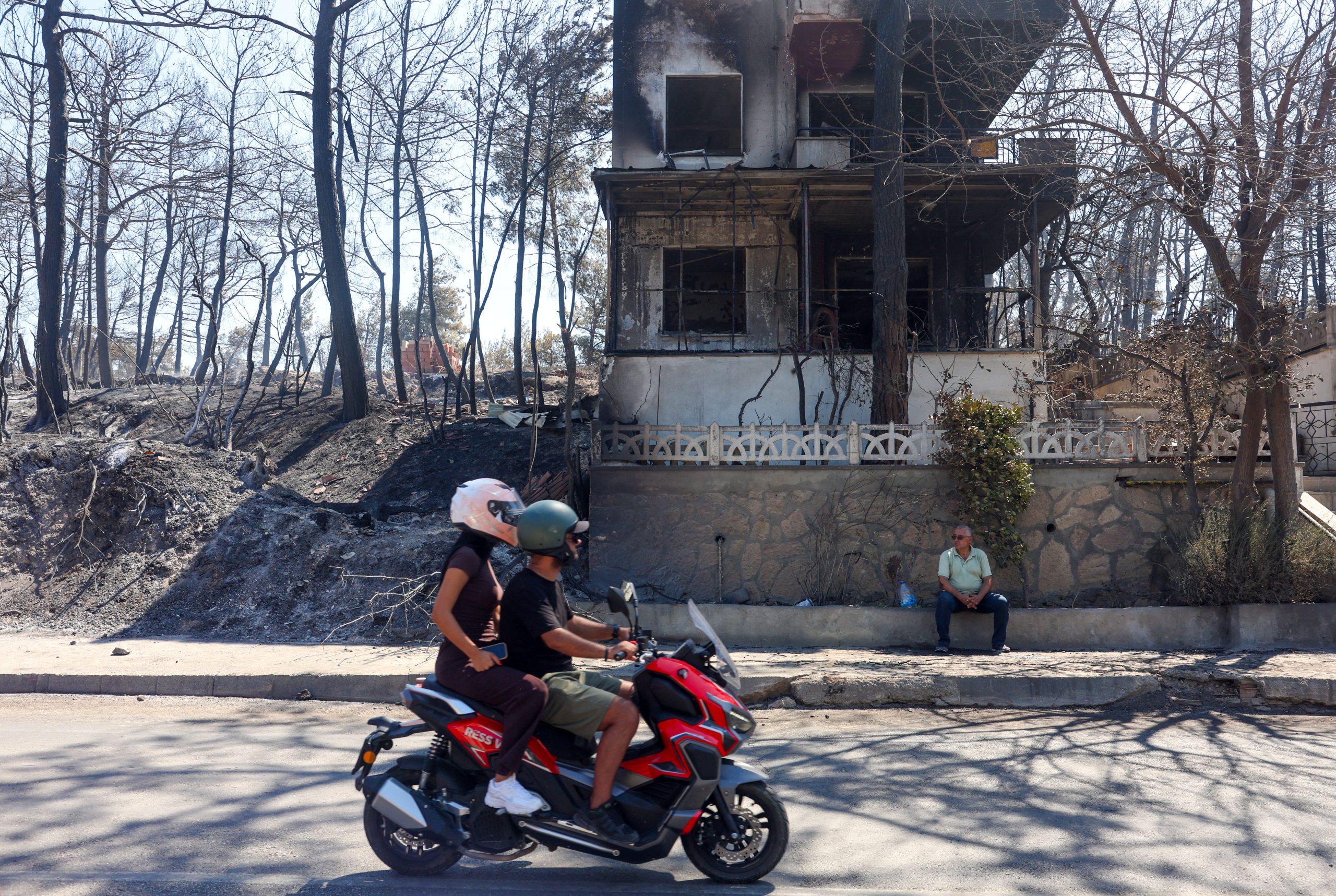
As Türkiye welcomed world leaders in Antalya during the first week of the UN climate summit, few were probably aware that wildfires raged just a few kilometres from the COP31 venue in September, injuring several people and forcing hundreds to flee their homes.
Wildfires are one of the signs of a rapidly heating planet. Prolonged heatwaves and drought create ideal conditions for fires to start and to spread. In the coastal province of Antalya, 8,000 hectares have already been lost to forest fires this year alone.
It is a crucial moment for climate diplomacy. This year we have seen the human cost and mounting economic damage of climate impacts, from Europe’s heatwaves to Nepal’s deadly glacial floods. Scientists warn that the world will breach the 1.5C temperature limit within a few years.
-
Turkish giant sponsoring COP31 cut climate goals then cashed in on oil boom
COP31 sponsors should be screened for “climate integrity”. Yet Koç Holding has become a top partner while its oil refiner runs flat out and its climate targets slip -
Africa wants adaptation finance on COP31 agenda, raising risk of a fight
The African Group wants dedicated space on tripling adaptation finance, the Green Climate Fund and trade, setting up a possible clash -
European nations signal support for fossil fuel roadmap, says COP30 president
André Corrêa do Lago told Climate Home News that it’s up to other nations to decide how the fossil fuel and deforestation roadmaps are used

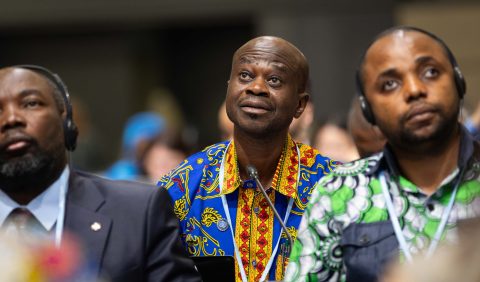

The stakes have never been higher as the Turkish government takes its turn hosting the Conference of the Parties (COP) to the UN climate convention. Türkiye has a lot riding on the summit, and not only its ability to stage one. Many in the country hope COP31 will put a spotlight on its own climate and environmental crisis.
Extreme weather in Türkiye is becoming far more frequent. In 2011, the country recorded more than 300 extreme weather events. By 2023, according to the Turkish State Meteorological Service, the figure had reached almost 1,500.
Dried-up lakes and sinkholes
For a semi-arid country, drought is a particular threat. Half of Türkiye’s population is at risk of water shortages by 2030, and last year brought the lowest rainfall in 61 years.
Perhaps the starkest sign of this is the alarming rate at which Türkiye’s lakes are vanishing. Three-quarters of its lakes have dried up in the past 50 years, many of them just in the last decade, marking the loss of ecological systems that have sustained generations of farmers and fishermen.
An example is Lake Iznik, the country’s fifth-largest natural lake and the site of the Byzantine Basilica of Saint Neophytos, a fifth-century site whose ruins were first discovered underwater. When Pope Leo visited last year, they stood exposed on dry land as the shoreline had dramatically retreated.
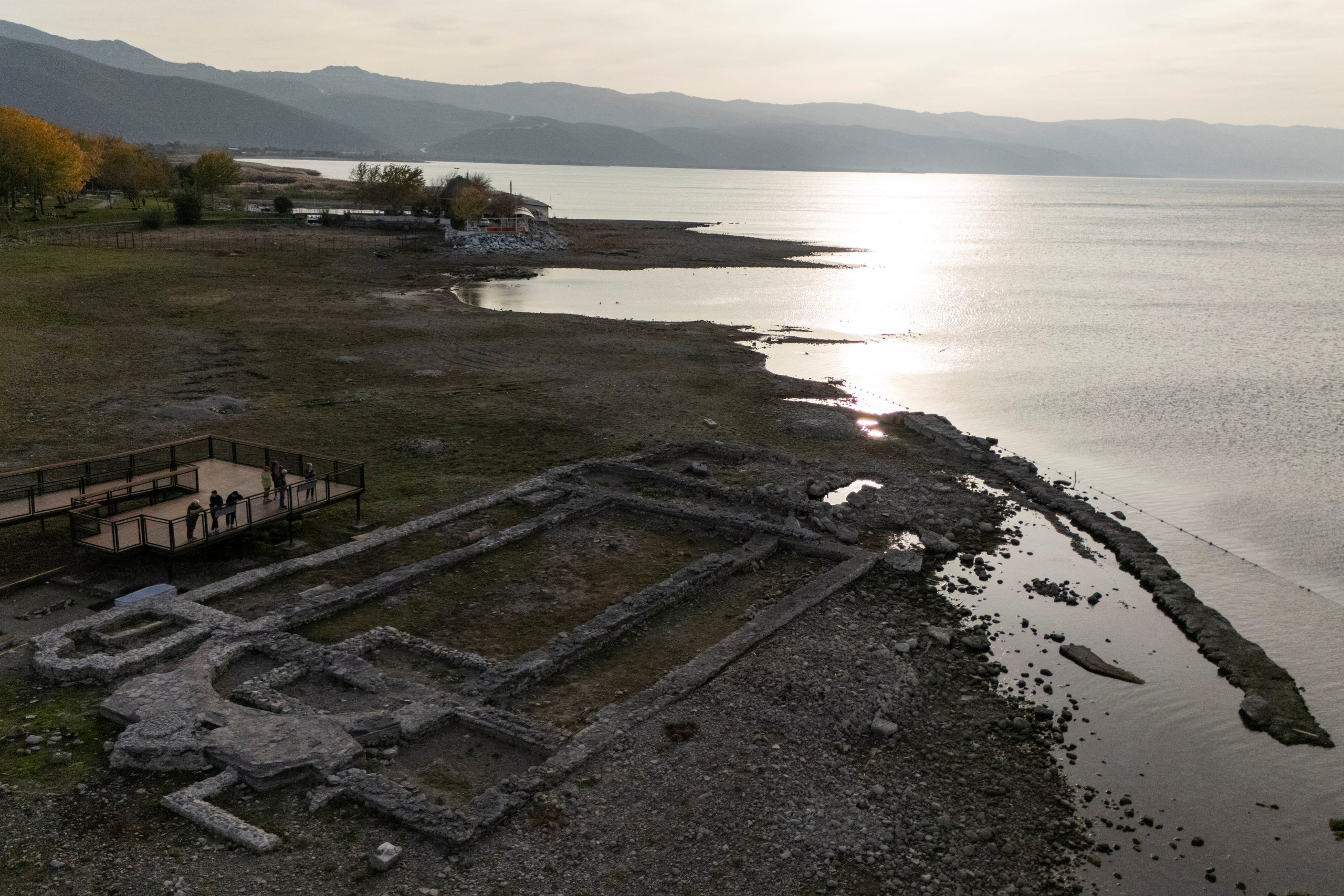
Locals fear that due to drought, as well as the pumping of large volumes of water by big agricultural companies, Lake Iznik will disappear. As Iznik recedes, the coastal water wells that irrigate olive groves have run dry.
“Everyone stands over their phones waiting for weather forecasts, wondering, ‘Will it rain today?’,” one 65-year-old olive farmer told me. “It used to snow waist-deep, and roads would remain closed for weeks. Today, children have forgotten what snow is.”
Agricultural stress isn’t limited to Iznik. In 2025, Türkiye’s crop and field production fell by 9%, while fruits, beverage and spice plants lost nearly a third of their output. According to the agriculture ministry, drought and frost were the main causes.
Visible scars of climate crisis
Sinkholes are also rapidly increasing, now numbering more than 1,000. Most of them are located in the Konya Basin, where groundwater levels fall by about 2 metres a year due to reduced rainfall and excessive extraction.
Türkiye’s sinkholes aren’t just a hazard to human life and infrastructure. They’re a graphic representation of how two human-made phenomena – groundwater exploitation and the climate crisis – combine to weaken the land, causing it to collapse upon itself.
Burnt forests, disappearing lakes, gaping sinkholes: many of these reminders of the climate crisis will remain hidden from visitors in Antalya this month. But the clamour for action will be on full display.
Since last year’s climate summit, a growing number of countries have rallied around a way forward: roadmaps to transition away from fossil fuels. More than just emission-reduction targets, these transition roadmaps are concrete plans on how to end dependence on fossil fuels, the main driver of climate change, in a just and orderly way.
As the Hormuz crisis has shown, not having to rely on oil and gas is no longer just about saving future generations from climate catastrophe – it’s also about saving next month’s household budget.
Electrification milestone
Türkiye is highly dependent on imported fossil fuels, spending an average of $42 billion annually on oil, gas, and coal over the last 10 years. The Hormuz crisis has increased these costs, with Turkish households and businesses losing an additional $3 billion in just two months’ worth of fossil fuel price spikes.
In launching the “35 by 35” electrification target, Türkiye’s COP President Murat Kurum acknowledged the need to protect citizens from high energy prices. This new global target for electricity to meet 35% of final energy demand by 2035 is shaping up to be one of the milestones of this year’s climate talks.
It’s a good target because electrifying transport, buildings and industry significantly cuts not just pollution, but daily expenses too. But electrification alone is not enough. Without an accompanying fossil fuel phase-out, electrification won’t be able to stop further climate and economic catastrophe.
Comment: Turkey must make COP31 a turning point for global climate action
A case in point is Türkiye’s new National Energy Plan 2040. The plan’s emphasis on electrification and the expansion of renewable energy capacity is welcome – these are positive steps that align with the messages coming from Türkiye’s COP31 presidency. However, for the plan to represent genuinely ambitious climate action, it must include a clear commitment and timeline to phase out coal.
Türkiye still relies on mostly imported coal for around one-third of its energy. A 350.org report has revealed that the coal trade between Türkiye and Australia – with which it shares the COP31 presidency – has been responsible for roughly 75 million tonnes of carbon emissions since the Paris Agreement was signed. Neither country has a coal phase-out date.
COP31 is an opportunity to change course. The Turkish government has made good progress on expanding solar and wind energy. In 2025, Türkiye surpassed its solar target as capacity had more than doubled in recent years. It must now build on this progress.
The world will be watching Türkiye as the climate summit heads into its second week. The Turkish government must ensure that global leaders implement real solutions that won’t leave its own citizens high and dry.
The post Behind the COP31 fanfare, Türkiye is worried about water appeared first on Climate Home News.