

Japan’s exports of clean energy technologies could more than double by 2035 as Asia accelerates its electrification, according to energy think-tank Ember, but it urged the government to abandon policies that support fossil fuels to maximise its clean-tech potential.
The nation’s exports of batteries, electric vehicles (EVs) and motors, heat pumps and grid equipment could be even higher with the right policies in place to ensure it remains competitive and fully embraces the market for clean energy technologies, Ember’s analysis found.
Rapid electrification also means the country’s exports of combustion engine cars, engines, hybrid vehicles and other fossil fuel-powered equipment could more than halve by 2035, falling to about $70 billion from $161 billion in 2024 amid faster-than-expected EV adoption in the region.
Ember director Kingsmill Bond said Japan had the potential to become a leader in clean energy technologies due to its strong engineering base and some of the world’s lowest borrowing costs.
“It should be one of the big winners of the electric age,” he said. “Instead, public money is going into cheap fuel, ammonia for coal plants and new gas plants. Every yen spent propping up the old system is a yen not spent building the home market that Japan’s electrotech companies need to compete abroad,” he added.
Japan in the age of electricity
Ember’s analysis is based on its rapid-change scenario, in which clean energy technology exports keep rapidly winning market share. It also assumes that Japan keeps its share of export markets.
Japan is already the world’s fifth-largest exporter of clean-tech goods, following China, Germany, the US and Mexico. In 2024, it exported clean energy technologies worth $44 billion, driven by exports of EVs and grid equipment.
-
COP31 electrification pledge leaves out clean power commitment
Campaigners and experts say the goal’s effectiveness in reducing emissions may be limited unless countries agree to meet it using only clean energy -
COP31 Briefing: What to expect from the Antalya climate summit?
Electrification, the fossil fuel transition, adaptation to rising impacts, climate science and trade are key themes as governments gather for COP31 in Türkiye
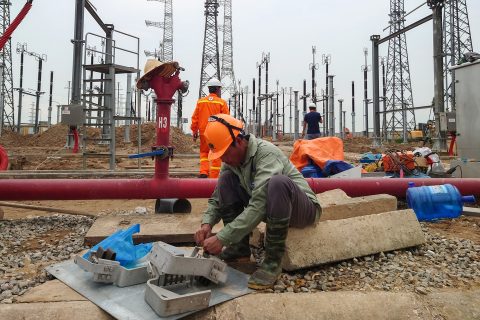

At home, it is also one of the world’s most electrified countries, with electricity supplying 32% of its final energy use, according to the International Energy Agency, meaning Japanese buildings and factories already run on electricity more than those in China, the EU or the US. Yet, Japan’s electrification rate has barely increased in the past decade.
At COP31 in Türkiye this week, a coalition of countries is expected to back a global pledge to increase the share of electricity in final energy consumption to 35% by 2035.
In addition, Japan’s solar and wind potential, including on rooftops and offshore, could generate 13 times the country’s electricity demand every year, according to Ember. Despite this, Japan imports nearly all of the fuel it burns, having almost no fossil fuel reserves.
At the same time, its early manufacturing lead in areas such as batteries and EV drivetrains is slipping away, Ember said.
Falling behind
In Southeast Asia, where Japanese brands have long dominated, the energy supply crisis triggered by the Iran war and the closure of the Strait of Hormuz sped up the uptake of EVs, and Chinese companies are pulling ahead.
In Thailand and Indonesia – two of the region’s largest car markets – more than 85% of EV sales came from Chinese brands in 2025, according to BloombergNEF’s latest EV outlook.

The shift illustrates the rapid transformation of a region which remains highly exposed to fossil fuel imports. Asia holds just 4% of the world’s oil and gas reserves but has become home to three-quarters of its clean-tech factories, according to Ember.
But Japanese carmakers bet on manufacturing hybrid vehicles rather than fully electric ones. Since 2019, the share of Japanese carmakers in global car sales has fallen from 31% to 26%.
“Unless Japan pivots fast to electric cars, it will cede one of its biggest industries to China,” said Sam Butler-Sloss, manager at Ember.
A way forward
Japan’s current energy policies favour fossil fuels and are holding back its potential to deploy electricity technologies, according to Ember.
Since 2022, Japan has spent about $86 billion on fuel and energy-bill subsidies intended to keep prices down, the report found. At the same time, the country has struggled with high electricity prices and slow electrification growth.
Meanwhile, the government has spent public money on technologies that rely on the old fossil-based system such as LNG, hydrogen and carbon capture and storage.
-
COP31 Bulletin Day 1: Agenda settled as COP urged to “supercharge solutions”
An agenda row is averted at the opening session, where the UN climate chief said strong results are needed from the talks to boost “real-world outcomes” -
COP31 Briefing: What to expect from the Antalya climate summit?
Electrification, the fossil fuel transition, adaptation to rising impacts, climate science and trade are key themes as governments gather for COP31 in Türkiye

Ember called on the government to set an electrification target and to respond to the energy crisis with renewable power, EVs and batteries rather than fuel subsidies. It found the government can leverage the country’s industrial strength for producing electric technologies by building up its domestic market.
This could include putting an end date on sales of new petrol cars and coal power generation, providing funding for suppliers and regions to switch to clean power generation, shifting taxes from electricity to fossil fuels, and pivoting public funding to electricity technologies.
Rolling out clean energy technologies across the transport, electricity and heating sectors could also significantly reduce Japan’s dependence on fossil fuel imports.
Noriaki Oba, energy analyst and founder of the Japan-based Post-Oil Strategy Institute, said contributing Japanese technology to Asia’s electrification “would offer Japan a major opportunity for both its industrial competitiveness, as well as its diplomatic and economic security”.
The post Japan urged to ditch fossil fuel support to maximise clean-tech exports appeared first on Climate Home News.
Japan urged to ditch fossil fuel support to maximise clean-tech exports

Climate Change
Pressure builds on Australia to deliver, as Guterres injects fresh momentum for fossil fuel phase out at COP31
ANTALYA, Türkiye, Tuesday 10 November 2026 — Following the launch of the Brazil COP30 Presidency Roadmap which saw a rousing address by outgoing United Nations climate chief Antonio Guterres, who spoke alongside former COP Presidents and John Kerry, Greenpeace Australia Pacific is calling on the Australian government to step up and deliver a concrete national roadmap away from fossil fuels.
UN Secretary General Guterres urged all countries to build concrete national roadmaps for transitioning away from fossil fuels that are aligned with science and with clear timelines and responsibilities. He urged greater cooperation between fossil fuel importing and exporting countries and said that by 2028, every country should be able to show what it has done to cut fossil fuel use of production, and outline what it will do next.
In addition to encouraging all countries to develop national plans, he encouraged the COP31 Presidency of Australia and Türkiye, and future presidencies, to carry forward the work of Brazil in driving the global transition away from fossil fuels.
Shiva Gounden, Head of Pacific at Greenpeace Australia Pacific said: “The success of COP31 will be judged by whether it delivers real action and momentum to phase out fossil fuels. The Pacific and the world need concrete dates and credible plans to deliver roadmaps away from fossil fuels based on the best available science, and a commitment to put people, energy security and the planet ahead of fossil fuel interests.
“Brazil’s determination to push on despite resistance from a handful of fossil fuel producers can be a lesson for Australia as it takes the reins of negotiations. Australia must pick up the baton from Brazil, and lead by example with its own national roadmap away from fossil fuels, including exports.
“Minister Bowen urged us to “show the world that multilateralism works.” He acknowledged the science of overshooting 1.5°C, the non-negotiable survival line for Pacific communities, and the urgent need to return as quickly as possible to reduce the duration and severity of harm. Yet the Australian government continues to greenlight coal and gas, including 38 approvals since it took office in 2022.
“Our planet is on the brink. Communities bearing the brunt of climate disasters and soaring cost of living do not need another meeting where leaders tell us that change is coming — we need leaders that will show us when it will happen, and how it will happen fairly.
“Australia cannot champion the survival of the Pacific while simultaneously exporting our destruction. Australia must step up and deliver practical policies, not paper pledges.”
ENDS
COP31 images and video available here in Greenpeace Media Library
Media contact: Kate O’Callaghan in Antalya (GMT+3) on +61 406 231 892 (Whatsapp/Signal)
Energy and Transport Day at COP31 ironically saw a second morning of horrible traffic jams and over-crowded buses and trams, meaning early events at the venue had to be hastily rescheduled.
This COP has more than 68,500 registered participants, together with another 24,500 workers needing to reach the venue, which is around 25 kilometres from the centre of Antalya.
Once things finally got underway in the halls, the focus was on two main voluntary pushes: transitioning away from fossil fuels (TAFF) and the COP31 Global Electrification Pledge, meant to usher in the “age of electricity”, according to the Turkish presidency.
The pledge sets a goal of raising electricity’s share of final energy consumption from around 23% today to 35% by 2035 (known as 35×35) by electrifying transport, buildings and industry.
“This year’s energy crisis has shocked us out of our complacency and demonstrated the inherent vulnerability of dependence on energy imports. Electrifying the global economy is now essential to boost energy security, cut emissions, and drive economic growth,” COP31 President Murat Kurum said in a statement.
The COP31 presidency is “determined to chart a path forward and use the annual UN summit to build momentum”, he added. But it remains to be seen whether and how the pledge will be incorporated into the final cover decision from Antalya, as some fossil fuel-producing countries are set to oppose any mention of the electricity to meet it coming from clean sources.
Neither is it clear which countries are backing the pledge. Climate Home News understands that no list is expected this week, as Turkiye rallies governments to the cause. Australia and other recent COP host nations are on board, while the European Union co-hosts the first “Electrification Forum” on Tuesday, bringing together governments, institutions, businesses and financiers.
The International Energy Agency (IEA), meanwhile, will lead a Global Electrification Tracking Mechanism to monitor global and regional electrification trends.
The IEA says the 35×35 electrification goal is within reach with strong political backing. But a recent analysis from Climate Action Tracker shows current policies will only lead to a share of 28% for electricity by the deadline.
-
COP31 outcome needs to prioritise transition away from fossil fuels
Many countries are already working on parts of their transition, such as phasing out coal or ending fossil fuel subsidies, with more expected to follow soon -
Developing countries face climate finance deficit as loan payments soar
Repayments on climate loans could overtake new lending by 2036, according to CARE analysis shared exclusively with Climate Home News


On the TAFF front, Brazil’s COP30 presidency held a high-level event to showcase its new global roadmap, which is essentially a toolkit to help countries start planning their transitions away from coal, oil and gas.
Here, UN Secretary-General Antonio Guterres said countries should use the document to build their own concrete national roadmaps including clear timelines, responsibilities and financing needs.
By the next Global Stocktake of national climate plans in 2028, “every country should be able to show what it has done to cut fossil fuel use or production, what it will do next, and how it will measure progress,” he said, in a challenge to governments.
He added that it is “long past time to stop treating the transition away from fossil fuels as taboo or intractable” and called on COP31 to “move from discussing the transition to organising it, financing it, and delivering it”.
European nations signal support for fossil fuel roadmap, says COP30 president
As with the electrification pledge, the TAFF process remains a pick and choose effort. Some fossil fuel-producing nations are adamant it will stay that way and are likely to resist any attempt to anchor the roadmap in the cover decision or other negotiated outcomes at COP31.
Nonetheless, energy security concerns are expected to lead to an almost 60% increase in renewable capacity growth from 2026-2031 compared to the previous six years, according to the IEA, with solar power accounting for three quarters of that growth.
Declarations aim to electrify shipping and rooftops
One sector that is tricky to electrify – mainly because of a lack of chargers in the middle of the ocean – is maritime transport.
But a newly formed group of ports, shippers, campaign groups and think-tanks want electricity to be used where it can in the sector – electrifying ships on short routes like ferries, plugging ships into the electricity grid when they’re in port and electrifying the machines that handle ships’ cargo.
While the COP31 presidency has proposed a 35% by 2035 goal, this group said on Tuesday they want electricity’s share of final energy demand in shipping to rise to a more modest 20% by 2035 – up from a negligible amount today. The Danish Port of Esbjerg and Californian Port of Long Beach are among the backers of the Maritime Electrification Breakthrough Goal.
Maritime electrification projects could get a huge boost from the International Maritime Organisation’s Net Zero Fund, if it is agreed at intergovernmental talks in London starting later this month.

Also on Energy Day at COP31, a group of countries including Australia, Bangladesh, Kenya, Nigeria and Vanuatu signed onto the Global Rooftop Solar Declaration, an Australia-led initiative to try and double the number of solar-powered households to 300 million by 2030.
It’s not clear exactly how many countries are backing it. But the presidents of Palau and Pakistan also joined leaders to discuss the initiative while Indonesia’s state-operated utility PT PLN signed up too.
Australia’s climate minister Chris Bowen said in a statement: “Many countries have the sunshine, the space and the demand, but lack the finance, infrastructure and workforce needed to unlock this opportunity. This declaration is about changing that.”
Coal phase-out partnerships offer emerging economies early help
A multilateral initiative launched in Antalya aims to tackle one of the key demands from coal-producing countries in the Global South: help to access the existing pool of funding for transitioning away from fossil fuels.
Through “Coal Transition Partnerships”, the Powering Past Coal Alliance (PPCA) – a group of governments and other actors launched in 2017 – is seeking to unlock more than $23 billion by supporting developing countries to draw up their first phase-out plans.
Backers of the initiative include the Asian Development Bank (ADB), the Climate Investment Funds (CIF), the European Bank for Reconstruction and Development (EBRD) and climate research think-tanks like Rocky Mountain Institute (RMI) and TransitionZero.
Julia Skorupska, head of the PPCA secretariat, told Climate Home News in Antalya that the early interventions could help developing countries access larger financial mechanisms along the lines of the Just Energy Transition Partnerships (JETPs), which are working to help several developing countries phase out their coal fleets.
She added that countries are required to have done “a lot of work” before applying for transition funding, including having investment plans and a portfolio of projects. “For us that feels like a gap,” she said.
She added that the initiative has received “a lot of interest” and is meant to enable early-stage planning in coal-dependent emerging economies such as Kazakhstan, Indonesia and Pakistan.
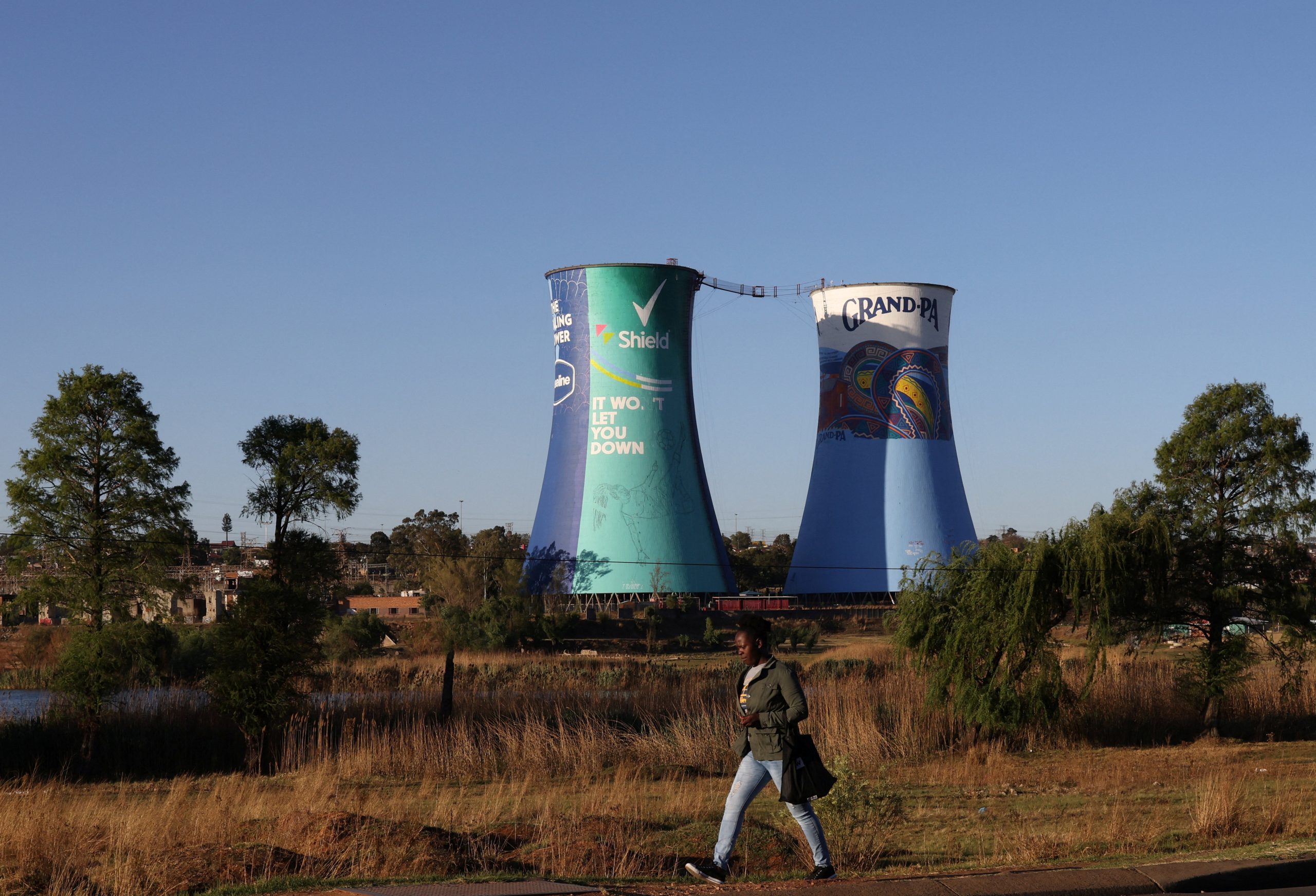
By the time of the next Global Stocktake – the UN’s five-year review of climate progress – in 2028, the PPCA aims to be supporting ten of the world’s most coal-dependent countries. These include Indonesia, Vietnam, India and South Africa, according to the International Energy Agency (IEA).
Farah Heliantina, energy transition official at Indonesia’s Ministry of Economic Affairs, said in a statement that the country’s experience “has taught us how challenging this transition can be”, as uncertainty in global fossil fuel markets threatens energy security at home.
Finance for the transition away from fossil fuels has proven difficult to channel effectively. At COP26 in Glasgow in 2021, South Africa was the first country to announce an $8.5bn JETP – funded by a group of donor countries including the UK, Germany and France – which included projects like early power plant retirements, reskilling workers and building transmission lines for renewable energy. However, by 2025, only around $3.8bn had been allocated.
After the war in Iran disrupted oil and gas markets this year, countries with gas-fired power fleets like China, Korea, Japan, and some European countries have turned to easier-to-source coal generation to keep their economies running, the IEA has highlighted. Skorupska said there’s a risk that new coal investments could become stranded.
“Fundamentally, we want to think about how we can help people overcome those shorter-term challenges to get the real long-term benefits of the transition away from fossil fuels,” she said.
Traffic chaos set to get worse as leaders arrive tomorrow
The first two days of COP31 have seen travel chaos which looks set to get worse tomorrow. As world leaders arrive in town and head to the conference centre, some roads will be closed so that the VIPs can be ferried in past not-so-important delegates. The COP31 presidency is warning of “severe disruptions”.
In an email to all COP participants, it advises getting to the venue by 7am. There will be more public transport than usual between 5-7am, after which time no public transport can leave the area, the email says, without specifying when it will resume.
Route schedules are still being planned and will be shared “as soon as possible”, the COP31 Transport Coordination Center says.
The 42 world leaders causing this heightened level of disruption on Wednesday will speak from 2pm local time. They include Brazil’s recently re-elected President Lula, European Commission President Ursula Von Der Leyen and China’s Vice President Han Zheng. The Turkish and Australian leaders are not on the list, but are expected to speak as COP31 co-hosts.

The speech of Barbados Prime Minister Mia Mottley will be worth a watch as she often uses COPs to unveil interesting and progressive new ideas. So will that – for different reasons – of Saudi energy minister Abdulaziz bin Salman Al Saud, the only minister allowed to speak on a day reserved mainly for presidents and prime ministers.
After COP28 agreed to transition away from fossil fuels in energy systems, he infamously described this as just one item on an â€