

Jacynta Fa’amau is a Pacific campaigner at global grassroots climate movement 350.org and a secretariat member of Pacific Climate Warriors.
The first thing that struck me was the sheer size of Queensland’s Saraji coal mine. Standing at the edge of the enormous pit, my brain scrambled for words as I scanned the earth’s open wound – a whole island could probably fit inside it.
Looking down, I noticed footprints of an emu and a koala, pressed and dried in what was once a puddle – signs of how drought had driven animals in desperate search of water, so dangerously close to the coal trucks and heavy machinery ahead.
Earlier this year, I joined a small group of Pacific Islanders on a journey through the Bowen Basin to learn from First Nations communities battling Australia’s mammoth coal industry. Of the more than 40 coal mines operating in the area, BHP & Mitsubishi Alliance’s Saraji mine is one of the largest. So it came as a painful shock to us when in August, the Australian government approved the mine’s extension just months after our visit.
-
As COP31 co-host, Australia should make its polluters pay for climate damage
With UN climate funds running short on cash, now is the time to start taxing the companies whose emissions are driving harm in the Pacific and other vulnerable parts of the world -
At pre-COP, UN climate chief warns of heat threat to mothers and babies
The spotlight on maternal health came on the first day of the pre-COP31 meeting in Fiji, where Pacific concerns are set to top the agenda as ministers gather for talks

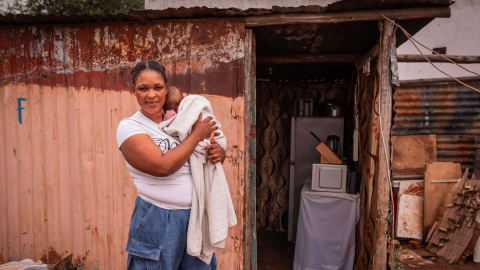
Witnessing coal extraction is devastating. It is bad enough to see what pillaging tonnes of coal can do to a mine’s immediate surroundings: dry creek beds, dwindling wildlife, denuded land. But to know that this coal will be shipped across the ocean, bring air pollution, and eventually lead to the destruction of Pacific islands thousands of miles away is another kind of heartbreak.
Rising ocean waters
I’m an Australian-born Samoan. In 2002, I visited my family home for the first time. My father took me to the rural community where generations of my family were raised. He did not have the words to describe how much has changed since rising ocean waters had taken away almost a third of the beach.
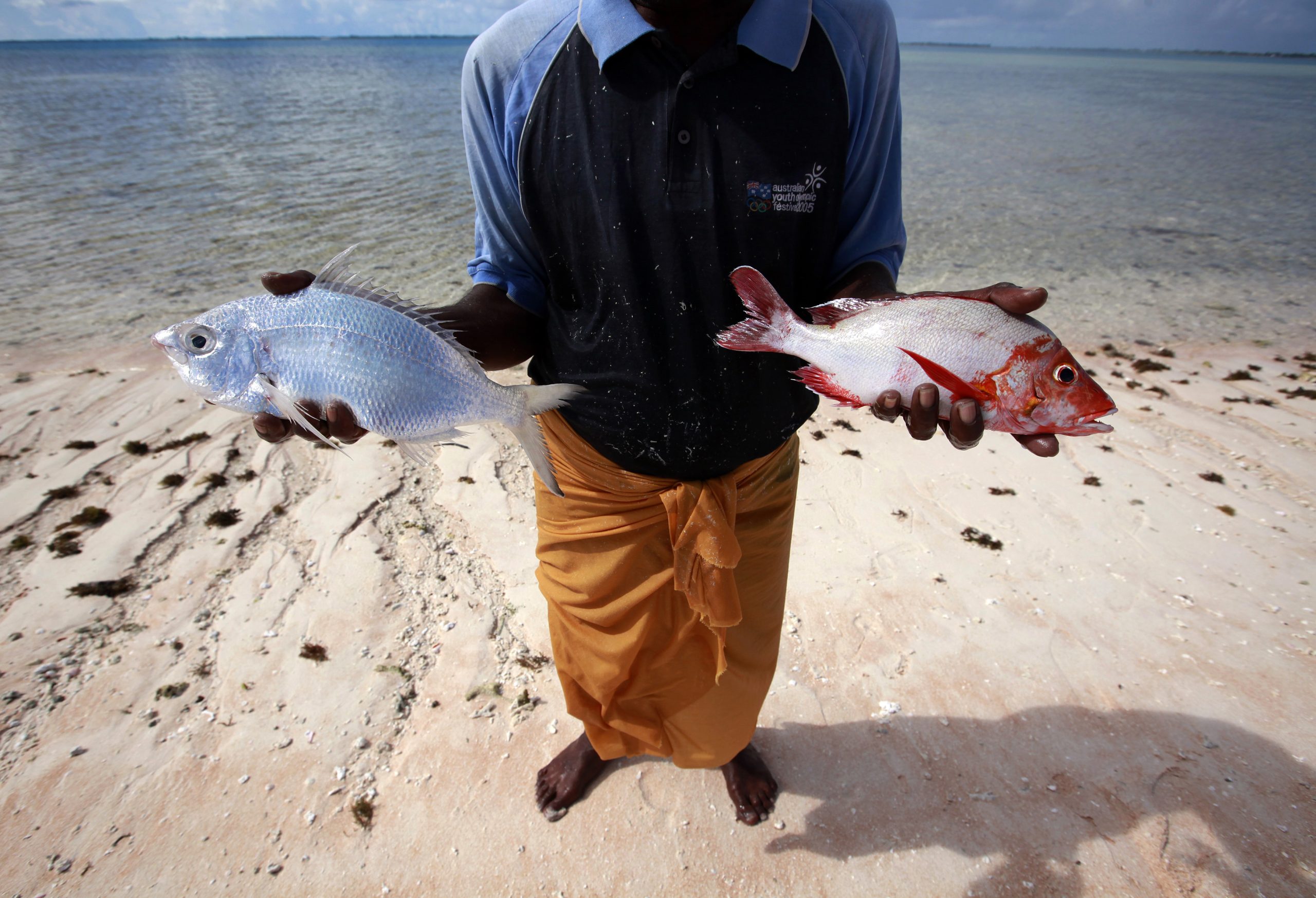
I learned of how we had to relocate my great‑great‑grandparents’ grave to higher ground twice in the last 15 years. Of how my cousins have to paddle out further to sea to catch fish, since warmer waters have destroyed much of the reef. Of how the ocean crashes so close to my uncle’s home that he had to build a new house further away.
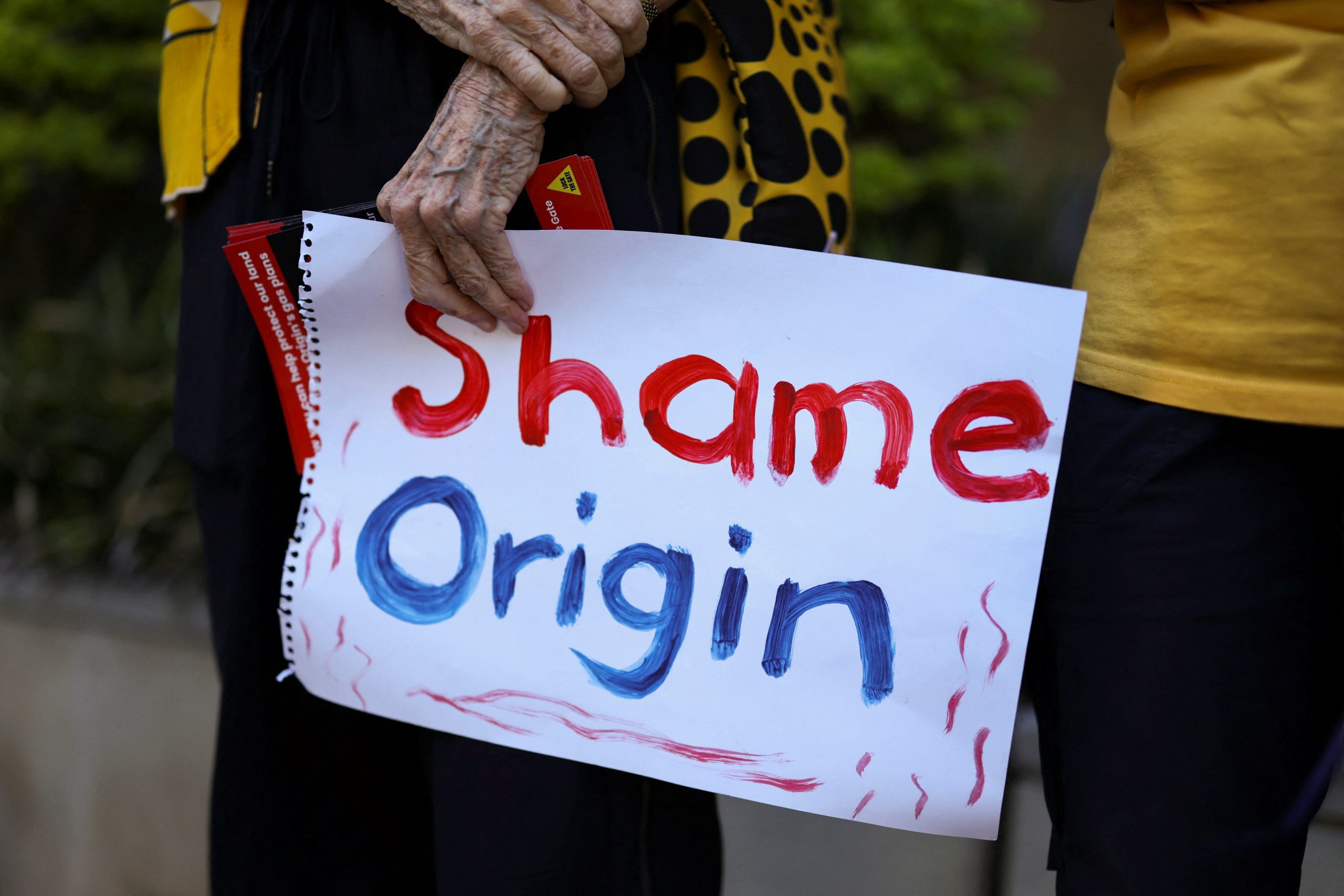
We saw reflections of our own climate destruction in the Pacific when we shared these stories with our First Nations relatives at the edge of the Saraji mine. Murrawah Johnson and Teila Watson, both Birri Gubba and Gangulu women, made clear connections between their struggles and ours. “We don’t get to inherit our land and we don’t get to inherit our traditional roles. We are fighting a war on extinction,” Murrawah said.
Coal extraction devastated their lands and cultures – totems have disappeared, fresh water has become scarce – while the effects of using it have devastated ours. “King tide, cyclones, all the violence that has been enacted on your country and people is because of the violence that has been allowed here, to us and our country,” Teila said.
Wearing the mantle of climate leadership
This week, Australia is assuming the mantle of climate leadership as co-president and head of negotiations of this year’s UN Climate Change Conference, COP31. It will lead on deliberating the summit’s priorities as world leaders and climate negotiators descend on Fiji and Tuvalu for the pre-COP meetings.
Ironically, just days before the pre-COP began, the New South Wales Independent Planning Commission approved the largest-ever coal project the state has seen, set to emit an extra 800 million tonnes of carbon emissions. I joined the Pacific Climate Warriors and other communities in submitting about 4,000 appeals to oppose the project – yet these all fell on deaf ears.
-
Fossil fuel expansion threatens COP31 hosts’ credibility, experts warn
Türkiye and Australia are pushing coal, oil and gas at home with no national timeline for their own fossil fuel phase-out -
This Australian coal community is co-designing its own green future
The mining town of Collie offers a promising example of how to survive – and even thrive – amid the global transition to net-zero emissions
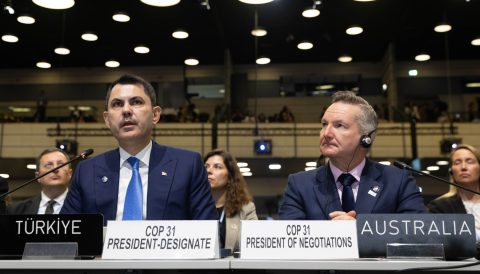

But the fight is not yet over. The project still requires federal approval to proceed, so every promise that Australia makes while at the helm of the climate talks counts. These promises will be measured against actual decisions it makes at home: to either lock us into more decades of climate pollution, or begin shutting down coal and gas once and for all.
Pacific leaders have made it clear that countries must align their policies with the 1.5-degree warming goal, a limit that we already know will be breached within the decade. Any chance of keeping this still within reach requires an immediate end to fossil fuel expansion and concrete plans to phase out existing projects. But success will be an uphill battle if COP31’s own head of negotiations refuses to lead by example.
Australia remains the second-largest coal exporter in the world. It is one of the very few industrialised countries under the Paris Agreement’s Annex I that still has no coal phase-out plan. Since 2022, the Albanese government has approved 37 new, expanded or extended coal, oil and gas projects. It is thus unsurprising that its own mitigation policies have been rated by Climate Action Tracker as “insufficient”, even without factoring in fossil fuel exports and related expansion.
Keeping 1.5C alive
Australia must course-correct to earn the mantle it has been given, especially by Pacific nations that backed the country’s bid for the COP31 co-presidency. As a first step, the government must end all coal expansion and explicitly declare a coal phase-out date. It’s the only way to show that it’s capable of leadership that moves beyond endlessly deliberating the “if”, and starts implementing the “how” of keeping the 1.5C target alive.
The dread I felt staring down at the abyss on the edge of that coal mine months ago still exists. I carry it with me as I show up at the pre-COP to demand that leaders heed the calls of Pacific people. But it is tempered with resolve to keep our lands and communities alive. We remain steadfast in our efforts to secure an outcome that protects people everywhere and brings us back below 1.5 degrees as soon as possible.
The post Coal mines and hypocrisy must not be Australia’s COP31 legacy appeared first on Climate Home News.
Coal mines and hypocrisy must not be Australia’s COP31 legacy

Climate Change
‘COP-out’: COP31 fails to deliver the ambition needed to phase out fossil fuels and address climate breakdown
Antalya, Türkiye, Sunday 22 November 2026 — The COP31 climate summit in Antalya has ended in disappointment and anger, as the final COP31 outcome failed to deliver on critical issues like overshooting the 1.5°C limit, fossil fuel phase out and climate finance. Greenpeace Australia Pacific says that Australia did not deliver the deal that the world needed in a time of escalating climate breakdown.
In Antalya, Dr Susie Byers, Head of Advocacy at Greenpeace Australia Pacific, said: “We need to call this COP outcome what it is: a COP-out that has failed to deliver what the world urgently needs given the scale of the crisis we’re facing. It’s a colossal lost opportunity, and one that the world won’t easily forget.
“Coming out of Belém there was momentum to phase out fossil fuels, but COP31 wasn’t able to harness that energy and drive the world forward. The failure to adopt the Cover Decision means there’s now no acknowledgement of, let alone response to, 1.5°C overshoot — the survival line for Pacific nations. Electrification, defence of science, protection for the oceans, and advances on climate finance were all casualties of cynical attempts to derail climate action with dangerous distractions like CCUS.
“Australia knew how hard this task would be and put their hand up anyway. In the end, they didn’t get it done. This outcome validates exactly why so many countries are looking towards parallel tracks like the International Court of Justice Advisory Opinion and national transition roadmaps, where we’ve seen microdiplomacy and Pacific leadership again lead the way. This spirit of multilateralism and collaboration is how we will move beyond rhetoric to concrete actions, and end the fossil fuel chokehold.”
Also in Antalya, Shiva Gounden, Head of Pacific at Greenpeace Australia Pacific, said: “They called this an ‘implementation’ COP, but implementation means nothing when the foundation is broken. The frontline communities leading this fight came to Antalya demanding the urgent, definitive action required to confront the sickening realities of 1.5°C overshoot. Instead, developed countries turned their backs on their historical responsibilities, held climate finance hostage, and treated the debt they owe as a cheap bargaining chip.
“At the exact same time, Parties and negotiating blocs deliberately blocked the bold action the world needed on mitigation, peddled toxic distractions like CCUS, and intentionally scrubbed the words ‘fossil fuels’ from the final text. A strong Presidency that understood the urgency of the situation would not have let this happen; Australia failed to deliver what it promised the Pacific.
“Billions of people across the world are fiercely defending their lives, their homes, their cultures, and their livelihoods, and we came here with their voices demanding real action. By choking off the money and refusing to name the root cause of this collapse, polluting nations made a calculated choice to protect their own interests over our shared future. The Pacific will increasingly look towards parallel paths like the ICJ climate advisory opinion, and the Santa Marta process, to continue finding solutions because that is what our people need.”
ENDS
COP31 images and video available here in Greenpeace Media Library
Media contact: Kate O’Callaghan in Antalya (GMT+3) on +61 406 231 892 (Whatsapp/Signal)
Climate Change
COP31 Bulletin Day 13: New draft retains electrification goal but delays adaptation finance and science decisions
After an evening of tense discussions, a new version of the cover text was finally released at around 2am on Sunday morning. But, with many delegates flying home, it is unclear if – and for how long – there will be the two-thirds of governments present needed to legally adopt a decision.
The latest draft, which is – as of 9.30 – scheduled to be put to a plenary session for approval at 10am – retains a goal to boost electrification and links it more strongly with clean energy and storage. It does not, however, include language on transitioning away from fossil fuels as many countries had called for.
It ditches a specific numerical target for carbon capture, use and storage (CCUS), a controversial technology that is favoured by fossil fuel producers, which is now only an aim “to achieve gigatonne scale globally by 2035 as a collective global aspiration”. The previous version had two alternative targets, a weaker one of 0.5Gt “working towards” 1.3-2.5Gt and a stronger one of 2.5Gt.
The draft cover decision has strong language on responding to an almost certain overshoot of the 1.5C warming limit, recognising that it will increase loss and damage and result “in increasingly adverse, and in some cases irreversible, impacts and risks to human and natural systems”. As President of Negotiations Chris Bowen has repeatedly drawn attention to, this is the first COP held since the UN acknowledged that overshoot is inevitable.
In pursuing efforts to limit any overshoot, the decision recognises the need for “deep, rapid and sustained reductions in greenhouse gas emissions in line with 1.5 °C pathways” – which is a push towards greater ambition.
The text also resolves to close adaptation gaps and boost action and support to help countries and communities to better cope with adverse climate impacts. But it does not put a figure to a goal agreed at COP30 last year to triple adaptation finance by 2035.
The goal did not specify a baseline year and African nations, least-developed countries and small island states had pushed for it to be a later and higher baseline and therefore a larger target number of $120 bn a year. Instead, the text launches a “roadmap” on adaptation finance to be considered at COP32.
Loss and damage finance has been cut from the roadmap’s scope, as have references to about half the money pledged to the loss and damage fund having yet to be sent to the fund’s bank account and the gap between the $2.8 billion of loss and damage funding requested by developing countries in the fund’s start-up stage and the $0.342 billion allocated to fund these projects. “Erasing the shortfall doesn’t make it disappear for families who have lost everything”, said Harjeet Singh, global convenor of Fill the Fund.
The new text drops its invitation to the Intergovernmental Panel on Climate Change (IPCC) to publish all of its next three reports in time for the 2028 global stocktake of climate progress. Instead, it just invites them to “continue to provide policy-relevant information as input to the UNFCCC processes, including outputs from the seventh assessment cycle to the next global stocktake”. It no longer specifies that all their reports, including the third on reducing emissions, are published. The IPCC will have an online meeting in December to discuss this issue but COP31 guidance will be influential in its decision.
As Climate Home News entered the venue around 7.30am, tired-looking negotiators from Saudi Arabia and from the Alliance of Small Island Developing States were seen entering the area which houses the Presidency’s offices, as others dozed on sofas. A source close to the German delegation said that negotiations had been intense and were not necessarily resolved.
If the Presidency does not think it can get agreement on a cover text, then it can withdraw it or it can issue it a Presidency declaration, which does not have much weight. Some of its provisions could be added into other agenda items and adopted seperately. Governments could also decide to reconvene COP31 at a later date – known as a bis – as happened at COP6.
The post COP31 Bulletin Day 13: New draft retains electrification goal but delays adaptation finance and science decisions appeared first on Climate Home News.
COP31 Bulletin Day 13: Germany rejects text moments before plenary meeting
On Friday night, COP31 approved a series of less controversial agenda items and then COP President Murat Kurum told governments to hang around the venue until midnight in case his team wanted to consult them on the cover text, which is still Thursday’s version.
If you don’t hear from us, Kurum said, go home and get some rest and don’t bother coming in before 9am. Governments appear to have taken his advice. Around 10am, the conference centre was ghostly and there was still no sign of a new draft cover text.
COP31 Bulletin Day 11: Countries decry cover text for omitting fossil fuels
Friday night’s plenary did offer a few moments of drama. An activist was ushered out of the room by security after holding a rope around his neck and shouting “you keep doing nothing, nothing at all” and “you are killing the future, just kill me now” to a smattering of applause.

Panama’s environment minister Juan Carlos Navarro urged Kurum to ensure full respect of the rules of procedure when gavelling decisions through this weekend. Given he has led threats to object to the cover text if it is not ambitious enough, this sounded like a warning to Kurum not to ignore objections, as previous COP presidents have been accused of doing.
Another significant development on Friday night was a joint statement from Australia and China which, among other things, expressed China’s backing for the 35×35 electrification goal. More on that here.
The post COP31 Bulletin Day 12: ‘Don’t ignore us,’ Panama warns as COP31 runs into overtime appeared first on Climate Home News.
COP31 Bulletin Day 12: ‘Don’t ignore us,’ Panama warns as COP31 runs into overtime

‘COP-out’: COP31 fails to deliver the ambition needed to phase out fossil fuels and address climate breakdown
COP31 Bulletin Day 13: New draft retains electrification goal but delays adaptation finance and science decisions
