

Mohamed Adow is the founder and director of Power Shift Africa.
What does it mean to ask a continent to adapt to a crisis it did little to create? For Africa, that question has stopped being philosophical as it is answered every day in flooded communities, failed harvests, disappearing livelihoods and public budgets stretched by disasters they cannot afford.
Africa produces a negligible share of global emissions, but between 1970 and 2021 it accounted for around 35% of climate-related deaths worldwide. The continent is therefore confronting a brutal contradiction that is exemplified by the fact that those who have contributed least to the climate crisis are carrying some of its heaviest costs.
And that explains why, for us, it is worrying that much of the climate debate treats adaptation as a technical exercise. Build better infrastructure, they say. Improve early-warning systems, they urge. Develop drought-resistant crops, they preach. Strengthen disaster preparedness, they yell. All of these things matter, but they do not answer the harder question of why some people and countries are so much more vulnerable in the first place.
At pre-COP, UN climate chief warns of heat threat to mothers and babies
That is the question we have spent the last couple of years trying to answer, and it culminates in our recently launched thought-provoking report that shows how Africa’s vulnerability is not an accident of geography, but has instead been shaped by history, economics and power.
Colonial extraction, unequal development, debt dependency, global economic asymmetries and exclusion from international decision-making have all constrained the resources and choices available to African countries, and climate change is intensifying those existing inequalities, shows the report, titled “A Just Transition for Adaptation: A Framework and Vision for Africa”.
Widening adaptation finance gap
I say it is ‘thought-provoking’ because it asks us to rethink adaptation itself – not as a collection of projects designed to help people cope with climate impacts, but as a question of justice, power and structural change.
That distinction might not sit well with some people, but for Africa it matters, because there is a danger in asking vulnerable countries simply to become more “resilient”. Resilient against what? How can you ask people to toughen up while letting them be strangled by a system that continues to reproduce the very inequalities that have made resilience so difficult?
If you want to know where the problem is, see where the money is coming from and where it is going. That becomes quite stark when you consider the fact that Africa’s annual adaptation needs are close to $70 billion but its adaptation finance flows are only around $14 billion.
Editor’s Desk: Nepal’s disaster has laid bare the world’s adaptation accountability gap
At the same time, a growing proportion of climate finance is being delivered through commercial loans rather than grants. That means countries already under severe fiscal pressure are being asked to borrow to protect themselves from climate impacts they did little to cause.
There is something deeply wrong with a system in which climate-vulnerable countries are spending more of their own public money on adaptation than they receive in international support, because that system turns climate injustice into a financial transaction, with those least responsible carrying more of the cost.
From extractivism to African ownership
And, as the new report shows, the problem goes beyond finance. Africa’s land, minerals, forests and other resources have become central to the global transition towards lower-carbon economies. Markets and green industrial projects may offer genuine opportunities, but without African ownership, participation and accountability, there is a risk that old patterns of extraction will simply be repackaged in the language of the green economy, and that is why we argue that a transition can be low-carbon and still be unjust.
It is precisely because of this risk that the report’s idea of a just transition for adaptation becomes important as it expands the idea beyond the familiar focus on emissions and energy systems. It asks what justice looks like when the goal is not simply to reduce carbon, but to enable societies to withstand a changing climate without reproducing the inequalities that made them vulnerable.
The report places four dimensions of justice at the centre: recognition, participation, distribution and restoration.
From Belém to Antalya – gains, gaps and challenges for a new Just Transition Mechanism
Recognition means taking African realities and knowledge seriously. Indigenous and local knowledge has too often been treated as peripheral to “real” climate expertise, even though communities possess generations of detailed understanding of ecosystems, rainfall, soils, water and livelihoods. That knowledge should inform adaptation policy from the beginning, rather than being added after decisions have already been made.
Participation means giving affected communities a genuine voice in decisions about their land, resources and futures. Adaptation governance should be inclusive, democratic, rights-based and rooted in free, prior and informed consent.
Climate justice must confront unequal development
Meanwhile, distribution asks who actually receives adaptation finance, technology and protection? Money that is announced internationally but fails to reach vulnerable communities does little to change their reality.
And, finally, restoration recognises that present-day vulnerability has a history. Climate justice cannot begin and end with today’s emissions, but must also confront the structural conditions that have shaped unequal development and continue to limit African countries’ room to respond.
This report, therefore, is an invitation to change the terms of the conversation on just transition. Africa definitely needs adaptation, but that should not mean endlessly adjusting to an unjust system. The real goal should be something more ambitious; a transition in which resilience, development and justice reinforce one another, shaped by African priorities and grounded in African realities.
The post Africa should not have to adapt to an unjust climate system appeared first on Climate Home News.

Extreme heat poses a growing threat to pregnant women and their babies, both before and after birth, the UN climate chief said on Monday, calling it “a new faultline in the global climate crisis, and one which is potentially fatal”.
Speaking on the first day of the pre-COP31 meeting in Fiji, where new research was launched on the issue, Simon Stiell warned: “This faultline must not become another deep chasm of climate-driven suffering, inequality and injustice.”
Rather than being a time of hope, he added, pregnancy is becoming “a time of anxiety, as climate impacts fill everyday life with risk”, straining health systems and threatening essentials like food, water and power – especially in poorer countries where many women work outdoors and live in informal housing far from under-equipped clinics.
-
What’s on the climate calendar for October 2026?
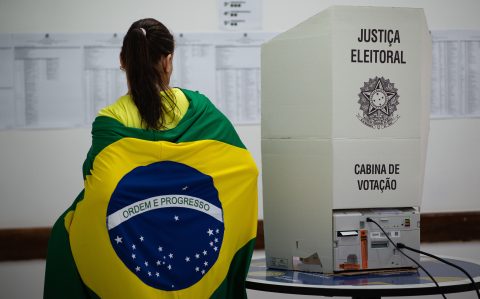
Brazilians are heading to the polls, diplomats are gathering in the Pacific for pre-COP, and it’s crunch time for the IPCC -
WHO issues new guidance on heat-health action plans, as El Niño sets in
Amid warnings of “unprecedented” weather extremes this year, the World Health Organization urges governments to strengthen protections for vulnerable groups

In a new international survey of 1,000 maternal healthcare professionals in Australia, Brazil, India, the UK and Zimbabwe, around three-quarters reported an increase in heat-related cases or complications affecting pregnant women, as well as foetal and newborn health, over the past five years.
Nearly all respondents in the survey commissioned by Wellcome, a global charitable foundation, said they had cared for a pregnant woman or baby whose health they believed had been affected by extreme temperatures.
Researchers have linked heat exposure with preterm birth, low birth weight, stillbirth and maternal complications. For every 1 degree Celsius rise in heat exposure, the odds of preterm birth increase by around 5%, while exposure to heatwaves is associated with a 25% higher risk of obstetric complications.
“No woman should have to fear that extreme heat will harm the baby she is carrying,” said Julia Gillard, chair of Wellcome and former Australian prime minister, adding “pregnant women must not be invisible”.
Call to include mothers and midwives
Wellcome urged governments to include pregnant women, new mothers and babies in their national climate and health plans, with funded measures to protect them from extreme heat.
It also called on the World Health Organization to develop clinical guidance on heat, pregnancy and the postpartum period, alongside stronger data and surveillance on how heat exposure impacts maternal and newborn health.
The charity is backing a study in Zimbabwe and South Africa to test simple interventions such as handheld fans, reflective paint on health-facility roofs and community-led climate information systems.
Extreme heat costing India’s poorest workers 2% of GDP, survey finds
The International Confederation of Midwives, which represents over 2 million midwives, is also pushing for action, asking countries to include maternal healthcare professionals in their National Adaptation Plans, and provide finance to ensure clinics have access to reliable water, power and cooling.
Chief executive Anna af Ugglas told an event on adaptation at Climate Week NYC that midwives tire more easily when working in high heat, which can lead them to make errors. They are often first responders in a crisis – and yet “too many climate and emergency plans are still developed without them”, she added.
Pacific hosts Pre-COP
The campaign to put maternal health on the climate policy agenda kicked off the proceedings in Fiji, where ministers and other attendees from around 50 countries are gathering this week to advance discussions in the run-up to the COP31 climate summit in Antalya next month.
This year’s annual UN climate conference is taking place in Türkiye which holds the COP presidency, while Australia is in charge of the negotiations – a deal worked out after a long rivalry to host COP31.
Australia is using its role to spotlight the concerns of the Pacific region to which it belongs, where low-lying island nations are under threat from sea level rise.
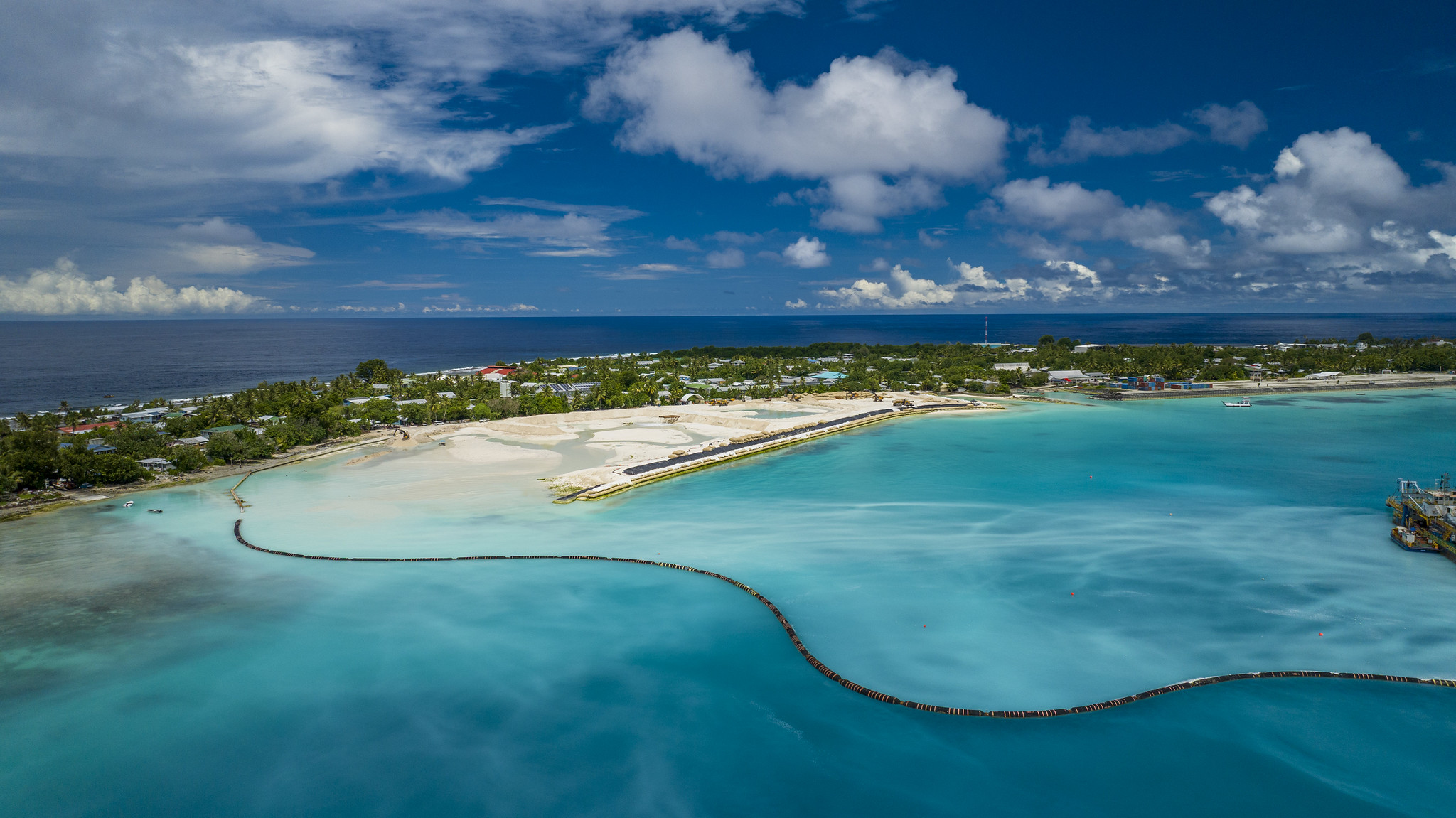
On Tuesday, a group of 14 government leaders – mainly from the Pacific – plus heads of international organisations including the Green Climate Fund and the Asian Development Bank will visit climate resilience projects in neighbouring Tuvalu.
Key themes for the pre-COP – a glitzier event than usual – are keeping the 1.5C global warming limit within reach despite a projected overshoot, protecting oceans and improving access to finance for small island nations and the least-developed countries.
At a press conference on Monday, Australia’s climate change and energy minister Chris Bowen flagged his country’s investments in renewables, both in Pacific nations such as Vanuatu and at home, saying this would help lower the use of diesel, fossil gas and coal in energy supplies.
Ahead of the pre-COP, Australia has been criticised by climate campaigners and some Pacific leaders for greenlighting expanded coal production on its territory.
As COP31 co-host, Australia should make its polluters pay for climate damage
Asked about Australia’s ongoing support for fossil fuels, Fiji’s climate minister Lynda Tabuya said the issue had been raised by “certain countries” at a ministerial meeting on Monday.
“There will be things that we disagree on, but we can agree to disagree – and we’re just very grateful for the support of Australia and the commitment towards renewable energy, and I think that’s the direction that we need to take, especially in the Pacific,” she added.
The post At pre-COP, UN climate chief warns of heat threat to mothers and babies appeared first on Climate Home News.
At pre-COP, UN climate chief warns of heat threat to mothers and babies
Climate Change
‘Don’t waste this moment’: Pre-COP must back Pacific priorities; respond to the urgency of the climate crisis
NADI, FIJI Sunday 4 October 2026 — As leaders and delegates gather for the Pacific Pre-COP in Fiji and Tuvalu, Greenpeace Australia Pacific is calling on the Australian government to uphold Pacific priorities on fossil fuels and climate finance, and respond to the urgency of the climate and energy crisis by accelerating the just transition away from fossil fuels.
The Pre-COP meeting in Fiji and atoll nation Tuvalu is an important milestone on the road to the COP31 climate summit in Türkiye, where Climate and Energy Minister Chris Bowen will take the reins as President of Negotiations. But another coal mine approval in the days before the Pre-COP has left Pacific leaders and civil society exasperated at Australia’s perceived ‘double talk’ and overshadowed the start of talks.
Speaking from Nadi, Shiva Gounden, Head of Pacific at Greenpeace Australia Pacific, said:
“This week we must focus on why the Pre-COP is so important. We must listen to Pacific leaders and communities who are sick of Australia’s double talk on climate, and want to see the actions of the most polluting nations respond to the urgency and scale of the crisis we face.
“Every cyclone, every storm blows with the deadly force of accumulated emissions and gives a warning of what is to come. The Pacific must not become a sacrifice zone for major polluters and fossil fuel corporations.
“1.5°C remains the scientific, moral and legal temperature limit. The landmark Pacific-led ICJAO ruling is clear — continuing down the fossil fuel path, and failing to align efforts with limiting warming to 1.5°C, is a breach of our international legal obligations. Our communities, our cultures and our very existence are under threat.
“As Australia prepares to chair the upcoming COP31 talks in partnership with the Pacific, it must do much more to turn empty rhetoric into real action to end the fossil fuel chokehold.”
Also in Nadi, Dr Simon Bradshaw, COP31 Lead and climate expert at Greenpeace Australia Pacific, said: “The Pacific Pre-COP is a critical milestone on the road to COP31. The Australian government must rise to the moment with concrete plans to accelerate the global transition away from fossil fuels, and respond to communities across the region facing soaring cost of living and the escalating impacts of the climate crisis.
“This week, the Australian government must deliver more than empty rhetoric. The Prime Minister’s recent keynote address at New York Climate Week acknowledged the urgency of the climate crisis, but failed to mention its cause, fossil fuels. Just last week we saw another new coal mine approval in Australia. This is on top of the 37 fossil fuel approvals by the Albanese Government since elected, despite recognising through the Belém Declaration that returning to 1.5°C is incompatible with new coal, oil and gas.
“At the Pre-COP, words must be matched with real action to phase out fossil fuels. We can not help decarbonise the world without action at home to halt fossil fuel approvals and phase out coal and gas exports. Don’t waste this important moment to back Pacific leadership and turn commitments into real action, including an immediate end to new fossil fuel approvals, and following other nations in developing a national roadmap away from fossil fuels.”
ENDS
Media contact: Kate O’Callaghan in Nadi on +61 406 231 892 (Whatsapp/Signal)
Several major banks that helped set up the UN’s now-defunct Net-Zero Banking Alliance (NZBA) in 2021 have since continued to lend money to coal companies, a new report has revealed.
Bank of America, Barclays, Citibank, Deutsche Bank and Santander were heavily involved in the NZBA and the associated Glasgow Financial Alliance for Net Zero (GFANZ) when it was launched by Mark Carney, then a UN climate envoy and now Canada’s leader, in the run-up to the COP26 climate summit in Glasgow.
Despite their involvement, data released this week shows those banks and some others did not reduce the amount of money they lent, nor the value of their underwriting, to coal activities between 2022 and 2025. Around half of the NZBA members who were engaged in coal financing over that time increased it and half cut it, according to the report by German environmental research group Urgewald.
Ana Botín, executive chair of Santander, was a member of the GFANZ CEO principals’ group and said at the time of the NZBA launch that her Spanish bank was “proud to be part of the founding members of this new alliance and to accelerate progress towards net zero”.
Since then, the report’s data documents that Santander has provided loans and underwriting worth hundreds of millions of dollars each year to coal companies, particularly American coal-power plant operators Duke Energy and the Southern Company. Santander did not respond to a request for comment.
Urgewald’s research adjusts the value of loans and underwriting provided to coal companies based on how much of a company’s revenues come from the most polluting fossil fuel. So a hypothetical $100 million loan to German utility RWE is valued at $21 million, as 21% of RWE’s revenue is from coal.
The research does not take account of whether companies are expanding their coal business or phasing it out for greener alternatives. Some banks have said their coal clients need to put in place transition plans by a certain date. Some also say that, by a certain date, they will stop lending money to clients that get more than a set percentage of their revenue from coal.
-
What’s on the climate calendar for October 2026?
Brazilians are heading to the polls, diplomats are gathering in the Pacific for Pre-COP, and it’s crunch time for the IPCC -
UN chief urges countries to adopt fossil fuel transition plans with timelines
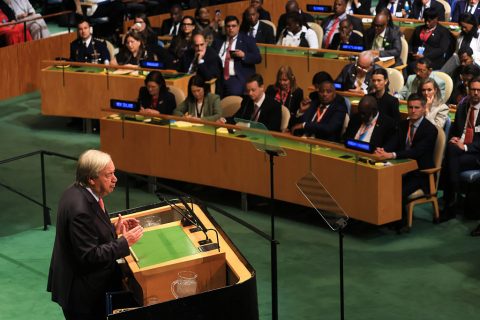
In his last speech to the UN General Assembly, António Guterres for the first time called on every nation to deliver a plan to phase out coal, oil and gas while protecting workers

Most companies expanding coal are in Asian nations like China, India and Indonesia and are largely financed by banks from their own countries. But there are examples of NZBA founding members supporting companies that are actively prolonging the life of their coal businesses.
For example, Glencore, a Switzerland-based multinational that gets 4% of its revenue from coal, has just won preliminary regulatory approval to keep on coal mining in Australia’s Hunter Valley until 2045. Last year, the company was supported by loans and underwriting from Bank of America, Citigroup, Santander, Barclays, Deutsche Bank, HSBC and Standard Chartered.
Good and bad news
Some NZBA founding members like Swiss giant UBS have reduced their loans and underwriting for coal companies, the data suggests. Others – like Triodos and Kenya Commercial Bank – have provided no support for coal companies since at least 2021.
Urgewald researcher Hannah O’Neill told Climate Home News that “the banking sector is not moving in one direction. There is a growing divide between banks that are tightening their coal policies and reducing their exposure, and those where coal policies remain weak or where financing continues.”
Unlike the UN’s Race to Zero campaign, with which it partnered, the NZBA did not require its members to end financing for fossil fuels like coal, leading to accusations by climate campaigners that its rules were too weak.
Despite this, after Donald Trump’s re-election as US president in November 2024, several North American banks quit the alliance and the NZBA’s requirements were diluted in April 2025. After further withdrawals, the group shut itself down in October 2025.
Globally, the Urgewald report found that many banks in the European Union, Thailand, Malaysia, India and Taiwan have reduced their coal finance since governments agreed at COP26 to phase down coal power.
But with Chinese, American, Indonesian and South Korean banks increasing their support, total bank financing for the coal industry has remained broadly the same each year since 2022.
“Coal financing is not disappearing – but it is concentrating in banks and markets where coal policies are either missing or weak,” said Heffa Schücking, director of Urgewald.
Urgewald’s definition of coal companies includes firms and their subsidiaries that explore for, process, trade, transport and mine coal, or burn it in power plants to produce electricity, or manufacture equipment for the coal industry. It does not include companies that use coal to make cement or steel – and an adjustment is made to account for how much of the business model is coal-related.
Banks defend delays
At the time of publication, most of the banks named in the report for increasing their coal finance had not responded to requests for comment. But a spokesperson for Deutsche Bank pointed Climate Home News to its May 2026 announcement that it was delaying its requirement for existing clients to present it with transition plans and cut their coal exposure.
Instead of having to present these plans by the end of 2025, the bank has given them until the end of 2027. They will also have to ensure that their revenue share from thermal coal falls below half by then, the bank added. New clients need energy transition plans to access finance.
Deutsche Bank said at the time it was delaying its requirements because of the “increasingly complex regulatory environment as well as differing speeds of energy transition in various regions beyond what was anticipated by Deutsche Bank in 2023”.
Big banks’ lending to coal backers undermines Indonesia’s green plans
A spokesperson for Barclays told Climate Home News: “Many companies in this report are diversified energy or mining companies. We do not provide financing to companies that generate more than 30% of revenues from thermal coal mining or power generation, and we will phase out all financing by 2035.”
The Barclays spokesperson added: “Barclays is financing an energy sector in transition, providing finance to meet current energy needs and also financing the scaling of clean energy. Over the past three years, we have facilitated more than $300 billion of sustainable and transition finance, including billions to cleaner energy projects, and invested millions into climate tech.”
The post Big banks behind “net zero” alliance continued lending to coal firms appeared first on Climate Home News.
Big banks behind “net zero” alliance continued lending to coal firms



-
Climate Change1 year ago
Guest post: Why China is still building new coal – and when it might stop
-

 Greenhouse Gases2 years ago
嘉宾来稿:满足中国增长的用电需求 光伏加储能“比新建煤电更实惠”
-
Greenhouse Gases1 year ago
Guest post: Why China is still building new coal – and when it might stop
-

 Climate Change2 years ago
嘉宾来稿:满足中国增长的用电需求 光伏加储能“比新建煤电更实惠”
-

 Renewable Energy12 months ago
Sending Progressive Philanthropist George Soros to Prison?
-
Climate Change2 years ago
Bill Discounting Climate Change in Florida’s Energy Policy Awaits DeSantis’ Approval
-
Greenhouse Gases1 year ago
嘉宾来稿:探究火山喷发如何影响气候预测
-

 Climate Change2 years ago
Analysis: China’s CO2 falls 1% in Q2 2024 in first quarterly drop since Covid-19