

Susana Malcorra is president and founder of GWL Voices and former foreign minister of Argentina. Mary Robinson is a GWL Voices member, former UN human rights commissioner and former Irish president.
Earth has just had the hottest August since records began. Wildfires tore through Europe, North America and Asia, killing dozens, forcing hundreds of thousands from their homes, and burning more than a million acres of land.
In Nepal, flash floods triggered by a glacial lake outburst killed more than a thousand people and left thousands missing – a disaster Nepal’s foreign minister said reflected the disproportionate share of climate consequences borne by countries like his. Just recently, the UN Environment Programme confirmed what scientists have long warned: the world is now on track to breach 1.5C of warming, likely within the next few years.
As the climate crisis intensifies, one question is central: who is at the helm?
GWL Voices’ report, published this summer, shows that women are very much on deck in climate and environmental governance, but they are not steering the ship.
-
UN chief urges countries to adopt fossil fuel transition plans with timelines
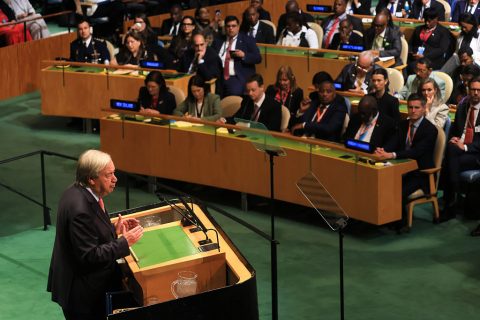
In his last speech to the UN General Assembly, António Guterres for the first time called on every nation to deliver a plan to phase out coal, oil and gas while protecting workers -
COP31 electrification pledge leaves out clean power commitment
Campaigners and experts say the goal’s effectiveness in reducing emissions may be limited unless countries agree to meet it using only clean energy
Of all climate COP Presidents since the annual conferences began over thirty years ago, three-quarters have been men. This matters because COP Presidents are among the most visible and influential roles in global climate governance. The climate COPs, however, are not the worst offenders. Another of the UN’s three environmental “sister conventions,” the UN Convention to Combat Desertification (UNCCD), has had a woman preside over its COP only three out of 17 times since 1997.
Structural inequality cascades down
Women’s underrepresentation is not a harmless coincidence. It’s a pattern that cascades down to other critical roles, including country delegates, heads of delegations, national focal points, and COP bureau members.
It is a structural inequality that limits the diversity of perspectives, priorities and decisions brought to bear on the environmental emergencies we face, and it is unfolding against a backdrop UN Women itself describes as one of “escalating conflicts, attacks on women’s rights, and environmental degradation.”
GWL Voices’ Spotlight on Women in Global Climate and Environmental Leadership shows that progress beyond the COPs is slow and sparse. While the Green Climate Fund has approached gender parity in its top leadership role over time, the IPCC, which is the body charged with compiling and communicating climate science to the world, has never appointed a woman to its top position of Chair in nearly four decades.
Gender focal points mainly women
Parity in environmental governance at the multilateral level remains extremely rare. There is, however, one role where women are, for once, not under- but substantially over-represented: when the task at hand is gender equality itself. Ninety percent of countries’ gender focal points under the biodiversity and climate conventions are women.
Relegating women to so-called “women’s issues” within climate and environmental governance is a particularly stark example of horizontal segregation, a pattern that repeats well beyond the multilateral level.
According to the Women in Politics Map 2026, prepared by UN Women and the Inter-Parliamentary Union, the largest share of women cabinet ministers worldwide sit in Women and Gender Equality ministries (90%) and family and children affairs (73%), while they remain sidelined in strategic areas including economic affairs (18%), foreign affairs (29%) and energy (12%).
‘Hectic’ in high heels? Women still face gender hurdles at UN climate talks
The danger of this segregation is that women’s rights come to be seen as women’s responsibility alone, which does nothing to advance equality, since the problem affects us all and requires everyone’s active engagement to solve.
Conversations about gender and climate too often focus on women’s vulnerability to climate impacts. That angle reflects a real problem, but it hides a second one: access to decision-making. Women are not simply “victims” of the climate and nature crisis, they are among its most experienced responders, its most consistent advocates, and, when given the chance, its most effective leaders.
Studies show women leaders’ impact
What if women had an equal seat at the decision-making table? Would environmental governance be more effective? The evidence says it would. Research by Norgaard and York (2005), Mavisakalyan and Tarverdi (2018), and Fredriksson and Wang (2011) finds that women leaders are more likely to support environmental protection, ratify environmental treaties, and adopt stricter climate policies.
Following last year’s COP30 – where the UN Framework Convention on Climate Change adopted a landmark, nine-year plan to mainstream gender equality across climate governance and implementation – GWL Voices called for the same principles: gender parity across all climate bodies, Indigenous women’s voices embedded in policy design, gender-responsive climate finance with transparent tracking, and real accountability for women-led initiatives. Its 2026 report is the evidence for why implementation of the Belém Gender Action Plan cannot wait any longer.
Why women’s leadership is central to unlocking the global phaseout of fossil fuels
As the world convenes for Climate Week NYC, weeks before the UN chooses its next Secretary-General, and less than two months before COP31, we raise our voices for this message to reach those who hold power.
Let’s start seeing the climate crisis as a governance crisis, one with an outrageous blindspot for women’s leadership, ingenuity and readiness to decide. We invite every government, institution or boardroom, and every person to read the spotlight report in full, identify the pattern in the ranks of their own organisations, and use whatever power they hold to break it.
Because when it comes to the climate crisis, women’s hands are already on deck; it’s time we let them steer.
The post Women are on deck – it’s time they steered appeared first on Climate Home News.

More than a dozen countries, including Germany, South Korea, Pakistan and several small island states, have publicly backed the Turkish COP31 presidency’s flagship electrification pledge.
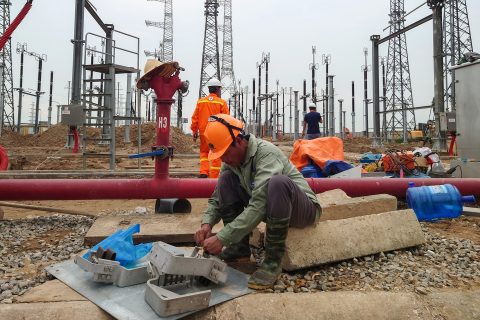
The voluntary pledge aims to raise electricity’s share of global final energy consumption to 35% by 2035, from 23% currently, but does not specify how that electricity should be generated.
The COP31 presidency is not expected to publish a full list of backers until next week, as it continues to rally support. But at least 14 countries have publicly endorsed the pledge, according to a Climate Home News analysis of speeches and official statements.
Alongside COP31 co-host Australia and COP32 host Ethiopia, they include Germany, Norway, Finland, South Korea, Pakistan, Zimbabwe, Eswatini, Togo and Liechtenstein, as well as the small island states of Palau, Seychelles and the Solomon Islands.
The European Union is widely expected to join the pledge this week, although member states still need to formally approve the decision, Politico reported. On Wednesday, President Ursula von der Leyen supported the pledge in her personal capacity and encouraged others to do the same.
Major economies still on the fence
Other major economies have welcomed COP31’s focus on electrification while stopping short of endorsing the pledge.
British Prime Minister Andy Burham said on Thursday that he was proud to support the summit’s focus on electrification. He said it matters for energy security, for creating good jobs in clean energy and manufacturing, and for lowering people’s bills.
-
Big fossil-fuel countries back Brazil-led transition roadmap
Some countries including Germany and the Netherlands call for the roadmaps to inform a key global review of climate progress in 2028 -
COP31 outcome needs to prioritise transition away from fossil fuels
Many countries are already working on parts of their transition, such as phasing out coal or ending fossil fuel subsidies, with more expected to follow soon
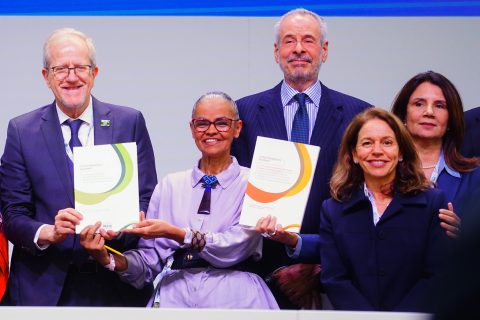

Brazil’s environment minister João Paulo Capobianco ssaid on Thursday that electrification was “an important front” in climate action, but warned it should not be pursued “for the sake of it”. It should instead serve as a means of improving efficiency and cutting emissions. He said Brazil would work with the Turkish proposal and suggest adjustments to allow “specific solutions” that reduce emissions, without giving details.
Saudi Arabia was more openly sceptical. Energy minister Prince Abdulaziz bin Salman told the leaders’ summit that emissions reduction is “what unites us”, “not necessarily the track to achieving it”. “The expansion of electrification does not necessarily mean cutting emissions, so long as we do not consider the sources of its production,” he said, adding that countries’ choices must be respected.
Clean power strings attached
Many of the nations formally backing the initiative have attached some strings to their support. At a high-level roundtable on Wednesday, the low-lying Pacific island nation of Palau said it would sign on to the pledge. But it added that electrification “must not become a substitute or a distraction” from the chief goal of transitioning away from fossil fuels.
Seychelles also endorsed the pledge but added that it must be connected with cleaner electricity. “Electrifying more activities while continuing to burn fossil fuels will not deliver the full economic or climate benefits,” the country’s representative told the roundtable.
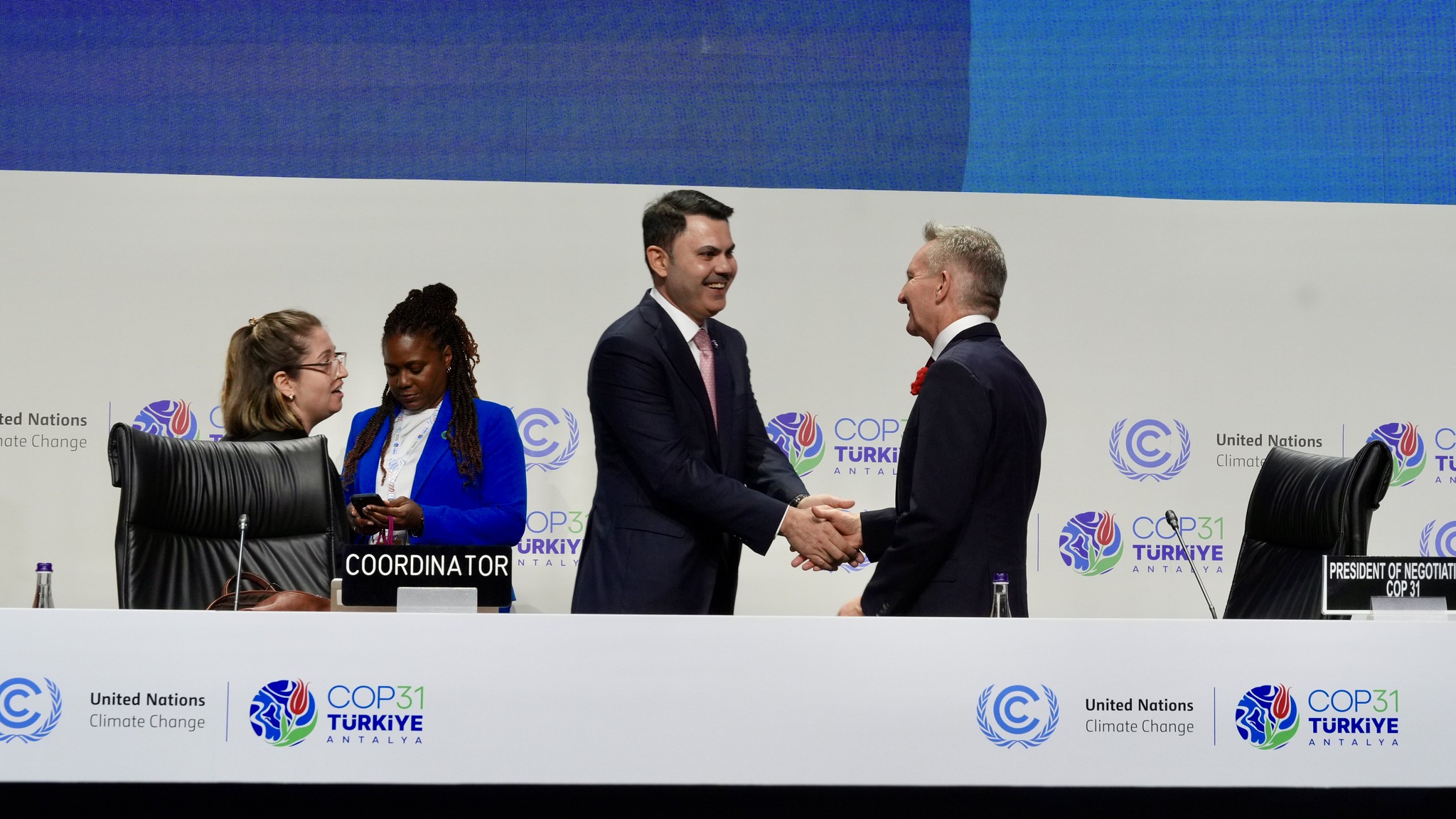
Australia’s climate and energy minister Chris Bowen, whose country is co-leading the pledge with Türkiye, has defended its design. “Electrification is almost always a good thing,” he told the Outrage and Optimism podcast recently. He argued that switching to an electric car cuts emissions by 60% even on a coal-fired grid, and by 90% when powered by solar.
Doug Arent, senior fellow at the WRI Polsky Center for the Global Energy Transition, said the most important thing “is that there is significant support for the concept of electrification”. He expects more countries to “recognise their pathway to be behind the 35 by 35” in the coming years.
Calls for finance
Other developing countries backing the pledge have underlined the critical importance of access to finance. Pakistan’s Prime Minister Shehbaz Sharif showed off his country’s people-led boom in rooftop solar and growing rollout of electric vehicles. But he added that “momentum without finance cannot be sustained,” and said the burden of new technologies cannot fall on countries already in debt.
Zimbabwe backed the pledge but warned of the high capital costs and financial bottlenecks facing developing countries. Its representative proposed a global electrification investment facility that would provide first-loss guarantees for projects under Mission 300, an initiative to connect 300 million people in Sub-Saharan Africa to electricity by 2030.
The Solomon Islands, another supporter of the pledge, asked for a dedicated finance access window for small island nations and least developed countries (LDCs).
Tuesday saw the launch of a global finance coalition backed by COP31 host Türkiye and COP32 host Ethiopia aimed at supporting clean electrification in developing countries.
Closing the roundtable, Türkiye’s energy minister Alparslan Bayraktar, who chaired the session, claimed the 35×35 pledge had found broad support worldwide. He called for a “smart” energy transition that draws on all available technologies, including carbon capture, use and storage.
The post COP31’s electrification pledge wins support, with caveats on clean power and finance appeared first on Climate Home News.
COP31’s electrification pledge wins support, with caveats on clean power and finance
Climate Change
Albanese must deliver credible action to end fossil fuel chokehold, not just rhetoric
ANTALYA,Türkiye, Thursday 12 November 2026 — In response to Prime Minister Albanese’s COP31 Leaders’ Summit address, Shiva Gounden, Head of Pacific at Greenpeace Australia Pacific, speaking from Antalya said:
“Prime Minister Albanese’s COP31 address was full of nice rhetoric, but once again failed to confront or even mention the root cause of the climate crisis — fossil fuels.
“In Antalya, UN climate chief Guterres told leaders to “tell the truth”. The truth is Australia can not credibly talk about its clean energy transition while continuing to expand the industry it needs to leave behind. Australia must reckon with reality; its damning track record of 38 coal and gas approvals since it took office in 2022.
“We meet in Antalya amidst a global energy shock and dire projections of 1.5°C overshoot. Overshoot means something in the Pacific — it means irreversible harm, lives and cultures lost forever, entire nations at stake. We must face the fierce urgency of now.
“Never before has the need to end the fossil fuel chokehold been so abundantly clear, as our Pacific communities again suffer the consequences of a global economy hooked on coal, oil and gas. The Pacific needs credible roadmaps and clear timelines to unhook from fossil fuels — Australia can’t keep saying implementation and not reflect it with credible action.”
ENDS
COP31 images and video available here in Greenpeace Media Library
Media contact: Kate O’Callaghan in Antalya (GMT+3) on +61 406 231 892 (Whatsapp/Signal)
Albanese must deliver credible action to end fossil fuel chokehold, not just rhetoric
A second set of world leaders give their speeches on Thursday before heading out of town and leaving their negotiators to it. After around 40 leaders spoke on Wednesday, today there will be just 25 or so including the UK’s Andy Burnham, Venezuela’s Delcy Rodriguez and Bangladesh’s Tarique Rahman.
But Brazil’s President Lula is still there and is expected to keep grabbing headlines, along with California’s Governor – and maybe next US president – Gavin Newsom – and Swedish climate activist Greta Thunberg who has lost none of her star power, if the crowd around her in the press centre was anything to go by.
We’ll bring you highlights through the day on issues ranging from finance to methane, and update you on a pledging event for the Pacific Resilience Facility, which the climate-vulnerable region is relying on to keep small island nations as safe as possible in the face of intensifying storms, drought and sea level rise.
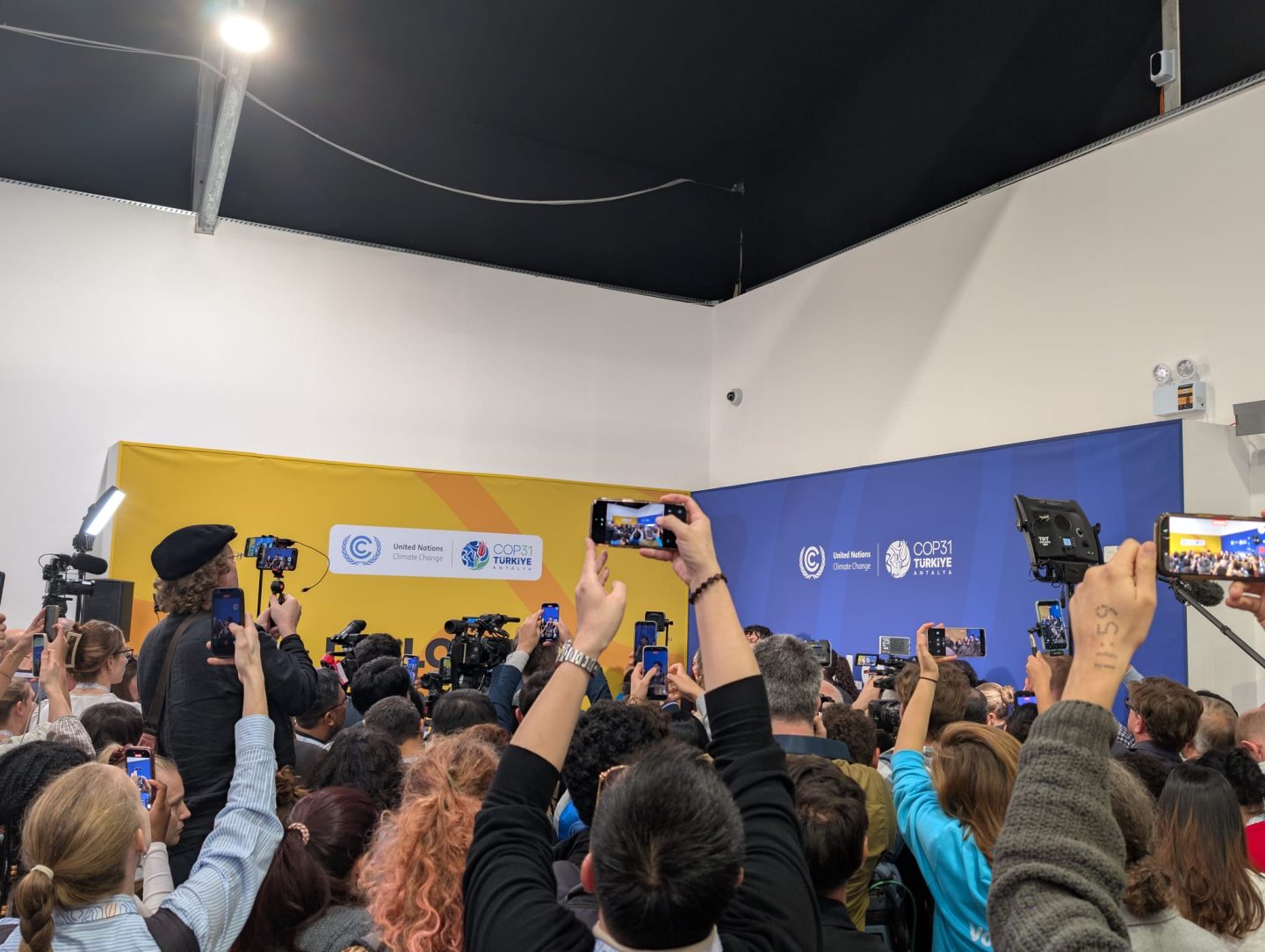
The post COP31 Bulletin Day 4: Burnham speaks with UK climate policy under fire appeared first on Climate Home News.
COP31 Bulletin Day 4: Burnham speaks with UK climate policy under fire


COP31’s electrification pledge wins support, with caveats on clean power and finance
Albanese must deliver credible action to end fossil fuel chokehold, not just rhetoric


