

Janet Fleischman is an independent consultant with extensive experience in research, policy advocacy, and narrative storytelling. Jyotsna Uppal is a historian and narrative strategist, who supports individuals and organisations in change processes.
Global climate progress sits at the centre of an acute crisis, as the multilateral order that structured international climate cooperation for three decades frays at the seams.
The Trump administration’s withdrawal from 66 United Nations and international organisations in early 2026, compounded by its exit from the Paris Agreement and the UN Framework Convention on Climate Change itself, has launched a rupture in the governance architecture and the geopolitical consensus that made multilateral climate action conceivable.
Institutions have been stripped of authority, voluntary commitments left contingent on political will.
At this precarious moment, what can and should climate funders be doing?
Q&A: Look beyond Trump for the full story on US climate action, says university dean
Lawyer Lou Leonard, who leads the climate school at Clark University, says Washington’s attacks haven’t halted climate efforts across American societyIs FOMO undermining climate diplomacy?
The negotiating community has not become 20 times larger, but the COP has – and the rising number of participants, from politicians to business executives, is getting in the way of the task at hand


We recently examined the state of environmental multilateralism through an extensive literature review and interviews with climate leaders from around the world – policymakers, UN officials, regional actors, philanthropic leaders and advocates.
Their perspectives reinforced a sobering finding: more consequential than any single country’s efforts to undermine the multilateral system is the deeper question of whether that system is still fit for purpose.
Climate philanthropy must do more than fill gaps left by retreating governments; it must ask harder questions about whether gap-filling is the right role at all – and prepare to catalyse the emergence of something new.
Change will not come without pain.
As Sarah Millar, programme director at the Climate Emergency Collaboration Group, an international philanthropic network and strategic regranter, told us: “What we’re trying to do here is fundamentally rewire the global economy… it’s everything everywhere, all at once. And that’s really hard to do.”
Filling the gaps or leading change?
The multilateral climate system, for all its limitations, remains relatively intact. Countries other than the United States continue to submit national climate plans and participate in global negotiations. Yet participation is not the same as effectiveness – many commitments fall short of what’s needed.
Meanwhile, new regional, thematic and plurilateral coalitions are emerging; voluntary groupings of countries, cities, companies, and civil society organisations aligned around specific climate objectives are increasingly filling the action gap.
Santa Marta coalition tested as co-chair Colombia turns back to fossil fuels
Climate philanthropy has often responded to these gaps by substituting for absent public finance. Arunabha Ghosh, the founder and former CEO of the Council on Energy, Environment and Water (CEEW), a climate think-tank based in New Delhi, explained: “Philanthropy is having to fill in the gap of public finance where development assistance is failing.” But this instinct deserves scrutiny.
A more fundamental question is whether gap-filling remains the right approach. Does philanthropy keep a failing system limping along, propping up dysfunction – or does it spur transformation and catalyse what comes next? There is no neutrality here – philanthropy cannot pretend its choices are inconsequential. The question is which position advances the transformation the moment requires.
Compounding these strategic questions is a more immediate threat. As formal multilateralism struggles, the civil society actors who might fill the gap face mounting restrictions – a closing of civic space evident not just in the US but in India, Israel, Russia, Turkey, and elsewhere. In the US, the Trump administration has stepped up attacks on philanthropies, threatening legal investigations and the withdrawal of foundations’ tax-exempt status.

For climate philanthropy specifically, there’s a particular risk: support for climate action is increasingly portrayed in some US conservative circles as anti-American.
Conservative actors who emphasise fossil fuels for manufacturing and energy security often equate backing renewables with pro-China stances, since China is the largest green technology manufacturer. Yet the economic evidence points the other way, with the clean energy transition already underway – and the perils of fossil fuel reliance further underscored by the war in Iran.
Winning back the narrative
Underlying all these gaps is a failure of narrative. The story of climate progress – and there is real progress to tell – is not being written by governments.
As Christiana Figueres, an international leader on climate change and the former executive secretary of the UN Framework Convention on Climate Change, put it this way: “The story of progress is being written by a plethora of other stakeholders – subnationals, finance corporations, NGOs – all of whom are doing their thing together. They’re writing an amazing story, and nobody’s writing it and nobody’s reading it and nobody’s taking note of it.”
This storytelling also needs to be more integrated: climate can’t remain a siloed concern but must be linked to health, education, gender equity and migration. Philanthropy can help make these linkages legible to policymakers and the public – expanding the coalition of actors who see climate as central to their own agendas.
UN sets out narrow path back to 1.5C warming after inevitable overshoot
Four directions stand out for catalytic philanthropic support in this fragmented landscape:
- Shift who gets supported, and convene diverse actors. New pathways are needed to support local communities, civil society coalitions, and subnational actors implementing national climate plans.
- Support compelling narratives and amplify affected voices. Listening to affected communities is critical to shaping a just transition that gives communities real agency over change.
- Engage the private sector differently. New financing instruments and blended finance opportunities require philanthropy to engage more strategically with private sector and corporate actors – not merely as funders but as partners to design how catalytic capital can flow.
- Take strategic risks. Philanthropy may need to fund approaches to implementation, finance, and technology that governments and financial institutions won’t support.
This is a precarious moment for multilateralism, civil society and the philanthropic organisations that sustain it.
But that complexity may also provide an opportunity. Philanthropy willing to ask harder questions, take greater risks, and invest in the connective tissue between issues may do more than keep a struggling system afloat.
To catalyse multilateral climate action, many philanthropies recognise that this is the time to deepen their reach. In the words of Ailun Yang, with the environment program at Bloomberg Philanthropies: “Our main way to engage in this is by supporting smart people and innovative ideas. Philanthropy doesn’t necessarily do these things ourselves, and that is really where our superpower is.”
This piece is adapted from a project conducted by Janet Fleischman and Jyotsna Uppal, funded by the William and Flora Hewlett Foundation’s Environment Program; however, all the views and opinions expressed in this article are the authors’ own.
The post With multilateralism in crisis, what’s next for climate philanthropy? appeared first on Climate Home News.
With multilateralism in crisis, what’s next for climate philanthropy?

Dozens of countries – from big emerging economies to the world’s poorest nations – are calling for the UN’s new carbon market to reassess climate integrity rules, in a push that campaigners and researchers have blamed on industry lobbying.
At COP31 talks on the Paris Agreement Crediting Mechanism (PACM) this weekend, the Like-Minded Developing Countries – a group that includes Saudi Arabia, India and China – the Least Developed Countries (LDCs) and landlocked developing countries raised concerns about the requirements project developers must meet, according to sources familiar with the closed-door discussions.
They warned about the cumulative weight of those requirements developed under Article 6 of the Paris Agreement as barriers to implementation. Several countries, including Singapore and some Latin American states, said rules must keep projects financially viable, while South Korea asked for proportionate requirements, the sources said.
Their demands closely track arguments from carbon market industry groups, which claim PACM’s conservative approach to counting emission reductions is so strict that few projects will ever come to fruition.
Industry and NGOs lobby to weaken UN carbon credit rules in “coordinated” push
In a letter published ahead of COP31, the lobby groups asked governments to “raise implementation concerns” and to request that the Supervisory Body – the UN body that oversees the market – assess the “combined impact” of its rules on the feasibility of projects.
The letter was signed by the International Emissions Trading Association (IETA), a business group whose members include fossil fuel giants Shell, BP, Saudi Aramco and Chevron, along with the Project Developer Forum and the Wildlife Conservation Society, which develops forest conservation programmes.
Draft text reflects industry demands
Those demands are reflected in the first draft of the COP31 decision on the mechanism, published late on Saturday. To guard against over-crediting, PACM’s rules deliberately err on the side of issuing fewer credits when emissions cuts from projects are uncertain.
The document asks the Supervisory Body to look at how these cautious assumptions add up across its rules and what that means for the number of credits, project costs and prices. The aim, it says, is to avoid “excessive compounding of conservative adjustments”.
Other parts of the draft tell the body not to make its rules too cautious or too rigid. That includes efforts to guard against the risk that carbon captured by a project is later released. Most of these passages add that environmental integrity must be maintained.
Risk of another ‘failure’
“Weakening the rules is not climate ambition – it is a license to pollute,” said Erika Lennon, a senior attorney at the Center for International Environmental Law (CIEL). “As we are on the brink of permanently breaching 1.5C, we cannot afford to turn the carbon market into another loophole for polluters,” she added.
Axel Michaelowa, research director at Perspectives Climate Research, said that if attempts to weaken the rules succeed, it could lead to another failure of an international carbon market. Demand for credits rests on trust, he said, and the slightest doubt over integrity erodes buyers’ willingness to pay.
Calls to revise requirements “must be supported by scientific evidence, not unsupported claims of under-crediting – especially when these assumptions come from private actors whose revenues depend on the volume of transacted credits rather than real mitigation outcomes,” Michaelowa said.
The EU, Switzerland and Senegal are among a handful of countries pushing back against demands to re-assess the market rules, according to the sources, and are opposing requests to weigh up the profitability of projects or to lower standards.

Cookstove credits in focus
At the centre of the fight are new methodologies for projects that aim to cut emissions by distributing cleaner cookstoves – one of the carbon market’s most popular credit types and also one of its most criticised for overstating climate benefits. A 2024 study in Nature Sustainability found cookstove projects had been over-credited roughly tenfold.
Under the rules adopted by the Supervisory Body in October, cookstove project developers are required to set aside part of their credits in a buffer pool, in case the forests they claim to save later burn or are cleared.
The body rejected an exemption from this requirement sought by developers, corporate buyers, some conservation groups and the UN Environment Programme, in what critics called a coordinated lobbying campaign, as reported by Climate Home News.
Industry groups and some countries have seized on the cookstove methodologies to warn against excessively stringent requirements, which they say undercount emission reductions and deter developers. The LDCs told negotiators that developers had found some approved methodologies, including on clean cooking, difficult to apply.
Industry group calls for revisions
Industry representatives attacked the Supervisory Body’s approach in interventions that sources in the room described as very aggressive.
In a subsequent Linkedin post, IETA’s Andrea Bonzanni accused the regulator of following an unscientific approach that would deliver systematic under-crediting. He called on environmental integrity standards to be amended and rulebooks to be revised.
The mechanism “has had a false start”, he said, but countries in Antalya have a chance to agree on clear guidance that puts it back on track. “Unless the mechanism becomes workable across countries and activity types, its impact on the atmosphere risks remaining marginal,” he added.
IETA did not respond to a request for comment.
-
UN carbon market forces cookstove projects to protect against forest loss
Despite lobbying for an exemption, the UN regulator has for the first time made cookstove projects cover the risk that the trees they save are later destroyed -
Most “zombie credits” locked out of new UN carbon market after China and India snub
Fears of a flood of environmentally-dubious carbon credits have faded, with most old projects not able to transition to new UN market
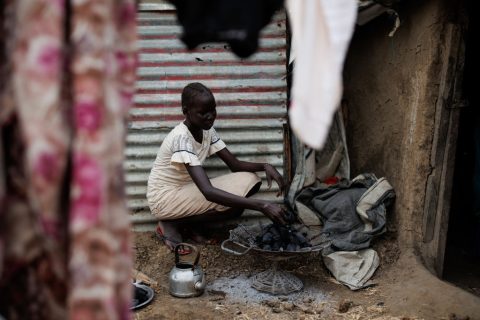
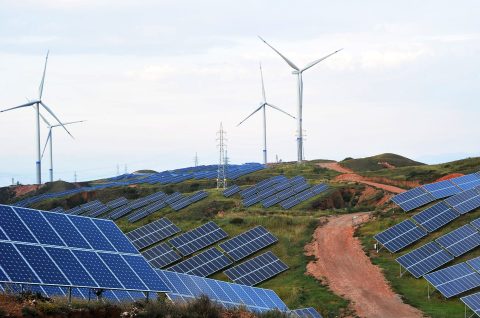
Campaigners and researchers have pushed back on the claims. Arguing there is currently no evidence of under-crediting in the UN market, they stressed that more credits do not necessarily mean more emissions reductions if the rules underpinning them are not grounded on science.
“Having a Paris Agreement carbon crediting mechanism that cheats the atmosphere completely misses the point,” said Isa Mulder, a policy expert at Carbon Market Watch. “Countries should not allow Article 6 to become just another dangerous distraction from real, urgent climate action.”
The draft of the rules is an early version and will be negotiated during the COP31 summit’s final days. Under the Paris Agreement rules, the Supervisory Body must follow guidance that governments give through COP decisions.
The post Countries take up industry push to loosen UN carbon market rules at COP31 appeared first on Climate Home News.
Countries take up industry push to loosen UN carbon market rules at COP31
Mohamed Adow is director of Power Shift Africa.
International Energy Agency chief Fatih Birol celebrates the electricity demands of AI and electric cars, but the revolution must be about more than luxuries for the rich. It must bring clean, affordable power to the hundreds of millions still living without it.
The world is entering the age of electrification. But while wealthy countries focus on powering AI data centres, electric cars and other energy-hungry technologies, hundreds of millions of people across Africa and the developing world still lack access to electricity.
The real promise of the electricity revolution is not simply meeting the growing demands of those who already have plenty, but bringing clean, affordable power to those who have none.
So the decision by Türkiye and Australia to make electrification a flagship initiative at COP31 should be welcomed. Their proposed 35 by 35 goal, increasing electricity’s share of global final energy consumption to 35 per cent by 2035, could accelerate this transformation.
But who is this revolution actually for? Birol has celebrated the arrival of the electricity age, identifying AI data centres, electric transport and air conditioning as three major drivers of growing electricity demand.
-
Can AI data centres help power underserved African communities?
Three African countries join a pledge for sustainable AI at COP31, but the jury is still out on whether the energy-hungry industry can bring benefits for all -
COP31’s electrification pledge wins support, with caveats on clean power and finance
At least 14 countries have endorsed the voluntary pledge so far, but island nations warn it must not distract from the shift away from fossil fuels

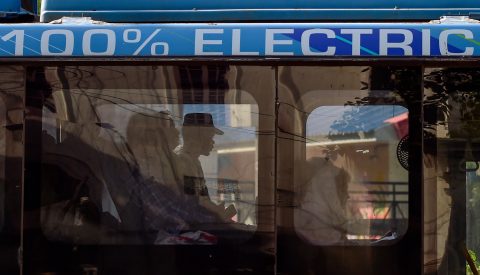
These technologies are reshaping the global energy system. But it is extraordinary that a discussion about the world’s electricity future can focus on infrastructure and services for the rich while overlooking those who still have no electric power at all.
For wealthy countries, electrification may mean powering AI or replacing petrol cars with electric ones. For millions across Africa and the developing world, it means something more fundamental: being