

Chinese industry is beginning to shift from fossil fuels to clean electricity, with wind, solar and batteries progressively displacing coal, oil and gas across the industrial sectors that made the country the world’s factory and largest carbon emitter, a new analysis shows.
Clean electricity met all of China’s demand growth in 2025 and coal generation fell for the first time in a decade, even as electricity demand rose by 5%, the report found.
Despite a rebound in coal power generation in the first half of 2026, the analysis by global energy think-tank Ember found the growth in clean electricity illustrates a longer-term shift: a massive build-out of wind, solar energy and battery storage and deepening electrification of the economy are starting to make a dent in the fossil-fuel energy system supporting China’s industrial base.
China keeps Indonesia’s battery dream afloat but future less certain
The research identifies early signs that a structural transformation of China’s industrial economy from coal, oil and gas to clean electricity is underway, even if changes on the ground are not yet reflected in national data.
“The energy foundation of the Chinese industrial economy is shifting,” Muyi Yang, a senior energy analyst at Ember and the report’s lead author, told Climate Home News.
“Fossil fuels are progressively being replaced in the many functions they have historically assumed. Because of that, fossil fuel peaking is increasingly coming into view,” he said.
Electrifying industry
Coal generation has stopped growing in 17 of the 26 provinces and regions analysed by Ember between 2021 and 2025. This includes industrial centres such as Hunan in southern China and Shandong – home to energy-intensive industries like cement production. Together, these regions are home to more than half of China’s thermal power capacity.
A greater share of the Chinese economy is now running on electricity than in other major economies, accounting for 29% of final energy consumption in 2024, compared with about 23% in Europe and 21% in the US. Less than half of China’s electricity was generated from coal in the first half of the year.
-
China’s coal power rebounds as record clean energy goes to waste
Long-term contracts guarantee coal plants buyers regardless of demand, crowding out renewables, report finds -
China’s coal-chemicals boom risks repeating the mistakes of the past
By reviving the problematic industry in the name of energy security, China runs the risk of higher emissions, stranded assets and setting back its ambitions as a clean energy leader -
China’s carbon emissions rise again as more clean power is wasted
The economic powerhouse burned more coal and gas in the first quarter of 2026, despite record wind and solar build-out


Meanwhile, fossil fuel use has fallen in eight of 11 tracked industrial sectors, declining between 26% and 71% from peak consumption levels across fossil fuel extraction, manufacturing industries such as textiles, machinery and food and beverages, transport equipment and chemical materials.
Earlier this year, German company BASF, the world’s largest chemical producer, opened a new facility in southern China, which is fully supplied by renewable energy. The company said emissions from the site could be 50% lower than conventional petrochemical facilities.

In easier-to-electrify sectors such as machinery, electronics and textiles, electricity now supplies about three-quarters of final energy consumption, Ember found.
Fossil fuel use is also showing signs of flattening in the metals smelting and processing sector – one of the most fossil-intensive parts of the economy – offering “encouraging signs” that the transformation is starting to take hold in harder-to-abate sectors, said Yang.
“If that is happening in more and more provinces, and more and more economic sectors that means that fossil fuels are progressively being squeezed out of the energy system,” he said.
“Growing by greening”
China’s vast cleantech manufacturing power has become an engine for growth in its own right, spurring investment, creating jobs and generating export revenues.
Yang described this “growing-by-greening” dynamic as “turning each step of the transition into a source of strength for the next”.
China and Brazil join pledge to triple global nuclear energy capacity
For Li Shuo, director of China Climate Hub at the Asia Society Policy Institute, this is part of what makes China’s lead in manufacturing clean energy equipment “irreversible”, comparing its growth with that of a rainforest, where different parts of the ecosystem thrive by reinforcing one another.
The early success of deploying wind and solar helped drive down electricity costs, which created favourable conditions for the rapid adoption of electric vehicles (EVs) and in turn boosted demand for batteries that are now critical to balance the grid.

An oversupply of renewable energy incentivised industrial players to benefit from cheap and readily available clean power generation, encouraging innovative solutions to electrify other parts of the economy. In the transport sector, for example, electrification is moving from passenger vehicles to harder-to-electrify trucks.
This abundance of cheap green energy is also making China competitive in what has long been seen as the anchor of Western competitiveness, Li said.
Stalling fossil fuel use
At the same time, China’s huge legacy fossil fuel generation capacity is still expanding, even as coal power plants are being used less intensively.
China brought 30 GW of new coal power capacity into operation in the first six months of the year and coal-fired generation rose 3% over the same period after local governments fast-tracked coal projects to prevent a repeat of severe power shortages in 2021.
Solar surge kept fossil electricity flat in 2025 as China and India made ‘historic’ shift
A further 274 GW of coal capacity is either under construction or has permits to be built while vast amounts of solar and wind power that could not be absorbed by the grid have gone to waste in the first half of the year.
“This doesn’t mean that the transition is losing steam,” said Yang, arguing that China is now grappling with some of the more complex aspects of the transition.
A recent analysis by the Centre for Research on Energy and Clean Air (CREA) for Carbon Brief found that China’s CO2 emissions from fossil fuels and cement have plateaued for more than two years following a peak in March 2024. Ember found that on a 12-month moving average, coal generation has been stalling since then, following years of continuous expansion.
-
EU, UK lead push for electrification as “powerful weapon” against fossil fuels
A group of dozens of countries seeks to build momentum for a COP31 pledge to electrify 35% of global energy use by 2035 as an alternative to fossil fuels -
COP31 leaders unveil global targets, with spotlight on electrification
Co-hosts Türkiye and Australia want countries to sign on to global targets in three of their priority areas for this year’s COP climate negotiations -
Africa can lead the Age of Electrification
The electrification agenda presents both an extraordinary opportunity for Africa and an immense challenge for the continent


In the second quarter of the year, CO2 emissions fell by 1% after China’s oil consumption plummeted 9% as the US-Iran war prevented the transport of oil cargoes from the Gulf through the Strait of Hormuz.
The electrification of the transport sector, particularly electric trucks, was the biggest driver in displacing oil demand as the conflict in the Middle East accelerated the transition.
A lesson in sequencing
China’s bumpy transition offers a useful lesson for other countries at an earlier stage of their transition, said Xunpeng Shi, president of the Sydney-based International Society of Energy Transition Studies (ISETS), a global network of professionals that shares research and fosters collaborations.
“Build quickly enough so that clean electricity can start taking over and prepare for the pressure on the fossil system before it arrives, because that is the part nobody has done easily,” he said.
For countries that are heavily reliant on revenue from fossil fuel exports, a peak in Chinese fossil fuel use weakens the assumption of rising demand on which investments have long been made.
“For them, the time to plan for that is now, while the revenues are still there,” he said.
The post China’s industrial engine starts to break its fossil fuel habit appeared first on Climate Home News.
China’s industrial engine starts to break its fossil fuel habit

Climate Change
After a week of plenty of activity and drama for Greenpeace at sea, I felt like writing to you on a much quieter theme…
Do you have a favourite book, poem or story about the ocean?
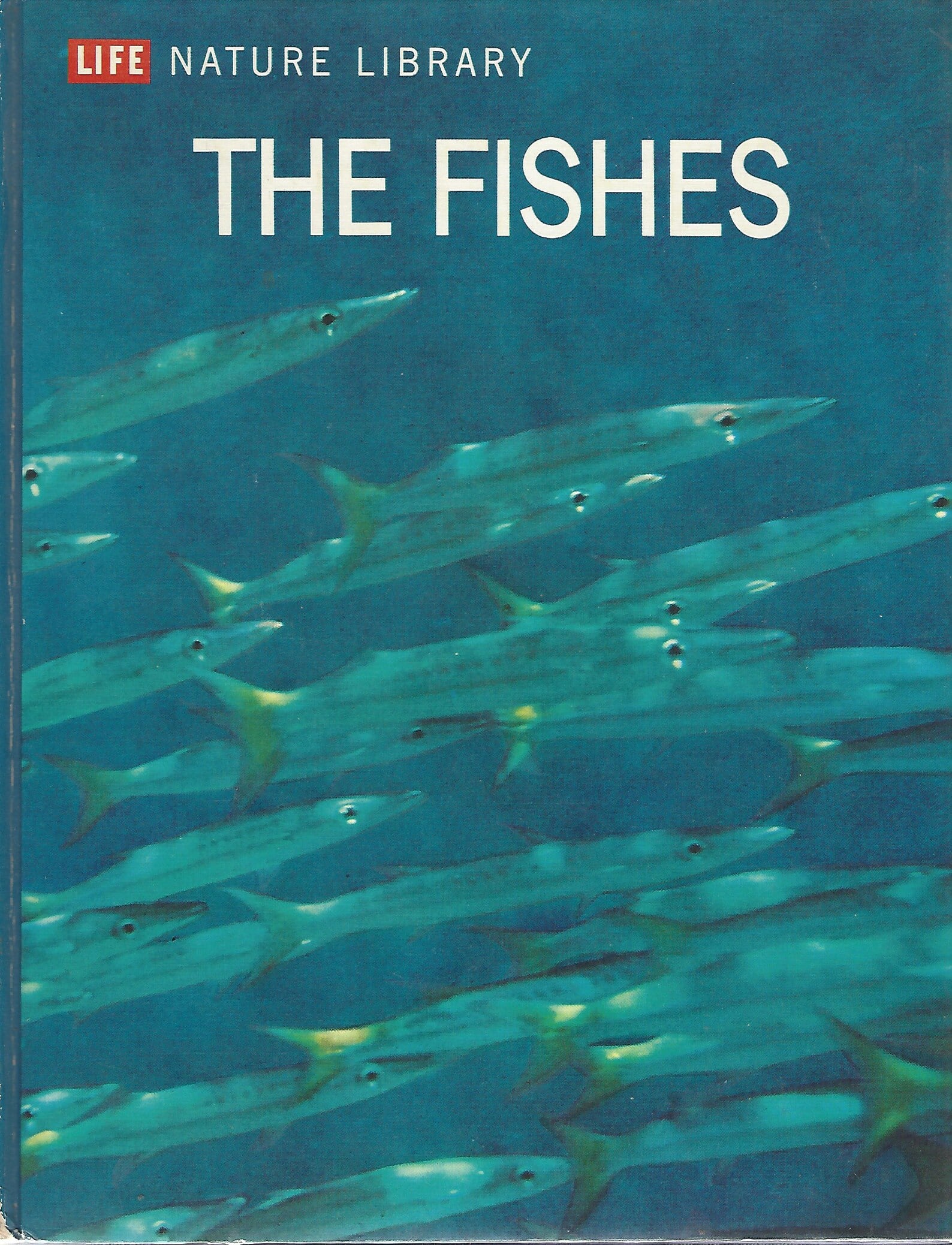
When I was very small, it was the TimeLife book of The Fishes, by F. D. Ommanney, which I remember endlessly poring over, my child’s mind gripped, in total fascination. The cover illustration showed a shoal of barracuda, mid-water and heading upwards, lit up as an iridescent blue by a column of sunlight. Oddly, it is only the cover and the illustrations of the deep sea creatures which I now remember—but I loved that book, as the weakened spine, blunted pages and dog-eared corners attested.
The Fishes has been on my mind recently, because I’ve been working with some dear friends on our own illustrated oceans book, to be published by Upswell Publishing. The book is called Scott Reef: Like Nowhere Else on Earth, and I want to share with you a bit of the story behind its creation.
Scott Reef is absolutely magnificent: Australia’s largest freestanding oceanic reef, brimming with life, including rare and threatened species such as a genetically distinct population of green sea turtles, pygmy blue whales and the wonderfully elegant dusky sea snake. But Scott Reef isn’t near our capital cities; it is way off the north-west coast of WA. And it is threatened with devastation by Woodside, which wants to drill up to 57 toxic wells at the Reef for its vast, dirty Browse gas project.
One of the main challenges in the fight to save Scott Reef from being turned into an industrialised gas zone by Woodside is bringing this incredible location to life for people who haven’t actually experienced it first hand. Because despite its ecological significance and dazzling beauty, ‘Scott Reef’ is also—at least not yet—exactly a household name.
To help get over this barrier, Greenpeace has enabled a number of photographers to travel to Scott Reef by boat (including the Rainbow Warrior) to document its astonishing diversity of colour and life. We then brought these images together in a remarkable photobook, produced by our talented in-house team, which we’ve been putting into the hands of as many leaders as possible—including the MPs whose decisions can determine the Reef’s future.
Back in June this year, I was sharing a copy of our in-house book at a business gathering in Perth when someone pulled me aside. Had we thought about publishing the book commercially? Apart from anything else, he wanted to buy a copy himself! He had a point. We were proud of what we’d created, but a commercially published version could reach a much wider audience and have even greater campaign impact. I immediately turned to my dear friend, Terri-ann White, who runs Upswell Publishing in WA, for advice.
Terri-ann has a huge heart and terrific vision. So many wonderful things in WA owe their existence to her doings, and, true to form, she was immediately encouraging and enthusiastic. “But,” she said, “it would add a whole new dimension if we had some words to accompany the incredible pictures.”
Fair enough, I thought. I could ask a few authors.
“And when would you like it published?” she asked.
“Ideally November,” I answered sheepishly.
Now, in publishing terms, nobody goes from idea to finished work, beautifully produced by a commercial publisher, in just four months. It. Just. Doesn’t. Happen. A book of this scale would ordinarily take nine months, I was told. But Terri-ann was undeterred. “If you can get a rapid turnaround on the writing, I will give it a shot.”
Over the following few days, I sent out 24 emails to prospective writers. To my joy and surprise 23 of them responded almost immediately with an enthusiastic yes!
Terri-ann was somewhat alarmed and perplexed when I told her the good news… we’d discussed a few authors, not more than twenty! “Impossible,” she texted. “Editing is important and you are talking about thousands of words!” But I also know Terri-ann. She does the impossible. And so, here we are… Terri-ann is going to hit that improbable deadline. Scott Reef: Like Nowhere Else on Earth will be on shelves in November.
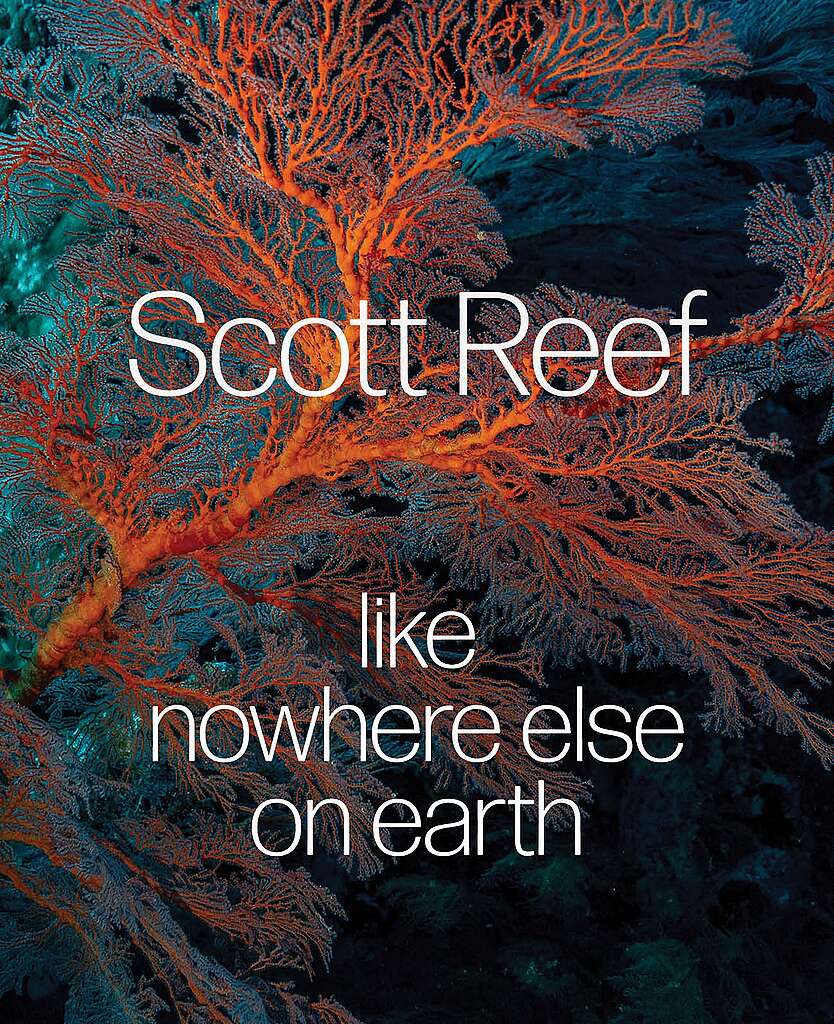
The contributors are a wonderfully diverse bunch, united by their enthusiasm for Scott Reef — and their extraordinary speed!
It’s a brilliant mix. The book brings together national icons like Peter Garrett, Tim Winton, Mick Dodson, Janet Holmes à Court and Fiona Stanley; the intellectual heft of professors Frank Bongiorno, Jessica Meeuwig, Rick Steiner and Samantha Hepburn; the poetic vision of Prema Arasu, Berndt Sellheim and Saadiah Freeman; the field expertise and passionate first hand witnessing of Imogen Zethoven, Tooni Mahto, Ben Fitzpatrick, Geoff Bice, Olaf Meynecke, Paul Gamblin, Sarah Gittoes and Hayley Baillie; and the determination of emerging activist voices Jackson Reid and Emma Sangalli.
Their elegant words wrap themselves around the sheer wonder of the underwater world, brought to life by the work of the photographers — of whom one, Wendy Mitchell, has also contributed a wonderful essay.
Terri-ann showed me the full physical proofs this week and they are breathtaking. This book contains some of my absolute favourite images of wildlife beneath the waves -– and believe me, after almost 20 years at Greenpeace, I’ve been privileged enough to see some remarkable shots! The essays bring a whole new depth and richness to the story of Scott Reef.
If I am being honest, and maybe a bit sentimental, I hope that a four or five-year-old child somewhere in Australia will spend part of their summer holidays turning the pages of this book, wide-eyed with curiosity and awe at the beauty and strangeness of the creatures that call our oceans home.
Our shared commitment is to make sure that, as those children grow up, the wonders of Scott Reef will exist not just in the pages of the book, but out there in the wild waters off north-western Australia—alive, thriving, and every bit as extraordinary as they are today; a living wonder beneath the waves.
Pre-orders of Scott Reef: Like Nowhere Else on Earth are available here.


Q & A
Sometimes you get asked a question so often that you decide to produce a report to answer it!
We know there is strong public opposition to voter opposition to gas drilling at Scott Reef and fracking in the Kimberley in Western Australia. But I am frequently asked whether, even if people don’t want it, more gas drilling is a necessary evil to sustain WA’s prosperity?
The short answer is an unequivocal ‘No’. The longer answer is our new report, From Gas to Green: Building Western Australia’s Future State, which makes the comprehensive case that Asia’s gas market is declining — while WA has an enormous untapped opportunity to become a global leader in green industries and exports, helping drive the region’s shift away from fossil fuels. The faster that WA embarks on a decisive shift away from gas—and that includes no fracking in the Kimberley, or drilling at Scott Reef — so much the better for the state’s people, ecology and economy.