

Welcome to Carbon Brief’s DeBriefed.
An essential guide to the week’s key developments relating to climate change.
This week
US-China meet
ENERGY TALKS: Trump administration officials have raised the prospect of China buying more US oil in response to the disruption caused by the Iran war, following two days of talks between the leaders of the superpowers in Beijing, said Reuters. On Thursday, US treasury secretary Scott Bessent told CNBC the nations had discussed China “buying more US energy”, adding that production from Alaska would be a “natural” for China. The Hong Kong-based South China Morning Post reported that Trump and Xi also agreed that the strait of Hormuz must remain open to “support the free flow of energy”.
CLIMATE ‘COOPERATION’: Ahead of the talks, the Communist party-affiliated People’s Daily published an article saying that addressing climate change requires “coordinated efforts and cooperation” between China and the US. State-run newspaper China Daily said that US-China cooperation on energy security and climate governance is “essential” because the two countries have “considerable influence over international institutions”. However, an article in Legal Planet said that the Trump-Xi meeting had no climate agenda, adding that the two countries are now moving in “radically different directions”.
El Niño extremes
‘SUPERCHARGED’: From wildfires to heatwaves and flooding, scientists have warned that the El Niño weather pattern could “amplify climate extremes” in 2026, reported Climate Home News. There is an 82% chance of a “very strong” El Niño forming this year, according to the average of four weather forecasters cited by the Times. The Independent added that the phenomenon could be “supercharged” by another weather pattern – a positive Indian Ocean Dipole – raising the risks of fire, drought risks and other extreme weather events.
WORLD ON FIRE: Global fire outbreaks hit a “record high” in Africa, Asia and elsewhere this year, reported Reuters, with conditions expected to worsen to the “highest in recent history” if a strong El Niño “kicks in”. More than 150m hectares of land were damaged by fires from January to April – 20% more than the previous record – according to data compiled by the World Weather Attribution (WWA) research group cited by the newswire.
Around the world
- ETHIOPIA EVS: Electric vehicles now account for 8% of Ethiopia’s car fleet as “soaring prices and fuel shortages compel” African countries to switch to “cleaner and cheaper transport”, according to the Associated Press.
- UK AID CUT: The UK has halved its most recent contribution to the UN’s Green Climate Fund (GCF) as part of a government “shift from development aid to military spending”, according to Climate Home News. The UK is no longer the top donor to the GCF following the move, said Carbon Brief.
- TORT RETORT: Reuters reported that the New Zealand government plans to amend a key climate law, to prevent courts from holding private companies liable for climate harms. This would apply to “both current and future proceedings”, the newswire said, including a current case against six major emitters.
- RENEWABLE SECURITY: Military alliance NATO is “openly backing renewables and other non-fossil fuel sources of energy as key to the alliance’s security” despite US scepticism, reported Politico. The outlet covered a NATO-backed study that highlighted how imported fuels have been used as a “bargaining chip” in conflicts.
- NO INDIAN ‘LOCKDOWN’: India’s oil-and-gas minister “dismissed concerns of any imminent lockdown-like restrictions” after prime minister Narendra Modi “urged citizens” to adopt fuel-saving measures amid a global energy crisis, reported the Economic Times.
One billion barrels
The volume of oil the world has lost over the past two months since Iran began its blockade of the strait of Hormuz following attacks by the US and Israel, according to Saudi Aramco CEO Amin Nasser, quoted in Reuters.
Latest climate research
- Antarctic sea ice levels have plummeted to “record-low anomalies” since 2015, with researchers calling it “one of the largest present-day climatic shifts in the Earth system” | Science Advances
- Rainfall reductions in the southern Amazon will occur at progressively lower levels of deforestation as the planet warms, indicating that “climate change amplifies the sensitivity of rainfall to forest loss” | Global Ecology and Biogeography
- Economic inequality adds more than 100,000 deaths to the total toll from heat and cold in Europe | Nature Health
(For more, see Carbon Brief’s in-depth daily summaries of the top climate news stories on Monday, Tuesday, Wednesday, Thursday and Friday.)
Captured
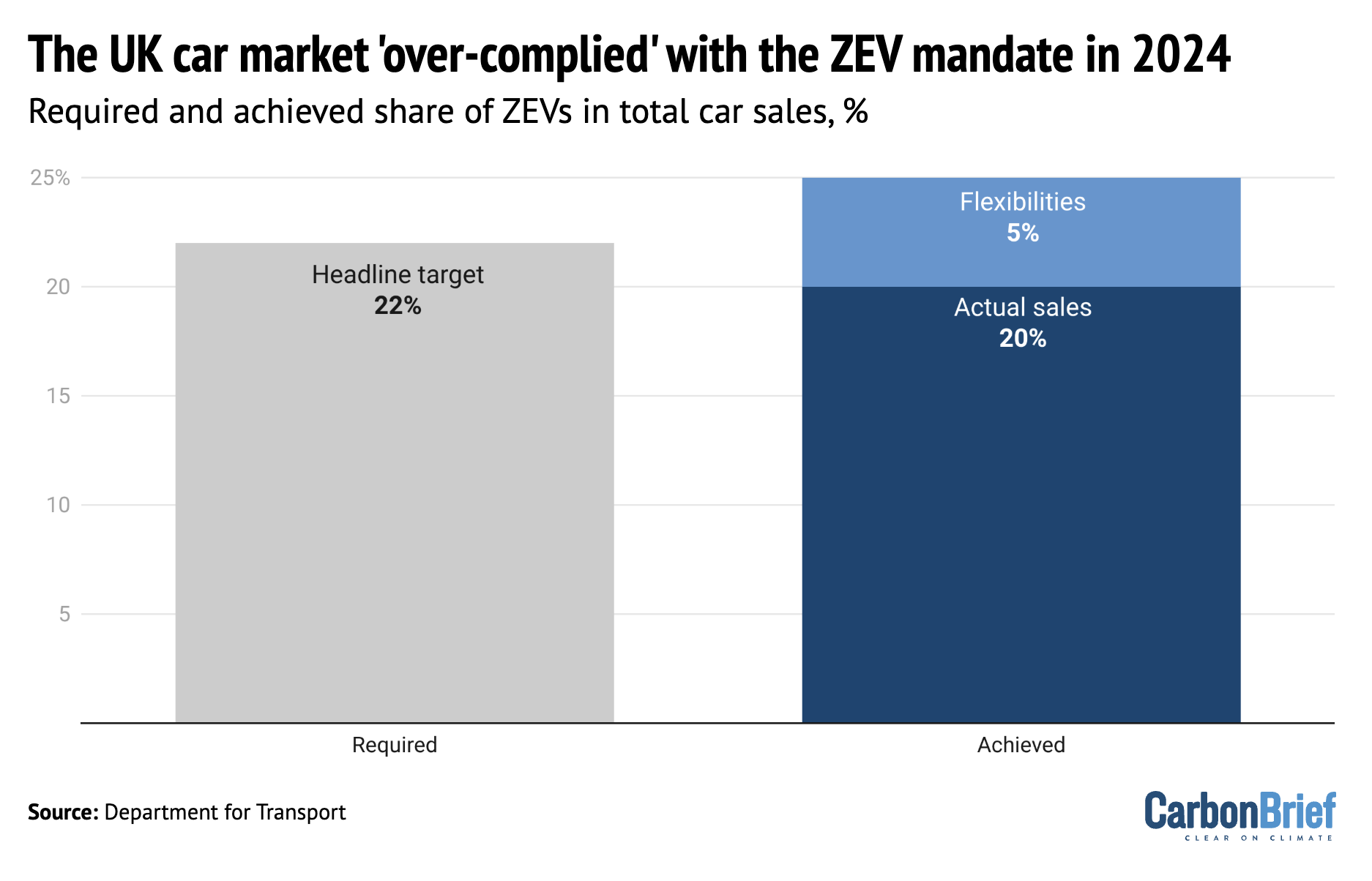
Contrary to claims by the UK car industry that demand is not high enough to meet the UK government’s sales targets for “zero emissions vehicles” (ZEVs), a new Carbon Brief factcheck found it has actually “overcomplied” with its mandate. The chart above shows the required (left) and achieved (right) share of ZEVs in total UK car sales in 2024, the latest figures available. “Flexibilities” (in light blue) include the sale of lower-emission petrol cars.
Spotlight
Chennai’s gig workers race against the heat
This week, Carbon Brief visits one of India’s first air-conditioned lounges designed to help gig workers deal with extreme heat.
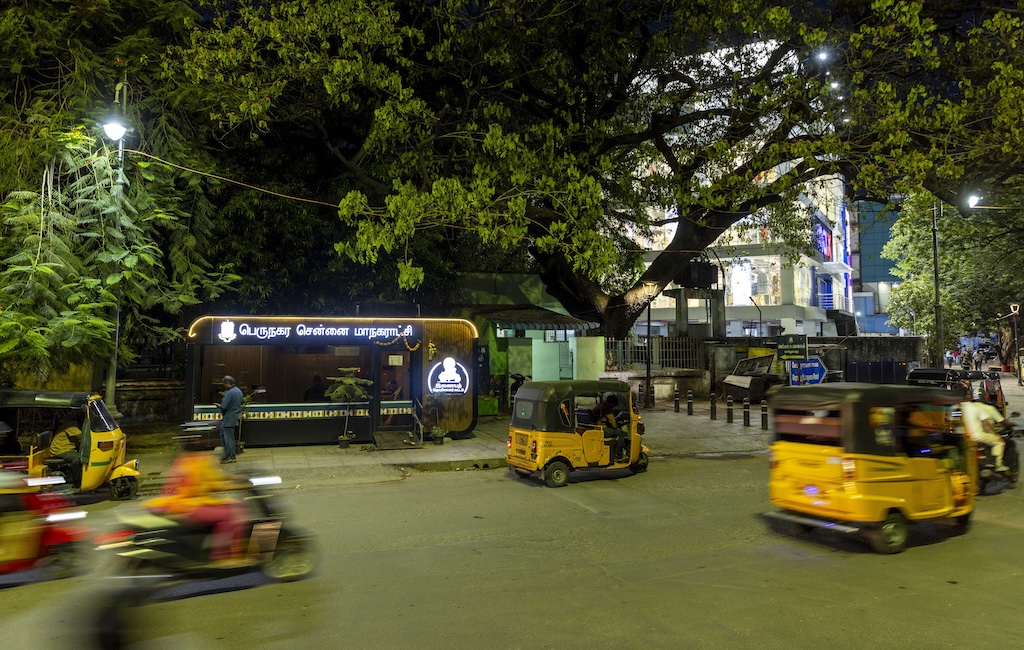
On a single day in late April, 20 of the world’s hottest cities were all in India.
Chennai was not on the list this time, but is no stranger to high temperatures. In the south-eastern coastal capital of Tamil Nadu, extreme humidity and heat are inescapable facts of life.
“The heat is by no means manageable, but we have no choice but to deal with it,” said Mohammed S, a 29-year-old grocery platform delivery worker, speaking to Carbon Brief.
Last year, Chennai became India’s first ever city to roll out air-conditioned lounges for millions of gig workers, like Mohammed, navigating India’s increasingly hotter cities.
Lounge access
In the dense shopping district of T Nagar – recognised as an “urban heat island” – studded with silk sari and jewellery shops, an unassuming oblong container-like structure stands out.
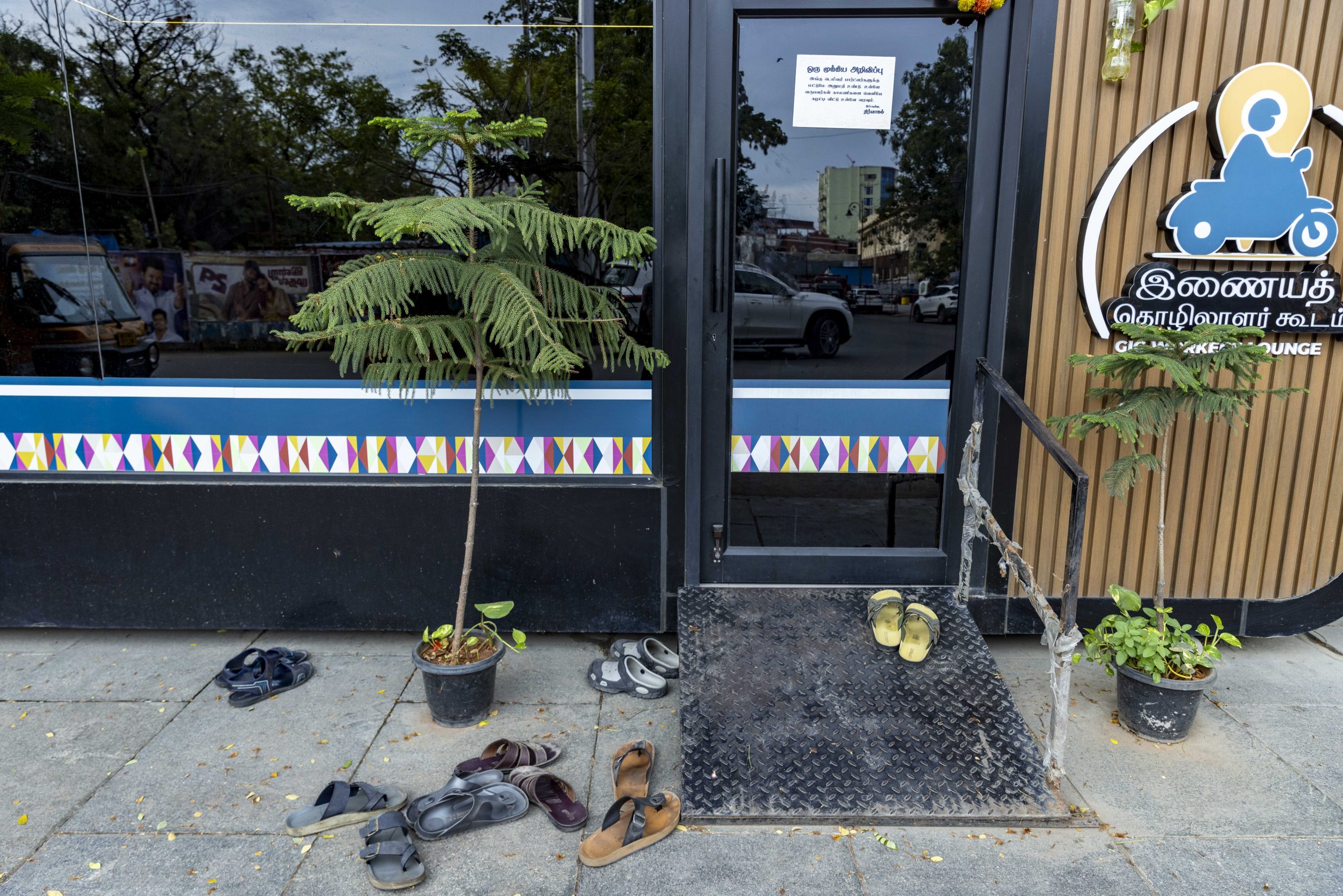
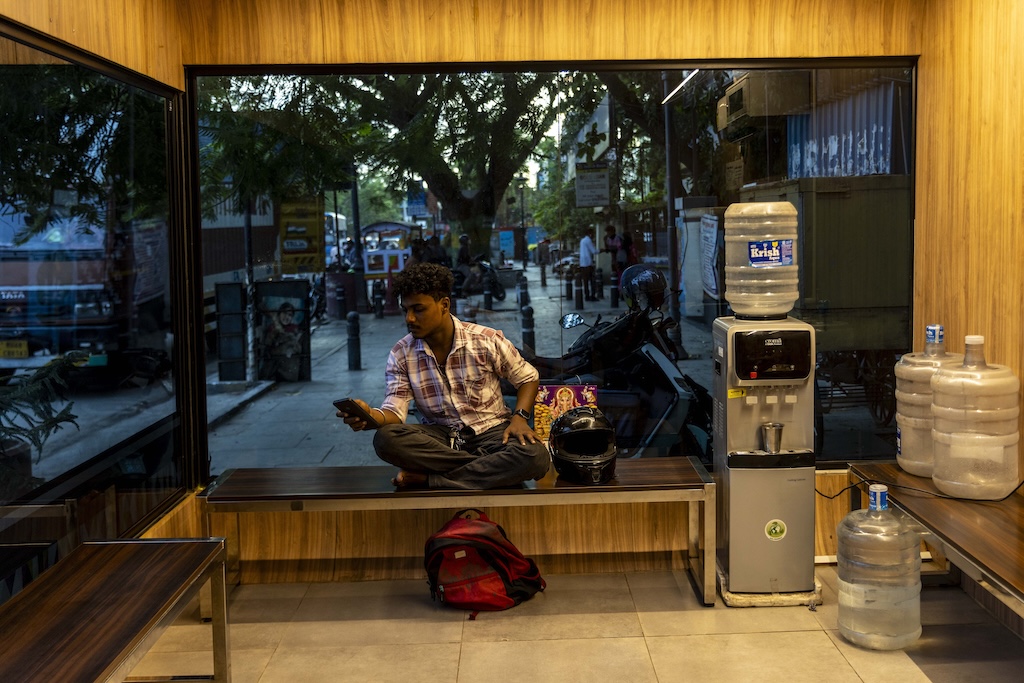
Through the building’s tinted windows, workers wearing synthetic jerseys emblazoned with food delivery app logos are stretched out on wooden benches meant to seat 25 people.
The lounge has charging points for phones, a water cooler and a unisex toilet. It might not seem like much, but workers tell Carbon Brief that it has made a “huge difference” to their lives – even on a day when the air conditioner stopped working.
“Before this, life was very difficult,” said Mohammed. He continued:
“We would park our [electric] bikes and try to find a tree to sleep under, stop for tea and tea shop owners would tell us we couldn’t sit there for more than 10 minutes, try to rest in a building’s stairwell and be chased away, then try to find shade under a flyover. Now we can sit in the AC and avoid the worst of the heat.”
Dinesh, 27, said his day starts at dawn before the sun is up, picking up packages from companies in north Chennai – another critical heat hotspot.
For the next seven hours, there is no “off point” or breaks for Dinesh as apps rush deliveries.
Some of Chennai’s gig workers told Carbon Brief they try to avoid the worst of afternoon temperatures from noon to 3pm, but for many – especially migrant workers – sitting back in the lounge is not a choice they can afford. One of them explained:
“If you don’t have cash to cover your bills or have to send money back home, you head out into the heat for a 12-hour shift and hope for the best.”
Feeling ‘gear’
In Chennai, heat might be normalised, but it has its own vocabulary. Speaking to Carbon Brief, the city’s gig workers, auto rickshaw drivers and fish sellers used an all-encompassing term – “gear” – to describe their symptoms, including dizziness, exhaustion and nausea.
Last summer, researchers offered Delhi’s gig workers a Rs 200 (roughly £2) cash transfer on the first day of a heatwave, to provide them with a means to achieve “real-time” adaptation to heat risk. Workers who received a cash transfer reported fewer heat-related symptoms, according to the study.
Asked if they would accept similar incentives to stay home on 40C days, workers in the T Nagar lounge expressed disbelief. Dinesh – who also trains technicians on how to repair air conditioners to support his income – told Carbon Brief:
“They [the apps] offer us incentives to go out in the heat when there are fewer riders.”
Barring a few, none of the dozens of outdoor workers Carbon Brief spoke to had an air conditioner at home or in their hostels, making the lounge the only place they could cool down.
Watch, read, listen
THE BIG ‘LOSER’: Writing in Foreign Affairs, Princeton University’s Prof Benjamin Bardlow argued that Beijing “may emerge from the war in Iran as its winner – and Washington its ultimate loser”.
CARBON ‘KINGPIN’: A new podcast by Drilled followed Bruce Rastetter – a corn ethanol “kingpin-turned-carbon entrepreneur” from Iowa – now promoting biofuels and carbon-capture projects in Brazil.
OPEC ‘DRAMA KINGS’: An episode of the Polycrisis podcast, titled “Gulf drama kings”, dug into the UAE’s announcement that it was quitting oil producers’ cartel OPEC, asking whether this reflected “doom” for the group, geopolitical tensions, or “different beliefs” about the future of oil.
Coming up
- 17 May: Cape Verde election
- 17-22 May: 13th session of the World Urban Forum, Baku, Azerbaijan
- 20-21 May:Copenhagen climate ministerial
Pick of the jobs
- Greenpeace, communications and engagement co-head (climate) | Salary: £63,756-£67,644. Location: London
- Global Witness, deputy director of campaigns (one-year contract) | Salary: £75,886. Location: London
- Karolinska Institute, research assistant in climate attribution and health | Salary: Unknown. Location: Stockholm, Sweden
- Greenpeace South Asia, climate researcher | Salary: Unknown. Location: Colombo, Sri Lanka
DeBriefed is edited by Daisy Dunne. Please send any tips or feedback to debriefed@carbonbrief.org.
This is an online version of Carbon Brief’s weekly DeBriefed email newsletter. Subscribe for free here.


The post DeBriefed 15 April 2026: Trump-Xi talk energy | ‘Supercharged’ El Niño | India’s first ‘heat lounges’ appeared first on Carbon Brief.

Climate Change
Commencement of NSW Forestry assessment a ‘chance to fix a broken system’ and deliver urgent forest protection
SYDNEY, Friday 18 September 2026 — In response to the Federal and NSW government’s announcement to commence an assessment of NSW forestry under the new national nature laws, Adele Chasson, Nature Policy Lead at Greenpeace Australia Pacific said:
“This is the Federal Government’s chance to fix a broken system that has enabled the destruction of NSW’s precious forests for far too long.
“Native forest logging continues to smash threatened species habitat. In NSW, it is pushing unique wildlife like koalas, greater gliders and glossy black cockatoos towards extinction. The state-owned logging agency has a disastrous record of environmental damage and breaches.
“The Regional Forest Agreement (RFA) system has failed, allowing the industrial logging of special forests for decades across Australia with no oversight. Thankfully, the Federal Government has started the process to finally remove the logging industry’s exemption from national nature laws.
“It’s time for the Federal Government to deliver the protection that forests urgently need, and that Australians overwhelmingly want. The Government must ensure a thorough assessment of the devastating impacts of native forest logging in NSW, and establish strong environmental rules that states must follow.
“These forests have been cared for by First Nations people for tens of thousands of years. They are some of the most biodiverse on the planet, store carbon, clean our air and water. It’s critical we protect them.”
ENDS
Media contact:
Kate O’Callaghan on 0406 231 892 or kate.ocallaghan@greenpeace.org
What happens when a love of marine life meets a playful imagination?
Sydney artist, illustrator and children’s author Sha’an d’Anthes, better known as Furry Little Peach, has teamed up with Greenpeace to create Happy Ocean Happy Planet: a joyful celebration of the extraordinary creatures that call our oceans home.
Sha’an felt inspired to create an illustration celebrating the beauty and resilience of marine life. Its hopeful message, A Happy Ocean is a Happy Planet, sparked a special collaboration with Greenpeace and a limited-edition t-shirt designed to help protect the oceans that inspired it.
The exclusive Furry Little Peach tee is available as a gift to new regular Greenpeace donors who give $30 or more and make at least three donations. By becoming a regular giver, you’ll help Greenpeace campaign for ocean protection.

ARTIST INTERVIEW: Sha’an d’Anthes (Furry Little Peach)
Sha’an shares the story behind the artwork, the local marine creatures featured in the design and why hope can be such a powerful force for action.
Hi Sha’an! Can you tell us a little about yourself and what you do?
My name is Sha’an d’Anthes, I also go by the pseudonym Furry Little Peach and I’m an illustrator, artist and children’s author based in Sydney, Australia. I love creating joyful, vibrant and nostalgic art that looks at the world through the lens of childlike wonder.

What do you love about drawing animals and nature?
I love all of the different shapes, colour and narrative you get to explore when drawing animals and nature. I’m also a city-slicker these days, and so I think that my work is a sort of escapism (for myself and hopefully for my audience).
How did the Greenpeace collaboration come about?
I went to the premiere of David Attenborough’s documentary Ocean, and felt compelled to create something to share the message of the film. This t-shirt is actually based off of that illustration including the tagline in I included when I shared it “A Happy Ocean is a Happy Planet”. I’m so grateful Greenpeace approached me for the project – it was a blast.
Where did you start when creating the Happy Ocean Happy Planet design?
The Happy Ocean tee starts the same as all of my work – with a brainstorm/braindump and really loose concept sketches.
How did you choose the animals for the illustration?
I actually asked Greenpeace to help me with the research of local marine life and they were so accommodating. They very quickly delivered me a huge list of local species of fish, mammals and coral and I just went through and looked up each creature and curated a little group of sea life that I thought would look sweet together – a mix of sizes, types, colours, textures and shapes.
What did you use to create the artwork?
So much of my work is traditional, but when it comes to things like t-shirts I always use digital drawing programs because I like to draw each colour in a separate layer which requires me to jump in and out of layers because it allows me to control colour and printing. When working digitally I always sketch in Procreate (an Australian digital art app), and then with this project I created final art in Adobe Fresco because it called for a vector graphic (an image that can be blown up to any size).
Do you have a favourite creature in the design?
I love painting Humpback Whales and always have, but I also have a soft spot for the sweet little Jelly Blubber jellyfish.
What did you want people to feel when they saw the artwork?
I specifically wanted to focus on the outcome that all of us want to see – a happy, thriving ocean where creatures are given the time and space to balance themselves. I feel that even when tackling tough subjects, leaning into hope is my natural inclination. As long as we have hope that things can be better, we will continue to take action.
What was the most fun part of creating it?
I actually documented the entire process of this project in a studio vlog on YouTube – and you can see how much fun I’m having doing final art jumping between layers and building the image. I had just come off completing final art for two books which are multi-year long projects, so being able to do a project that from start to finish in just a few days was really freeing at the time.
What does a “happy ocean” mean to you?
An ocean that given the time and space to repair and balance itself. Something I really took away from David Attenborough’s Ocean is that ocean ecosystems are actually really good at repairing themselves if we just let them do their thing.
How can people get their hands on the t-shirt?
The shirt is a reward for regular givers to Greenpeace – those who commit to at least 3 months of donations will receive the tee as a gift. Read about how at http://act.gp/flp-tee
How is Greenpeace helping to make our oceans happier places?
They have a deep focus on the health and happiness of our oceans through advocating for the set up of marine sanctuaries, holding big ocean polluters to account and calling for a ban on deep sea mining.
What are you working on next?
I will be jumping headfirst into Peachtober – an annual daily art challenge I run each year in October, if there are any artists reading this it’s a great time so please come join! In terms of publications my next picture book The Late Bird will be out in February 2027 (published by Harper Collins US) and then I have an creative activity book for adults coming out next August with Chronicle US and Penguin Australia. Otherwise you can always check out what I’m tinkering away with in my studio on Instagram and YouTube.

Climate Change
AI giant Anthropic’s first Australian data centre deal an “egregious” example of Big Tech double talk
SYDNEY, Thursday 17 September 2026 — Greenpeace Australia Pacific has slammed AI giant Anthropic’s deal for its first Australian site in Queensland’s Western Downs, the heart of coal seam gas country, saying the project will entrench gas and turbocharge climate pollution.
The expected electricity demand from the data centre site, situated in the middle of the Western Downs coal seam gas fields, is comparable to 1.5 million Australian households. Greenpeace’s report Energy Vampires: The AI data centres draining Australia called for a moratorium on frenzied data centre development until appropriate guardrails are in place.
Joe Rafalowicz, Head of Climate and Energy at Greenpeace Australia Pacific, said: “This is an egregious example of Big Tech giants being given carte blanche to drain energy and water, and use polluting gas to fuel their hyperscale data centres.
“AI and Big Tech corporations claim to bring new renewable energy to the grid, while blatantly planning to power their operations with polluting fossil fuels.
“Planning documents show the first stage of this behemoth project could be powered by ‘behind the metre’ gas — the same playbook AI companies have used in the US, leading to a 20% increase in climate pollution from electricity. Now these companies want to bring their cowboy plans to Australia and the Federal Government is allowing it.
“If they plugged into the local grid, the power required would increase Queensland’s electricity grid emissions by around 6.6 million tonnes — an 18% rise. If they build their own gas-fired power plants, this will drive up Queensland’s emissions even more.
“Billions of dollars are now pouring into a massive pipeline of proposed new data centres, of unprecedented size, being built at incredible speed across the country. Australians should be worried about the extreme lack of scrutiny being applied to these projects, and the corporations leading the data centre charge.
“The data centre build-out is happening without the endorsement of the Australian people, yet we are the ones who will pay the price. We can not allow unchecked data centre expansion to derail our renewable energy transition, entrench gas and turbocharge climate pollution — that’s why Greenpeace has called for an urgent moratorium until appropriate guardrails are in place.”
ENDS
Media contact: Kate O’Callaghan on 0406 231 892 or kate.ocallaghan@greenpeace.org



-

 Greenhouse Gases2 years ago
嘉宾来稿:满足中国增长的用电需求 光伏加储能“比新建煤电更实惠”
-
Climate Change1 year ago
Guest post: Why China is still building new coal – and when it might stop
-
Greenhouse Gases1 year ago
Guest post: Why China is still building new coal – and when it might stop
-

 Climate Change2 years ago
嘉宾来稿:满足中国增长的用电需求 光伏加储能“比新建煤电更实惠”
-

 Renewable Energy11 months ago
Sending Progressive Philanthropist George Soros to Prison?
-
Climate Change2 years ago
Bill Discounting Climate Change in Florida’s Energy Policy Awaits DeSantis’ Approval
-
Greenhouse Gases1 year ago
嘉宾来稿:探究火山喷发如何影响气候预测
-

 Carbon Footprint2 years ago
US SEC’s Climate Disclosure Rules Spur Renewed Interest in Carbon Credits