

The gleaming electric motors rolling off the production line at a factory in northeastern England offer an answer to one of the energy transition’s thorniest challenges.
The Advanced Electric Machines (AEM) plant outside Newcastle is at the forefront of building a new generation of motors made without rare earths, a group of 17 nearly indistinguishable metals used to manufacture most of the high-performance permanent magnets that power electric vehicles.
CEO James Widmer, a former aerospace engineer who founded the company in 2017, compares heavy reliance on rare earths in EV motors to the ill-fated decision to add lead to gasoline to resolve a technical issue.
“Putting rare earths in motors is the same thing,” Widmer told Climate Home News in a video call from his office. “You don’t need it, but somebody did it because it was easy.”
Widmer’s firm is among a handful of startup companies working with researchers to eliminate the need for rare earths in magnets and motors – offering a pathway to ease pressure on new mining and refining for one of the world’s most concentrated value chains.
Unease over China’s grip on supplies
As countries strive to reduce their climate-warming emissions by switching to electric transportation, demand for rare earths is soaring. That is increasing pressure for mining new resources and raising concerns about China’s supply chain domination.
China controls more than 90% of global rare earth separation and refining capacity and makes nearly all of the world’s permanent magnets – one of the building blocks of advanced technologies from EV motors and wind turbines vital to the energy transition to microchips, AI data centres and fighter jets.

Beijing spooked Western governments last year when it announced new export restrictions on supplies of rare earths and technological know-how in response to US tariffs on imports of Chinese goods. Automakers were left facing shortages.
While some of Beijing’s retaliatory curbs were suspended within months, China’s willingness to use its industrial clout over technological chokepoints to advance its geopolitical objectives has injected momentum into the efforts of companies such as AEM to find alternatives to rare earths.
“The best way to avoid the problems with these materials…isn’t to drill, baby, drill.The best way is just not to use them in the first place,” said Widmer.
Cutting that dependency would help shrink the environmental footprint of EV motors by keeping costly-to-extract rare earths in the ground, Widmer said.
Rare earth-free motors?
The auto industry had already been manufacturing electric motors using rare earth magnets for 20 years when Widmer set up AEM after conducting PhD research at the University of Newcastle.
Toyota’s Prius model, which is widely recognised as the first mass-produced hybrid passenger car, was launched in 1997 and used rare earth magnets in its motor.
About 80% of modern EV drivetrains now rely on high-performance rare earth permanent magnets to convert electricity into torque, according to a 2024 study, fuelling demand for the metals as EV adoption gains traction across the world, from Europe to South Asia.
Rapid electrification has doubled demand for magnet rare earths since 2015 and it is projected to increase by another 30% by 2030, according to the International Energy Agency (IEA). It recently put the cost of adequately diversifying the supply chain at $60 billion over the next decade.
Demand for EVs and concerns over oil dependence have rocketed back onto the political agenda after the Iran war sparked unprecedented disruptions to global oil markets, reigniting simmering debates about supply chain sovereignty for energy.

Contrary to their name, rare earths are found nearly everywhere on the planet in small quantities. However, larger, economically viable deposits are difficult to find and costly to extract.
On top of the expense, getting rare earths out of the ground is energy-intensive and generates toxic waste and sometimes radioactive by-products. This has led to large-scale environmental damage in China and Myanmar, where unregulated mines have become a major source of rare earth elements and are driving environmental destruction and violence, according to NGOs.
Lighter, greener, less risky
Instead of rare earth magnets, AEM’s motors rely on electrical steel laminations – thin stacked sheets of specialised metal – that create a magnetic field when powered.
The company says its electric motors are more energy-efficient and, in some configurations, more power-dense than traditional rare earth motors and reduce the emissions and polluting waste associated with permanent magnet motor manufacturing processes.
“And we’ve gotten rid of this enormous liability in the supply chain at the same time,” Widmer said.
-
South African rare earths project aims to rival Chinese with low-cost model
The EU-backed Zandkopsdrift project plans to offset the high cost of rare earths production with another mineral in hot demand for use in batteries -
Nepal’s EV revolution pays off as oil crisis causes pain at the pumps
Import subsidies, abundant hydropower and charging investments have spurred EV adoption, with electric vehicles now making up about three-quarters of new car sales -
Cobalt and nickel-free electric car batteries boom in “good news” for rainforests
Lithium iron phosphate batteries do not contain cobalt and nickel, which are mostly found in rainforest nations like the DR Congo and Indonesia


The company, which manufactures electric motors for passenger cars and trucks as well as for the agricultural and aerospace sectors, expects demand for its technology to grow as buyers become increasingly aware of the risks of supply chain disruption and the environmental harm caused by rare earth mining.
AEM’s motors are already being used in commercial vehicles, for example in truck axles in the Netherlands, and the company aims to expand into new regions through a joint venture with Indian manufacturing firm Sterling Tools, a company spokesperson said.

‘Reinventing the wheel’
Some 8,000 kilometres from AEM’s factory floor, a group of Silicon Valley engineers has been inundated with enquiries since Beijing announced its export restrictions on technologies to mine and smelt rare earths, magnet production and recycling.
As manufacturers worried about shortages, the rare earths supply chain bottleneck became a board-level conversation and executives started scouting for alternatives, said Ankit Somani, a former Google engineer and the co-founder of Conifer.
“Every startup needs an unfair advantage – and that was ours,” he told Climate Home News, adding that the challenge is now to keep up with demand.
The San Francisco-based startup’s technology removes rare earths from electric scooters and small delivery vehicles by placing the motor directly inside the wheel hub, an innovation it describes as “literally reinventing the wheel”.
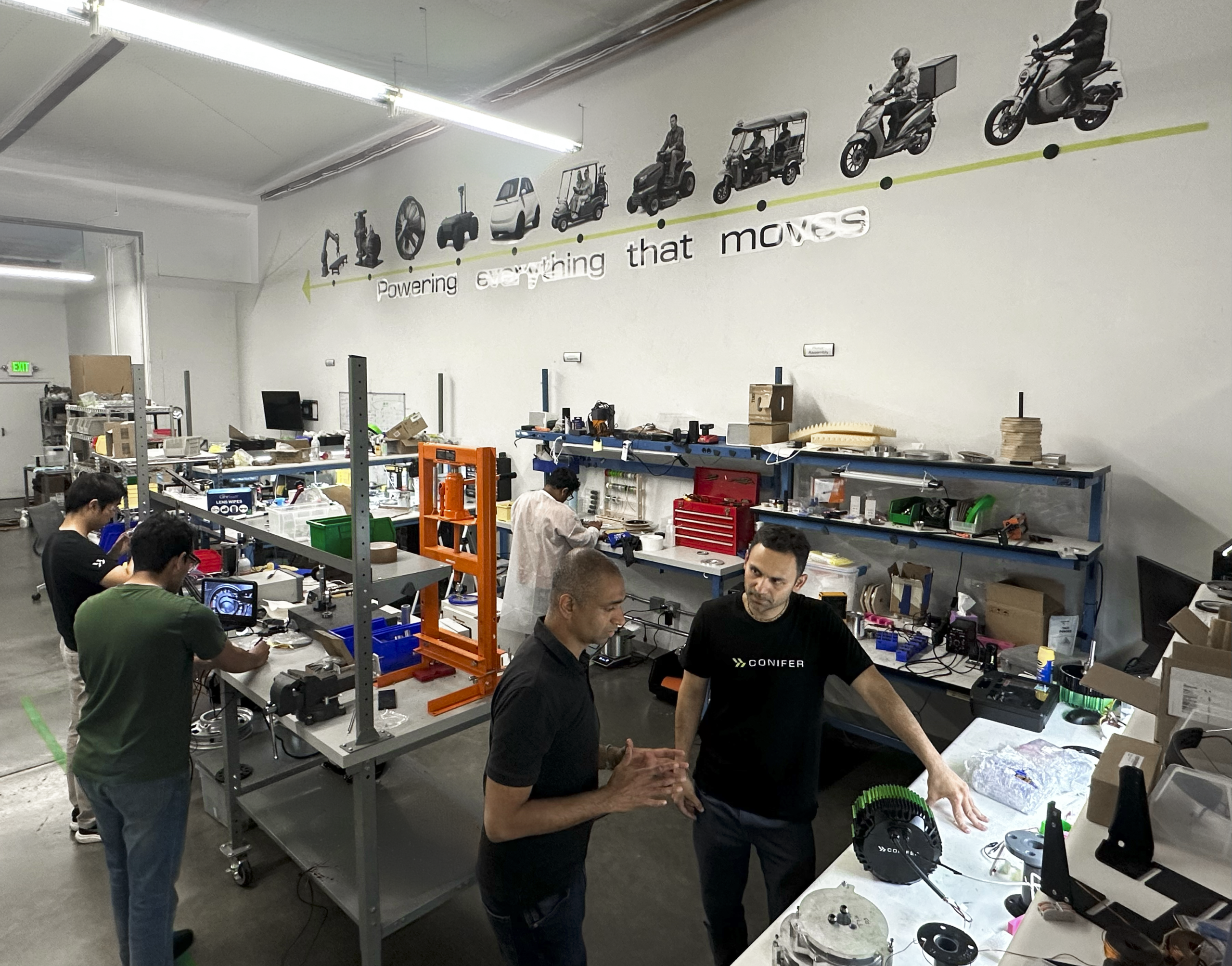
To transfer power inside vehicles, the company uses a refined form of iron oxide – the same basic compound as rust – known as a ferrite magnet.
Somani said the technology reduces the costs of manufacturing electric vehicles by eliminating the need for expensive rare earth supplies.
Conifer’s first production line already produces 75,000 motor components a year in the city of Pune in western India, the hub of its manufacturing operations, where electric two- and three-wheelers are booming.
To keep up with demand, the company is planning to open a 250,000-unit capacity facility, Somani said.
The next generation of magnets
At Minnesota-based Niron Magnetics, which produces permanent magnets using iron nitride instead of rare earths, vice president Tom Grainger said last year’s supply chain disruption had been a wake-up call.
“What was always possible but never quite material – the risk of geopolitical interference in magnet supply chains – became real in 2025,” he told Climate Home News.
In contrast to magnets that depend on Chinese rare earth supplies, the company’s iron nitride magnets are made from the abundant and inexpensive elements, iron and nitrogen.
Niron estimates that iron nitride magnets could replace roughly two-thirds of the global permanent magnet market.
-
Battery passport plan aims to clean up the industry powering clean energy
Some of the world’s largest battery makers are piloting a scheme led by the Global Battery Alliance to reward manufacturers that meet social and environmental standards -
Dutch startup’s rust-powered batteries could help crack Europe’s energy storage gap
Ore Energy says its long-duration batteries made of iron and air can help Europe cut its dependence on critical minerals supply chains and boost renewables -
Self-taught mechanics give second life to Jordan’s glut of spent EV batteries
As EV sales boom in Jordan, a lack of formal infrastructure for dealing with end-of-life batteries is leading to some innovative solutions


Niron Magnetics’ first consumer-facing magnet, used in a professional loudspeaker, was rolled out earlier this year and the firm has already received investment from automotive giants General Motors, Stellantis and parts provider Magna International.
The company is developing its first full-scale manufacturing plant in Sartell, Minnesota, which aims to produce up to 1,500 tonnes of magnets annually when it opens in 2027, targeting consumer electronics, as well as the automobile sector, data-centre cooling pumps, robotics and drones.
By Chinese standards, that is a modest start: a typical factory in China can produce between 5,000 and 20,000 tonnes of rare earth magnets, said Grainger. But Niron’s model is designed to be replicated anywhere with basic industrial infrastructure. Unlike rare earth processing, it requires no proximity to a mine or complex chemical permitting.
“The goal…is a factory that has the scale to deliver in sufficient quantities for large programmes – with the economics that come with scale,” Grainger said.
The firm is already looking for a second site in the US to build a 10,000-tonne per year facility, equivalent to approximately 1-2% of the global permanent magnet market share, according to the company.
Governments ramp up support
Anxious to protect their industries from potential supply gaps, Western countries are supporting research into innovative rare earth alternatives.
Jean-Michel Lamarre, a team leader at Canada’s National Research Council, said the government’s science agency, which has been developing rare earth-free motor technologies, is working on using 3D printing to produce magnets.
Lamarre said that while removing rare earths from electric motors significantly reduces the costs of materials, making new designs commercially viable remains a challenge.
Difficulties include scaling up manufacturing capability and responding to rapidly changing market conditions, a spokesperson for Canada’s Department of Natural Resources said.
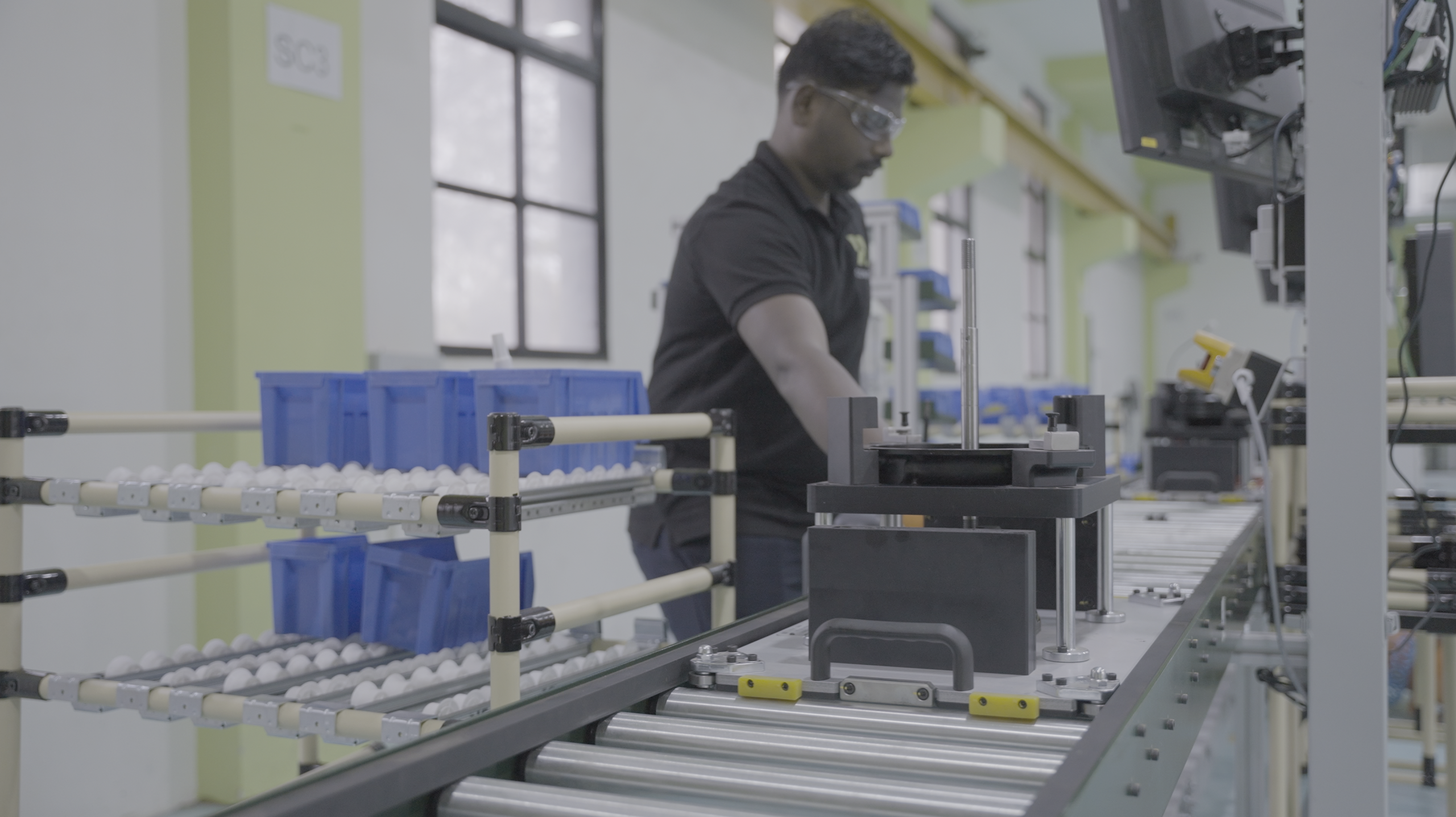
The US, Canada and the European Union have announced billions in subsidies and financial support to mine and produce more of the materials themselves, as well as funding research on rare earths substitutes. The US government is also investing heavily in American rare earths and magnet producers.
Recycling rare earth elements from discarded computers, motors and wind turbines also has a role to play in boosting domestic production, said Nicola Morley, a professor of materials physics at the University of Sheffield in the UK, who advises major manufacturers including Siemens and Volkswagen.
Recycling alone has the potential to reduce the need for primary rare earths supplies by up to 35% by 2050, according to the IEA.
Today, around 1% of the rare earths used in end-products is recycled because of technical and economic challenges. But startups are seizing on interest in creating circular supply chains that reduce reliance on China.
Better than rare earths
While recycling may be a relatively quick way for major markets to bolster their supplies of magnet metals, some researchers expect scientists to come up with groundbreaking alternatives to rival rare earths within a matter of years.
At Georgetown University in Washington DC, physicist Kai Liu and his team are working to create new materials for magnet production using a machine that bombards atoms of up to six different metals onto a surface simultaneously – like six games of pool played at once. As they land, the atoms bond into new crystal structures, which Liu’s team tests for magnetic properties.
Their research has already led to a discovery of magnet materials, Liu said, adding that he is hopeful for further breakthroughs by the scientific community.
“I am cautiously optimistic that within the next five to 10 years, the community might find something comparable or better than rare earths,” he said.
Main image: An employee working on an AEM motor at the company’s factory outside Newcastle (Photo: Advanced Electric Machines)
The post The energy transition has a rare earth problem: These startups are solving it appeared first on Climate Home News.
https://www.climatechangenews.com/2026/05/05/the-energy-transition-has-a-rare-earth-problem-these-startups-are-solving-it/

Climate Change
After a week of plenty of activity and drama for Greenpeace at sea, I felt like writing to you on a much quieter theme…
Do you have a favourite book, poem or story about the ocean?
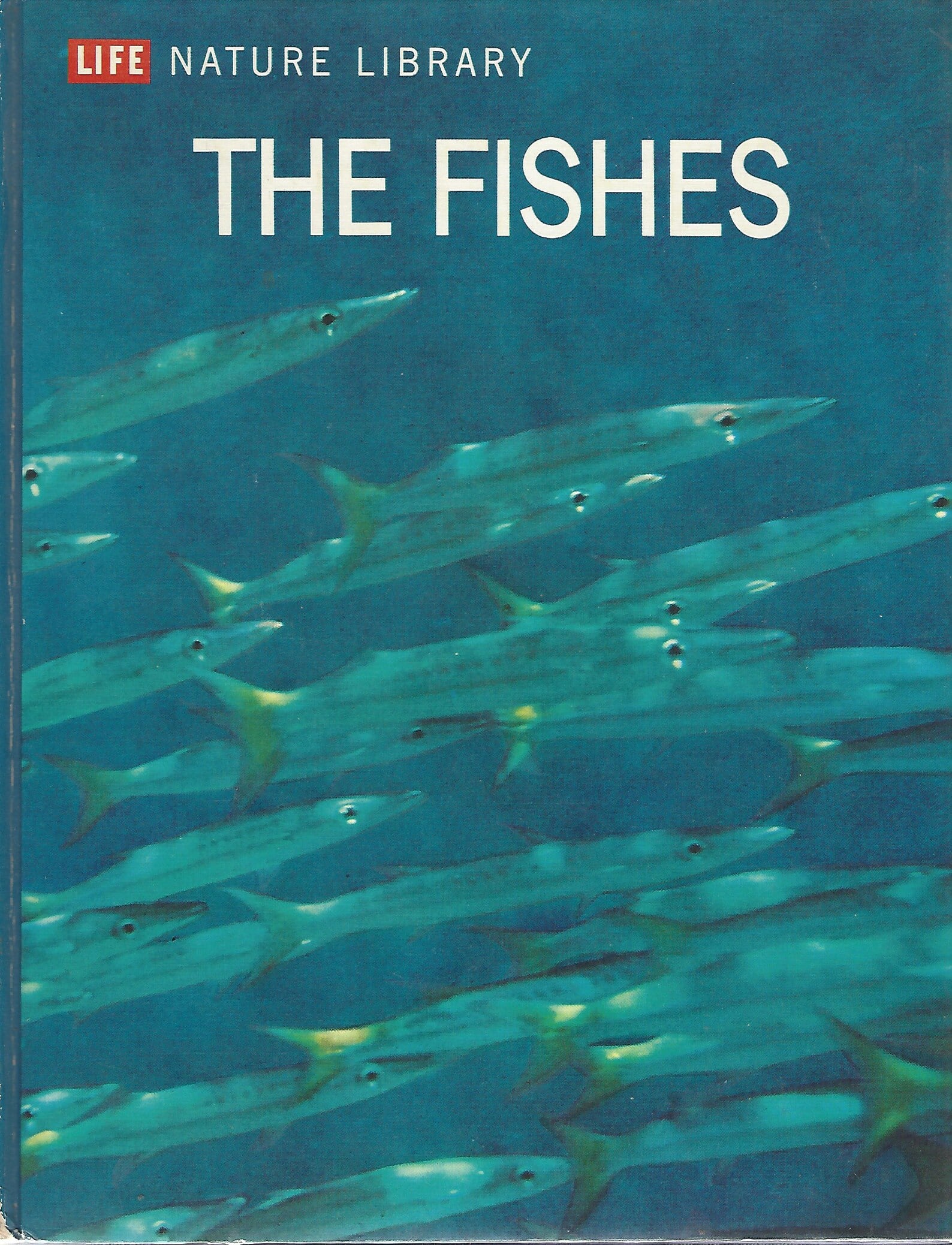
When I was very small, it was the TimeLife book of The Fishes, by F. D. Ommanney, which I remember endlessly poring over, my child’s mind gripped, in total fascination. The cover illustration showed a shoal of barracuda, mid-water and heading upwards, lit up as an iridescent blue by a column of sunlight. Oddly, it is only the cover and the illustrations of the deep sea creatures which I now remember—but I loved that book, as the weakened spine, blunted pages and dog-eared corners attested.
The Fishes has been on my mind recently, because I’ve been working with some dear friends on our own illustrated oceans book, to be published by Upswell Publishing. The book is called Scott Reef: Like Nowhere Else on Earth, and I want to share with you a bit of the story behind its creation.
Scott Reef is absolutely magnificent: Australia’s largest freestanding oceanic reef, brimming with life, including rare and threatened species such as a genetically distinct population of green sea turtles, pygmy blue whales and the wonderfully elegant dusky sea snake. But Scott Reef isn’t near our capital cities; it is way off the north-west coast of WA. And it is threatened with devastation by Woodside, which wants to drill up to 57 toxic wells at the Reef for its vast, dirty Browse gas project.
One of the main challenges in the fight to save Scott Reef from being turned into an industrialised gas zone by Woodside is bringing this incredible location to life for people who haven’t actually experienced it first hand. Because despite its ecological significance and dazzling beauty, ‘Scott Reef’ is also—at least not yet—exactly a household name.
To help get over this barrier, Greenpeace has enabled a number of photographers to travel to Scott Reef by boat (including the Rainbow Warrior) to document its astonishing diversity of colour and life. We then brought these images together in a remarkable photobook, produced by our talented in-house team, which we’ve been putting into the hands of as many leaders as possible—including the MPs whose decisions can determine the Reef’s future.
Back in June this year, I was sharing a copy of our in-house book at a business gathering in Perth when someone pulled me aside. Had we thought about publishing the book commercially? Apart from anything else, he wanted to buy a copy himself! He had a point. We were proud of what we’d created, but a commercially published version could reach a much wider audience and have even greater campaign impact. I immediately turned to my dear friend, Terri-ann White, who runs Upswell Publishing in WA, for advice.
Terri-ann has a huge heart and terrific vision. So many wonderful things in WA owe their existence to her doings, and, true to form, she was immediately encouraging and enthusiastic. “But,” she said, “it would add a whole new dimension if we had some words to accompany the incredible pictures.”
Fair enough, I thought. I could ask a few authors.
“And when would you like it published?” she asked.
“Ideally November,” I answered sheepishly.
Now, in publishing terms, nobody goes from idea to finished work, beautifully produced by a commercial publisher, in just four months. It. Just. Doesn’t. Happen. A book of this scale would ordinarily take nine months, I was told. But Terri-ann was undeterred. “If you can get a rapid turnaround on the writing, I will give it a shot.”
Over the following few days, I sent out 24 emails to prospective writers. To my joy and surprise 23 of them responded almost immediately with an enthusiastic yes!
Terri-ann was somewhat alarmed and perplexed when I told her the good news… we’d discussed a few authors, not more than twenty! “Impossible,” she texted. “Editing is important and you are talking about thousands of words!” But I also know Terri-ann. She does the impossible. And so, here we are… Terri-ann is going to hit that improbable deadline. Scott Reef: Like Nowhere Else on Earth will be on shelves in November.
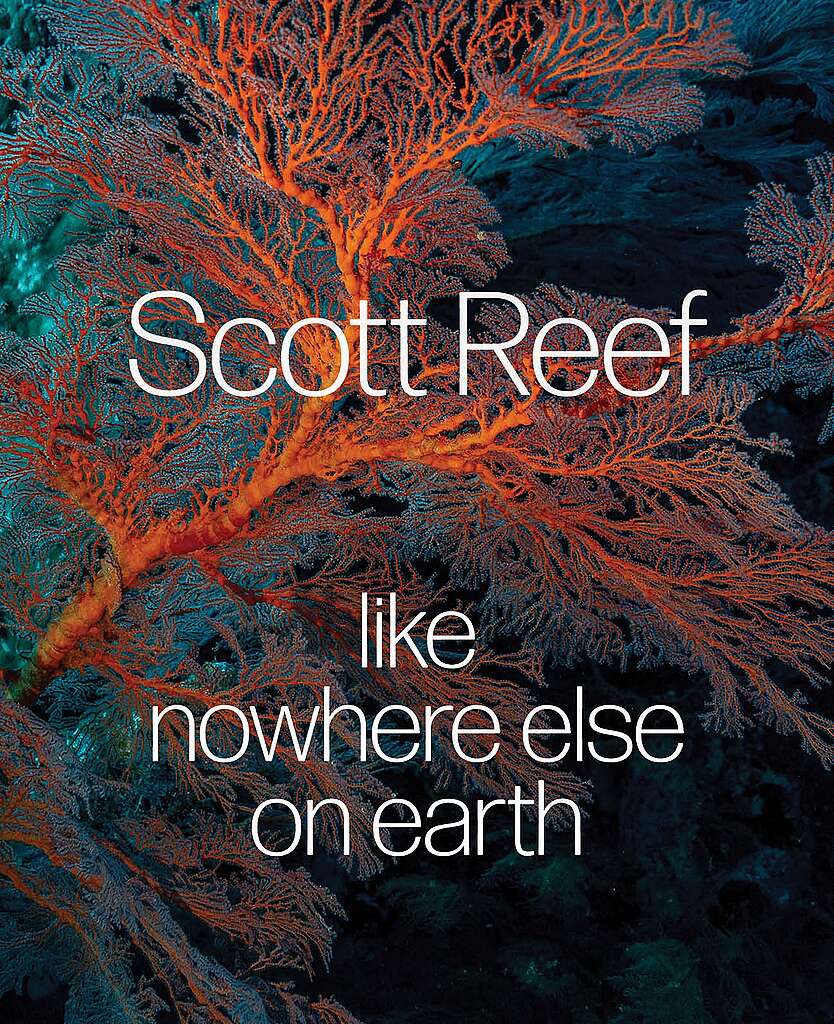
The contributors are a wonderfully diverse bunch, united by their enthusiasm for Scott Reef — and their extraordinary speed!
It’s a brilliant mix. The book brings together national icons like Peter Garrett, Tim Winton, Mick Dodson, Janet Holmes à Court and Fiona Stanley; the intellectual heft of professors Frank Bongiorno, Jessica Meeuwig, Rick Steiner and Samantha Hepburn; the poetic vision of Prema Arasu, Berndt Sellheim and Saadiah Freeman; the field expertise and passionate first hand witnessing of Imogen Zethoven, Tooni Mahto, Ben Fitzpatrick, Geoff Bice, Olaf Meynecke, Paul Gamblin, Sarah Gittoes and Hayley Baillie; and the determination of emerging activist voices Jackson Reid and Emma Sangalli.
Their elegant words wrap themselves around the sheer wonder of the underwater world, brought to life by the work of the photographers — of whom one, Wendy Mitchell, has also contributed a wonderful essay.
Terri-ann showed me the full physical proofs this week and they are breathtaking. This book contains some of my absolute favourite images of wildlife beneath the waves -– and believe me, after almost 20 years at Greenpeace, I’ve been privileged enough to see some remarkable shots! The essays bring a whole new depth and richness to the story of Scott Reef.
If I am being honest, and maybe a bit sentimental, I hope that a four or five-year-old child somewhere in Australia will spend part of their summer holidays turning the pages of this book, wide-eyed with curiosity and awe at the beauty and strangeness of the creatures that call our oceans home.
Our shared commitment is to make sure that, as those children grow up, the wonders of Scott Reef will exist not just in the pages of the book, but out there in the wild waters off north-western Australia—alive, thriving, and every bit as extraordinary as they are today; a living wonder beneath the waves.
Pre-orders of Scott Reef: Like Nowhere Else on Earth are available here.


Q & A
Sometimes you get asked a question so often that you decide to produce a report to answer it!
We know there is strong public opposition to voter opposition to gas drilling at Scott Reef and fracking in the Kimberley in Western Australia. But I am frequently ask