

When Shell sold its onshore oil operations in Nigeria to the Renaissance Africa Energy Company last year, the divestment transformed the fossil fuel giant’s climate performance – helping it become the first energy major to report zero routine flaring.
One year on, gas flaring at some of these assets has increased significantly, while Shell has continued to benefit commercially from them, according to a new investigation by nonprofit group Data Desk, shared exclusively with Climate Home News.
Since March 2025, Shell has traded 8 million barrels of oil from the Niger Delta’s Forcados terminal, which was included in the Renaissance deal, Data Desk’s analysis of information supplied by commodities data firm Kpler found.
It is a similar picture at the Bonny terminal, where Shell’s operations were also transferred as part of its onshore exit. Shell is recorded as having traded 3 million barrels of oil from this facility, south of the city of Port Harcourt, since the deal went through.
Multimillion-dollar oil shipments
Using an average 2025 global Brent crude price of $69 per barrel, 11 million barrels of oil shipped from the two terminals since the completion of Shell’s divestment would be worth $759 million.
Shell chartered the tankers carrying the oil to buyers around the world – from Ivory Coast and South Africa, to Canada and Italy, the Kpler data shows.
-
Gas flaring soars in Niger Delta post-Shell, afflicting communities
Since the multinational sold its assets in Nigeria’s oil hub, data analysis for Climate Home News shows flaring has risen, harming locals and the climate -
Fossil fuel crisis offers chance to speed up energy transition, ministers say
As climate diplomacy resumes in Berlin, ministers say the Iran war-driven fuel crisis is exposing the risks of fossil dependence


“Whoever is running Shell’s old oilfields in Nigeria needs to get that oil to market,” said Neil Atkinson, former head of the Oil Industry and Markets Division at the International Energy Agency (IEA).
“So it may well be that while Shell no longer runs a facility, the firm that took it over may have an arrangement to continue selling oil through Shell, thereby making use of their connections and trade networks,” Atkinson said.
Shell’s shipping and chartering arm made a profit of £24.8 million (about $33 million) in 2024, the most recent date available, up from £17 million the year before.
Asked about Shell’s continuing ties to the two terminals, a Shell spokesperson said: “We don’t comment on trading activities or specific customer relationships.”
Renaissance did not address a question from Climate Home News about its ongoing commercial ties with Shell.
Environmental legacy
The new reporting raises fresh questions about how energy majors present their climate performance to investors and consumers, and the environmental legacy they are leaving behind after selling fossil fuel assets in countries such as Nigeria, where Shell has operated for nearly a century.
Many of Shell’s onshore oil fields had been in production for decades by the time the company sold its Nigerian onshore subsidiary over a year ago for $2.4 billion to Renaissance, a consortium of Nigerian companies and an international firm that aims to double oil production by 2030.
Six months after finalising the deal, Renaissance CEO Tony Attah said the company had already boosted output at Shell’s former fields by 100,000 barrels per day.

At the same time, gas flaring increased at most of the fields where the activity was detected, according to Data Desk’s analysis of satellite data, despite Renaissance’s pledges to foster sustainable energy development and protect local communities.
Gas is a by-product of oil drilling. In places that lack infrastructure to process this gas, like the Niger Delta, it gets burned off instead.
Earlier this year, Climate Home News reported on the impact on local communities of increased gas flaring at several other fields in the Niger Delta since they were sold by Shell to different Nigerian companies in recent years.
Besides billowing out toxic chemicals that cause air pollution and wasting a potential energy source, global gas flaring is estimated by the World Bank to release the equivalent of 400 million tonnes of CO2 annually – higher than France’s greenhouse gas emissions each year.
Gas flaring renaissance?
Comparing the year before the sale’s completion to the year after, satellite data shows daily flaring rose at 10 of the 13 Renaissance blocks where it was detected. Flaring fell at two blocks and was unchanged at one other, while five had no detectable flaring in the dataset.
The OML 32 block, located in the heart of the Niger Delta, was one of the assets that Renaissance took over last year. Here, average daily flaring was more than 20 times higher in the year ending March 2026 compared to the year before, according to Data Desk’s analysis of satellite data from the Colorado School of Mines’ Earth Observation Group.
The Renaissance-operated OML 21 and OML 28 onshore blocks saw increases of 390% and 93%, respectively, in average daily flaring in the year after the sale’s completion.

A spokesperson for Renaissance said the company’s environmental management framework included a plan to reduce flaring.
“Renaissance Africa Energy Company Limited has a multi-year gas flaring reduction strategy through its Flare Elimination and Monetisation Plan, developed in accordance with applicable laws and regulations,” the spokesperson said.
Shell’s spokesperson said it “cannot comment on operational matters relating to assets under new owners/operators”, adding that both the company and the Nigerian government had conducted “extensive due diligence” with regard to its divestments in Nigeria.
“Dodging accountability”
Before the deal, Shell said three years ago that its remaining Nigerian assets accounted for about half of the total routine and non-routine flaring in its integrated gas and upstream facilities. Shortly after selling these assets, the company announced it had achieved zero routine flaring – five years ahead of a global 2030 target set by the World Bank.

Shell’s exit from onshore operations in Nigeria followed years of accusations of environmental harm, including oil spills. Residents of two Nigerian communities are currently taking legal action against the oil major in the UK and a trial at the High Court is due to begin next year.
Shell says the majority of spills in the Niger Delta were caused by theft and sabotage and it is therefore not liable.
According to Atkinson, Shell pivoted away from onshore oil fields that “might have become more trouble than they were worth” while remaining a major player in Nigeria’s oil industry.
Top green jet fuel producer linked to suspect waste-oil supply chain
The London-based company has invested billions in offshore gas development in the country. It has also retained a 25.6% stake in Nigeria LNG Limited (NLNG), a liquefied natural gas producer based on Bonny Island.
As the world’s biggest fossil fuel companies seek to meet their climate targets, a strategic shift “to dodge accountability” by selling more problematic assets is under way, said Sophie Marjanac, director of legal strategy at the Polluter Pays Project, an organisation that campaigns for the oil industry to cover the cost of its environmental damage.
“By dumping ageing, polluting infrastructure onto smaller operators, they leave behind contamination, and communities facing ongoing harm with little chance of justice,” Marjanac said.
The post How Shell is still benefiting from offloaded Niger Delta oil assets appeared first on Climate Home News.
How Shell is still benefiting from offloaded Niger Delta oil assets

Climate Change
After a week of plenty of activity and drama for Greenpeace at sea, I felt like writing to you on a much quieter theme…
Do you have a favourite book, poem or story about the ocean?
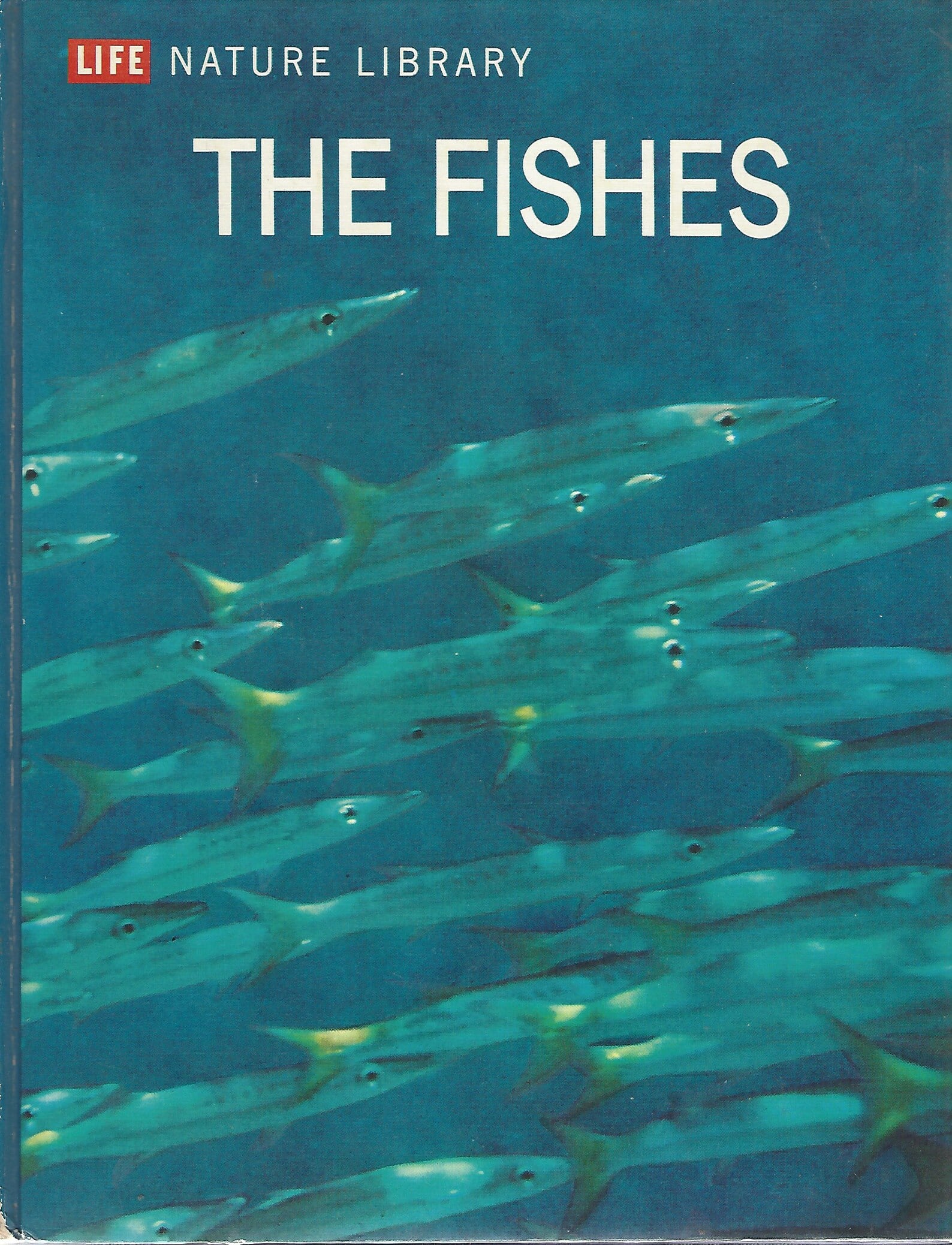
When I was very small, it was the TimeLife book of The Fishes, by F. D. Ommanney, which I remember endlessly poring over, my child’s mind gripped, in total fascination. The cover illustration showed a shoal of barracuda, mid-water and heading upwards, lit up as an iridescent blue by a column of sunlight. Oddly, it is only the cover and the illustrations of the deep sea creatures which I now remember—but I loved that book, as the weakened spine, blunted pages and dog-eared corners attested.
The Fishes has been on my mind recently, because I’ve been working with some dear friends on our own illustrated oceans book, to be published by Upswell Publishing. The book is called Scott Reef: Like Nowhere Else on Earth, and I want to share with you a bit of the story behind its creation.
Scott Reef is absolutely magnificent: Australia’s largest freestanding oceanic reef, brimming with life, including rare and threatened species such as a genetically distinct population of green sea turtles, pygmy blue whales and the wonderfully elegant dusky sea snake. But Scott Reef isn’t near our capital cities; it is way off the north-west coast of WA. And it is threatened with devastation by Woodside, which wants to drill up to 57 toxic wells at the Reef for its vast, dirty Browse gas project.
One of the main challenges in the fight to save Scott Reef from being turned into an industrialised gas zone by Woodside is bringing this incredible location to life for people who haven’t actually experienced it first hand. Because despite its ecological significance and dazzling beauty, ‘Scott Reef’ is also—at least not yet—exactly a household name.
To help get over this barrier, Greenpeace has enabled a number of photographers to travel to Scott Reef by boat (including the Rainbow Warrior) to document its astonishing diversity of colour and life. We then brought these images together in a remarkable photobook, produced by our talented in-house team, which we’ve been putting into the hands of as many leaders as possible—including the MPs whose decisions can determine the Reef’s future.
Back in June this year, I was sharing a copy of our in-house book at a business gathering in Perth when someone pulled me aside. Had we thought about publishing the book commercially? Apart from anything else, he wanted to buy a copy himself! He had a point. We were proud of what we’d created, but a commercially published version could reach a much wider audience and have even greater campaign impact. I immediately turned to my dear friend, Terri-ann White, who runs Upswell Publishing in WA, for advice.
Terri-ann has a huge heart and terrific vision. So many wonderful things in WA owe their existence to her doings, and, true to form, she was immediately encouraging and enthusiastic. “But,” she said, “it would add a whole new dimension if we had some words to accompany the incredible pictures.”
Fair enough, I thought. I could ask a few authors.
“And when would you like it published?” she asked.
“Ideally November,” I answered sheepishly.
Now, in publishing terms, nobody goes from idea to finished work, beautifully produced by a commercial publisher, in just four months. It. Just. Doesn’t. Happen. A book of this scale would ordinarily take nine months, I was told. But Terri-ann was undeterred. “If you can get a rapid turnaround on the writing, I will give it a shot.”
Over the following few days, I sent out 24 emails to prospective writers. To my joy and surprise 23 of them responded almost immediately with an enthusiastic yes!
Terri-ann was somewhat alarmed and perplexed when I told her the good news… we’d discussed a few authors, not more than twenty! “Impossible,” she texted. “Editing is important and you are talking about thousands of words!” But I also know Terri-ann. She does the impossible. And so, here we are… Terri-ann is going to hit that improbable deadline. Scott Reef: Like Nowhere Else on Earth will be on shelves in November.
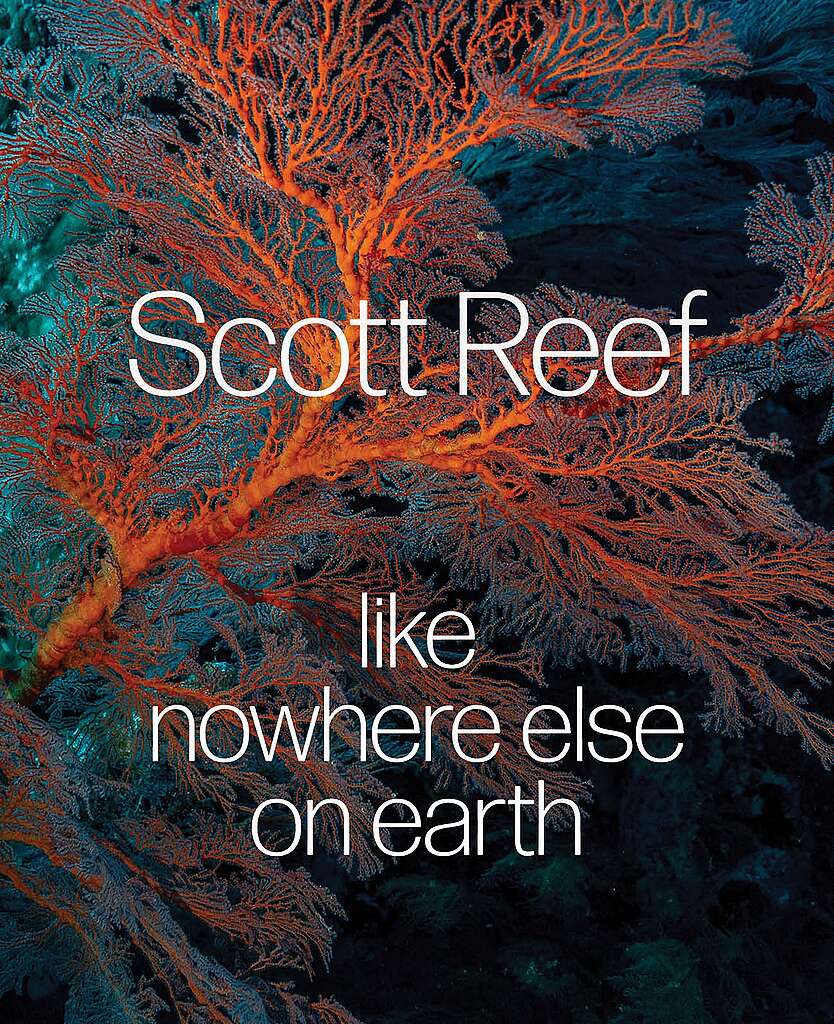
The contributors are a wonderfully diverse bunch, united by their enthusiasm for Scott Reef — and their extraordinary speed!
It’s a brilliant mix. The book brings together national icons like Peter Garrett, Tim Winton, Mick Dodson, Janet Holmes à Court and Fiona Stanley; the intellectual heft of professors Frank Bongiorno, Jessica Meeuwig, Rick Steiner and Samantha Hepburn; the poetic vision of Prema Arasu, Berndt Sellheim and Saadiah Freeman; the field expertise and passionate first hand witnessing of Imogen Zethoven, Tooni Mahto, Ben Fitzpatrick, Geoff Bice, Olaf Meynecke, Paul Gamblin, Sarah Gittoes and Hayley Baillie; and the determination of emerging activist voices Jackson Reid and Emma Sangalli.
Their elegant words wrap themselves around the sheer wonder of the underwater world, brought to life by the work of the photographers — of whom one, Wendy Mitchell, has also contributed a wonderful essay.
Terri-ann showed me the full physical proofs this week and they are breathtaking. This book contains some of my absolute favourite images of wildlife beneath the waves -– and believe me, after almost 20 years at Greenpeace, I’ve been privileged enough to see some remarkable shots! The essays bring a whole new depth and richness to the story of Scott Reef.
If I am being honest, and maybe a bit sentimental, I hope that a four or five-year-old child somewhere in Australia will spend part of their summer holidays turning the pages of this book, wide-eyed with curiosity and awe at the beauty and strangeness of the creatures that call our oceans home.
Our shared commitment is to make sure that, as those children grow up, the wonders of Scott Reef will exist not just in the pages of the book, but out there in the wild waters off north-western Australia—alive, thriving, and every bit as extraordinary as they are today; a living wonder beneath the waves.
Pre-orders of Scott Reef: Like Nowhere Else on Earth are available here.


Q & A
Sometimes you get asked a question so often that you decide to produce a report to answer it!
We know there is strong public opposition to voter opposition to gas drilling at Scott Reef and fracking in the Kimberley in Western Australia. But I am frequently asked whether, even if people don’t want it, more gas drilling is a necessary evil to sustain WA’s prosperity?
The short answer is an unequivocal ‘No’. The longer answer is our new report, From Gas to Green: Building Western Australia’s Future State, which makes the comprehensive case that Asia’s gas market is declining — while WA has an enormous untapped opportunity to become a global leader in green industries and exports, helping drive the region’s shift away from fossil fuels. The faster that WA embarks on a decisive shift away from gas—and that includes no fracking in the Kimberley, or drilling at Scott Reef — so much the better for the state’s people, ecology and economy.