

After a slight delay of the Maria S. Merian caused by late-arriving containers our research cruise MSM142 finally got underway. By last Tuesday (24.03.2026), the full scientific team had arrived in Nuuk, the capital of Greenland, and the ship reached port on Wednesday (25.03.2026) morning. That same day, scientists and technicians moved on board and immediately began preparations, assembling and testing our instruments. Although the mornings on Wednesday and Thursday were grey and overcast, the afternoons cleared up beautifully. This gave us valuable time to organize equipment on deck and store empty boxes back into the containers before departure.
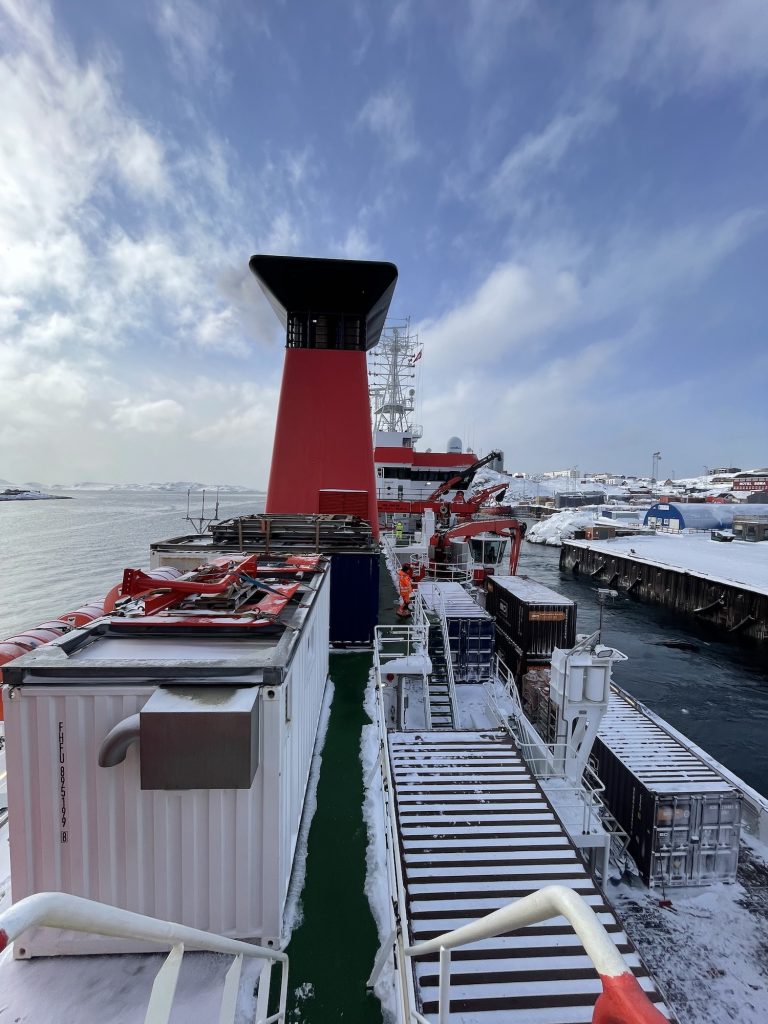
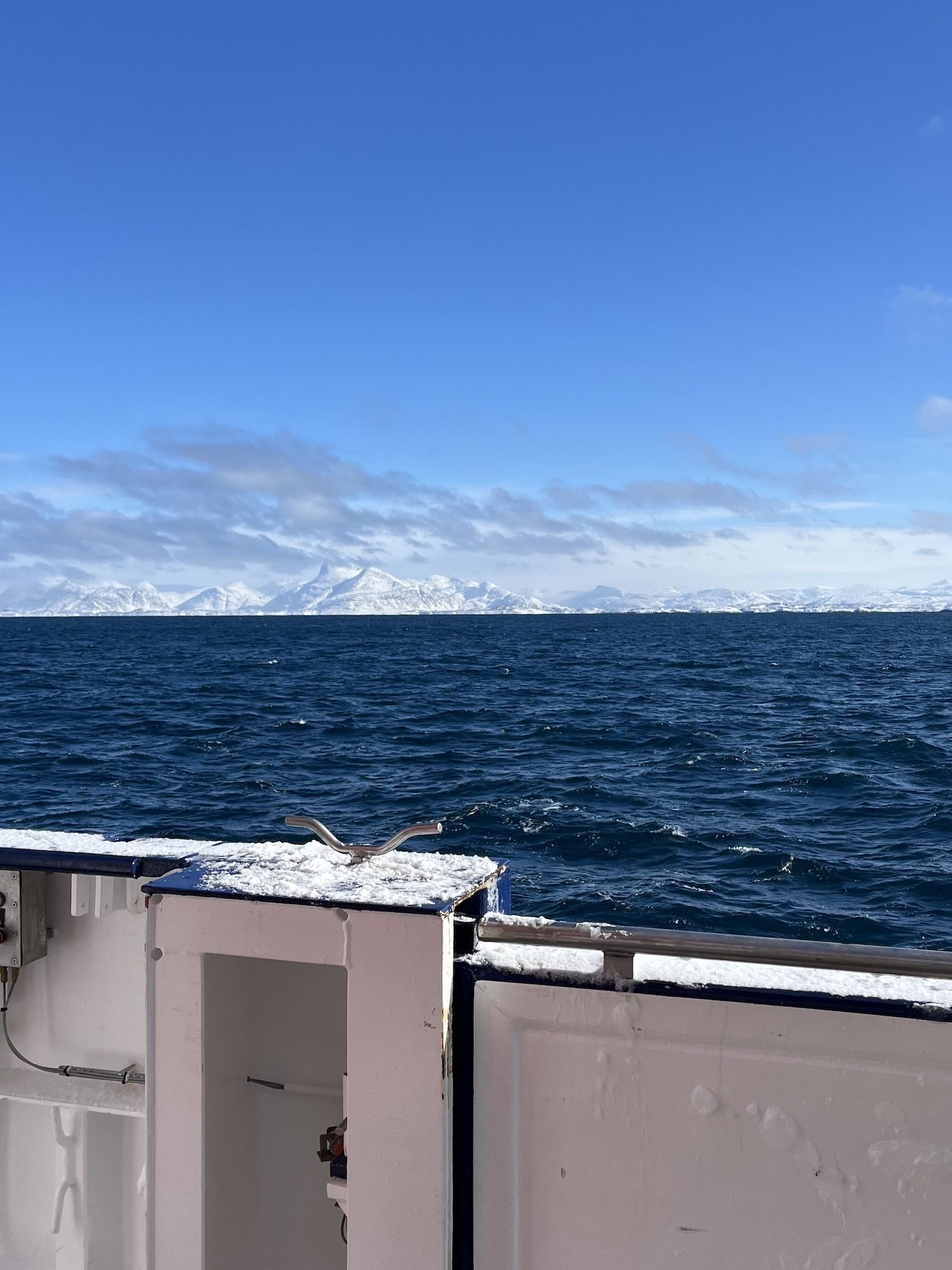
Given the forecast of harsh conditions outside the fjord, we carried out the mandatory safety drill while still in harbour. This included practicing emergency procedures and boarding the lifeboat. After completing border control, we were finally ready to leave Nuuk. We set sail on March 27th, heading into the Labrador Sea to begin our mission. Even before starting scientific operations, we tested the setup for deploying our gliders without releasing them during the transit out of the fjord. Once we reached open waters, we were met by high waves the following morning. For some on board, this was their first experience under such rough sea conditions. Seasickness quickly became a challenge for a few, while scientific work had to be temporarily postponed due to the strong winds and sea conditions. Together with the crew, we discussed how best to adapt our measurement plans to the given weather conditions. On March 29th, we were finally able to begin our scientific program with the first CTD deployment. A CTD is an instrument used to measure conductivity, temperature, and depth, which are key parameters for understanding ocean structure.
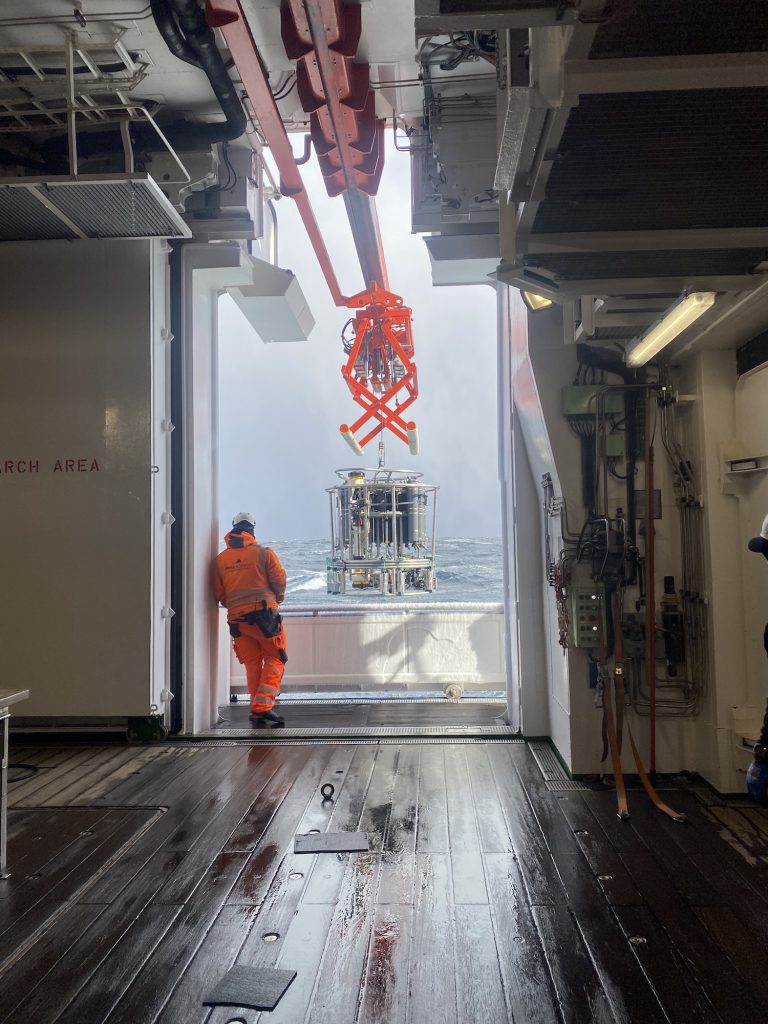
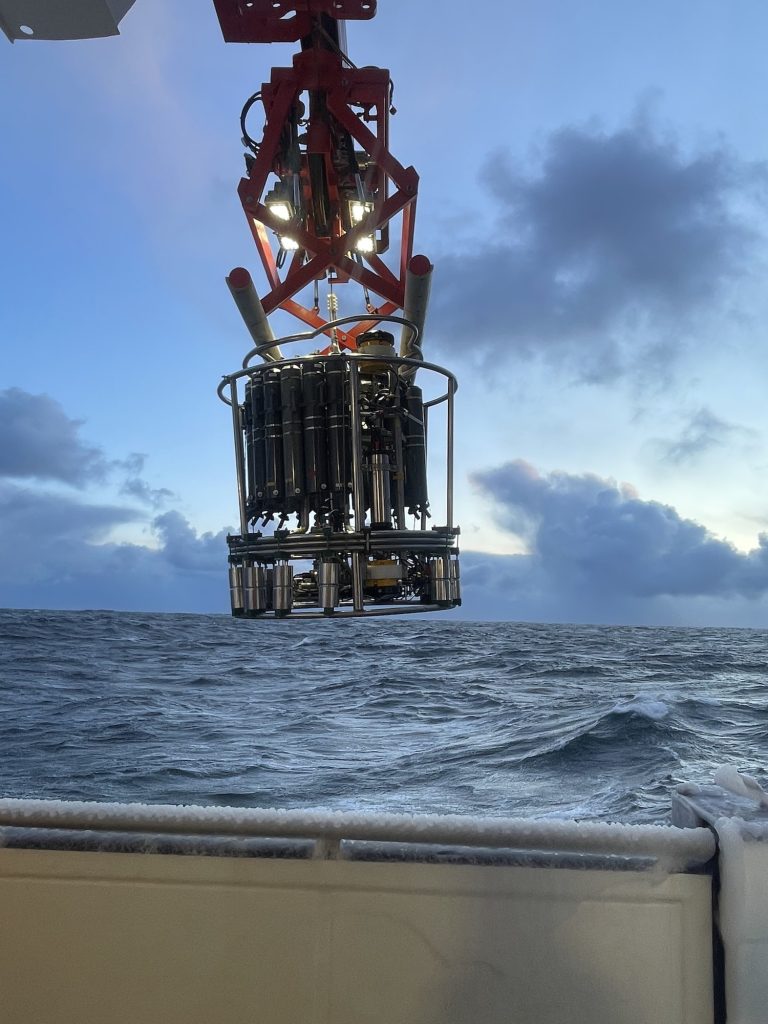
During the following night, we continued with additional CTD stations and successfully recovered two moorings: DSOW 3 and DSOW 4, located south of Greenland. These moorings carry instruments at various depths that measure velocity, temperature, and salinity. DSOW 4 was redeployed on the same day, while DSOW 3 followed the next day. In addition, the bottles attached to the CTD’s rosette can be used to collect water samples from any desired depth. These samples can be used, for example, to determine the oxygen content, nutrient levels, and organic matter.
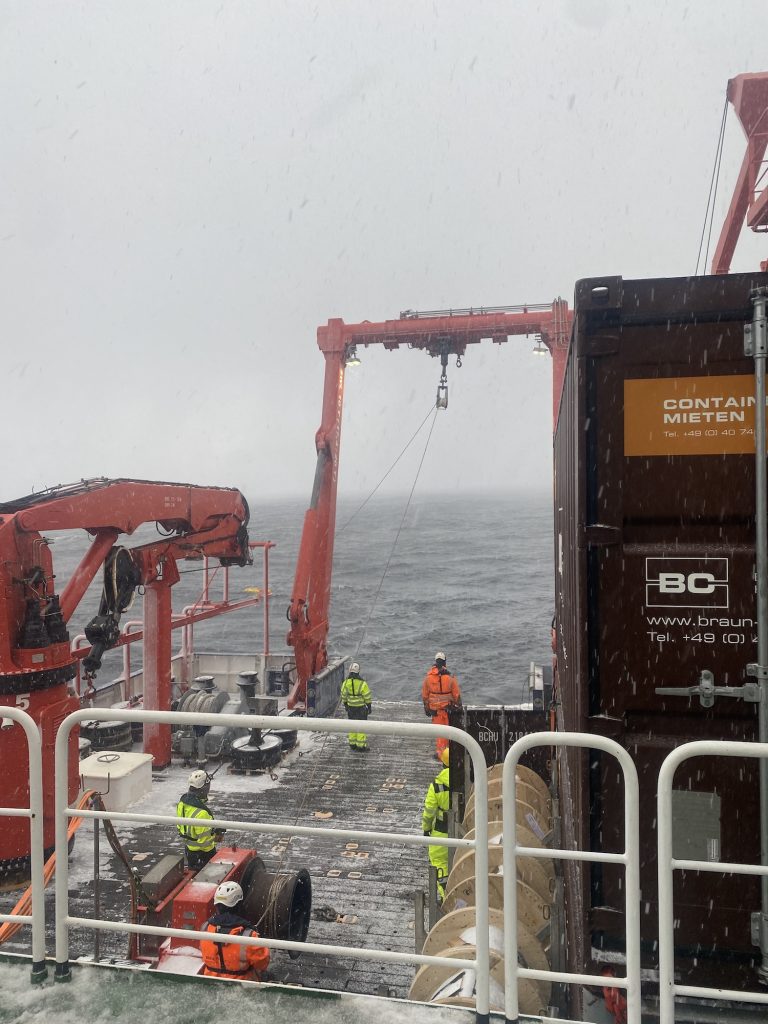
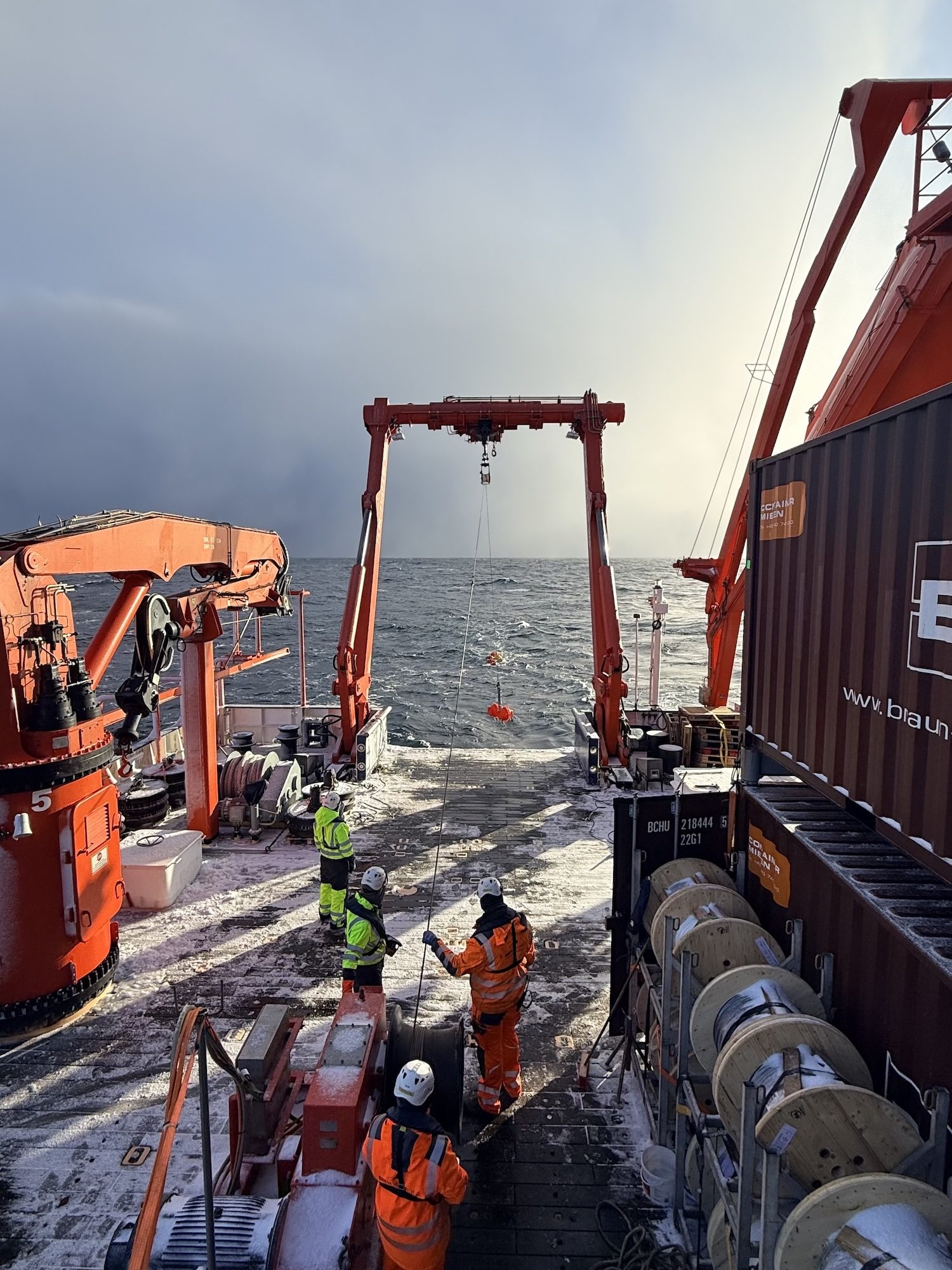
Both are part of the OSNAP array, a network of moorings spanning the subpolar North Atlantic. On these moorings are a few instruments, for example microcats which measure temperature, pressure and salinity.
We then conducted around 25 CTD stations spaced approximately 3 nautical miles apart across an Irminger ring identified from satellite data. This high-resolution sampling was necessary to capture the structure of an Irminger Ring, which had a radius of about 12 km wide.
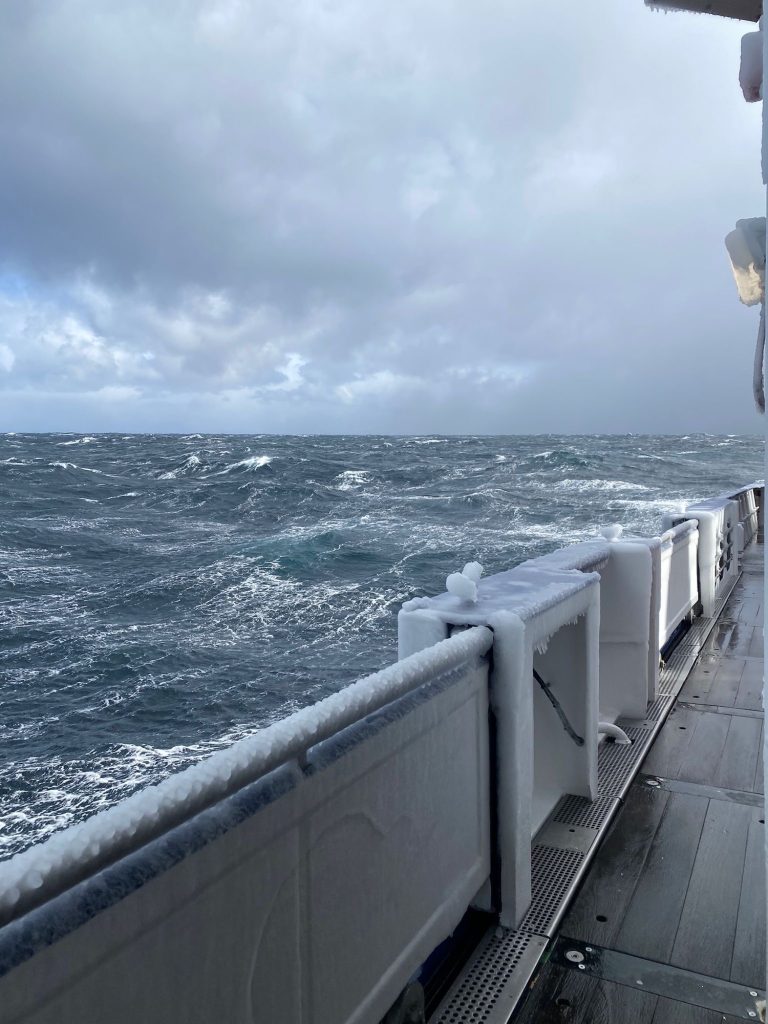
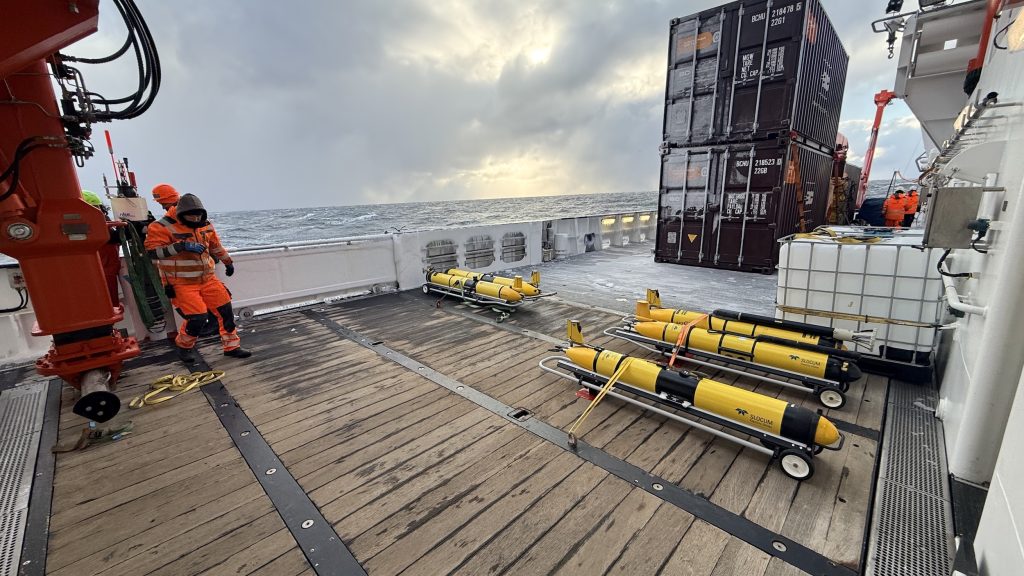
The days leading up to April 2nd were marked by very rough weather conditions. Life on board became both challenging and, at times, unintentionally entertaining sliding chairs were not uncommon. During the night from April 1st to April 2nd, winds reached 11 Beaufort with gusts up to 65 knots, forcing us to pause our measurements. Fortunately, conditions improved by morning, allowing us to resume our work. As well as with the help of the crew we had to adapt to the harsh weather conditions to continue our scientific work. On the 3rd of April, we were able to deploy a few gliders and one float. An ocean glider is an autonomous underwater Vehicle, which you can steer remotely and send to different locations, while it is measuring oceanographic key parameters.
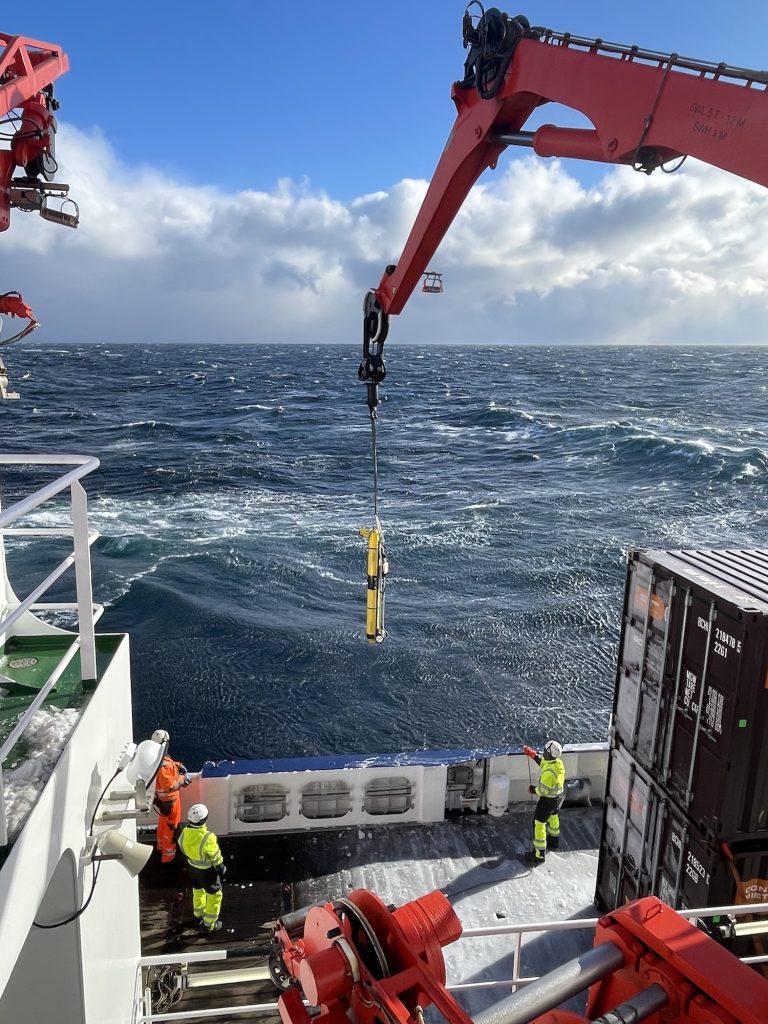
This research cruise focuses on understanding small-scale processes in the ocean and their connection to the spring bloom, an essential phase in marine ecosystem in subpolar regions. Despite the challenging start, we have already gathered valuable data and look forward to the weeks ahead in the Labrador Sea.




When I attended the OBIS Data Mobilization Workshop in the Azores (Thanks to the Air Center) this year, one observation immediately caught my attention: compared with countries such as the United States, Europe still appears surprisingly fragmented and underinvested in biodiversity data mobilization. The issue is not necessarily a lack of biodiversity research. European scientists produce enormous amounts of ecological data. The challenge is that publishing biodiversity observations into global infrastructures such as MBON/GBIF often remains an additional task rather than an integral part of funded research. In the United States, biodiversity data publication is frequently embedded in funding mechanisms and institutional mandates. Data management, curation, and dissemination seem to be recognized research activities. In much of Europe, including Denmark, researchers often mobilize data on top of their existing responsibilities, with limited dedicated funding for long-term stewardship.
I asked myself how is Denmark performing compared with its Nordic and neighboring countries?
Denmark is not lagging behind, but neither is it leading
The numbers reveal a mixed picture.
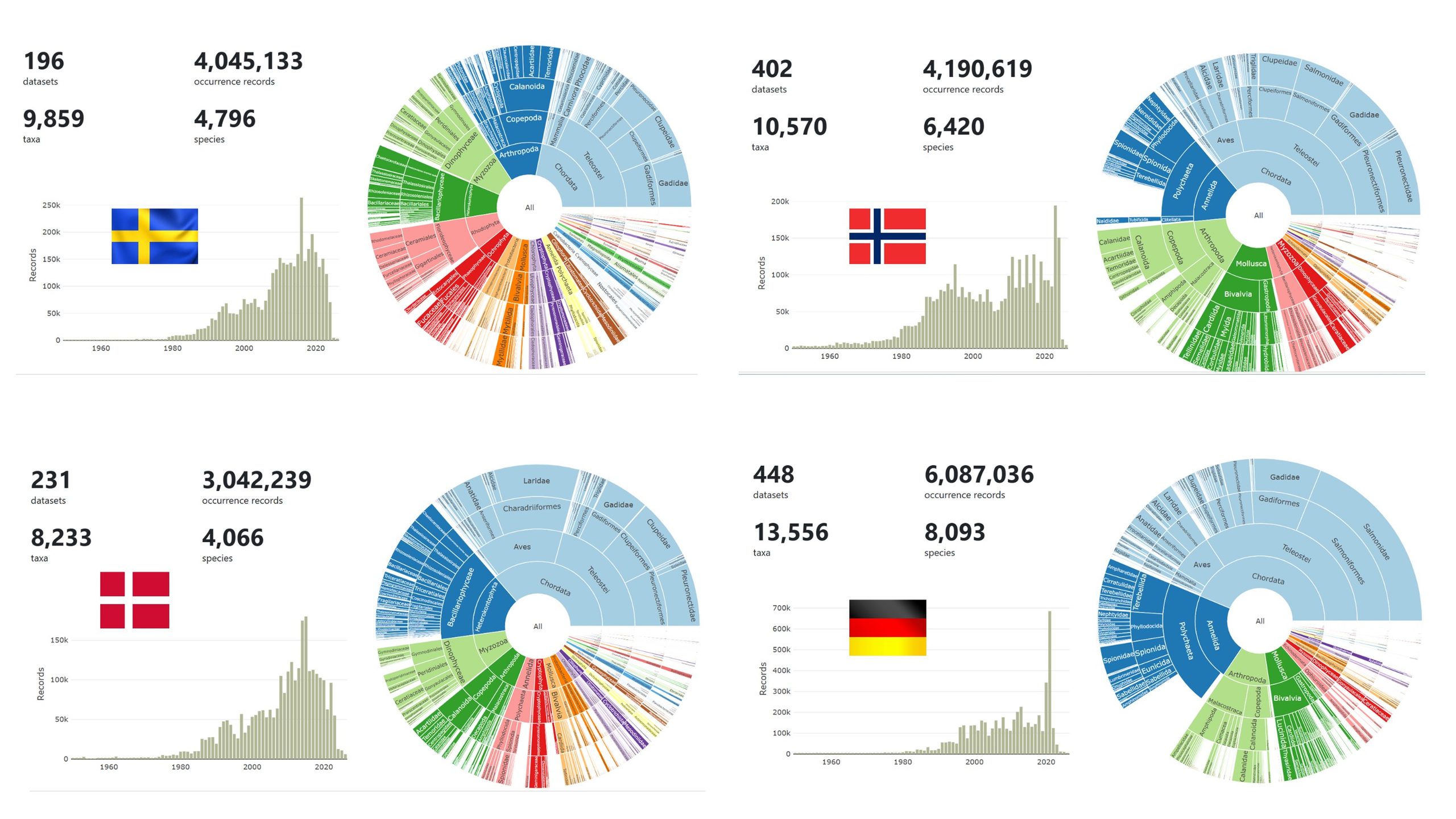
Germany clearly stands out as the regional leader, with both the highest number of datasets and the highest taxonomic coverage. Denmark has the lowest number of occurrence records and species represented among the four countries, despite having a very active biodiversity research community. What is striking is that Denmark does not fall dramatically behind in dataset numbers. Rather, the difference appears in scale and breadth. Danish datasets tend to contain fewer records and cover fewer taxa than those from Germany, Norway, and Sweden.
Different countries tell different biodiversity stories
The taxonomic breakdowns are equally revealing. Denmark should appreciate its fish and birds’ activists. Large portions of the records belong to Gadidae (cod family), Clupeidae (herring family), Laridae (gulls), and other marine vertebrates. This reflects Denmark’s historical strengths in fisheries monitoring, marine ecology, and seabird observations. However, many invertebrate groups, microorganisms, and less visible components of biodiversity remain comparatively underrepresented in global data sets despite active programs like national Program like MONIS.
Norway shows stronger contributions from invertebrate sides such as polychaetes, bivalves, copepods, and marine benthic fauna. The Norwegian data landscape appears heavily influenced by aquaculture sectores, long-term marine monitoring programs and offshore environmental surveys. There is greater representation of marine invertebrates, which are often critical indicators of ecosystem change.
What stood out in Sweden’s data profile is the relatively large contribution from copepods, diatoms, dinoflagellates, and macroalgae. These groups are often overlooked in biodiversity databases because they require specialized expertise and monitoring programs. Sweden’s contribution suggests sustained investment in aquatic ecosystem monitoring beyond commercially important species. Well done Sweden!
Germany’s profile appears the most diverse. While fish and vertebrates remain important, there are strong contributions from polychaete worms, molluscs, arthropods, plankton in general term and benthic organisms. Germany not only contributes more records but also appears to mobilize a wider variety of biodiversity data types. You made me proud Germany 
The real gap may be invisible biodiversity
One lesson from the workshop was that biodiversity databases often reflect what is easiest to observe, identify, and fund. Fish, birds, and mammals are well represented almost everywhere. The groups that drive ecosystem processes, such as jellyfish, zooplankton, benthic invertebrates, phytoplankton, and microbial communities, remain far less visible. This is particularly relevant for marine ecosystems. Some of the most important ecological changes currently occurring in our seas involve gelatinous zooplankton, plankton communities, and benthic assemblages, yet these groups remain underrepresented in many biodiversity repositories. For someone working with jellyfish and marine food webs, this raises an important question:
Are we documenting the biodiversity that is easiest to count, or the biodiversity that is most important for understanding ecosystem change?
This fall, Ocean Conservancy is celebrating its 41st annual International Coastal Cleanup® (ICC), once again bringing together volunteers to protect the beaches and waterways we all love. Ocean Conservancy recently hosted flagship events in Long Beach and Washington, D.C. that celebrated this global movement close to home.
Over the past four decades, nearly 20 million volunteers have rolled up their sleeves to remove more than 405 million pounds of trash from beaches and waterways around the world. And their impact extends far beyond what they collect. ICC volunteers have documented nearly 440 million individual items, creating the world’s largest marine debris database and providing invaluable information that helps Ocean Conservancy and others better understand—and tackle—ocean plastic pollution.
This year’s celebration continued that incredible legacy. At Alamitos Beach in Southern California, more than 150 volunteers gathered on September 19 and removed 1,109 pounds of trash, alongside members of Team USA Artistic Swimming and Olympic and Paralympic athletes. In Washington, D.C., 439 volunteers gathered on September 26 to remove 2,182 pounds of trash from Anacostia Park along the Anacostia River.


“I am so grateful to all of the volunteers who came out today for our ocean—and every volunteer who has made the last 41 years of impact possible,” said Ocean Conservancy’s Senior Director of Conservation Cleanups, Allison Schutes. “Every piece of plastic collected helps protect marine animals and habitats and contributes to research and advocacy.”
And the impact doesn’t stop when the cleanup ends. During International Coastal Cleanup events, volunteers do more than remove trash: They document what they find, helping build a clearer picture of the plastic pollution threatening our waterways and wildlife. Through the Clean Swell® app or paper data sheets, ICC volunteers contribute to Ocean Conservancy’s online, open-access database, the world’s largest repository of marine debris data. These records help scientists, conservation groups and governments understand pollution trends and identify solutions.
That data can also drive meaningful policy change. ICC data were recently used in a peer-reviewed study showing that plastic bag bans lead to reduced plastic bag pollution. The data have also helped advance policies ranging from California’s SB 54 to Florida’s balloon release ban and the federal Farewell to Foam Act. From a neighborhood cleanup to statewide action, every piece of documented trash helps build the evidence needed to tackle plastic pollution at its source.
Get Ocean Updates in Your Inbox
Sign up with your email and never miss an update.