

Whale watching is a popular pastime and a great way to get outdoors, but not everyone knows the best places and times of year to see the largest mammals on Earth. Here’s a quick guide to some of the best places to catch a glimpse of these magnificent creatures in the United States.
San Juan Islands, Washington

Washington State — and the entire West Coast — has ample opportunities for whale watching. Specifically, the San Juan Islands off the Washington Coast is a great place to look for orcas, humpbacks, gray whales and minkes.
While some orcas, humpbacks and gray whales can be found year-round off the Washington Coast, the best time of year to see them is usually during the summer months. Southern resident orcas — who live in three pods, referred to as the J, K and L — typically make their way through the San Juans from May to October.
The picturesque archipelago is on the Whale Trail — a series of more than 100 sites with resources for watching whales and other marine life — like harbor seals, sea lions, marine birds and porpoises — from the shores of British Columbia down to Southern California.
“I used to go to summer camp in the San Juan Islands and sometimes we would go on boat trips. On one of these trips, one of my fellow campers yelled out, ‘Orcas!’ We all raced to the side of the boat to see a pod traveling besides us. The dark spears of their fins stood out against the gray waves and sky. We watched them arc up and down out of the water until our paths diverged. I was thrilled to see them; it felt like a gift from the universe. I felt honored that they chose to travel beside us,” Olivia Rosane, who is also the opinion editor for Common Dreams, told EcoWatch.
Seward, Alaska

Alaska is one of the best places in the world for wildlife viewing of any kind, including whales. Every year, more than 22,000 gray whales travel along the longest mammal migration route in the world — roughly 10,000 to 14,000 miles round-trip — from Baja, Mexico, north to where they feed in the Chukchi and Bering Seas. Gray whales migrate during the months of late February to May and generally stay near the coast, making them easier to spot — noninvasively — from shore.
During the warmer months — from May to August — you may also see humpback whales near Seward, as they return from their Hawaiian winter feeding grounds.
The best times to catch a glimpse of orcas in and around Resurrection Bay and Kenai Fjords National Park — where fin, minke and grays are also known to gather — is in May and June, though they are around all year.
“Orca whales don’t follow a migration pattern, and instead can be found where there is food, socialization, and ice coverage. Orcas, or killer whales, are the largest member of the dolphin family and have three main classifications: resident, transient, and offshore. We often spot resident orcas near Seward, as they feed on fish. Transient orcas can be spotted, but are less likely since they feed on marine mammals like seals,” Seward.com said.
After blue whales, fin whales are the largest mammals on Earth and are most often seen in Alaska from May to September, generally traveling by themselves or in smaller pods.
When you’re lucky enough to spot them, minke whales can also be seen from May to September, traveling in small, slow-moving pods.
Maui, Hawaii

The beautiful black and white humpback whale is one of the most majestic creatures on Earth. The weathered-looking cetacean can grow up to 60 feet in length and weigh as much as 80 thousand pounds. Most humpback populations were decimated by more than 95 percent before a final commercial whaling moratorium was imposed in 1985. There are now estimated to be approximately 84,000 mature humpback whales on Earth.
The powerful marine mammals — who live in all the world’s oceans — are increasing in much of their range, but are still threatened by entanglement in fishing gear, underwater noise pollution, vessel strikes and harassment from humans.
Humpback whale populations migrate along different routes. Hawaii’s Kohola — or Central North Pacific humpback whale population — travel back and forth from the Hawaiian Islands and Alaska.
The winter migration brings these gentle whales to Hawaii and the North Pacific Ocean from November to May each year, when more than 12,000 humpbacks come to the warmer waters to breed.
“We went to Maui in February about 7 years ago. When we got there we were told that it was prime whale watching time there on the island, so we booked a whale watching boat tour through the hotel. It was a small, modest boat with about 10 other people on it. We were all excited but skeptical about just how many whales we’d see since everyone knows that a lot of times whales can be elusive and unpredictable,” North Carolina resident Anna Moore Groome told EcoWatch. “It was a gorgeous sunny day and right from the beginning of the trip, we began seeing several whales. They were jumping and rolling, splashing their tails and fins and getting super close to our boat and snorting water all over us! We must have been right in the middle of a pod because there were large whales and small whales all around us. We stuck a microphone down in the water and heard what seemed like a million conversations going on under the surface. It was one of the most magical days of my life.”

Bar Harbor, Maine

A humpback whale in Bar Harbor, Maine. Patrick Hawks / CC BY-SA 2.0
The picturesque town of Bar Harbor, Maine, on Mount Desert Island is known as the gateway to Acadia National Park with its mountains, rocky cliffs, white sand beaches and sea views. Some of the wildlife living in Acadia National Park include bobcats, moose, porcupines, barred owls, beavers and American black bears.
Located along Frenchman Bay, the area offers wonderful opportunities for wildlife viewing and whale watching. The Shore Path begins at the town’s pier and meanders along the bay with views of the area’s islands.
The best time to see humpback whales, minkes and finbacks around Bar Harbor is from April to October, when the whales come to feed on krill, squid and fish in the Gulf of Maine.
“Our whale watching cruise from Bar Harbor was an adventurous way to rest between more strenuous hike days. We dressed in extra layers of clothing and brought warm hats and gloves, knowing the temperatures would drop once we ventured away from shore,” Michigan author Cynthia Birk told EcoWatch. “Although it took a little while to reach the area where the humpback whales were visible, we were entertained along the way with glimpses of dolphins racing alongside our boat. We also met majestic tall-masted schooners cruising in the opposite direction through the Gulf of Maine. It was too late in the season for us to see any puffins, but as we passed Mount Desert Rock, it looked as if every harbor seal in the area had decided to stop there to soak up the sun near the famous lighthouse. Our boat kept a respectful distance from the whales we encountered, but it was still close enough to see a thrilling show. We enjoyed observing their spouting and breaching behaviors and caught several slaps of tail flukes as the giant creatures dove into the ocean. It was a marvelous experience.”
The post 4 of the Best Whale Watching Spots in the U.S. appeared first on EcoWatch.
https://www.ecowatch.com/best-whale-watching-spots-us.html

There’s something undeniably special about wearing uniquely handcrafted, fair trade jewelry that you can know was made slowly and thoughtfully with care. Equally special is wearing an elevated set of jewelry crafted with recycled materials and sustainable processes.
Whether you’re looking for an investment piece or more affordable pieces, there are options for any budget on this list. The aesthetics of these fair trade and sustainable jewelry brands also vary, so you’ll also be able to discover an ethical brand that matches your unique style.
What is Fair Trade Jewelry?
Fair trade can both be a general term used to describe a brand’s sourcing practices — like direct relationships with artisan cooperatives, wages above local standard rates, and safe working conditions — or a third-party “Fair Trade” verification through an organization like Fair Trade Federation, Fair Trade USA, or World Fair Trade Organization. When a brand doesn’t have a certification, we verify a brand’s practices by their own published information.
In the cases where brands do go the extra mile and get a third-party verification for their fair trade practices, we’ve noted it directly in their entries.
Note that this guide includes affiliate links and partners. As always, we only feature brands that meet high standards for responsibility we love, and that we think you’ll love too!
2. Ana Luisa
Best for: affordable everyday jewelry
Conscious Qualities: Recycled Gold, Lab-Grown Diamonds, Small-Batch Production, Direct-to-Consumer
Ana Luisa creates stunning, elegant jewelry from responsibly-sourced materials including 100% recycled gold and lab-grown diamonds. The sustainable jewelry brand also produces in small batches to minimize waste.
By using a direct-to-consumer model, Ana Luisa is able to provide luxury, high-quality jewelry at accessible prices.

3. Monica Vinader
Best for: recycled demi-fine jewelry
Conscious Qualities: Woman-Founded, Recycled Silver & Gold Vermeil, Traceable Gemstones, Lab-Grown & Conflict-Free Diamonds, Supply Chain Transparency
Price Range: $85 (studs) – $2,495 (diamond ring)
British jewelry brand Monica Vinader was one of the first brands to meet the gap between fashion jewelry and fine jewelry with their “demi fine” jewelry. The women-founded brand has necklaces, earrings, bracelets, and rings crafted from 100% recycled sterling silver and gold vermeil, fully traceable gemstones, and lab-grown or conflict-free diamonds. Monica Vinader also launched Product Passports, taking an active effort towards full supply chain transparency.

4. WorldFinds
Best for: unique statement jewelry with a story
Conscious Qualities: Fair Trade Verified, Upcycled Materials, Artisan-Made
WorldFinds provides sustainable employment and just wages for hundreds of women artisans in India and Bali. These artisans handcraft both sleek metal fair trade jewelry and unique recycled Kantha pieces. WorldFinds is Verified by the Fair Trade Federation, which assesses members against fair trade principles including fair wages, safe conditions, and transparent supply chains.
Plus WorldFinds’ signature Kantha jewelry is made from upcycling materials: wood scraps from a furniture factory and locally sourced Kantha fabric remnants.

5. Astor + Orion
Best for: drop earrings and charm necklaces with symbolism
Conscious Qualities: Certified Ethical Factory, Recycled Materials, Designed for Recyclability, Repair Program
Ethical jewelry brand Astor + Orion sources their jewelry from a factory with multiple certifications ensuring worker safety, fair production practices, and responsible environmental management. Astor + Orion’s stunning jewelry is made from recycled materials and designed in a way to make it easily recyclable! Their pieces also come with a quality assurance — the brand will repair any piece within 6 months of purchase.

6. Laura Elizabeth
Best for: non-toxic jewelry in organic shapes
Conscious Qualities: Locally Sourced Recycled Metals, Woman-Owned, Fair Wages, Safe Working Conditions
Price Range: $45 – $330
Crafted from recycled metals sourced locally in LA, Laura Elizabeth creates stand-out sustainable jewelry. All of the brand’s jewelry is sourced ethically from a small, woman-owned studio in Los Angeles that ensures reasonable working hours (35 hr/week), fair wages, and safe working conditions (such as proper ventilation). Check out more on Laura Elizabeth in this post!
The jewelry is also non-toxic, free of cadmium or lead.

7. Ten Thousand Villages
Best for: giftable fair trade jewelry
Conscious Qualities: Fair Trade Production, Artisan-Made
Price Range: $6 – $175
Founded in 1946, Ten Thousand Villages is one of the fair trade pioneers and a founding member of the World Fair Trade Organization (WFTO), the global network that verifies fair trade practices across its member organizations.
They’ve developed relationships with artisans around the world, providing valuable economic opportunities for thousands of makers in 30 countries around the world. Their marketplace has handmade necklaces, earrings, bracelets, and rings, along with a variety of other fair trade goods.
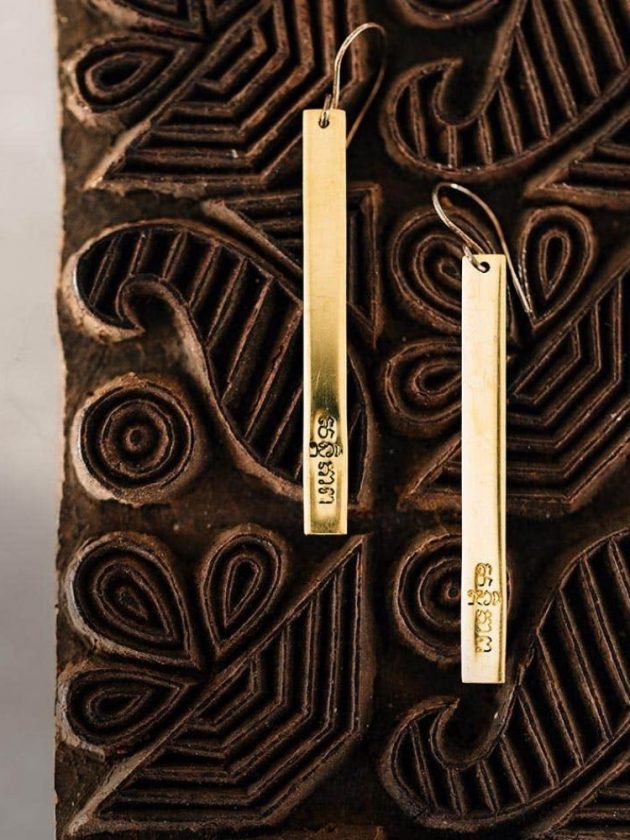
8. Edge of Ember
Best for: gemstone jewelry
Conscious Qualities: Recycled Gold & Silver, Artisan-Made, Ethical Production
Price Range: $49 (ear cuff) – $2,730 (diamond tennis bracelet)
Edge of Ember’s timeless jewelry is responsibly crafted by makers working in artisan groups and small-scale factories. Their delicate necklaces, bracelets, rings, and other pieces are crafted by skilled artisans in India, Hong Kong, Germany, and Thailand. The brand carries out independent social audits to ensure ethical working conditions and environmental responsibility.
Edge of Ember has a wide selection of recycled gold and silver rings, bracelets, and necklaces adorned with stunning gemstones, including many birthstone jewelry options perfect for gifting.
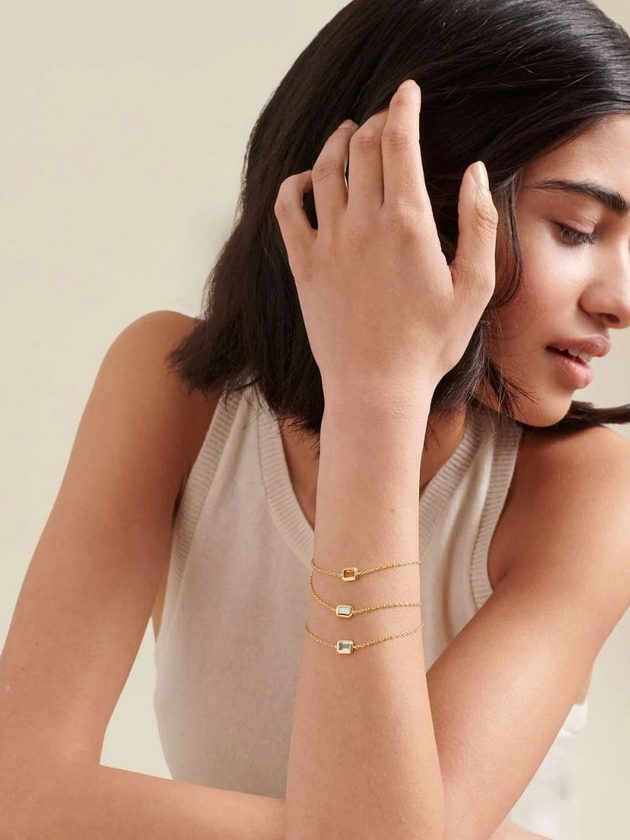
9. Aurate
Best for: ethical diamond fine jewelry
Conscious Qualities: 100% Recycled Gold, Lab-Grown & Conflict-Free Diamonds, Vintage Collection
Price Range: $18 (stainless steel chain) – $19,000 (diamond tennis necklace)
Responsibly-sourced quality jewelry — that’s Aurate’s promise. The jewelry brand’s sleek, timeless pieces are thoughtfully made by seventh-generation craftspeople using 100% recycled gold and lab-grown or conflict-free diamonds.
Aurate also has a curated collection of vintage fine jewelry from cocktail watches to signet rings up to 50% off.

10. SOKO
Best for: modern, minimalist artisan-made jewelry
Conscious Qualities: Above-Market Artisan Wages, Black-Owned
Price Range: $78 – $298
SOKO is an innovative Black-owned ethical jewelry brand using mobile tools to bridge the barriers for artisan entrepreneurs in Kenya. In partnership with SOKO, independent artisans can operate a “virtual factory”, earning 5x more than an average artisan workshop in their local areas.
The jewelry is made with 24K gold or silver-plated brass — an affordable metal that also happens to consist of 90% recycled content on average. Other materials include reclaimed horn and bone, locally-sourced teak wood offcuts, and ceramic beads made by a fair trade women’s collective in Kenya.

10. Raven + Lily
Best for: affordable artisan jewelry
Conscious Qualities: Fair Trade Verified, Artisan-Made, Women-Led
Price Range: $40 – $240
Raven + Lily is an ethical fashion and jewelry brand verified Fair Trade by the Fair Trade Federation. The women-led brand partners with artisan women around the world who use natural materials to craft both classic, elegant pieces and statement jewelry.

11. NAKIIT
Best for: one-of-a-kind, solo-handcrafted pieces
Conscious Qualities: Made-to-Order, Recycled Silver & Gold, Zero-Waste Scrap Recycling
Price Range: $21 – $485
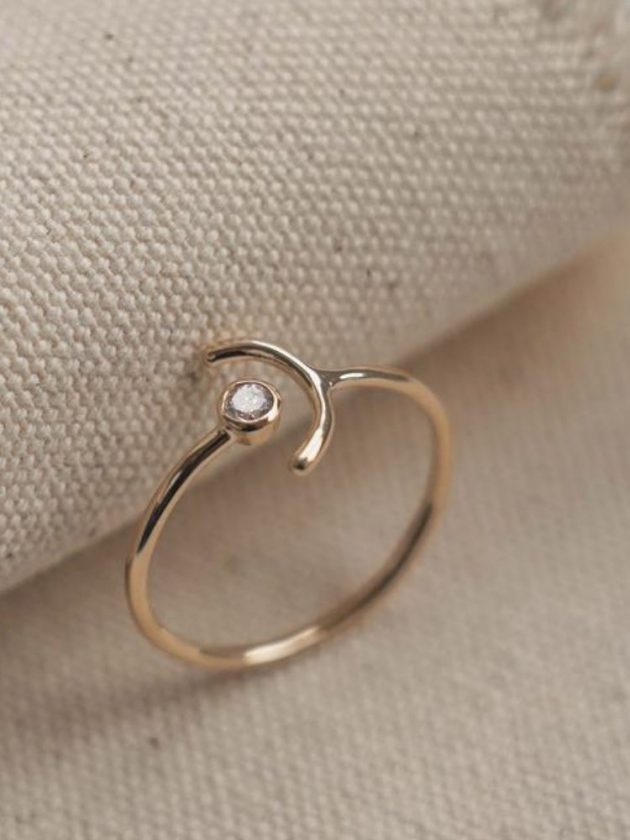
As a small, slow-minded jewelry brand, NAKIIT’s founder + owner handcrafts each piece with intention. In fact, every piece of jewelry the brand sells is made by the founder herself!
Nearly all of NAKIIT’s ethically-made jewelry is either made-to-order or one-of-a-kind, ensuring a minimal ecological impact and the highest attention to quality.
As if we could love this brand even more, NAKIIT also sources recycled sterling silver and gold, plus recycles any remaining metal scraps or dust after production.
You May Also Want to Check Out:
Best Fair Trade Fashion Brands With Style and Heart
Affordable Ethical Fashion Brands
Consciously Curated Marketplaces for One-Stop Ethical Shopping
The post 11 Best Fair Trade and Sustainable Jewelry Brands That Shine appeared first on Conscious Life & Style.
11 Best Fair Trade and Sustainable Jewelry Brands That Shine
It’s time to leave fast fashion in the dust — with one-of-a-kind designs, quality fabrics, and the assurance your dollars are supporting a more responsible fashion industry, these slow fashion brands are sure to win you over.
Before we go any further, though, I think we need to clarify what exactly slow fashion is…
What Do I Mean By “Slow Fashion?”
Slow fashion is about being more mindful and thoughtful about how clothing (and other fashion items) are being produced, how they’re being purchased, and how they’re being used/worn.
Instead of mass-producing trend-driven garments cheaply and quickly, slow fashion production is about creating a piece to last by using high-quality materials, transitional designs (i.e. they migth be contemporary but they’re not super “trendy”), and durable construction.
For individuals, slow fashion purchasing habits means buying less, but better. A slow fashion mindset is all about choosing well