

The Amazon isn’t just the world’s greatest rainforest. She has been home to her original people for tens of thousands of years, who have persisted through centuries of colonial incursions to protect their home. At each moment of each day, the Amazon breathes, dances, and sings with an endless variety of plants and animals, many of those we humans have yet to understand. The Amazon is life-giving, irreplaceable and yet profoundly vulnerable.
Here are 10 fascinating facts to inspire you to take action for the Amazon:
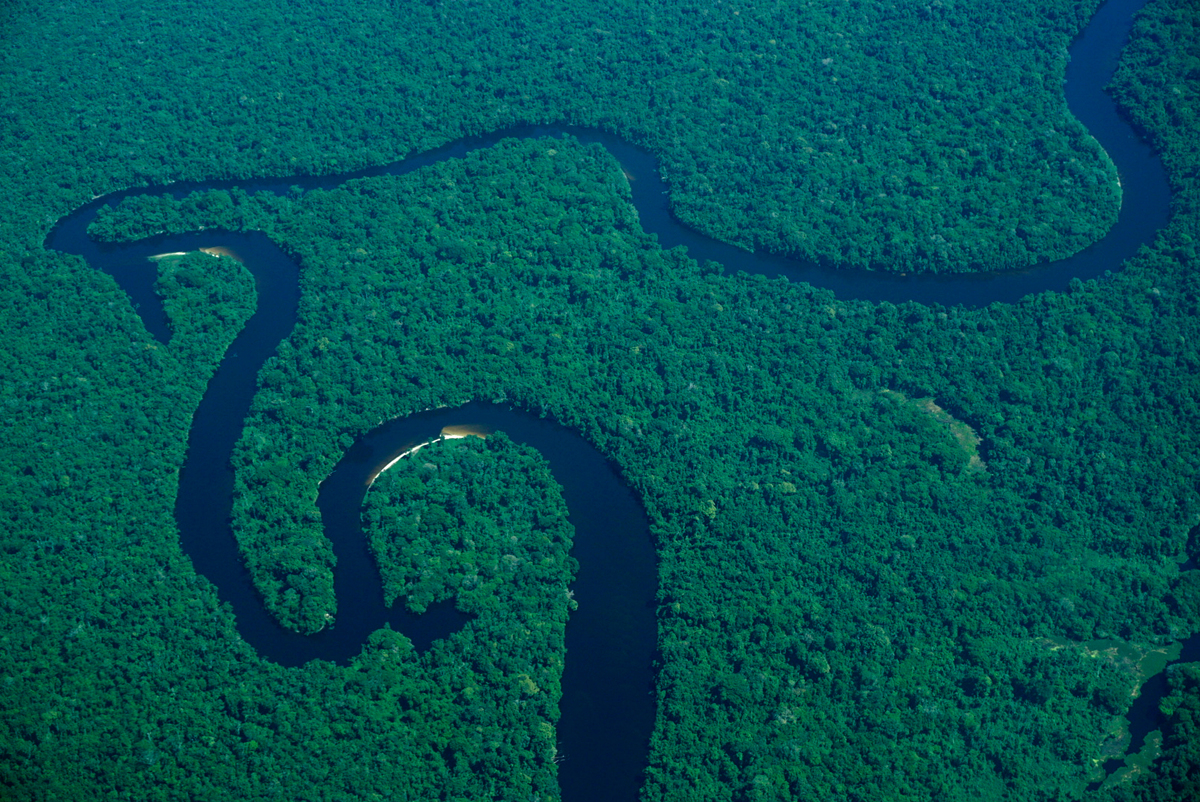
1- The Amazon is the largest rainforest in the world
Spanning over nine countries in South America, the Amazon is the largest tropical forest on the planet, covering 6.7 million square kilometres. To put it in perspective, she is twice the size of India—the largest country in South Asia. The biggest part, around 60%, is in Brazil. After the Amazon, the Congo Basin and Papua host the world’s largest remaining rainforests.
2- The Amazon is one of the most biodiverse ecosystems on Earth
The Amazon is home to approximately 10% of all known species of fauna and flora worldwide. From the beautiful hyacinth macaws to fearless jaguars and the amazing pink dolphins, this vibrant ecosystem is teeming with life. In some areas, a single hectare can contain more than 300 tree species, approximately two-thirds of the native tree species in Europe (454), making the Amazon one of the most botanically rich regions on Earth.
Studies show that the Amazon Basin harbours at least 2,716 species of fish, 427 amphibians, 371 reptiles, 1,300 birds, and 425 mammals. However, the vast majority of its biodiversity lies in her invertebrates, particularly insects, with over 2.5 million species currently known
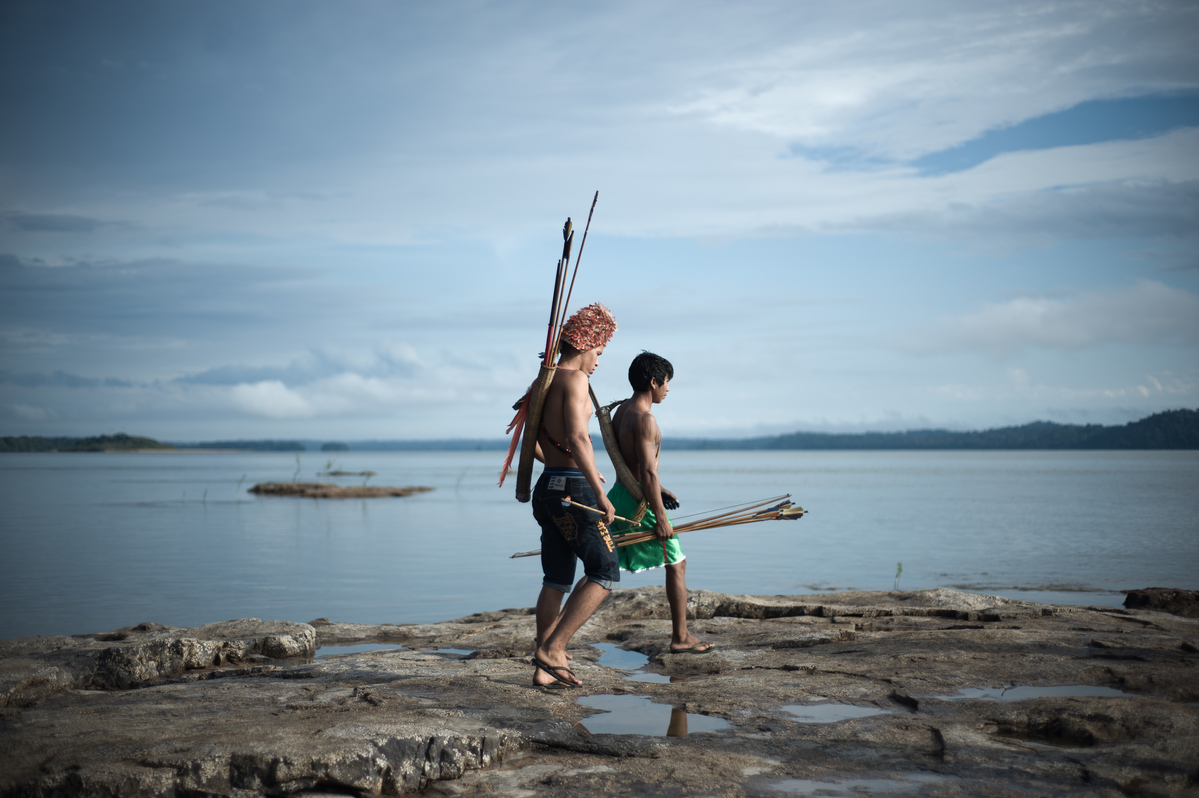
3- There are approximately 3 million Indigenous People living in the Amazon
The Amazon is home to a diverse group of Indigenous Peoples. Over 390 Indigenous Peoples live in the region, along with approximately 137 isolated groups, who have chosen to remain uncontacted.
In Brazil, about 51.2% of the country’s Indigenous population resides in the Amazon. But the largest tropical forest in the world is also home to traditional communities that have lived in harmony with the forest for generations, such as Rubber Tappers, Ribeirinhos—who inhabit the Amazon’s riverbanks—and Quilombolas, Afro-Brazilian communities descended from enslaved people..
4- The Amazon is home to over 40 million people
The Amazon is not just a vast rainforest rich in biodiversity and home to Indigenous People—it is also home to several cities. In Brazil, These include Manaus , an industrial hub with a population of 2.2 million, and Belém , which will host the United Nations Climate Conference (COP30) in November 2025.
These people’s lives are intrinsically connected to the forest. They depend on her for their food, fresh water, and to regulate the local climate. Smoke from the fires in the Amazon directly impacts the people living in the region, darkening the skies and causing respiratory problems to the population, especially children and elders.
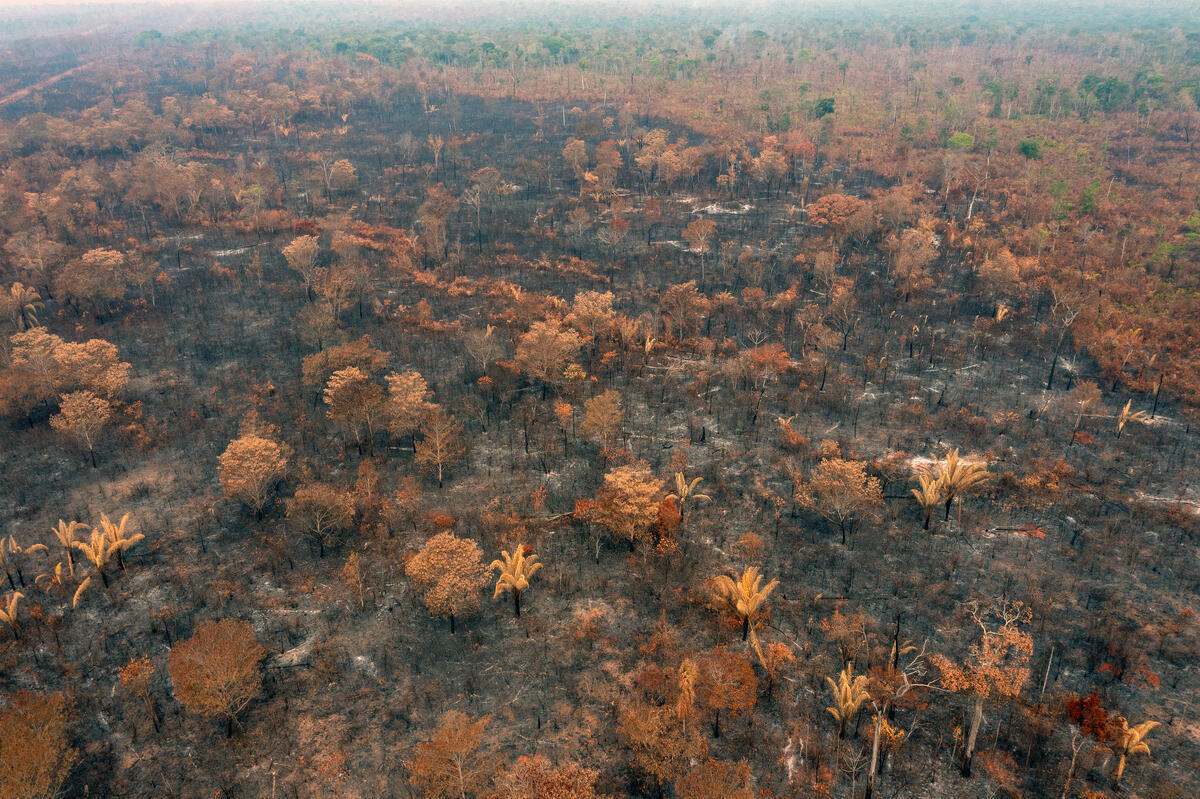
5- The Amazon is vital for the global climate
The Amazon is estimated to store about 123 billion tons of carbon, both above and below ground, making her one of Earth’s most crucial “carbon reserves”, vital in the fight against the climate crisis. However, studies show that fire- and deforestation-affected areas of the Amazon are now releasing more CO₂ into the atmosphere than they absorb. This poses a major threat to the global climate. Protecting the Amazon means protecting the future of everyone.
6- Fires in the Amazon are not natural
Unlike bushfires in Australia and other parts of the world, fires in the Amazon are not natural. In the Amazon biome, fire is used in the deforestation process to clear the land for agriculture and pasture. The use of fire in the Amazon is often illegal, and so is deforestation. This practice has a major impact on the local biodiversity, the health of the populations living in the region, and to the global climate, as the fires release vast amounts of carbon into the atmosphere.
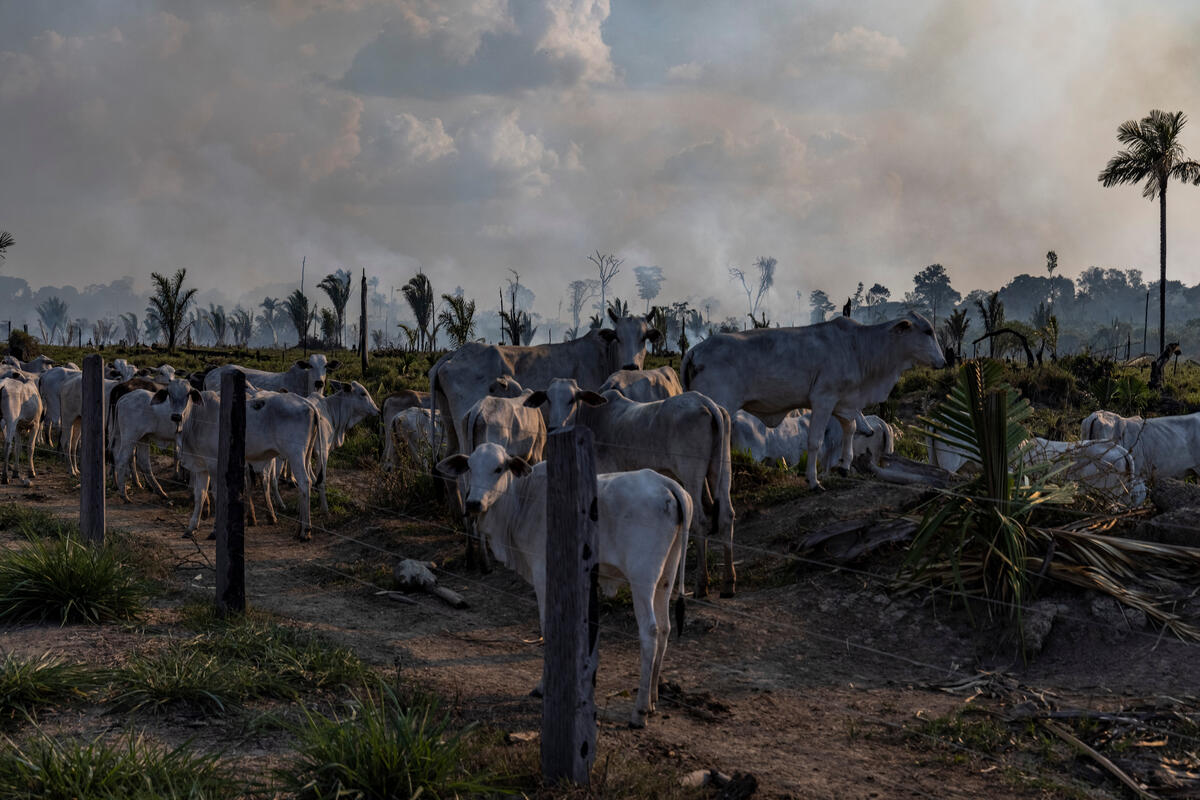
© Victor Moriyama / Amazônia em Chamas
7- Cattle ranching is the leading cause of deforestation in the Amazon
The expansion of agribusiness in the Amazon is putting more and more pressure on the forest. According to a study, 90% of the deforested areas in the Brazilian Amazon are turned into pasture to produce meat and dairy. This means the food we eat may be linked to deforestation in the Amazon. We must urge our governments to stop buying from forest destroyers and ensure supply chains are free from deforestation, and demand stronger protections for the Amazon.
8- Illegal gold mining is a major threat to Indigenous Peoples
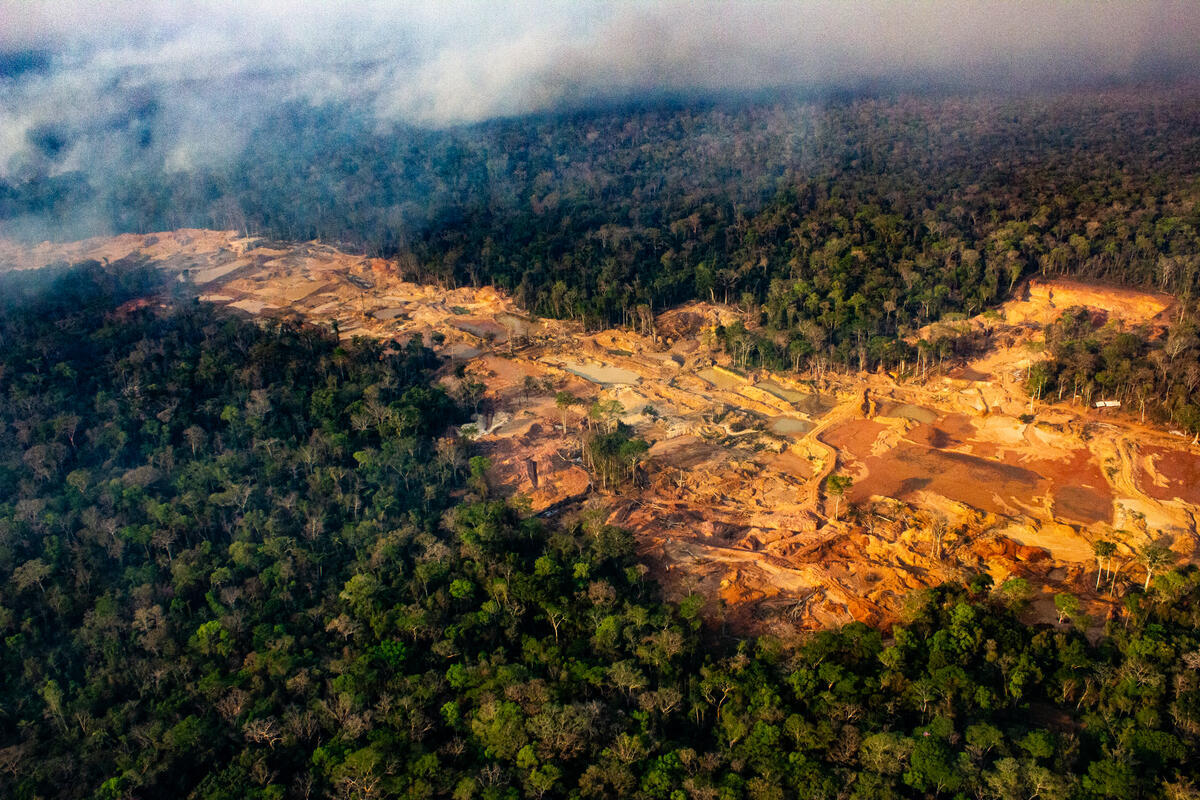
Illegal gold mining in Indigenous Lands in Brazil surged by 265% in just five years, between 2018 and 2022. The activity poses a severe threat to the health and the lives of Indigenous People, destroying rivers, contaminating communities with mercury and bringing violence and death to their territories.
But illegal gold mining doesn’t impact just the forest and Indigenous People. A recent study showed that mercury-contaminated fish are being sold in markets in major Amazonian cities, putting the health of millions at risk.
9- The Amazon is close to a point of no return
About 17% of the Amazon has already been deforested, and scientists warn we are getting dangerously close to a ‘point of no return’.
According to a study, if we lose between 20% and 25% of the Amazon, the forest might lose its ability to generate its own moisture, leading to reduced rainfall, higher temperatures, and a self-reinforcing cycle of drying and degradation.
As a result, vast areas of the forest could turn into a drier, savanna-like ecosystem, unable to sustain her rich biodiversity. This could have catastrophic consequences for the global climate, local communities, and the planet’s ecological balance.
10- The most important Climate Conference in the world is happening in the Amazon this year
COP30, the United Nations Climate Conference, will take place in Belém, the second largest city in the Amazon region, in November 2025. During the conference, representatives from countries all over the world will meet to discuss measures to protect the climate. Across the globe, we are already witnessing and feeling the impacts of the climate crisis. This is our chance to demand our political leaders move beyond words to urgent action. They must stop granting permission and public funds to Earth-destroying industries. Instead, our leaders must respect, pursue, and support real solutions that already exist—solutions that put the forest and her people at the heart of the response. Indigenous guardians of the forest hold true authority, and they must be respected and heard. The moment is now.
We are the turning point! Join the movement and demand respect for the Amazon.

June Rubis is a steering group committee member for the Cali Fund, from Sarawak in Malaysian Borneo.
At COP16 in Cali, governments made a significant commitment: at least half of the funding from the new Cali Fund should support the self-identified needs of Indigenous Peoples and local communities, including women and youth. It was a watershed moment for multilateral benefit-sharing.
The challenge now is to translate that commitment into access arrangements that recognise the different institutions, priorities and decision-making processes of Indigenous Peoples and local communities.
For generations, biodiversity and traditional Indigenous knowledge have provided significant value to companies who depend on nature’s genetic diversity to discover new drugs that fight diseases, create products that improve health, and grow crops resilient to extreme heat and flooding events. While some compounds are sampled directly from the source country, increasingly the digital blueprints are held in online public databases which are freely accessible to use for innovation and research.
Countries urged to ramp up “insufficient” nature policies at COP17
The Cali Fund was established at COP16 to encourage commercial users of Digital Sequence Information, or DSI, to share benefits arising from its use. Estimates suggest it could generate over $3.5 billion a year – a stark contrast to the modest $10,656 currently committed to the fund from just five SMEs, underlining how much progress must be made at COP17 over the next two weeks.
The COP16 decision that set up the fund offers two routes for money to reach Indigenous Peoples and local communities: through government authorities, and through direct payments to institutions identified by Indigenous Peoples and local communities themselves.
Varied ways of organising
Indigenous Peoples and local communities organise through a wide range of institutions. Some have national or regional organisations experienced in managing international grants. Others work through territorial organisations, customary institutions, community associations, cooperatives or networks. Some have professional finance teams and audited accounts; others have extensive experience governing territories, collective resources or conservation work without having been organised around international funding requirements.
For direct access, some questions are already apparent. Which institutions should be able to receive funds? How should they be identified? What fiduciary standards should apply? How should safeguards and accountability work where institutional capacities differ? What support may be needed where institutions have strong community mandates but less experience with international finance?
Comment: Protecting nature is a public duty, not a Wall Street profit opportunity
If access is designed mainly around institutions that already meet the expectations of large international finance mechanisms, early funding will tend to favour those already familiar to funders. They will gain further experience and become better positioned for future funding, while institutions with less administrative capacity may remain outside the system despite strong community mandates and long histories of stewardship.
These first decisions matter most, because they set the terms for everyone who follows.
The role of intermediaries requires care. Some Indigenous organisations may want a fiscal host to hold and manage funds on their behalf. Communities may choose to work through an NGO they trust. Government-facilitated arrangements may work well in particular national contexts.
What matters is the function an intermediary performs and the authority that comes with it. Providing administrative support is different from deciding which Indigenous organisations qualify, which priorities can receive support, or how success will be assessed. Direct access means communities keep that decision-making authority.
Decision-making power
The COP16 decision refers to institutions that Indigenous Peoples and local communities identify. But authority among Indigenous Peoples does not sit in one kind of body. It may sit with territorial organisations, customary institutions, community associations or combinations of these. Legal recognition and customary authority do not always align neatly.
Global deforestation slowed in 2025 but Brazil’s election could undo “fragile” gains
An important feature of the Cali Fund’s governance is that Indigenous Peoples and local communities participate as full members of the Steering Committee, rather than as observers. Seven Indigenous Peoples and local community representatives, one from each of the seven socio-cultural regions, participate in consensus-based decision-making alongside representatives of governments and UN entities. Six additional representatives from civil society, scientific institutions and the private sector participate as observers.
That representation carries responsibility. Institutional legitimacy, access and representation take different forms across the seven socio-cultural regions. Indigenous Peoples and local communities members therefore have an important role in bringing those differences into the Fund’s governance and in ensuring that arrangements developed for one context do not become the assumed model for everyone else.
Safeguards and clear responsibilities
COP17 can establish the core principles and direction, while allowing operational pathways to develop in ways that respond to different regional contexts. The decisions countries take in Yerevan will shape how that flexibility is realised in practice.
The choices made around access will influence which institutions are able to participate, which routes become established and which forms of authority are recognised within the funding architecture. The aim should be an architecture with enough structure to maintain confidence while allowing for different forms of Indigenous and community governance.
A credible direct-access pathway will need safeguards, financial oversight and clear responsibilities. This would give the 50% commitment a stronger institutional foundation.
The Cali Fund’s importance will ultimately depend not only on how much funding reaches Indigenous Peoples and local communities, but on whether they are able to determine how the money is accessed, governed and used. This requires access pathways that recognise their institutions, priorities and decision-making processes, rather than requiring them to conform to a single predetermined model.
The post COP17 must settle who decides how Cali Fund money is disbursed appeared first on Climate Home News.
COP17 must settle who decides how Cali Fund money is disbursed
The UK government has approved extraction at the Jackdaw gas field in the North Sea, despite acknowledging that this decision could make it harder for Britain to convince other countries to move away from fossil fuel production.
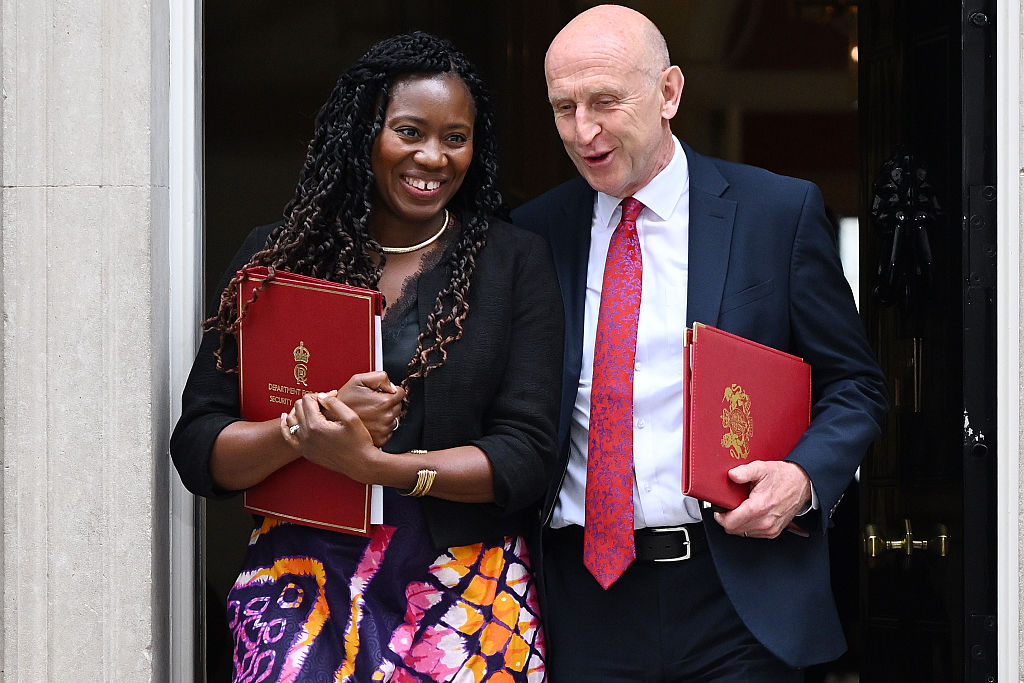
UK energy secretary Miatta Fahnbulleh approved the drilling on Wednesday after months of high-profile debate, fuelled in part by interventions from US President Donald Trump. She argued that the project would boost energy security in the wake of the Middle East fossil fuel crisis, protect hundreds of jobs and add £2.9 billion ($3.88bn) to the UK economy.
She said Jackdaw’s gas would be cleaner than imported gas and would not prevent the UK from meeting its legally-binding carbon targets and its goal of net zero by 2050. As the field is already licensed, she said extraction was consistent with the Labour Party’s 2024 manifesto promise not to issue any new oil and gas licenses.
The same morning, the government announced a new Energy Wealth Fund to reinvest oil and gas revenues in the climate transition. It will start with £2 billion ($2.67bn) from the government and be topped up over time with tax revenues from offshore oil and gas production.
Climate campaigners in the UK and abroad were quick to condemn the decision, while a leading legal expert told Climate Home News it goes against the advice of the International Court of Justice. Meanwhile, the government’s own documents reveal that it recognises the drilling could damage the UK’s reputation and its ability to push forward the global transition away from fossil fuels.
“Climate leadership” blow
The 92-page decision document says Fahnbulleh “acknowledges that international standing on climate is important and accepts that a decision to grant consent may not further the UK’s international climate leadership.”
It adds: “She acknowledges concerns about the potential implications for the UK’s credibility and influence – including the difficulty inherent in encouraging other states to move away from fossil fuel production while the UK continues, in a limited and transitional way, to draw on its own domestic resources.”
While noting that Jackdaw has not been issued with a new license – just permission to extract gas – the document says Fahnbulleh “accepts this does not fully resolve the underlying tension in the UK’s position” but “considers this alongside the substance of the UK’s wider record [on emissions reduction], which remains significant”.
It continues that she accepts these concerns are “legitimate” and weigh against approving gas extraction, but only gives this argument a “moderate negative weight” set against the benefits of gas production.
“Huge” wrong signal
In international climate talks, the UK has long supported the transition away from fossil fuels and is one of very few major oil and gas producers to ban new licenses. Across the North Sea, the Norwegian government continues to make offshore areas available for oil and gas exploration through annual licensing rounds.
Climate experts and campaigners shared the concern, acknowledged in the decision document, that approving Jackdaw could set a precedent for fossil fuel production elsewhere. Sam Fankhauser, professor of climate change economics at Oxford University, said the direct climate impact of Jackdaw is “much smaller than the debate around it would suggest” but the “wrong signal it sends, however, is huge”.
-
Carbon capture industry faces tough future, as UK raids green spending
Despite a spate of projects getting underway, the mood at an industry conference in London this week was low with government subsidies set to shrink -
Paris Agreement committee names three countries snubbing it over NDCs
More than 30 countries have failed to submit an NDC, but only three have repeatedly ignored the committee’s efforts to engage with them -
Turkish giant sponsoring COP31 cut climate goals then cashed in on oil boom
COP31 sponsors should be screened for “climate integrity”. Yet Koç Holding has become a top partner while its oil refiner runs flat out and its climate targets slip


Bob Ward, policy and communications director at the Grantham Research Institute on Climate Change, said that while Jackdaw’s output will be very small, “it will signal to other fossil fuel producers that they too should carry on with business as usual, less than a month before the COP31”.
Kenyan campaigner Mohamed Adow, director of Power Shift Africa, called the decision “a serious blow to Britain’s international climate credibility” as “the UK cannot expect developing countries to move away from fossil fuels while giving the green light to new drilling in its own backyard”.
International Court of Justice
In July 2025, the International Court of Justice (ICJ) advised that government failure to take appropriate climate action “including through fossil fuel production” may amount to an internationally wrongful act.
The UK voted in favour of a United Nations resolution welcoming the advisory opinion. Yet, in its Jackdaw decision document, it notes that the ICJ opinion is not legally binding and says the UK does not accept the court’s opinion that the customary international law duty to prevent significant harm to the environment applies to climate change.
Fahnbulleh concludes that, although it will have “significant effect on the environment”, gas drilling in Jackdaw “would not lead to significant harm to the environment” – and so does not breach any duty to prevent such harm. Instead, the government document says the duty should be considered “as a matter of policy rather than legal obligation”.
Margaretha Wewerinke-Singh, who led Vanuatu’s legal team pushing for the ICJ’s advisory opinion, told Climate Home News that treating the duty as a matter of policy rather than legal obligation is “not how international law works”. “An advisory opinion is not a judgement,” she said, “but it states the law as it stands, and that law binds the UK whether or not it accepts it.”
“Even as a matter of policy,” she added, “the decision asks the wrong question: whether Jackdaw on its own would cause significant harm. The Court found that accumulated emissions are already causing significant harm. What matters is whether approving new production is consistent with the stringent due diligence the duty requires.”
Public support for decision
While the decision was criticised by climate campaigners and the opposition Green party, polling reported by Politico suggests that 55% of British adults support drilling at Jackdaw, with just 14% opposed. Even supporters of the UK’s net zero target back new drilling by more than two to one, the polling found.
Jackdaw is one of two North Sea oil and gas fields the government has been debating whether to extract more from for months. While Jackdaw is a small gas field, the other, Rosebank, is a much larger field that holds mostly oil.
Rosebank’s emissions are estimated to be around seven times higher than Jackdaw’s. Fahnbulleh told Sky News that Rosebank is “different” to Jackdaw because its oil would be exported, whereas Jackdaw’s gas will be used in the UK, adding that she will consider it “in its own right”.
The Guardian reported on Wednesday that UK officials say Fahnbulleh is minded to refuse approval for Rosebank. She has not yet taken a final decision on Rosebank, the newspaper said, but a ruling is expected later this year.
The post UK approves gas drilling despite admitting blow to “climate leadership” status appeared first on Climate Home News.
UK approves gas drilling despite admitting blow to “climate leadership” status