

Weather Guard Lightning Tech
WOMA 2026: Where Will Australian Wind Be in Five Years?
Recorded live at the Wind Operation and Maintenance Australia 2026 conference, Allen, Rosemary, Matthew, and Yolanda are joined by Thomas Schlegl for a panel discussion on where the Australian wind industry is headed over the next five years.
Sign up now for Uptime Tech News, our weekly newsletter on all things wind technology. This episode is sponsored by Weather Guard Lightning Tech. Learn more about Weather Guard’s StrikeTape Wind Turbine LPS retrofit. Follow the show on YouTube, Linkedin and visit Weather Guard on the web. And subscribe to Rosemary’s “Engineering with Rosie” YouTube channel here. Have a question we can answer on the show? Email us!
Alright, let’s get started. This is the, the final event of this three day marathon. Uh, where will we be in five years? And I have, uh, pretty much everybody from the Uptime podcast and Thomas Schlagel from eLog Ping. Uh. Uh, Rosie and I had a big argument before we all came about what we were going to be in five years, and Rosie’s and my opinion differed quite a bit just on, that’s, uh, that’s what led to me suggesting the personality test because yes, and that was, that’s actually a really good suggestion.
So I know something about myself now, but, uh, I, I think talking to people here, watching the presentations. And having an American slash European perspective on it. I think every, everybody can chime in here. Australia’s probably on a better pathway than a lot of places. Yeah. Well, I know I’ve been back in Australia for about [00:01:00] five years, five years.
Before that I was in Denmark. I left Australia. Because I was so like in despair about the state of renewables and also manufacturing and just doing smart engineering in Australia. Um, so yeah, when I came back five years ago, I was a bit shocked at how different things were in Australia. And I was also, you know, like I will say that it, we were, we were behind like way less mature than other, um, markets in terms of how we operated our wind energy assets.
Um, and it’s changed so much in five years, so like a half day, if I’m making predictions for where we’ll be in five years time, I have to, you know, like use that as a, it, it’s probably gonna be more than you would think in five years, just based on how far we’ve already come in, in five years. Um, so yeah, I think that five years ago people were trusting a lot more in the full service agreements.
Um, definitely there’s very few people who are still naive that that’s just, you know, um, a set and forget kind of thing that you [00:02:00] can do and not worry about it. Everybody’s now aware that you need to know, um, about your assets and we’re already to the point where there are like a lot of asset managers know so much, um, and, you know, have become real experts and really wasn’t, wasn’t the case five years ago.
So. I’m hopeful for that. Um, you know, that it, it will continue and yeah, probably at a faster pace than, um, what we see elsewhere. I think Australia is a really attractive market, not just for developing new wind projects, but also for developing all of the kinds of supporting technologies, which is, you know, like a lot of the people here either using or developing those kind of technologies.
And some of our challenges here make it the perfect place to, yeah, develop new text because. Things are, it’s really expensive to do repairs here. Um, the operating conditions are harsh and so things wear out and it just means that it’s, you can put together a positive business case for a new tech here much sooner than you could overseas.
So I’m really [00:03:00] hopeful that we see, you know, like a whole lot of innovation, um, in, in those kinds of technologies that are gonna help wind energy get a lot more mature. And even hearing some of the answers from last year to this year, you see that shift. Uh, I was really shocked last year how much reliance there was on.
The FSA and now I hearing a lot more discussion about, all right, we need to be shadow monitoring. We need to be looking at the, the, the data coming off, trying to hack, break into the passwords to get to the SCADA system, which was new, but I feel like very Australian thing to do. Matthew, you’ve been in the small business in Australia for, for several years in the wind business.
What do you see? I mean, you’ve been in it like for five years now. Plus actually more than that, uh, I actually did my first wind farm around 20 oh 2001. Okay. Or 2002. Um, that was from a noise perspective. So I, I’ve seen things, you know, the full cycle. Um, you know, there were many years of [00:04:00]despair, the whole, um, stop these, stop these things.
I’m actually featured, I was featured on Stop these things. So, um, don’t, don’t Google it. It was pretty horrible. So, um, we did a lot of work around infrasound and noise impacts and so there was many years which were, were pretty horrible. Um.
Over that time, I sort of relate to my daughter. My daughter’s turning 21 soon. She is a beautiful girl, turning into an adult, a wonderful adult, and it’s, I think the wind industry is really growing, maturing, growing up, and you know, is wonderful to see. And I think we are, we’re only gonna get better, stronger.
And I think one may, one note I made here is that now they’ve got wind, solar batteries. I just think it’s unstoppable, so I’m super optimistic that we’re only gonna keep, you know, raising that bar. Well, if you look at where Australia is compared to a lot of the places on the [00:05:00] planet, way ahead, in terms of renewable energy.
I mean, you’ve got basically $0 in electricity for, because of how much solar there is, plus the batteries are coming in and, and the transmission’s coming online. And I’m talking to some people about, uh, what these new developments look like. If you’re trying to develop some of these projects in the United States, you’re not gonna be able to do them.
There’s, there’s too many regulatory hurdles, and it seems like Australia has at least opened some of the doors to explore. Uh, people in America, the companies in Europe are gonna be watching Australia, I think in, in terms of where we go next. Because if Australia can pull off pretty much a renewable grid, which is where you’re headed, others will follow because it’s just a lower cost way of running a, running an electricity grid system.
Yeah. Now I need to perform my, um, regular role of being a Debbie Downer. Um, I, I think that there’s, there’s big challenges and it’s definitely not, um, a case of [00:06:00] the status quo now is good enough to carry us through to a hundred percent renewables. Um, there are some big, big problems that need to be solved.
Like, uh, solar plus batteries in Australia is, is going amazing and it’s gonna do a lot. It’s not gonna, it will be incredibly hard to get to, you know, a fully renewable grid that way. The problem with wind is at the moment, I mean, it’s getting more expensive to install wind now and we don’t only need to install new wind farms, we’ve also got existing wind farms that are retiring.
So we need to either extend those or we need to, um, you know, build new wind farms in their place. So we do need to get better there. And then I think that the new technologies, like, you know, I’m the blades person and the bigger blades are bigger problems like, like dramatically. I don’t think that your average, um, wind farm owner or wannabe wind farm owner is aware, like actually how many more problems there are with big blades compared to smaller ones and.
I think that, like I said earlier, I [00:07:00] think Australia’s a great place to get those technologies, um, you know, developed. But we, we need to do that. That’s not like a nice to have and oh, everything will be a little bit better, but if we can’t maintain our assets better and get more out of them, um, we also need improvements with manufacturing.
But it’s not really an o and m thing. I won’t talk too much about it. But yeah, I think that like we can’t be remotely complacent. Well, I think in, in Europe, uh, Thomas, you actually spent several months in Australia, and you’re obviously from Austria, so it’s an Austria Australian connection. Do you see the differences between the Austrian market, the German market, and what’s happening here in Australia?
What, what do you think of the comparison between the two? So, what I, what really was fascinating from was the speed of, um, improvements we see here in Australia. It. Um, just for me, wind industry in my young industry, sorry, was always rather slow in Europe and [00:08:00] like not really adopting. Um, and here, sorry.
For example, last year you asked the question how many. Of the audience to use sensors for shadow monitoring and no hand was raised right. It was zero silence. And uh, this year we even had a few percentage on, on sensors on the, on the cido. So you see only within a year like this gradually graduated, improvements are happening and I think that makes such a, um, speed in, in improvements and that will.
Close to the rescue again.
Thank you. And that, um, that will bring Australia to a big advantage. Um, especially I think overtaking, uh, at a certain point, and it would be great to see in five years from now, um, maybe Europeans, Austrians, uh, coming to Australia to. [00:09:00] To learn and not the other way around. Yeah, and, and especially with Yolanda working for the biggest energy company in Denmark, uh, in America, you see how Americans react to change and, and the reluctance to move forward on some of the things we talked about this week, which are, do seem to be moving a little bit quicker.
There is more an acceptance of CMS systems here. And on in the States, it seems like you have to really fight. A lot of times to get anybody to listen, to do something because it’s all, it’s financially driven in some aspects, but it’s sort of like, we don’t do that here, so we’re not gonna listen to it.
What’s been your experience being on a, this is your first time in Australia, what, what has been your experience this week and what have you learned? I was very pleasantly surprised by just the amount of collaboration that everybody really wants to have here and the openness to, to do so, and to learn from each [00:10:00] other, um, and to accept just, you know, if you’ve seen an issue and or someone else has seen an issue, then you can really learn from each other.
And it doesn’t necessarily mean that you have to silo yourself as much as, as you typically do in the United States. I mean, it is a different culture, right? And so it’s just. Honestly, hats off to, to Australians for, for being able to, to work with each other, so, so well, yeah. The discussions out at the lunchtime and the coffee area were uniquely different than what we generally will see in the United States.
And Matthew, you’ve been around a lot of that too, where it kinda gets a little clique. But here, I mean, obviously, I mean, not just human nature, but on some level I felt like, oh, there’s a lot of interaction happening and it’s really loud. So people are engaging with one another and trying to learn from one another, or at least connect.
And I, I think in a lot of times in Europe, there’s not a lot of the connection until the, the drinking starts, you know, at about 10. Uh, but. Uh, Matthew, did you see that too? [00:11:00] Like I was really pleasantly surprised. That was a good thing to see here. Yeah. And in my former life as a consultant, I dealt with, you know, construction, uh, road rail, you know, I mining a whole range of industries.
And, um, one of the reasons why I’ve stayed in wind is ’cause I, you know, I love the people, you know, I love you all. So, or, um, but no, I think, um, the. The collaboration, the willingness to talk, um, the willingness to share ideas. And I think, I think I’ve been super, super, super happy about the way the panels have run, you know, everyone’s willing to share.
Um, yeah, I’m, I’m just stoked. Yeah, Rosie, this is all your fault, honestly, because Rosie was always the, the contrary opinion. So I would say something and Rosie would feel obligated to say something as the opposite. But when, when we all started this discussion about, uh, a, a wind turbine conference, you had been to a bad wind turbine conference in Australia and I had been to a really bad one in the States and we were just, okay, that’s enough.
And the movement [00:12:00] toward, let’s get some information, let’s everybody interact with one another. Let’s, we will give all the presentations to people at the end of this so you can access data. You’re not spending a ton of money to come. That was a, a big part of the discussion, like, I’m spending $5,000 to listen to sales presentations for three days.
I don’t want to do that anymore. We try to avoid that in this conference. Hopefully, if you notice that and, and, and. I guess the conference board is up here right now. Are we gonna do Woma 2027? Are we gonna decide that today? Or. Yes, yes, the website is live.
Um, I also wanna take this opportunity to, um, thank the, the sponsors of the event. And I hope that you’ve noticed that it’s not like these aren’t the sponsors of normal events where they’re like, okay, we’ll give you a bunch of money and then we’re gonna stand up and talk at you for half an hour about our new product launch or whatever.
Like these sponsors haven’t, they haven’t got back [00:13:00] in the traditional way that you, you would with a kind of, um, event. So I’m really grateful for the very high quality sponsors that we’ve got. And, um, yeah, I just, I, I dunno if I’m allowed to share a little bit about the, the economics of this event. Um, if we didn’t have the sponsors tickets would cost twice as much.
So, um, that’s one thing. But then the other key thing that we. Really couldn’t do it without sponsors is that we didn’t, our event didn’t break even until about a week ago because everyone buys their tickets late. Um, so yeah, the, the, we would’ve been having heart attacks, um, months ago about our potential, you know, bankruptcy from running the event if it wasn’t for, um, yeah, the, the great sponsors.
So thanks to everybody that did that. Um, and everybody that attended consider buying a ticket earlier next time. Um, I, I’m the worst. I often buy my ticket the day of, of, of an event. So it’s, you know, like it’s a pot calling the kettle black. But, um, yeah, that’s just a bit of the, [00:14:00] the reality. And we have a number of poll questions.
Uh, let’s get producer Claire back there to throw ’em up on the screen. So while we’re doing that, we should really thank Claire. Claire has been amazing. Yeah. Thank you, Claire.
So the emojis are from Claire. Claire, clearly here. Uh, how do you feel about the, the current state of the wind industry?
Hopefully there’s more smiley faces after this week. Well, alright, we’re a hundred percent rosemary.
We had to put the one with the, yeah. And for me personally, um, I used to feel a lot more optimistic when I worked in design and manufacturing. And then when I come into operations, that like automatically makes you feel a bit more pessimistic. And then me specifically, like I only get involved when really bad things are happening.
And so sometimes for me, like it’s easy to think. [00:15:00] When technology is just not good enough and, you know, I need to find a new industry to move into. So, uh, it is good to talk, talk to other people and, you know, like bring my reality back to a kind of a midpoint. And I, I just like to say, I, I think, I mean maybe there’s been a bit of OE em bashing here maybe.
Um. Um, however, we need really strong OEMs, so I just wanna put a shout out to the OEMs and say, yeah, we absolutely need you. So just keep doing it. You will keep doing better, so thank you. Yeah, it’s a difficult industry to be in and we put a lot of demands on them and they, they’re pushing limits, so yeah, they’re gonna run into problems.
That’s fine. Let’s just find solutions for them. Alright, uh, next question, producer Claire. What is the best thing you learned at Woma?
This is not multiple choice. You can write whatever you want. Stealing passwords. [00:16:00] Did any of us learn anything? Unexpected
contracting? Oh yeah. Get the contract right? Oh yeah. Yeah. Dan was really good. Yeah, Dan was great about contracting, looking on the other side of that fence. Cybersecurity is not that big of an issue in Australia. That’s some big thing in Europe, so yeah, it is. I was surprised by the environmental factor in Australia.
I was surprised about the birds. Yeah. Everyone who wasn’t in the birds workshop yesterday, Alan was freaking out about, about how Australian wind farms have to manage birds and um, you have to freeze a bird for 12 months. I don’t, where do you have to freeze it for a bird? I don’t know. But that, it just is a little odd, I would say.
Yeah.
All right, Rosemary, you gotta take away Rosemary’s phone. Alan’s personality test. Yeah, there we go. That was not me. Wind farm toilets was a good one. Thank you, Liz, for, for raising that. [00:17:00] Yeah, I know when I worked in, um, Europe and Canadian wind farms, I would have to strategize my liquid intake for the day.
Balancing out tea will help keep me warm, but on the other hand.
Did everybody meet up with someone who had a solution? That was part of the goal here is to put people with solutions in the room with people with problems and let you all sort it out. So hopefully that was one of the things that happened this week. Or if you haven’t connected here, be able to connect with over LinkedIn or over coffee later.
And the networking on the app and networking page on the website. Right. So you can actually use that now that’s all live. Yeah. So you can, you can connect through there if you’ve selected to. To keep your contact information open. Yep. You can connect through there so it’s easy to, if you need somebody to find my or Matthew’s email, you can just find it right there and we’ll upload the presentations, as you said.
Right. The presentations we uploaded. But you have to select into that, Matthew, is that right? Also, the speakers [00:18:00] have to approve them as well. Right. And the, and all the speakers, you know who you are. Can let us know if we can use your slide decks to public size them. I didn’t see anything there that looked highly classified, so I think that would be fine.
Alright. This is really interesting. Convince OEMs to install better pitch bearings. That’s very true. Okay, thanks you for that. Claire, what’s the next one?
What do you wish you learned more about? So Matthew did a tour before the conference several months ago. And, and went to a lot of the operators and said, what would you like to hear about? So the things that were, uh, the seminar or the different workshops and all that were the result of talking to each of the operators about what you would like to see.
So hopefully we covered most of them. Uh, obvious There. There’s some new things. Gear boxes. Yeah. I figured that one was coming. Tower retrofits. Okay. Good, good, [00:19:00] good. ISPs? Yeah. Life extension. Yeah. A lot of life extension. I agree. Well, we’re gonna run into that to the United States also. Asbestos. I’ve read some things about that in Australia.
Okay. Which leading protection work by name. I do, I do have, well, lemme see. I do know that answer, but you’re gonna have to talk to Rosemary to get the, the key to the vault there. I I also think that you can’t assume that it’s gonna work in Australia. I think that, that like really seriously, I, I wouldn’t, um.
I wouldn’t replace my entire wind farms leading edge protection based on what worked well in Europe and America. So, um, I would highly suggest, um, getting in touch with me and or bigger to get involved in a trial if you, that’s a problem for you. Yeah, definitely get involved in the trial. Uh, more data is better and if you do join that trial, you will have the keys to the castle.
They will tell you how all the other pro uh, blades went. Uh, trainings and [00:20:00] skills, obviously that’s a, that’s a international one. When does ROI really happen? Yeah. Yep. We hear that quite a bit. Needs have proven good products for leading edge erosion. Yep. Okay. Yeah. So the que I guess one of the questions is, is that we did not on purpose, did not have any vendor things.
I haven’t mentioned my product once this week. I, because I don’t want to, you know, that’s not the point of this conference, but should we. I don’t know. I mean, that’s a, should we have people standing up and I don’t know if it’s standing out there, but able to, to trial things. Yeah. Yeah. I agree. I agree with what.
I, I don’t, I don’t want that. Oh, yeah. No, I don’t want that. But it’s not my conference. Right. It’s, it’s everybody who c comes and wants to participate. What do you wanna see? Do you wanna see 10 leading edge products out in the hallway or, I didn’t mind that people were putting like stickers and like little knickknacks out on [00:21:00] tables.
That was fun. Rosemary’s got a, a satchel full of them. Alright, Claire, is that the last one? There’s one more. All right. Hang on for one more. What’s your biggest takeaway from Woma? That you’re gonna buy your tickets early for WMA 2027, hopefully, and you’re gonna sponsor. I had a lot of people come up to me and say they would like to sponsor next year.
And that’s wonderful. That will really keep the, the cost down because we’re not making anything off of this. I’m losing money to be here, which is totally fine ’cause I think this is a noble effort. Uh, but we will keep the cost as low as we can. We have an upgraded venue from last year. If you attend last year we were at the library, which was also a very nice facility, but this is just another level.
Mm. Um, and the website has the ability to register interest in sponsorship. Yeah. Yes. Yeah. Yeah. I’ve already got, uh, Jeremy’s already shook my hand. He’s already committed. Yeah. [00:22:00] Uh, I think we’ll have a lot of three pizzas on, on sponsorship for next year, and that’s good. Uh, that tells you there’s some value to be here and, and, uh, connect stickers, Rosemary stickers.
There you go.
I like whoever put calories up there. That’s funny. Yeah. You know the thing about, uh, this city is you can eat and it’s so dang good. You can’t do that in the states. You can’t just walk around in a random. Downtown like Detroit, Chicago. There are places you can eat there, but every place you walk into in this city is really good food.
It’s crazy. Yeah. It’s, it’s uh, sort of addictive. I’m gonna have to go home on Saturday or not gonna fit in my seat. Um, alright. This is great. Yeah. We really love, um, constructive feedback. I think we’re all, or at least. Vast majority of us are engineers. We like to know about problems and fix them. So, um, most of us can’t have our feelings hurt easily.
So, you [00:23:00] know, be very, very direct with your feedback. And, um, yeah, I mean the event should be different every year, right? Like, we don’t wanna do the exact same thing every year, so, um, it will change. Yeah. Yeah. And there is a survey going out as well, so Georgina will send out a survey. All right. So those surveys go to who?
Matthew, are they going to you or are they going to all attendees and go? I think it goes back to Georgina, but we’ll, okay. Yeah. Great. So if you do get a, a form to fill out, please fill it out. That helps us for next year. Are we gonna be back in the same city? I say Yes. Yes. Yeah, this place is great. Sydney is also lovely.
I spent an hour there at the airport. It was quite nice, but it was long enough. As I learned from people from Melbourne that Sydney is not their favorite place to go. So I guess we’re, we’re here next year. Is there anything else we need to talk about? Um, no. I mean, I’ve just been, uh, my favorite thing about this event is like the, the size of it and that people, uh, like very closely related in what we’re interested in that.
It’s not like a, [00:24:00] you can put any two random people together and then we’ll have an interesting conversation. So I’ve really enjoyed all of the, you know, dozens of conversations that I’ve had this week. And, um, yeah. So thank you everybody for showing up with a open and collaborative, um, yeah. Frame of mind.
It’s, yeah, couldn’t be done without everybody here. We do have a little bit of an award ceremony here for Rosemary, so we actually put together. A collage of videos over the last, um, five years. Uh, this is news to me. What? Yeah. Surprise. All right. Let it roll. Claire.
Champion Rosie Barnes is here. Everybody.
Climate change is a problem that our politicians don’t seem to be trying. Particularly hard to solve. This used to frustrate me until I realized that as an engineer, I have the power to [00:25:00] change the world, and unlike some politicians, I choose to use my powers for good.
So I made a gingerbread wind turbine, I mean, a functional gingerbread, wind turbine, functional and edible. Everything except for the generator is edible. Alan, what were some of your takeaways from our talk with, uh, with Rosie? Well, I just like the way she thinks she thinks in terms of systems, not in terms of components.
And I, I think that’s a, for an engineer is a good way to think about bigger problems. On today’s episode, we’ve got, well, some exciting news. Number one. Rosemary, uh, Barnes will be joining us here today as our co our new co-host. Yeah, thanks. Thanks so much for having me. So, you know, one wind turbine with, um, wooden 80 meter long wooden blades.
Yeah. Like, that’s so cool. What a great engineering challenge or, you know, craftsmanship challenge, um, there, but, you know, I’d like to see one [00:26:00]wooden wind turbine blade, but not, not more than that. It’s a, it’s a cool, it’s a cool novelty. And then burn it, right? If you burn it, then you’ll catch the carbon. We need someone within the Australian wind industry to start up a, a better conference.
Um, you know, it should be allowing you to kind of put your finger on the pulse and figure out, you know, what, what’s the vibe of wind energy in Australia at the moment? Um, what are the big problems people are having and then, you know, some potential solutions, some people talking about things that are coming up that you might not have heard about yet.
I just think that it’s much easier to get a good value conference from a, like a, a small organization that is really dedicated to the, um, topic of the, of the conference. So as part of the Uptime Wind Energy Podcast, Rosemary,
the YouTube ci, these little gold plaques. So this is actually, this is your first gold plaque, but you have two [00:27:00] silver plaques also. ’cause engineering with Rosie reached a 100,000 subscribers. Uh, the uptime also reached a hundred thousand subscribers a while ago, but we reached 1 million. This is the first time I, we’ve been in person, but I could actually hand you this award.
So congratulations Zi. Very, very well done.
Thank you. This is treasured and, um. Yeah, added in. Nothing like that has ever happened to me before, so I’m bit overwhelmed. I, I’m interested to know, we got that Wheel of Fortune footage from, ’cause I thought that was lost. Lost forever. It’s over. It’s on YouTube. Sadly. It is. It’s 24. All the episodes Rosemary competed in the Wheel of Fortune.
She was on four times. Six times. Six times. Sorry. There’s only four available on the internet. You may have white scrub tube. I wanna massaging Lazy Boy.
Is that your husband? He made me get rid of it. He is like, that thing is hideous. And [00:28:00] it was, yeah. Thank, thank you so much. And I mean, yeah, this is the, the uptime wind energy. Um. Yeah, podcast achievement. It’s, um, it’s crazy how, how popular that, um, it’s in insanely popular since we crossed the 1 million mark that was a while ago.
We’re up to 1.6 million right now. We’ll cross 2 million this year. I know it’s, it’s clear Claire’s reason. It mostly clear and it honestly is. Uh, but wind energy is a big part of the energy future, and as I’m realizing now, uh, when you start to reach out to people, you realize how important it is for the planet and for individual countries that wind energy is part of their electricity grid.
So the, the information we exchange here this week is very valuable and reach out to others. I think that’s part of this wind industry and Matthew’s pointed out many times, is that we share. So unlike other places, uh. Wind energy likes to work together. And that’s great to hear and it’s great to participate in.
So I wanna thank everybody here for attending, uh, this conference. Thank you to all the sponsors. Uh, you [00:29:00] made this thing possible. Uh, as Matthew has pointed out, we’ll be at WMA 2027. The website is live. So, uh, listen to Rosie. Please register now. Uh, and uh, yeah. Thank you so much for, for being with us. And we’ll see you in February right here.
Thank you.

 Whoa. Let’s take a step back. Is it really either A or B?
You could on the side of the morons, those incapable of any level of critical thinking, like the author of the meme here.
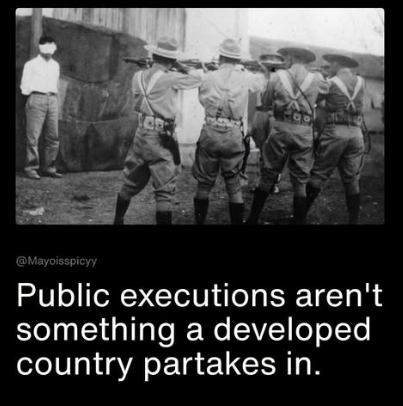 The United States seems set on propelling itself backwards.
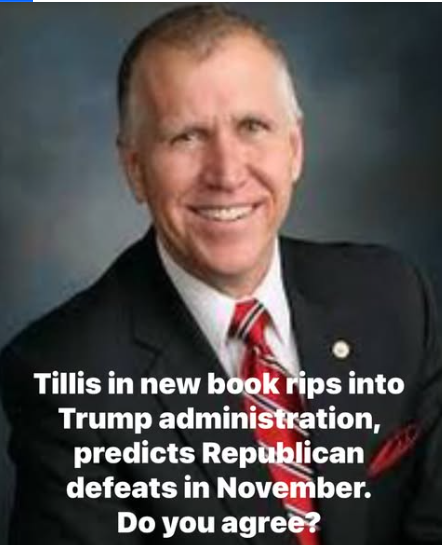 Maybe, as they say, “Hell has a special place reserved in it” for people like Thom Tillis, Republican Senator from North Carolina, who enabled Trump to rape and destroy the United States.
That was until it became clear to Tillis that he could jump ship, write a scathing book about the president, get all over mainstream news promoting it, and go on to enjoy another chapter of political success.
That we Americans are so stupid that we accept this blatant hypocrisy and criminality is sad proof that we’re not the people we were 20 years ago. Maybe what many people are saying are correct: we deserved what we got.



