

With the failure to seal a deal on the main cover decision at COP31 dominating global headlines on Monday, you’d be forgiven for thinking nothing was actually agreed. Not so.
The same geopolitical fractures over fossil fuels and finance that sank the “Antalya Pact” spilled over into the talks’ 165 negotiated agenda items, thwarting ambition and consensus on some. But there was limited success in others.
Here’s the lowdown on what did – and didn’t – get approved in the final plenary.
Climate Finance Work Programme
Agreed at COP30 in Brazil, the two-year Climate Finance Work Programme was added as a standalone agenda item at the beginning of the Antalya summit. This was in response to developing countries’ demand to have a dedicated space to discuss international finance for climate action, especially as it relates to developed countries’ responsibility to provide it to them.
An earlier attempt by donor nations to link the COP31 decision on the work programme to a separate article of the Paris Agreement that aims to make broader financial flows consistent with low-carbon, climate-resilient development was dropped as developing countries protested.
The decision says two co-chairs from a developed and a developing country will be appointed to organise activities under the work programme in 2027 and 2028, which include workshops and a ministerial roundtable at COP32 on implementing the “new collective quantified goal” (NCQG) on climate finance. This includes an obligation by developed countries to mobilise $300 billion a year by 2035 for emissions reductions and adaptation in developing countries.
At the start of COP31, developing countries had pushed for a vague goal to triple adaptation finance by the same year, agreed at COP30, to be discussed and defined under the Climate Finance Work Programme, but the adopted decision does not mention this.
Just Transition
Going into COP31, Australia’s President of Negotiations Chris Bowen promised the summit would give birth to the Just Transition Mechanism (JTM) agreed a year ago at COP30 in Brazil. Pushback, mainly from European countries that don’t want to see a new body set up, meant that happened in name only, without putting any flesh on the mechanism’s bones.
The decision on just transition adopted in Antalya extends the existing Just Transition Work Programme for three years and “operationalizes” the JTM, through “a phased approach”. That means discussions on its scope, form and ways of working will continue over the next year, aimed at launching it properly at COP32 in Addis Ababa.
With developed countries unwilling to cede ground on what they view as fresh obligations – and potentially a new source of demand for finance – some just transition experts told Climate Home News this outcome was preferable than creating a weak mechanism sooner.
Why COP31 needs to start talking about just transition finance
Anabella Rosemberg, senior adviser on just transition at Climate Action Network International, said efforts by rich countries to bury the mechanism had failed. “The mandate from Belém survives, but workers and communities have been told to wait yet again for the institution that will give it teeth. The fight…continues.”
Green groups, meanwhile, hailed the first-ever mention of critical minerals in an agreed COP decision.
The just transition text recognises “the importance of equitable value chains that promote local value addition and economic opportunities, help to build productive capacity and enable developing [countries] to move towards higher-value segments of regional and global value chains, including with respect to critical minerals and agricultural products, in line with nationally determined strategies”.
Patrick Stephenson, Ghana country manager for the Natural Resource Governance Institute, welcomed the linkage made between critical minerals and just energy transitions in the text.
“Managed well, increased mineral demand can bring jobs, new industries and inclusive growth to the people who live with the mines. But that only happens if producer countries become deal-makers, not deal-takers,” he said.
Global Goal on Adaptation
The Global Goal on Adaptation (GGA) was adopted in Antalya but not every element was satisfactory to all. At COP30 in Belem, countries agreed on a list of 59 indicators aimed at tracking national efforts to strengthen climate resilience. However, issues around how to put the GGA indicators into practice, technical readiness and asks on finance remained unresolved.
Countries agreed to at least triple adaptation finance by a deadline of 2035 at COP30, but without clarity on the baseline year for that tripling, the amount to be delivered, who will pay and the mode of delivery.
When this discussion was brought up at the mid-year talks in Bonn in June, developed countries, mostly European governments, refused to include the 2035 tripling target in the GGA decision text and also disagreed over who should be part of the technical task force on the indicators. Rule 16 was applied, which meant the talks were pushed to COP31.
In light of the 1.5C warming overshoot now expected, developing countries had hoped that agreeing these outstanding issues would be easier at COP31. At the close of the Antalya summit, a compromise was reached on the work needed to put the indicators into practice, setting up a taskforce with experts from each UN regional group, as well as SIDS and LDCs, to refine the indicators and develop guidance for their use by October 2027.

No deal was reached on putting a number on the adaptation finance goal, however. The adopted text only recalled language from last year’s cover decision which called for at least a tripling of adaptation finance by 2035 and urged developed countries to increase the trajectory of their collective provision of climate finance for adaptation to developing countries.
The decision left similar gaps as last year, despite a renewed push by African nations, least-developed countries and small island states for a later and higher baseline for the goal that would amount to a target of $120 billion a year.
A report and roadmap that would have helped to resolve the baseline and how to reach the target were proposed in the Antalya Pact that failed to find agreement at COP31 and so will not be produced.
Imane Saidi, a senior researcher at the North-Africa based Imal Initiative and an observer at the talks, told Climate Home News that “developing countries will continue fighting for its urgent delivery next year in Addis” where COP32 will be held.
Adaptation Fund
While the Adaptation Fund only received a disappointing $50 million in pledges at COP31, around a sixth of its annual fundraising target, governments agreed a deal that sets it up for potentially hundreds of millions of dollars in alternative finance.
A decision was adopted to complete the fund’s transition to exclusively serve the Paris Agreement. This means it will be able to receive a 5% share of the proceeds from all Article 6.4 carbon credits – other than those based in small island developing states (SIDS) and least-developed countries (LDCs).
How much money this will generate is very uncertain, as it depends on the sale price of the credits. The fund got over $200 million from a similar share of proceeds under the Kyoto Protocol’s Clean Development Mechanism – far below what had been hoped for due to rock-bottom carbon prices.
The fund’s transition to serve the Paris Agreement had been delayed by a dispute over how to share out seats on the fund’s board. Developed countries preferred to split them between “developed” and “developing” countries while developing countries wanted to keep them divided between “Annex 1” and “non-Annex 1” countries as they had been up to now.
The latter categorisation, which is a set list of countries, makes it less likely that developing countries – particularly wealthier ones – could be recategorised as developed and required to contribute funding. Russia was also reluctant to give up its veto over Annex 1 seats.
Building coastal resilience for local communities in Honduras
At COP31, governments agreed that the board seats would be split by region rather than development status. The board will have 17 members, including three representatives from each of the five geographic UN regional groups, as well as one from a SIDS country and one from an LDC. A majority of its members will be from developing countries.
Board chair Ali Daud Mohamed said in a statement that the decision would help the fund mobilise “much-needed resources”. “Article 6 is gaining momentum, with countries signing new implementation and purchase agreements announced at COP31. As the carbon markets grow, support for adaptation will grow,” he explained.
Carbon Markets
In the run-up to COP31, the carbon market industry waged a sustained campaign against decisions by the Supervisory Body, the regulator of the UN’s new carbon crediting mechanism, known as the Paris Agreement Crediting Mechanism (PACM).
Lobby groups and project developers complained that stringent standards, recently approved by the body and widely applauded by many experts, would make projects financially unviable and, as a result, hold back climate action.
In Antalya, a broad range of countries took up the argument. Negotiating blocs as different as the Like-Minded Developing Countries (which includes Saudi Arabia, India and China), the Least Developed Countries (LDCs) and some Latin American nations wanted the COP31 decision on Article 6.4 to require the regulator to weigh up the cumulative burden its rules place on project developers.
Scientists and campaigners warned of the danger of watering down key safeguards. A handful of parties, led by the EU and Senegal, opposed the push.
Under the Paris Agreement rules, the Supervisory Body must follow guidance that governments give through COP decisions.
Countries take up industry push to loosen UN carbon market rules at COP31
After heated negotiations, countries agreed to a final outcome that largely leaves existing guidance intact. It tells the Supervisory Body to keep ensuring its standards, methodologies and tools uphold environmental integrity, are based on the “best available science” and are informed by robust evidence. Supporters of tighter standards welcomed this language.
But the decision also asks the regulator to “take into account the implications” of how its standards and methodologies operate together when developing and revising them. It also notes concerns from “some stakeholders” about how the standards and tools work in practice.
That stops short of the stronger cumulative-burden assessment that some countries and industry groups had sought. Still, the International Emissions Trading Association (IETA), the lobby group that led the pre-COP campaign, welcomed the inclusion. Some campaigners fear it could open the door to a renewed push to review, and potentially loosen, the rules.
Federica Dossi, policy expert at Carbon Market Watch, said: “The PACM is at a crossroads. Either it sets a new and more responsible benchmark for global carbon markets, or it is steered by financial and other vested interests, becoming just another cheap get-out-of-jail-free card for polluters.”
Mitigation Work Programme
The Mitigation Work Programme (MWP), the only formal negotiating track dedicated to cutting emissions, was due to expire this year. Countries had to decide in Antalya whether to renew it and, if so, in what form.
Throughout the talks, there was broad support for keeping the programme going, but views diverged on how long for. The Arab Group and the African Group wanted to extend it only to 2030, while the EU proposed 2040, and others suggested it run with no fixed end date, according to Earth Negotiations Bulletin which has access to closed-door talks.
But the real sticking point, which proved insurmountable, was the programme’s scope. Since its launch, the MWP has largely been a talking shop: a series of dialogues that have not translated into any meaningful outcomes, with decisions at previous COPs mostly procedural.
The EU, small island states, the least developed countries and the AILAC group of progressive Latin American nations called for a strengthened programme to take forward the outcomes of the first global stocktake (GST) of climate progress. Under the GST, countries agreed for the first time in 2023 to transition away from fossil fuels in energy systems.
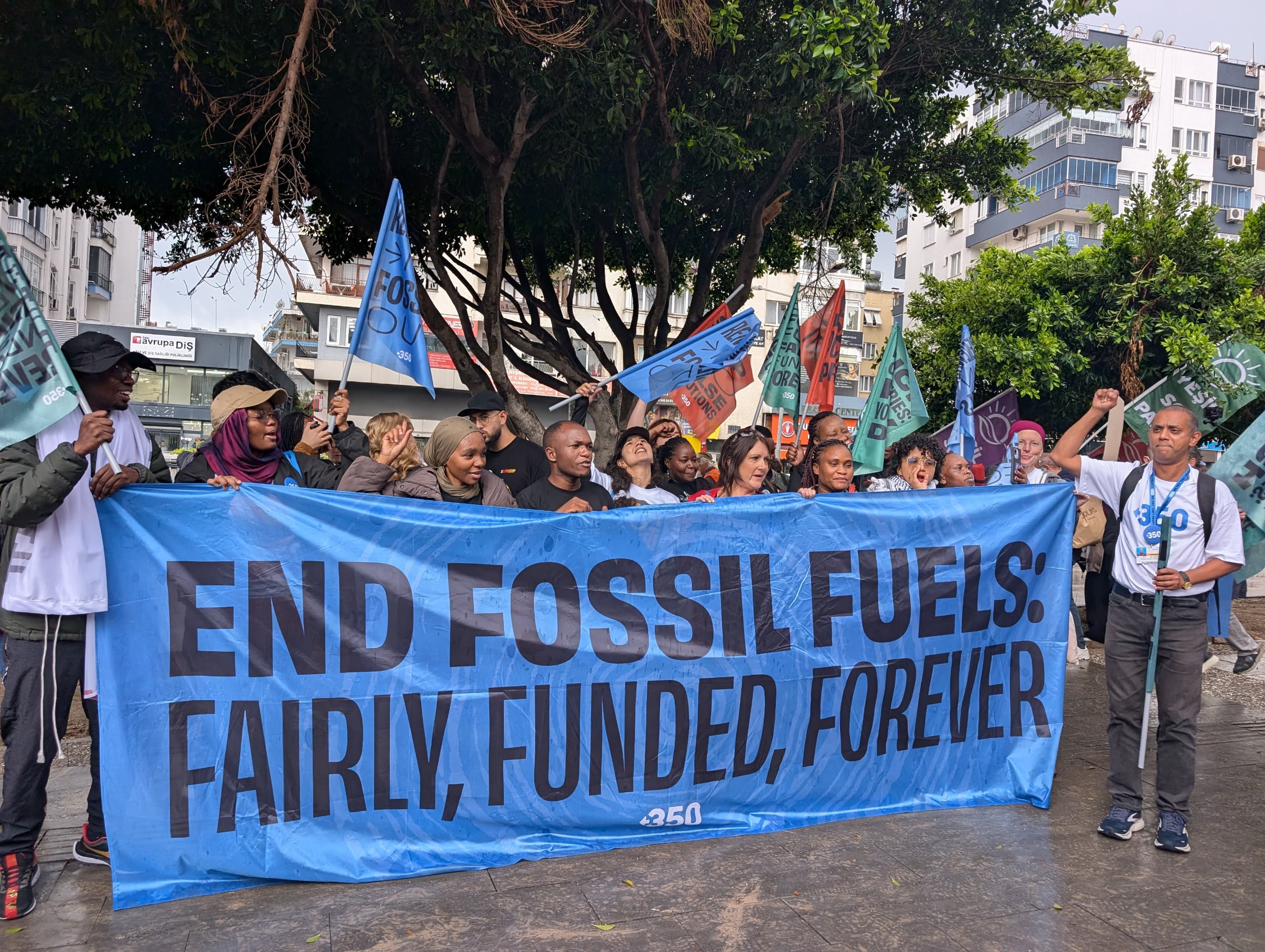
When negotiators failed to align in Antalya, the COP31 presidency tabled a proposal that would have set up the MWP as a platform for countries to “exchange views and experiences” on efforts to cut emissions, “taking into account” the outcomes of the GST.
The programme was established at COP27 in Sharm el-Sheikh, following a mandate agreed in Glasgow a year earlier, with the goal “to urgently scale up mitigation ambition and implementation in this critical decade in a manner that complements the global stocktake”.
Even so, in the final COP31 plenary, Saudi Arabia, Russia and China, which spoke on behalf of the Like-Minded Developing Countries, made clear that any links to the GST in the text were unacceptable to them because, they argued, that reached beyond the original mandate.
China suggested adopting the text without the GST wording. But Russia took issue with several other provisions and opposed its adoption.
The negotiating track ended without a formal decision and discussions over its future are due to restart at the mid-year talks in Bonn next June.
Developed countries, small island states and AILAC voiced deep disappointment over the failure to reach agreement in the plenary. Palau said small island states remained committed to securing a “strengthened programme” at future sessions.
Response Measures
Countries were unable to reach agreement on how to take forward work on “response measures”, which are the things countries do to combat climate change, and the social and economic impacts of those activities. They include everything from economic diversification to reduce reliance on fossil fuels and changing trade rules to make imports greener.
Therein lay the sticking point – the European Union in particular is wary of other countries using a forum where governments exchange information on response measures as a place to push back against the effects of its carbon border adjustment mechanism (CBAM) levy and anti-deforestation legislation on their exports. The draft decision on response measures for COP31 referred to “cross-border impacts”.
The EU argues that the UN climate talks is not the right place to discuss CBAM, which is already being implemented as a way to incentivise lower manufacturing emissions but is viewed by many emerging economies as an onerous trade barrier.
The EU, the UK and Canada objected to the decision over its lack of reference to the “best available science” and efforts to push it higher up the priority list for the next global stocktake which has just been launched. Brazil also said the concerns of developing countries had not been adequately taken into account.
Oceans
After so far being sidelined into a voluntary dialogue at mid-year talks in Bonn, ocean issues gained prominence at COP31 thanks to a push by Pacific islands, and the Australian and Turkish co-presidency. Ocean experts celebrated the increased recognition for the world’s largest carbon sink.
Because there are no ongoing formal talks on ocean-based climate action, this was discussed under the presidency-led cover decision. Ocean issues enjoyed wide consensus during the two-week summit but were ultimately not adopted due to the failure of the Antalya Pact.
Previous versions of the cover text included strong measures, including the creation of a “multi-year” ocean roadmap that would inform COP decisions, a call for oceans to feature prominently in new climate plans, and a report that would feed into the next global stocktake.
Comment: COP31 can’t deliver for islands without delivering for the ocean
During the final plenary, Canada’s chief negotiator Jeanne-Marie Huddlestone said these measures “would’ve helped to further mainstream and give greater profile” to the ocean’s important role in solving the climate crisis, as well as measures to help coastal communities adapt to rising temperatures.
Also speaking in the closing session, Fiji’s climate minister Linda Tabuya lamented that the new ocean commitments – one of the Pacific’s main demands – were not adopted, but said “we will bring them back and we will keep working with all parties to see them land”.
In a last-minute effort to land something, Fiji called for a standalone decision on oceans based on the cover text’s ocean section, but this was ultimately not taken forward by the presidency.
Ocean Conservancy’s vice president for Climate, Fatima Candace Vahlsing, said the failure to reach an agreement is a “failed opportunity” to deliver “historic commitments”, and added that this puts at risk “hard-won progress”.
Despite the disappointing outcome of the negotiations, some voluntary initiatives were announced as part of the Action Agenda, including the Antalya Ocean and Seas Compact – a Türkiye-led political declaration outlining key actions for ocean-based climate action.
Also launched were an initiative to electrify 20% of maritime transport by 2035, a taskforce to help countries include ocean-based mitigation and adaptation in their climate plans, and a $1bn programme to protect coastal communities across 14 Pacific islands.
The post What was agreed – and not agreed – on key issues at COP31 talks? appeared first on Climate Home News.
What was agreed – and not agreed – on key issues at COP31 talks?

A milder winter can sound like welcome news. But for a community waiting for a winter road to carry fuel and building supplies, or a family relying on safe ice to reach harvesting areas, warmer conditions can bring difficult trade-offs. The significance of the coming El Niño is not simply how much temperatures might rise, but what changing winter conditions could mean for food, travel, health, and community life.
One of the strongest El Niño events in the modern record may be developing in the tropical Pacific. NOAA’s October 8 assessment placed an 83% probability on its October–December three-month Relative Oceanic Niño Index reaching at least +2.5°C—a threshold it identifies with an event stronger than previous El Niños in its record dating back to 1950.
For First Nations, Inuit, and Métis communities, the implications will depend on location, local conditions, and the systems people rely on. This is not a forecast of the same experience everywhere: it is an opportunity to consider how a large-scale climate event could interact with existing community priorities and risks.
El Niño, not La Niña
El Niño and La Niña are the warm and cool phases of the El Niño–Southern Oscillation, or ENSO. During El Niño, unusual warming in the central and eastern tropical Pacific changes atmospheric circulation, influencing weather far beyond the Pacific.
El Niño is a naturally occurring climate pattern, distinct from long-term human-caused climate change, although the two can combine to influence temperatures and extreme-weather risks. A strong event changes the odds of particular conditions; it does not determine the weather in any individual community.
What the forecasts suggest
NOAA’s October assessment indicated that a strong-to-very-strong El Niño was likely through January–March 2027. The World Meteorological Organization’s September update also anticipated a very strong event peaking near the end of 2026, with impacts continuing into 2027.
Environment and Climate Change Canada’s August assessment pointed toward a milder winter across much of Canada, with the possibility of drought and wildfire risks extending into the following spring and summer. Its August-issued winter outlook favoured above-normal temperatures across much of British Columbia, the Yukon, Manitoba, Ontario, Quebec, and Atlantic Canada, while parts of western Canada were more likely to be drier than normal.
These are seasonal outlooks, not predictions of conditions on a particular day or travel route. Cold spells, heavy snow, freezing rain, and other dangerous weather can still occur during an otherwise mild winter.
Winter roads, essential connections
For some remote First Nations, winter roads provide a limited seasonal window for moving heavy freight that supports daily life and planned construction. When conditions prevent trucks from carrying full loads, the consequences can reach well beyond transportation.
In February 2024, Nishnawbe Aski Nation Chiefs-in-Assembly declared a winter-roads state of emergency after unusually warm conditions restricted freight movement. NAN identified fuel and construction deliveries among the essential supplies at risk. That experience illustrates why another potentially warm winter deserves attention, although it does not establish what the 2026–27 road season will bring.
The practical planning question is therefore larger than whether a road will open: it includes how essential deliveries and community projects will be supported if the operating season is disrupted. Seasonal forecasts can inform contingency planning, but decisions about road access and load limits must remain grounded in actual local conditions.
Food, culture, and seasonal relationships
Changing winter conditions can also affect access to harvested foods and the relationships sustained through harvesting and sharing. Inuit Tapiriit Kanatami identifies country food as central to Inuit well-being and sharing practices, while highlighting climate-related pressures on access to locally harvested foods. Safe travel is therefore about more than reaching a destination; it also supports food systems and connections between generations.
These concerns take different forms elsewhere. Along the British Columbia coast, El Niño-associated ocean warming can affect fisheries and shellfish, creating another reason to monitor conditions important to harvesting and livelihoods. In Ontario, the Métis Nation of Ontario has identified increasingly unpredictable harvesting seasons among the climate changes affecting Métis citizens.
These are existing climate concerns, not proof that a particular harvest will fail in 2027. The connection to El Niño is the possibility that another season of unusual conditions could add pressure to food systems already adapting to environmental change.
Looking beyond winter
Some of the most consequential risks may emerge after the snow melts. Reduced snowpack, limited spring runoff, and warm, dry conditions can contribute to drought and a more favourable environment for wildfire. ECCC’s August-issued outlook for spring 2027 indicated a high probability of above-normal temperatures across much of western Canada.
For communities facing wildfire, preparedness involves more than protecting buildings. Fires can threaten harvesting areas and medicinal plants, while evacuations require continuity of health care, access to medications, mental-health support, and culturally safe services.
The First Nations Health Authority’s wildfire response resources reflect that broader understanding of safety through support for clean-air spaces, health-service access, counselling, and cultural supports. These considerations belong in early planning wherever local assessments identify elevated risk—not because El Niño guarantees a severe fire season, but because preparation takes time.
Different places, different risks
A national headline about a warmer winter can obscure important regional differences. ECCC’s review found that parts of Nunavut experienced colder-than-normal winters during previous very strong El Niño events, even while much of the country was warmer. The historical sample is small, so that pattern should be treated as a tendency rather than a community-level prediction.
Coastal communities may also face a different combination of concerns, including heavy rain, storm surge, and coastal flooding. Neither a warm national outlook nor an expectation of colder conditions elsewhere can establish whether local ice is safe: community observations and current conditions remain essential.
Indigenous leadership already at work
Indigenous communities are not approaching these risks without knowledge, experience, or solutions. First Nations, Inuit, and Métis climate strategies identify their own priorities for preparedness, food systems, infrastructure, and community well-being.
SmartICE provides one practical example of locally grounded adaptation. Its community-based services bring Indigenous and local ice knowledge together with monitoring technology to support travel decisions. Information is shared through tools including SIKU, as well as local communication channels. Monitoring supports knowledge and decision-making; it does not replace the judgement of experienced ice users.
Land stewardship offers another example. In spring 2026, Gitanyow Land Guardians and Firekeepers carried out cultural burns intended, in part, to support food and medicinal plants. Such initiatives should not be presented as responses to the coming El Niño; they demonstrate stewardship and adaptation work already underway.
The Assembly of First Nations’ National Climate Strategy places First Nations jurisdiction, knowledge systems, and self-determined priorities at the centre of climate action. Inuit Tapiriit Kanatami similarly calls for Inuit-led decisions and partnerships that support Inuit priorities. Preparing for the coming season should build on that leadership rather than treat communities only as recipients of emergency advice.
Preparing on community terms
A useful starting point is to connect updated forecasts with the decisions communities already make about transportation, harvesting, water, health, and emergency readiness. Depending on local priorities, planning could include:
- Reviewing essential deliveries. Identify supplies and projects exposed to winter-road disruption, and discuss contingency arrangements before shortages develop.
- Supporting local monitoring. Resource community-selected approaches to observing ice, snow, water, and travel conditions, alongside current weather information.
- Protecting food access. Consider support for harvesters, food sharing, storage, and alternative supplies where access may be disrupted.
- Preparing for smoke and evacuation. Review clean-air spaces, transportation, medication access, health-service continuity, and culturally safe supports.
- Following regional updates. Revisit plans as ECCC’s monthly seasonal forecasts and local assessments provide a clearer picture.
Planning also requires resources and clear responsibilities beyond the community itself. The AFN’s climate strategy calls for sustained funding and direct partnership with First Nations rights and title holders, including action on infrastructure and emergency-management capacity. Inuit climate priorities likewise identify infrastructure gaps and the need for partnerships shaped by Inuit decisions.
A very strong El Niño does not guarantee a particular winter-road season, harvest, drought, or wildfire outcome. Its value as an early warning lies in the time it provides to prepare—and in whether that time is matched with the resources and decision-making authority communities need to act on their own priorities.
By:Rye Karonhiowanen Barberstock
Photo by: Goran Vinko at Unsplash
The post A Supersized El Niño: What Winter 2026–27 and 2027 Could Mean for Canada appeared first on Indigenous Climate Hub.
A Supersized El Niño: What Winter 2026–27 and 2027 Could Mean for Canada
Australia is looking to South Korea to help turn its vast renewable energy and mineral resources into new export industries supplying low-emissions materials to Korean manufacturers – a deal which campaigners hope will shift trade between the two nations away from fossil fuels.
In an agreement signed on the sidelines of the COP31 climate summit in Antalya, Türkiye, the two countries established a cooperation framework to connect South Korea’s growing industrial power demand with Australia’s clean energy resources.
The deal also aims to support investment in power grids, clean energy supply chains, and greening industries to accelerate emissions cuts.
Analysts say the agreement can help build competitive clean energy supply chains and attract long-term investment into decarbonising industrial processes.
Richie Merzian, CEO of the Clean Energy Investor Group (CEIG), an Australian industry body representing institutional investors in clean energy, told Climate Home News this was “a great example” of a government-to-government agreement that would give investors confidence to invest in green technologies.
-
SE Asia speeds up plan for connected clean power grid after oil shock
Countries are redoubling efforts to link their grids to bolster energy security and reduce their dependence on fossil fuels – but many challenges remain -
As COP31 weighs 35×35 pledge, IEA says Hormuz crisis driving electrification
The report estimates that a planned transition away from fossil fuels and into renewables can add energy jobs and cut energy bills -
Southeast Asia’s fragile grids threaten billions in clean energy investment
Renewables developers need reliable electricity infrastructure and stable policies to help the region meet climate goals and surging demand for power
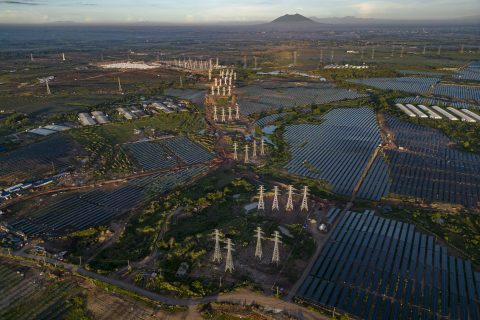

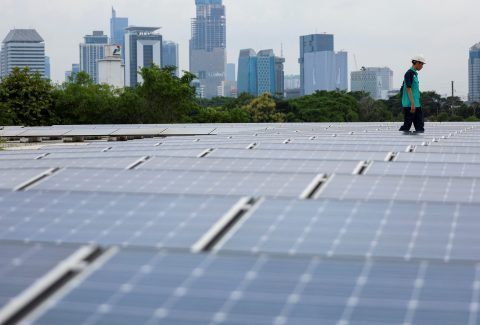
For example, the deal could support Australian exports of green iron and other low-emissions materials, while giving Korean manufacturers access to cleaner inputs for steelmaking, batteries and other industries.
That in turn could help attract investments in Australian renewable power projects, hydrogen production and industrial infrastructure if developers know Korean customers are willing to pay for greener products.
“The high levels of capital for green iron and steel need certainty on demand and a credible path to offtake before it commits,” said Merzian. The partnership, he added, “will help smooth out the path for Korea’s significant industrial policy and capital to come down under”.