Connect with us

Published

on

Last Updated on November 4, 2024

This post was sponsored by Adobe Express. All thoughts and opinions are my own; for more information, please see my disclosure policy.

Since moving to Maine, I get the fall hype. I finally get it. I have never seen trees that are so colorful. The air is crisp. Cliché, but true. And I’m not even sure how to describe crisp air. But I think it’s like true love. You can’t really explain it, but you know it when you feel it.

The colder weather and crisp air make me excited to put on warm and cozy clothes. I want to wrap up in a big scarf and embrace this season’s magic in every way possible.

And the magic of this season…. isn’t something you can buy, even though a quick scroll through my Instagram feed might have you believe otherwise.
There can be a lot of waste this time of year, from giant hauls of clothing, seasonal decor, beauty and body products that won’t be used entirely by the time we need to swap for the next holiday scent, single-use poorly constructed costumes, single-use plastic cups for fall drinks, and the list goes on.

We often use buying things as a replacement for connection. Instead, focus on the connection. While I don’t think it’s inherently wrong to want to enjoy fall fashion, decorate for the season, and fall-inspired treats, I do think that the magic of the season goes so much deeper than what you can buy.

Fall is about slowing down as we head into winter. It’s about darker nights, connecting with our loved ones, and enjoying the bounty of harvest and some of our favorite fall foods. And we can do all of that in a sustainable way that makes us feel truly connected to the season and the people we care about.

In truth, you don’t need a bunch of new stuff to enjoy fall. And you certainly don’t have to sacrifice your favorite fall activities to be sustainable. So here are some ways to keep your fall eco-friendly and enjoy the essence of the season.

fall bingo

To fully embrace this season, I made a fall bingo card using Adobe Express. This is a fun game and a reminder to celebrate the season sustainably and fully. You can even share or compete with your friends and family. (annnd maybe encourage them to participate in some sustainable fall habits too??)

I wanted to make a bingo card to go beyond just a checklist because the visual nature and gamification encourages me to really make these fall activities a priority.

Plus, it’s just FUN. I was so excited when I got my bingo this year!!

If you’d rather download a pdf, I can email that to you with the form below. It will automatically sign you up for my weekly newsletter where I share more sustainability tips, but you can unsubscribe at anytime.

    If I don’t make a plan to go out and enjoy the season, I can often get too wrapped up in day-to-day, that I miss out on so many fun moments. Allowing myself to print and hang the bingo sheet on my fridge, I’m reminded of all the fun ways I can celebrate the season. 

    I made this bingo sheet with Adobe Express. They made it so easy because I can easily choose from various templates, making it simple even for non-designers.

    The templates are fully customizable, so I could adapt each section to fit the activities and eco-friendly values I wanted to showcase. The platform’s user-friendly tools allowed me to adjust colors, add icons, and play around with fonts to give the sheet a festive fall-themed look.

    I love the intuitive features, making it easy to design something unique in minutes without any complicated steps. If you’re interested in creating your own seasonal games or personalized checklists, Adobe Express is a fantastic option for putting together visually appealing projects with ease.

    Here’s a look at a few of my favorite bingo sheet squares!

    1. pumpkin and apple picking

    This is a fall classic, and I got to check both of these boxes off of my bingo sheet this year!

    If you love stocking up on apples and pumpkins, consider hitting up a local pumpkin patch and apple orchard. It’s so important to support small, local farms. Not only is it fun, it’s a great way to connect more with your local food systems.

    Small farms support the local economy by providing jobs, strengthening the community, and helping maintain rural populations.

    Small farms can help protect and enhance the environment by preserving land and creating a good landscape. They can also increase biodiversity by growing heirloom and non-commercial varieties of plants.

    Check and see if you can find any local farms near you that use organic and/or regenerative farming practices too!

    But don’t forget to use up all the apples and pumpkins you get! Especially pumpkins: 1.3 billion pounds of pumpkins go uneaten and get sent to landfills in the U.S. alone each year.

    Here are some creative ways to use up your apples and pumpkins.

    Apples:

      And you can save your scraps and cores to make homemade Apple Cider Vinegar from Scraps!

      Pumpkins:

      For more ideas check out my latest book 101 Tips For a Zero Waste Kitchen, with tons of food waste-fighting recipes!

      2. fall drinks

      There are so many delicious fall drinks that come out this time of year. From apple cider to pumpkin spice lattes, there’s no shortage of options.

      I have three squares on the bingo card dedicated to fun fall drinks because you don’t have to give them up to be sustainable. Just consider bringing your own reusable travel mug with you and asking for it to go in there.

      So far I’ve gotten hot apple cider and a pumpkin spice coffee blend. So, I have one more fall drink to try before December!

      Also, if you have some extra time, most small cafes are more likely to provide you with actual mugs if you get your drink to stay. And what’s not more aesthetically pleasing than sipping on a fall drink in a cute cafe?

      You can also make your own fall drinks at home. One of my favorites is mulled apple cider (even better if you get it from the local farmers market). Here’s how to make it.

      mulled apple cider recipe

      Ingredients:

      • Apple cider
      • Orange slices
      • Cinnamon sticks
      • Whole cloves

      Instructions:

      1. In a pot, add as much apple cider as you’d like (this will depend on how many people you’re serving – a gallon should be enough for 7-8 people). Add in your orange slices, cinnamon sticks, and whole cloves.
      2. Bring it to a boil, then reduce to a simmer for ~30 minutes. 
      3. When it’s done, strain out the extras and serve in reusable mugs!
      3. diy fall crafts

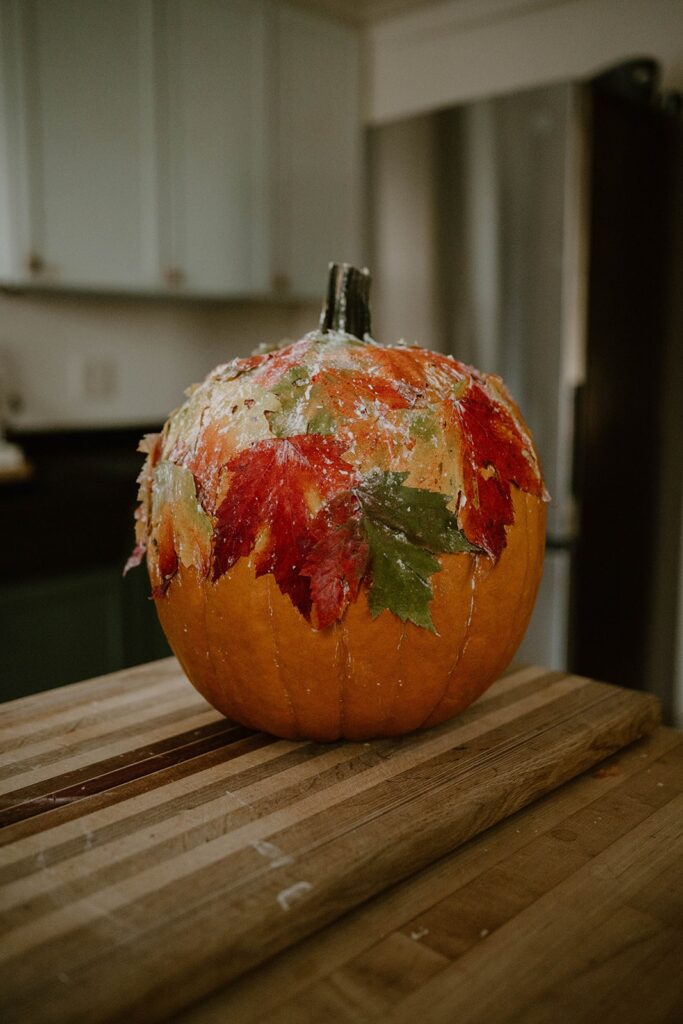
      You really don’t need to go out and buy a bunch of new fall decor. Nature has provided us with so many beautiful options, so lean in. I love to decorate with gourds and pumpkins that can be eaten. You can make a beautiful garland with leaves that can be composted.

      Of course, the most sustainable option is to use what you have. Shop secondhand and consider DIYing some fall crafts and decor instead.

      I love to draw inspiration from the items I see on Instagram or in stores and then make my own version using secondhand or upcycled materials like scrap fabric, salvaged paper from gifts or packages, and cardboard from boxes. But using natural materials for your crafts is great too, as these can be composted, like foraged fall leaves, acorns and twigs.

      Here are some fall DIYs I love:

      4. cook using in-season fall produce

      Visiting your local farmers market is a great way to see what’s in season near you. This will vary from state to state due to the climate in your region. For example, California is warmer than New York, so it makes sense that more produce is available during the winter months.

      However, be mindful that what’s sold at your local market will also depend on what your local farmers choose to grow that year. Many things can factor into this decision, like the cost of growing versus the profit of selling.

      Here’s a general list of what’s typically in season for fall:

      • Apples
      • Pears
      • Plums
      • Figs
      • Pumpkins 
      • Winter squash (butternut, acorn squash, kabocha etc.)
      • Broccoli
      • Cauliflower
      • Brussels sprouts
      • Sweet potatoes
      • Cabbage
      • Carrots
      • Celery
      • Chard
      • Parsnips
      • Garlic
      • Onions
      • Herbs
      • Kale
      • Leeks
      • Potatoes
      • Spinach
      • Turnips
      • Peppers

      I cannot wait to make my dad’s award winning chili, miso white bean stew, and all of roasted squash dishes! I’m a member of a vegan dinner party group, and we do a big Friendsgiving potluck every year and a soup party. The party is hosted by a vegan, but no one else in the group is vegan so this a great way to encourage more plant based eating and creativity.

      Please note the Potluck square on the bingo sheet, and let me tell you a soup party truly is life changing. Every time we host one of these, we all bring the recipes to share with each other.

      My favorite dish so far was brought by one of my friends! It’s a kabocha squash stuffing with maple tempeh that has become one of the recipes I look forward to all year long. 

      When you choose to support locally grown produce, you’re reducing food miles (aka, how long it takes for your food to get to you). Market produce is often grown in the same or neighboring states instead of across the country or overseas.

      You can also sign up for a local CSA box if you have access to one. They will curate a weekly or bi-weekly box of seasonal produce from a local farm. Many offer delivery straight to your door, or have a designated pick-up spot.

      Cooking at home also helps reduce waste and connects you to your food more. When you buy your produce fresh, there’s less packaging waste. Plus, fresh food goes bad faster, which allows you to think up yummy ways to utilize it in your cooking.

      My tip? Keep fresh foods within sight so you’re more likely to reach for them. And meal plan whenever possible!

      5. make your own costume

      So many of the costumes you find online and in stores are made from cheap materials, like polyester. They’re only built to last one night and easily fall apart.

      That essentially means thousands of Halloween costumes will be heading to the landfill after the holiday is over. (source) And remember: Polyester is just another term for plastic fabric. So it won’t break down and likely, cannot be recycled.

      Plus, costumes can cost a lot of money, depending on what you’re going as. A costume can easily cost $50-80.

      Instead, why not make your own? Here are some ways you can. I guarantee you, you’ll look so much better, reduce waste and save a lot of money.

      shop your closet first

      You probably already have clothes in your wardrobe that would make a great costume! I recently challenged myself to make seven costumes from one black dress, and it was a blast.

      You can also get a few accessories that can easily change almost any basic look and allow you to lean into what you already have.

      • animal ears paired with any clothing will make an easy costume
      • a crown paired with any fancy dress will be a princess
      • wings will make any slightly flowy and whimsical dress a fairy
      • a witch hat will make any black dress look like a witch costume
      • a cowboy hat and jeans will instantly make you from the wild west

      thrifting, renting, swapping

      You can thrift or rent your Halloween costume, too! There are SO many Halloween costumes available at your local thrift store, many of which haven’t even been worn.

      There are also some amazing costume rental companies – just google ones near you and see what pops up.

      You can also try renting normal clothing that looks ‘costume-like’ and fits into whatever character you’re aiming for. This is a great option if you know the item you want for the costume will never be worn again.

      For example, maybe you want to go as a leopard, but don’t enjoy wearing leopard print on a consistent basis. Renting is a great option to reduce waste: You get to use it with the comfort of knowing someone else will keep it in use after you.

      And don’t forget going to a costume swap or just swapping with friends and family. It’s a great way to get a new-to-you costume for free.

      diy costumes

      If you’re especially crafty, you can probably put your entire costume together yourself using some basic sewing skills. Head to a fabric store (or even better yet, fashion one from fabric scraps/secondhand fabrics) and grab whatever you’ll need.

      You don’t have to sew your costume to DIY it either: You can get crafty by upcycling all kinds of materials to create a costume, like cardboard, aluminum, and jewelry.

      I recently crafted an impromptu bug costume and made my own antennas out of a headband, a clothing hanger and some ribbon!

      6. go leaf peeping

      A simple way to reconnect with nature is to go leaf peeping. All you need to do is pick a location, research the area, and bring the right gear.

      This bingo sheet is really about slowing down and connecting with the season in a less consumer driven way. Taking a nature walk, leaf peeping, stargazing, even crafting are all ways to help you slow down from the day-to-day.

      I recommend visiting a local state forest and going on a fall hike to get the best view of the colorful leaves.

      Maine is known for its forests, so if you’re in the area, I highly recommend checking them out! Upstate New York, Massachusetts, Oregon, and Vermont also have some impeccable fall foliage worth checking out.

      You can sustainably prep for your trip by:

      • Packing some zero waste snacks! I love grabbing some granola, chocolate covered raisins, and pistachios at the bulk food store. Bringing some fresh fruit, like apples and pears is great too. You can also make some homemade protein bars and store them in a reusable silicone bag.
      • Bring some sustainable hiking gear! For fall, flannel, comfy pants, and hiking boots are a must! Don’t forget a sturdy hiking backpack, a compass, a flashlight, and some binoculars. Don’t forget your reusable water bottle either!
      • Choose eco-friendly routes on Google Maps if possible to get there. Just make sure to turn on ‘prefer fuel-efficient routes’ under route options. 

      Of course, if you’re unable to make it to a forest for a hike, you can always simply walk through your local park to see the leaves. Enjoying the foliage in your own backyard is easy and hassle free!

      7. attend a pumpkin smashing event

      Did you know 1.3 billion pounds of pumpkins are trashed annually after Halloween and Thanksgiving? (source USDA) We should be eating our pumpkins – I listed some pumpkin recipes in the first section!

      However, if you don’t like the taste of pumpkin, consider attending a local pumpkin smash event. You get to literally smash your pumpkin, and the remains get composted!

      Another option is to see if your local farm, zoo, or animal sanctuary accepts pumpkin donations for the animals. They’ll enjoy eating them.

      Also, if you have a dog, consider whipping up some homemade pumpkin dog treats. Nala loves it when I make her some!

      8. host a fall themed event

      Love hosting? Why not try hosting a fun fall themed event? It’s a great way to build connections, make memories, and get your loved ones into the spirit of seasonal, slow living.

      Here are some fall-inspired friend nights, minus the waste:

      • Seasonal inspired potluck: Ask your friends to cook a dish that uses at least one in-season produce item. Even better if they get it from your local market!
      • Movie night: Invite your friends over to watch some cozy, wholesome films. Snacks can be popcorn you bought at the bulk bins and homemade treats!
      • Candle making: Assemble the materials needed to make some natural beeswax, coconut or soy candles together. Just make sure to take the proper precautions and prepare to get messy!
      • Pumpkin carving: Invite your friends over to carve pumpkins – but save the guts to make stock, and the seeds for roasting. Compost whatever you can’t reuse! You can even host a contest to see who makes the best one. Winner gets a fun eco-themed prize!
      • Baking: Have your friends over for a bake night! Attempt to make something apple, pear, or pumpkin themed. Cinnamon rolls and raisin oatmeal cookies scream fall to me too!
      • Bread-making: Attempt to make homemade bread together! Just note that bread tends to take a while to make and you may need to prep some of it in advance the day before. 
      • Painting fall-themed art: Using whatever art supplies you already have, challenge yourself to paint a fall scene. You can paint it on a traditional canvas, or get creative and use upcycled materials (like scrap paper, cardboard, seashells, wine bottles, etc.) as your canvas! 

      9. go thrifting for new fall clothes

      This time of year, there’s a huge push to buy new boots and sweaters. We’re constantly bombarded with advertisements for the latest “fall fashion trends” and this leads to impulse purchases we probably don’t really need.

      If you do need something new, or feel like you’re missing a fall staple in your wardrobe, consider thrifting for it first. Everything at the thrift store is secondhand, which means the materials needed to make it were already used up. Purchasing thrifted pieces means you’re keeping these items out of landfills and promoting reuse.

      To make thrifting even more fun, consider going with a friend! Just make sure you ask yourself if you really need/will use the item you’re eyeing before purchase.

      If you don’t have a thrift store near you, consider checking out one of these online thrift and vintage stores.

      RELATED: 10 Sustainable Fall Must-Haves

      10. tour a cidery

      What’s more fall than apple cider? Consider checking to see if there are any local cideries near you. If there are, you can likely schedule a tour!

      I actually got my first fun fall drink bingo check from freshly made apple cider to go in my own reusable cup!

      You can ask them a bunch of questions about how they grow their apples, and if they use any sustainable practices. Also, many will let you sample their ciders in reusable glasses.

      Cider itself is considered sustainable because it is fermented without heat, similar to wine, which means it uses less energy than other craft beverages. Cideries can also use clean energy to reduce their carbon footprint.

      If you fall in love with the cider, you can purchase it straight from them. This helps support small farms, which is much better than purchasing it from the grocery store. You’re helping to empower your local economy, and supporting better farming practices.

      So, which of these sustainable fall activities are you most excited to try out? Let me know in the comments!

      And, a huge thank you to Adobe Express for sponsoring this post. Be sure to visit Adobe.com to create all kinds of images, videos, and documents, like the bingo card I made above!

      I am definitely planning on making one for Christmas as well. I’ve always loved making seasonal bucket lists, but the bingo sheet makes it even more interactive and intentional.

      The post Ultimate Fall Bucket List: Budget Friendly Activities + Printable Bingo Card appeared first on Going Zero Waste.

      https://www.goingzerowaste.com/blog/ultimate-fall-bucket-list-budget-friendly-activities-printable-bingo-card/

      Continue Reading

      Green Living

      7 Ethical & Eco-Friendly Dinnerware Brands To Set Your Table Sustainably

      Published

      on

      A durable set of eco-friendly dinnerware is a solid ingredient for a sustainably set table! But…

      What is Sustainable Dinnerware?

      Well looking for secondhand and vintage dinnerware is always a good start, whether that’s your grandmother’s porcelain dining sets or a pre-loved set of colorful plates and bowls at your local thrift store.

      Another great place to look is estate sales. You can likely find full sets of dinnerware! If none of those options are available to you (or your just not finding something you love) you can check out a site like Etsy Used or Chairish.

      *Important note on secondhand dinnerware: the FDA started regulating the use of lead in dinnerware in 1971. So you might want to avoid any dinnerware produced before 1971, unless it’s just for display!

      Here are some qualities to look for when shopping for new sustainable dinnerware:

      Sustainably sourced materials: such as responsibly-harvested bamboo and recycled glass.

      Quality: when it comes to products you’re going to potentially use and wash daily, durability is an important factor to keep in mind. Also consider your lifestyle! Perhaps glass and porcelain aren’t the best choices if you have little ones, or you tend to drop things often. (Guilty!!)

      Usefulness: You might also want to consider if you will be hand-washing or dishwashing your dinnerware. Some materials are too fragile for the dishwasher, so consider if you’ll have the time (and willingness) to hand wash them all the time. Because part of sustainability is that you’ll actually use the products and they won’t just sit and collect dust!

      Ethical production: this could look like transparent local manufacturing or artisan-made and fair trade. In any case, an ethical dinnerware brand would prioritize fair living wages for the workers, ensure safe healthy conditions (this includes no toxic chemicals used in production!) and go above and beyond to consider the wellbeing of the people who work for them and/or produce their products.

      Ownership and Equity: this means looking at who owns and profits from the brands we’re supporting; if a brand is owned by a person of color, it will be indicated in their description below (BIPOC-owned stands for Black, Indigenous, Person of Color-owned and WOC-owned stands for Woman of Color-owned).

      Your Values: you may have other elements you look for in a brand, such as traditional craft preservation. Or perhaps it’s really important to you that a brand is giving back to their local community.

      Where to Find Eco-Friendly Dinnerware

      The eco-friendly tableware and sustainable dinnerware brands featured below meet at least one (though most of them meet several) of the above criteria.

      In this roundup, you’ll find sustainable pottery (including ceramic plates, sustainable mugs, and more), recycled glassware, artisan-made ethical dinnerware, and everything in between to suit your needs. I hope that this variety of brands will help you set the table, whether that’s for fancy dinner parties, Friday night pizza, or something in between.

      This article features affiliates and partners. As always, we only feature brands that meet strict standards for sustainability that we love — and that we think you’ll love too!

      1. Zungleboo

      Lightweight, shatterproof, and made from corn starch + bamboo fiber, Zungleboo creates family-friendly and eco-friendly dinnerware!

      Their versatile plant-based bowls and plates are also dishwasher and microwave safe, making them easy to care for no matter how busy mealtime is. As Zungleboo writes on their website, their sustainable dinnerware is “from real plants, for real life”.

      Categories: Bowls, Plates

      Conscious Qualities: Eco Materials, WOC-Owned

      Price Range: $$

      Check Out Zungleboo

      Use code CONSCIOUS15 for 15% off!

      2. Our Place

      From the same brand that brought us their cult-favorite Always Pan, comes a gorgeous collection of non-toxic dinnerware and sustainable pottery.

      Our Place has hand-painted main plates and side bowls made with recycled and virgin porcelain ceramic and dinner glasses handmade from recycled glass and colored with natural dyes.

      Categories: Glassware, Bowls, Plates

      Conscious Qualities: Eco Materials, Gives Back, WOC-Owned

      Price Range: $$

      Check Out Our Place

      Gray bowls from eco-friendly dinnerware brand Our Place

      3. Fable

      Prioritizing timelessness and sustainability, Fable sources quality materials and simple designs that last the test of time.

      The eco-minded dinnerware company partners with makers in Portugal, Germany, Italy, Japan, and the US that use conscious practices, like ethical employment, craftsmanship, and low-waste practices (like sourcing recycled clay).

      Categories: Dinnerware, Drinkware, Cutlery, Serveware, and Decor

      Conscious Qualities: Quality Craftsmanship, Low Waste Practices, Responsibly Sourced

      Price Range: $$$

      Check out Fable

      taupe colored sustainable dinnerware from Fable

      4. East Fork

      East Fork’s ethically-made dinnerware and tableware is next level — their gorgeous sustainable ceramics, glassware, mugs, and other goods are exquisitely designed and built for durability.

      Committed to creating local manufacturing jobs, all of East Fork’s eco-friendly pottery is made in Asheville, North Carolina and is working to center equity and inclusion throughout their business.

      Categories: Plates, Bowls, Cups, Drinking Glasses, Flatware/Silverware,

      Conscious Qualities: Locally-Made, Transparent Production

      Price Range: $$$$

      Check Out East Fork

      ethical dinnerware in blue and orange from East Fork

      5. Urban Natural

      Green home retailer Urban Natural has stunning eco-friendly tabletop goods from leading contemporary brands like Farmhouse Pottery and Ethnicraft.

      The brands Urban Natural curates source natural materials, use time-honored processes, and take quality craftsmanship seriously.

      Categories: Plates, Bowls, Cups & Mugs, Flatware

      Conscious Qualities: Artisan Goods, Natural Materials, Locally and Ethically Made

      Price Range: $$ – $$$

      Check Out Urban Natural

      Eco-friendly stoneware from Urban Natural

      6. GOODEE

      For artisanal plates that can elevate your tablescape, GOODEE is the answer.

      From 100% porcelain stone ceramic plates hand-crafted in the ancient Japanese town of Arita and hand-painted plates made from Egyptian clay to marble patterned ecothylene® (upcycled BPA-free plastic) plates ideal for family-friendly daily wares, GOODEE has options for everyone.

      Categories: Plates, Glassware, Cups & Mugs, Serving, Flatware

      Conscious Qualities: Ethical Production, Craft Preservation

      Price Range: $$$

      Shop GOODEE 

      Scalloped artisan-made dinnerware

      7. Ekobo

      Ekobo’s colorful eco-friendly dinnerware is available in a variety of colors and sizes, perfect for mixing and matching to create a unique sustainable table setting for any space.

      The eco-friendly dinnerware from Ekobo is made from upcycled bamboo and the result is durable, dishwasher-safe, and non-toxic diningware.

      Categories: Plates, Bowls, Cups, Trays, Baby Diningware

      Conscious Qualities: Eco Materials

      Price Range: $$

      Check Out Ekobo

      colorful sustainable dinnerware

      More Guides For An Eco-Friendly Kitchen:

      Best Fair Trade and Eco-Friendly Tablecloths

      Your Sustainable and Zero Waste Kitchen Guide

      The Best Zero Waste Food Storage Options

      The post 7 Ethical & Eco-Friendly Dinnerware Brands To Set Your Table Sustainably appeared first on Conscious Life & Style.

      7 Ethical & Eco-Friendly Dinnerware Brands To Set Your Table Sustainably

      Continue Reading

      Green Living

      10 Non-Toxic and Eco-Friendly Mattress Options for a Safer Sleep

      Published

      on

      Everyone wants to get a good night’s sleep, but conventional mattresses can often be full of questionable chemicals and synthetic materials — that you’ll be exposed to for one third of your day, every single day.

      What Makes a Mattress Sustainable?

      The materials matter most. A mattress made from certified organic cotton, wool, and natural latex is a fundamentally different product than one made from conventional foam and synthetic fibers.

      Beyond materials, look for real transparency: does the company disclose exactly what they use, and where and how it’s manufactured? Vague claims like “eco-friendly” or “sustainably made” with no specifics are a red flag, not a green one.

      Local, in-house manufacturing is also worth weighing, because a brand that owns its own factory (rather than outsourcing to an unnamed third party) generally has more direct visibility into its own labor and material sourcing, and more accountability if something’s wrong.

      Mattress Materials to Look For (and Materials to Avoid)

      Sustainable mattresses will be made from natural, non-toxic, and sustainably sourced materials, ideally backed by real certifications, not just marketing language.

      Some eco-friendly materials to look out for:

      • GOTS Certified Organic Cotton
      • Sustainably sourced wool
      • Natural Dunlop or Talalay Latex, ideally GOLS certified
      • Non-toxic, water-based adhesives

      The materials to be most cautious of are conventional polyurethane foam, plastics, and added chemical flame retardants — these are where the biggest health and environmental concerns tend to concentrate. That said, not all synthetic materials are equal: a foam that’s independently tested and certified (like CertiPUR-US®) can be a reasonably safer choice than an untested one, even if it’s not our top recommendation compared to natural latex. I’ll flag where a brand in this guide uses tested synthetic materials so you can weigh that tradeoff yourself.

      Eco-Friendly Mattress Certifications to Know

      Certifications add a layer of third-party accountability to a brand’s claims. Though none are perfect on their own, so it’s key to know what each one actually covers!

      • GOTS Certified = the fabric (like the organic cotton cover) meets strict organic and safety standards, with labor protections built into the entire supply chain. This is the most rigorous certification for organic textiles specifically — but it’s fabric-specific, not a claim about the foam or latex inside.
      • GOLS Certified = verifies that latex is made from certified organic latex, grown and processed to strict environmental and safety standards. A latex-specific certification, not a wood, fabric, or foam guarantee.
      • Cradle to Cradle Certified (Gold) = evaluates a product across material health, circularity, clean air/climate, water/soil stewardship, and social fairness — one of the few certifications that can assess a whole mattress rather than a single material.
      • GREENGUARD Gold Certified = the finished product was tested for low chemical emissions, including VOCs — the stricter tier of GREENGUARD certification.
      • eco-INSTITUT Certified = a German certification measuring a material’s chemical emissions and verifying responsible sourcing — similar in spirit to GREENGUARD, but based in the EU.
      • MADE SAFE® = screens against a list of thousands of chemicals known or suspected to harm human health. One of the more comprehensive certifications available, assessed at the product level.
      • Rainforest Alliance Certified = verifies a product was produced in a socially, economically, and environmentally responsible way, particularly regarding forests and climate — commonly seen on natural latex specifically, since it’s often applied to rubber tree sourcing.
      • OEKO-TEX® = tests the finished textile for harmful substances. OEKO-TEX offers several distinct certification tiers (STANDARD 100 being the most common), so it’s worth checking which specific OEKO-TEX label a brand holds.
      • FSC Certified = wood-based materials (like a bed frame or wood mattress components) came from responsibly managed forests. Not a chemical-safety or textile certification.
      • Fair Trade Certified = verifies that a factory meets standards for fair wages, safe working conditions, and ethical labor practices — a certification about how a product was made and by whom, not about the materials themselves.

      Where to Find Eco-Friendly Mattresses

      [Looking for bed frames too? Check out this guide.]

      Note that some of the brands below are affiliates, meaning we’ll earn a commission at no additional cost to you if you choose to purchase through these links. As always, all brands meet rigorous criteria for sustainability and are brands we love — and that we think you’ll love too!

      1. Savvy Rest

      Best for fully customizable organic mattresses (even side-by-side for couples)

      Organic mattress from Savvy Rest in nature

      Based In: US | Made In: US

      Conscious Qualities: GOTS-certified organic company and factories; organic wool, natural USDA- and GOLS- certified Dunlop or Cradle to Cradle Gold-certified Talalay latex and organic cotton

      Price: $1199-$4799

      One of the more standout features of Savvy Rest is their ability to customize your mattress to fit your needs. If you’re a couple, they can even customize each side. This B Corp also designs non-toxic furniture, including bed frames to complete your bedroom set. 

      *Use code CONSCIOUSSTYLE20 for 20% off at Savvy Rest!*

      2. Avocado

      Best for organic mattresses with nearly every possible certification

      Avocado sustainable organic mattress on walnut wood bed

      Based In: US | Made In: US

      Conscious Qualities: Climate-neutral; No chemical retardants; Eco-Institut certified, sustainably-sourced Dunlop latex, GOTS-certified cotton and wool from their own sheep herd; Handcrafted in their own local GOTS-certified factories; Fair Trade, Greenguard Gold and Made Safe, and B-Corp certified

      Price: $279-$3,339

      Avocado is leading the way in sustainability efforts as far as mattress brands go. They offer a variety of eco-friendly mattresses to choose from depending on your needs, as well as crib mattresses and various household goods. They also have a 1-year trial to ensure you have ample opportunity to try their sustainable mattresses out before you commit.

      3. My Green Mattress

      Best for a full family lineup, crib to child and basic to luxury adult mattresses

      My Green Mattress sustainable organic mattress

      Based In: US | Made In: US (Willowbrook, IL)

      Conscious Qualities: GOTS-Certified Organic Cotton & Wool, GOLS-Certified Organic Latex, GREENGUARD Gold Certified, MADE SAFE® Certified

      Price: $399 (Crib) – $2,399 (Cal King)

      My Green Mattress handcrafts their entire lineup — crib, kids, and two adult tiers — in their own Illinois factory.

      Their Natural Escape is the most luxurious pick, with extra latex cushioning for a plusher feel, while the Kiwi Organic Mattress offers that same organic cotton, wool, and latex construction in their standard everyday option. For kids, the Pure Eco Organic Kids Mattress is a lower-profile design made to fit bunk beds and trundle beds, and for babies, the Emily Organic Crib Mattress takes a firmer, simpler approach suited to safe infant sleep. All four come with a 365-night trial.

      4. PlushBeds

      Best for highly customizable non-toxic mattresses

      Certified organic mattress from Plush Beds

      Based In: US | Made In: US

      Conscious Qualities: USDA-certified organic cotton, wool, and latex; GOTS organic cotton and wool; OEKO-TEX certified latex; FSC- Control Union- and Greenguard certified; ethical in-house production; sources ethically harvested materials 

      Price: $300-$2000

      Plushbeds has almost every certification one could want in a sustainable mattress company. They have been making handcrafted mattresses for over a decade in GOTS and GOLS-certified factories. One notable initiative from Plushbeds is that they also provide annual scholarships to students working in environmental fields.

      5. Spindle

      Best for an affordable, family-run organic option

      Sustainable organic mattress from Spindle on light wood bed

      Based In: US | Made In: US

      Conscious Qualities: family-run company, OEKO-TEX certified organic Dunlop latex, organic cotton, organic wool; no chemical fire retardants, rubber, or VOCS; donates 10% of proceeds to environmental organizations

      Price: $1500-$1800

      Spindle is a fourth-generation family-run company that deeply values their customers. Thanks to their direct-to-consumer model, they can offer high-quality sustainable mattresses at a competitive price. Like many of these companies, they offer a 365-day trial and a 10-year warranty. Spindle also donates one mattress per every 10 mattresses sold.

      6. Medley

      Best for a simple, no-frills organic latex mattress

      Non-toxic organic mattress on gray upholstered bed

      Based In: US | Made In: US (Illinois)

      Conscious Qualities: GOLS-Certified Organic Latex, Organic Cotton Cover, Natural Wool Barrier, 20-Year Warranty

      Price: $1,895 – $3,495

      Medley’s mattress keeps things simple: a single, GOLS-certified organic latex core (a minimum of 95% certified organic raw material, per GOLS’ standard) wrapped in a natural wool barrier and a quilted organic cotton cover handcrafted in an Illinois factory. The perfect addition to the furniture company’s non-toxic beds.

      7. Saatva

      Best for a luxury innerspring feel (not a fully organic build)

      Sustainable non-toxic adjustable mattress in beach background

      Based In: US | Made In: US (New Jersey, plus a nationwide factory network)

      Conscious Qualities: CertiPUR-US® Certified Foam, OEKO-TEX® Standard 100 Certified Bedding, Recycled Steel Coils, No Fiberglass or Chemical Flame Retardants, Solar-Powered Factory

      Price: Saatva Classic starts at $2,729 (Queen; varies by size)

      Saatva’s best-selling Classic Mattress is a luxury innerspring, not an all-organic build — worth knowing upfront if you’re comparing it to the fully GOTS/GOLS-certified options elsewhere in this guide. Its cover uses organic cotton, and rather than fiberglass or chemical flame retardants, Saatva uses a natural plant-based thistle pulp and organic wool flame barrier. The coils are made from recycled, triple-tempered steel, and the base panels use REPREVE® recycled polyester (removing the equivalent of four plastic bottles per Queen mattress made).

      Where Saatva differs most from the rest of this guide: their foam is CertiPUR-US® certified rather than natural latex — a meaningful synthetic-foam certification (tested for VOCs, flame retardants, heavy metals), but not the same as the GOLS-certified organic latex used by brands like Medley or My Green Mattress. Saatva does offer a separate GREENGUARD Gold and eco-INSTITUT certified natural latex mattress line for shoppers who want a fully natural core, so it’s worth specifying which Saatva mattress you’re looking at rather than assuming the flagship Classic and the natural latex line share the same materials.

      Saatva also operates a solar-powered New Jersey factory, plants trees through a partnership with Evertreen (23,000 to date), and is an early member of the Sustainable Furnishings Council.

      8. Birch

      Best for affordable organic mattresses

      Beige affordable sustainable organic mattress from Birch

      Based In: US | Made In: US

      Conscious Qualities: Fair Trade certified factory; sustainable supply chain; GOTS-certified organic cotton, organic birch wool, 100% natural Talalay latex; free of chemical fire retardants 

      Price: $1299-$2899

      Birch handcrafts mattresses locally in the US from a variety of sustainable materials, with ergonomic pressure relief technology. They sell online and at numerous storefronts nationally. Their 100-day trial period and 25-year warranty take the risk out of trying these eco-friendly mattresses.

      9. Naturepedic

      Best for organic mattresses across every age, from baby to adult

      Plush non-toxic organic mattress on bed in bedroom

      Based In: US | Made In: US

      Conscious Qualities: GOTS-certified cotton and wool, GOLS-certified latex; manufactures in their own factories in the US; Greenguard Gold, Rainforest Alliance, Made Safe, and FSC-certified; family-run company; 1% For The Planet member 

      Price: $259-$4799

      Naturepedic designs wonderful organic mattresses for the whole family, from adult to baby size. Operating since 2003, this family-run company takes extra steps to produce toxic-chemical-free, luxury mattresses. They also sell online and in a variety of storefronts across the US.

      10. Essentia

      Best for a fully vegan, natural memory foam mattress

      Organic latex mattress on upholstered bed

      Based In: Canada | Made In: Canada

      Conscious Qualities: 100% vegan, made in a certified organic factory, GOLS-certified organic Dunlop latex, GOTS-certified organic cotton; only natural memory foam mattress

      Price: $649-$8790

      Essentia offers four different eco-friendly collections tailored to your needs. Whether it’s spinal support, deeper sleep, or a custom design you’re after, Essentia likely has what you’re looking for. Each organic mattress is handcrafted in their GOTS and GOLS certified factory and comes with a 120-night trial.

      You May Also Want to Check Out:

      Your Ultimate Guide to Organic & Non-Toxic Bedding (15+ Brands!)

      Eco-Friendly Bed Frames for a Sweet Sustainable Slumber

      The Best Sustainable Furniture Brands To Complete Your Space

      The post 10 Non-Toxic and Eco-Friendly Mattress Options for a Safer Sleep appeared first on Conscious Life & Style.

      10 Non-Toxic and Eco-Friendly Mattress Options for a Safer Sleep

      Continue Reading

      Green Living

      The Top 10 Non-Toxic and Eco-Friendly Pillows for a Safer Slumber

      Published

      on

      People are particular about their pillows — just like our mattress, a good pillow determines whether or not we have a great night’s sleep. Unfortunately, many pillows are made with synthetic materials and toxic finishes. Thankfully, there are a number of brands creating non-toxic and eco-friendly pillows that you can feel better about, and sleep better with.

      Whether you’re looking for a travel pillow, body pillow, or sleep pillow, one of the eco-friendly pillow brands below is bound to have what you’re looking for.

      What Goes Into a Sustainable & Non-Toxic Pillow?

      When deciding if a pillow is sustainable, transparency is key. In general, if sourcing, materials, or production methods are unclear, the company is most likely not a sustainable one.

      A sustainable pillow will be made from eco-friendly, non-toxic materials. This means no harmful chemicals or synthetic materials. The materials used will be sustainable and responsibly sourced, such as organic cotton and natural dye.

      Sustainable pillows, and brands, will most likely have one or more of the certifications listed below. These certifications verify that the materials and production methods a company is using comply with trusted global standards.

      Additionally, sustainable pillow companies will produce their products in a way that doesn’t involve exploitative labor. They will implement production methods that are eco-friendly and ethical – benefitting both their workers and the planet.

      Non-Toxic Pillow Materials to Look for — and Materials to Avoid

      These are the kinds of materials to look for for sustainable non-toxic pillows:

      • GOTS-certified organic cotton
      • Sustainably sourced organic kapok fiber
      • GOLS organic certified latex
      • Responsibly sourced or organic certified wool
      • TENCEL Lyocell
      • Hemp 
      • Buckwheat hulls

      These are the materials we’d avoid.

      • Synthetic polyurethane foam or memory foam
      • Synthetic latex
      • Polyester

      Certifications for Eco-Friendly Pillows

      Certifications add a layer of third-party accountability to a brand’s claims — though none of them are perfect on their own, so it’s worth knowing what each one actually covers.

      • GOTS Certified = the fabric (like an organic cotton pillowcase) meets strict organic and safety standards, with labor protections built into the entire supply chain. This is the most rigorous certification for organic textiles specifically.
      • GOLS Certified = verifies that latex filling is made from certified organic latex, grown and processed to strict environmental and safety standards. A latex-specific certification.
      • USDA Organic = confirms that a grown material (like cotton or wool) was produced without synthetic pesticides or GMOs. This is a raw-material certification, not a finished-product one and it doesn’t cover dyes, fillers, or manufacturing chemicals added afterward.
      • OEKO-TEX Standard 100 = tests the finished textile for harmful substances. OEKO-TEX actually offers several distinct certification tiers (STANDARD 100 being the most common), so it’s worth checking which specific OEKO-TEX label a brand holds rather than assuming they’re all equivalent.
      • GREENGUARD Gold Certified = the finished product was tested for low chemical emissions, including VOCs. This is the stricter tier of GREENGUARD certification.
      • eco-INSTITUT Certified = a German certification measuring a material’s chemical emissions and verifying responsible sourcing — similar in spirit to GREENGUARD, but based in the EU.
      • MADE SAFE® = screens against a list of thousands of chemicals known or suspected to harm human health. One of the more comprehensive certifications available, assessed at the product level.
      • FSC Certified = wood or paper-based materials (like packaging or textiles like viscose) came from responsibly managed forests. Not a chemical-safety certification.
      • Fair Trade Certified = verifies that a factory meets standards for fair wages, safe working conditions, and ethical labor practices. This is a certification about how a product was made and by whom, not about the materials themselves.
      • FLOCERT = the certifying body behind Fairtrade International’s certification — a different organization from Fair Trade USA (which issues “Fair Trade Certified”). Both cover similar ground (fair wages, ethical labor, transparent supply chains), but they’re separate certifying bodies with their own standards, so don’t assume a “FLO-Cert” claim and a “Fair Trade Certified” claim mean the exact same thing.

      Where to Find Eco-Friendly Pillows

      Note that some of the brands below are affiliates, meaning we’ll earn a commission at no additional cost to you if you choose to purchase through these links. As always, all brands meet rigorous criteria for sustainability and are brands we love — and that we think you’ll love too!

      1. Circadian

      Tested by CL&S Editor, Elizabeth

      Sustainable Materials: Organic cotton, organic wool, USA-grown buckwheat, Dunlop latex, Kapok fibers

      Based In: USA | Made In: USA

      Price: $89 – $269

      Crafted in their own New Jersey workshop for over four decades, Circadian knows organic pillows. And with six distinct natural pillow options, Circadian’s range fulfills most sleeping needs, whether you’re a side sleeper or back sleeper and whether you sleep hot or wake up with neck pain.

      I’ve been having neck pain for months — even going to physical therapy for it — and the buckwheat pillow has been one of the most helpful things I’ve tried to alleviate neck pain. I tried memory foam, I tried a side sleeper pillow, but the firmness of the buckwheat has been the trick for me.

      Buckwheat and organic wool pillow with organic cotton case

      2. Avocado

      Based In: USA | Made In: USA

      Sustainable Materials: No chemical retardants; organic GOTS-certified cotton and kapok fiber, GOLS organic certified latex

      Price: $25-$199

      Avocado is one of the leading brands for eco-friendly pillows. They are a climate neutral B-corp that sources their materials from their own Fair-Trade farms in India and Guatemala. Each pillow is handcrafted in their local GOTS-certified factories.

      Plus, Avocado has the trusted certifications you want like Gold Certified vegan, Eco-Institut certified and Made Safe certified.

      3. Savvy Rest

      Based In: USA | Made In: USA

      Sustainable Materials: Organic wool, natural USDA and GOLS-certified Dunlop or Talalay latex, organic cotton, organic kapok fiber, natural dye

      Price: $29-$239

      *Use code CONSCIOUSSTYLE20 for 20% off*

      Savvy Rest has a large selection of eco-friendly pillows, with eight different styles to choose from, including body and contour pillows. Savvy uses a variety of sustainable materials and even offers customizable filling options.

      Savvy Rest is both a B Corp and a GOTS-certified organic company, as are their factories.

      Non Toxic kids pillow from Avocado

      4. Coyuchi

      Based In: USA | Made In: Sri Lanka

      Sustainable Materials: GOLS Certified Organic Latex, GOTS certified Organic Cotton, sustainably sourced Down; reusable cloth bag packaging

      Price: $68-$198

      Coyuchi is a woman-owned, Made Safe Certified company. They produce four different types of organic latex pillows including a body pillow.

      Coyuchi uses Fair-trade certified factories and a circular production process. They are also a 1% for the planet partner.

      Eco-friendly pillow from Coyuchi

      5. SOL Organics

      Based In: US | Made In: India

      Sustainable Materials: Certified 100% Organic cotton, 100% Canadian down, non-toxic dyes; pesticide & harmful chemical free, hypoallergenic

      Price: $169

      SOL Organics is a BIPOC-owned and family-run company. They are passionate about ethical production and only work with FLO, OEKO-TEX, GOTS, and Fair-Trade Certified manufacturers.

      Responsibly made with care, you can sleep soundly on these sustainable down pillows.

      Organic non toxic pillow from SOL Organics

      6. Birch

      Based In: USA | Made In: USA

      Sustainable Materials: GOTS-certified organic cotton, organic birch wool, 100% natural Talalay latex, recycled polyester filling; chemical fire retardant free

      Price: $75-$119

      Birch offers two different non-toxic pillows. Their organic pillow comes with a 100 night trial and is Greenguard Gold and GOTS Certified.

      Their eco-rest pillow is GOTS and Fair Trade certified. Both are handmade in a Fair Trade certified factory.

      Eco-friendly cotton pillows from Birch

      7. Sleep & Beyond

      Based In: USA | Made In: Kyrgyzstan, India, China

      Sustainable Materials: 100% natural or organic wool and latex; GOTS, Woolmark and OEKO-TEX Certified

      Price: $49-$139

      Sleep & Beyond is a BIPOC-owned company that offers nine different types of eco-friendly pillows, including a travel pillow. They have a handy comparison guide so you can easily find the best fit for you.

      Sleep & Beyond produces everything in Fair-trade Certified and solar factories using zero waste production.

      Training eco-friendly pillow from Sleep & Beyond

      8. Buffy

      Based In: USA | Made In: USA

      Sustainable Materials: GRS or RCS certified BPA free Recycled PET filling, Eucalyptus Lyocell, hemp linen; packaging made from FSC certified recycled materials

      Price: $49-$99

      Buffy is best known for their “cloud-like” comforters but they also have an extensive pillow offering including travel pillows and body pillows. 

      Buffy is working toward closed loop and zero waste production and offsets their CO2 emissions.

      Wiggle non toxic pillow from buffy

      9. Organic Textiles

      Based In: USA

      Sustainable Materials: 100% natural & organic latex, natural Australian wool, kapok fiber, natural down, GOTS and GOLS certified cotton

      Price: $60-$117

      Organic Textiles is a great company for finding sustainable pillows from a variety of materials. They even offer extra pillow fillings for a customisable feel.

      All of their products are pesticide & toxic chemical free as well as hypoallergenic. Organic Textiles is Green America Approved Certified and uses Fair-Trade manufacturers.

      Eco-friendly pillow from Organic Textiles

      10. Boll & Branch

      Based In: USA | Made In: USA, India

      Sustainable Materials: OEKO-TEX standard locally and responsibly sourced Down, 100% organic cotton, hypoallergenic synthetic down alternative; recycled packaging

      Price: $58-$168

      Another great husband and wife owned company is Boll & Branch. They offer harmful chemical free, non-toxic Down and Down alternative pillows.

      Eco-friendly pillow from Boll & Brand

      You May Also Want to Check Out:

      15+ Sustainable & Organic Bedding Brands — Sorted by Material

      Eco-Friendly Bed Frames for a Sweet Sustainable Slumber

      Non-Toxic Mattresses for a Sound & Sustainable Sleep

      The post The Top 10 Non-Toxic and Eco-Friendly Pillows for a Safer Slumber appeared first on Conscious Life & Style.

      The Top 10 Non-Toxic and Eco-Friendly Pillows for a Safer Slumber

      Continue Reading

      Trending

      Copyright © 2022 BreakingClimateChange.com