

A recent ruling by the UK’s top court will make it harder for new fossil fuel production projects to get approval across Europe and beyond, with the judgment already influencing a separate court case over a new coal mine in England this week, climate campaigners and legal experts told Climate Home.
On June 20, the Supreme Court in London ruled that, in deciding whether to approve a new oil well in Horse Hill in southern England, the authorities must consider the greenhouse gas emissions from burning the oil, not just the much smaller volume of emissions from getting the oil out of the ground.
Announcing what has been called the “Finch ruling”, Judge George Leggatt said: “The emissions that will occur on combustion of the oil produced are ‘effects of the project’ because it is known with certainty that, if the project goes ahead, all the oil extracted from the ground will inevitably be burnt, thereby releasing greenhouse gases into the Earth’s atmosphere in a quantity which can readily be estimated.”
The ruling has already helped campaigners challenge a planned coal mine in Cumbria in the north of England, set to provide fuel for steel-making. The UK’s new Labour government said last week that the previous Conservative government had made an “error in law” when approving the mine and withdrew support for the mine’s developer in a separate court case being heard this week.

Campaigners against the Cumbria coal mine oppose bringing “zombie” coal back from the dead on July 16, 2024 (Photo: Friends of the Earth)
Speaking during a break in that case, Friends of the Earth lawyer Katie de Kauwe said the Finch ruling had strengthened the green group’s legal argument against the coal mine. The mine’s developer – which is still defending the case – did not assess the emissions from burning the coal and, in the wake of the Finch ruling, “it’s very clear that was unlawful”, she told Climate Home.
The ruling is likely to resonate beyond the UK, she added, because it concerns regulations that are derived from European Union (EU) law. Although the UK has left the EU, many of its laws remain similar.
Greenpeace Norway campaigner Halvard Raavand said his colleagues had “a small celebration” in their Oslo offices when the Finch ruling was handed down, popping bottles of alcohol-free champagne. “It’s highly positive,” he said. “We’re very, very relieved – it shows it’s possible to take on fossil fuels and win.”
Like the UK, Norway is not an EU member but bases much of its law on that of the bloc. Greenpeace Norway is challenging in court its government’s approval of three new oil and gas fields, arguing that they failed to properly consider the climate impact from burning the fuels – known as scope 3 emissions.
Raavand said that, while Norway and the UK’s national courts are not related, Norwegian judges are likely to consider the UK’s judgement as a precedent. “Other courts across Europe might look to each other too,” he said.

Gina Gylver, head of Natur og Ungdom (Young Friends of the Earth Norway), and Frode Pleym, head of Greenpeace in Norway in Oslo District Court on November 28, 2023 (Photo: Rasmus Berg/Greenpeace)
Over in Amsterdam, Dutch Friends of the Earth campaigner Sjoukje van Oosterhout also celebrated the Finch ruling. “This verdict sets an important precedent,” she told Climate Home. “Judges worldwide will be looking at this.” She said it could boost campaigners’ legal challenge to Dutch company One Dyas’ plans to drill oil in the Wadden Sea, part of the North Sea.
Climate law professor Harro van Asselt said the UK ruling was “important” and “may well have implications for EU member states considering licensing fossil fuel projects”. He added that judges had made similar rulings in Australia and Norway in the last few years – although the Norwegian case, which influenced the Finch ruling, is under appeal.
While its ripple effects will be strongest in the EU and countries with similar laws, van Asselt said he would not exclude the possibility of the Finch ruling influencing court judgements elsewhere, in particular in common-law countries like Australia. Common law is a legal system that evolves based on judges’ rulings, generally found in former British colonies like the US, Canada and New Zealand.
De Kauwe of Friends of the Earth added that the Finch ruling could influence environmental impact assessments across the world.

Most of the oil and gas being extracted in Europe (red) or discovered, or under development (blue), is in the North Sea (Picture: Global Energy Monitor/Screenshot)
The recent change in government in the UK is also likely to hamper new fossil fuel production projects in the country. Keir Starmer’s Labour Party was elected on a manifesto promising to ban the method of gas extraction known as fracking and not to issue new licenses to explore new oil and gas fields or grant new coal mining licenses.
Gareth Redmond-King is the international lead at the Energy and Climate Intelligence Unit advocacy group. He told Climate Home that, at last year’s COP28 climate summit, British politicians heard from Global South government negotiators that politicians in their countries had cited the UK’s decision to issue new North Sea oil and gas licences as justification for pursuing their own fossil fuel exploration. That excuse has now been taken away, he said.
“Leadership works both ways,” he added. “The precedent set by this [Labour] decision makes it harder for fossil fuel companies to justify drilling in other countries. The UK is now the first G7 country to have pledged to put a moratorium on new exploration. That’s a big step.”
(Reporting by Joe Lo; editing by Megan Rowling)
The post UK court ruling provides ammo for anti-fossil fuel lawyers worldwide appeared first on Climate Home News.
UK court ruling provides ammo for anti-fossil fuel lawyers worldwide

Climate Change
“Sink or swim”: WA Gov hugely underestimating decline in regional gas demand while sleeping on green exports, new report finds
PERTH, Tuesday 13 October 2026 — A new report from Greenpeace Australia Pacific and Springmount Advisory reveals green commodity exports are an untapped economic opportunity for Western Australia in a declining Asian gas market, while offering a genuine solution for decarbonising Asia.
From Gas to Green: Building Western Australia’s Future State is a comprehensive analysis of the declining gas market in Asia, and the untapped economic opportunity for WA to become a global leader in green commodity exports while driving the regional shift away from fossil fuels.
The report offers key recommendations for the WA Government to support regional decarbonisation through an orderly phase out of gas exports in favour of green iron and other green exports. It comes as global climate leaders from across business, politics and advocacy prepare to meet for the Global Citizen Now: Perth event focused on decarbonising WA.
Key findings:
- Gas demand is falling across WA’s core markets in Asia: Gas demand fell in 2025 and is projected to continue to decline, driven by a combination of global geopolitical factors and domestic concerns.
- Policy shifts in key markets since the war on Iran now prioritise renewables and nuclear over gas: Japan, South Korea and China have legislated energy plans that prioritise renewables and nuclear over gas.
- New WA gas would arrive in a saturated, uncertain Asian market filled with cheaper gas: The US is now the world’s largest liquefied gas producer and plans to double its capacity as it also targets Asian markets.
- Green commodities offer a real solution to sustain WA’s economy: WA can lead Australia’s green commodity exports, which by 2060 could be worth almost a trillion dollars.
- Exporting more WA gas is likely to delay or impede Asia decarbonisation: Despite claims by the gas industry, there is no evidence that WA gas is displacing coal in Asia, and in fact diverts resources from genuine decarbonisation options.
Geoff Bice, WA Campaign Lead at Greenpeace Australia Pacific said: “As our export partners in Asia shift away from expensive and polluting gas, the WA Government has a golden opportunity to pivot our economy to green exports, like green iron, which is the most effective way to help our region to decarbonise.
“The writing is on the wall: gas is in decline, renewables are our future. In this context, it makes zero sense for the government to encourage high risk projects like Woodside’s reckless Browse gas proposal at Scott Reef.
“This report clearly shows that the WA Government faces a choice: sink or swim. They can either allow the gas industry to keep ripping off West Australians and continue propping up its decline, or choose the path that will deliver enormous benefits to the state and the world by becoming a leader in the rapidly expanding green economy.”
Tom Quinn, Managing Director of Springmount Advisory: “Western Australia prospers when it looks to the future and builds for future demand. Twenty years from now, what the world needs is green commodities made using WAs abundant renewable resources. Just like it did with iron ore in the 1950s and gas in the 1970s, WA should look to the future and build what the world will need, not sunsetting industries like gas that are already past their peak.”
-ENDS-
Media contact
Kate O’Callaghan on 0406 231 892 or kate.ocallaghan@greenpeace.org
Lucy Keller on 0491 135 308 or lucy.keller@greenpeace.org
A report from Greenpeace Australia Pacific and Springmount Advisory reveals the untapped green economic opportunity for Western Australia in a declining Asian gas market, which also offers a genuine solution for decarbonisation in Asia.
Is Western Australia clinging to a fading gas industry while a thriving green future passes it by? As major Asian trading partners rapidly pivot away from volatile gas imports toward cheap solar and battery storage, this report exposes a high-stakes choice: risk becoming stranded in an oversupplied fossil fuel market, or harness WA’s unmatched sun and wind to lead the global clean energy transition.
Summary
From Gas to Green: Building Western Australia’s Future State reveals that Western Australia (WA) faces a critical juncture as falling Asian gas demand, geopolitical gas supply volatility and accelerating renewable energy deployment undermine the long-term economic viability of gas exports. By harnessing its world-class wind and solar resources, the report demonstrates that WA can execute an orderly phase-out of gas and pioneer a green commodity export economy that could generate $987 billion in economic value by 2060, create 24,000 ongoing jobs, and drive a 9.6% reduction in global greenhouse gas emissions.
Key Findings
- Gas demand is falling in Asia – WA can no longer rely on gas exports: Gas demand in core Asian markets fell in 2025 and is projected to continue to decline in 2026. Legislated energy plans in Japan, South Korea, and China now prioritise renewables and nuclear over gas.
- Asia is increasing renewables, importing gas just gets in the way: Evidence from markets like Thailand suggests that gas imports are increasingly crowding out cheaper renewable energy investments and battery storage rather than displacing coal, locking in more emissions over time.
- Green commodities offer a real solution to decarbonise Asia – this is a major win for WA: With world-class renewables, WA can lead Australia’s green commodity exports, which by 2060 could be worth almost a trillion dollars ($987 billion) and support a genuine 9.6% reduction in global emissions.
Recommendations to WA government
Recommendation 1: Plan an orderly gas phase-out aligned with a trading partner pivot plan
Implement a managed, orderly phase-out of gas exports aligned with trading partners’ decarbonisation pathways, rather than waiting for demand to collapse, by:
- Developing and implementing a staged phase-out of gas facilities aligned with feedstock supply expiry or typical end of facility lifespans.
- Committing to no new gas development for gas expansion, including Browse and Kimberley fields.
- Developing new, reciprocal trade relationships with existing gas trade partners, structured to progressively replace gas exports with green commodities – integrated with recommendation 2.
Recommendation 2: Develop an integrated green commodity export strategy, positioning WA as a global green iron manufacturing hub
Establish an integrated green commodity export strategy that immediately prioritises green iron development, positioning WA as a global green iron manufacturing hub, by:
- Committing to green commodity export targets to give industry and investors a clear demand signal.
- Prioritising green iron as the lead sector within the broader green commodity strategy, given WA’s iron ore endowment and first-mover potential.
Recommendation 3: Reject false solutions such as carbon dumping (CCS) and blue hydrogen
Reject carbon dumping (also described as carbon capture and storage, or CCS) and blue hydrogen as viable decarbonisation technologies, and prioritise green hydrogen and proven renewables for clean energy and fuel production by:
- Excluding blue hydrogen projects (and CCS-dependent projects) from all government support programs.
- Requiring existing hydrogen-based production (including ammonia, methanol, synthetic fuels) to have clear, near-term transition timelines to switch to green hydrogen production.

What you can do
Together, we can push for a prosperous green future.
You can help by:
- Sending an email to Environment Minister Murray Watt and Prime Minister Anthony Albanese, calling on them to reject Browse.
- Sharing this story to help more Australians understand what’s at stake.
- Encouraging your friends and family to take action.
REPORT: “From Gas to Green” Building Western Australia’s Future State
Cleaner cooking projects in the UN carbon market will have to set aside a share of their credits to insure against the risk that the trees they save are lost to fire, drought or logging, after the market’s regulator rejected calls to exempt the sector.
The requirement is part of a new rulebook that the Paris Agreement carbon market regulator – the Article 6.4 Supervisory Body – approved last Friday for programmes that aim to cut emissions by distributing new and cleaner cookstoves in regions that still burn wood or charcoal for cooking.
These are the UN mechanism’s first rulebooks for cookstoves, one of the carbon market’s most popular credit types and also one of its most criticised for overstating climate benefits.
They consist of two methodologies: one for programmes that aim to cut greenhouse gas emissions by distributing more efficient cookstoves that burn less wood or charcoal, and a separate methodology for projects shifting households to lower-emissions cookers running on electricity or liquid petroleum gas (LPG).
Mkhuthazi Steleki, the South African chair of the Supervisory Body, said “this decision gives cleaner cooking projects a new pathway under the UN carbon market, with clear rules to ensure that each credit represents a real and credible emission reduction”.
Industry and NGOs lobby to weaken UN carbon credit rules in “coordinated” push
In copycat submissions and a private briefing to government officials, the groups have opposed a proposal to tighten safeguards for emissions offsetsLaunch of Africa Energy Bank delayed again in blow to oil and gas hopes
Repeated delays are raising questions about the bank’s momentum and whether it can mobilise investment to finance Africa’s oil and gas ambitions in an era of energy transition

Exemption push rejected
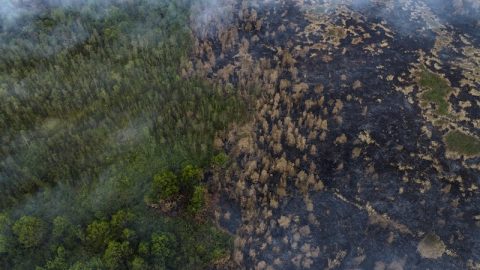
More efficient cookstove projects earn credits based on the amount of carbon they save by preserving trees that would have otherwise been cut down and burned for fuel. But if those trees later burn in a wildfire or are logged, the carbon stored would be released anyway, erasing the climate benefits of the credits.
Several carbon credit developers, conservation NGOs and the UN Environment Programme (UNEP) disputed that cookstove projects face this risk, in what critics described as a “coordinated lobbying campaign”.
They argued that, unlike forest protection schemes, this type of credit represents a “flow” of avoided emissions rather than a “stock” of stored carbon that can be released. They also warned that requiring a buffer would impose disproportionate costs and undermine the financial viability of these activities.
But the UN carbon market regulator was not persuaded by the argument. It decided that projects would have to protect against this reversal risk by handing over a percentage of credits to a so-called “buffer pool” instead of selling them.
‘New paradigm’
The amount of credits to be given up is calculated by applying different methods for natural risks, like wildfires, droughts or hurricanes, and human-caused ones, such as logging or land clearing.
For natural risks, project developers will need to apply local risk values derived from new modelling published by a group of independent scientists.
Campaigners have broadly welcomed the decision. Federica Dossi, an expert at Brussels-based advocacy group Carbon Market Watch, said it sets a new paradigm for calculating reversal risk based on empirical data. “This approach is grounded in science and we hope to see this now being adopted by other carbon crediting mechanisms in the voluntary market,” she added.
Backers claim this method is more rigorous than current practice in the voluntary carbon market, which largely relies on expert guesswork.
Pre-COP draws attention to Pacific’s climate plight and 1.5C goal
Pushback over science
As Climate Home News previously revealed, the same industry and NGO groups that sought an exemption from the “buffer pool”, along with some corporate buyers, criticised the use of a study backed by the UN carbon market’s experts that recommended the new risk assessment approach.
The groups pushed for more flexible rules that would have allowed natural risk values drawn from other sources, including national databases, or from the project developers themselves.
While the Supervisory Body rejected this approach, it gave project developers and countries the option to propose alternative values that would first need to be vetted by the mechanism’s expert panel and then approved by the regulator.
A carbon market expert told Climate Home News that, while it is too early to say how this provision will be used, they expect requests will have to be backed up with solid scientific evidence, lowering the risk of unfounded claims.

Policy discounts questioned
To guard against human-caused risks, projects will need to apply a flat 20% value set by the Supervisory Body, at the bottom of the 20-45% range recommended by its technical experts ahead of last week’s meeting.
That value can be further reduced by up to two-thirds if the host country has an emission-reduction plan covering forests, a long-term climate strategy and a framework for the UN’s REDD+ forest protection scheme.
Injy Johnstone, senior research fellow at the Munich-based Max Planck Institute, said that, while these are important governance measures, their existence does not necessarily demonstrate that the underlying risk of forest carbon loss has been reduced.
“It is important to distinguish between evidence of actual risk reduction and assumptions about the effectiveness of policy commitments,” she added.
Moving target
A UN source told Climate Home News that, under the approved formula, improved cookstove projects must set aside at least 9% of credits linked to saved wood if they operate in the lowest-risk areas and the host country can claim all available discounts. The share of credits rises significantly in regions with high natural risk values, such as Guyana, Sri Lanka and Timor Leste, or that do not have REDD+ programmes.
These factors could change in the future as the Supervisory Body asked its technical experts to recommend revisiting the risk value