Connect with us

Published

on

A national forecast underscored the elevated risk of wildfire across the West, which just experienced a climate change-fueled heatwave after a winter with little snow.

On the heels of one of the warmest and driest winters on record, parts of Wyoming show “significant fire potential” this spring and summer, according to a national forecast released on April 1.

The Warm, Dry Winter Has Left Firefighters in Wyoming Nervous

Climate Change

Cropped 22 April 2026: Global food ‘catastrophe’ | BECCS emissions | UK solar farm controversy

Published

on

We handpick and explain the most important stories at the intersection of climate, land, food and nature over the past fortnight.

This is an online version of Carbon Brief’s fortnightly Cropped email newsletter.
Subscribe for free here.

Key developments

Food ‘catastrophe’

FAO WARNING: On Monday, the UN Food and Agriculture Organization (FAO) warned that a prolonged closure of the strait of Hormuz could lead to a “global food catastrophe”, reported Al Jazeera. With 20-45% of the world’s key agrifood inputs dependent on the sea passage, the outlet explained, poorer countries would be the “most exposed”, with delays in accessing fertilisers “quickly translating into lower output”. A Financial Times essay detailed how the Gulf region has come to “sit at the centre of modern agriculture” over the past two decades”.

Subscribe: Cropped
  • Sign up to Carbon Brief’s free “Cropped” email newsletter. A fortnightly digest of food, land and nature news and views. Sent to your inbox every other Wednesday.

‘PERFECT STORM’: The FAO also warned countries to “not limit shipments” of energy and fertilisers, warning that such restrictions have led to food price spikes in the past, wrote Bloomberg. The UN body asked countries to “closely ponder” biofuel mandates, given the choice between high oil prices and curtailing global food supplies. In a statement, FAO chief economist Dr Maximo Torero warned of a “perfect storm”, if the world is also affected by a strong El Niño.

COUNTRIES RESPOND: Sri Lanka, already “burdened with old fertiliser debts”, has promised to provide fertiliser subsidies to farmers, reported Sri Lanka’s Sunday Times. In India, “fear of a fertiliser shortage is particularly heightened”, wrote Scroll.in. In Australia – where 60% of urea comes from the Persian Gulf – the war could herald a fertiliser “manufacturing comeback”, reported ABC News. Reuters looked at how China is “clamping down on fertiliser exports to protect its domestic market”.

Study: Wood vs gas burning

BASHING BECCS: A new study found that “bioenergy with carbon capture and storage (BECCS) is unlikely to generate negative emissions within 150 years”. The paper added that BECCS is likely to “produce higher emissions for decades than using natural gas without carbon capture” and to “increase electricity costs by ~3.5-fold”. The Guardian covered the research, stating that its findings “cast doubt” on government plans to offer subsidies for carbon capture attached to wood-burning power, such as the UK’s Drax power station.

INTERPRET WITH CAUTION: Prof Joana Portugal Pereira, an assistant professor at the Federal University of Rio de Janeiro, told Carbon Brief that the study is “clearly framed and the modelling approach is transparent”. However, she said the results are “very sensitive to the assumptions made” and advised “caution” in drawing conclusions from the analysis. For example, she noted that the study “focuses on BECCS supplied from existing forests”, which is likely to “emphasise higher emissions outcomes”.

MISLEADING HEADLINE: Dr Isabela Butnar, a lecturer in environmental policy at University College London, praised parts of the methodology and agreed that “forest-based BECCS for electricity is a no-go”. However, she argued that the title of the paper – “Decades of increased emissions from forest-fuelled BECCS” – might be “a bit misleading”. The title should specify that the analysis only applies to BECCS for electricity production, she said.

News and views

  • TOO HOT TO FARM: A major new joint report by the FAO and the World Meteorological Organization estimated that extreme heat “currently threatens” the livelihoods of more than 1 billion people, with agricultural workers on the “frontlines…absorbing the greatest impacts”. Farmers in much of south Asia, sub-Saharan Africa and central and South America could find it “simply too hot to work” for up to 250 days a year, the report cautioned.
  • PALM READING: Demand for palm oil has “surged as the war in Iran drives countries to build up stockpiles” and “boost” biofuel programmes in response to higher crude oil prices, reported Nikkei Asia. While Malaysian and Indonesian palm oil exports have risen to their “highest level in months”, longer-term supply could be “threatened” by rising fertiliser prices and “high temperatures caused by climate change”, added the outlet.
  • RED LIST: Emperor penguins and the Antarctic fur seal “have joined the list of wildlife endangered by global warming”, according to the International Union for Conservation of Nature’s (IUCN) Red List, reported the New York Times. Conversely, “iconic” blue-and-yellow macaws have returned to Rio de Janeiro after a 200-year absence, following an ambitious “refaunation” programme, wrote the Guardian.
  • CATTLE CLASS: A new Unearthed investigation found that a major US biofuels producer supplied the UK with “sustainable aviation fuel” derived from “beef fat linked to illegal Amazon deforestation”. Darling Ingredients – the producer’s parent company – denied sourcing tallow from slaughterhouses sourcing cattle from illegal farms in the Amazon. It told the outlet it was “in the process” of requiring suppliers to prove their products were “deforestation-free”.
  • FUND OPEN: On 10 April, Ecuador issued its “first call” for grants to protect 1.8m hectares of the Ecuadorian Amazon using the $460m Amazon Biocorridor Fund, reported EFE Verde. The trust fund is linked to what is considered the “largest debt-for-land nature swap”, added the outlet. [For more on debt-for-nature swaps, see Carbon Brief’s 2024 explainer.]
  • SUPER EL NIÑO: Scientists expect a strong El Niño event to develop by early autumn, driving up global temperatures, according to Carbon Brief’s latest state of the climate update. The analysis said that if a super El Niño develops this year, it is likely that 2027 will top the charts as the hottest year on record. It added that “the latest climate models give a central estimate of 2.2C warming by September – a scenario which would put the world firmly in ‘super’ El Niño territory”.

Spotlight

Oxford solar farm under fire

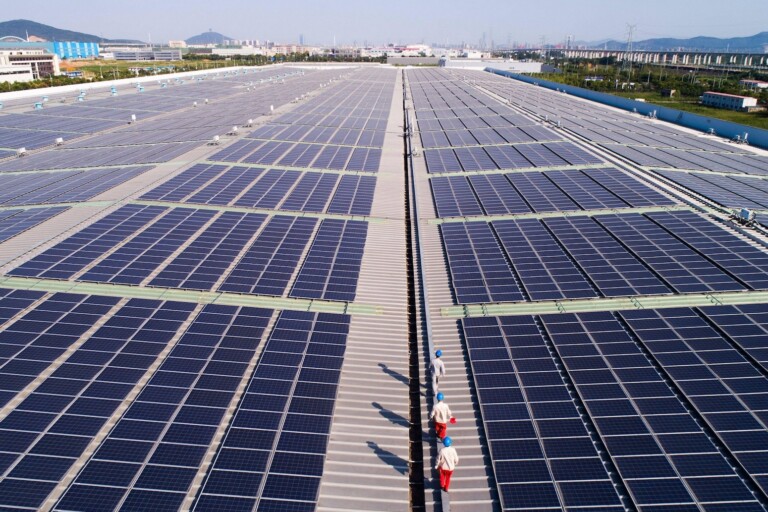
This week, Carbon Brief unpacks what the UK’s Botley West solar farm development would mean for farmland and biodiversity in the area.

Planning permission for one of Europe’s largest solar farms has been delayed, after the UK government asked for more time to consider the proposal from the developer.

Oxfordshire’s Botley West solar farm has been under consultation since 2022.

If approved, the site – located 80km north-west of London – will deliver 840m watts (MW) to the UK power grid.

However, the development faces vehement opposition – most notably from the Stop Botley West campaign group, which has said the “vast” solar farm will have “unprecedented” visual impact, drive the loss of “arable farmland” and will “disregard Oxford’s green belt”.

Politicians frequently use solar farms to score points with their supporters, with some MPs describing the developments as hazards for rural communities and food supply.

Farmland loss

Most of the land earmarked for the solar farm belongs to the Blenheim estate – a 12,000-acre expanse surrounding the UNESCO world heritage site of Blenheim Palace.

Dr Jonathan Scurlock – the former chief climate adviser at the National Farmers’ Union, which represents farmers in England and Wales – told Carbon Brief that the estate rents out much of its land to tenant farmers. However, he added, it is “not terribly good quality farmland”.

The UK government has a ranking system for agricultural land that is being considered for large-scale development projects, where five indicates “very poor quality” and one indicates “excellent quality”. Developers are generally encouraged to build on lower-quality land, leaving the high-quality land for farming.

According to the Botley West website, 62% of the land surveyed for the proposed solar farm is agricultural grade 3b – defined as “moderate-quality agricultural land”. The remainder is mostly 3a, defined as “good-quality agricultural land”.

Many opponents of Botley West argue that the farm will take away vital farmland. However, Scurlock said:

“Solar is perceived as very challenging to land use and yet the evidence nationally really doesn’t support that…Solar farms do not really represent lots of agricultural land capacity”.

(A 2025 Carbon Brief factcheck found that golf courses currently take up six times as much land in the UK as solar farms.)

The developers plan for the solar panels to remain on-site for about 40 years, after which the fields will be returned to use for agriculture.

Biodiversity gain

The proposed solar farm has also promised to improve local biodiversity.

New development projects in the UK must deliver a “biodiversity net gain” (BNG) under a 2024 regulation.

Developers must arrange for the “biodiversity value” of the land to be assessed, considering factors including the size, quality, location and type of each habitat. They must then ensure that the final project increases this value by at least 10%.

If the Botley West project is approved, the developers will aim for 70% BNG.

Prof Alona Armstrong, an energy researcher from Lancaster University, told Carbon Brief that around two-thirds of solar farms in the UK are built on “ex-arable lands”.

She explained that biodiversity outcomes on solar farms depend on where the farms are located and how they are designed and managed. Much agricultural land is “intensively managed”, with the use of chemicals and farming machinery. In contrast, there is less chemical and machinery use on solar farms, potentially benefiting biodiversity.

Armstrong added that solar farms are often lined with hedges, which are “really good for biodiversity”, acting as refuges for a wide range of plant and animal species.

The latest BNG statement for Botley West filed with the government featured a “habitat and hedgerows creation and enhancement plan”.

The plan included creating 26.5km of new species-rich hedgerow, enhancing 25km of existing hedgerows and developing a range of grassland types within the solar arrays to be managed for conservation.

Watch, read, listen

EARTH ANGELS: From protecting Nigeria’s rare bats to pushing higher climate targets in South Korea, Mongabay profiled the six women who won this year’s Goldman Prize.

CHERRY (BLOSSOM) PICKING: The Guardian reported on the hunt to find a researcher to continue Japan’s 1,200-year record of cherry-blossom blooming dates.

‘SOYA REPUBLICS’: A Phenomenal World essay argued that global grain traders in South America’s soya supply chains “sowed the seeds of anti-democratic politics”.
ZACH IS BACK: Actor-comedian Zach Galifianakis debuted a new Netflix series, called “This is a gardening show”, meant to be an “oddball celebration of the food we eat”.

New science

  • Preventing the loss of intact biomes, ecosystems and species is the “most critical strategy” to achieve the “nature positive” future outlined in the Kunming-Montreal Global Biodiversity Framework | Frontiers in Science
  • Climate change will lead to “increased pest damage” in North American forests, as “temperature-boosted pest performance” and “climate-induced stress”, such as drought, make trees more susceptible to pests | Nature Ecology and Evolution
  • There are 160m “small wetlands” in “non-forested” parts of the world, which together contribute to 24% of total wetland methane emissions | Nature Climate Change

In the diary

  • 22-24 April: Eighth meeting of the board for the loss and damage fund | Livingstone, Zambia
  • 24 April: Launch of the 2026 global report on food crises | London
  • 24-29 April: First conference on transitioning away from fossil fuels | Santa Marta, Colombia
  • 5-7 May: Workshop on invasive alien species for Spanish-speaking countries in Latin America and the Caribbean | Panama City

Cropped is researched and written by Dr Giuliana Viglione, Aruna Chandrasekhar, Daisy Dunne, Orla Dwyerand Yanine Quiroz. Please send tips and feedback to cropped@carbonbrief.org

The post Cropped 22 April 2026: Global food ‘catastrophe’ | BECCS emissions | UK solar farm controversy appeared first on Carbon Brief.

Cropped 22 April 2026: Global food ‘catastrophe’ | BECCS emissions | UK solar farm controversy

Continue Reading

Climate Change

Prospects for global green shipping deal boosted by US tariff ruling, analysts say

Published

on

A recent US court ruling restricting President Trump’s ability to impose sweeping tariffs has improved the chances of an international deal to cut emissions from shipping, observers of UN maritime talks have said.

Government officials meeting at the International Maritime Organization (IMO) in London this week and next are resuming negotiations on a proposed set of measures known as the Net-Zero Framework (NZF), aimed at tackling the sector’s roughly 3% share of global greenhouse gas emissions.

Last October, Trump and his officials threatened any government voting to adopt provisionally agreed green shipping measures, known as the Net-Zero Framework (NZF), with tariffs that would make it harder for their businesses to export to the USA.

The intervention helped derail talks, with governments narrowly voting to postpone for a year the adoption of the NZF.

The framework, provisionally agreed in April 2025 after years of negotiations, would penalise the owners of particularly polluting ships and use the revenues to fund cleaner fuels, support affected workers and help developing countries manage the transition.

The delay plunged the future of the NZF into doubt. Vanuatu’s climate minister said the delay was “unacceptable” given the urgency of tackling climate change. A final decision on the NZF is not expected until November.

    Tariff threat neutered

    Since the last round of negotiations, the political landscape has shifted. In February 2026, the US Supreme Court ruled that Trump had no legal authority to impose sweeping tariffs without approval from Congress.

    Rockford Weitz, professor of maritime studies at Tufts University, said that his officials would have “a more challenging time” using tariffs as threats at this month’s shipping talks than they did in October.

    University College London professor Tristan Smith, a close observer of IMO talks, agreed that the tariff threat is “not quite as potent as it was last year”. He noted that the US also no longer benefits from the element of surprise. In October, Washington began lobbying governments only shortly before the talks, leaving little time for countries supporting the NZF to coordinate a response.

    This time, Smith said supporters of the framework – which include most European countries, Pacific Islands and some African and Latin American states – are “working very closely together” to resist the US’s pressure.

    He added that the US’s attempt to promote liquefied natural gas (LNG) as a transition shipping fuel, rather than renewable-electricity-based solutions like ammonia or methanol, by weakening the NZF has been undermined by the spike in the cost of gas triggered by the Iran war.

    Attempts to re-negotiate

    But divisions remain in the talks scheduled to run until Friday next week. Ahead of this round of negotiations, some governments have proposed re-negotiating the core tenets of the NZF, while others insist it should be adopted in November largely as provisionally agreed in April 2025.

    This debate played out last week on a webinar hosted by the African Futures Policies Hub. Liberian diplomat Grace Nuhn said the emissions-reduction requirements included in the NZF are “over-zealous” and “over-ambitious” and do not reflect the limited availability of clean fuels, while penalising “transitional fuels” such as LNG and biofuels.

    In a formal submission, Liberia – alongside US ally Argentina and Panama – has proposed weakening emission targets and ditching any funding mechanism for the framework involving “direct revenue collection and disbursement”.

    Liberia and Panama host the world’s two biggest ship registries, meaning their governments earn revenue from allowing shipowners from around the world to register vessels in their countries.

    The NZF would penalise owners of ships that emit more than certain agreed amounts and use that revenue to clean up the maritime sector, help workers through the green transition and compensate for any negative impacts of the transition on developing economies.

    Shipping’s climate deal sets up battle over pollution calculations for gas and biofuels

    Japan has also proposed that, in order to reach a compromise with the NZF’s opponents, emissions reduction targets and requirements to pay into the IMO’s Net-Zero Fund are weakened.

    Yuki Inoue, a diplomat from Japan’s transport ministry, told the webinar that this would reduce the perception that the NZF is a “carbon tax”. Japan wants to get all governments “back to the discussion table”, he said.

    NZF a “fragile compromise”

    But Tuvalu’s IMO negotiator Pierre-Jean Bordahandy said that the NZF itself is a “fragile compromise” reached after lengthy discussions and is the “only viable path forward” to meet the sector’s climate targets agreed in 2023.

    Tuvalu and six other Pacific nations have vowed to try to make the NZF more ambitious if it is reopened for negotiation. With rising sea levels threatening their survival, “time is not on our side”, Bordahandy told the webinar.

    Brazil has also pushed back against attempts to renegotiate. Diplomat Adriana de Medeiros Gabinio warned that it would be unrealistic to expect countries to rewrite a deal in a matter of months after more than two years of negotiations involving over 100 nations culminated in the April 2025 vote in favour of the NZF.

    She added that proposed changes to the NZF would not address climate change and food insecurity and “seem aimed at addressing diplomatic pressure imposed by a small group of countries rather than the issue itself”.

    The IMO Secretary General Arsenio Dominguez speaks to US, Saudi, Brazilian, European and other delegates at talks on 17 October 2025 (Photo: Joe Lo)

    Mexico has defended the framework’s funding mechanism. Raul Zepeda Gil, an advisor to the country’s IMO mission, said the net-zero fund is essential to ensure developing countries can access financing for cleaner ships and infrastructure. Without the fund, “then just a few countries will be available to participate in the transition”, he warned

    Some countries that previously supported delaying the NZF now appear more aligned with its backers. Kenya was among 16 African nations that voted for postponement last October.

    But this month Michael Mbaru, maritime lead for the Kenyan government’s climate envoy office, told journalists that Kenya supports the NZF and hinted that other African and developing countries would follow.

    “From the Global South perspective, as you’ve seen from the submissions from Africa, we are moving forward in terms of the framework as is”, he said, adding “we feel like we have compromised enough and we feel like the framework provides the best package.”

    “If we are to reopen these discussions, we need to reopen them to strengthen the revenue, not to weaken the revenue”, he said.

    Tacit or explicit approval?

    Brazil’s Adriana de Medeiros Gabinio warned that even if the NZF is officially adopted in November, its opponents are trying to change the rules by which it comes into force as a “safety net to block” it.

    The US and its allies want to shift away from a system of tacit approval where, after the NZF is approved at the IMO talks, its rules are automatically applied unless a certain number of countries object.

    They prefer explicit approval instead, meaning it would not come into force unless enough governments – representing a certain percentage of the world’s shipping fleet – actively indicate support for it.

    Critics say this change would give a small number of countries with large shipping registries the power to block implementation. Liberia has the world’s biggest shipping registry, which is run by a US-based company, followed by Panama and the Marshall Islands.

    The Marshall Islands has long been one of the most vocal supporters of the NZF but, with its officials and its shipping registry income vulnerable to US retaliation, did not sign on to the recent Pacific proposal vowing to strengthen the NZF if it is re-opened.

    Commenting on the chances of the NZF being approved, Smith said “there are lots of things which I think generally are much better and stronger than they were last year.”

    “I can’t tell you now that that means we’re not going to have a difficult conversation and I can’t put odds on what the outcome is but I think things have improved on the energy transition question,” he said.

    The post Prospects for global green shipping deal boosted by US tariff ruling, analysts say appeared first on Climate Home News.

    Prospects for global green shipping deal boosted by US tariff ruling, analysts say

    Continue Reading

    Climate Change

    As Climate Disasters Create an Insurance Crisis, a California Bill Seeks to Make Fossil Fuel Companies Pay

    Published

    on

    Premiums “have gone through the roof” and insurers have been leaving the state as the costs of disasters soar amid worsening extreme weather.

    Mary Creasman had insurance on her mind as she made her way to the California Capitol on Earth Day.

    As Climate Disasters Create an Insurance Crisis, a California Bill Seeks to Make Fossil Fuel Companies Pay

    Continue Reading

    Trending

    Copyright © 2022 BreakingClimateChange.com