

On the outskirts of New Delhi, the four-month brick-making season is ending, and migrant worker Munna Majnu is preparing for the arduous 1,560-km journey home to Cooch Behar, in far northeastern West Bengal.
Majnu, 40, started labouring at the brick kiln in Uttar Pradesh’s Gautam Buddha Nagar district this year, when the previous one he worked at shut down after the government rolled out new rules – including a coal ban – to reduce heavy air pollution from the sector.
The green switch has been unaffordable for many kiln owners and has had a domino effect, with kilns closing one after the other in districts around the Indian capital.
“The kiln we were working at shut down and the owner sold his land to a builder,’’ said Majnu, adding that a house will be constructed there instead.
UN chief appeals for global action to tackle deadly extreme heat
Majnu had originally found work in the now closed kiln in the Ghaziabad district of Uttar Pradesh through a network of thekedars (contractors) back home, which helped him get his current job too.
“We did not lose a season of work when the kiln shut,” Majnu said. But there are concerns that things may become harder, with many labourers lacking access to social welfare.
Brick-making stops during the monsoon rains – when workers head home to their villages to work on the land, either on their own plots or as farmhands – and restarts at the end of the year.
Measures to ease air pollution
Brick kilns account for 6-7% of Delhi’s emissions of particulate matter, which contains black carbon (soot), according to government officials and researchers with India’s Centre for Science and Environment.
Since 2016, measures have been imposed on the kilns in stages, to cut pollution and help combat the capital’s toxic air. They include shifting the location of some kilns, mandating new, more energy-efficient technology, and last year banning the use of coal to fire the kilns.

Farm fields now line roads that cut through Ghaziabad district, in India’s Uttar Pradesh state, where brick kilns stood even until a few years ago, before many shut down due to new measures to cut air pollution. (Photo: Esha Roy/The Migration Story)
The effort is showing results alongside a range of other measures, with the air quality in Delhi having improved considerably. According to government data, the daily average air quality index in the capital fell from 225 in 2018 to 204 in 2023, showing lower levels of pollution.
But with no proper plans to help brick kiln owners and workers adjust to the changes in how they operate, the sector – which is among the country’s biggest employers, covering some 10 million workers – is floundering, labour rights experts and bosses said.
Unregistered workers
Saniya Anwar of non-profit The Climate Agenda, which advocates for a socially fair shift to clean energy, said most of the brick workers are unskilled, landless and change their phone numbers regularly, making it hard to register them.
“This in turn, means that they often fall outside the safety net of welfare schemes provided by the government for migrant workers,’’ Anwar added.
Like Majnu, Salam Hak, 29, also moved to Gautam Buddha Nagar when the kiln where he worked in Ghaziabad closed.
“We don’t have job cards (for work under the national rural employment guarantee scheme), so while we do daily wage (work) back home, it is not often easy to find,” Hak said.
“It’s the income from the kilns that sustains us through the year. There have been many kilns shutting, and we don’t know what will happen in the future – but we feel that there is no point worrying about it for now,’’ he said.

Hari Chand, 27 (first from left) and Shivam Rai 18 (second from left), hail from Chattarpur in Madhya Pradesh and work at a kiln in Uttar Pradesh’s Baghpat. While kiln owners in Baghpat said the sector is struggling with the new green norms, in this region, kilns have not shut down yet nor has labour been laid off. (Photo: Esha Roy/The Migration Story)
The 22 districts of the Delhi-National Capital Region are home to more than 3,800 brick kilns. Among these, Uttar Pradesh (UP) has the highest concentration of kilns at 2,062.
A state official working on pollution control said Ghaziabad is among the areas most affected by the green transition, with the number of kilns halving in the past six years, but there is no count of, or plan to support the workers who lose their jobs.
Another UP official in the labour department noted that brick kiln workers are seasonal rather than permanent and as such are not entitled to alternative government employment schemes that kick in when a factory shuts down, for example.
Excluded from state benefits
Living off agriculture alone would be tough for workers like Majnu and his family, who cultivate fields belonging to landlords and keep a portion of the crop, mostly rice paddy, as income.
“We are bhag chashis (landless farmers) back home, and we never make enough,’’ said Majnu, stacking the last lot of bricks next to mountains of agricultural waste being used to fire the Dankaur kilns.
“The earnings here (at kilns) are more than what we make back home, where we only get part of the crop to either consume or sell – whereas here, we make 600 rupees (around $7) per 1,000 bricks made and can make up to 1,200 rupees a day,’’ he said.
UAE’s ALTÉRRA invests in fund backing fossil gas despite “climate solutions” pledge
The Building and Other Construction Workers (BoCW) Act of 1996 does include social security and welfare benefits for brick kiln workers, including scholarships, maternity benefits, marriage assistance, pensions, financial help for funeral services and food rations.
But labour experts say most brick kiln workers are not registered and therefore cannot access the benefits – neither have they been part of the energy transition conversation so far.
“The isolated nature of seasonal migrant workers at brick kilns is a major factor in preventing access to services, and makes them entirely dependent on the kiln owners,” said Ravi Srivastava, director of the Centre for Employment Studies at the Institute for Human Development.
The cost of going green
In Ghaziabad, a congested, booming industrial township 36 km from the capital, Ravinder Kumar Tewatia, former general secretary of the All India Bricks and Tile Manufacturers Federation, said 200 of 430 brick kilns have shut since 2018.
He closed the last of the four kilns he owned two years ago as norms got stricter and the business less profitable.
In 2016, the Environment Pollution (Prevention & Control) Authority gave all kilns in Ghaziabad a two-year period to switch to “zig zag” technology – an energy-efficient kiln design allowing chimneys to retain heat for longer.
Then, between 2022-2023, the Supreme Court ordered the annual period for manufacturing bricks to be cut from seven to four months and imposed the mandatory use of agricultural waste instead of coal to heat the kilns.
“Now you can’t get coal even if you want to,” Tewatia said, explaining that the main issue with farm waste – mainly wheat and mustard husks – is lower temperatures in the kilns where the clay bricks are hardened.
“As a result of this, the bricks that are being produced are of lower quality and more fragile,” he said.

Workers stack bricks at a kiln in Ghaziabad, Uttar Pradesh, as their shift comes to an end. (Photo: Esha Roy/The Migration Story)
Kiln owners said the shortened brick-baking season has impacted production volumes, hitting overall earnings. At the same time, falling brick quality has led to prices plunging by around half.
“We have been demanding that the government allow us to use a mix of coal and agricultural waste,’’ said Tewatia.
Pollution control board officials said the central government did provide alternatives, including biomass briquettes and compressed natural gas, but these also suffer from lower heat generation and gas is not suitable for use in most traditional kilns.
Farming fails to pay
The kilns have been a second home for Nidesh Kuma, 27, since he was a toddler, accompanying his parents to mould and shape bricks near Delhi, as frequent floods on the Ganges River prevents farming in their village.
For the past five years, Kumar has been “supplying” migrant workers from his Sambhal area of Uttar Pradesh to the Delhi region. This year, he placed 40 families in three kilns there, noting that his network is strong and extensive.
But with more brick kilns closing, the seasonal migration pattern has started to lose its appeal – and could be a sign of things to come, say labour rights campaigners.
“What can we do?” asked 55-year-old Laturi Singh, a brick-maker and labour contractor also from Sambhal.
“When the kilns shut down, most (workers) were absorbed at other kilns, but some have gone back to the villages and are working as daily wage workers earning 300 rupees a day, which is much less.”
(Reporting by Esha Roy; editing by Megan Rowling)
This article was first published by The Migration Story, India’s first newsroom to focus on the country’s vast internal migrant population.
Esha Roy is an independent journalist writing on issues of climate change, social development and government policy. Reporting for this story was supported by Buniyaad, a movement for a just transition in the brick kiln sector.
The post Pollution clampdown on Delhi kilns threatens brick workers’ future appeared first on Climate Home News.
Pollution clampdown on Delhi kilns threatens brick workers’ future

Climate Change
Kevin Parker, Hugh Jackman, Tina Arena and over 150 Australian artists sign open letter to save Scott Reef from Woodside gas plans
SYDNEY, Monday 16 November 2026 — More than 150 Australian entertainers and creatives have signed an open letter calling on Federal Environment Minister Murray Watt to reject oil and gas drilling plans at Scott Reef, Australia’s largest oceanic reef system.
- Artists have supplied images for use here
- High res images and footage of Scott Reef can be found here
The open letter to Minister Watt concerns risks to Scott Reef, 270 kilometres from the Kimberley coast of Western Australia, posed by multinational Woodside which plans to drill up to 57 wells for its Browse gas project. The project is forecast to emit 1.6 billion tonnes of climate pollution and risk a catastrophic oil spill in endangered whale migratory pathways.
Australian signatories calling on the government to save Scott Reef include 2026 ARIA nominees Kevin Parker (Tame Impala), Tkay Maidza and G Flip, Hollywood actors Hugh Jackman and Simon Baker, and prolific musicians Tina Arena, Paul Kelly and “Down Under” legends Men at Work.
About the open letter, Australian musician Jessica Mauboy said: “Caring for Country means caring for our oceans and all the life they hold. Places like Scott Reef are precious, and we have a responsibility to protect them for future generations. I’m adding my voice to the call to protect Scott Reef and keep it safe from gas drilling.”
Australian singer-songwriter and ARIA award winner Missy Higgins signed the open letter and said: “Scott Reef is an ancient coral reef off WA’s Kimberley coast, home to endangered whales, vulnerable turtles and hundreds of other marine species. Woodside’s plans to drill up to 57 wells under and around it put this extraordinary place at risk. We need to preserve these beautiful places for our kids. If not now, then when?”
Australian singer-songwriter Sarah Blasko said: “Scott Reef off Western Australia’s Kimberley Coast is not the place for a massive new gas project by Woodside. It’s our responsibility to protect our beautiful reefs and rare marine life. They are, after all, what this country is best known for around the world. If we don’t protect them, what does it say about us to our children and the world?”
Scott Reef supports thousands of species including vulnerable turtles and endangered whales that are particularly threatened by Woodside’s proposal. Greenpeace has nominated Scott Reef for National Heritage listing for its ecological and scientific importance, and the WA Environment Protection Authority (WA EPA) has warned Woodside’s plans could cause “serious, significant and irreversible” harms to the 15-million-year-old ecosystem.
Senior Campaigner at Greenpeace Australia Pacific, Hannah Schuch, said: “I am heartened to see so many Australian artists amplifying the call for a better future, one where places like Scott Reef are rightfully protected from greedy corporate interests.
“Scott Reef is an iconic, irreplaceable piece of Australian nature, and Woodside’s plans to drill 57 toxic wells and turn Scott Reef into an industrialised gas zone risk threatened species and this unique, ancient ecosystem.
“Murray Watt and the Albanese Government have an opportunity to make history and write their legacy: save Scott Reef and stop Woodside’s reckless gas plans. Australia is watching.”
-ENDS-
Media contact
Emma Sangalli on 0431 513 465 or emma.sangalli@greenpeace.org
Efe Baysal leads the Türkiye team of global climate advocacy group 350.org.
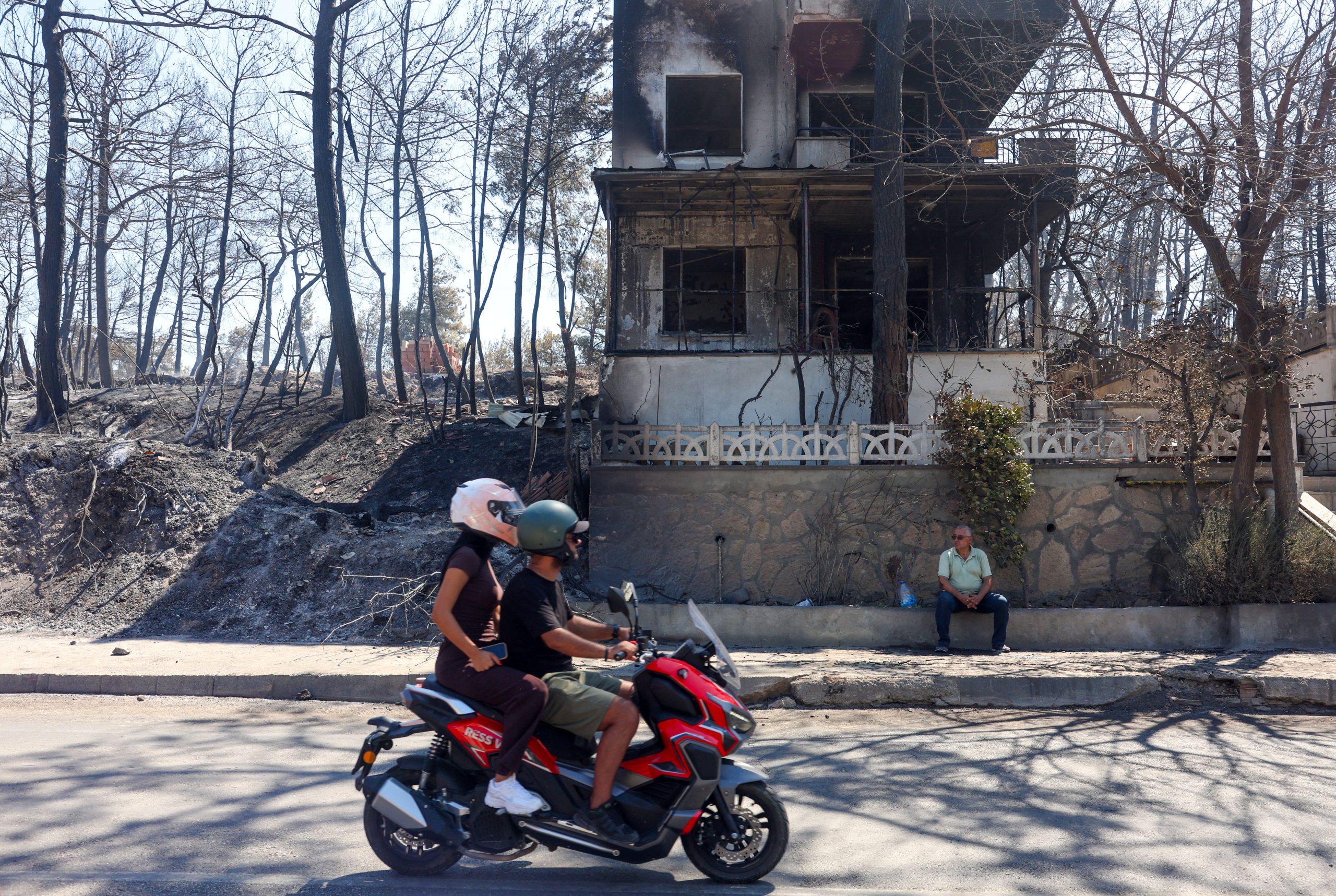
As Türkiye welcomed world leaders in Antalya during the first week of the UN climate summit, few were probably aware that wildfires raged just a few kilometres from the COP31 venue in September, injuring several people and forcing hundreds to flee their homes.
Wildfires are one of the signs of a rapidly heating planet. Prolonged heatwaves and drought create ideal conditions for fires to start and to spread. In the coastal province of Antalya, 8,000 hectares have already been lost to forest fires this year alone.
It is a crucial moment for climate diplomacy. This year we have seen the human cost and mounting economic damage of climate impacts, from Europe’s heatwaves to Nepal’s deadly glacial floods. Scientists warn that the world will breach the 1.5C temperature limit within a few years.
-
Turkish giant sponsoring COP31 cut climate goals then cashed in on oil boom
COP31 sponsors should be screened for “climate integrity”. Yet Koç Holding has become a top partner while its oil refiner runs flat out and its climate targets slip -
Africa wants adaptation finance on COP31 agenda, raising risk of a fight
The African Group wants dedicated space on tripling adaptation finance, the Green Climate Fund and trade, setting up a possible clash -
European nations signal support for fossil fuel roadmap, says COP30 president
André Corrêa do Lago told Climate Home News that it’s up to other nations to decide how the fossil fuel and deforestation roadmaps are used


The stakes have never been higher as the Turkish government takes its turn hosting the Conference of the Parties (COP) to the UN climate convention. Türkiye has a lot riding on the summit, and not only its ability to stage one. Many in the country hope COP31 will put a spotlight on its own climate and environmental crisis.
Extreme weather in Türkiye is becoming far more frequent. In 2011, the country recorded more than 300 extreme weather events. By 2023, according to the Turkish State Meteorological Service, the figure had reached almost 1,500.
Dried-up lakes and sinkholes
For a semi-arid country, drought is a particular threat. Half of Türkiye’s population is at risk of water shortages by 2030, and last year brought the lowest rainfall in 61 years.
Perhaps the starkest sign of this is the alarming rate at which Türkiye’s lakes are vanishing. Three-quarters of its lakes have dried up in the past 50 years, many of them just in the last decade, marking the loss of ecological systems that have sustained generations of farmers and fishermen.
An example is Lake Iznik, the country’s fifth-largest natural lake and the site of the Byzantine Basilica of Saint Neophytos, a fifth-century site whose ruins were first discovered underwater. When Pope Leo visited last year, they stood exposed on dry land as the shoreline had dramatically retreated.
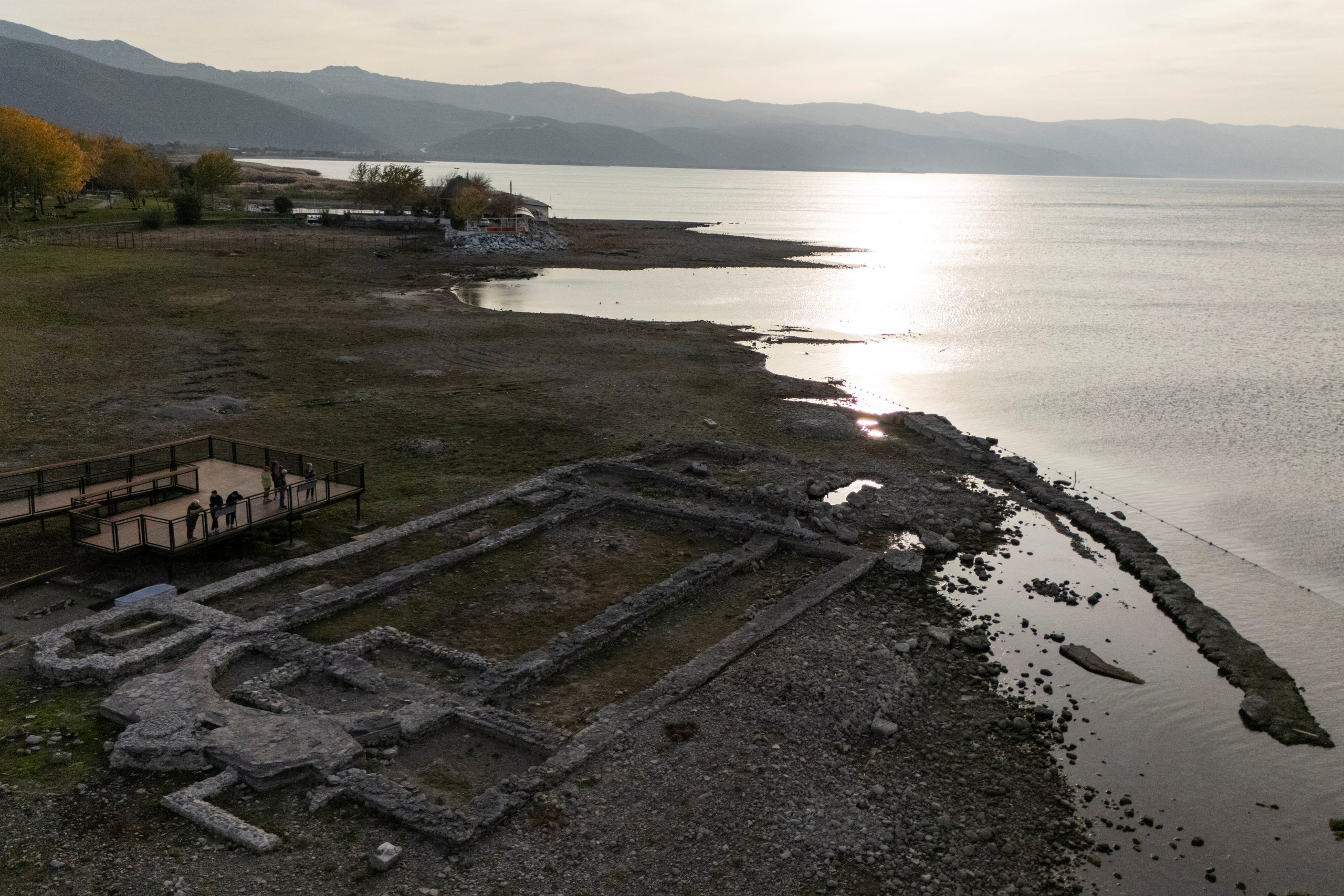
Locals fear that due to drought, as well as the pumping of large volumes of water by big agricultural companies, Lake Iznik will disappear. As Iznik recedes, the coastal water wells that irrigate olive groves have run dry.
“Everyone stands over their phones waiting for weather forecasts, wondering, ‘Will it rain today?’,” one 65-year-old olive farmer told me. “It used to snow waist-deep, and roads would remain closed for weeks. Today, children have forgotten what snow is.”
Agricultural stress isn’t limited to Iznik. In 2025, Türkiye’s crop and field production fell by 9%, while fruits, beverage and spice plants lost nearly a third of their output. According to the agriculture ministry, drought and frost were the main causes.
Visible scars of climate crisis
Sinkholes are also rapidly increasing, now numbering more than 1,000. Most of them are located in the Konya Basin, where groundwater levels fall by about 2 metres a year due to reduced rainfall and excessive extraction.
Türkiye’s sinkholes aren’t just a hazard to human life and infrastructure. They’re a graphic representation of how two human-made phenomena – groundwater exploitation and the climate crisis – combine to weaken the land, causing it to collapse upon itself.
Burnt forests, disappearing lakes, gaping sinkholes: many of these reminders of the climate crisis will remain hidden from visitors in Antalya this month. But the clamour for action will be on full display.
Since last year’s climate summit, a growing number of countries have rallied around a way forward: roadmaps to transition away from fossil fuels. More than just emission-reduction targets, these transition roadmaps are concrete plans on how to end dependence on fossil fuels, the main driver of climate change, in a just and orderly way.
As the Hormuz crisis has shown, not having to rely on oil and gas is no longer just about saving future generations from climate catastrophe – it’s also about saving next month’s household budget.
Electrification milestone
Türkiye is highly dependent on imported fossil fuels, spending an average of $42 billion annually on oil, gas, and coal over the last 10 years. The Hormuz crisis has increased these costs, with Turkish households and businesses losing an additional $3 billion in just two months’ worth of fossil fuel price spikes.
In launching the “35 by 35” electrification target, Türkiye’s COP President Murat Kurum acknowledged the need to protect citizens from high energy prices. This new global target for electricity to meet 35% of final energy demand by 2035 is shaping up to be one of the milestones of this year’s climate talks.
It’s a good target because electrifying transport, buildings and industry significantly cuts not just pollution, but daily expenses too. But electrification alone is not enough. Without an accompanying fossil fuel phase-out, electrification won’t be able to stop further climate and economic catastrophe.
Comment: Turkey must make COP31 a turning point for global climate action
A case in point is Türkiye’s new National Energy Plan 2040. The plan’s emphasis on electrification and the expansion of renewable energy capacity is welcome – these are positive steps that align with the messages coming from Türkiye’s COP31 presidency. However, for the plan to represent genuinely ambitious climate action, it must include a clear commitment and timeline to phase out coal.
Türkiye still relies on mostly imported coal for around one-third of its energy. A 350.org report has revealed that the coal trade between Türkiye and Australia – with which it shares the COP31 presidency – has been responsible for roughly 75 million tonnes of carbon emissions since the Paris Agreement was signed. Neither country has a coal phase-out date.
COP31 is an opportunity to change course. The Turkish government has made good progress on expanding solar and wind energy. In 2025, Türkiye surpassed its solar target as capacity had more than doubled in recent years. It must now build on this progress.
The world will be watching Türkiye as the climate summit heads into its second week. The Turkish government must ensure that global leaders implement real solutions that won’t leave its own citizens high and dry.
The post Behind the COP31 fanfare, Türkiye is worried about water appeared first on Climate Home News.
Scientists behind a landmark UN report on overshooting the 1.5C warming limit have defended its credibility, after Saudi Arabia and other large developing countries questioned its scientific legitimacy and sought to keep it out of the main political decision expected from COP31.
The UN Environment Programme’s (UNEP) Limiting Overshoot report, published in September, examines how to minimise an almost certain breach of the Paris Agreement’s temperature goal, what crossing it will mean for people and ecosystems and how temperatures could be brought back down.
The European Union, the UK, the Least Developed Countries (LDCs) and small island states are among those pushing for COP31 to make the response to overshoot of 1.5C one of the summit’s priorities.
But during closed-door consultations on the cover decision this week, the Arab Group, led by Saudi Arabia, have tried to cast doubt on the report’s scientific rigour, arguing it had not been peer-reviewed, according to sources familiar with the discussions.
Meanwhile, the bloc of Like-Minded Developing Countries (LDMCs), which included India and China, called for the cover decision to avoid references to reports produced outside the UN climate process, seen by observers as a thinly-veiled reference to the UNEP report.
Laurence Tubiana, CEO of the European Climate Foundation and one of the key architects of the Paris Agreement, said the overshoot report “tells us a truth some would rather hide”.
“We are on course to exceed 1.5C and limiting how far and for how long is a matter of survival for us all,” she told Climate Home News. “The attacks on climate science are an attempt to delay action. They target intergovernmental institutions that give countries a shared scientific basis for acting together.”