

It always strikes us as amusing how many DIY projects you see online that seem to require more time and more money than it would take to simply buy the thing they’re trying to DIY in the first place. Are we missing the point?
We think that doing things ourselves and taking back the power to create instead of simply consuming is absolutely vital to the green movement. But if you don’t already have the materials and spend a lot of money purchasing craft supplies, does it really make sense to DIY?
These eight projects are true do-it-yourself masterpieces. One-of-a-kind outdoor projects you can make for almost nothing, with supplies you most likely already have or can easily pick up second hand for a song. Roll up your sleeves and let’s get started!
1. Teapot/Teacup Bird Feeder
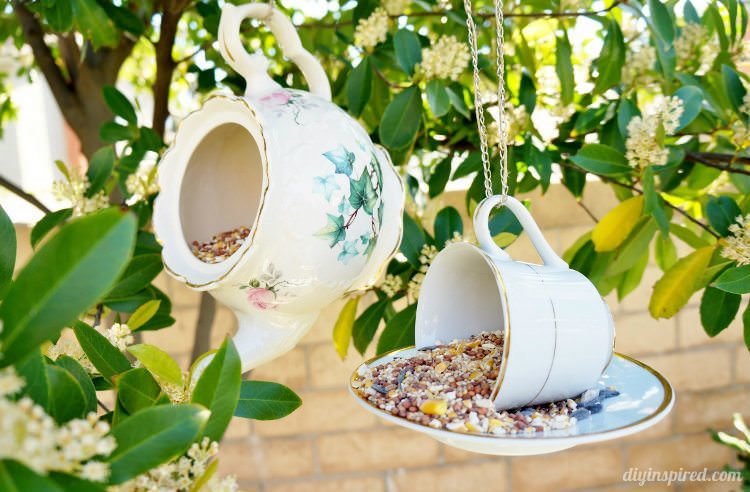
Do you have one of Grandma’s old tea sets lying around that doesn’t quite fit into the sleek modern aesthetic you’ve been cultivating? Put it to great use by feeding the birds in your area — in style.
Thrift stores are always awash in old china, so if you don’t already have the old tea set, consider going wild and spending a few bucks for this DIY delight. You’ll find blogger Dinah Wulf’s instructions for the teacup bird feeder at DIY Inspired.
Safety note: Use sturdy twine or cord — not chain — to hang the feeder. Birds can catch their toes in chain links, which causes serious injury. The National Audubon Society also recommends cleaning seed feeders every two weeks (more often in hot, humid weather) by scrubbing with soap and water and soaking in a 50-50 vinegar-water solution to prevent the spread of avian disease.
2. Gardening Tool Storage
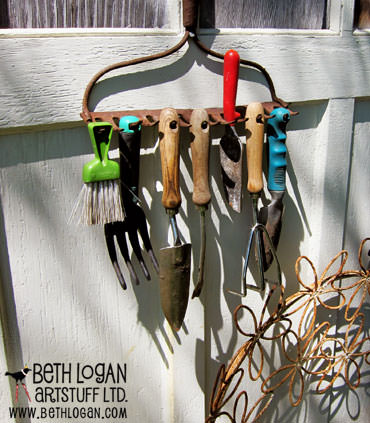
What on earth do you do with those rusty-as-heck, old-school garden rakes hanging around your garage? Well, if you’re any sort of DIY genius, you press them into service as a gardening tool holder.
The original inspiration for this project came from Beth Logan at Artstuff Ltd., whose blog has since gone offline. For a current walkthrough, see the Repurposed Rake Tool Rack tutorial at DIY n Crafts (project #14 in their roundup of 25 ways to reuse old garden tools). The concept is embarrassingly simple — remove the rake handle, mount the head tines-out on a fence or garage wall, and use the tines themselves as hooks for trowels, gloves, and pruners — but eye-catching enough to make you look like a DIY pro.
3. Bottle Tree
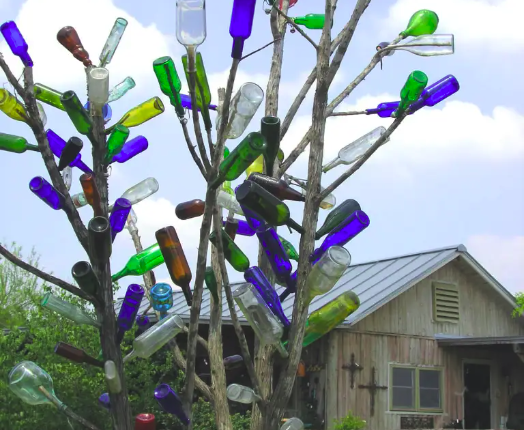
Do you like wine? No, I mean do you really like wine? Do you want a reason to drink more of it? And does your garden need a cute border? This sustainable, upcycled garden border may be just the project for you. You might have to expand your drinking list to include bottles of various shapes, sizes, and colors — but variety is the spice of life.
When friends ask how you managed to collect so many bottles, just laugh gaily and then distract them with your dainty teacup bird feeder. The bottle tree tradition itself runs deep — Mississippi garden writer Felder Rushing traces the practice back through African American Southern folk art and, by his own research, as far as ancient Egypt and Mesopotamia. See his bottle tree gallery and history for inspiration, or jump straight to his how-to guide for building one out of a cedar snag, rebar, or just about anything else.
4. Colorful Outdoor “Tiles”
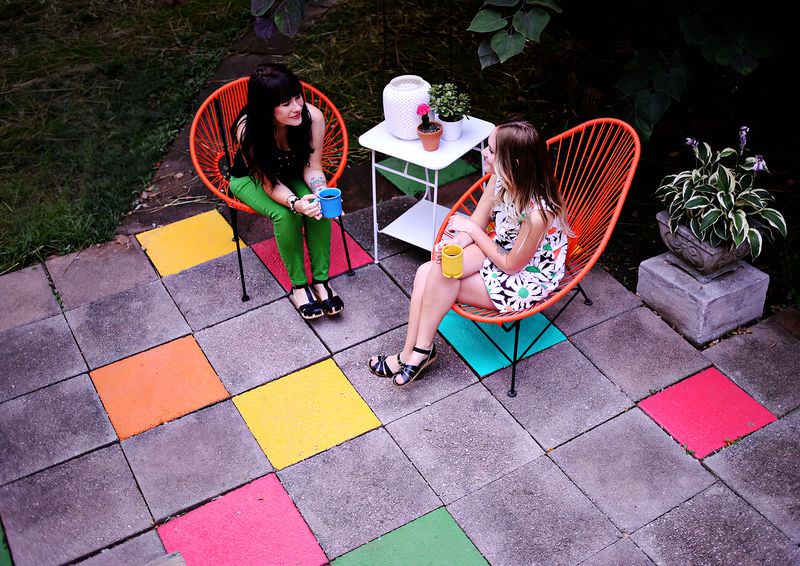
If your backyard isn’t perfectly landscaped and manicured, with an impeccably tiled “outdoor living space,” don’t despair. You can use up all those half-empty paint cans and create a Pinterest-worthy colorful backdrop for evenings spent clustered around a fire or barbecue.
Pop a few coats of paint on cement tiles and you have a one-of-a-kind flooring solution. If you rent, the same effect could be achieved on a more temporary basis by letting the kids go wild with sidewalk chalk and create a mosaic masterpiece. Check out Elsie’s Painted Patio Tiles at A Beautiful Mess for the back story on this DIY idea. (Heads up: the original author noted she had to touch up the paint each spring in Missouri winters — a porch and patio floor enamel will hold up better than wall paint.)
5. Home Sweet Gnome
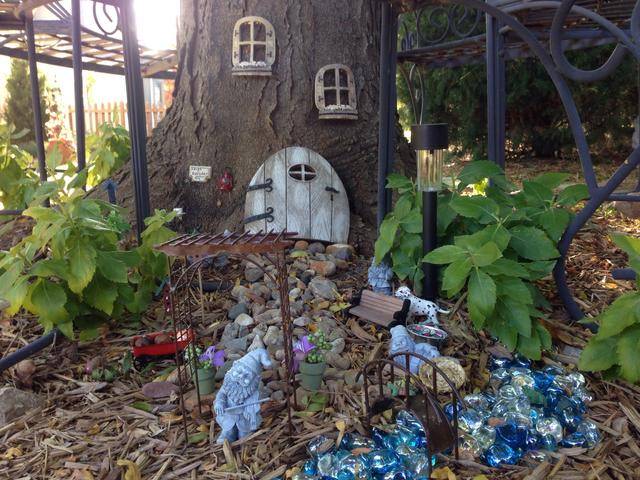
Okay, this one might be the least practical idea of the bunch, but that may be why I love it oh so much. If you have a stump in your backyard and you’re not willing or able to pay the truly insane amount it costs to have it ground down and removed, how about making it into a little gnome home? This is the perfect outdoor project if you have small children in your life.
Construct the trappings of a little house — door, windows, winding garden path — from found objects or natural materials, and affix them to the stump. Bonus points if you don’t tell the kids about this particular DIY project and allow them to simply stumble upon it one day in the garden. My mind would have been blown if I had come across one of these as a seven-year-old. For a step-by-step build, see this Gnome Tree Stump Home tutorial on Instructables.
Safety note: Don’t use an angle grinder to gouge windows or doors into a stump. Use a chisel and mallet for shallow detail work, or attach decorative pieces (driftwood, bark, polymer clay) to the outside instead.
6. Mosaic Stepping Stones from Broken China
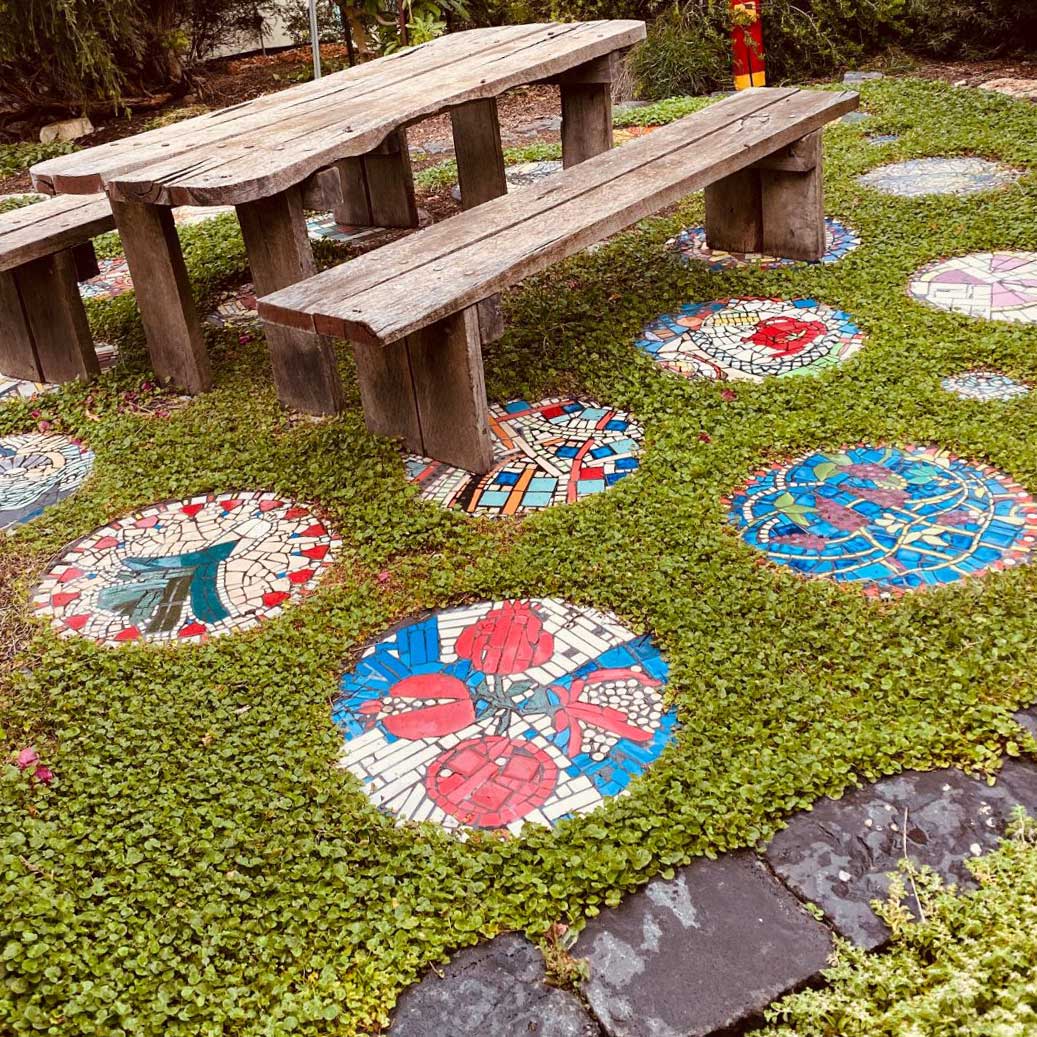
Every household eventually accumulates a small graveyard of chipped mugs, a single survivor from a four-piece dinner set, or a beloved teapot with a hairline crack. Rather than tossing them — broken ceramics generally aren’t accepted in curbside recycling — embed them in concrete stepping stones for a garden path that’s genuinely one of a kind.
This pairs beautifully with the teacup project above: any teacups that don’t make it past Project #1 (you will break a few) can come back as paving. The DIY mosaic stepping stones tutorial at Gardening.org walks through the full process — breaking ceramics safely inside a drop cloth, sizing pieces to half-inch to one-inch fragments, pressing them into wet concrete, and sealing the surface so sharp edges don’t cause injury underfoot. Basic mold options include an old cake pan, a plastic plant saucer, or a purpose-built stepping stone form from a craft store.
Safety note: Wear safety glasses and heavy gloves when breaking ceramics. Once cured, run a finger over the surface to check for protruding edges and file or sand any down before placing the stone where bare feet might land.
7. Vertical Pallet Herb Garden
Shipping pallets are one of the world’s most abundant near-free materials. Small businesses, garden centers, and feed stores often have stacks of them out back, and asking politely beats the alternative of seeing them landfilled. Mounted vertically against a sunny wall or fence, a pallet becomes a stacked planter that holds enough herbs to keep a kitchen in basil, thyme, parsley, and chives all season.
Grit Magazine published a clear how-to for a vertical pallet planter — line the back and sides with landscape fabric or heavy plastic to hold soil, fill through the slats, and plant each gap as its own row. The gaps act as natural divisions, so different herbs don’t fight for the same root space.
Safety note: Use only heat-treated pallets for anything edible. Look for the IPPC stamp with the letters HT (heat treated) and avoid any stamped MB (methyl bromide — a fumigant restricted under the Montreal Protocol). Unstamped pallets are unknowns; skip them for food crops. The same heat-treated pallets are fine for ornamental flowers either way.
8. Punched Tin Can Lanterns
Steel food cans — soup, tomato, coffee — are one of the most recyclable materials on Earth, but the recycling-then-buying-something-decorative loop has plenty of slack in it. With nothing more than a hammer, a few nails of varying sizes, and the freezer, an empty can becomes an outdoor lantern that throws constellation patterns across a patio at dusk.
HGTV’s tin can lantern tutorial covers the trick that makes this project work: fill the can with water and freeze it solid before punching, so the ice supports the can wall and prevents denting. Sketch your pattern on paper, tape it to the frozen can, punch through with a nail at each marked dot, and let the ice thaw. Drop in a battery tealight (much safer outdoors than a real flame) and group them along a walkway or down the center of an outdoor table.
The Point of All This
None of these projects requires you to buy more than a tube of waterproof adhesive, a bag of concrete, or maybe a stepping stone mold. The materials — chipped china, leftover wine bottles, empty cans, a forgotten pallet, an old rake — are already in your house or someone else’s. That’s the point. The greenest project is the one that uses what already exists, and the best part is that yours will look like nobody else’s.
Editor’s Note: This article, originally authored by Madeleine Somerville on June 17, 2015, was updated with corrected links and new ideas in May 2026.
The post Outdoor Projects You Can DIY for Almost Nothing appeared first on Earth911.
https://earth911.com/diy/outdoor-projects-you-can-diy-for-almost-nothing/

Think about what goes into your bathroom trash: empty toothpaste tubes, worn toothbrushes, floss containers, and the occasional mouthwash bottle. Together, they make oral care worth a second look.
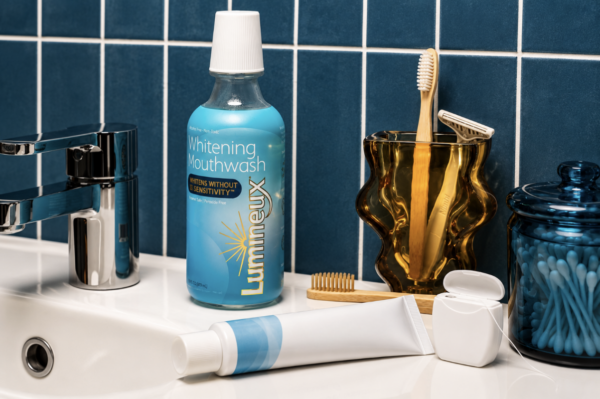
Packaging is a good place to begin. Lumineux® Whitening Mouthwash, for example, comes in a bottle made with BPA-free recycled plastic. Choosing products with recycled packaging can help support more sustainable oral care habits. Check local recycling guidelines to ensure proper disposal.
There are other simple changes you can make without sacrificing dental hygiene.
7 Simple Tips for a Greener Oral Care Routine
1. Choose Mouthwash With Recycled or Reduced Packaging
Before picking up a new bottle, look at its packaging. Does the manufacturer state how much recycled material it uses? Is there an extra box or wrapping that serves no obvious purpose?
A 2023 life-cycle study published in Environmental Research found that making bottle-grade PET resin from used PET bottles could cut greenhouse gas emissions by around 60% compared with virgin PET production in the scenarios studied. That’s a comparison of manufacturing processes, not a verified saving for a particular mouthwash bottle.
There’s also an important distinction: recycled means a product contains recovered material; recyclable means it can go through an appropriate recycling process after use.
A recycling symbol is no substitute for checking what your local program actually accepts.
2. Turn Off the Tap While Brushing
You don’t need a new product to save water. You only need to stop letting it run down the drain.
According to the U.S. Environmental Protection Agency, turning off the tap while brushing can save up to eight gallons a day. For someone who currently leaves the water running, that could add up to approximately 2,920 gallons over a year.
Wet your toothbrush, turn off the faucet, and turn it back on only when you need water. Rinse the sink once when you’re finished rather than leaving the tap running throughout your routine.
3. Switch to Bamboo or Replaceable-Head Toothbrushes
When bristles wear out, the handle often remains perfectly usable. A toothbrush with a replaceable head lets you keep that handle for longer.
Bamboo-handled brushes offer another option. A 2020 British Dental Journal study compared four toothbrush designs over five years. Bamboo and replaceable-head manual brushes had the lowest environmental impacts across the categories studied. The electric toothbrush examined had 11 times the climate-change impact of the bamboo model.
That isn’t a reason to throw out a working electric brush. Use what you already have, and explore alternatives when it’s time for a replacement.
Choose a brush that cleans your teeth comfortably and effectively. Replace worn heads or brushes when the bristles fray. For bamboo handles, check whether the bristles must be removed before composting the untreated handle. Don’t assume the entire brush is compostable.
4. Choose Toothpaste More Thoughtfully
Toothpaste tubes aren’t all made alike. Some use layers of different materials, while others use plastics that certain recycling programs can process. Check the manufacturer’s packaging instructions and your local rules before assuming a tube belongs in the recycling bin.
You may also come across toothpaste tablets, powders, or products sold with less packaging. Consider the complete package rather than the format alone. A product isn’t automatically better for the environment because its ingredients are described as natural.
Read the ingredient label, too. Oral care still needs to work. Choose toothpaste with proven cavity protection, including fluoride when appropriate, rather than making a choice based only on an environmental slogan.
5. Explore Lower-Waste Dental Floss Options
Think about the floss dispenser before you throw it away. If you’re buying a new plastic case every time you finish a spool, a refillable container could reduce that packaging.
Alternative floss materials, including silk, are also available. But words such as biodegradable and compostable deserve a closer look. Coatings can affect whether a material breaks down, and some products need industrial composting conditions.
Check the instructions before deciding where used floss belongs. Most importantly, keep cleaning between your teeth every day, whether you use floss or another suitable interdental cleaner.
6. Recycle Oral Care Products Responsibly
An empty mouthwash bottle may be accepted in curbside recycling while a toothbrush isn’t. Toothbrushes combine different components, and leftover paste or layered materials can complicate recycling toothpaste tubes.
Earth911’s guide to recycling toothbrushes and toothpaste tubes explains these challenges and describes take-back options for products that local recyclers may reject.
Start with your community’s recycling instructions. Empty and rinse bottles where required, and keep unaccepted items out of the bin. Then search for a nearby collection site using Earth911’s Recycling Search or check whether a manufacturer offers a mail-back program.
Recycling works better when the right materials reach the right facilities. Guessing can make the job harder.
7. Support Brands With Meaningful Environmental Initiatives
A company can put a leaf on its packaging without explaining what it’s actually doing for the environment. Look for specifics instead: recycled-content figures, reduced packaging, clear targets, and progress reports.
Tree planting is another initiative worth examining. Through the Lumineux® mouthwash subscription program, one tree is planted for every new subscription. That’s a concrete commitment, but it doesn’t necessarily mean that each purchase delivers a specific carbon benefit.
If tree planting matters to you, look for information about where trees go, how they’re cared for, and whether the company reports on their survival.
Ask similar questions about packaging improvements. The clearer the evidence, the easier it is to judge a brand’s claims.
Build a Greener Oral Care Routine, One Habit at a Time
Start with what you already have. Turn off the tap. Finish products before replacing them. When it’s time to shop, compare packaging and choose options that make sense for your needs and your local recycling system.
You don’t have to make every change at once. A few habits you can stick with will do more good than a bathroom full of replacements you didn’t need.
The goal is to reduce unnecessary waste while continuing to give your teeth and gums the care they need.
About the Author
This sponsored article was written by Dr. Kourosh Maddahi, DDS, a Beverly Hills cosmetic dentist and graduate of the University of Southern California School of Dentistry. He is the founder of Lumineux® and has written several books about the relationship between oral health and overall wellness. Learn more about his work on his official author page.
Title image courtesy of Canva.
The post Guest Idea: 7 Simple Tips for a Greener Oral Care Routine appeared first on Earth911.
https://earth911.com/health/guest-idea-7-simple-tips-for-a-greener-oral-care-routine/
Whether you’re planning to be a guest at a wedding, or attend a prom, gala, or any other special occasion, these ethical and sustainable formal dresses will be just the fit.
A lot of formalwear is made from irresponsibly sourced silk or polyester and is worn just once. It’s time to turn that around!
This guide will share sustainable formal dress options that have frocks you can rock to weddings, dances, galas, concerts, or any other event you have coming up.
How to Find Sustainable Formal Dresses
The most sustainable garment is the one already in your closet!
Do you have a special occasion dress or piece of formalwear that could fit the bill? While wearing an outfit only once to an event has unfortunately become the norm with social media, we can help counteract the culture by normalizing outfit repeating to special occasions again!
Another sustainable option is to make the most of what already exists by borrowing from a friend or family member or swapping with someone you know has a formal dress. This is something my friends and I did for high school dances like homecoming and prom. A friend’s Junior Prom dress became my Senior Prom dress the next year!
If there’s no one with your style and size, you can also expand your search of formalwear by browsing online resale platforms. Vestiaire Collective has a fabulous selection of dresses from designer brands for great prices, as does The RealReal. I’ve used The RealReal site to purchase dresses for weddings and other occasions.
If you just need a special occasion dress for one event, consider rental sites like Rent the Runway that offer affordable ways to get formalwear for a limited time.
If none of these options are available to you or you really feel ready to invest in an extra-special garment that you can wear for years to come, keep scrolling for our list of brands with sustainable and ethical formal dresses.
Brands With Sustainable Formalwear & Special Occasion Dresses
These brands have party-perfect minis, chic cocktail dresses, elegant evening gowns, and even pieces that would make for fabulous sustainable prom dresses! (You might also want to check out this guide for sustainable wedding dresses or this guide for more causal eco-friendly dresses.)
Price Key:
$ = Under $120
$$ = Under $250
$$$ = Under $400
$$$$ = $400+
Note that this guide contains partners and affiliate links. As always, all brands meet rigorous standards for sustainability and are brands we truly love — and that we think you’ll love too!
1. The RealReal
Best for: secondhand designer gowns and cocktail dresses
Whenever I’m looking for a wedding guest outfit or dress for another special occasion, The RealReal is my first stop. From gowns to cocktail attire, mini to maxi dresses, designer to contemporary, The RealReal is a mecca for dresses that sparkle and shine — at up to 70% off original prices.
Though you should expect an equally wide array of prices, from steals at under $70 to vintage designer looks coming in at $10K+. Be sure to use the price filter to find something that suits your budget.
Conscious Qualities: Secondhand
Size Range: XXS – 5XL
Price Range: $ – $$$$

2. Ninety Percent
Best for: affordable special occasion dresses
A responsibly-made occasion dress doesn’t have to break the bank. UK-based Ninety Percent has dresses made from lower impact materials like MicroModal and better practices like solar-powered production coming in at just around $100.
Most pieces are made at EchoTex, a facility in Bangladesh owned by the brand’s co-founder for maximum transparency. Best yet, 90% of the brand’s profits are shared across five causes and the workers behind the brand.
Conscious Qualities: Traceable Production, Profit Sharing
Size Range: UK 4-18 (US 0-14)
Price Range: $

3. Reformation
Best for: going-out and wedding guest dresses
Reformation is a leader on sustainability among larger fashion brands, between their climate positive roadmap and better material sourcing (including recycled cotton, TENCEL Lyocell, and regenerative fabrics) to their supply chain transparency, limited production model, and circularity practices.
And the brand is making it easy to shop for sustainable special occasion dresses with their selection features like “Going Out Dresses” and “Wedding Guest Dresses”.
Conscious Qualities: Lower Impact Materials, Responsible Production Practices, Decarbonization Initiatives
Size Range: 0 – 12
Price Range: $$ – $$$
4. OMNES
Best for: made-to-order upcycled evening wear
Making each piece to order using upcycled materials, Bastet Noir is a zero-waste fashion label. The brand’s sustainable formal dresses and other elegant apparel — including silk jumpsuits — are made by women in North Macedonia. 100% of Bastet Noir’s profits are reinvested into the women’s businesses and their children’s education.
Conscious Qualities: Repurposed Materials, Made-to-Order, Gives Back
Size Range: 4-10 + custom sizes
Price Range: $
5. AMUR
Best for: formal dresses for black tie dress codes
Standing for A Mindful Use of Resources, AMUR uses natural materials like cotton and recycled fibers like recycled polyester.
AMUR is the brand on this list with true gowns, so if you’re looking for a more sustainable prom dress or black tie occasion outfit, AMUR would be our pick. That said, the brand doesn’t have as much transparency on labor practices as the others in this guide.
Conscious Qualities: Natural & Recycled Fabrics
Size Range: XXS-XL
Price Range: $$$$
6. SeamsFriendly
Best for: natural fiber special occasion dresses
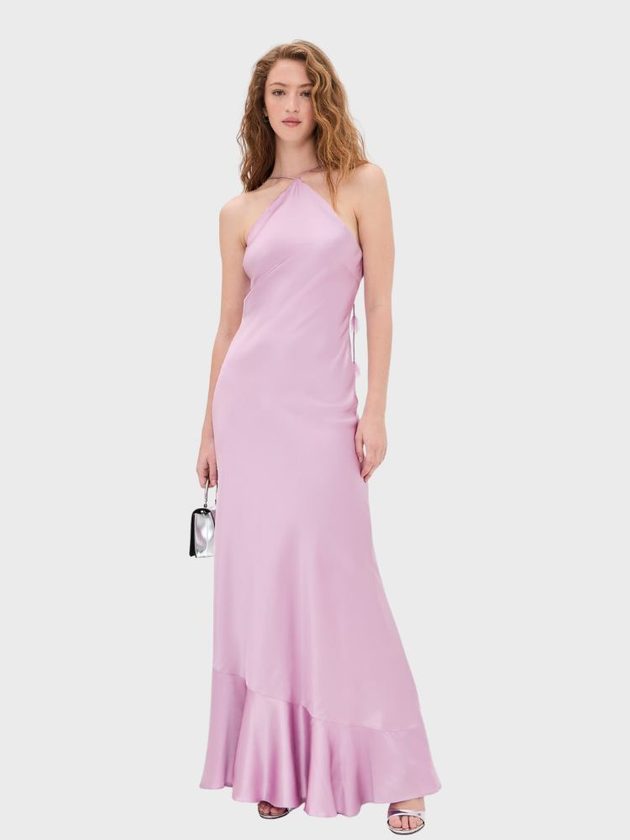
Can you find natural fiber formal or wedding guest dresses? SeamsFriendly is proving that the answer is yes. Crafted from 100% cotton or 100% linen in classic A-line and fit-and-flare dress fits, these are the perfect dresses for summer showers and weddings.
And since each piece is made-to-order just for you, you can select a fabric of your choice, select custom sizing at no additional fee, and customize the piece in dozens of other ways such as sleeve length, neck line, and even adding nursing-friendly zippers at the bust.
Conscious Qualities: Natural Fibers, Made-to-Order
Size Range: Custom sizing
Price Range: $

7. Christy Dawn
Best for: Semi-formal dresses for showers, baptisms, and casual weddings
Christy Dawn’s dresses are vintage-inspired but totally timeless. Their feminine frocks can be worn as house dresses or semi-formal wear to weddings, bridal showers, baptisms, or other not-quite black-tie occasions. Their dresses are either made from reclaimed fabrics ethically in Los Angeles or from regenerative organic cotton that is sourced in partnership with a small collective in India.
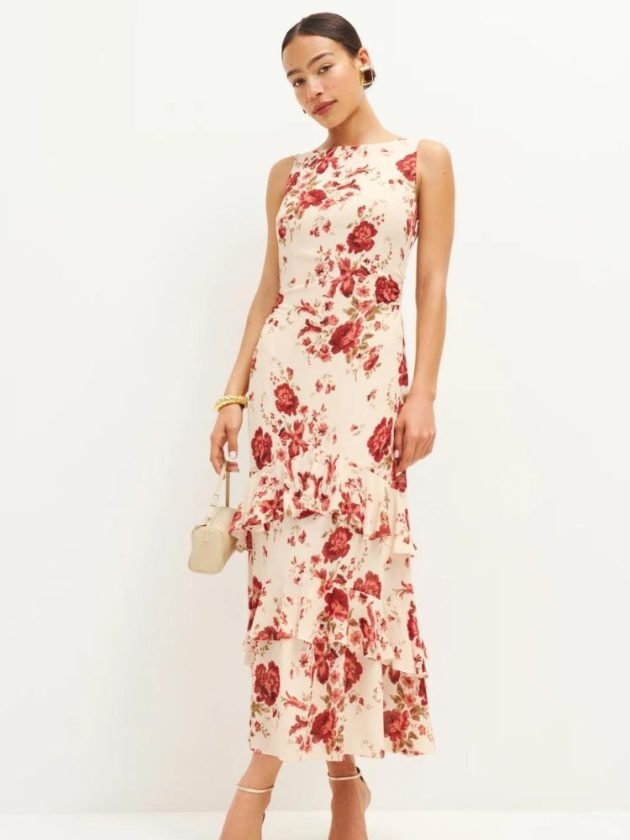
You’ll also find sustainable special occasion dresses from Christy Dawn made with regenerative silk, like the dress pictured here!
Conscious Qualities: Reclaimed or Regenerative Fabrics, Ethical Production
Size Range: XS-3XL (extended sizing collection)
Price Range: $$$