

The most financially costly climate disasters around the world in 2024 produced $229 billion in damages and killed 2,000 people, according to Counting the Cost 2024: A year of climate breakdown, the most recent analysis of insurance payouts by nonprofit Christian Aid.
Three-quarters of these calamities occurred in the United States, reported The Guardian.
“Behind the billion-dollar figures are countless lost lives and livelihoods,” said Dr. Mariam Zachariah, a researcher for World Weather Attribution at Imperial College London, in a press release from Christian Aid.
Since the financial costs are only based on insurance losses, the numbers do not reflect the true figures, which are likely to be higher, in addition to the often uncounted human costs.
Among the extreme weather events that caused the most financial damage in 2024, Hurricane Milton in October was the most costly single event, bringing $60 billion in damages with 25 lives lost. Hurricane Helene, which struck Cuba, Mexico and the U.S. in September, was close behind with $55 billion. The monster hurricane killed 232 people.
In addition to these major hurricanes, smaller storms in the U.S. killed 88 people and brought $60 billion in damages.
“The data is now also showing that climate change is doubling the likelihood of many extreme weather events like floods and tropical cyclones and increasing their intensity, leading to massive destruction and loss of life,” said Patrick Watt, chief executive officer of Christian Aid, in the report.
People living in poverty in the world’s lower income nations are disproportionately affected by the costs and impacts of climate events. This highlights the necessity for adaptation strategies to mitigate vulnerability before disasters strike.
December’s Cyclone Chido in Mayotte potentially killed more than 1,000 people.
Left to right: Satellite imagery of homes and buildings near College de Kwale in Mamoudzou, Malotte before Cyclone Chido, on March 19, 2024, and after on Dec. 16, 2024. 2024 Maxar Technologies
“The tragic impacts of Cyclone Chido in Mayotte really show how vulnerable small islands are to climate change. A single storm can severely damage critical infrastructure like power, water supply and communications across an entire island, making international support essential. Small islands must be supported to build resilience to tropical cyclones. It is not enough to just improve early warning systems, we must improve the resilience of homes and critical infrastructure to ensure that people have somewhere safe to shelter and essential services are operational during and after the storm,” said University of Reading professor Liz Stephens in the report.
Worldwide, no region escaped the devastating impacts of climate disasters this year. Flooding in China killed 315 and cost $15.6 billion, while Southwest Asia’s Typhoon Yagi took the lives of more than 800 and caused widespread destruction from Thailand to the Philippines.
Three of the 10 most costly disasters occurred in Europe, including Storm Boris and floods in Germany and Spain, which collectively claimed 258 lives and caused $13.87 billion in damages.
In Bangladesh, heatwaves affected 33 million, while West African floods displaced millions across Chad, Niger and Nigeria. Water levels in the Amazon River have fallen by 90 percent, threatening livelihoods for the region’s Indigenous communities.
“Most of these disasters show clear fingerprints of climate change. Extreme weather is clearly causing incredible suffering in all corners of the world,” Zachariah said, as The Guardian reported. “This report is just a snapshot of climate devastation in 2024. There are many more droughts, heatwaves, wildfires and floods not included that are becoming more frequent and intense.”
Christian Aid noted that other of the year’s major climate disasters had a lower immediate cost financially, but would have incalculable subsequent costs in terms of deaths; the destruction of ecosystems; and damage to sea levels, food supplies and social stability.
Watt urged the world’s policymakers to reduce emissions and increase financial compensation to poor countries.
“The human suffering caused by the climate crisis reflects political choices. There is nothing natural about the growing severity and frequency of droughts, floods and storms,” Watt said, as reported by The Guardian. “Disasters are being supercharged by decisions to keep burning fossil fuels, and to allow emissions to rise. And they’re being made worse by the consistent failure to deliver on financial commitments to the poorest and most climate-vulnerable countries.”
“In 2025 we need to see governments leading, and taking action to accelerate the green transition, reduce emissions, and fund their promises,” Watt said in the press release.
The post Most Costly Climate Disasters of 2024 Killed 2,000 People and Inflicted $229 Billion in Damages appeared first on EcoWatch.
https://www.ecowatch.com/climate-disasters-2024.html

As a longtime book lover, I may be biased, but I think a full bookshelf is one of the most beautiful additions to a space. There’s nothing better than seeing a showcase of your favorite reads alongside a TBR list.
A bookcase, though, can of course be used for all sorts of purposes from placing your favorite photos of family and friends to showcasing treasured vintage finds.
Whatever the case, this guide will help you find the right sustainable bookshelf for your living room, office, or wherever you like to cozy up with a good read!
So what make a bookcase more sustainable? What makes a bookshelf non-toxic?
First of all: sustainable and non-toxic are two overlapping — but distinct — criteria. And both of those terms can come with a lot of opinions and varying definitions.
When it comes to sustainable bookcases, I look for:
- Responsibly Sourced Materials: most bookshelves are made primarily with wood. While natural, unsustainable wood sourcing can be a cause of deforestation, so we want to see that the wood was from responsibly managed forests or made from reclaimed or repurposed wood. Some bookshelves may feature metal, in which case recycled materials here are important.
- High Quality Construction: sustainability includes longevity — how long will you be able to use that furniture piece before it goes to the landfill and gets replaced? Look for transparency around craftsmanship and woodworking processes. Another sign of quality is the length of warranty a company has for its products.
- Ethically Made: this one is straightforward in theory — were the people making it paid fairly and working in safe conditions? — but is unfortunately not always easy to find information. In this category, I look for transparency in practices, what relationship the brand has with the manufacturer (some produce in-house which is the best case scenario for transparency!), where it was made, and how well the makers were paid.
Ideally a sustainable bookshelf would also be non-toxic — as toxic chemical fumes aren’t exactly sustainable! But this isn’t always the case. For example, if a company prioritizes upcycled materials, they don’t necessarily have control over what inputs were part of the original materials. And sometimes a company focuses more on ethical artisan partnerships and sustainable wood sourcing, more than, say, using non-toxic finishes.
But when it comes to non-toxic bookshelves, this is what I look for. (Note that non-toxic doesn’t necessarily mean safe for all chemical sensitivities. Nor does it mean zero potentially irritating chemicals.)
- Solid Wood (where possible): MDF or pressed wood contains glue to stick the various wood pieces together, which can contain added formaldehyde. I prefer solid wood, or if it is engineered wood, I’d make sure the company is transparent around the type of glue used and/or they at least have a product certification like GREENGUARD. (More on that in a second.)
- Low or Zero VOC Finishes: most wood furniture is completed with some sort of finish to provide a protection against scratches or moisture. Many of these finishes are synthetic, and some can contain high levels of toxic chemicals. Look for a natural finish like linseed oil or beeswax or a low VOC synthetic finish.
Relevant Certifications
You’ll see a few certifications referenced throughout this guide. Here’s what each one covers:
- FSC Certified = the wood sourcing was responsibly managed; this is not a finish, foam, or textile guarantee.
- GREENGUARD / GREENGUARD Gold Certified = the finished product was tested for low chemical emissions, including VOCs, with Gold representing the stricter tier.
- Fair Trade Certified
 = verifies that a factory meets standards for fair wages, safe working conditions, and ethical labor practices.
 - Cradle to Cradle Certified (Gold) = evaluates a product or material across material health, circularity, clean air/climate, water/soil stewardship, and social fairness.
Where to Find Sustainable Bookcases and Shelving
I’m always a secondhand first proponent, and that goes for furniture, too. While your local thrift store might not have used bookshelves, check for dedicated furniture resale shops near you or estate sales. (I use EstateSales.net to find ones near me.) You can also find gently used pieces on online marketplaces like Facebook Marketplace, OfferUp or AptDeco.
If you can’t find something you love secondhand, and you don’t want to DIY your own bookshelf, then the next best choice is to shop from one of the sustainable furniture companies below. (If you’re simply looking for a bookstand, I’d suggest browsing Etsy for a collection of solid wood, bamboo, and reclaimed wood book stands and cookbook stands!)
Note that this guide includes affiliate links, which means we may earn a small commission if you purchase through these links which helps us continue to run this website and create resources like these. As always all brands meet strict sustainability criteria and are brands we love — and that we think you’ll love too!
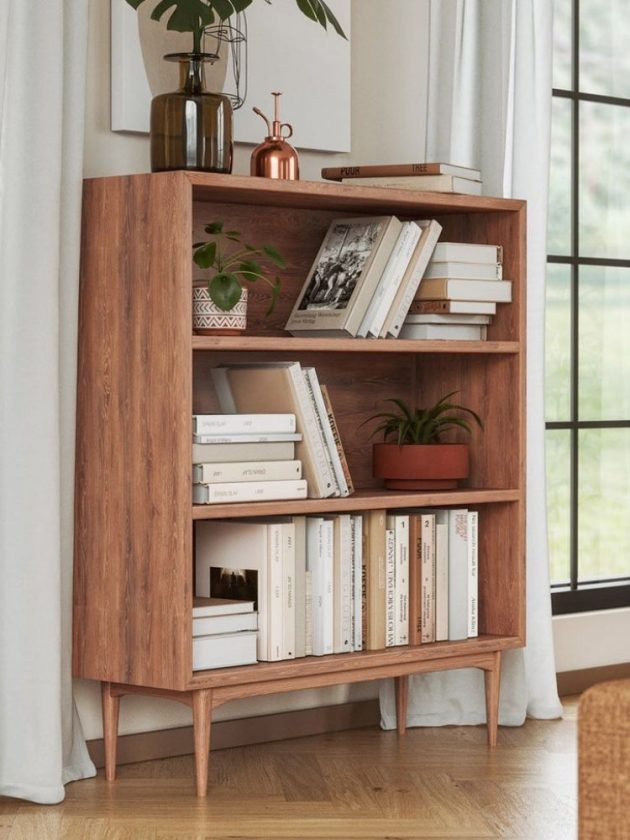
1. Medley
Best for: low VOC wood bookcases
Medley’s bookshelves are elegant and elevated, perfect for a living room. Each piece is made with 100% solid FSC-certified hardwood for the tops and sides, though low-VOC CARB 2 compliant plywood is used for the shelves.
Every eco-friendly bookcase is handcrafted in the US (California or North Carolina) and completed with a low-VOC wood finish.
Price: $2,395 – $2,995
Materials: White Maple, American Walnut Wood
Conscious Qualities: Made-to-Order, US-Made, FSC-Certified Wood, Natural Finish
2. Thuma
Best for: non-toxic modular bookshelf
Thuma’s eco-friendly bookshelf is made from upcycled wood sourced from rubberwood trees no longer being used to source rubber. The brand’s bookshelf is also GREENGUARD Gold certified.
What makes Thuma’s bookshelf stand out to me, though, is its modularity — their Pillar Bookshelf can be set in 10 different configurations. And if you start with just a few shelves but later decide you want a larger bookshelf, you can simply buy an additional shelf or two to add on to it!
Price Range: $550 – $3,300
Materials: Upcylced Rubber Wood
Conscious Qualities: GREENGUARD Gold Certified, Repurposed Materials, Adaptable

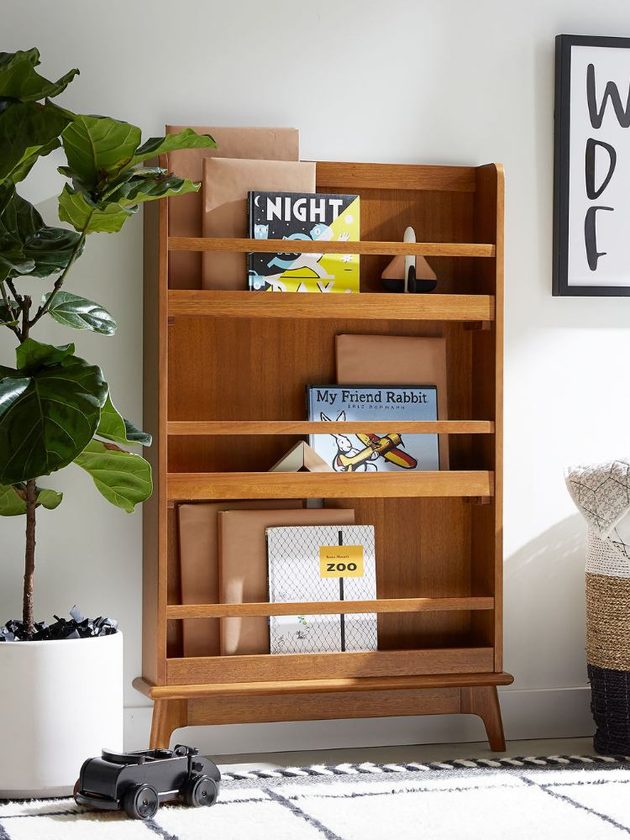
3. West Elm GREENGUARD Certified
Best for: low-tox bookcases and bookracks for kids
This furniture retailer has plenty of adorable, but functional, bookshelves for a playroom or kids’ bedroom. From cubby bookcases to mid-century bookracks, you’ll find plenty of options that are not only GREENGUARD certified, but made in Fair Trade Certifiedfactories, and/or with FSC-certified wood. Note that the company’s bookshelves are made with engineered wood, though.
West Elm also has GREENGUARD certified bookcases large enough for the adults too!
Price: $399 – $2,897
Materials: Solid Wood, Reclaimed Wood
Conscious Qualities: Fair Trade, FSC Certified, and GREENGUARD Certified Options
4. Urban Natural
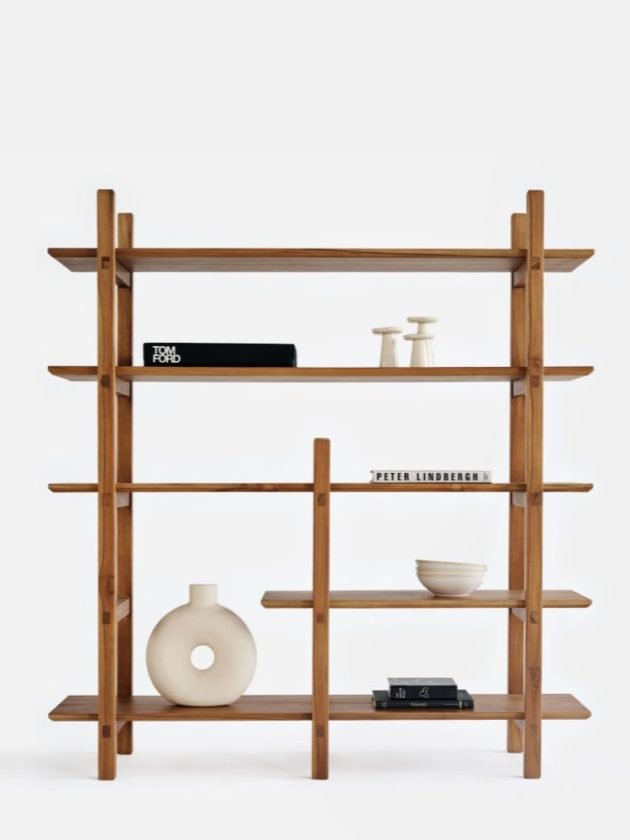
Best for: a variety of eco-friendly bookshelves
This natural home retailer has sustainable bookcases in all shapes and sizes. From traditional bookcases to open-back asymmetrical shelving units, Urban Natural has options for any interior aesthetic. Each brand they carry values quality craftsmanship, responsible production, and sustainable sourcing.
Price: $1,099 – $5549
Materials: Solid Teak, Maple, Cherry, Walnut, Birch (varies by brand)
Conscious Qualities: FSC-Certified Options, USA-Made Options, Low VOC Finish Options (varies by brand)

5. MasayaCo
Best for: sustainably-sourced wood bookshelves
MasayaCo has a stunning collection of sustainable shelves and bookcases handcrafted by artisans in Nicaragua. Not only is each piece of furniture made from responsibly harvested wood, but MasayaCo plants 100 trees for each order — and has planted 1.3 million trees to date. Plus they keep 40% of the reforestation projects completely untouched, to ensure the ecosystems have the chance to truly thrive.
The company shares that with the right care, their teak wood pieces can last up to 75 years. Note, though, that the finishes used aren’t disclosed, so if that’s one of your priorities, this might not be the top pick for you.
Price: $675-$1,295
Materials: Teak
Conscious Qualities: Artisan Made-to-Order, Reforestation Projects, FSC-Certified
6. Healthier Homes
Best for: affordable non-toxic bookshelves
With shelving options starting at under $250, Healthier Homes is a more affordable option for finding sustainable, non-toxic bookcases and shelving.
Most of their wood furniture is made from Parawood, rescued from rubber tree farms after the trees stop producing latex. And their wooden bookcases come unfinished, so you can have full control over the color and any chemicals used. (The company also sells zero VOC furniture paint.)
Price: $238 – $2,160
Materials: Repurposed Wood, Metal, Zero VOC Finishes
Conscious Qualities: Repurposed Materials
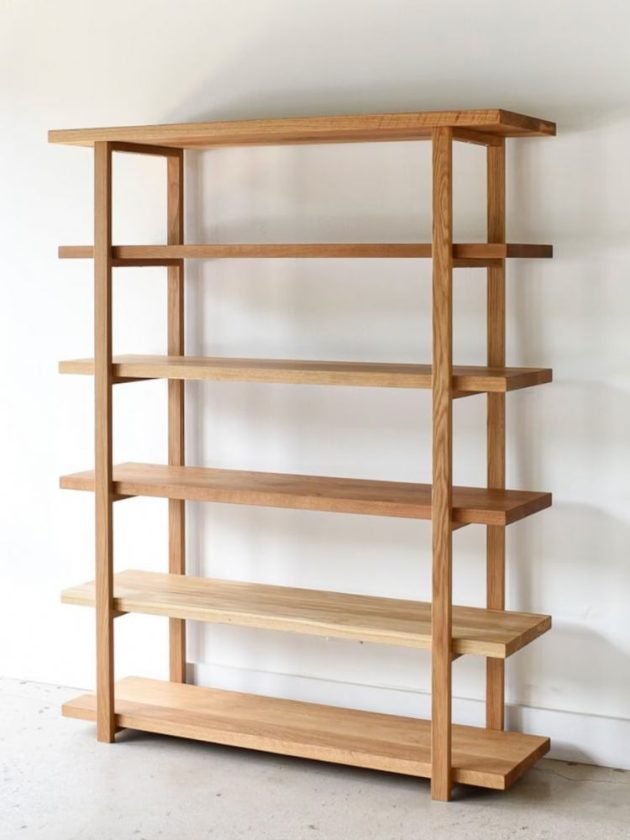
7. What We Make
Best for: reclaimed wood bookshelves
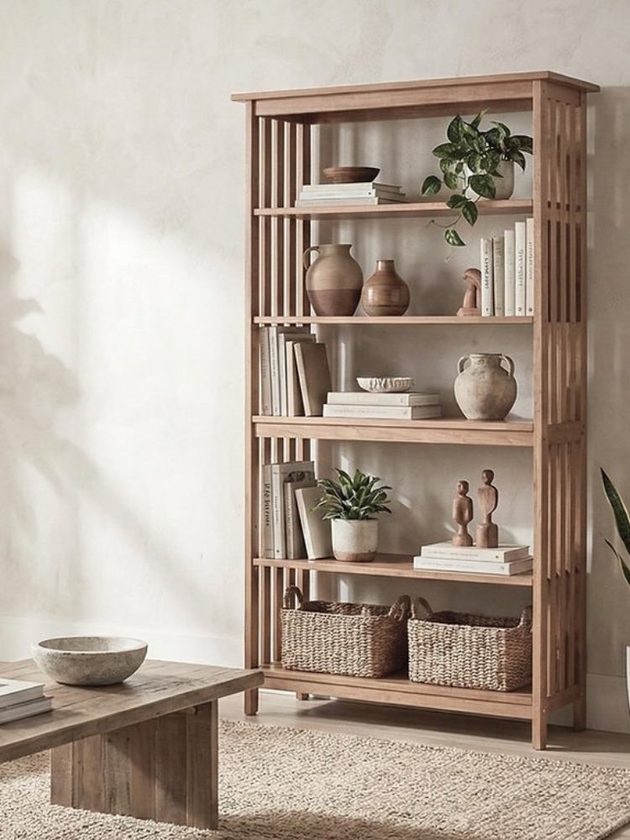
Illinois-based furniture company What We Make crafts non-toxic bookcases with a VOC-free finish.
The shop offers both modern Scandinavian styles (pictured here) using solid oak and industrial style sustainable bookshelves made with a stainless steel frame and the reclaimed wood salvaged from 100+ year old Midwestern barns.
Price: $2,025 – $5,055
Materials: Oak, Reclaimed Wood
Conscious Qualities: Made-to-Order, Repurposed Material Option, Zero-VOC Finish
8. Greenington
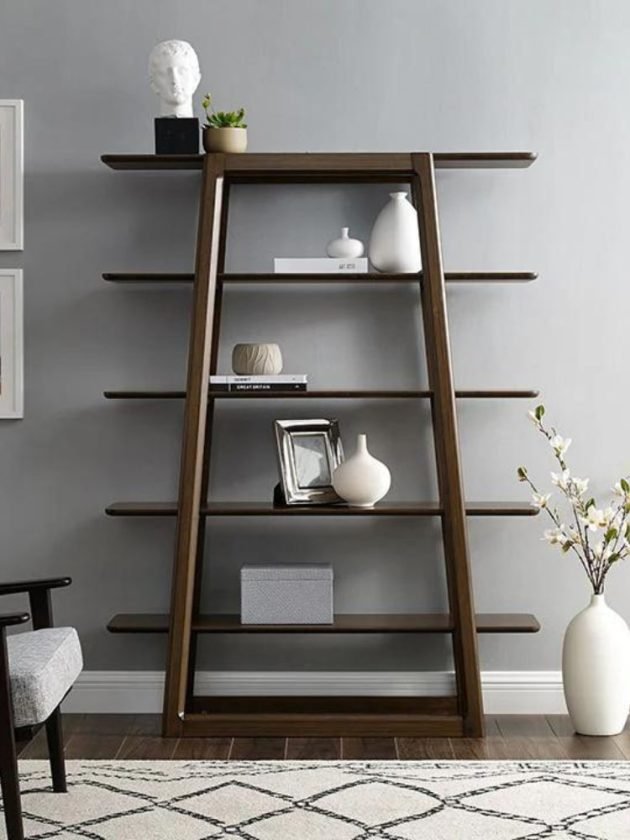
Best for: bamboo bookshelves
Greenington is a furniture company with pieces crafted from sustainably hand-harvested Moso bamboo. Greenington sources mature bamboo — reached in just 5 years — for maximum strength and durability. And because bamboo is technically a grass, not a tree, it regenerates after being cut without any replanting.
The company uses every part of the bamboo culm, for zero waste production, winning the Sustainable Furnishings Council Green Ribbon Award in 2020.
Price: $809 – $2,139
Materials: Moso Bamboo
Conscious Qualities: Zero-Waste Production, Sustainable Materials
9. Crate & Barrel FSC-Certified
Best for: certified responsibly sourced wood shelving
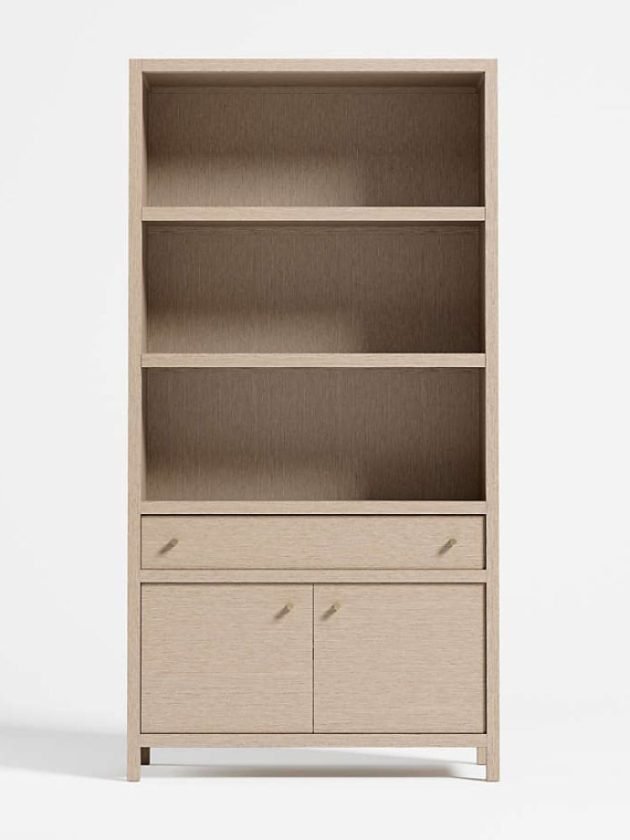
Crate & Barrel’s FSC-Certified collection features bookshelves made with materials like solid oak, mahogany wood, teak, and rattan. And you can find a range of styles and finishes in their collection, from natural oak to espresso and driftwood.
It’s worth noting that the company’s bookshelves do contain veneer and engineered wood as well. There are also select products that are also GREENGUARD certified, but not all of them.
Price: $1,399 – $4,949
Materials: FSC-Certified Wood, Some GREENGUARD Certified Pieces
Conscious Qualities: Natural Materials, Responsibly Sourced
More Guides to Browse:
Sustainable Tables and Coffee Tables to Gather Around
The Best Non-Toxic Furniture Brands for a Healthier Home
Sustainable Storage Furniture: Dressers, Media Consoles, and More
The post 9 Sustainable Bookcases to Showcase Your Latest Reads appeared first on Conscious Life & Style.
Put your feet up and relax with the eco-friendly and non-toxic ottomans, benches, and poufs from these incredible sustainable fur