

- Formal negotiations
- Turkish and Australian leadership
- Cover decision
- COP reform
- Adaptation
- Finance
- Just transition work programme
- Loss and damage
- Gender
- Article 6
- Agriculture and food security
- Mitigation work programme
- Response measures
- Action for climate empowerment
- Trade
- Second global stocktake
- Long-term goal review
- Around the COP
- Fossil fuels
- Action agenda
- Global leaders
- Electrification
- China at COP31
- Ocean
- Deforestation
- Methane
- New climate science
- Food and water
- NDCs
- Protests and access
- Road to COP32 and beyond

Hosting a COP in the Amazon, the world’s largest tropical rainforest, has raised hopes that this year’s UN climate summit in Brazil will be free from the shadow of fossil fuels, after the last two were held in major oil-producing countries. But even as Brazil faces extreme heat and flooding, its government has signalled it wants to extract more climate-warming oil.
“I dream of a day when we no longer need fossil fuels, but that day is still far away. Humanity will depend on them for a long time,” Brazilian President Luiz Inácio Lula da Silva said last week during a speech in Belém, the capital of Pará and the host city for November’s COP30.
This Tuesday, Brazil’s National Energy Policy Council, which brings together federal ministers, approved the Latin American nation’s entry into the Charter of Cooperation (CoC) between oil-producing countries, a discussion forum linked to the Organization of the Petroleum Exporting Countries (OPEC+).
It provides a platform to “facilitate dialogue and exchange views regarding conditions and developments in the global oil and energy markets”, according to OPEC. Despite lacking binding obligations, Brazil’s entry into the CoC has brought backlash from climate groups.
“This is a disappointing setback for everyone who relies on the Brazilian government to lead a just transition away from fossil fuel exploration—an essential step if we are to survive on this planet,” said André Guimarães, director of the Amazon Environmental Research Institute (IPAM).
According to a report by the climate campaign group 350.org, Brazil became the third-largest country in terms of investment in expanding its oil and gas sector last year, shortly after countries agreed at the COP28 in Dubai to “transition away from fossil fuels”.
Japan disregarded widespread calls to raise its 2035 emissions goal
Fossil fuel growth
If Brazil were to maintain only the oil wells it currently has in operation, the country’s production would decline by 64% by 2035. However, with new exploration projects set to be licensed, Brazil’s oil production is expected to increase by 36% in the next decade, according to analysis by 350.org based on International Energy Agency (IEA) data.
President Lula responded to criticism that his support for oil would tarnish Brazil’s leadership at COP30. “Look at the United States; see if France is worried. No, they are exploiting as much as they can. It’s England exploiting [oil] in Guyana and France in Suriname,” he said, pointing out that neighbouring countries are already profiting from oil in the Amazon region, working with Europe-based multinationals.
In his speeches, Lula has argued that the profits from new oil explorations will be used to finance the energy transition. However, this claim has been met with skepticism and sarcasm from environmentalists.
“It’s like recommending smoking twice as much to raise more money for lung cancer treatment,” mocks Caetano Scannavino, from the Amazonian NGO Saúde e Alegria.
In 2010, the Lula government passed a law stipulating that revenues from oil exploration in the pre-salt fields—a new source of wealth for Brazil at the time—would be invested in health and education. However, amid an economic crisis in the following years, the government redirected those funds to cover other expenses such as public debt.
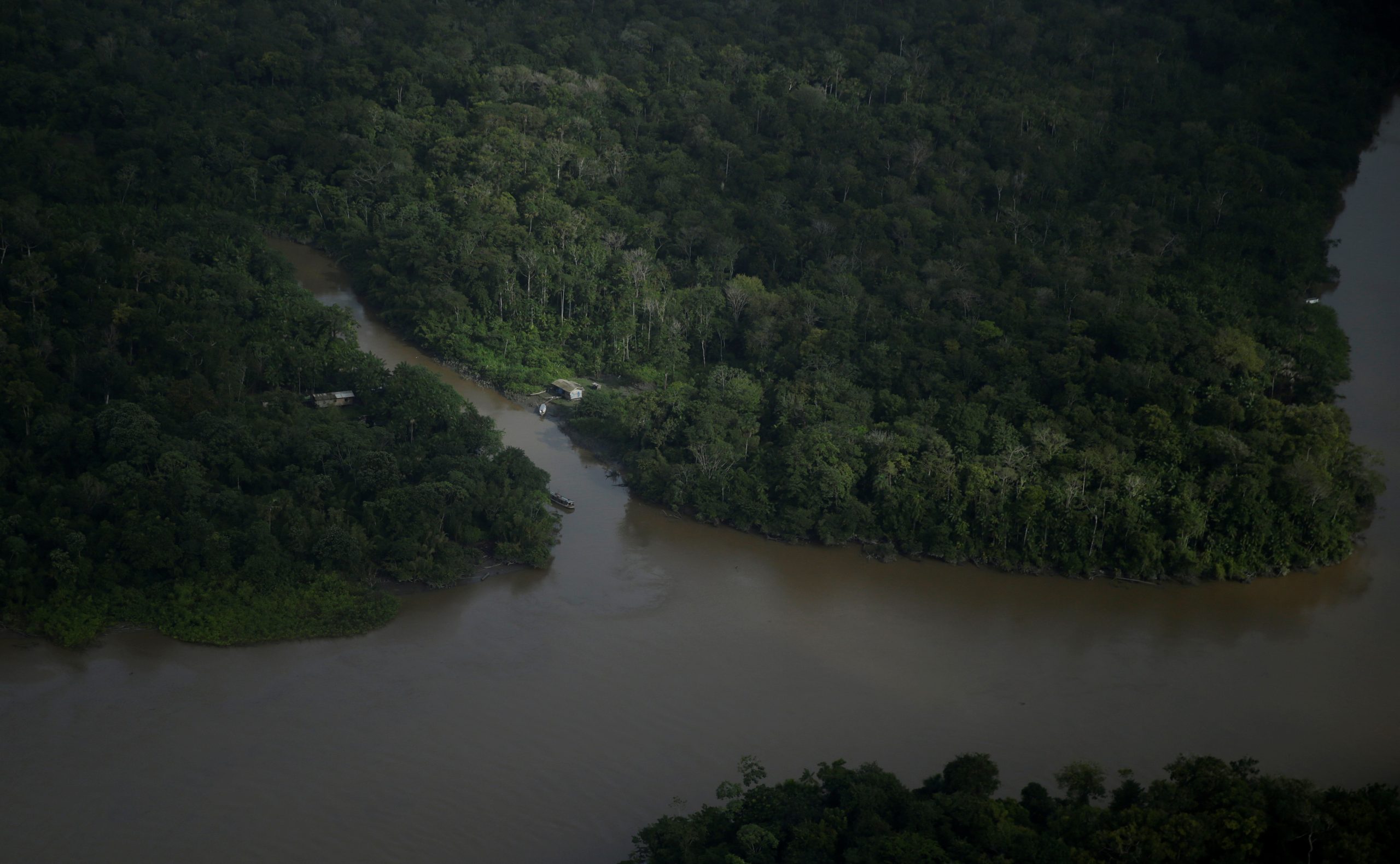
Amazon oil
Since taking office for his third non-consecutive term, Lula’s government has been seeking an environmental license to drill an exploratory oil well in the Foz do Amazonas Basin, located along the coast of Amapá state, in an area of extreme environmental sensitivity.
The license was denied early in his administration, in May 2023. Experts at IBAMA (the Brazilian Institute of Environment and Renewable Natural Resources, the federal government’s environmental agency) concluded that Petrobras, the state-owned oil company, had failed to present a solid impact mitigation and emergency response plan.
Additionally, IBAMA’s President Rodrigo Agostinho noted the risks of exploring the area without first conducting a Sedimentary Area Environmental Assessment (AAAS). This includes an assessment of sensitive ecosystems, biodiversity hotspots and affected communities to determine potential environmental and social impacts.
Since then, three ministers – Alexandre Padilha for Institutional Relations, Rui Costa who is Chief of Staff, and Alexandre Silveira for Mines and Energy – have been negotiating a political agreement with the Ministry of the Environment, led by Marina Silva.
Seen as a roadblock by other ministries, Silva has repeatedly stated that IBAMA’s decision will be purely technical. However, sources within the government told Climate Home that the license is expected to be granted by the end of March.
Big polluters funnel 75% of profits to shareholders, not clean energy
Pressure from above
Even if IBAMA’s technical staff reject Petrobras’ revised plans, the agency’s leadership could still approve the drilling under political pressure from the president himself. Lula has been considering replacing IBAMA’s current president and has reportedly been eyeing Márcio Macêdo, a close ally who currently heads the General Secretariat of the Presidency.
“We can’t keep up this back-and-forth with IBAMA, which is a government agency but seems to act against the government,” Lula said last week during an interview to Diário FM, a local radio in Amapá state.
The environmental public servants’ association, Ascema, responded to that declaration with a letter stating that political pressure is unacceptable and that evaluations take the time needed to assess potential environmental and social impacts, as well as mitigation or compensation measures.
“The attempt to fast-track the approval of high-impact projects without due adherence to technical and scientific procedures threatens not only the integrity of Brazil’s ecosystems but also the rights of traditional populations and local communities directly affected by these decisions,” stated the Brazilian Forum of NGOs for the Environment.
Pressure to fast-track environmental licensing for large infrastructure projects, such as hydroelectric dams and highways, has already left a stain on the left-wing administrations of Lula and his successor, Dilma Rousseff. The most emblematic case was the construction of the Belo Monte hydroelectric dam in Pará state in the Amazon.
In 2011, the approval of its environmental license led to the dismissal of IBAMA’s president. The project significantly impacted the Xingu River, a large tributary of the Amazon River, and Indigenous communities who depended on the river were not consulted. The violation of their rights was later recognised by Brazil’s Supreme Court.
Recently, due to the variability of the region’s hydrological regime combined with an undersized reservoir infrastructure, the dam has been operating at less than half of its projected power generation capacity, calling into question the economic rationale of the project.
Weakening studies
Now, the government aims to speed up environmental approval for drilling in the Foz do Amazonas basin by weakening IBAMA’s evaluation process. Through legal opinions issued by the Attorney General’s Office, the Ministry of Mines and Energy (MME) has successfully narrowed the scope of the environmental assessment.
One of its main arguments was that IBAMA cannot require mitigation measures for noise pollution caused by aircraft in the region, despite complaints from Indigenous communities that disturbances have scared away game animals essential to their way of life.
Another requirement that was legally overturned was the demand for a Sedimentary Area Environmental Assessment, a tool the MME has resisted implementing, since it could identify areas where oil exploration should be restricted.
With much of the licensing process stripped down, IBAMA’s final decision now hinges on the company’s emergency response plan. The initial denial of Petrobras’ request was based, among other criteria, on the absence of a plan to rescue wildlife in the event of an oil spill.
In response, the company built a wildlife rescue centre on the coast of Amapá state. This plan remains the last pending issue, and its approval will determine whether the license is granted.
Government officials at the Ministry of Environment told Climate Home they fear that the issuance of the license could send a crucial signal to potential fossil fuel investors in the region, as the National Petroleum Agency has already announced it will auction another 47 oil blocks in the same area of the Foz do Amazonas basin in June.
The post Lula’s government pushes for new oil drilling in the Amazon – where it plans to host COP30 appeared first on Climate Home News.
Lula’s government pushes for new oil drilling in the Amazon – where it will host COP30
Continue Reading
Climate Change
‘Ode to Scott Reef’: Indie-folk duo Hollow Coves performs at famous Australian reef in call for protection
SCOTT REEF, Tuesday 24 November 2026 — Released today, a new music video with Gold Coast duo Hollow Coves performing onboard the flagship Rainbow Warrior at Scott Reef calls for protection of the ancient ecosystem from oil and gas drilling proposed by multinational Woodside.

- Watch ‘Coastline’ shot at Scott Reef here and see visuals from the shoot at sea here
The new music video, in collaboration with Greenpeace Australia Pacific, captures a performance of Hollow Coves’ viral single ‘Coastline’, joining a nationwide push by Australian artists to protect heritage-nominated Scott Reef, located 270 kilometres off WA’s Kimberley coast. The video was shot on multiple cameras including a Bolex 16mm vintage movie camera, and boasts original underwater and aerial footage of Scott Reef.
Scott Reef is home to thousands of marine species, genetically unique green sea turtles and endangered pygmy blue whales but is threatened by oil and gas drilling proposed by multinational corporation Woodside, the Browse project.
Matt Carins, Hollow Coves musician, said: “It would be such a tragedy if gas drilling happened at Scott Reef. It’s such an incredible part of the world and is something that we want to pass on to future generations. Being a father myself, I want to share these places with my kids.
“There’s still hope in saving Scott Reef. I think it’s our time now to spread the word of how beautiful this place is. It may not have the same fame as other reef systems, but it’s just as amazing and just as important.”
Ryan Henderson, Hollow Coves musician, said: “Scott Reef is incredible. We were greeted by a pod of dolphins the first day we arrived. The whole place is brimming with wildlife.
“It would be such a shame to allow gas drilling to go ahead at Scott Reef. We wouldn’t allow drilling at the Great Barrier Reef so why should we allow it at Scott Reef which is also so beautiful and so precious. We want to preserve these places.
“There’s still hope. The Australian Government has an opportunity now to save Scott Reef and be on the right side of history.”
Hannah Schuch, Senior Campaigner at Greenpeace Australia Pacific, said: “It was a privilege to witness Hollow Coves playing their iconic single ‘Coastline’ live from Scott Reef, surrounded by wildlife and tranquil blue water.
“The ecological significance of Scott Reef to thousands of species, many of which are threatened, cannot be understated, but its surreal beauty is something that is so easy to capture and makes a perfect setting for a song like Coastline.
“Hollow Coves’ work is a perfect example of the symbiosis between Australian music and nature, and we are so excited to present this musical and cinematic ode to Scott Reef in collaboration with them.
“Drilling at Scott Reef is an unacceptable proposal, and Environment Minister Murray Watt has a generational opportunity to write a legacy of nature protection by putting a stop to Woodside’s plans and saving Scott Reef.”
Minister Watt is expected to decide if Woodside will be allowed to drill at Scott Reef for the Browse gas project in the coming months.
-ENDS-
Media contact
Emma Sangalli on 0431 513 465 or emma.sangalli@greenpeace.org
High res images and footage of Scott Reef can be found here
The COP31 climate talks in Antalya, Turkey, have failed to reach agreement on a “pact” that lacked clear references to curbing fossil fuels or scaling up climate finance.
The “Antalya pact”, proposed by the joint Turkish-Australian presidency, was rejected in the final hours by the EU, the UK and several climate-vulnerable nations.
Meanwhile, many developing countries criticised the lack of progress on climate finance and indecision on a proposed $120bn target for funding climate adaptation.
With stark divisions preventing agreement on the presidency-led pact, UNFCCC chief Simon Stiell expressed “deep disappointment”, speaking of “scope to improve, modernise and reform” the UN climate process.
Despite a chaotic endgame that saw the overrunning COP become the longest in history, it did not end in complete failure, with many items adopted in the closing plenary.
These included fairly limited or procedural outcomes on a new “mechanism” for global “just transitions”, plus support for countries struck by climate disasters.
There was some progress beyond the negotiations, though, with growing coalitions of nations championing “roadmaps” for “transitioning away” from fossil fuels.
With the presidency promoting “electrification” as a key theme, around 80 nations also signed up to a global target of securing 35% of final energy consumption from electricity by 2035.
Here, Carbon Brief provides in-depth analysis of all the key outcomes from Antalya, both inside and outside the COP31 negotiations.
(See Carbon Brief’s coverage of COP30, COP29, COP28, COP27, COP26, COP25, COP24, COP23, COP22, COP21 and COP20.)
- Formal negotiations
- Turkish and Australian leadership
- Cover decision
- COP reform
- Adaptation
- Finance
- Just transition work programme
- Loss and damage
- Gender
- Article 6
- Agriculture and food security
- Mitigation work programme
- Response measures
- Action for climate empowerment
- Trade
- Second global stocktake
- Long-term goal review
- Guidance on NDCs
- Rio synergies
- Around the COP
- Road to COP32 and beyond
Formal negotiations
Turkish and Australian leadership
Turkey and Australia presided over the longest COP in history – and failed to find consensus on their proposed “cover decision”, exposing deep fractures between countries on key issues such as fossil fuels and the need for developed nations to meet climate-finance pledges.
Experts told Carbon Brief that, strictly, the talks did not “collapse” as several negotiated items were still adopte