


- What happened at COP31?
- What has the reaction to the presidency been?
- How has the role of oil-rich nations been portrayed?
- How has the role of developed nations been portrayed?
- How has the role of developing nations been portrayed?
- How has the role of China been portrayed?
- What does this mean for the consensus process and reform?
- Could COP31 send a ‘positive signal’?

Going into COP31, co-president Australia had talked up its plan to use the summit as an opportunity to make it easier for vulnerable countries to access climate finance. But during the two-week talks in Turkiye, the effort flopped when it failed to secure support from the very nations it intended to help.
An action plan and statement on improving access to finance for small island developing states (SIDS) and least-developed countries (LDCs) was presented at October’s pre-COP meeting in Fiji, and opened for governments to endorse.
But when the plan did not get enough backing at the COP, including from SIDS and LDCs, it was quietly buried and an advisory committee was quickly cooked up as an alternative.
Raju Pandit Chhetri, lead climate finance negotiator for the LDCs, said the group had not been able to support the plan, as with SIDS, because they felt their views had not been taken on board during consultations.
In addition, the plan lacked concrete measures to bring about real change and put too much emphasis on private finance which often does not flow to the poorest countries, he said.
“There was just… very little conversation on the process itself, and then there was less time to build that trust between the two groups in bringing them on board,” he told Climate Home News.
While the LDCs appreciated the co-presidency’s support in elevating the issue, Australia did not reopen the text as requested during COP, because some countries had already backed it, Chhetri added.

Ilana Seid, a Palauan diplomat who chairs the Alliance of Small Island States (AOSIS), told Climate Home News in Antalya that the unclear status of the plan was another obstacle. “It was very confusing whether the declaration was in the [UN climate] process or outside,” she said.
“AOSIS negotiators were saying we don’t want to spend a lot of time and energy negotiating a declaration that is not in the process because it’s not legally binding,” she added.
Cover decision proposal also dropped
Despite the lack of clear backing for the action plan, Australia’s President of Negotiations Chris Bowen promoted it in his opening speech at COP31.
The focus, he said, would be a practical objective: “making access to finance faster and simpler”, as well as strengthening project pipelines and jointly mobilising public and private investment.
He later told a press conference that only a fraction of climate finance goes to LDCs and SIDS. The latter receives only 0.2% of international finance for adaptation, according to a 2025 report from Climate Policy Initiative. “That may not be good enough,” Bowen added.
When asked about the status of the action plan during the second week of COP31, the Australian minister responded: “For now, we are going to focus on the advisory committee.” He also told Climate Home News to wait and see if the issue appeared in the cover decision.
-
COP31 Bulletin Day 13: Talks fail as many countries reject main deal
The EU, the AILAC group of Latin American states and the Least Developed Countries (LDCs) said they could not accept the draft “Antalya Pact” -
What was agreed – and not agreed – on key issues at COP31 talks?
Climate Home News walks you through the main outcomes on negotiated items, ranging from finance to adaptation and carbon markets
At that time, the first draft included a request to the UNFCCC’s Standing Committee on Finance to develop a methodology for assessing access to climate finance, including information on regional challenges.
But the final presidential proposal for the so-called “Antalya Pact” did not include such a proposal. Instead, it reiterated the importance of improving access to finance, focusing on reform of the multilateral financial architecture, including development banks and climate funds.
The only activity proposed within the UN climate process was a series of annual workshops to facilitate exchange of information, monitor progress and decide next steps on the topic. But as the draft pact was never adopted, nothing was ultimately agreed on the way forward.
Advisory committee to take it forward
That leaves the advisory committee, announced at a ministerial event on the topic during the first week of COP31, as the only practical outcome. “It’s designed to answer the question on how do we work with development banks to engage with us on practical solutions,” Bowen told journalists.
“Often those nations – the small island states and also the LDCs more broadly – don’t have the capacity to deal with complicated application processes,” he added.
The core group working on the committee so far consists of Australia, the UK, Ireland, Palau and Cape Verde, although others can still join.
AOSIS chair Seid said the group will work towards improving access to finance from climate funds and multilateral development banks, without needing to negotiate a document.
Fig leaf for rich nations
During COP31, developed countries played up strengthening access to finance as a priority. This was particularly the case with the European Union, which pointed to it often in response to questions about whether it was planning to provide more climate finance.
“That’s what is important. It’s not a big new quantum,” said Irish minister Darragh O’Brien, representing the presidency of the EU Council.
UN climate chief Simon Stiell told a ministerial dialogue on the topic that developing countries were currently required to “hack through a thicket of complex requirements and administrative tasks”.
Key ways to improve this include simplifying access procedures, coordinating better between financial institutions and reducing red tape, he added.
International climate funds have acknowledged that lengthy approval processes for projects create a barrier to access and some have already begun implementing changes.
The Green Climate Fund’s executive director, Mafalda Duarte, told the same event her fund has been working to cut the time it takes to evaluate and approve projects, and to deliver the first tranche of funding.
Building local capacity
Developing countries agree that shortening deadlines and streamlining administrative procedures are necessary to help get money to the ground faster.
Morocco’s minister of energy, mines and sustainable development, Charafat Afailal, told an access to finance roundtable at COP31 that the current complexity is not caused by a lack of human resources in developing countries, but by the process itself. “It takes a long time. It’s not a productive process,” she said.
Rich countries must step up to replenish Green Climate Fund, Duarte says
Some representatives of other African countries, meanwhile, raised the importance of working directly with local institutions rather than channelling money through international agencies, as often happens.
“We must strengthen human institutional capacity, local institutional capacities… and move away from dependence on ineffective international technical and fiduciary intermediaries,” Gabon’s Vice President Alexandre Barro Chambrier, said at the event.
Access to “peanuts”
France’s Minister for Ecological Transition Monique Barbut argued at the same roundtable that “access will not be solved by increasing the volume of climate finance”.
“The amount of climate finance is less than $100 billion [a year], and we are facing a clear issue of access to finance from SIDS and LDCs. Reaching $200 or $300 billion will not solve this problem – so we need to work on access independently of the amount of public finance that is available,” she emphasised.
Countries most exposed to climate impacts say both problems should be addressed at the same time.
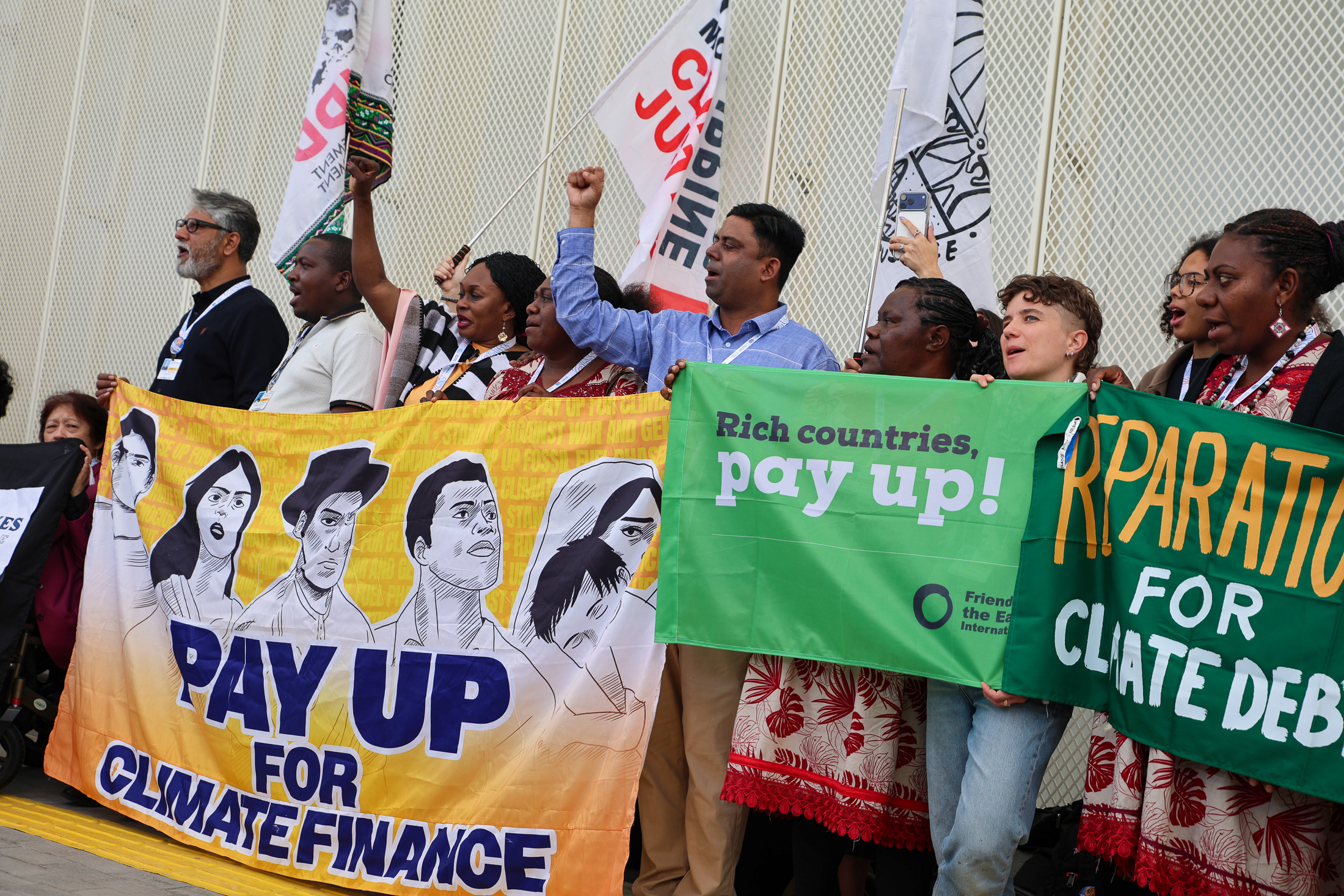
“We are not just happy to talk about access to finance,” Seid told reporters. “Developed countries, including the EU, really have to live up to their commitments of finance… Access to finance for SIDS is key for equity purposes, but the whole machinery needs to move.”
At COP31, a fundraising session organised by Australia to help Pacific nations fill a new fund for the region went by without governments pledging a single new cent, leaving it with less than half of its $500-million target for this year.
Mariana Paoli, who leads on climate justice policy for Oxfam, said rich countries should prioritise meeting their obligations to provide finance above making it easier to access.
“It’s not only a distraction, as all developing countries should have access as established in the Paris Agreement. But given how little has been provided by developing countries at COP31, this could be access to peanuts,” she said.
The post How COP31 fell short on easing access to finance for vulnerable nations appeared first on Climate Home News.
https://www.climatechangenews.com/2026/11/25/how-cop31-fell-short-on-easing-access-to-finance-for-vulnerable-nations/
Continue Reading
COP31 came to a dramatic close last weekend when a coalition of nations rejected the proposed “Antalya pact”, citing its failure to mention fossil fuels.
The tense final moments and lack of a much-anticipated “pact” have sparked extensive media coverage around the world.
Many commentators have rushed to label the COP31 outcome a “failure”, questioning what it means for the future of the UN climate process and a “divided world”.
There has been much finger-pointing, with some outlets attributing COP31’s “collapse” to “oil-rich nations”, while others blame Europe’s “reluctance” to provide more climate finance.
While it is not accurate to say there was “no agreement” at COP31, the media response demonstrates the complexity of the divergent views on display at the Antalya conference.
In this article, Carbon Brief draws together media reactions from around the world to show the diversity of responses to the COP31 outcome.
- What happened at COP31?
- What has the reaction to the presidency been?
- How has the role of oil-rich nations been portrayed?
- How has the role of developed nations been portrayed?
- How has the role of developing nations been portrayed?
- How has the role of China been portrayed?
- What does this mean for the consensus process and reform?
- Could COP31 send a ‘positive signal’?
What happened at COP31?
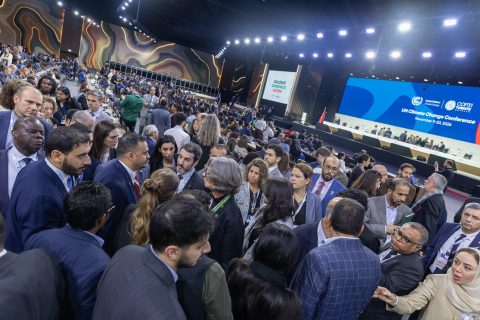
COP31 ended without agreement on a proposed “Antalya pact”, which had been pushed by the Turkey-Australia presidency.
The final text was rejected by at least 32 countries, including the EU, the UK and some climate-vulnerable countries, in chaotic scenes as the talks overran by two days.
An Irish Times editorial said the outcome was an “unprecedented ending of a COP without any agreement or roadmap forward”.
This view, while commonly expressed in the media, is incorrect.
As veteran “COP-watchers” explained for an article on CB Connect, the summit reached agreement on many decisions, even though the presidency’s “cover decision” failed.
Referring to the rejection of the cover decision, Melbourne University climate researchers Prof Jacqueline Peel and Prof Kathryn Bowen wrote in the Conversation that “these texts have always been add-ons to the formal negotiation process”.

They noted that there was “progress in a few areas” at COP31, including negotiations on supporting a just transition via a “phased approach” and “improving alignment in climate adaptation”.
For a full overview of what happened at COP31 – both inside and outside the negotiations – see Carbon Brief’s “key outcomes” article.
What has the reaction to the presidency been?
In the aftermath of COP31, commentators have critiqued decisions made by the presidency. An editorial in the Hindu noted that “usually, cover texts evolve as a final synthesis of deliberations”, but said the COP31 leadership “thought it fit to push for a cover text early in the proceedings”.
Australian “president of negotiations” Chris Bowen has also faced criticism over how he managed competing interests at the summit. An editorial in the climate-sceptic Australian said:
“One thing is clear: Chris Bowen, who presided over Australia’s $150m investment in the conference, has some explaining to do. International reporting has raised questions about Australia and Turkey, the two nations that co-hosted the summit. Some negotiators have criticised their handling of the talks.”