

Gulf Wind Technology Advances Wind Turbine Innovation
Allen Hall and Joel Saxum visit Gulf Wind Technology in New Orleans, where they sit down with CEO James Martin and CTO David King to explore the company’s innovative work in wind turbine technology. The conversation delves into Gulf Wind’s unique facility, their approach to solving industry challenges, and their role in developing wind energy solutions for the Gulf of Mexico.
Sign up now for Uptime Tech News, our weekly email update on all things wind technology. This episode is sponsored by Weather Guard Lightning Tech. Learn more about Weather Guard’s StrikeTape Wind Turbine LPS retrofit. Follow the show on Facebook, YouTube, Twitter, Linkedin and visit Weather Guard on the web. And subscribe to Rosemary Barnes’ YouTube channel here. Have a question we can answer on the show? Email us!
Pardalote Consulting – https://www.pardaloteconsulting.com
Weather Guard Lightning Tech – www.weatherguardwind.com
Intelstor – https://www.intelstor.com
Allen Hall: Welcome to the Uptime Wind Energy Podcast. I’m your host, Allen Hall, along with my cohost, Joel Saxum. And we are in New Orleans, Louisiana, of all places, at Gulf Wind Technology. And we have James Martin, who is the CEO of Gulf Wind Technology, and David King, the Chief Technical Officer at Gulf Wind Technology.
And first of all, welcome to the podcast, guys. Great to be here. Yeah, thanks for coming to visit us. We’ve had a wonderful time here today going through the Gulf Wind Technology. offices and workspace. It is impressive. It’s not something I knew we even had in the United States, honestly. And you guys have been working for a couple years on a variety of different projects and technologies.
And we had a meeting this morning, just full disclosure, about all the things that Gulfwind has been involved with. I’m like, whoa, all right, I didn’t know that. Some of it is top secret still, some of it not top secret. James, let’s just start with you. I think people in the U. S. don’t have a lot of experience, haven’t met you before, haven’t worked with Gulfwind.
Can you just give us a brief background on what Gulfwind Technology is as a business?
James Martin: Certainly, yeah. Gulfwind Technology, we are all first principles, blades engineers essentially, first. OEM industry for a number of years. We’ve seen some of the challenges that the industry is up against today, and we like to think that we can predict maybe some of the challenges for tomorrow.
So with that team, we’ve been able to build assets, equipment get ourselves out there as problem solvers and offering technology solutions to basically problems that can reduce the cost of energy over time. It gets talked about a lot. We’re going to talk about some of the assets we’ve invested in, but yeah, we’ve got reliability products that get involved with today.
The problems of today’s market. We’re really passionate about the products of tomorrow. So more performance projects for the future. And we love running projects. So we like, we specifically, we’ve been working in our region to open up or demystify, remove roadblocks for the Gulf of Mexico market.
Which have got some great technology problem statements in there
Allen Hall: Because that’s where we first heard of gulfwind was with the work with shell gulfwind, right?
Yeah, that’s It’s a double edged sword and we had you on the podcast in a sense because we were talking about the first wind turbine being Installed in louisiana and gulfwind is involved with that.
James Martin: Yeah, I mean we really thought Because a lot of our challenges about how to get technology to products how can we demonstrate that we can take it off a desktop study in terms of a solution or an idea, and how can we show it works? How can we de risk that for our customers? So the first thing we thought is that we really want to invest put our money where our mouth is, make sure that we can design, make sure we can test on a sub component level, make sure we can actually spin anything we’re talking about.
And yeah, demystify some of that technology, essentially. One of the things
Joel Saxum: Allen and I talk about regularly, whether it’s on the podcast or in our many Slack conversations every day, is the fact that there’s not a whole lot of technology development, either companies, solutions, services, coming out of the United States, right?
We know that we are a bit younger of a wind market as a whole than there is our European counterparts and a lot of solutions come out of them. So the, some of the performance enhancements, some of the those fixes that we’re talking about here, like you guys are working on. We’re sitting in this, you can see on the camera here, if you’re watching on the YouTube version, that we’ve got planes and we’ve got a rapid prototyping facility.
And we’ve got offices over here and people running around and There’s a lot of things that can go on here because they have the facility built for it. If you haven’t looked into it, both wind technologies and what it can bring to not only the global market, but the local U. S. Market. It’s huge. It’s a game changer for what we should be doing here, and more operators should be coming in here to talk with the team.
So with that being said, I know we’re in Louisiana. What is the rest of the team and the rest of the
James Martin: outfit look? Yeah, the core team and where we were founded is really here at the shipyard, Abendale Global Gateway. Yeah, this is almost the jewel in the crown of former glory North American manufacturing.
They used to manufacture giant ships here for the Navy, oil and gas projects. They had 26, 000 people here. So this, this 30, 000 square foot facility. It’s our true north. This is our headquarters. But we’ve got a fantastic, we got an engineering office actually in Hickory in North Carolina.
Dead center between Asheville and Charlotte where our chief engineer and our, some of our blade inspection and our loads teams sit. So it’s only a few people there, but they really much complement what we’re up to here.
David King: Yeah, no. And just as James mentioned, all we’ve really done is taken that, that jewel in the crown and filled it with all the things you need to Really understand the problem statements and when really dive into the hands on engineering work that’s needed to drive these problem statements into solutions.
And so that’s really why it’s been such a joy to be part of this Gulf wind team to build this team out is because we’ve been able to almost match that kind of handshake between engineering and hands on work in a very real substantive way. So you have
Joel Saxum: the engineering resources, but you’ve got the resources as well.
We’re in so everybody knows, the heat index here in Louisiana is 105 degrees, but it’s comfortable here, right? So we’re in an insulated air conditioned facility that is 125 meters long. And if I look through the camera here, I see this is where there’s a composite repair testing facility. We have rapid prototyping.
There’s a wind, there’s an actual wind tunnel that you guys built design. Had calibrated and are regularly using it down at that end. And so what you would need, like you said, is Hey, not only do we have engineering resources and all the smart people, but we have the capabilities of testing of, Hey, there is a solution.
What if we thought about this? Let’s action it here. Let’s test it out. Let’s build a piece and then put it in the test chamber. We were right over here earlier when we were walking around. Of course, we’re recording this sitting at a desk. We’re in full PPE walking through here. And there’s a material testing station and SNAP!
We had the energy. The sweet sound of composite failure. Yeah, that’s right. There we go. And then we all turned. Yay! Success, right? But those facilities and those capabilities are here. As an operator, you have a problem. You have a, you say you’ve got, you name the turbine XYZ turbine, and we’re starting to see this kind of issue in our fleet.
Call Gulf Wind Technologies. They could replicate the issue with them, get in the field, do the inspections, figure out what’s going on, come back here, fix it. Build what could be, will be the fix, test the fix,
David King: and make sure it works. And it’s really all about getting engineers as close to the problem statement as possible.
Whether that’s sending engineers up tower, having engineers stood around problem statements in a lab setting, or trying to bring the field into the lab to really break these problem statements down and understand them. As you go through that asset list, it’s been all about how do we remove these different barriers that we’ve seen in the past, slow down projects, make things take longer than they really should and allow us to move quite quickly and rapidly through that kind of prototyping that fail forward fast type mentality and get to something where we can actually offer a solution for a customer, whether that’s on the performance load side of thing with, like you mentioned, the wind tunnel or whether it’s testing materials, doing subcomponent testing, really just want to remove these barriers.
And as you mentioned a little bit earlier, With the the turbine down in Port Fouchon, that’s been a huge part of that as well, is what’s that, that, top of the testing pyramid where these problems really shake themselves out on these prototype turbines, and how can we, in a very quick, rapid, fast way, get to that prototype turbine level.
We can make blades for a turbine like that in a couple weeks, really, which allows us to, again, move super, super fast through these
Allen Hall: problems. And being so knowledgeable in blades, the root cause analysis ends up at your doorstep quite a bit in terms of engineering review in the United States.
That’s, seems to be a relatively growing business as people realize Gulfwind is here. They’re going to be tapping you to do that kind of work. What kind of root cause analysis work have you been doing lately?
James Martin: A lot of what we do is we treat a turbine like a it’s a production line for energy.
So we want to break it down in times of a very repeatable engineering based approach to the problems thing. You can brand it as a whether it’s a six sigma project and you’re breaking it down into those nice steps with gates, or it’s the first principles technology development project or product development project.
But we start with the business case. It all starts with that a customer. What do they want out of our solution? What’s their budget for it? What’s the time period that they want it both designed and implemented? How long do they want the solution to last for? So once you go through that defined stage, it then starts to, you’re setting up your design experiments, you’re putting your sandpit of engineers together so they can actually innovate.
And like David said, fail forward fast, but using all the tools around us. to make sure that we’re, working with the customer lockstep with them. We’re independent. We’ve got high integrity. We like to create areas for customers that they can come here. So customers can ship their full blades here.
And they can do it under very tight NDA terms, totally confidential. If we see a pattern, then we can approach those customers and actually in a very controlled way cross pollinate and create more consortia of driven environments, and switch. As we know, in this industry, it’s sometimes about removing the barriers, like we were talking about earlier on today, demystifying, getting as close a collaboration between an operator, an OEM, an independent, a field technician, what David was talking about, but creating that appropriate collaborative space to problem solve and then put a really robust solution together, something that is designed with its end intent which is You know, there’s no point doing something on a desktop or on a subcomponent level.
If by the time it’s deployed, that’s when you introduce the variation. So we, it’s all about de risking our approach, essentially.
Joel Saxum: On what, you’re just de risking what you guys do as a company. But in a grand scheme, you’re de risking what the global fleet looks like. So people can come here, like you said, operate in, under close NDAs.
But if they want to iterate with others, it’s available. Right now I’m looking at one, two, three, four blades, four or five root sections. Out beyond this door to my left, there’s eight or 10 full blade sections there. So customers have actually gotten to the point where they say we want to ship you a blade.
You guys figure it out. We may send some engineers, we may help out. But when we talk about on the podcast, a lot of. The Shroud of Secrecy around everything. You guys have created a facility. Basically, it For a lack of a better term, it’s an engineer’s playground. To come here and solve these problems for the industry.
Allen Hall: Yeah, and I think that gets back to the industry need. An operator has a problem with a blade, is probably not on a blade, is probably just a series of blades, have a similar issue. A lot of times when an RCA is done, there’s an engineer comes out to the field, takes some photos of the blade, They may take a couple of samples maybe, and then they’ll see a report shoved out on the other side.
And it doesn’t really get down to the heart of what is really causing the issue, and a lot of times companies that are doing RCA’s don’t have the mechanical ability to start breaking things apart, or cross sectioning, or doing NDA. That’s a huge advantage. Because if I’m a large operator, I’m going to send you that blade to tear it apart and figure out what’s going on because it’s not just one.
David King: It’s really about, approaching in that systematic way where, whether it’s, understanding failure modes, effects analysis, using that as a tool that extracts out what does that teardown need to look like? What do we need to be evaluating here? Is it we need to be doing mechanical testing, looking under the microscope at parts, approaching with a different inspection method?
And then ultimately, opening up for a period of time, maybe potentially some different innovative solutions around how you can approach a solution coming out of that RCA. So you’re not just identifying that problem, but you’re also starting to think ahead on what am I going to do about this problem?
How am I going to manage this at scale? How am I going to manage risk? And how am I going to do that? At that fleet level, I’d be thinking about that on the onset of the RCA to truly get the most value out of that exercise. And it’s
Allen Hall: not the really critical part, because when it comes down to it, it eventually becomes a money issue.
How do I minimize the cost impact and my downtime impact, my business interruption, to get these turbines back up and running so I can get through their useful lifespan? And I think, From what we’ve seen today, when technology has that expertise for sure, but also has a sense of what the business is.
I don’t need to extend a blade for another 20 years if it really only has 3 or 4 years of life in it. I need to get it to its end of useful life. That kind of repair is different than the 20 year repair. That knowledge, I think, is really important in how you apply engineering principles to that. So not every problem has the same solution.
James Martin: Yeah, no, I’m free matters. Absolutely. Yeah. And that, from our very first problem statement, there was a a life extension to get through to repower as you say, or whether it’s one of our more programmatic guess opportunities. So with the shell sponsored golf wind technology accelerator, that was about looking actually quite far in the future.
That was saying, Hey, this is a high risk environment with specific economic challenges. What does that look like? Like, how are we going to remove the barriers and how are we going to approach it? So we like looking, we look at today, we look at the reliability and we love applying that to what the future might be.
Allen Hall: So let’s walk through the hurricane scenario because this always comes up about the Gulf of Mexico and Shell anointed Gulfwind to be the company to go look at it. Really, that’s what happened. And that’s great. They obviously have done their homework and decided to come here and that’s, congratulations on that.
But, when you put a turbine out in the Gulf of Mexico, there’s always a concern in two phases. One, that it’s essentially low wind conditions, except when there’s a hurricane. Then it’s super high wind conditions. That requires a different kind of technology or approach to designing blades and you’ve been working on that for a little while.
Do you have that solution or are there multiple solutions? What does that look like? Because we want to put some wind turbines out in the Gulf of Mexico. How does that happen?
James Martin: Yeah, I mean from a programmatic approach and then I may hand it over to David on the blades approach but From a programmatic approach, it was about the whole ecosystem of wind in the Gulf.
Maybe just leaning out from just the blades part for a minute, but we talked a little bit about this. It was about the workforce, the infrastructure what can be leveraged from oil and gas to actually deploy and take percentage points out of the cost structure in the backyard of the Gulf. And you have just have to go down there to realize that.
It’s It’s a huge production system, and the stats are amazing, the amount of mileage of pipeline,
Joel Saxum: Platforms, workforce,
James Martin: cranes, so much stuff that can be transposed into wind. So it was looking at it from that cost of capital, from the economics of wind, from, workforce, training, equipment, deployment, servicing.
And then you start to think at the system level, okay, how can the rotor affect that? The foundation where the foundation design and I’ll hand the ball to David to talk about more of the rotor and the loads technology part because that’s also pretty damn interesting.
David King: No, absolutely. As James mentioned, it really has to be rooted in that business case.
If you’re just looking at things from an engineering problem solving point of view, it’s probably actually an easy problem to solve. You can put more material in a blade. You can put more expensive material in it. You can solve the problem. But what you haven’t done is you haven’t solved the economic problem.
So you’ve got to come into it. With an engineering hat on and an economic hat to make sure that you can really deploy turbines in an efficient manner that’s going to make that energy competitive and the open market and actually useful for everybody. Especially
Joel Saxum: in the Gulf, you’re going to be in the ERCOT market.
Exactly. That’s usually not a fixed PPA and you’re going to be playing with what’s going on there.
James Martin: Yeah, Texas side. Sure. No,
Joel Saxum: absolutely. Like there was a that’s Boehm
James Martin: sale off of Galveston’s. Yeah. And that, I’m in it. Yeah, I mean from a, we’ve learned a lot about that by bringing Parties to the table.
So we know our background is blades. We’ve got the assets to be able to demystify it. But on a programmatic approach, it’s about bringing in the experts and actually being quite humble about where are they going to be lessons learned. So we showed you a little bit earlier about where we can we like collaborating a lot.
So if we can have people that are experts in sighting, ground conditions, deployment aviation, lightning birds migratory patterns. It’s getting all the problems on the table and getting an appropriate size forum where people can talk frankly, and not, have a particular lens.
And that, so that collaboration piece is critical. Exactly, and that’s
David King: almost part of that optimization problem. If you’re, again, putting on an engineering hat now and listening to all those problem statements, how do you find that optimal solution that’s incorporating all those different, design curves, whether it’s a stakeholder management curve, whether it’s understand the economics, the loads, you can boil it down into a lot of different ways.
You want to find that lowest kind of intersecting point between those curves to solve the problem. So with, as you mentioned, the gulf low wind speed, you’ve got high loads. How do you solve that fundamental problem? That was your original question there. And what it really comes down to is loads management and being smart with your aerodynamics on the front end.
To be able to drive out the need for materials, drive out the amount of loads that are being experienced by those foundations. And basically, selecting airfoils appropriately, selecting your material appropriately, and being a bit creative with how you combine those things together. To without adding cost to that turbine, be able to reduce the load.
So it really boils down to a series of technologies that manage those loads appropriately, both from a structural performance point of view, an aero performance point of view, a controller point of view, and then validating that those things are going to work on a demonstration turbine on different scales.
And so that’s a lot of what the work’s been to date.
Joel Saxum: So if we wrap up that basically when Shell approached you guys, the Gulfwind Technology Accelerator, they were looking for an independent set of experts to bring in experts as you need, as consultants or whatever. But they were looking for someone independent to do a holistic review of how do we deploy this technology in this environment?
And it’s something that we talk about regularly. We wish that would happen in more emerging markets because, as it sits right now, offshore wind in the United States, it doesn’t matter if you’re in the East Coast, West Coast, California, the Gulf, it’s all an emerging market. And if you don’t understand that, then You haven’t looked at it deep enough because the east coast where we sit right now, there’s the maritime help, the vessels, the people, the expertise.
It seems to be that there’s a lot of lessons that a lot of those operators have from working in the North Atlantic. Great. However, when you get over to the United States, it’s a different problem. And we’re focusing on low speed, low wind speeds, hurricane force winds in the Gulf. That also exists on the east coast.
Yeah. Yeah, for sure. And I don’t know, and okay, I’m not a fly on the wall in those meetings of those operators and those OEMs, but I don’t know if they’ve taken that stuff into consideration or not. So I’m not saying that. Yeah. But that holistic, independent review all would love and really have an emerging market coming up on the west coast with the floating wheel.
So I would love to see some of those operators engage you guys for that same kind of holistic project to bring the whole, wrap the whole thing up. But as an independent and look at it from an. from different lenses, right? It’s not looking at it from where they sit and what they feel. It’s someone else telling them these are the realities.
James Martin: And the OEMs are they’re working on phenomenal programs and projects their own. So they’ve been really supportive of what we’re doing. So again, doing something in an emerging market, like you say the OEMs are very public that they’ve got. They’ve got a lot to focus on, they’re working about ramping up supply chains and, demonstrating that improving quality.
There’s a lot going on at the OEM level. So finding this niche and being between the OEM and the operator and collaborating in that space. Yeah, it’s, it, we’ve really enjoyed it. And I think it was very valuable for our stakeholders over the last couple of years. And it’s part of a multi year program.
So we really hope to be, talking to you guys about this over the next few years as we get to steel in the water.
Allen Hall: You’re dealing with a lot of blades. Joel and I walked around the facility and there are a lot of blades outside even, so there’s a lot of blade knowledge here. What are the top issues that operators on shore are having with blades at the moment?
David King: Yeah, so I can speak to that a bit. A lot of the issues are stemming from various types of damage that we’re seeing from erosion, which is your typical stuff your lightning strikes, that sort of thing. There’s a lot of problem statements right now around various manufacturing deviations, quality issues that might have found their way into the field that are resulting in cracked laminates, cracked balsa panel regions, core regions, things like that.
And really, a lot of these defects they need real true due diligence and understanding what’s going on with that problem statement. And again, coming back to that kind of understanding the business case for how we’re going to deal with these issues. Is it getting something to through to repower?
Is it getting a 20 year life out of it? Is it getting a two year life out of it? And again, it really comes back to understanding these first principle composite problems and seeing some of the similarities that are coming out of that, whether it’s a crack in the balsa region, a crack in the root region, a crack in the spar a lot of the, solutions have overlaps, have commonalities between them that you can piggyback off of.
And this goes back
Allen Hall: to the question of how do I monitor this? So it’s one thing to notice you have a crack. The second is, what do I do about it? And maybe the answer is nothing. And we’ve seen a number of continuous monitoring systems being applied just in that case and the question from every operator is how do I know that this CMS system works or which is the best one?
Or I have this particular application. Is there a particular CMS system that works in particular better for that kind of problem, that crack problem or that lightning problem, whatever it is, you’re looking at that.
David King: It’s all data collection at its fundamentals, right? Whether you’re using a drone inspection, whether you’re visually going out and looking at something, whether you’re using accelerometers, audible noise, acoustics any of these different systems out there, it’s all about really just trying to capture data in different forms and understanding what to do with those data streams.
And something we’ve seen is that each data stream might have a different way of capturing a different damage mode that you’re seeing on a blade. So the same solution is gonna apply to all damage modes, whether it’s an acoustic system or an accelerometer based system. And what we have been doing here at the GWA facility is trying to categorize and understand that in a lab setting and then try and expand out from that lab setting into how do things scale into the field.
In a controlled way, where you’re eliminating noise you’re getting rid of the things that are gonna cause variation in that data stream that allow you to not make an actual conclusion off of that. For example, one of the things we did is we built a spar box beam in house, and put that on one of our in house test rigs and put load into it.
And the first thing we want to do is actually have no defects, no damage on it. And what do all these systems detect when there’s no damage? What’s that baseline look like? So we’ve got comparable data later on. And then we can start introducing defects of different types, different distances from these these systems.
Start to categorize things in a very holistic view, and then start adding the complexities of how do the variables of the field apply over the top of that sort of controlled
Allen Hall: data set. And if I’m an operator, I don’t want to be calling David and getting hooked up with that because I have that problem.
Every operator that Joel and I have talked to over the last couple of years They all need monitoring of some sort. Every one of them needs a monitor. But they don’t know which one to choose. And we provide recommendations because we have knowledge of some of that, obviously. But we don’t have direct knowledge.
We have anecdotal knowledge.
Joel Saxum: Yeah. We don’t have the We can tell you it works Our own boxed And there’s
David King: a huge amount of value even in that anecdotal You know, I think that’s something that, data is obviously extremely important, but also how is that information being received often plays out in some of those anecdotal stories that I’m sure you guys have worked through personally, where maybe the data was confusing. Maybe it gave conflicting signals or things like that. And those are all important considerations. But
Allen Hall: there’s no place to go besides Gulfwind technology right now. Honestly, where are you going to go in the United States? I know of places that you could do it or you’re doing it’s up and running right now.
You’d have to start over somewhere else. This is why your leadership in the industry in the United States in particular is so valuable because we’re not, we’re ahead of where I thought we were. Yeah. Yeah. In terms of trying to solve problems. Yeah.
James Martin: And a lot of it’s about talking to, it’s like doing a gap analysis.
So early on we’d worked with the labs. I know you got, NRA and Sandia Labs, they’re phenomenal bonds. So they’ll, they’ve got, they’re a wealth of knowledge and they might be able to help us curate what we’re gonna invest in. Certainly you mentioned that turn the lights on, doing those blade autopsies.
So using the fact that it’s a shipyard, it’s very, you got a mile and a half of Mississippi River next door, we got 35 rail cars can roll onto site. We could have the largest blade in the world wheeled into the factory. That is, there’s something that we know is, we’re really proud that’s pretty unique.
And then cutting it up, polishing it, the racks of samples that we showed you earlier. But, turning the lights on, rather than looking around with a spotlight, and again, that’s something that we’ve we’ve found is extremely valuable for what we’re trying to do.
Joel Saxum: In with respect to, of course NDAs have in place, we don’t want to, we don’t want to lift anybody’s Hood too much.
But what are some of the other projects that you’re working on? We talked about the CMS thing. Can you give us a couple of them where it’s Miss, we’re doing this, we’re doing this, we’re doing that. Yeah.
David King: Yeah just going around the factory, a bit. We do a little bit of composite manufacturing.
Whether that’s, producing parts that can go in the field and put on a wind turbine. We can actually pre infuse a lot of parts that find their ways on to blades and solve problems in the field. In a variety of different manners. You mentioned the CMS problem statement.
We also do a lot of performance characterization. That involves a rapid prototyping lab where we’ll 3D print, scan airfoils, characterize airfoils, understand how erosion impacts performance, loads, a variety of different kind of factors. I think one of the key takeaways or kind of key facts for us coming out of that, the rapid prototyping lab is the ability to have an airfoil and CAD and turn it around to an air foil on the wind tunnel in less than five days.
That’s really the real aim of that whole entire facility there. So we do a lot of projects around that. We mentioned a little bit about RCA, so that’s receiving blade components, doing blade tear downs, looking at those blade parts under microscope, looking at them when they’re on a test stand, putting them underneath NDT and a laboratory setting a little bit different than sometimes doing that in the field.
Cutting sections out of them and actually, again, mechanically characterizing those sections as well. And then, mentioned a little bit about the wind tunnel testing. We do have the wind tunnel here, so we can do a variety of different test campaigns on that, whether that’s emerging technologies that somebody wants to validate, or whether it’s something that’s out in the field right now that someone wants to understand how that’s performing.
And then the other side of this is actually deploying solutions. As we speak today, we actually have two or three teams out in the field. One of those teams is doing uptower NDT inspections, so they’re inspecting blade roots uptower. They can do a turbine in about four hours or so, so it’s a quick turnaround.
We can get big deployment very fast with that team. We’ve got another team that’s actually doing repairs in the field today, and they’re deploying that repair with some bit of custom kit that we’ve got, whether it’s some custom equipment that we’ve developed in house to be capable of going uptower.
Equipment that maybe traditionally has always been thought of as a down tower solution or a down tower fix and basically applying composites, carbon fiber, specking them out so that we can bring them up tower. That’s been a huge element. And then also just more of some of your more traditional composite repairs in the field as well, where you’ve got trucks and trailers and, fiberglass get applied to blades.
So you can really cover a lot of the spectrum with those projects. And yeah, it certainly keeps us busy. Yeah. Yeah, when you look at your website,
Joel Saxum: there, you, if you like to read, Fantastic website. Yeah. But it shows I know Allen and I were looking at it before we came down here when we originally had talked with you on the phone and then it’s man, they do this, and they can do that, and they can do this, and they can do that.
It’s man, okay, what’s the next page? They can do this, too. They can do that, too. Basically if you have a page, whether it is leading edge erosion on a blade that you just need fixed all the way to, rapid prototyping and testing things to the nth degree you guys can solve.
James Martin: Yeah. And that we’re a young company and we certainly have been involved with a lot of problem statements.
Like you say David talks about some things that are getting deployed, but yeah, really specializing in that route region up tower. Repair and life extension. That’s something we’re really proud of. We’ve done a lot of work on for almost three years now. And yeah, just moving into something that can be deployed as as engineers intended it to be deployed.
So a lot of. Kind of first principles in terms of lean and repeatability. Just making sure that you don’t have any risk when you take it out of the tech center and put it into the field.
David King: And a lot of that comes down to the cross functionality of the team. I think James mentioned earlier a little bit about the North Carolina office and some of the different skill sets around the team.
But when we were building out the team, we started out with, almost like an inputs, outputs look on the design of a turbine, right? So we’ve got. Site assessments. We’ve got loads, understanding the loads of the system level, understanding those loads at the blade level and then understanding the loads within the blade.
So structural engineering composite material engineering, then understanding how are those processes developed and having process engineers on the team that have got, hands on composite experience, have spent decades in factories building things, repairing things, doing the full spectrum of that side of it and really trying to bring again all that different cross functionality into one roof so that we’re not, Blind to maybe certain areas of that design where we might be trying to put out a solution or a repair method that, that isn’t taking into account that full spectrum of what else might we be affecting?
And that’s really where that team plays out quite well.
Allen Hall: Yeah, you have a lot of talented people on your team and to be such a young company, to have that lineup of people on your staff, it’s impressive. There’s a huge resume behind these names. That says a lot. As an operator, I want to go to a company that has people that have worked for OEMs in the industry a little while and understand what composites are and what repairs are and what can go wrong out in the field, which is the front.
I think the big problem is that we do a lot of things engineering wise that when getting to the hands of a technician that’s not familiar with the problem’s scope, mistakes are made. And we went through a number of scenarios here. That hey, we’re looking at what the technicians could do taking away the variability of this or if there is variability It’s not gonna affect the overall performance.
Those are huge. That’s such a huge advantage besides Repair in the repair world you get a repair instruction sheet and it just says do X but X rarely happens the way
James Martin: We’re having a compliment what’s going on in the OEM and the operator level. I think that’s What the feedback loop that we get from OEMs and operators that we’re in the right space.
We do have a pretty romantic idea of the future in terms of wind. We believe in wind. We’ve been with veterans of the industry. We know there are cycles. We know there are challenges. But we, ultimately we’ve seen innovation get to product. We’ve seen rotor sizes increase. We’ve seen quality increase even though there are sensitivities on quality.
We’ve seen a lot of good, steps forward. It’s a young industry in the scheme of things versus some of the other industries we talked about. But yeah, you’re right. You need the talent. You need the culture. You need the collaboration that we talked about a lot today So yeah, we’re optimistic.
Allen Hall: Yeah. James, where does Gulfwind technology go from here? What’s the next year or two look like?
James Martin: The next year or two, I think, like David alluded to, we really want to scale a lot of our early TRL projects from a couple of years ago and maturing. So working through that technology readiness spectrum.
And, we’re in pre series, as David said, for a number of things. So deployment on you really, putting the rubber on the road, and getting some of these things out there in alignment with the customer risk profile. But we also love innovating. We secured our first Wind Energy Technologies Office, SBIR DOE loan grant last year.
Big difference. But that was fantastic because we get to fund some of the white paper innovations that we’re pretty passionate about as well. You have consortia. It’s never done in isolation. OEMs, labs, operators, universities, colleges. So we look forward to doing stuff like that. Of course we do.
And there’s going to be more of that to come. But yeah, really de risking and keeping very tight reins on how we get our product out there. That’s what looks for the next year or so.
Allen Hall: So James, how do people find you on the internet? How do they connect with you?
James Martin: Okay, so we we’ve got our very lengthy website that we’re very proud of.
So golfwindtechnology. com. We are trying to get better on LinkedIn about talking about what we’re doing. In terms of what is out there that we can talk about. And, yeah, we really enjoy going to all these array of shows out there.
Allen Hall: If you’re down in New Orleans stop by and check out the facility because it is impressive.
James and David, thank you so much for inviting us to New Orleans and to see the facility. It is well worth the trip. And learned a ton visiting with you today. Thank you so much.
James Martin: Thank
Allen Hall: you, guys.
James Martin: Absolute pleasure. Thank you.
https://weatherguardwind.com/gulf-wind-technology-advances-innovation/

 All I can say about the me here is that personally I refused, against considerable pressure from my family, to indoctrinate my children into something I myself could not accept.
Is it actually “psychological abuse” to indoctrinate children into monotheistic religion? Whether to take it that far is an open question.
My parents, both atheists, sent my brother and me to Sunday School, as they thought it wrong to cut us off from a modality of growing up in America in the early 1960s. I don’t blame them, but again, it’s not something I was willing to replicate with my own children.
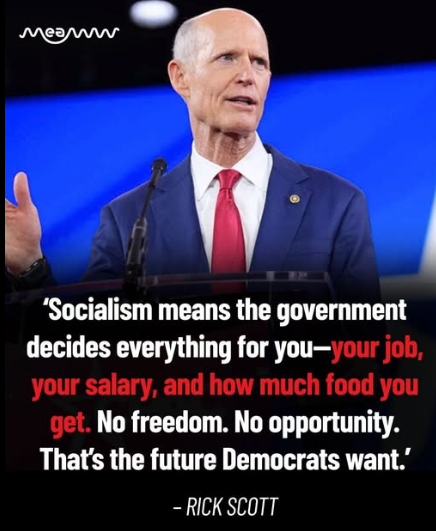 In less than a month, we’re going to learn how many idiots are buying this socialism crap.
Sure, there are people who don’t know anything about the way people live in northern England, New Zealand, Costa Rica, etc. Most of these people couldn’t find these countries on this globe.
But how many can there possibly be?
Clearly, Republicans are desperate, but isn’t asking voters to believe that the Swedes have to rely on the government for their job, salary, and food a bit over-the-top?
 I got the meme here from a neighbor, but I wonder who actually w