

Fungi are learning to adapt to climate change, posing a major threat to human health.
Fungal infections range from minor conditions, such as athlete’s foot, to life-threatening respiratory diseases and bloodstream infections.
Fungi are known for their ability to adjust to – and thrive in – new and changing environments.
Now, they are learning to adapt to the rising temperatures, changing rainfall patterns and extreme weather events that characterise a warming planet.
This is increasing their ability to colonise and cause disease in the human body.
However, there is a severe lack of diagnostics, treatments and vaccines available for fungal infections – and fungal resistance to existing drugs is on the rise.
An increase in fungal infections driven by climate change could also have devastating consequences for agriculture, damaging crops and threatening food security.
New fungal pathogens
Fungi are one of five “kingdoms” of life on Earth – putting them in a distinct category separate from animals or plants.
There are millions of fungal species – from saccharomyces cerevisiae, or baker’s yeast, to penicillium chrysogenum, which is the source of the antibiotic penicillin.
Fungal infections can be transmitted to humans through direct contact in the environment, with contaminated surfaces or via infected individuals.
Historically, most fungi do not cause disease in humans, meaning they are not “pathogenic”.
This is because – unlike viruses and bacteria – most fungi cannot survive or spread in body temperatures of 37C.
But, as global temperatures rise, some fungi are adapting to survive in hotter environments, including the human body.
(How fungi adapt to their environments is still not fully understood. However, their large genomes and diverse metabolic pathways – the chemical reactions which allow organisms to function – are thought to play a key role in their ability to survive and grow in a wide range of conditions.)
An example of this is candida auris, a fungal infection that emerged simultaneously on three continents in the late 2000s. The fungus mostly infects people with weakened immune systems and is a real concern as it can cause bloodstream infections. It is a serious problem in intensive care units, where the fungus sticks to medical equipment and grows rapidly.
Many infection, prevention and control measures are unable to get rid of it. Candida auris is already resistant to several antifungal drugs, making it very challenging to treat. One study in Oman, for example, recorded a fatality rate over more than 50%.
Due to lack of surveillance and routine monitoring, we do not know exactly how many people are impacted by candida auris infections.
To address this, the World Health Organization Global Antimicrobial Resistance and Use Surveillance System (WHO-GLASS) – a programme that provides a standardised approach to collect and analyse data for antimicrobial resistance surveillance – has included a protocol for candida auris.
Candida auris is one of four fungal species identified by the World Health Organization (WHO) as a “critical” threat to public health, alongside aspergillus fumigatus, candida albicans and cryptococcus neoformans.
Scientists have pointed to the likelihood that the emergence of candida auris is being driven by rising temperatures caused by climate change.
A 2022 study noted that higher temperatures driven by human-caused climate change may have added “selective pressure” on candida auris – leading to the spread of strains “adapted to salinity and higher temperatures – similar to the conditions found in the human body”.
The emergence of candida auris is just one example of how climate change is exacerbating fungal infection.
A study currently undergoing peer review suggests that – without effective strategies to tackle climate change – the aspergillus family could expand its reach to more northerly swathes of Europe, Asia and the Americas, exposing more people to life-threatening respiratory infections as temperatures rise.
Aspergillus infections can cause permanent damage to lungs and lead to serious illness in individuals with existing respiratory conditions or weakened immune systems.
Extreme weather
Rising temperatures are not the only cause of rising fungal infections linked to climate change.
Changing rainfall patterns, increasing humidity and worsening extreme weather events are also driving fungal pathogens to new areas.
Heavy rainfall, flooding and humidity leads to increased moisture in homes, increasing the growth of indoor mould. Mould – which encompasses a diverse group of fungal species – can cause substantial health impacts when inhaled for those with underlying health conditions, such as asthma.
Meanwhile, extreme weather events, such as wildfires and floods, transport fungal pathogens to new regions by spreading spores far beyond where they would typically be found. This increases the threat fungi pose to both human health and agriculture.
For instance, the fungus coccidioides, which is found in soils in the south-western US and parts of central and South America, causes valley fever – a lung infection which can be fatal to humans and animals.
Outbreaks occur when extreme events, such as wildfires, disturb large amounts of soil and spread fungal spores into the air. These enter the human body when inhaled. Cases are often unreported, but it is estimated that the fungi causes around 206,000-360,000 cases per year in the US.
The fungus thrives in a hot and dry climate. Coccidioides is now being seen in regions that would not normally support its growth, as the climate heats up.
A 2019 study used climate models to project that the range of valley fever could expand into more northerly US states such as Idaho, Wyoming and Nebraska. It also estimates that, by 2100, cases across the US could rise by approximately 50% as more regions develop climates suitable for transmission.
Threatening food security
Fungal pathogens also threaten human health indirectly by damaging harvests and causing a range of plant diseases, including blights, root rot and mildew.
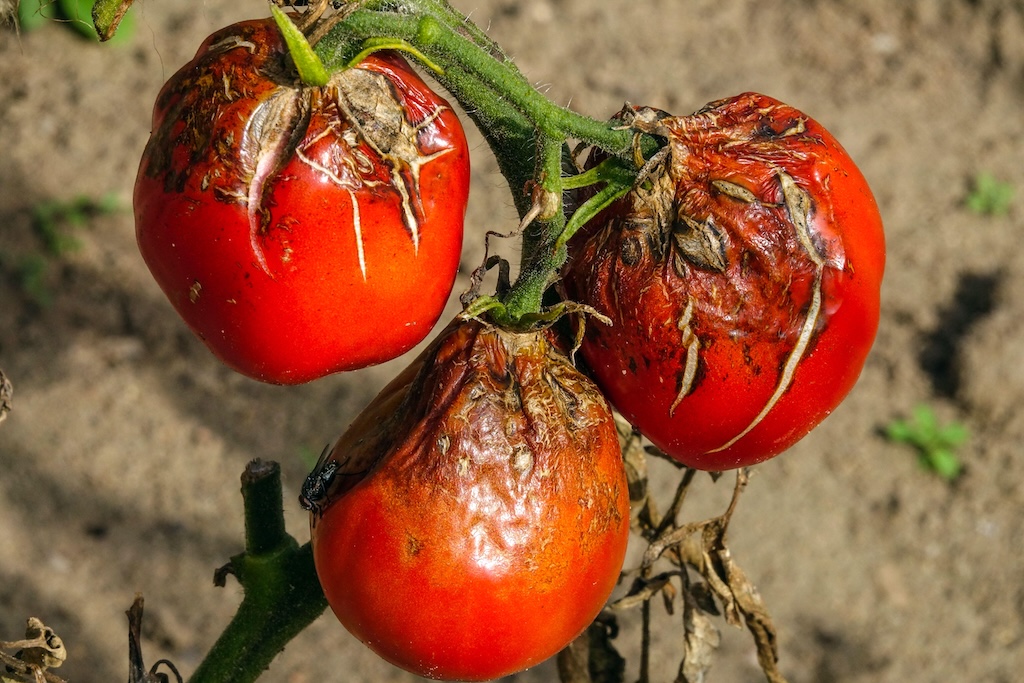
Fungi are a key part of soil ecosystems, but plant pathogenic fungi can cause growers to lose between 10-23% of their crops every year – and a further 10-20% after they are harvested, as food that is incorrectly stored goes mouldy at different points of the supply chain.
Rising temperatures can spread and introduce more pathogens to an area, which can reduce harvests and, in some cases, wipe out entire crop families. This could result in food insecurity globally and economic instability in regions that rely on agricultural exports.
Modern agriculture’s reliance on growing genetically uniform crops, known as monocultures, puts the global food system at increased risk of fungal disease, as pathogens learn how to colonise crops.
Developments in the global banana market are a prominent example of the threat posed by fungus to crops. In the 1950s, the Gros Michel banana – once the main export variety of banana – was wiped out by a disease caused by the fungus fusarium oxysporum.
Now, the banana variety that was grown and exported in its place – the Cavendish banana – is under threat by a new strain of fusarium. This poses a major threat to the global banana trade, given that the Cavendish banana accounts for 47% of banana production and virtually all bananas supplied to the US and Europe.
In another example, the fusarium graminearum fungus, which flourishes in wet conditions and warm temperatures, causes a disease that is thought to cause wheat and barley yield losses amounting to more than $1bn every year.
Rising antifungal resistance
The spread of fungal infections caused by climate change is particularly concerning given the lack of available treatment options, as well as limited awareness among the public and healthcare professionals.
Most healthcare professionals receive little training around how to identify fungal infections, leading to delayed diagnosis and treatment. In the developing world, fungal infections can be deadly because both awareness and access to diagnostic tests are lacking.
There are just four types of antifungal drugs and no approved fungal vaccines.
Antifungal treatments are harder to develop than antibiotics because fungi are more biologically similar to humans than plants – making them difficult to kill without harming human cells.
Meanwhile, resistance to the antifungal drugs that are available is growing.
The fungicides used to kill fungi in agriculture often share “modes of action” with medical antifungals. The overuse of these fungicides has led to fungi in the environment building up their resistance – creating hardier fungi that are more difficult to treat in clinical settings.
As climate change puts additional stress on the food system, the risks and benefits of using fungicides to ensure food security need to be balanced with safeguarding the effectiveness of antifungal drugs.
However, there is limited communication between agricultural and medical sectors around how to juggle these priorities.
And yet – despite all these challenges – fungal infections receive a fraction of the funding and attention that bacterial or viral diseases do.
Fungi that tackle climate change
Fungi have historically been an asset in medical research – most notably the discovery of the drug penicillin. They could also prove valuable in the fight against climate change.
Some fungi are used to suppress populations of pests or pathogens in agriculture. This method – known as natural biocontrol – uses fungi, or other forms of naturally occurring organisms – such as bacteria, insects or viruses – as a replacement for chemical pesticides.
Natural biocontrol is seen as a more environmentally friendly method for treating crops than manmade chemicals because the organisms break down naturally in the environment and do not leave toxic residues in the soil.
Meanwhile, researchers have also found that mycorrhizal fungi – which grow in association with plant roots – store roughly 13bn tonnes of carbon (GtC) – equivalent to 36% of annual global fossil fuel emissions. The fungus does this by absorbing carbon from plants and locking it in their underground networks and soil, where it stays stable for long periods.
There are groups looking at how the mycorrhizal fungi could be harnessed to help deliver decarbonisation – similar to tree planting.
However, more research is needed to better understand the valuable properties of fungi, including how they could be part of “nature-based solutions” to help tackle climate change.
Discovering the unknown
There is still a lot that remains unknown about fungi. Scientists estimate that less than 10% of all species have been identified globally.
Fungi are essential to healthy ecosystems. They recycle nutrients by breaking down organic matter and play a critical role in the carbon cycle.
But climate change is disrupting this balance. Rising temperatures and environmental shifts threaten to wipe out some fungal species before they’re even discovered, while enabling others to thrive in new – and often harmful – ways.
These changes signal deep trouble for the natural world.
It is, therefore, critical that more scientific attention is paid to the risks and opportunities of fungi as they learn to adapt to a warmer climate.



The post Guest post: Fungal infections are adapting to climate change – and threatening public health appeared first on Carbon Brief.
Guest post: Fungal infections are adapting to climate change – and threatening public health

Drought and heatwaves occurring together – known as “compound” events – have “surged” across the world since the early 2000s, a new study shows.
Compound drought and heat events (CDHEs) can have devastating effects, creating the ideal conditions for intense wildfires, such as Australia’s “Black Summer” of 2019-20 where bushfires burned 24m hectares and killed 33 people.
The research, published in Science Advances, finds that the increase in CDHEs is predominantly being driven by events that start with a heatwave.
The global area affected by such “heatwave-led” compound events has more than doubled between 1980-2001 and 2002-23, the study says.
The rapid increase in these events over the last 23 years cannot be explained solely by global warming, the authors note.
Since the late 1990s, feedbacks between the land and the atmosphere have become stronger, making heatwaves more likely to trigger drought conditions, they explain.
One of the study authors tells Carbon Brief that societies must pay greater attention to compound events, which can “cause severe impacts on ecosystems, agriculture and society”.
Compound events
CDHEs are extreme weather events where drought and heatwave conditions occur simultaneously – or shortly after each other – in the same region.
These events are often triggered by large-scale weather patterns, such as “blocking” highs, which can produce “prolonged” hot and dry conditions, according to the study.
Prof Sang-Wook Yeh is one of the study authors and a professor at the Ewha Womans University in South Korea. He tells Carbon Brief:
“When heatwaves and droughts occur together, the two hazards reinforce each other through land-atmosphere interactions. This amplifies surface heating and soil moisture deficits, making compound events more intense and damaging than single hazards.”
CDHEs can begin with either a heatwave or a drought.
The sequence of these extremes is important, the study says, as they have different drivers and impacts.
For example, in a CDHE where the heatwave was the precursor, increased direct sunshine causes more moisture loss from soils and plants, leading to a drought.
Conversely, in an event where the drought was the precursor, the lack of soil moisture means that less of the sun’s energy goes into evaporation and more goes into warming the Earth’s surface. This produces favourable conditions for heatwaves.
The study shows that the majority of CDHEs globally start out as a drought.
In recent years, there has been increasing focus on these events due to the devastating impact they have on agriculture, ecosystems and public health.
In Russia in the summer of 2010, a compound drought-heatwave event – and the associated wildfires – caused the death of nearly 55,000 people, the study notes.

The record-breaking Pacific north-west “heat dome” in 2021 triggered extreme drought conditions that caused “significant declines” in wheat yields, as well as in barley, canola and fruit production in British Columbia and Alberta, Canada, says the study.
Increasing events
To assess how CDHEs are changing, the researchers use daily reanalysis data to identify droughts and heatwaves events. (Reanalysis data combines past observations with climate models to create a historical climate record.) Then, using an algorithm, they analyse how these events overlap in both time and space.
The study covers the period from 1980 to 2023 and the world’s land surface, excluding polar regions where CDHEs are rare.
The research finds that the area of land affected by CDHEs has “increased substantially” since the early 2000s.
Heatwave-led events have been the main contributor to this increase, the study says, with their spatial extent rising 110% between 1980-2001 and 2002-23, compared to a 59% increase for drought-led events.
The map below shows the global distribution of CDHEs over 1980-2023. The charts show the percentage of the land surface affected by a heatwave-led CDHE (red) or a drought-led CDHE (yellow) in a given year (left) and relative increase in each CDHE type (right).
The study finds that CDHEs have occurred most frequently in northern South America, the southern US, eastern Europe, central Africa and south Asia.

Threshold passed
The authors explain that the increase in heatwave-led CDHEs is related to rising global temperatures, but that this does not tell the whole story.
In the earlier 22-year period of 1980-2001, the study finds that the spatial extent of heatwave-led CDHEs rises by 1.6% per 1C of global temperature rise. For the more-recent period of 2022-23, this increases “nearly eightfold” to 13.1%.
The change suggests that the rapid increase in the heatwave-led CDHEs occurred after the global average temperature “surpasse[d] a certain temperature threshold”, the paper says.
This threshold is an absolute global average temperature of 14.3C, the authors estimate (based on an 11-year average), which the world passed around the year 2000.
Investigating the recent surge in heatwave-leading CDHEs further, the researchers find a “regime shift” in land-atmosphere dynamics “toward a persistently intensified state after the late 1990s”.
In other words, the way that drier soils drive higher surface temperatures, and vice versa, is becoming stronger, resulting in more heatwave-led compound events.
Daily data
The research has some advantages over other previous studies, Yeh says. For instance, the new work uses daily estimations of CDHEs, compared to monthly data used in past research. This is “important for capturing the detailed occurrence” of these events, says Yeh.
He adds that another advantage of their study is that it distinguishes the sequence of droughts and heatwaves, which allows them to “better understand the differences” in the characteristics of CDHEs.
Dr Meryem Tanarhte is a climate scientist at the University Hassan II in Morocco, and Dr Ruth Cerezo Mota is a climatologist and a researcher at the National Autonomous University of Mexico. Both scientists, who were not involved in the study, agree that the daily estimations give a clearer picture of how CDHEs are changing.
Cerezo-Mota adds that another major contribution of the study is its global focus. She tells Carbon Brief that in some regions, such as Mexico and Africa, there is a lack of studies on CDHEs:
“Not because the events do not occur, but perhaps because [these regions] do not have all the data or the expertise to do so.”
However, she notes that the reanalysis data used by the study does have limitations with how it represents rainfall in some parts of the world.
Compound impacts
The study notes that if CDHEs continue to intensify – particularly events where heatwaves are the precursors – they could drive declining crop productivity, increased wildfire frequency and severe public health crises.
These impacts could be “much more rapid and severe as global warming continues”, Yeh tells Carbon Brief.
Tanarhte notes that these events can be forecasted up to 10 days ahead in many regions. Furthermore, she says, the strongest impacts can be prevented “through preparedness and adaptation”, including through “water management for agriculture, heatwave mitigation measures and wildfire mitigation”.
The study recommends reassessing current risk management strategies for these compound events. It also suggests incorporating the sequences of drought and heatwaves into compound event analysis frameworks “to enhance climate risk management”.
Cerezo-Mota says that it is clear that the world needs to be prepared for the increased occurrence of these events. She tells Carbon Brief:
“These [risk assessments and strategies] need to be carried out at the local level to understand the complexities of each region.”




The post Heatwaves driving recent ‘surge’ in compound drought and heat extremes appeared first on Carbon Brief.
Heatwaves driving recent ‘surge’ in compound drought and heat extremes
Greenhouse Gases
DeBriefed 6 March 2026: Iran energy crisis | China climate plan | Bristol’s ‘pioneering’ wind turbine
Welcome to Carbon Brief’s DeBriefed.
An essential guide to the week’s key developments relating to climate change.
This week
Energy crisis
ENERGY SPIKE: US-Israeli attacks on Iran and subsequent counterattacks across the Middle East have sent energy prices “soaring”, according to Reuters. The newswire reported that the region “accounts for just under a third of global oil production and almost a fifth of gas”. The Guardian noted that shipping traffic through the strait of Hormuz, which normally ferries 20% of the world’s oil, “all but ground to a halt”. The Financial Times reported that attacks by Iran on Middle East energy facilities – notably in Qatar – triggered the “biggest rise in gas prices since Russia’s full-scale invasion of Ukraine”.
‘RISK’ AND ‘BENEFITS’: Bloomberg reported on increases in diesel prices in Europe and the US, speculating that rising fuel costs could be “a risk for president Donald Trump”. US gas producers are “poised to benefit from the big disruption in global supply”, according to CNBC. Indian government sources told the Economic Times that Russia is prepared to “fulfil India’s energy demands”. China Daily quoted experts who said “China’s energy security remains fundamentally unshaken”, thanks to “emergency stockpiles and a wide array of import channels”.
‘ESSENTIAL’ RENEWABLES: Energy analysts said governments should cut their fossil-fuel reliance by investing in renewables, “rather than just seeking non-Gulf oil and gas suppliers”, reported Climate Home News. This message was echoed by UK business secretary Peter Kyle, who said “doubling down on renewables” was “essential” amid “regional instability”, according to the Daily Telegraph.
China’s climate plan
PEAK COAL?: China has set out its next “five-year plan” at the annual “two sessions” meeting of the National People’s Congress, including its climate strategy out to 2030, according to the Hong Kong-based South China Morning Post. The plan called for China to cut its carbon emissions per unit of gross domestic product (GDP) by 17% from 2026 to 2030, which “may allow for continued increase in emissions given the rate of GDP growth”, reported Reuters. The newswire added that the plan also had targets to reach peak coal in the next five years and replace 30m tonnes per year of coal with renewables.
ACTIVE YET PRUDENT: Bloomberg described the new plan as “cautious”, stating that it “frustrat[es] hopes for tighter policy that would drive the nation to peak carbon emissions well before president Xi Jinping’s 2030 deadline”. Carbon Brief has just published an in-depth analysis of the plan. China Daily reported that the strategy “highlights measures to promote the climate targets of peaking carbon dioxide emissions before 2030”, which China said it would work towards “actively yet prudently”.