SYDNEY, Friday 9 October 2026 — In response to the Environment Protection Order issued by the National EPA to stop deforestation at a cattle station in North Queensland, the following comments can be attributed to Adele Chasson, Nature Policy Lead at Greenpeace Australia Pacific:
“Greenpeace welcomes the Environment Protection Order to stop deforestation operations at Wombinoo Station in North Queensland. This order is good news for koalas, wildlife and the Great Barrier Reef. Without intervention, this bulldozing operation could have led to more than 1,000 tonnes of toxic sediment runoff flowing into the Great Barrier Reef every year. This is the first such order under the reformed national nature laws, and shows the potential for genuine environment protection provided strong action continues.
“But this is just one station in one state, and now we need rapid action. Rampant deforestation in Australia continues to destroy precious forests, pushing threatened animals like the koala to the brink of extinction, and poisoning the Great Barrier Reef with muddy runoff. Every minute, the equivalent of a dump truck of sediment enters the Reef, smothering coral and threatening our global icon.
“This first stop order is a great start, but the Albanese government must stop widespread deforestation threatening the Great Barrier Reef and endangered wildlife using the new nature laws. We need a no-go zone plan for the Great Barrier Reef to reign in the bulldozing of forests in the catchment area, and for the National EPA to use the full extent of its powers to catch bulldozers in real time and crack down on deforestation with strong sanctions.
-ENDS-
‘Good news for wildlife’ as EPA puts stop order on Qld cattle station deforestation

Going into COP31, co-president Australia had talked up its plan to use the summit as an opportunity to make it easier for vulnerable countries to access climate finance. But during the two-week talks in Turkiye, the effort flopped when it failed to secure support from the very nations it intended to help.
An action plan and statement on improving access to finance for small island developing states (SIDS) and least-developed countries (LDCs) was presented at October’s pre-COP meeting in Fiji, and opened for governments to endorse.
But when the plan did not get enough backing at the COP, including from SIDS and LDCs, it was quietly buried and an advisory committee was quickly cooked up as an alternative.
Raju Pandit Chhetri, lead climate finance negotiator for the LDCs, said the group had not been able to support the plan, as with SIDS, because they felt their views had not been taken on board during consultations.
In addition, the plan lacked concrete measures to bring about real change and put too much emphasis on private finance which often does not flow to the poorest countries, he said.
“There was just… very little conversation on the process itself, and then there was less time to build that trust between the two groups in bringing them on board,” he told Climate Home News.
While the LDCs appreciated the co-presidency’s support in elevating the issue, Australia did not reopen the text as requested during COP, because some countries had already backed it, Chhetri added.

Ilana Seid, a Palauan diplomat who chairs the Alliance of Small Island States (AOSIS), told Climate Home News in Antalya that the unclear status of the plan was another obstacle. “It was very confusing whether the declaration was in the [UN climate] process or outside,” she said.
“AOSIS negotiators were saying we don’t want to spend a lot of time and energy negotiating a declaration that is not in the process because it’s not legally binding,” she added.
Cover decision proposal also dropped
Despite the lack of clear backing for the action plan, Australia’s President of Negotiations Chris Bowen promoted it in his opening speech at COP31.
The focus, he said, would be a practical objective: “making access to finance faster and simpler”, as well as strengthening project pipelines and jointly mobilising public and private investment.
He later told a press conference that only a fraction of climate finance goes to LDCs and SIDS. The latter receives only 0.2% of international finance for adaptation, according to a 2025 report from Climate Policy Initiative. “That may not be good enough,” Bowen added.
When asked about the status of the action plan during the second week of COP31, the Australian minister responded: “For now, we are going to focus on the advisory committee.” He also told Climate Home News to wait and see if the issue appeared in the cover decision.
-
COP31 Bulletin Day 13: Talks fail as many countries reject main deal
The EU, the AILAC group of Latin American states and the Least Developed Countries (LDCs) said they could not accept the draft “Antalya Pact” -
What was agreed – and not agreed – on key issues at COP31 talks?
Climate Home News walks you through the main outcomes on negotiated items, ranging from finance to adaptation and carbon markets


At that time, the first draft included a request to the UNFCCC’s Standing Committee on Finance to develop a methodology for assessing access to climate finance, including information on regional challenges.
But the final presidential proposal for the so-called “Antalya Pact” did not include such a proposal. Instead, it reiterated the importance of improving access to finance, focusing on reform of the multilateral financial architecture, including development banks and climate funds.
The only activity proposed within the UN climate process was a series of annual workshops to facilitate exchange of information, monitor progress and decide next steps on the topic. But as the draft pact was never adopted, nothing was ultimately agreed on the way forward.
Advisory committee to take it forward
That leaves the advisory committee, announced at a ministerial event on the topic during the first week of COP31, as the only practical outcome. “It’s designed to answer the question on how do we work with development banks to engage with us on practical solutions,” Bowen told journalists.
“Often those nations – the small island states and also the LDCs more broadly – don’t have the capacity to deal with complicated application processes,” he added.
The core group working on the committee so far consists of Australia, the UK, Ireland, Palau and Cape Verde, although others can still join.
AOSIS chair Seid said the group will work towards improving access to finance from climate funds and multilateral development banks, without needing to negotiate a document.
Fig leaf for rich nations
During COP31, developed countries played up strengthening access to finance as a priority. This was particularly the case with the European Union, which pointed to it often in response to questions about whether it was planning to provide more climate finance.
“That’s what is important. It’s not a big new quantum,” said Irish minister Darragh O’Brien, representing the presidency of the EU Council.
UN climate chief Simon Stiell told a ministerial dialogue on the topic that developing countries were currently required to “hack through a thicket of complex requirements and administrative tasks”.
Key ways to improve this include simplifying access procedures, coordinating better between financial institutions and reducing red tape, he added.
International climate funds have acknowledged that lengthy approval processes for projects create a barrier to access and some have already begun implementing changes.
The Green Climate Fund’s executive director, Mafalda Duarte, told the same event her fund has been working to cut the time it takes to evaluate and approve projects, and to deliver the first tranche of funding.
Building local capacity
Developing countries agree that shortening deadlines and streamlining administrative procedures are necessary to help get money to the ground faster.
Morocco’s minister of energy, mines and sustainable development, Charafat Afailal, told an access to finance roundtable at COP31 that the current complexity is not caused by a lack of human resources in developing countries, but by the process itself. “It takes a long time. It’s not a productive process,” she said.
Rich countries must step up to replenish Green Climate Fund, Duarte says
Some representatives of other African countries, meanwhile, raised the importance of working directly with local institutions rather than channelling money through international agencies, as often happens.
“We must strengthen human institutional capacity, local institutional capacities… and move away from dependence on ineffective international technical and fiduciary intermediaries,” Gabon’s Vice President Alexandre Barro Chambrier, said at the event.
Access to “peanuts”
France’s Minister for Ecological Transition Monique Barbut argued at the same roundtable that “access will not be solved by increasing the volume of climate finance”.
“The amount of climate finance is less than $100 billion [a year], and we are facing a clear issue of access to finance from SIDS and LDCs. Reaching $200 or $300 billion will not solve this problem – so we need to work on access independently of the amount of public finance that is available,” she emphasised.
Countries most exposed to climate impacts say both problems should be addressed at the same time.
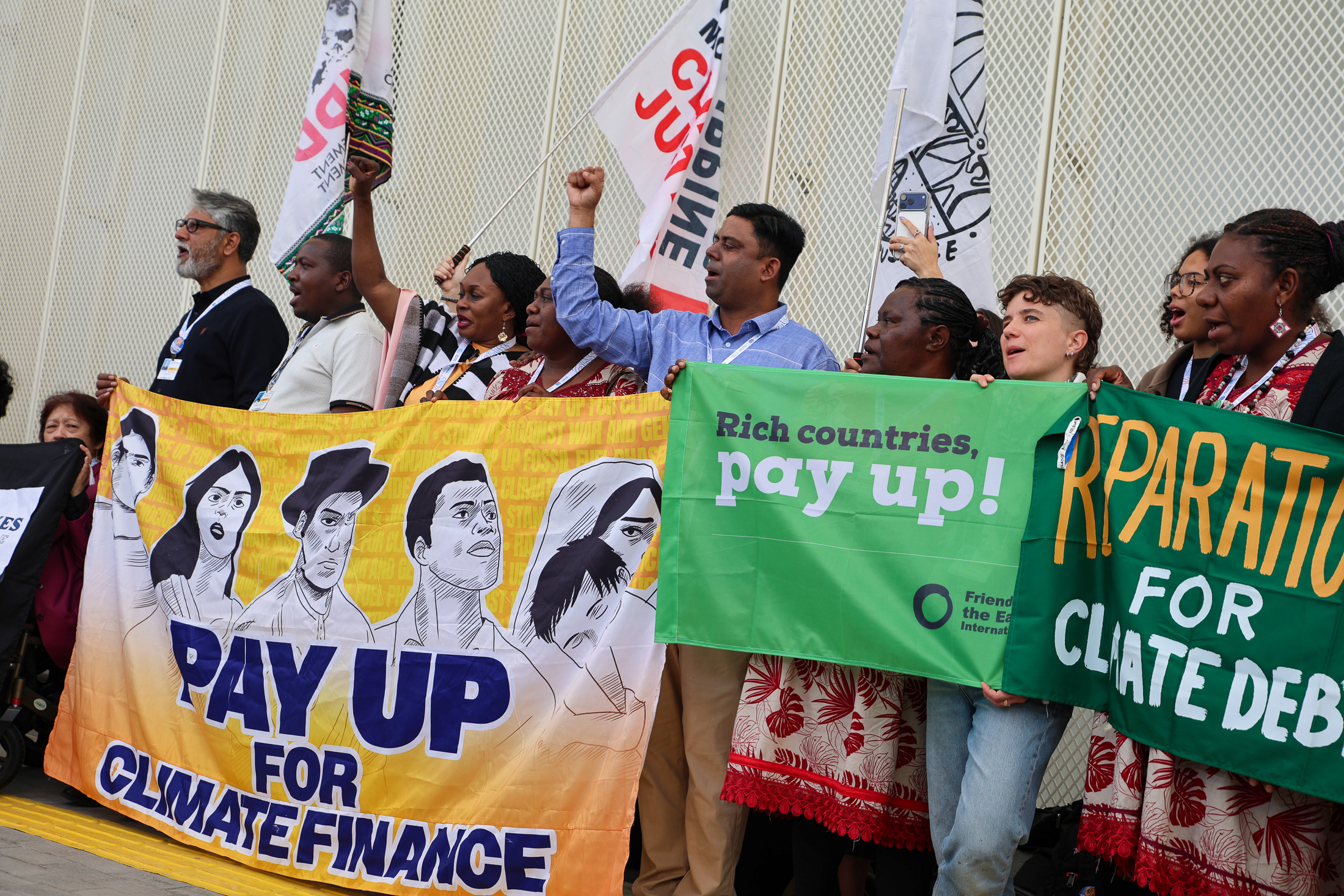
“We are not just happy to talk about access to finance,” Seid told reporters. “Developed countries, including the EU, really have to live up to their commitments of finance… Access to finance for SIDS is key for equity purposes, but the whole machinery needs to move.”
At COP31, a fundraising session organised by Australia to help Pacific nations fill a new fund for the region went by without governments pledging a single new cent, leaving it with less than half of its $500-million target for this year.
Mariana Paoli, who leads on climate justice policy for Oxfam, said rich countries should prioritise meeting their obligations to provide finance above making it easier to access.
“It’s not only a distraction, as all developing countries should have access as established in the Paris Agreement. But given how little has been provided by developing countries at COP31, this could be access to peanuts,” she said.
The post How COP31 fell short on easing access to finance for vulnerable nations appeared first on Climate Home News.
https://www.climatechangenews.com/2026/11/25/how-cop31-fell-short-on-easing-access-to-finance-for-vulnerable-nations/
Michael Jacobs is Emeritus Professor of Political Economy at the University of Sheffield and a former climate adviser to the British Finance Minister and Prime Minister Gordon Brown (2004-10).
As everyone now knows, COP31 ended in failure – the first COP since Copenhagen in 2009 not to reach an overall agreement at the end.
But failure can be a curious thing. At COP15 in Copenhagen, a large majority of countries agreed to a Copenhagen Accord. Although it was not approved in the final plenary, it attracted over 100 national emissions reduction commitments in the following months, which subsequently underpinned the 2015 Paris Agreement. The following year at COP16 in Cancun, the accord was officially adopted more or less intact.
Similarly, COP31 failed to agree an overall “cover decision”, because 130 climate-progressive countries refused to go along with the charade of refusing to mention fossil fuels. But that refusal is almost certainly more politically significant (and received more media attention) than had the COP continued to ignore the main cause of the climate crisis.
-
COP31 Bulletin Day 13: Talks fail as many countries reject main deal
The EU, the AILAC group of Latin American states and the Least Developed Countries (LDCs) said they could not accept the draft “Antalya Pact” -
COP31 Bulletin Day 12: Divisions on fossil fuels, adaptation finance and trade set to delay deal until Sunday
A COP31 cover decision is not likely to be adopted before 9am on Sunday, with many negotiators complaining they had not yet seen the full text
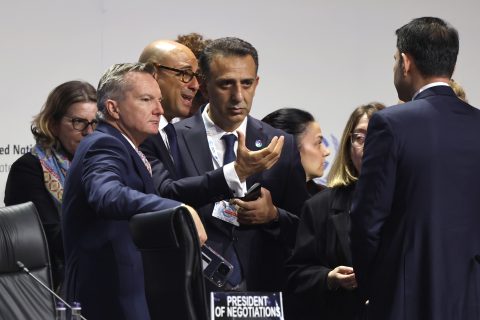
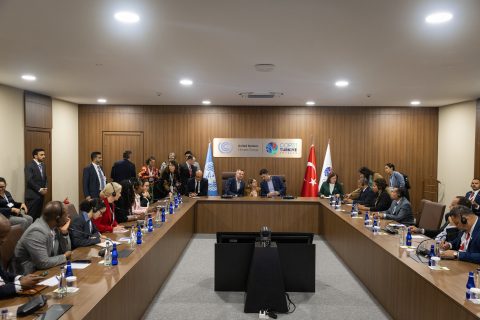
Moreover, the four major issues raised in the rejected cover decision – the “35 by 35” electrification goal, the need for carbon dioxide removals to respond to 1.5C overshoot, the attempt by some countries to delay the completion of the IPCC assessment report until after the Global Stocktake, and the unwillingness of developed countries to agree on a baseline for the tripling of adaptation finance – have not gone away just because there was no deal. All have been raised; all will remain on the agenda for COP32 (although the IPCC issue may have been decided before then).
Nevertheless, the Ethiopian hosts of next year’s conference must be thinking that they don’t want COP32 to be anything like COP31. So here are some suggestions on how to improve the organisation and process of the next COP.
Make Action Agenda central
First, make the Action Agenda the main focus of the event. Nowadays, the official agenda of COP negotiations is rather thin – for the very good reason that almost all the issues left from the Paris Agreement have now been resolved.
There really isn’t very much left to negotiate about: it is implementation that the world needs. So next year’s presidency should make Addis Ababa a proper “implementation COP” by putting the Action Agenda centre stage.
This should include an Action Agenda communique issued by the presidency, listing and summarising the key commitments and announcements made during the fortnight. This communique should then be ‘noted’ in the formal cover decision.
This would be a way of enabling those countries who wish to take climate action forward to do so unconstrained by those who do not, and giving their efforts some recognition and legitimacy in the formal process.
Australia and South Korea’s clean energy deal could boost low-carbon trade
Second, make all the new “roadmaps” the centre piece of the Action Agenda. Following the failure to agree on the idea of roadmaps at COP30 last year, Brazil (as it pledged to do) has published two helpful global roadmaps on Transitioning Away From Fossil Fuels (TAFF) and Deforestation.
Meanwhile a number of other countries have produced national TAFF roadmaps, and others have said they will do so. There is also the ‘Baku to Belem Roadmap to $1.3tn’ (B2BR) to follow up on – a document officially mandated by COP29, but shamefully appearing nowhere in this year’s negotiations or text.
The B2BR remains the only way for the UN process to think about how to raise the $1 trillion a year by 2035 in climate finance that will not be provided by developed country governments (whose commitment is only to $300bn of it). It should be restored to the official negotiations under the climate finance work programme; but it should also be a major part of the Action Agenda.
More warning and face to face talks
Third, use the annual mid-year meetings in Bonn in June to name the issues that will go into the cover text, and limit the text to these. One of the problems of this year’s process – and indeed that of COP30 – was the introduction of new issues at the last minute.
It is a good use of the cover decision to pick up important climate topics that are not formally part of the Paris negotiating agenda; but it is not sensible that countries may have no sight of these, or the chance to come to considered positions on them, until the COP itself.
Having countries put them forward in Bonn – not for agreement, which would merely bring forward the negotiation, but so that the presidency can publicly identify the issues it proposes to include in the cover decision text – would avoid the scrappy process of some countries making demands at the last minute and others objecting that this is an abuse of the negotiating rules.
Fourth, have the cover text negotiated face to face between parties and not simply through the presidency. Over the last few COPs an unfortunate trend has developed, by which the presidency takes charge of contentious issues in the second week and tries to resolve them through ‘shuttle diplomacy’ – bilateral meetings between it and the major groups and countries – rather than countries directly negotiating with one another.
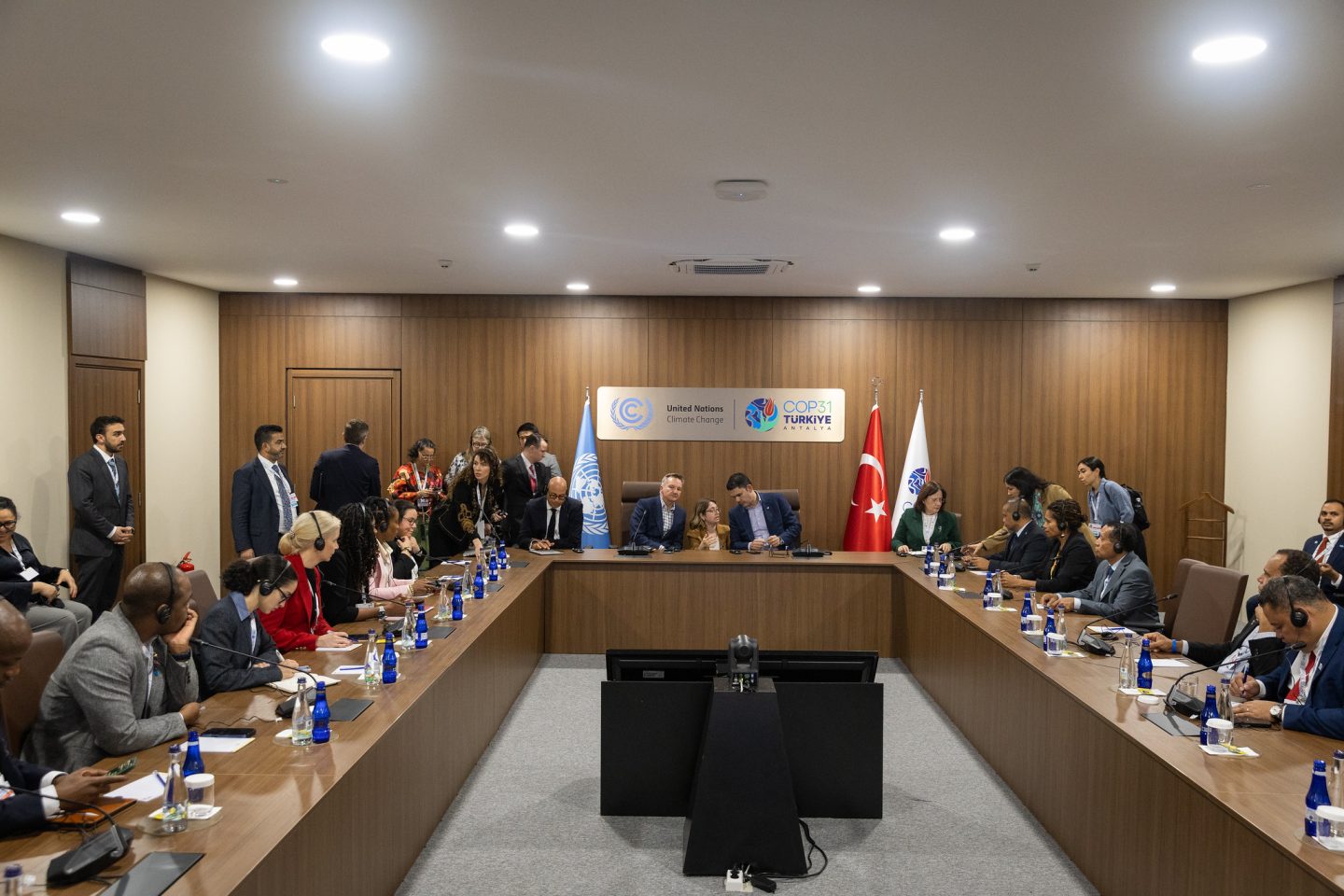
This gives the presidency too much power and assumed responsibility, and is incredibly time-consuming, with ministers and senior officials spending most of the second week drumming their fingers on the table, growing increasingly frustrated and fractious as they wait for the new presidency text to appear.
Next year the Ethiopian presidency should let negotiators negotiate. That is a much better way for each country and group to discover for itself how others see an issue, to understand one another’s positions, and see if consensus can be found.
There is no guarantee that COP32 will be any easier than COP31. The division of the world into countries wishing to accelerate the transition away from fossil fuels, and those that do not, is now entrenched and visible for all to see.
That division is not going anywhere. But there are ways for COPs to be organised that allow progress to be made, and (importantly) to be communicated intelligibly to the watching public. They should be tried next year.
The post Four ways Ethiopia can ensure COP32 is not like COP31 appeared first on Climate Home News.
https://www.climatechangenews.com/2026/11/25/four-ways-ethiopia-can-ensure-cop32-is-not-like-cop31/
Following the close of COP31 in Antalya, Turkey, Carbon Brief’s journalists answered a range of questions in a CB Live panel discussion.
COP31 came to a dramatic conclusion nearly 50 hours after its scheduled close – making it the longest COP in history.
Less than 24 hours later, Carbon Brief published its 21,000-word summary, capturing everything that happened in the negotiations, the cover decision and more.
This includes the “Antalya pact”, proposed by the joint Turkish-Australian presidency, being rejected in the final hours of the summit by the EU, the UK and several climate-vulnerable nations.
There was some progress at COP31, including an agreement on the adaptation fund, as well as a raft of announcements within the “action agenda”.
Carbon Brief journalists – who followed every detail of the summit on the ground in Antalya and remotely answered a range of questions, including those sent ahead of time by CB+ members on CB Connect.
These covered climate finance, China, the “just transition mechanism”, the potential for COP reform and much more.
The discussion was moderated by Carbon Brief’s senior policy editor Dr Simon Evans and featured the following journalists:
- Daisy Dunne, associate editor
- Josh Gabbatiss, associate editor
- Aruna Chandrasekhar, policy journalist
- Molly Lempriere, policy section editor
- Anika Patel, China section editor
- Dr Giuliana Viglione, associate editor
A recording of the CB Live (below) is now available to watch on YouTube.