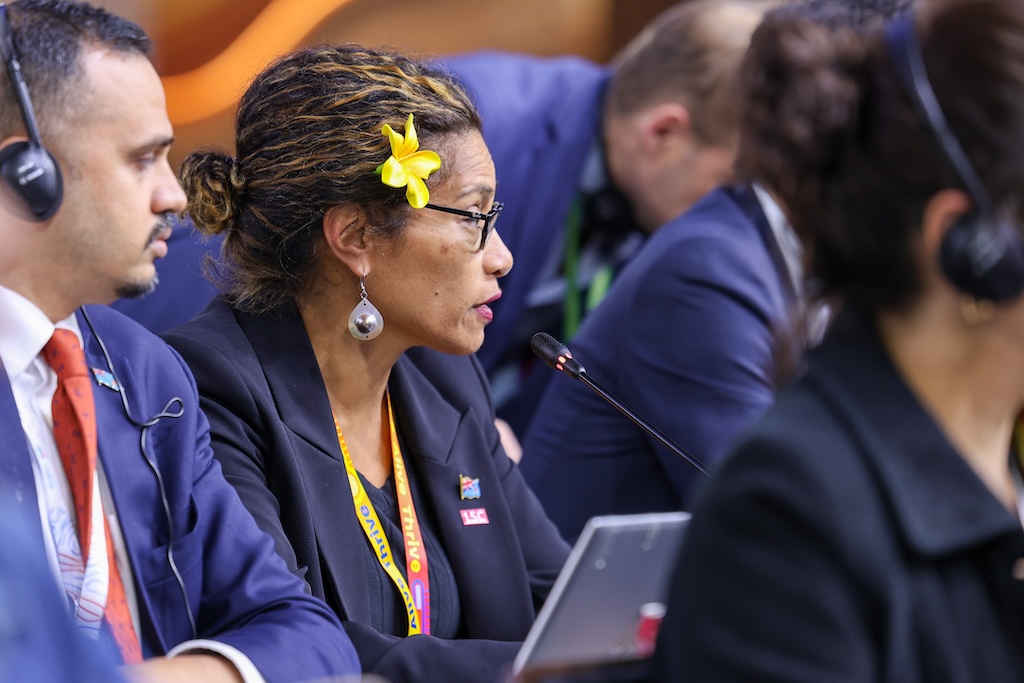
Michael Jacobs is Emeritus Professor of Political Economy at the University of Sheffield and a former climate adviser to the British Finance Minister and Prime Minister Gordon Brown (2004-10).
As everyone now knows, COP31 ended in failure – the first COP since Copenhagen in 2009 not to reach an overall agreement at the end.
But failure can be a curious thing. At COP15 in Copenhagen, a large majority of countries agreed to a Copenhagen Accord. Although it was not approved in the final plenary, it attracted over 100 national emissions reduction commitments in the following months, which subsequently underpinned the 2015 Paris Agreement. The following year at COP16 in Cancun, the accord was officially adopted more or less intact.
Similarly, COP31 failed to agree an overall “cover decision”, because 130 climate-progressive countries refused to go along with the charade of refusing to mention fossil fuels. But that refusal is almost certainly more politically significant (and received more media attention) than had the COP continued to ignore the main cause of the climate crisis.
-
COP31 Bulletin Day 13: Talks fail as many countries reject main deal
The EU, the AILAC group of Latin American states and the Least Developed Countries (LDCs) said they could not accept the draft “Antalya Pact” -
COP31 Bulletin Day 12: Divisions on fossil fuels, adaptation finance and trade set to delay deal until Sunday
A COP31 cover decision is not likely to be adopted before 9am on Sunday, with many negotiators complaining they had not yet seen the full text
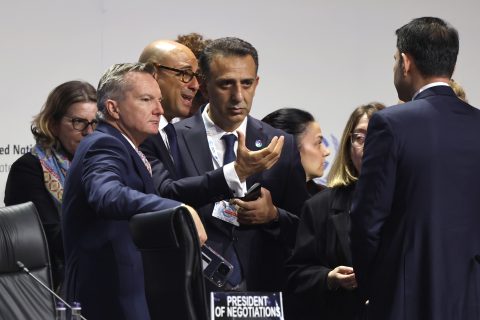
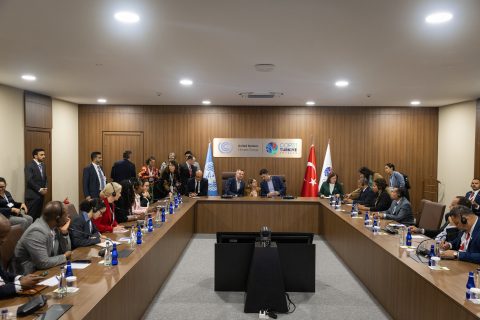
Moreover, the four major issues raised in the rejected cover decision – the “35 by 35” electrification goal, the need for carbon dioxide removals to respond to 1.5C overshoot, the attempt by some countries to delay the completion of the IPCC assessment report until after the Global Stocktake, and the unwillingness of developed countries to agree on a baseline for the tripling of adaptation finance – have not gone away just because there was no deal. All have been raised; all will remain on the agenda for COP32 (although the IPCC issue may have been decided before then).
Nevertheless, the Ethiopian hosts of next year’s conference must be thinking that they don’t want COP32 to be anything like COP31. So here are some suggestions on how to improve the organisation and process of the next COP.
Make Action Agenda central
First, make the Action Agenda the main focus of the event. Nowadays, the official agenda of COP negotiations is rather thin – for the very good reason that almost all the issues left from the Paris Agreement have now been resolved.
There really isn’t very much left to negotiate about: it is implementation that the world needs. So next year’s presidency should make Addis Ababa a proper “implementation COP” by putting the Action Agenda centre stage.
This should include an Action Agenda communique issued by the presidency, listing and summarising the key commitments and announcements made during the fortnight. This communique should then be ‘noted’ in the formal cover decision.
This would be a way of enabling those countries who wish to take climate action forward to do so unconstrained by those who do not, and giving their efforts some recognition and legitimacy in the formal process.
Australia and South Korea’s clean energy deal could boost low-carbon trade
Second, make all the new “roadmaps” the centre piece of the Action Agenda. Following the failure to agree on the idea of roadmaps at COP30 last year, Brazil (as it pledged to do) has published two helpful global roadmaps on Transitioning Away From Fossil Fuels (TAFF) and Deforestation.
Meanwhile a number of other countries have produced national TAFF roadmaps, and others have said they will do so. There is also the ‘Baku to Belem Roadmap to $1.3tn’ (B2BR) to follow up on – a document officially mandated by COP29, but shamefully appearing nowhere in this year’s negotiations or text.
The B2BR remains the only way for the UN process to think about how to raise the $1 trillion a year by 2035 in climate finance that will not be provided by developed country governments (whose commitment is only to $300bn of it). It should be restored to the official negotiations under the climate finance work programme; but it should also be a major part of the Action Agenda.
More warning and face to face talks
Third, use the annual mid-year meetings in Bonn in June to name the issues that will go into the cover text, and limit the text to these. One of the problems of this year’s process – and indeed that of COP30 – was the introduction of new issues at the last minute.
It is a good use of the cover decision to pick up important climate topics that are not formally part of the Paris negotiating agenda; but it is not sensible that countries may have no sight of these, or the chance to come to considered positions on them, until the COP itself.
Having countries put them forward in Bonn – not for agreement, which would merely bring forward the negotiation, but so that the presidency can publicly identify the issues it proposes to include in the cover decision text – would avoid the scrappy process of some countries making demands at the last minute and others objecting that this is an abuse of the negotiating rules.
Fourth, have the cover text negotiated face to face between parties and not simply through the presidency. Over the last few COPs an unfortunate trend has developed, by which the presidency takes charge of contentious issues in the second week and tries to resolve them through ‘shuttle diplomacy’ – bilateral meetings between it and the major groups and countries – rather than countries directly negotiating with one another.
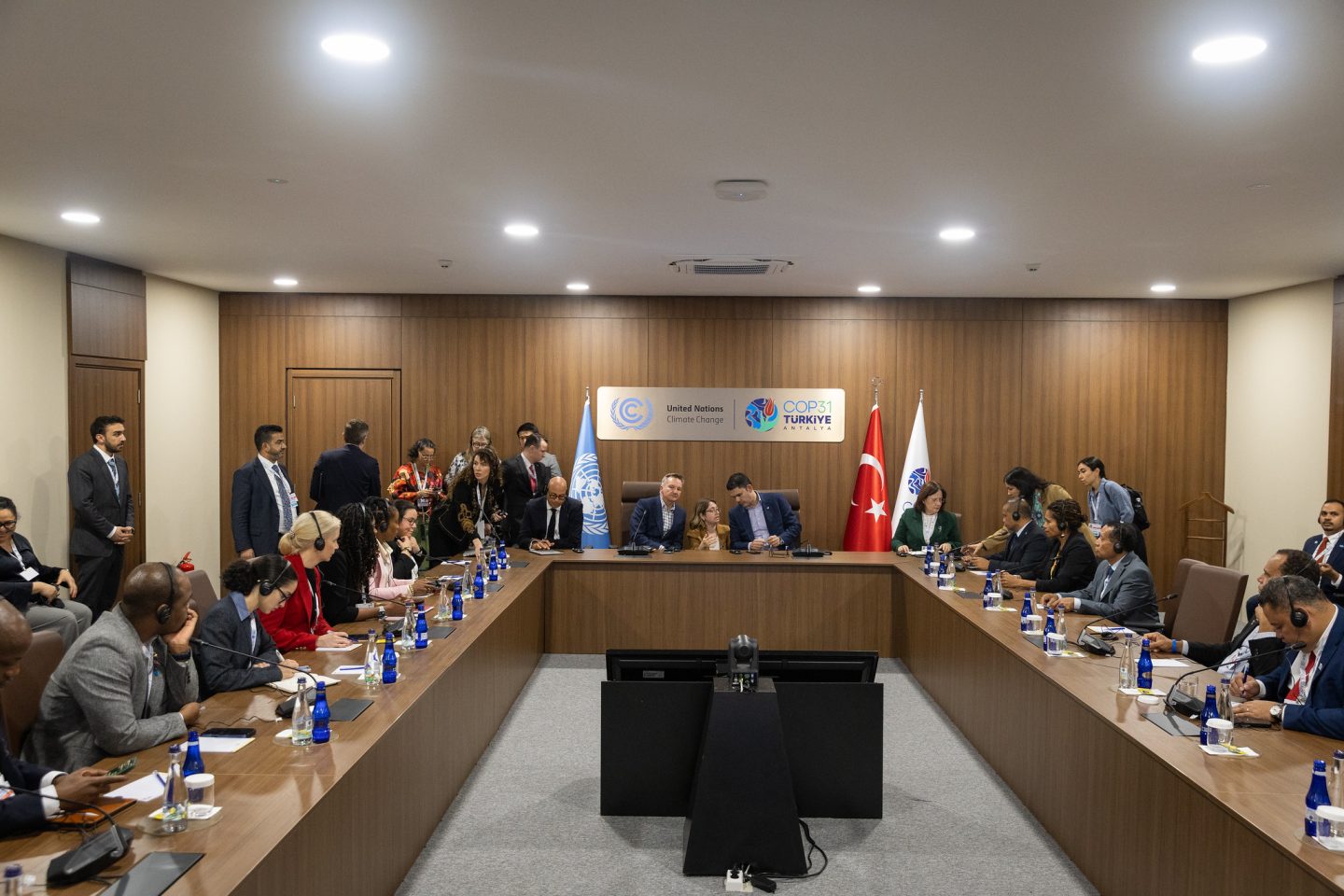
This gives the presidency too much power and assumed responsibility, and is incredibly time-consuming, with ministers and senior officials spending most of the second week drumming their fingers on the table, growing increasingly frustrated and fractious as they wait for the new presidency text to appear.
Next year the Ethiopian presidency should let negotiators negotiate. That is a much better way for each country and group to discover for itself how others see an issue, to understand one another’s positions, and see if consensus can be found.
There is no guarantee that COP32 will be any easier than COP31. The division of the world into countries wishing to accelerate the transition away from fossil fuels, and those that do not, is now entrenched and visible for all to see.
That division is not going anywhere. But there are ways for COPs to be organised that allow progress to be made, and (importantly) to be communicated intelligibly to the watching public. They should be tried next year.
The post Four ways Ethiopia can ensure COP32 is not like COP31 appeared first on Climate Home News.
https://www.climatechangenews.com/2026/11/25/four-ways-ethiopia-can-ensure-cop32-is-not-like-cop31/

Following the close of COP31 in Antalya, Turkey, Carbon Brief’s journalists answered a range of questions in a CB Live panel discussion.
COP31 came to a dramatic conclusion nearly 50 hours after its scheduled close – making it the longest COP in history.
Less than 24 hours later, Carbon Brief published its 21,000-word summary, capturing everything that happened in the negotiations, the cover decision and more.
This includes the “Antalya pact”, proposed by the joint Turkish-Australian presidency, being rejected in the final hours of the summit by the EU, the UK and several climate-vulnerable nations.
There was some progress at COP31, including an agreement on the adaptation fund, as well as a raft of announcements within the “action agenda”.
Carbon Brief journalists – who followed every detail of the summit on the ground in Antalya and remotely answered a range of questions, including those sent ahead of time by CB+ members on CB Connect.
These covered climate finance, China, the “just transition mechanism”, the potential for COP reform and much more.
The discussion was moderated by Carbon Brief’s senior policy editor Dr Simon Evans and featured the following journalists:
- Daisy Dunne, associate editor
- Josh Gabbatiss, associate editor
- Aruna Chandrasekhar, policy journalist
- Molly Lempriere, policy section editor
- Anika Patel, China section editor
- Dr Giuliana Viglione, associate editor
A recording of the CB Live (below) is now available to watch on YouTube.
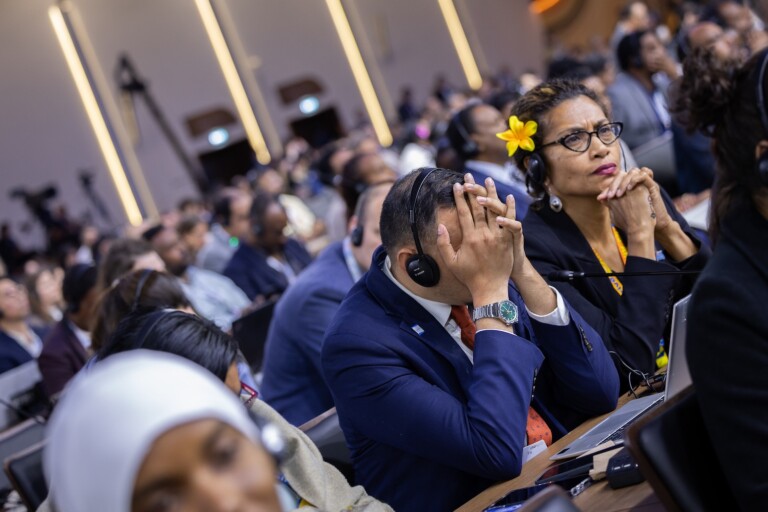
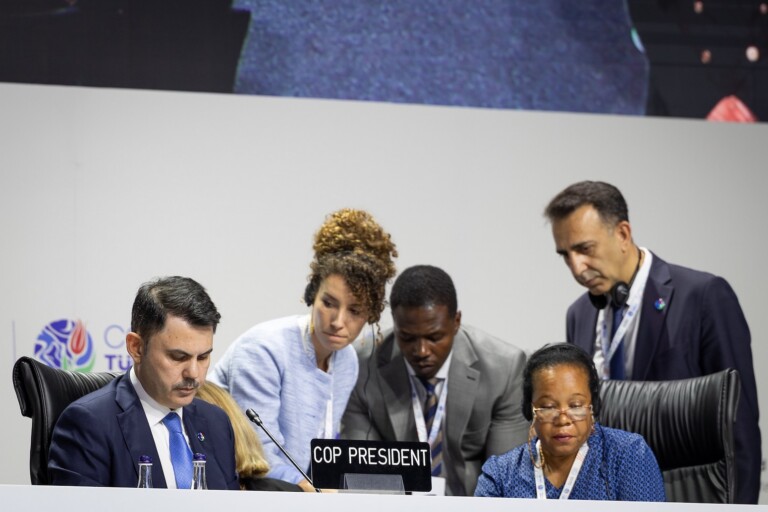
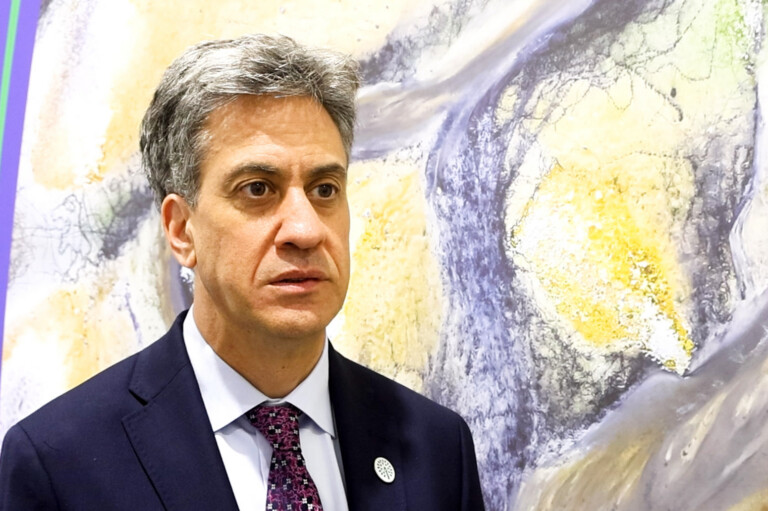
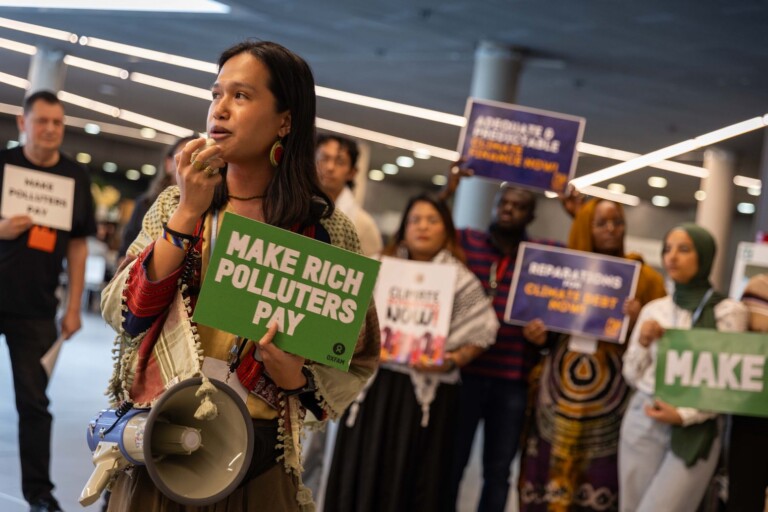
The post CB Live: Carbon Brief journalists discuss key COP31 outcomes appeared first on Carbon Brief.
CB Live: Carbon Brief journalists discuss key COP31 outcomes
Climate Change
COP31: Key outcomes for food, forests, oceans and nature at the UN climate talks in Antalya
The COP31 climate talks in Antalya, Turkey, failed to agree on a “pact” that – despite making no clear reference to fossil fuels or adaptation finance – had contained strong signals for oceans.
The “Antalya pact” took up much of the two weeks of negotiating time in Turkey, only to be rejected during the closing plenary by the EU, the UK and several climate-vulnerable countries.
Several countries expressed their regret during the plenary that significant work on advancing ocean-climate action would be lost.
The COP ran nearly 50 hours over time, but did not end with substantive outcomes on several key topics.
For the second year in a row, negotiations on agriculture and food security broke down and will now have to resume next year.
Food-systems advocates were, however, heartened by the explicit inclusion of “agroecology” in a decision within the “just transition work programme”.
Ocean-conservation groups noted an increased focus on ocean-climate links at this year’s COP, but said COP31 did not live up to its promise of being a “blue COP”.
There was also scant new funding for food systems and nature, with just a handful of small pledges to ocean initiatives and two newly announced contributions to the Tropical Forest Forever Facility.
Here, Carbon Brief analyses all of the key outcomes for food, forests, oceans and nature at COP31 – both inside and out of the negotiating rooms.
(See Carbon Brief’s coverage of food, forests, oceans and nature at COP30, COP29, COP28, COP27 and COP26.)
Formal negotiations
Cover decision
The final draft of a COP31 “cover decision” was rejected by at least 32 countries during a chaotic – and, at times, acrimonious – closing plenary in Antalya.
Other recent COPs have issued cover decisions, setting a firm precedent.
However, many parties remained unhappy about the existence of the cover decision, the process by which it was put together and the impact it had on time for other negotiations.
Ultimately, parties did not find consensus on the text, particularly around the removal of any reference to fossil fuels and the lack of concrete climate-finance targets.
The cover text was one of the places in the negotiations where ocean advocates were hoping to see ocean-climate linkages highlighted.
Marine Lecerf, head of international policy at Ocean & Climate Platform, told a press huddle:
“What we’re really asking for right now is to make sure we can recognise ocean-based interlinkages…We’re not asking for a new mandate. We are asking for acceleration of the work that is already undertaken.”
The first draft of the cover decision, published on 16 November, was a compilation of all the issues that parties had put forward for inclusion. It was accompanied by a short “presidency note” explaining that all elements were still in play, including whether or not they should appear in a final text.
This lengthy first draft had 21 references to the ocean, including recognising the impacts of climate change, support for ocean-observing systems, encouraging parties to strengthen ocean-climate action and a multi-year plan for the “ocean and climate change dialogue”, which occurs annually at the Bonn intersessional meetings in June.
Regarding that draft, Steven Guilbeault, former environment minister of Canada, told Carbon Brief:
“I don’t see why the elements that are in the cover decision right now on oceans should be controversial or problematic to any nations. If you’re serious about fighting climate change, there’s nothing in this text regarding oceans that should be problematic for you.”
(Earth Negotiations Bulletin reported that Russia opposed mentions of the ocean in the cover text during the ocean ministerial consultation.)
The next iteration of the text, on 19 November, retained many of the ocean elements, albeit with less detail than the first draft. The second text also removed references to post-2028 ocean work and a proposed high-level ministerial ocean dialogue.
In the end, oceans had 19 mentions in the rejected Antalya pact.