

This blog was written by Kassidy Troxell, Ph.D., a Research Assistant Professor at Florida international University’s Institute of Environment, and collaborator with Ocean Conservancy on our work to promote healthy Florida aquatic ecosystems. Dr. Troxell is a lead scientist executing the nitrogen fingerprinting discussed in this blog.
November was Manatee Awareness Month, a month dedicated to highlighting the popular aquatic mammal and the broader importance of clean, healthy waterways in Florida. One of the greatest challenges to water quality in areas like Tampa Bay is nutrient pollution. Excess nutrients in coastal waters fuel harmful algae which “bloom” into patches, one example is the well-known Karenia brevis referred to as red tide, causing fish kills and human respiratory problems while also reducing the sunlight needed by underwater seagrasses to flourish. These blooms diminish essential seagrass habitats, impacting marine species like manatees, harming local ecosystems and affecting human health. Identifying the primary sources of nutrient pollution is crucial for developing targeted strategies to control nutrient levels and maintain the health of delicate ecosystems.
Love ocean content?
Enter your email and never miss an update
In Tampa Bay, my lab at Florida International University has partnered with Ocean Conservancy to do just that: understand and address nitrogen pollution, the nutrient that contributes to water quality impairment, in the Hillsborough Bay and the larger Tampa Bay ecosystem. By using manmade or commonly used chemicals, we can pinpoint the sources of nitrogen—whether from untreated stormwater street runoff, treated home, business or industrial wastewater, or agriculture—allowing for more targeted management efforts. Just as each of us humans have our own unique fingerprints made of various patterns and distinctions, contamination sources have a unique makeup of compounds that allows us to fingerprint and track their movements throughout a watershed.

Key findings from recent study in Tampa Bay
The Hillsborough River, which flows into Hillsborough Bay and is vital to the health of Tampa Bay’s ecosystem, serves as the geographic focus of our study. Our preliminary results reveal that nitrogen levels in these waters rise significantly during the wet season when runoff is at its peak. Chemical tracers, which act like “markers” for pollution sources, suggest that reused non-drinkable treated water (reclaimed water), stormwater and agriculture are contributing sources of nitrogen into the waterway. Within the Hillsborough River watershed, nitrogen levels show distinct patterns (i.e., “fingerprints”) linked to various sources: reclaimed water and agricultural activities are prominent in the upper watershed, while urban stormwater runoff and wastewater inputs are notable near the river’s mouth. Potential contributions from other sources, such as septic systems, are still under investigation.

Now that we have identified the preliminary nitrogen sources and hotspots, the next phase of the project will focus on the sources that are contributing the largest nitrogen loads, the geographic origins of those sources and the amounts of the nitrogen going into the waterways. Future sampling will expand sampling sites in the tributaries that feed into the preliminary hotspot locations along the mainstem (the primary downstream river segment in contrast to its tributaries). This information will help tailor interventions to reduce nitrogen loads at the source and guide management efforts to improve water quality and ecosystem recovery in Tampa Bay.
The future of Florida’s water quality
Our research underscores the need to better manage nutrient levels to protect Florida’s coastal waters. The data generated from our study will give policymakers a more precise geographical understanding of nitrogen hotspots for prioritizing actions to curb nutrient pollution. Indeed, Ben Albritton, the incoming Majority Leader of the Florida state senate, recently said as much when he pointed to the importance of fresh, accurate data needed to drive solutions, whether these are new policies, investments or on-the-ground management practices.

Our activities on land—whether through treated wastewater, stormwater runoff or agricultural practices—have direct impacts on coastal ecosystems. While the Hillsborough River is the focus of this pilot study, we believe the nutrient fingerprinting techniques will be a valuable water quality management tool in other Florida estuaries and bays as well. By pinpointing and quantifying the largest nutrient sources, we can better protect the health of our marine environments and communities alike, which will benefit all Floridians.
Undoubtedly, Florida’s waterways are facing enormous challenges. Ocean Conservancy is dedicated to addressing nitrogen pollution, in part, for marine species like manatees that are so greatly impacted by threated water quality. Take action with Ocean Conservancy to demand greater protections for imperiled manatees and improvements in water quality in Florida and beyond.
The post Fingerprinting the Source of Nitrogen Pollution in Tampa Bay appeared first on Ocean Conservancy.
Fingerprinting the Source of Nitrogen Pollution in Tampa Bay

Ocean Acidification
Dr Heidarzadeh’s TV interview with SkyNews on the massive M7.7 Panama earthquake on 9 October 2026
Dr Heidarzadeh’s TV interview with SkyNews on the massive M7.7 Panama earthquake on 9 October 2026. Click here for the full story.

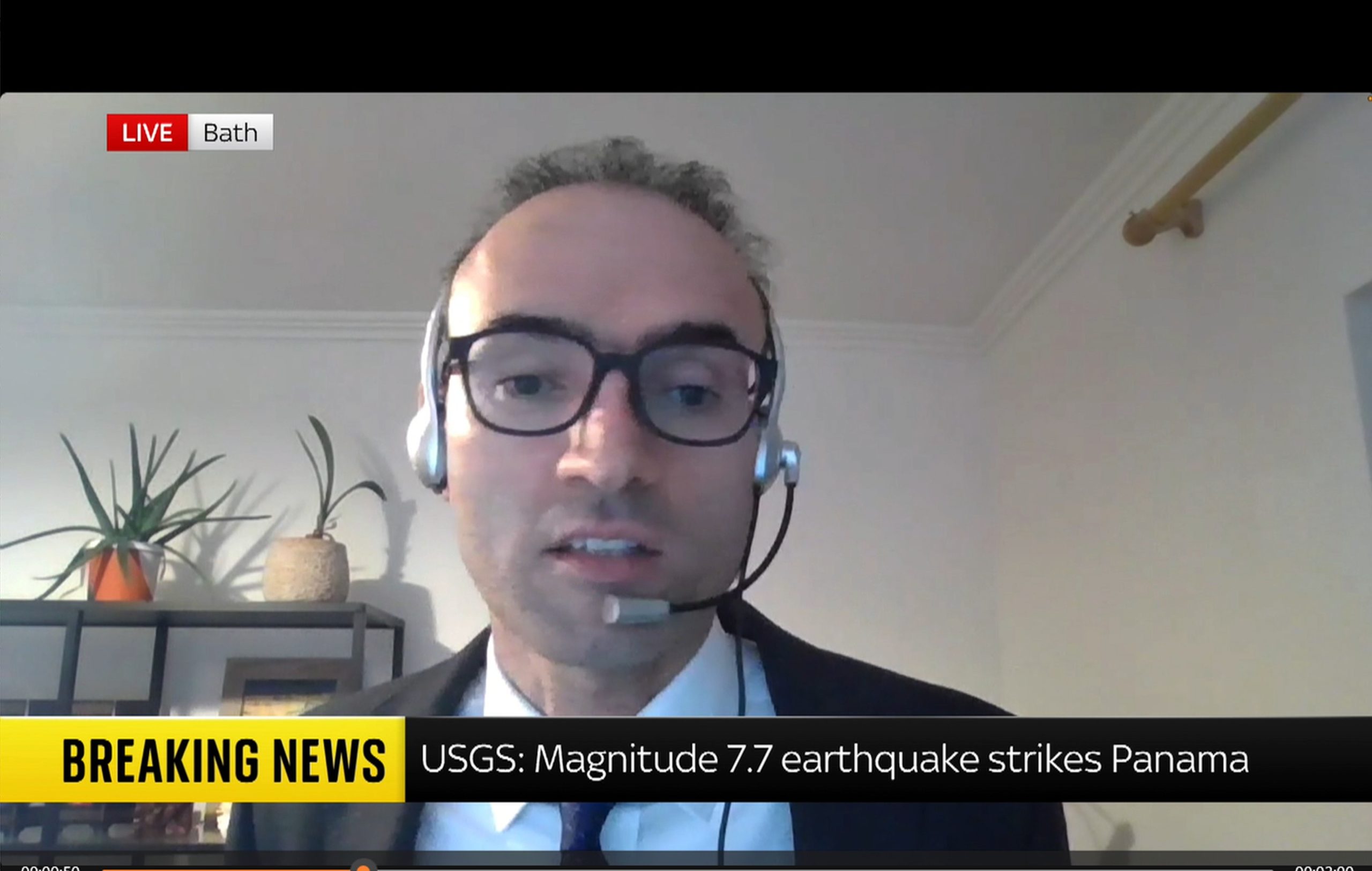
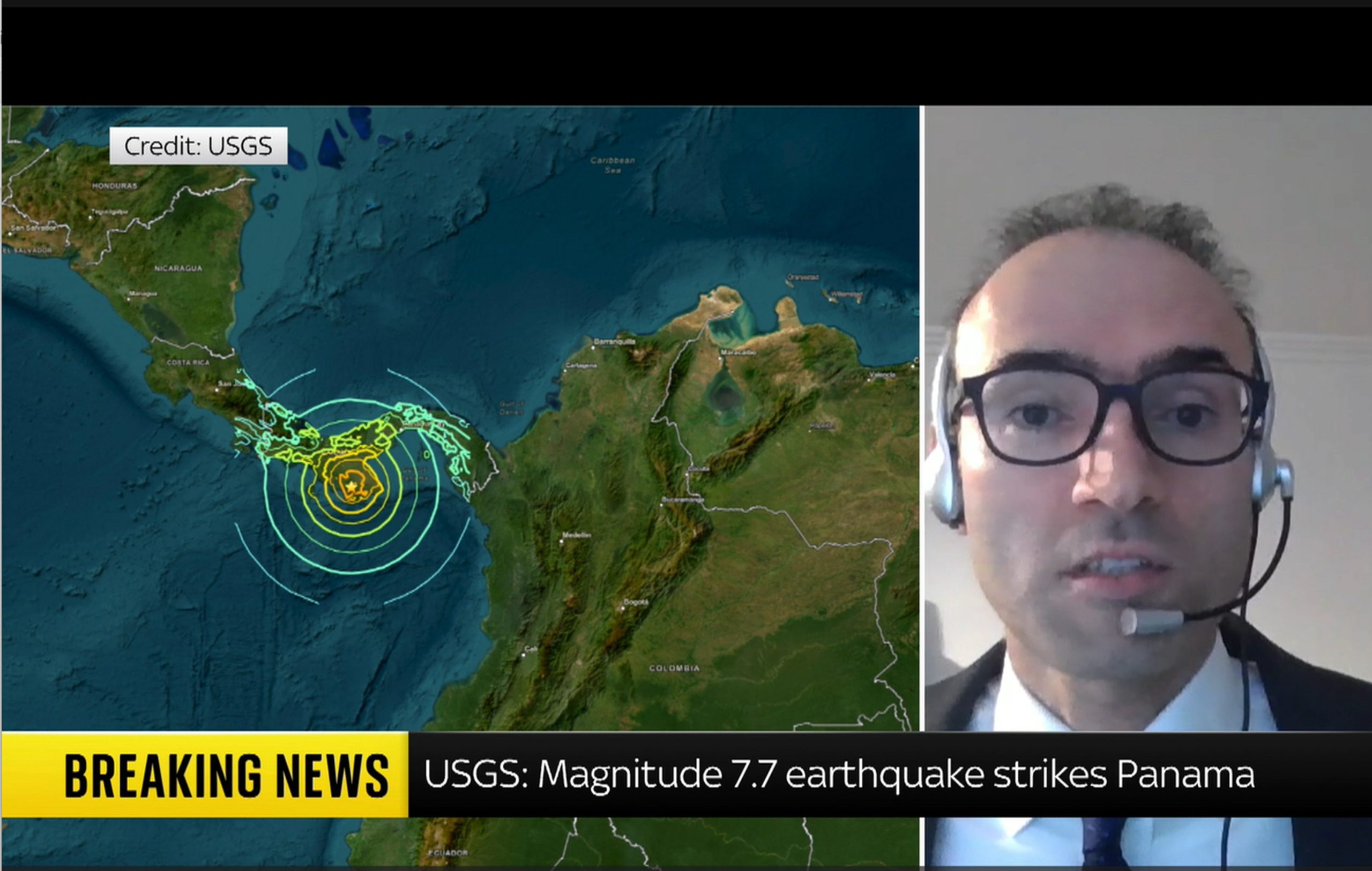
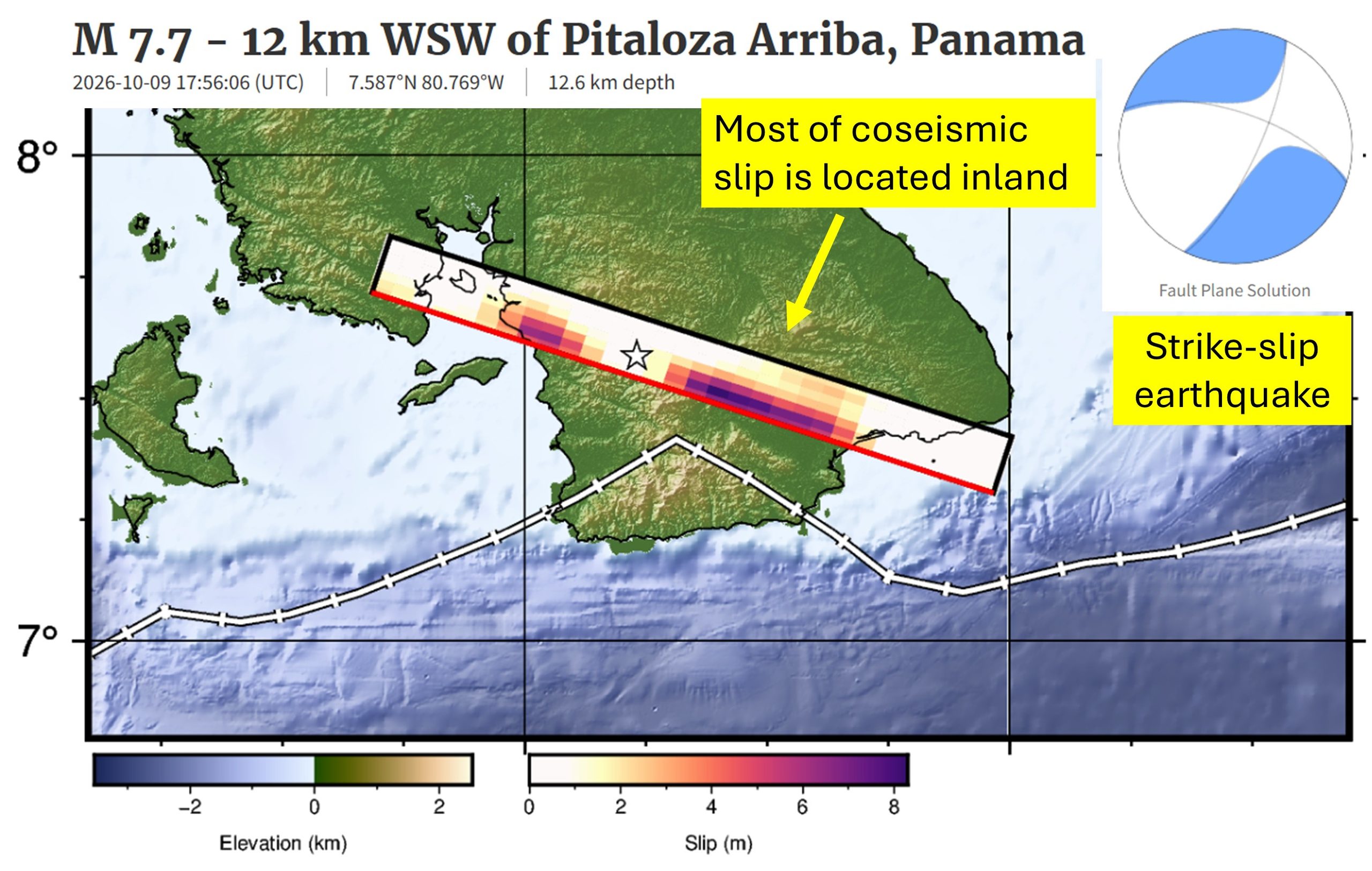
Dr Heidarzadeh’s TV interview with SkyNews on the massive M7.7 Panama earthquake on 9 October 2026
Our ocean is an incredibly vast and mysterious place. And there is no place where that is more evident than the deepest ocean area in the world: the legendary Mariana Trench. Located east of the Philippines, the Mariana Trench lies in the Mariana Archipelago in the western portion of the North Pacific. The greater area of the Mariana Trench Marine National Monument is made up of more than 95,000 square miles of ocean. Beneath these waters lie incredibly complex aggregations of submerged islands and volcanoes … and of course, an astoundingly massive trench.
Dive in with us to have your biggest questions answered about the famed Mariana Trench.
How deep is the Mariana Trench?
The deepest part of the Mariana Trench, known as Challenger Deep, is almost 36,000 feet below the ocean’s surface. For context, Mount Everest is about 29,000 feet above sea level, so the Mariana Trench is about 7,000 feet deeper than Mount Everest is tall. For one more comparison, the RMS Titanic lies at a depth of about 12,500 feet below sea level. The Challenger Deep is in waters nearly three times deeper than this ship’s final resting place.
Due to its enormous size, the Mariana Trench has at times been affectionately nicknamed the Grand Canyon of the ocean. This is certainly a picturesque image, but don’t let the mammoth size of this U.S. national terrestrial park fool you into thinking the Mariana Trench matches its size. The trench’s footprint is estimated to be 120 times larger than the Grand Canyon’s, and to reach the bottom of Challenger Deep, you’d need to descend through almost six Grand Canyons stacked on top of each other before you’d reach the seafloor.
Oh … and did we mention it’s five times wider than it is deep? It’s about 43 miles wide!
What is Challenger Deep, and how long would it take to reach it?
Challenger Deep is the deepest point of the Mariana Trench. Fewer than 30 people have ever journeyed to this area. The trek below the surface is long, dark and time-consuming, and it’s not an expedition considered lightly by scientists and explorers.
The first people to descend into the depths of this area in 1960 were oceanographers Jacques Piccard and Don Walsh, and it took them close to five hours to reach Challenger Deep. Since then, more advanced submersibles have been created, but it still takes two to four hours for modern vessels to reach such depths. For example, explorer and filmmaker James Cameron reached the seafloor in a little more than 2.5 hours in the first documented solo submarine dive to the area, and it took oceanographer Dr. Dawn Wright about four hours in 2022. It is crucial that these submersibles descend slowly and steadily beneath the surface, as the immense water pressure compounds with every mile a submersible descends. Speaking of pressure …
Get Ocean Updates in Your Inbox
Sign up with your email and never miss an update.
What is the water pressure at the bottom of the Mariana Trench?
If you thought the depth of the Mariana Trench was its only jaw-dropping feature, think again. Water pressure is one of the most important factors affecting deep-sea life. In the ocean, pressure increases by one atmosphere for every 33 feet (10 meters) of depth. One atmosphere (a unit of measurement for pressure equivalent to average air pressure at sea level) is equal to about 14.7 pounds per square inch (PSI), which is the approximate standard atmospheric pressure at sea level. If you were to convert atmospheric pressure into weight, one atmosphere is about the weight of a bowling ball. Stay with me, friends.
If a vessel were to dive 2,000 feet below the surface, the pressure would equal that of 60 bowling balls stacked atop every square inch of that submersible. But 60 bowling balls is simply nothing compared to the pressure in the Mariana Trench. The atmospheric pressure at the depths of Challenger Deep is equal to about 16,000 PSI. That pressure is about the same as the weight of an entire full-grown elephant on every square inch of a submersible!
Need a more extreme comparison? If a human were to be placed at the bottom of the Mariana Trench, the pressure would be equal to that of 50 jumbo jets piled on top of a person!
Do any animals live in the Mariana Trench?
The depths of the Mariana Trench come with immense pressure and extreme darkness, but somehow, life finds a way to survive. Organisms that live at an extreme depth, like that of Challenger Deep, have to be highly adapted to low temperatures (typically just above freezing), high pressure and virtually no light at all.
Species found in the depths of the Mariana Trench might look vastly different from animals from other ocean depths because their anatomy has been refined to thrive in harsh conditions. At such great depths, these animals typically depend on chemosynthesis (using nutrient-rich waters being pumped out of hydrothermal vents) or descending detritus (dead matter that has fallen from higher parts of the ocean) for food, such as whale falls. Just a handful of these animals include species of octopuses and squids, sea cucumbers, amphipods, sea jellies, shrimp, sea worms and some wild-looking fish!
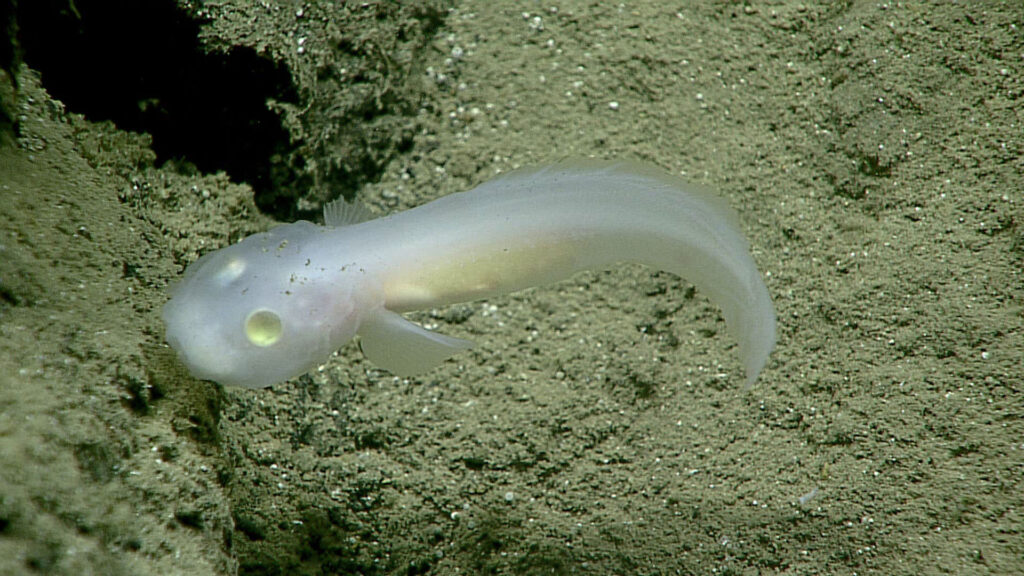
In 2025, more than 7,000 new species were discovered in the Mariana Trench, including the hadal snailfish (Pseudoliparis swirei). This is the deepest-dwelling fish currently known to science. Now, the fish has been dubbed “the Mariana snailfish.”
How was the Mariana Trench formed?
The process by which the Mariana Trench was created is a geologically fascinating one known as subduction. On the Earth’s surface, there are thin plates that cover the planet’s mantle, which is made of molten rock. If two of these plates collide, one pushes down into the Earth’s mantle while the other is pushed over the bottom plate. When this happens, a trench is formed from the drag of the bottom plate. This process can sometimes create incredibly strong earthquakes. The plates that forged the Mariana Trench’s creation are estimated to be up to approximately 180 million years old.
This trench was unknown to scientists until 1875. It was then that a team of explorers on the HMS Challenger measured the depth of the sea by simply lowering a weighted rope into the water. They were baffled when they measured that first portion of the seafloor to be five miles below the surface. And so was born the origin of some of the most daring deep-sea explorations known to mankind to date.
Is the Mariana Trench protected?
The Mariana Trench is in waters off Guam and the Mariana Islands. The region is protected from some human activities under its status as a marine monument. The creation of the Mariana Trench Marine National Monument signified that international, national and local leaders all recognize the importance of protecting this area.
However, just because the region is protected does not mean it’s not vulnerable to modern threats to ocean health. Plastic bags have been spotted in the Mariana Trench during several expeditions, highlighting the far-reaching impact of the marine debris problem. No corner of our ocean is safe from the ever-present threat of plastic pollution. The reality of a changing climate makes the future well-being of wondrous places like the Mariana Trench uncertain. What’s more: More than 70% of the global ocean has yet to be mapped. And what we don’t yet know about, we cannot wisely work to protect.
It’s up to us to work together to defend our ocean, from the sandy shores of our favorite beaches to the deepest, darkest parts of the sea. Together, we can work to protect our ocean as a whole, which ultimately helps protect treasured places like Challenger Deep.
Find out how you can join Ocean Conservancy’s wave of momentum to secure a healthy ocean and a thriving planet, forever and for everyone!
The post The Mysteries of the Mariana Trench appeared first on Ocean Conservancy.