

After arduous late night talks on Wednesday, European Union countries finally agreed a 2040 goal to cut the bloc’s emissions by 90% from 1990 levels, including a contentious concession that would let them buy foreign carbon credits to cover 5%.
Under the deal, which must be approved by the European Parliament, the EU stands to buy 710 million metric tonnes of carbon dioxide equivalent (CO2e) offsets worth about 50 billion euros ($57 billion) during the 2030s, according to an estimate by the Carbon Market Watch campaign group. That could give a huge boost to carbon credits from emissions-reduction projects, which are struggling with shrinking demand amid increased scrutiny of the sector.
Trishant Dev, carbon markets lead at the Centre for Science and Environment (CSE), a Delhi-based think-tank, told Climate Home News that 5% “may seem small compared to the EU’s overall emissions cuts, but in absolute terms it represents a vast volume of offsets, and therefore, massive investments in offset projects”.
On top of the 5% of the EU’s 1990-level net emissions, EU countries may be able to use offsets to cancel out another 5% of their national emissions, increasing the bloc’s wiggle room on meeting its headline climate goals and drawing criticism from some climate campaigners.
Countries split on counting carbon credits
The possibility of using carbon credits was supported by the European Commission and numerous member states including Sweden, Ireland, Poland and Austria.
Poland had pushed for 10% to be eligible for carbon credits, after one senior climate official hailed them in September as “a cost-efficient measure to cut emissions.”
The Netherlands’ representative, meanwhile, opposed using more than 3%, saying that “availability, price and quality remain uncertain”. International credits should just be a “safety net”, he said.
Slovakia’s environment minister also voiced concern about cost, saying the use of credits “may sound attractive but, with an estimated price…about €250 ($288) a tonne, this will not work for all of us”.
-
Business-as-usual: Donors pour climate adaptation finance into big infrastructure, neglecting local needs
A deep-sea port project in Bangladesh highlights how some major donor nations are labelling funds for industry-friendly transport and energy projects as adaptation finance, reporting by Climate Home News shows -
Car-driven climate risk: Valencia floods expose need for sustainable transport
Heavy reliance on cars put people in harm’s way in the 2024 disaster, say researchers, as citizens press for climate-friendly mobility to help them adapt


Several other wealthy nations – such as Norway, Switzerland and Singapore – have already said they intend to use or may use some carbon credits to meet their 2035 climate targets.
But Japan is the only major emitter that has specified how much it wants to buy – 200 million metric tonnes of CO2e by 2040, which at Carbon Market Watch’s assumed price of $70 a ton, would cost $14 billion.
Many countries – particularly in the Global South – have indicated their interest in selling credits. Thailand, for example, has already sold credits to Switzerland in return for rolling out electric buses in Bangkok, although the integrity of that deal has been questioned.
Critics say EU should reduce emissions at home
While EU officials and carbon market supporters defended the bloc’s policy shift on offsets, climate campaigners were mostly critical.
They said credits are expensive and will not reduce emissions by as much as they are supposed to, accusing the EU of dodging its responsibility as a historically large polluter to reduce the bloc’s emissions domestically.
Fabiola de Simone, policy officer at Carbon Market Watch, told Climate Home News the EU’s climate target and the offsets were an “international embarrassment” for the EU which will mean “way more emissions than science says you should do”.
Zimbabwe forest carbon megaproject generated millions of junk credits
“There is less of an incentive for member states to reach their national obligations after 2030 because they know that they could potentially rely on international credits up to 5%,” de Simone said.
Pedro Martins Barata, who works on carbon market integrity for the Environmental Defense Fund, called the flexibility in the EU’s target “disappointing”.
But, he said, the EU could use its clout as a dominant buyer to promote high standards for credits, such as environmental safeguards in offset methodologies.
“Planet doesn’t care where we cut emissions”
Carbon market advocates say it does not matter where in the world emissions reductions take place, that reducing emissions with offsets can be cheaper than cutting them directly and that developing countries can benefit from the money and other support they receive by selling credits.
“The planet doesn’t care where we reduce emissions,” EU climate commissioner Wopke Hoekstra told a press conference on Wednesday, adding that the 5% quota for offsets was optional.
Ukrainian scientist Olga Gassan-Zade, a member of the supervisory body of the Paris Agreement’s new Article 6.4 carbon market, told Climate Home News that without demand for credits – like that coming from the EU – international carbon markets would fail.
That would be bad, she said, because “it is maybe hard to see from the Global North, but the developing world lives in a different dimension”. “International markets are not just about finance but are also about technology transfer, knowledge transfer, training of climate change professionals [and] equity,” she added.
From Delhi, CSE’s Dev said carbon markets have often enriched intermediaries rather than supporting genuine emissions cuts. “These funds must therefore cover the true cost of mitigation, ensuring that communities are not short-changed or made to subsidise Europe’s continued emissions,” he said.
The post EU’s new climate target lines up multibillion-dollar boost for carbon markets appeared first on Climate Home News.
EU’s new climate target lines up multibillion-dollar boost for carbon markets

Following the close of COP31 in Antalya, Turkey, Carbon Brief’s journalists answered a range of questions in a CB Live panel discussion.
COP31 came to a dramatic conclusion nearly 50 hours after its scheduled close – making it the longest COP in history.
Less than 24 hours later, Carbon Brief published its 21,000-word summary, capturing everything that happened in the negotiations, the cover decision and more.
This includes the “Antalya pact”, proposed by the joint Turkish-Australian presidency, being rejected in the final hours of the summit by the EU, the UK and several climate-vulnerable nations.
There was some progress at COP31, including an agreement on the adaptation fund, as well as a raft of announcements within the “action agenda”.
Carbon Brief journalists – who followed every detail of the summit on the ground in Antalya and remotely answered a range of questions, including those sent ahead of time by CB+ members on CB Connect.
These covered climate finance, China, the “just transition mechanism”, the potential for COP reform and much more.
The discussion was moderated by Carbon Brief’s senior policy editor Dr Simon Evans and featured the following journalists:
- Daisy Dunne, associate editor
- Josh Gabbatiss, associate editor
- Aruna Chandrasekhar, policy journalist
- Molly Lempriere, policy section editor
- Anika Patel, China section editor
- Dr Giuliana Viglione, associate editor
A recording of the CB Live (below) is now available to watch on YouTube.
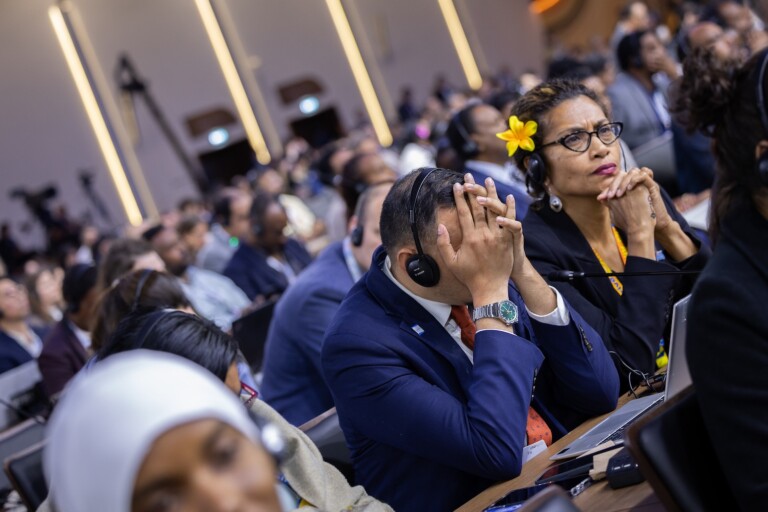
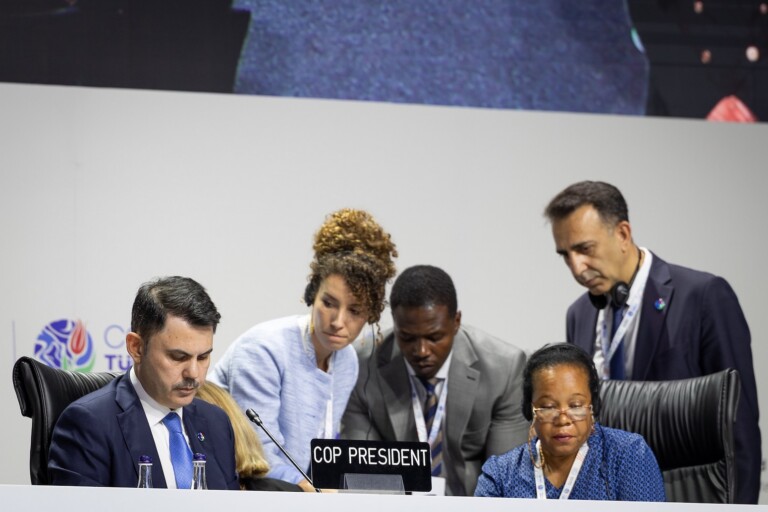
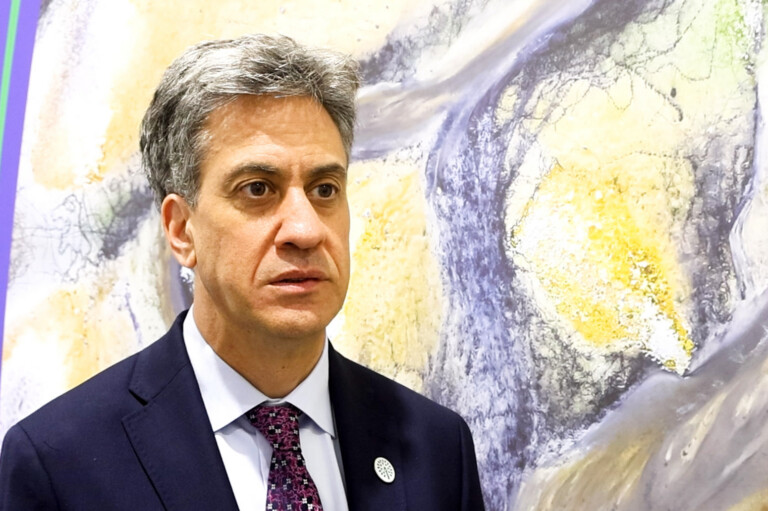
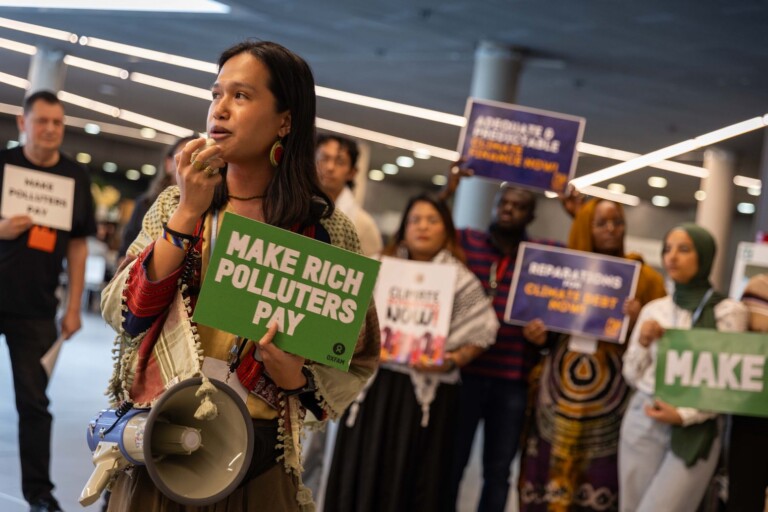
The post CB Live: Carbon Brief journalists discuss key COP31 outcomes appeared first on Carbon Brief.
CB Live: Carbon Brief journalists discuss key COP31 outcomes
Climate Change
COP31: Key outcomes for food, forests, oceans and nature at the UN climate talks in Antalya
The COP31 climate talks in Antalya, Turkey, failed to agree on a “pact” that – despite making no clear reference to fossil fuels or adaptation finance – had contained strong signals for oceans.
The “Antalya pact” took up much of the two weeks of negotiating time in Turkey, only to be rejected during the closing plenary by the EU, the UK and several climate-vulnerable countries.
Several countries expressed their regret during the plenary that significant work on advancing ocean-climate action would be lost.
The COP ran nearly 50 hours over time, but did not end with substantive outcomes on several key topics.
For the second year in a row, negotiations on agriculture and food security broke down and will now have to resume next year.
Food-systems advocates were, however, heartened by the explicit inclusion of “agroecology” in a decision within the “just transition work programme”.
Ocean-conservation groups noted an increased focus on ocean-climate links at this year’s COP, but said COP31 did not live up to its promise of being a “blue COP”.
There was also scant new funding for food systems and nature, with just a handful of small pledges to ocean initiatives and two newly announced contributions to the Tropical Forest Forever Facility.
Here, Carbon Brief analyses all of the key outcomes for food, forests, oceans and nature at COP31 – both inside and out of the negotiating rooms.
(See Carbon Brief’s coverage of food, forests, oceans and nature at COP30, COP29, COP28, COP27 and COP26.)
Formal negotiations
Cover decision
The final draft of a COP31 “cover decision” was rejected by at least 32 countries during a chaotic – and, at times, acrimonious – closing plenary in Antalya.
Other recent COPs have issued cover decisions, setting a firm precedent.
However, many parties remained unhappy about the existence of the cover decision, the process by which it was put together and the impact it had on time for other negotiations.