

Weather Guard Lightning Tech

EOLOGIX-PING Lightning Sensors Join SkySpecs Horizon
Allen and Joel are joined by Matthew Stead, Chief Product Officer and Co-founder of EOLIGIX-PING, at the SkySpecs Customer Forum 2025. They discuss the biggest takeaways from the forum, new developments at EOLOGIX-PING, and the upcoming Wind Energy O&M Australia event.
Sign up now for Uptime Tech News, our weekly email update on all things wind technology. This episode is sponsored by Weather Guard Lightning Tech. Learn more about Weather Guard’s StrikeTape Wind Turbine LPS retrofit. Follow the show on Facebook, YouTube, Twitter, Linkedin and visit Weather Guard on the web. And subscribe to Rosemary Barnes’ YouTube channel here. Have a question we can answer on the show? Email us!
Intro: [00:00:00] Welcome to Uptime Spotlight, shining Light on Wind Energy’s brightest innovators. This is the Progress Powering Tomorrow.
Allen Hall: Welcome to the Uptime Wind Energy Podcast. I’m your host, Alan Hall, and I’m with Joel Saxon. And we are in Ann Arbor, Michigan with Matthew Stead, chief Product Officer. And co-founder of eLog Ping and he is traveled all the way from Australia to be here in Ann Arbor, Michigan. We are at the Skys Specs customer Forum 2025.
We’ve been spending the last couple of days with most of the operators in the United States, uh, learning about what issues they are having and how they’re using Skys specs to reduce their overall operational costs. Boy, Matthew, it, it is been a really interesting couple of days hearing where customers are struggling and where they are trying to attack lost revenue.
Matthew Stead: Yeah, I think it’s [00:01:00] been amazing. I’m so pleased to be here. And, you know, it was great to get the invitation, uh, from Skyspace. I, I think, um, really the things that I’ve been hearing is the data and pulling data together, uh, to getting those insights as to what’s going wrong and then, and then fixing it and getting the money back.
Joel Saxum: Yeah. Yeah. The, the big thing here, we’re talking about the one big beautiful build, and it’s followed on the industry.
Matthew Stead: Yeah.
Joel Saxum: Right. So the, the theme of the event is prevent, perform, or prevent, prevent, predict, perform, I’m gonna get it wrong again.
Allen Hall: There’s three Ps,
Joel Saxum: three very important ps. But what we’re looking at is, is how, how can digitalization, how can the next generation of op intelligent asset management change the way we do things?
Because you can’t do things reactively like we were in the past anymore.
Matthew Stead: Yeah,
Joel Saxum: right. Even when budgets were tight before they’re gonna get even tighter. We’re gonna, and we’re gonna have to make sure that these assets are running. And that’s where like your smarter, smarter, smarter, smarter, right? Yeah.
Your solutions come into play. The Skys specs team. The, the, the conversations in the sessions. The [00:02:00] conversations around the sessions, the conversations over a beer.
Matthew Stead: Yeah. Yeah.
Joel Saxum: They have all been about the same concepts, right? About how can we do this better, more efficiently. And one of the reasons I really like events.
Like this is, like you said, Allen, you have all these operators. Yeah. You have all of these engine. It’s a, it’s a room full of 50 engineers that probably control man, 60 to 70% of the
Allen Hall: Oh yeah.
Matthew Stead: The US
Joel Saxum: fleet. In the US fleet. Right. So you have so much knowledge, so much sharing, and it’s an open forum. You have people p piping up, Hey, we use this strategy.
Hey, we do this. I heard some really cool things this week.
Matthew Stead: Yeah, I, I, at breakfast this morning, I was sitting to two guys, one from Canada, one from the US and they were talking about Repowering. One guy’s got GE turbines. He didn’t know that he could put a vestas in a cell on a G turbine.
Joel Saxum: Yeah.
Matthew Stead: And so these guys have exchanged details.
Ban.
Joel Saxum: Yeah.
Matthew Stead: That was beautiful to watch together.
Allen Hall: Well, yeah, we’ve, Joel and I have been hosting a number of panels, uh, during the Sky Specs event. If [00:03:00] those have been eyeopening, uh, I hosted one earlier yesterday and it, uh, the panelists, I don’t get too deep about who the panelists were because a lot of this is obviously.
It’s just be kept in house. But some of the approaches, uh, to the one big beautiful bill act mm-hmm. Were unique. The insights there that a lot of operators were planning for since last year.
Joel Saxum: Mm-hmm.
Allen Hall: Mm-hmm. And that they felt like this where we are today was likely to happen and they were making adjustments way back in October, November of last year.
So the repowering issues that we talk about a lot, and you hear smaller operators really struggling with bigger operators. Already had a plan of attack.
Joel Saxum: Safe harbor. Safe harbor. Safe harbor. Yeah. I’ve heard that word a lot. Right. And that was a, it was a plan from some of those, those, those big operators, uh, their senior leadership that shared some of their strategy, which I was surprised they did.
It was fantastic. But, um, if you haven’t been safe harboring, uh, or in, in contact with some good tax lawyers to understand the fall of these things and what it means to your [00:04:00] operation, do that now. Mm-hmm. Um, because you have, we have this cliff coming July 4th next year, and then at the end of the year after that.
Allen Hall: Yeah. So the, the amount of planet assets is going to, uh, go down and I think everybody in the industry has been. Talking about that. You see a lot of news reports about the number of wind turbines that will likely, uh, be repowered is gonna drop down. However, uh, a lot of operators have 10 year plans and those plans have not really changed all that much.
They, they weren’t super aggressive. They knew that during the Biden administration, this was just an extension mm-hmm. Of the Obama administration, but eventually it was going to end. Mm-hmm. That’s say they were preparing for the end anyway. And you hear that in their operational strategy.
Joel Saxum: Mm-hmm.
Allen Hall: You hear about how they’re trying to reduce their overall spend every year.
They’re trying to reduce their o and m budgets by a percent or two, even though the fleet’s getting bigger.
Joel Saxum: Yeah. An interesting conversation I had this morning was right around that was we’re, it was, this was not the same operator you and I talked to, but a different one saying that, Hey, we’re good through 28, 29.
Now [00:05:00] what happens with the next administration changes things. But then another person at the table, this was breakfast again, um, said, uh. That being said, what does the job market look like for engineers? My take on it was engineering staffs are being changed. However, if you’re an SME, that’s where, that’s where it lies.
And this person at the table was like, that’s awesome to hear, because my new boss just asked me to be the SME for blades in our company. It’s like
Matthew Stead: burn
Joel Saxum: chase it. Yes. The bonus that raised today. Yeah,
Matthew Stead: I, I, two things struck me. One was the, first of all that actually having the bill. Is clarity. I mean it’s actually good.
So I mean, that struck me as a real positive that actually there can be
Joel Saxum: getting outta the gray area.
Matthew Stead: There is some optimism there. And the other thing I heard, um, many people were talking about, not necessarily repowering, they were talking about. Whole of life, you know, o and m strategies, right? And then if Repowering happens.
So that was a bit of a, a lesson learned for me.
Allen Hall: Well, because a lot of operators that are in the United States have [00:06:00] a European branch, or they were, or European base, or they came
Matthew Stead: from
Allen Hall: there, right? So, and that’s a just completely different model than what we’ve been talking about in the United States and what has been offered in the United States.
But that stra, that European strategy has. Transferred over. And so it’s always
Matthew Stead: been,
Allen Hall: yeah. And the plans are there now. Yeah. And, and because they started several months ago, practically a year ago now. Mm-hmm. They have some sanity looking forward. Mm-hmm. They’re not panicking. And I was expecting to hear a little more cautiousness, a little more panic.
No. Mm-hmm. Not really.
Joel Saxum: It’s the same conversation that we’ve been having on the podcast for, for, since the follow out of this thing back in July of. This is going to change operational strategies, but being here we’re only what, three months removed from that?
Allen Hall: Mm-hmm.
Joel Saxum: And it seems like the strategies are already there.
Allen Hall: It was,
Joel Saxum: right. They’re already like, yeah, we’re we’re moving. Yeah. They’re big companies,
Allen Hall: right? Shore is different. Yeah. I think, I think offshore is where they got a little broadsided.
Joel Saxum: Yeah.
Allen Hall: Onshore not so much. And because [00:07:00] every operator pretty much has. Some level of solar, some level of battery. They just see, all right, if, if wind’s gonna get pummeled for a few months, we’re gonna put in a bunch of solar and we’re the plans, were already in place to do it anyway.
So we’re gonna do the solars, we’re gonna do the batteries, we’re gonna make the grid more resilient regardless of what happens to wind, which is great. I, in my opinion, some of the discussions happening in Skys specs this week, were the grid’s gonna get more resilient. We’re gonna handle the AI data power increase, and here’s how we’re gonna do it.
Joel Saxum: I heard this morning in another major operator, five to one solar farms to wind farms.
Matthew Stead: Yeah, yeah. That they’re
Joel Saxum: installing.
Matthew Stead: Yeah. More and more it’s wind, solar, battery, and in the same sentence.
Allen Hall: Yeah. And, and solar has always been falling way behind. And wind. Wind is way out in front of solar. And now solar’s finally catching up.
And it needed to be that way. This is what’s happening in Australia. You have to have a balance. You can’t have all solar, no wind. All wind and no solar, you have to have both. Plus a little bit of battery.
Matthew Stead: Definitely. In Australia, solar has [00:08:00] been above wind for a while,
Allen Hall: right? Yeah. Yeah. Right. And you’re now, you’re now it’s, it’s swinging the other way.
Right? There’s a lot of wind development going on
Matthew Stead: Yeah.
Allen Hall: In Australia and a lot of battery going on in Australia. So that balance is needed. And, uh, as we go forward, I think especially when we learn more about what happened, uh, in the Iberian Peninsula over the past spring, we’re gonna realize more solar, more wind to balance it out.
Then we’re also gonna need more battery to level it out. Yeah. Inia stability is gonna be tremendous. Way better than it was 10 years ago.
Matthew Stead: Yeah.
Allen Hall: And that’s unique. Now, one of the things that was announced today was the partnership between OGs Ping and Skys spec. So Matthew, would you like to. Talk to that.
Matthew Stead: Yeah, I mean, sky Skys specs have a great name in the industry and you know, I think the missing piece for them has been sensors, um, and lightning sensors. You know, the event Lightning sensor that we offer is perfect into their business model. So it ties in with the, you know, there’s an event, there’s an inspection, then there can be some actions you can get dealt with really [00:09:00] super quickly.
You know, maybe strike. Struck tape as well, necessary, of course. Um, but yeah, I’m super pleased this one’s been a little bit of, um, in the making. But yeah, super pleased that, um, sky Spec’s announced that this morning.
Allen Hall: Well, and Joel and I look at Sky Spec’s, drone images and internal inspections all the time.
Bring in regards to lightning. And every time I see a listing of damages on a wind farm, probably 30 to 60%. Depends on where you are. Of the damages are from Lightning. So it makes sense for Sky Specs to give everybody an alert if, if lightning is that important to the operational performance. Knowing you’ve been struck is the first thing.
Matthew Stead: Yeah.
Allen Hall: You should know.
Matthew Stead: Yeah. And was, you know, the, wasn’t the, the email from Intel store last week with, you know, lightning damage up there near the top.
Joel Saxum: Yeah.
Matthew Stead: Yeah.
Joel Saxum: Well, and, and the way Skys spec runs their operation as far as their. Very graduated on workflows and this is how this mm-hmm. This is how this plan works.
This is how this plan works. When they debuted it this morning, uh, it [00:10:00] was very clear to this is how it’s gonna work. Here’s how the workflow is lightning, bang, bang, bang. And then it was documentation. If you’re an under F, SA for your OE em, yeah. It was documentation. If you have an insurance claim and or their tech enabled insights, Hey, here’s what the damage looks like.
Do you need a repair? And then repair vendor management. Yeah. And the whole thing fits together. At the same time conversations about if there’s, if you’re in a heavy prone lightning area, now we have more and more data, accurate data to make decisions on. It’s up to, you need a strike tape or something of that sort?
Yeah,
Allen Hall: yeah, absolutely. Because the problem you see today is when they have lightning damage, they have to do an RC. A RCA takes anywhere between, say, at a minimum four weeks to. 20 weeks to get produced in that RCA process of trying to figure out when the lightning strike occurred, how big was it, all these other details.
And if you knew immediately that a lightning strike had occurred and you had done the inspection in according to Sky Specs mm-hmm. You would have all that data and you’d be, you would be able to have an RCA done in seven days.
Joel Saxum: Yeah.
Allen Hall: Which is [00:11:00] brilliant because that’s where you go back to the insurance or the FSA agreement and go.
Alright, we need to get something done.
Matthew Stead: Mm-hmm. Yeah. I was talking to an insurer and their biggest bug bear was actually the time taken to resolve the matter.
Joel Saxum: Yes.
Matthew Stead: Because they’re paying for a daily whatever. Yes.
Joel Saxum: A business interruption.
Matthew Stead: Yeah. Regularly. Nine grand a day, 12 grand a day,
Joel Saxum: which is regularly in the insurance world.
Three to one cost of property damage.
Matthew Stead: Exactly. So they’d be super keen to get this resolved quickly. No, no arguments.
Allen Hall: Get the, get the repair made. If it has to be made, get the turbine back operating. Start producing. So the business interruption. Yeah. Payments stop.
Joel Saxum: Yeah. If you’re a skys specs customer and you’re already getting inspections done regularly, so depending on your model, you might be doing ’em quarterly.
You have other headaches if that’s going on. Um, but uh, you have an big
Matthew Stead: bond.
Joel Saxum: Yeah, sorry. But you have a health record, right? So you know what the status of that turbine was. Then there’s a strike at a certain time. You go back to the last inspection, there was no damage. New inspection, there is damage. Okay, now we have a reality.
We know what the strike was. We know where the damage is. Here’s a PDF boom. That’s [00:12:00] proof.
Allen Hall: Mm-hmm. And there’s so much happening at eLog Ping at the moment. And we’re a lightning base ’cause we’re a lightning company, so we’re looking usually at the tip. But eLog Ping has been doing a lot of work at the root of the blade more recently because of the root bushing issue and some of the ways that we need to monitor that.
You usually, basically an existing device, uh, that has been primarily used for icing detection because it has, but it has this magic IME inside of it. Exactly. So it can detect. Blade motion that is now being applied for root bushing. Debos
Matthew Stead: Exactly.
Allen Hall: Which is a, a really smart move.
Matthew Stead: Yeah. I think it was probably about six months ago, one of the largest operators in the US um, was asked, what, what is one of their biggest problems?
And it was Route Debo. And so we sort of shifted our focus a bit. And since then we’ve been monitoring. Yeah, exactly. Like you say, our on blade, you know, eye sensor, um, was repurposed to measure vibration, what the blades are doing. And so we’ve got [00:13:00] some really cool stuff going on there. Um, and so we’ve also repurposed that for measuring root, deb bond, um, and actually.
Yesterday I received this, the best plot ever. A big beautiful plot. One,
Joel Saxum: one big, beautiful plot.
Matthew Stead: Um, showing the results so we can measure, um, root de bond. So yeah, we’re now looking for a bit of a wait list for customers, um, that wanna take up this service ’cause we know it’s a pain.
Joel Saxum: What does deployment look like?
Matthew Stead: Um, sensor on the front. Sensor on the back from the hub. On the outside.
Joel Saxum: Okay, so stood on the blade at the root, right?
Matthew Stead: Yeah. At the root, yeah. Okay. So you climb out, get on top of the hub, slap it on the front, the back, each blade and a comms box.
Joel Saxum: That’s it. Comms box goes in then to sell?
Matthew Stead: Yeah.
Joel Saxum: Wireless. Just power and Yeah.
Communicates itself.
Matthew Stead: Yeah.
Joel Saxum: Beautiful.
Matthew Stead: Easy. Easy. Well, that’s easy. Okay.
Joel Saxum: I said that’s at half a day a tower.
Allen Hall: Yeah. Oh, with that? Yeah. I
Matthew Stead: could do it.[00:14:00]
Allen Hall: Yeah. Well, I think that because the root bushing issue hasn’t been solved the, at the OEM level. Yeah. And because of there’s so many state harbor blades, and Joel, you pointed out like there’s just a couple years of safe harbor blades out there. That ru bushing issue has been sitting in the field for the last two years, and now we’re gonna deploy these blades because we’re in a rush to do it.
The root bushing issue, if, you know what model number is susceptible to it, you could actually install the OGs pink system on the ground.
Matthew Stead: Yeah. Uh, yeah. It would take
Allen Hall: 10 minutes to do it.
Matthew Stead: Exactly. Yeah, exactly. Um, and I think probably the big thing that we’ve been sort of realizing is that the, the whole industry is cost constrained.
And so what we’ve been trying to do is look at, well, what is a business case? And so there’s no point in developing a product unless there’s. A really clear return. So we really tried to optimize the cost of our system time for installation so that the customers [00:15:00] absolutely get a return on investment.
Allen Hall: Well, and the, the cost of any installation for a product is one third of the cost of the product. Two third, the cost of installation typically. Yeah.
Matthew Stead: Yeah, yeah, yeah.
Allen Hall: Exactly right. So doing it on the ground’s gonna save you two thirds of the cost typically. Yeah. And that’s where it should be done.
Joel Saxum: Well, I think that’s something that we, we, Alan, you and I.
On a podcast or off the podcast harp on all the time for everybody in wind. Yeah. It’s an industry thing, but a clear business case.
Matthew Stead: Mm.
Joel Saxum: Thank you.
Matthew Stead: Be smart.
Joel Saxum: Thank you.
Matthew Stead: Be smart. Be smart. Can I just do a little segue? Yeah. Um, this is another one of my favorite topics. Um, so we’ve sort of released a, like a technology enabled service, um, function now, which is actually using our hardware to delve into problems.
Um, and the first customer we had on that was Blade Twist. So we instrumented a long-ish blade. I can’t say how long. A hundred meters greater than a hundred meters around.
Allen Hall: Okay.
Matthew Stead: Um, [00:16:00] around, um, and we instrumented at the root, uh, 50%, 70%. Mm-hmm. And we’re able to measure the blade. The blade twisting in operation.
Allen Hall: Okay.
Matthew Stead: And the how much is twisting and how much is twisting can be compared against the design. And there’s a whole lot of standards around this topic, which, um, I think is an industry issue coming up.
Allen Hall: It’s very difficult to, to test.
Matthew Stead: Yeah. Portion. Yeah. Yeah. And it’s not even in the standard necessarily.
Not right
Allen Hall: now, no.
Matthew Stead: The
Joel Saxum: EMS are sort
Matthew Stead: of doing it. Yeah. So this is one of my favorite projects
Joel Saxum: and there’s a lot
Matthew Stead: of late twist,
Joel Saxum: there’s a lot of engineers that will say. This twists, this doesn’t field people saying it actually. Like what’s the Siemens model that does the active pitch?
Matthew Stead: Yeah. Yeah.
Joel Saxum: That they say it doesn’t actually have torsion on it, but some people say in the field it does.
Matthew Stead: Yeah.
Allen Hall: Yes.
Matthew Stead: So it’s all about the life. It’s all about the life, I mean, right. Yeah. Really, if you, you want 20, 30, whatever years you need to know, you gotta be careful.
Joel Saxum: Yeah. At the end of the day, is
Matthew Stead: it behaving?
Joel Saxum: Yeah. So that was, that’s an interesting conversation we talked about earlier. I think it was yesterday, of digital [00:17:00] twins with composites.
Because comp, the tough thing with that is a composite’s always changing.
Matthew Stead: Yeah.
Joel Saxum: Right. So there’s always a fatigue life and there’s the strength of it and the amount of twist and those, those things are gonna change throughout its life. So to, to develop a digital twin is very difficult.
Allen Hall: Yeah.
Joel Saxum: Right. So you can sense things.
Yes. And that’s what you guys are doing. Yeah.
Allen Hall: Yeah, yeah.
Joel Saxum: But developing a actual digital twin that you can, you know, a hundred percent rely on, is difficult.
Allen Hall: And I think the torsion question changes based upon where you are in the world. And northern colder climates. I think the torsion issue is a little bit different than you get closer to the equator and it’s warmer.
Matthew Stead: Yeah. The turbulence and Yeah. Yeah.
Allen Hall: And throw in turbulence.
Matthew Stead: Yeah.
Allen Hall: Right. So not, it’s not a one size fits all solution there. You need to understand what’s happening on your site. In particular in regards to torsion and a number of other things, vibrational modes
Matthew Stead: and,
Allen Hall: and root bushing’s, the same thing. I think some of the root bushing issues that I’m hearing about are where it’s a little bit hot, warmer.
Matthew Stead: [00:18:00] Mm-hmm.
Allen Hall: Right. Where we were seeing some issues there because of the temperature and maybe humidity, but So you can’t always take the data from Denmark and apply it worldwide. Yeah. You can’t apply that necessarily to Australia. You need to put some sensors on it and monitor it, even if you’re monitoring on a sampling basis.
On a tur you don’t have any experience on, at least you know
Matthew Stead: Yeah.
Allen Hall: What is likely to happen and then you can do some prediction.
Joel Saxum: Mm-hmm.
Allen Hall: Have a little bit of a model of what five years out looks like.
Joel Saxum: Yeah. You and I walked through a case one time with, uh, with a guest on the podcast about the same exact turbine model, like serial numbers that were real close to each other.
Yeah. Deployed in Sweden and deployed in Thailand.
Matthew Stead: Ah, cool.
Joel Saxum: And the ones in Thailand had way more of the same serial issue. And the ones in Sweden had like one. Wow. The ones in Thailand had like a hundred.
Matthew Stead: Interesting,
Joel Saxum: but they’re, they equated it to heat and humidity in the effecting the maintenance layup.
Matthew Stead: It’s a lot. We don’t know.
Joel Saxum: Yeah,
Allen Hall: there’s a lot We don’t know because,
Joel Saxum: because that we don’t need sensors for
Allen Hall: Exactly. We, the sensor part has been the missing link of saving operators millions of dollars a [00:19:00] year. We are literally talking about those numbers. A lot of the big savings have already happened.
Now we’re looking f when I say big savings. Operators are pretty smart about cutting $10 million out of a budget because that’s what they do for a living. You got a lot of smart people in the room trying to do that. Now we’re looking for million dollar grabs as as many places as we can. Sensors are gonna be that million dollar grab.
Mm-hmm.
Joel Saxum: Well, I think the sensor thing, and, and this is a, a macro comment about blade sensing technology, when I first got into the wind industry full time, 2019. If there was you guys were around. Yeah, right. There was blade sensing products around and IOT products for Blades around, but it was like every, even up 21, 22, 23, you had panels that sessions going like, yeah, we know there’s stuff out there.
All these operators saying, hmm eh. But it really seems in the last year, and with the one big beautiful bill here that people are actually listening. They’re seeing the technology, they’re deploying it more. Um, I mean, you guys are, you’ve got 2000 systems out in the field.
Matthew Stead: Two and a half,
Joel Saxum: two and a half thousand systems of different, all different products.
[00:20:00] Yeah, yeah, yeah. For different solutions and. You’re seeing more people say, seeing the value in it, adopting it. Mm-hmm. Looking at doing things more intelligently. That to me is very promising.
Matthew Stead: Yeah. And I think, um, also at this, um, event, we announced some of the results of the study that we did now with you guys as well around the nearly 3000, uh, lightning events.
We’ve, we’ve been measuring over the last 12 years. Uh, 12 months, sorry. In 12 years. 12 months. 12 years. Feels like lot of good data in 12 years. Like 12 years.
Joel Saxum: Yeah.
Matthew Stead: Um, and so we’ve got some really good data about, um, this ties into the risk factor, you know? Mm-hmm. Which, which turbines are being struck more, which ones need to be, you know, more attention and so.
You know, 3000 strikes. Um, so I think, you know, in the next 12 months, we’ll get 6,000 when we get more units out. So data, data, data feeding back into reducing risk.
Joel Saxum: Yeah. So data reducing risk through like showing realities.
Matthew Stead: Yeah.
Joel Saxum: Right. So, um, to anybody listening here, if you, you’re interested in what the latest we’ve seen in ground truthing lightning strike data to lightning location services to what’s [00:21:00] actually happening in the field.
Get ahold of us. Get ahold of a myself, Matthew. We’ll hop on a call, walk you through what this data looks like. It’s eye-opening.
Matthew Stead: Yeah. Upward strikes.
Joel Saxum: Upward strikes.
Allen Hall: Yeah. Upward strikes are, were really prevalent this year in the United States. Yeah. We’ve been tracking it pretty closely. And uh, Matthew, I think you threw a number out like 20%.
Matthew Stead: Yeah,
Allen Hall: definitely. Of wind turbine strikes or upward strikes.
Matthew Stead: Yeah. Or more. I mean, that’s, or more that’s, that’s, that’s, that’s for the full 12 months.
Allen Hall: Right.
Matthew Stead: So when you look at winter.
Allen Hall: Oh, it goes up by, yeah, yeah. Substantially. Yeah. Yeah. So it varies by season. All this is leading to an event that’s gonna happen in February in Melbourne, Australia.
So we’ve been working hard behind the scenes on Wind Energy O and M Australia, 2026. Last year we had about 180 people, 200 people, uh, 72. Yeah. So it, it was a big size crowd. We, we, we had to close the door at point. We
Matthew Stead: plan for 80. [00:22:00]
Allen Hall: Yeah. Yeah. We plan for half of that and to double it. And, and this year the response has been fantastic.
Everybody’s starting to register already. What is the website right now? Just so I don’t forget it.
Matthew Stead: Uh, wind. Sorry, WMA 2020 six.com.
Allen Hall: WOMA, 2020 six.com. Com. You can go and register there if you’re interested, interested in being a presenter, uh, or being on a panel. You, you can also, yeah, put in your information there.
It is gonna be for
Joel Saxum: or sponsor.
Allen Hall: Or a sponsor, right? So looking
Joel Saxum: for a
Allen Hall: couple of sponsors. We have a lot of sponsors. If you had a lot of sponsors already sign up and, and commit, especially a number from last year. Signed up again this year because it’s a transfer of knowledge. You’re bringing people together that are experts in their field to talk to other experts about how they’re running their assets.
That is what you need. If you’re an operator, you want to put your engineers in that room and you’re in asset managers in that room to get to the best configuration. The best setup for Turbine [00:23:00] in Australia, turbines in America. Turbines in Brazil.
Intro: Mm-hmm.
Allen Hall: That’s where everybody’s gonna be coming together in Melbourne in February.
Is a lot better weather than anything in the United States for sure. Unless you’re in Miami, maybe. But Melbourne is a beautiful city. It’s easy to get around in. It’s an easy airport in and out of flights all the time. It is a simple place to get to, even though it is a long distance from the United States.
It’s easy. Yeah, that’s one of the things I enjoyed the most was pleasant weather. Great restaurants, a lot of. Really, really good presentations and panels. Mm-hmm. And I walked out with a lot more knowledge than when I walked out.
Matthew Stead: Mm-hmm. Uh, I think Joel’s, uh, line was by engineers for engineers.
Allen Hall: Mm.
Matthew Stead: Yeah. So I think that helped a lot.
And I think the other thing that this is very clearly a not-for-profit event and it, so it is really about the knowledge and knowledge sharing rather than Yeah. Salesy stuff.
Joel Saxum: Yeah. It, at that event, it’s much like the conversations we were talking about at [00:24:00] the beginning of this, this, uh, little episode that’s happening here right now.
Where we are is it’s engineers talking to engineers, people that don’t know each other. Oh, you work for this operator? Yeah, yeah, yeah. Let’s exchange information because you can help me.
Allen Hall: Yeah, yeah, yeah.
Joel Saxum: That, that, at that conference last year, it was basically all of the major operators that probably 90 to 95% of the install capacity of wind were represented there.
Plus the, the limited amount of ISPs that started to grow that market started to change a little bit. Mm-hmm. We took some feedback from the event last year and adjusted it this year to be a little bit, we’re gonna do some round tables that are based on case studies, real things that happened, real value, this is how much money was saved, this is how much time was saved, this is how the solution was implemented.
Uh, again, like we said, going in there and walking away with something that’s tangible. Yeah. That you can bring back to your operation and say, Hey, I learned this. We should try this.
Allen Hall: Yeah, that’s gonna be the, the great thing about it. And we’re only a couple months away, so if you’re interested in going to Wind Energy o and m [00:25:00] Australia 2026, you need to get to the website WMA, and register WMA 2020 six.com.
Matthew, it’s so great to connect. We, we rarely are in the same place at the same time. We’re always in different continents.
Joel Saxum: That’s because this guy travels too much.
Allen Hall: Yeah. And Matthew’s actually heading to Japan here. Tomorrow.
Joel Saxum: Yes.
Allen Hall: Uh, to do some installations in Japan, because eLog is exploded worldwide.
There’s, there’s so many deployments going on simultaneously. It’s, it’s really hard to keep up with. Every time I talk to you, I’m going to a different place. You’re putting more sensors on, like, wow, that’s pretty good.
Matthew Stead: Yeah.
Allen Hall: It’s about time. Right. Good to go
Matthew Stead: on side.
Allen Hall: The industry is moving towards more knowledge.
Yeah. And that’s great. So Matthew, thank you so much for, for being here. If anybody needs to get a hold of you, Matthew, how do they do that?
Matthew Stead: Uh, through my LinkedIn profile. Might be the easiest. Um, Matthew said. Yeah. OGs Ping. Go for it. Alright, great. Thank you, Matthew. Thanks, Alan. Thanks Joel. Good to be [00:26:00] here.
https://weatherguardwind.com/eologix-ping-skyspecs/

Weather Guard Lightning Tech
Ørsted Finishes Drone Trial, Iberdrola Exits South Korea
Allen covers Ørsted’s Hornsea 2 drone trial, the DeepWind test site, Germany’s proposed land rent cap, and Iberdrola’s Korea exit.
The Uptime Wind Energy Podcast is brought to you by Weather Guard Lightning Tech, creators of the StrikeTape Ultra LPS retrofit. Subscribe to Uptime’s Substack newsletter. And check out Rosemary’s “Engineering with Rosie” Youtube channel. Have a question we can answer on the show? Email us!
 The vast majority of Americans have liberal views. We favor a woman’s right to choose abortion, high-quality public education, affordable healthcare, clear air and water, the use of science in policymaking, equal rights for minority ethnicities and religions, and efforts to trim the enormous gap between rich and poor.
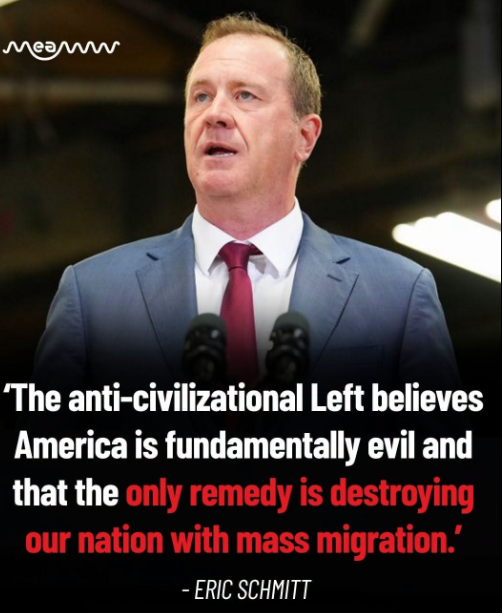
It would be very interesting to know what percentage of U.S. voters believe that liberals hate America, that we believe our country “is fundamentally evil and the only remedy is destroying our nation with mass migration (sic).”
Trump’s approval rating is about 30%, and a few percent of that is the amoral super-rich. So, possibly it’s in the high 20s.
But aren’t there at least some MAGA folks who would concede that educated people don’t necessarily hate America? My mother lived on a steady diet of Fox News, but even she had respect for Bernie Sanders, about whom she said, “I admire his sincerity, misguided though it is.”
An Important Republican Position: The Left Really IS “Radical”–But Who Believes This?
 Whoa. Let’s take a step back. Is it really either A or B?
You could on the side of the morons, those incapable of any level of critical thinking, like the author of the meme here.
