

english version below
Die physikalische Ozeanographie beschäftigt sich in großen Teilen mit Meeresströmungen: wo sie genau verlaufen, wie stark sie sind und ob sie sich verändern. Im vorherigen Blogeintrag ging es um die Verankerungen, die unter anderem Strömungsgeschwindigkeiten messen können. Diese Methode, also ein Messgerät an einem festen Punkt zu installieren und aufzuzeichnen, was vorbeifließt, nennt man Euler Methode. Der andere Ansatzpunkt – die Lagrange Methode – beruht darauf ein Messgerät ins Wasser auszusetzen, es mit der Strömung treiben zu lassen und seine Bahn zu verfolgen.
Die Idee ein Objekt mit der Strömung driften zu lassen, gibt es schon lange. Georg Neumayer kam auf die Idee Kapitänen auf ihren Reisen eine Flaschenpost mitzugeben, die an bestimmten Orten ins Wasser geworfen werden sollten. In der Flasche befand sich ein Brief, der die Finder bat sich zu melden und Fundort und -zeit zu übermitteln. Die erste dieser Flaschen ging am 14.Juli 1864 vom Schiff „Norfolk“ in der Nähe von Kap Hoorn zu Wasser. Erst drei Jahre später wurde sie an der Südküste Australiens wiedergefunden.
Ein unfreiwilliger Einsatz solcher sogenannten Drifter geschah 1992 bei einem Unfall eines Containerschiffs im Nordpazifik. Das Schiff, das von Hongkong auf dem Weg in die USA war, verlor in einem Sturm mehrere Container. Einer von ihnen hatte Badewannen-Tiere aus Plastik geladen: Quietscheenten, Biber, Schildkröten und Frösche. Geschätzte 29000 dieser Plastiktiere schwammen also plötzlich im Meer und wurden in den kommenden Jahren von Spaziergängen an zahlreichen Stränden gefunden. Zahlreiche Funde konnten auf Hawaii und in Australien vermeldet werden, einige schafften es sogar zur Westküste der USA sowie nach Schottland und England. Wahrscheinlich waren sie durch die Beringstraße nordwärts ins Nordpolarmeer bis nach Grönland in den Nordatlantik gedriftet. So wurde der Containerunfall zu einem Glücksfall für die Wissenschaft.
Die Drifter, die heutzutage eingesetzt werden, können schon ein bisschen mehr als Neumayers Flaschenpost und die verunglückten Plastiktiere. Bei den letzteren beiden, war nicht ersichtlich, welchen Weg sie zwischen Start- und Endpunkt zurückgelegt hatten. Moderne Drifter senden ihre exakten Messdaten automatisch über Satelliten an Datenzentren und machen so die annähernd simultane Beobachtung ihrer Wege möglich.
Auf dieser Fahrt haben wir auch Drifter dabei: gebaut vom Helmholtz Zentrum Hereon in Geestacht. Wissenschaftler*innen vom Hereon haben an einem Prototyp gearbeitet, der weniger Plastik enthalten soll. Jetzt besteht er aus einem Einwegglas, in dem sich Batterien und Software befinden und das erstaunliche Ähnlichkeit zu Neumayers Flaschenpost Idee zeigt. Für zusätzlichen Auftrieb und um das Glas aufrecht in der Wassersäule zu halten, befindet sich ein breiter Holzring am oberen Teil des Glases. Am Ende wird noch ein Aluminiumsegel an die Unterseite des Drifters gehängt, um ihn stabil in der Wassersäule zu halten. Einige der Drifter sammeln zusätzlich zu Positionsinformationen auch Daten über Druck und Temperatur der Luft sowie Wassertemperatur.


Nachdem wir jetzt einige Wochen mit der Vorbereitung der Drifter und dem Zusammenbauen der Einzelteile verbracht haben, sind nun die ersten Drifter zu Wasser gelassen worden. Ob sie zuverlässig funktionieren, wird sich in den nächsten Tagen zeigen. Schon jetzt kann man einige der Drifter online verfolgen. Schaut einfach hier auf der Webseite von Beluga vorbei.

Drifter in a bottle
Physical oceanography is largely concerned with ocean currents: where they go, how strong they are and whether they change. The previous blog post was about the moorings, which can measure, among other things, flow velocities. This method of installing a measuring device at a fixed point and recording what passes by is called the Euler method. The other approach – the Lagrange method – is based on placing a measuring instrument in the water, letting it drift with the current and tracking its trajectory.
The idea of letting an object drift with the current has been around for a long time. Georg Neumayer came up with the idea of giving captains a message in a bottle on their journeys, which should be thrown into the water at certain places. The message was a letter asking the finders to come forward and provide the location and time of the discovery. The first of these bottles was launched on 14 July 1864 from the ship “Norfolk” near Cape Hoorn. It was only three years later that it was found on the south coast of Australia.
An involuntary use of such so-called drifters occurred in 1992 in a container ship accident in the North Pacific. The ship, which was on its way from Hong Kong to the United States, lost several containers in a storm. One of them had loaded bathtub animals made of plastic: squeaky ducks, beavers, turtles and frogs. An estimated 29,000 of these plastic animals suddenly swam in the ocean and were found during walks on numerous beaches in the years to come. Countless finds have been reported in Hawaii and Australia, some even made it to the west coast of the United States, as well as to Scotland and England. They probably drifted north through the Bering Strait into the Arctic Ocean as far as Greenland into the North Atlantic. So the container accident became a stroke of luck for science.
The drifters that are used today can already do a little more than Neumayer’s bottles and the plastic animals. For the latter two, it was not clear which way they had travelled between the starting point and the end point. Modern drifters send their precise measurement data automatically via satellites to data centers, making it possible to observe their paths almost in near real time.
On this trip we also have Drifters with us: built by the Helmholtz Centre Hereon in Geestacht. Scientists from Hereon have been working on a prototype that is supposed to contain less plastic. Now it consists of a big glass containing batteries and software and shows the astonishing resemblance to Neumayer’s bottle post idea. For additional buoyancy and to keep the glass upright in the water column, there is a wide wooden ring at the top of the glass. At the end, an aluminum sail is attached to the bottom of the drifter to keep it stable in the water column. In addition to position information, some of the drifters also collect data on air pressure and temperature as well as water temperature.
After we have spent a few weeks preparing the drifters and assembling the parts, the first drifters have now been launched. Whether they function reliably will be revealed in the coming days. You can already track some of the drifters online. Just check out the website of Beluga here.

If you’ve ever joined a beach cleanup, you’ve almost certainly picked up a plastic bottle. During Ocean Conservancy’s 2025 International Coastal Cleanup® (ICC), plastic beverage bottles were the top item collected by volunteers around the world. Plastic bottles have been among the top 10 items collected throughout the ICC’s entire 41-year history.
But where do those bottles really come from? We know rivers carry plastics of all shapes and sizes from inland communities to coasts and the ocean. What we know far less about is what makes plastic bottles move within rivers, what speeds them up or slows them down and how likely they are to reach the coast and become ocean pollution. Research on river plastics is growing worldwide, but studies in North America lag behind other regions.
Ocean Conservancy scientists, alongside a team of collaborators from 10 research institutions around the United States and Canada, set out to help close some of these pressing knowledge gaps.
How do you track a plastic bottle?
… with a little help from GPS! We modeled our research after a 2021 project in the Toronto Harbor conducted by our University of Toronto colleagues. Like the Toronto project, our research team outfitted floating plastic bottles with GPS tags that reported each bottle’s location at regular intervals. That let us calculate how far and how fast every bottle traveled. Over a two-year period, we released about 300 GPS-tagged bottles into 30 stretches of river in Los Angeles, California; California’s San Francisco Bay Area; Chicago, Illinois; Washington, D.C.; Miami, Florida; Boston, Massachusetts; and Toronto, Canada.
We chose each of these places on purpose.
The locations were selected to represent varied watershed types (ranging from temperate to subtropical climates and mountainous to flat terrain) and development intensity (suburban to densely urban). We followed the bottles for about three months each, through changing seasons, storms and rainfall before locating and retrieving them. And while the plan was always to recover the bottles at the end of the experiment, we also conducted cleanups in each watershed beforehand to make sure we were leaving things a little cleaner than we started.
What did we find?
Our bottles went on quite a journey! On average, each bottle traveled 3.8 miles, but distance traveled actually spanned a huge range depending on the bottle and location. For example, one of our bottles barely budged, moving just 240 feet over the deployment period. Another made it further than the length of a marathon, clocking in at 33 miles traveled.
We found river flow was a major driver of how far bottles went, but it wasn’t the only factor—the landscape around each river mattered too. Patterns in bottle movement revealed:
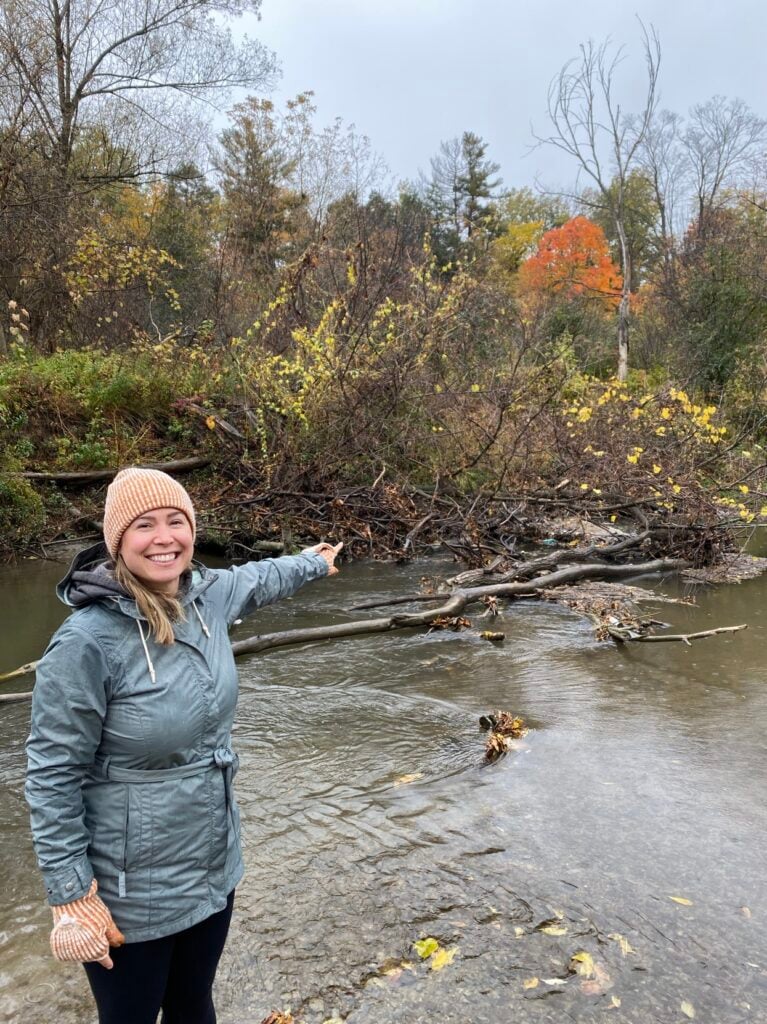
- Forest and vegetation in rivers slowed bottles down. The more forest cover upstream, the less likely a bottle was to reach the coast, because it got snagged in brush, branches and other natural obstructions.
- More urbanized stretches sped them up. Bottles moved farther and faster in more urbanized stretches of river, where there was typically less vegetation to catch them.
Using thousands of GPS points, as well as data about the river systems and watersheds we studied, we built a model to estimate where bottles reaching the coast or the Great Lakes may be coming from. It showed that within a one-year period, about half originate quite close to shore (within seven miles). The other half come from much farther inland, up to 120 miles away!
Why does this matter for our ocean?
Plastic bottles aren’t just unsightly. Ocean Conservancy’s recent, award-winning research found they can be deadly to marine life—either as whole items or after they break up into sharp fragments. There have been documented instances of seabirds like albatross dying after swallowing a plastic bottle whole.
Plastic bottles are among the most prolific plastic pollutants we see out there, and now we understand that many of those we find on beaches or in the ocean may be coming from far upstream.
That has big implications for how we tackle the problem. If half of the bottles reaching the ocean around North America or Great Lakes can start their trip more than 100 miles inland, prevention must happen upstream. Pollution-prevention models, like laws that incentivize the collection and recycling of plastic bottles before they end up in the environment, should be implemented more broadly to prevent plastic from becoming pollution in the first place. Cleanups and other efforts in coastal communities also remain critical. If we want to capture floating plastics like bottles before they reach the coast and eventually our ocean, communities within 120 miles from the ocean or Great Lakes should plan to do those cleanups on an annual basis, or even more frequently.
How can I help keep plastic bottles out of rivers and the ocean?
No matter where you live, the choices you make can help keep plastic out of the ocean:
- Support policies, like those Ocean Conservancy advocates, to stop plastic pollution at the source.
- Join a cleanup along your local river, creek or lakeshore. Every bottle picked up inland is one less that can wash out to sea.
- Choose reusables instead of single-use plastic bottles whenever you can.
We want to extend a huge thank-you to our amazing collaborators on this project at the University of New Hampshire, University of Toronto, Loyola University of Chicago, Smithsonian Environmental Research Center, Florida International University, Moore Institute for Plastic Pollution Research, San Francisco Estuary Institute, University of Waterloo, University of Southern California and University of New Mexico.
Our study, “GPS-Tracked Bottles in North American Rivers Show Marine Plastic Pollution Can Originate from Far Upstream,” was published in the November 13 issue of the scientific journal Environmental Science & Technology-Water. Read the full paper here.
This blog was co-written with Hannah De Frond. Hannah works with Ocean Conservancy and the University of Toronto Trash Team to manage the International Trash Trap Network (ITTN), a global network of local groups using trash traps to increase cleanup efforts, engage communities and inform upstream solutions.
Get Ocean Updates in Your Inbox
Sign up with your email and never miss an update.
The post How Far Does a Plastic Bottle Really Travel in a Year? appeared first on Ocean Conservancy.
If you’ve ever joined a beach cleanup, you’ve almost certainly picked up a plastic bottle. During Ocean Conservancy’s 2025 International Coastal Cleanup® (ICC), plastic beverage bottles were the top item collected by volunteers around the world. Plastic bottles have been among the top 10 items collected throughout the ICC’s entire 41-year history.
But where do those bottles really come from? We know rivers carry plastics of all shapes and sizes from inland communities to coasts and the ocean. What we know far less about is what makes plastic bottles move within rivers, what speeds them up or slows them down and how likely they are to reach the coast and become ocean pollution. Research on river plastics is growing worldwide, but studies in North America lag behind other regions.
Ocean Conservancy scientists, alongside a team of collaborators from 10 research institutions around the United States and Canada, set out to help close some of these pressing knowledge gaps.
How do you track a plastic bottle?
… with a little help from GPS! We modeled our research after a 2021 project in the Toronto Harbor conducted by our University of Toronto colleagues. Like the Toronto project, our research team outfitted floating plastic bottles with GPS tags that reported each bottle’s location at regular intervals. That let us calculate how far and how fast every bottle traveled. Over a two-year period, we released about 300 GPS-tagged bottles into 30 stretches of river in Los Angeles, California; California’s San Francisco Bay Area; Chicago, Illinois; Washington, D.C.; Miami, Florida; Boston, Massachusetts; and Toronto, Canada.
We chose each of these places on purpose.
The locations were selected to represent varied watershed types (ranging from temperate to subtropical climates and mountainous to flat terrain) and development intensity (suburban to densely urban). We followed the bottles for about three months each, through changing seasons, storms and rainfall before locating and retrieving them. And while the plan was always to recover the bottles at the end of the experiment, we also conducted cleanups in each watershed beforehand to make sure we were leaving things a little cleaner than we started.
What did we find?
Our bottles went on quite a journey! On average, each bottle traveled 3.8 miles, but distance traveled actually spanned a huge range depending on the bottle and location. For example, one of our bottles barely budged, moving just 240 feet over the deployment period. Another made it further than the length of a marathon, clocking in at 33 miles traveled.
We found river flow was a major driver of how far bottles went, but it wasn’t the only factor—the landscape around each river mattered too. Patterns in bottle movement revealed:
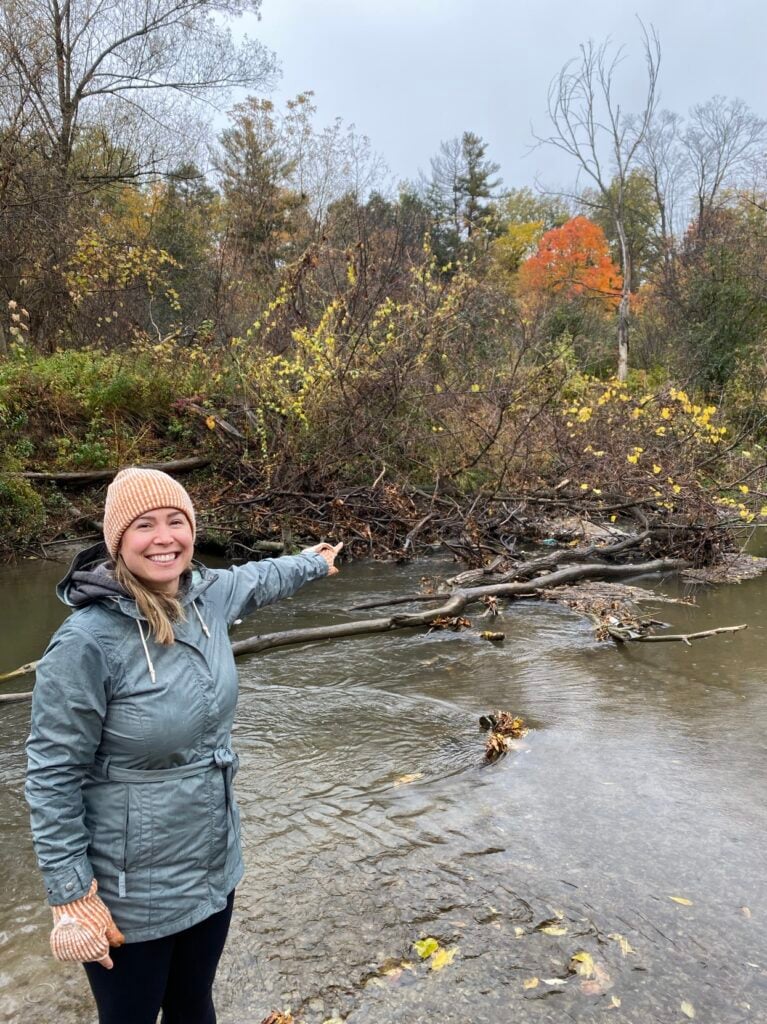
- Forest and vegetation in rivers slowed bottles down. The more forest cover upstream, the less likely a bottle was to reach the coast, because it got snagged in brush, branches and other natural obstructions.
- More urbanized stretches sped them up. Bottles moved farther and faster in more urbanized stretches of river, where there was typically less vegetation to catch them.
Using thousands of GPS points, as well as data about the river systems and watersheds we studied, we built a model to estimate where bottles reaching the coast or the Great Lakes may be coming from. It showed that within a one-year period, about half originate quite close to shore (within seven miles). The other half come from much farther inland, up to 120 miles away!
Why does this matter for our ocean?
Plastic bottles aren’t just unsightly. Ocean Conservancy’s recent, award-winning research found they can be deadly to marine life—either as whole items or after they break up into sharp fragments. There have been documented instances of seabirds like albatross dying after swallowing a plastic bottle whole.
Plastic bottles are among the most prolific plastic pollutants we see out there, and now we understand that many of those we find on beaches or in the ocean may be coming from far upstream.
That has big implications for how we tackle the problem. If half of the bottles reaching the ocean around North America or Great Lakes can start their trip more than 100 miles inland, prevention must happen upstream. Pollution-prevention models, like laws that incentivize the collection and recycling of plastic bottles before they end up in the environment, should be implemented more broadly to prevent plastic from becoming pollution in the first place. Cleanups and other efforts in coastal communities also remain critical. If we want to capture floating plastics like bottles before they reach the coast and eventually our ocean, communities within 120 miles from the ocean or Great Lakes should plan to do those cleanups on an annual basis, or even more frequently.
How can I help keep plastic bottles out of rivers and the ocean?
No matter where you live, the choices you make can help keep plastic out of the ocean:
- Support policies, like those Ocean Conservancy advocates, to stop plastic pollution at the source.
- Join a cleanup along your local river, creek or lakeshore. Every bottle picked up inland is one less that can wash out to sea.
- Choose reusables instead of single-use plastic bottles whenever you can.
We want to extend a huge thank-you to our amazing collaborators on this project at the University of New Hampshire, University of Toronto, Loyola University of Chicago, Smithsonian Environmental Research Center, Florida International University, Moore Institute for Plastic Pollution Research, San Francisco Estuary Institute, University of Waterloo, University of Southern California and University of New Mexico.
Our study, “GPS-Tracked Bottles in North American Rivers Show Marine Plastic Pollution Can Originate from Far Upstream,” was published in the November 13 issue of the scientific journal Environmental Science & Technology-Water. Read the full paper here.
This blog was co-written with Hannah De Frond. Hannah works with Ocean Conservancy and the University of Toronto Trash Team to manage the International Trash Trap Network (ITTN), a global network of local groups using trash traps to increase cleanup efforts, engage communities and inform upstream solutions.