

Welcome to Carbon Brief’s DeBriefed.
An essential guide to the week’s key developments relating to climate change.
This week
Plastic treaty pause
BUSAN BUST: Efforts to finalise a global treaty on plastic pollution failed to reach agreement in Busan, South Korea, Reuters reported. The newswire said more than 100 nations wanted the treaty to cap plastic production, but “a handful of oil-producers were prepared only to target plastic waste”. Carbon Brief previously explained how failure to address plastics production could affect efforts to tackle climate change.
FINGER POINTING: Saudi negotiators were accused of “leading” efforts to block limits on plastic production, which relies mostly on fossil fuels, said the New York Times. A French official was quoted by Agence France-Presse saying: “We also are worried by the continuing obstruction by the so-called like-minded countries.” Members of this group include China and India, which opposed limits on plastic production, according to the Hindustan Times.
POST MORTEM: The talks foundered, in part, because, as with the UN climate regime, they rely on making decisions by consensus, found analysis from the Independent. Negotiations will continue next year based on the current draft text, said the Earth Negotiations Bulletin.
Around the world
- DESERT COP: UN talks on desertification began in Riyadh, Saudi Arabia on Monday, reported Le Monde. The COP16 land summit will last for two weeks, it said.
- PRABAWO’S PLEDGE: Indonesia leader Prabawo Subianto’s pledge to phase out coal power by 2040 would entail “massive costs, reforms”, the Jakarta Post reported. The country would need to build 8 gigawatts (GW) of renewables and retire 3GW of coal each year to meet the target, according to Ember analysis cited by Bloomberg.
- COAL CURTAILED: A high court in South African capital Pretoria overturned plans for 1.5GW of new coal-fired capacity, the Mail and Guardian reported. It said the “landmark” ruling found the government had failed to adequately consider the impact of coal on children’s rights, particularly their right to a health environment.
- MONSOON FLOODS: More than 30 people were killed and tens of thousands displaced by floods in Malaysia and Thailand, Al Jazeera reported. The outlet noted climate change is “causing more intense weather patterns that can make destructive floods more likely”, according to scientists.
- CHINESE CURBS: Beijing has banned exports to the US of a series of critical minerals needed for low-carbon technologies, Reuters reported. China wanted to “safeguard its national security and interests”, said China Daily.
- HISTORIC DISCOVERY: Brazilian oil giant Petrobras and Colombian Ecopetrol have discovered Colombia’s “largest ever gas deposit”, according to Oilprice. The gas could double the country’s existing reserves, but the outlet says its energy sector is “grappling” with a government that supports the “transition away from fossil fuels”.
$100bn
The funds needed by Caribbean countries over the next 20 years to become “climate resilient”, according to comments from the International Monetary Fund reported by La Vanguardia.
Latest climate research
- The Arctic Ocean could see its first ice-free days before 2030, according to findings in Nature Communications.
- The recent “surge” in global temperatures has been “intensified by record-low planetary albedo” (reflectiveness), said a study in Science.
- A Nature Climate Change perspective critiqued the idea of climate “tipping points”, saying they “confuse and can distract from urgent climate action”.
(For more, see Carbon Brief’s in-depth daily summaries of the top climate news stories on Monday, Tuesday, Wednesday, Thursday and Friday.)
Captured

At COP29 in Baku, developed-country parties such as the EU, the US and Japan agreed to help raise “at least” $300bn a year by 2035 for climate action in developing countries. This target faced a strong backlash – and a closer inspection of climate-finance data helps to explain why. Carbon Brief analysis showed how pledges from before the COP29 deal would already bring climate finance up from $115.9bn in 2022 to around $200bn by 2030. Counting contributions from developing countries – something “encouraged” under the new goal – could raise this to $265bn. These pre-existing funds mean the target is achievable for developed countries with virtually “no additional budgetary effort”, according to experts.
Spotlight
Landmark climate case kicks off
This week, Carbon Brief interviews a leading international law scholar about a landmark climate case at the UN international court of justice.

The international court of justice (ICJ) has opened two weeks of hearings on states’ climate-related legal obligations – and the consequences, if “significant harm” is caused.
The case stems from a UN general assembly (UNGA) request for an “advisory opinion” from the ICJ. It is the ICJ’s largest ever case, with more than 100 countries and international organisations making interventions, deploying a wide variety of legal arguments.
In his opening address, Ralph Regenvanu, climate envoy for Vanuatu, which pushed for the case, said: “[T]his may well be the most consequential case in the history of humanity.”
Carbon Brief interviewed leading international law scholar Prof Philippe Sands to find out more about the legal issues at stake and the wider significance of the ICJ case.
Carbon Brief: Would you be able to start by situating this case in its wider legal context and explaining why it could be so consequential?
Philippe Sands: Well, it’s the first time the international court of justice has been called upon to address legal issues relating to climate change. The ICJ is the principal judicial organ of the United Nations and, although the advisory opinion that it hands down will not be binding on states, it is binding on all UN bodies. The determinations that the court makes will have consequences that go very far and that will have a particular authority, in legal and political terms. Of course, everything turns on what the court actually says.
CB: Would you be able to summarise the key legal arguments that are being fought over in this case?
PS: [F]or me, the crucial issues are, firstly, what the court says about the state of the science: is it established, or is there any room for doubt? Secondly, what are the obligations of states having regard to the clarity of the science. Thirdly, are there legal obligations on states in relation to the climate system that exist and arise outside of the treaty regime – the 1992 [UN Framework] convention [on climate change], the Kyoto Protocol, Paris Agreement and so on and so forth. And, related to that, fourthly – this is the most intense, legally interesting aspect – what are the responsibilities of states for historic emissions under general international law? And, in particular, are the biggest contributors liable under international law to make good any damages that may arise from their historic actions…The practicalities are that islands are disappearing with sea level rise. Are historic polluters of greenhouse gases responsible for the consequences of those disappearances?
CB: If you were going to make a bet, which way would you say the court would go on that key question of whether it’s just the [UN] climate regime that gives rise to obligations [on states], or whether there could be obligations from other parts of the law?
I think the court will proceed very carefully. I don’t think it will want to close the door to the application of other rules of international law…The broader issue here is that, essentially, the legislative system has broken down. The states have been unable to legislate effectively and efficiently to address the issues related to climate change. And, so, what has happened is that a group of states have essentially gone to the General Assembly and said: “The legislative system is broken down. Let’s now ask the judges to step in and tell us what the applicable principles and rules are.” The difficulty that that poses for the judges, who will be conscious that the legislative system has not delivered, is that it’s not the function of judges to legislate.
The full transcript of the interview can be read here.
Watch, read, listen
ZHENMIN SPEAKS: In a long interview with China Newsweek, Chinese climate envoy Liu Zhenmin reflected on the outcome of the COP29 climate talks, including the “disappoint[ing]” $300bn finance goal, and said the global energy transition is “irreversible”.
‘WAKE UP’: In a “viewpoint” article, Guardian economics editor Heather Stewart wrote that rising food prices were a sign of the “destabilising impact of [the] climate crisis”.
TALKING COP: Carbon Brief’s Anika Patel joined the All Things Policy podcast to discuss COP29, the upcoming Trump presidency and China’s actions at the summit.
Coming up
- 2-13 December: UN Desertification Conference, Riyadh, Saudi Arabia
- 2-13 December: International court of justice hearings on the obligations of states in respect of climate change, The Hague, Netherlands
- 7 December: Ghana presidential and parliamentary elections
Pick of the jobs
- International Energy Agency, junior energy modeller/analyst | Salary: €5,741 a month. Location: Paris
- University of Oxford, director of the Oxford University Museum of Natural History | Salary: Unknown. Location: Oxford, UK
- Mongabay, staff writer – California biodiversity | Salary: $54,000-$75,000. Location: California
- University of East Anglia, senior research associate – land use resource and engagement | Salary: £37,999. Location: Norwich, UK
DeBriefed is edited by Daisy Dunne. Please send any tips or feedback to debriefed@carbonbrief.org.
This is an online version of Carbon Brief’s weekly DeBriefed email newsletter. Subscribe for free here.


The post DeBriefed 6 December 2024: Plastics talks collapse; $300bn finance goal analysed; Landmark climate case kicks off appeared first on Carbon Brief.

Climate Change
“Sink or swim”: WA Gov hugely underestimating decline in regional gas demand while sleeping on green exports, new report finds
PERTH, Tuesday 13 October 2026 — A new report from Greenpeace Australia Pacific and Springmount Advisory reveals green commodity exports are an untapped economic opportunity for Western Australia in a declining Asian gas market, while offering a genuine solution for decarbonising Asia.
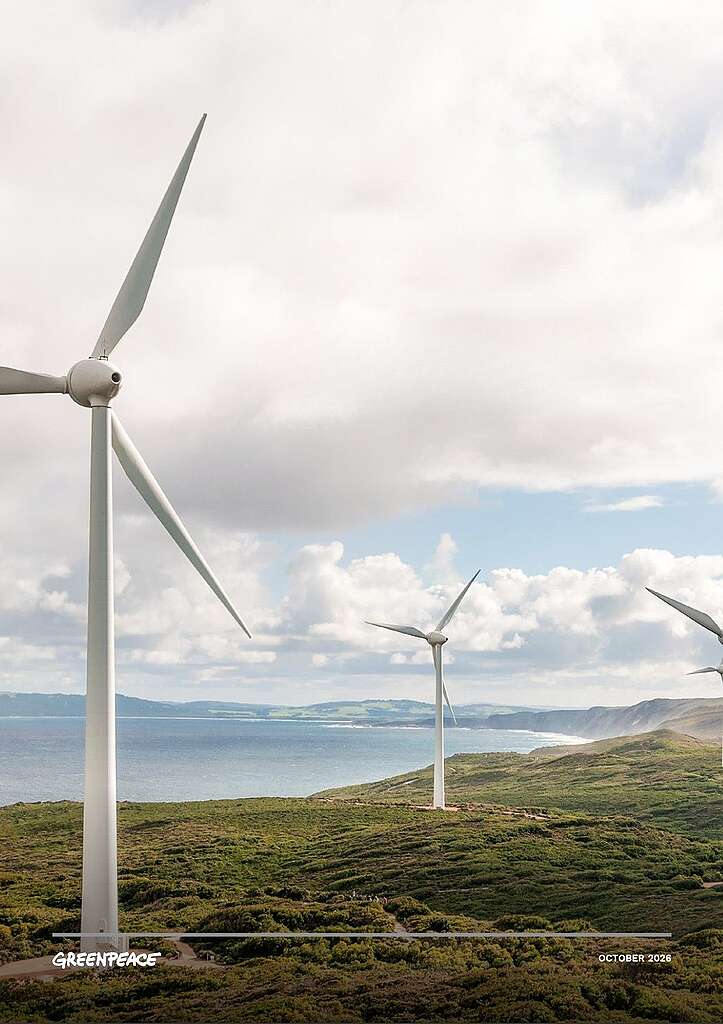
From Gas to Green: Building Western Australia’s Future State is a comprehensive analysis of the declining gas market in Asia, and the untapped economic opportunity for WA to become a global leader in green commodity exports while driving the regional shift away from fossil fuels.
The report offers key recommendations for the WA Government to support regional decarbonisation through an orderly phase out of gas exports in favour of green iron and other green exports. It comes as global climate leaders from across business, politics and advocacy prepare to meet for the Global Citizen Now: Perth event focused on decarbonising WA.
Key findings:
- Gas demand is falling across WA’s core markets in Asia: Gas demand fell in 2025 and is projected to continue to decline, driven by a combination of global geopolitical factors and domestic concerns.
- Policy shifts in key markets since the war on Iran now prioritise renewables and nuclear over gas: Japan, South Korea and China have legislated energy plans that prioritise renewables and nuclear over gas.
- New WA gas would arrive in a saturated, uncertain Asian market filled with cheaper gas: The US is now the world’s largest liquefied gas producer and plans to double its capacity as it also targets Asian markets.
- Green commodities offer a real solution to sustain WA’s economy: WA can lead Australia’s green commodity exports, which by 2060 could be worth almost a trillion dollars.
- Exporting more WA gas is likely to delay or impede Asia decarbonisation: Despite claims by the gas industry, there is no evidence that WA gas is displacing coal in Asia, and in fact diverts resources from genuine decarbonisation options.
Geoff Bice, WA Campaign Lead at Greenpeace Australia Pacific said: “As our export partners in Asia shift away from expensive and polluting gas, the WA Government has a golden opportunity to pivot our economy to green exports, like green iron, which is the most effective way to help our region to decarbonise.
“The writing is on the wall: gas is in decline, renewables are our future. In this context, it makes zero sense for the government to encourage high risk projects like Woodside’s reckless Browse gas proposal at Scott Reef.
“This report clearly shows that the WA Government faces a choice: sink or swim. They can either allow the gas industry to keep ripping off West Australians and continue propping up its decline, or choose the path that will deliver enormous benefits to the state and the world by becoming a leader in the rapidly expanding green economy.”
Tom Quinn, Managing Director of Springmount Advisory: “Western Australia prospers when it looks to the future and builds for future demand. Twenty years from now, what the world needs is green commodities made using WAs abundant renewable resources. Just like it did with iron ore in the 1950s and gas in the 1970s, WA should look to the future and build what the world will need, not sunsetting industries like gas that are already past their peak.”
-ENDS-
Media contact
Kate O’Callaghan on 0406 231 892 or kate.ocallaghan@greenpeace.org
Lucy Keller on 0491 135 308 or lucy.keller@greenpeace.org
A report from Greenpeace Australia Pacific and Springmount Advisory reveals the untapped green economic opportunity for Western Australia in a declining Asian gas market, which also offers a genuine solution for decarbonisation in Asia.
Is Western Australia clinging to a fading gas industry while a thriving green future passes it by? As major Asian trading partners rapidly pivot away from volatile gas imports toward cheap solar and battery storage, this report exposes a high-stakes choice: risk becoming stranded in an oversupplied fossil fuel market, or harness WA’s unmatched sun and wind to lead the global clean energy transition.
Summary
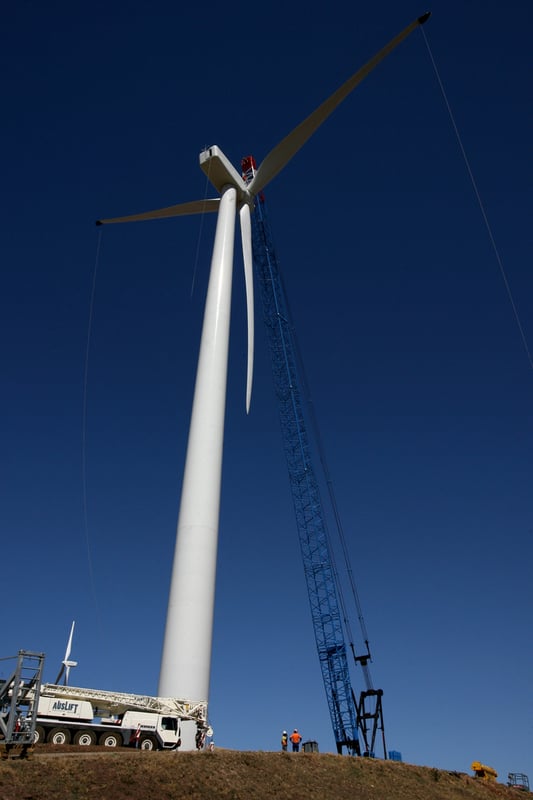
From Gas to Green: Building Western Australia’s Future State reveals that Western Australia (WA) faces a critical juncture as falling Asian gas demand, geopolitical gas supply volatility and accelerating renewable energy deployment undermine the long-term economic viability of gas exports. By harnessing its world-class wind and solar resources, the report demonstrates that WA can execute an orderly phase-out of gas and pioneer a green commodity export economy that could generate $987 billion in economic value by 2060, create 24,000 ongoing jobs, and drive a 9.6% reduction in global greenhouse gas emissions.
Key Findings
- Gas demand is falling in Asia – WA can no longer rely on gas exports: Gas demand in core Asian markets fell in 2025 and is projected to continue to decline in 2026. Legislated energy plans in Japan, South Korea, and China now prioritise renewables and nuclear over gas.
- Asia is increasing renewables, importing gas just gets in the way: Evidence from markets like Thailand suggests that gas imports are increasingly crowding out cheaper renewable energy investments and battery storage rather than displacing coal, locking in more emissions over time.
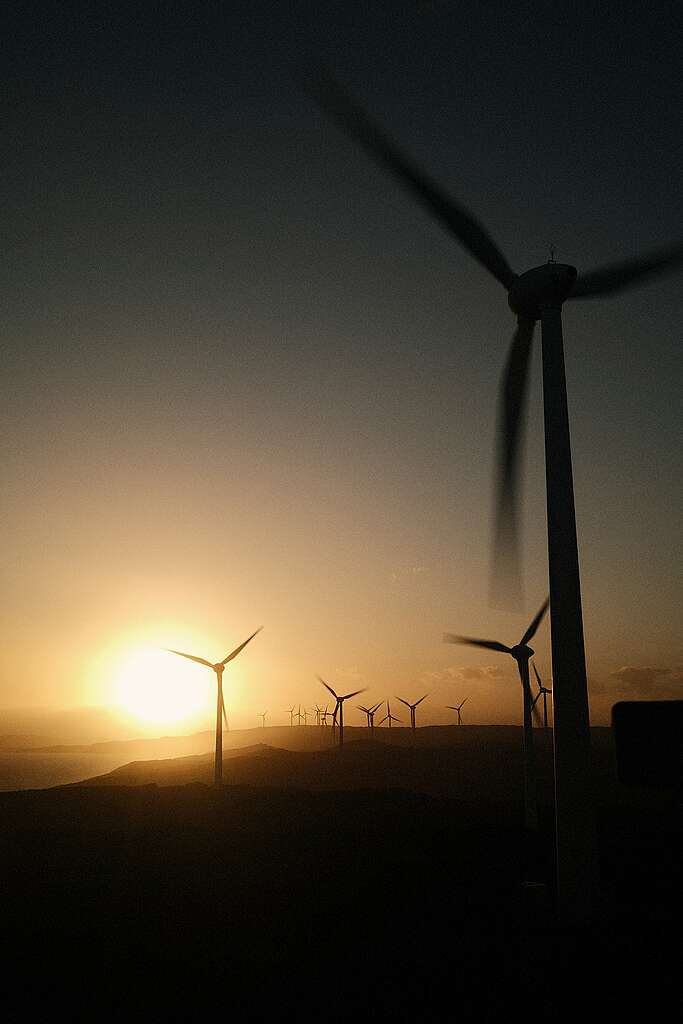
- Green commodities offer a real solution to decarbonise Asia – this is a major win for WA: With world-class renewables, WA can lead Australia’s green commodity exports, which by 2060 could be worth almost a trillion dollars ($987 billion) and support a genuine 9.6% reduction in global emissions.
Recommendations to WA government
Recommendation 1: Plan an orderly gas phase-out aligned with a trading partner pivot plan
Implement a managed, orderly phase-out of gas exports aligned with trading partners’ decarbonisation pathways, rather than waiting for demand to collapse, by:
- Developing and implementing a staged phase-out of gas facilities aligned with feedstock supply expiry or typical end of facility lifespans.
- Committing to no new gas development for gas expansion, including Browse and Kimberley fields.
- Developing new, reciprocal trade relationships with existing gas trade partners, structured to progressively replace gas exports with green commodities – integrated with recommendation 2.
Recommendation 2: Develop an integrated green commodity export strategy, positioning WA as a global green iron manufacturing hub
Establish an integrated green commodity export strategy that immediately prioritises green iron development, positioning WA as a global green iron manufacturing hub, by:
- Committing to green commodity export targets to give industry and investors a clear demand signal.
- Prioritising green iron as the lead sector within the broader green commodity strategy, given WA’s iron ore endowment and first-mover potential.
Recommendation 3: Reject false solutions such as carbon dumping (CCS) and blue hydrogen
Reject carbon dumping (also described as carbon capture and storage, or CCS) and blue hydrogen as viable decarbonisation technologies, and prioritise green hydrogen and proven renewables for clean energy and fuel production by:
- Excluding blue hydrogen projects (and CCS-dependent projects) from all government support programs.
- Requiring existing hydrogen-based production (including ammonia, methanol, synthetic fuels) to have clear, near-term transition timelines to switch to green hydrogen production.

What you can do
Together, we can push for a prosperous green future.
You can help by:
- Sending an email to Environment Minister Murray Watt and Prime Minister Anthony Albanese, calling on them to reject Browse.
- Sharing this story to help more Australians understand what’s at stake.
- Encouraging your friends and family to take action.