

Welcome to Carbon Brief’s DeBriefed.
An essential guide to the week’s key developments relating to climate change.
This week
Record Europe heat
HOTTEST EVER: The UK broke its temperature record for June twice this week, while France recorded its hottest day ever two days in a row, reported the Guardian. The Times reported that temperatures reached 36.7C in Somerset on Thursday, as the “London Ambulance Service had its busiest-ever day for life-threatening emergencies”.
FRANCE FRYING: French newspaper Libération said that temperatures reached as high as 44.3C in the south-western commune of Pissos on Wednesday. Spain also recorded its highest daily average temperature for June, said BBC News. On Thursday, Switzerland also had its hottest June day, when temperatures reached 37C in four locations, reported SwissInfo.
CLIMATE LINK: CNN covered a rapid analysis from the World Weather Attribution service finding that fossil-fuelled climate change has made this heatwave the most severe and widespread in Europe’s history. Carbon Brief covered the broken heat records, explaining the influence of climate change.
‘Electrifying’ London talks
‘LONDON COOKING’: In a sweltering, packed-out event at London climate action week, UN chief António Guterres quipped that “London is not just calling, it’s cooking”, reported Edie. Guterres also used his address to release a “global call to action on methane” and to call on artificial intelligence companies to reveal their environmental impact and source their power solely from renewables by 2030, said the publication.
‘ELECTRIFY NOW’: Elsewhere, dozens of governments, led by the EU and the UK, committed to throwing “their political weight” behind a rapid electrification of the world’s economy, according to Climate Home News. A high-level summit in London’s Mansion House saw energy ministers and business leaders, joined by Guterres, in “calling for faster action to curb demand for oil, coal and gas by powering homes, industry and transport with clean electricity”.
FOSSIL TRANSITION: At the same event, ministers from Colombia and the Netherlands, the co-hosts of the world’s first summit on transitioning away from fossil fuels in April, unveiled a report on their key takeaways. It comes after the current Colombian government has been ousted by a presidential election defeat to a fossil-fuel-supporting Trump ally. Carbon Brief examined what this could mean for the world’s energy transition.
Around the world
- UK TARGET: The UK parliament has approved its “seventh carbon budget”, aimed at cutting emissions 87% below 1990 levels by 2040.
- TOTAL ACCOUNTABILITY: A French court has ordered oil-and-gas giant TotalEnergies to account for the emissions from the use of its products, following a case brought by a climate NGO, reported Le Monde.
- METHANE RULES: The US, Qatar and other major energy exporters have urged the EU to “rewrite planned methane emissions” rules for oil-and-gas imports, saying that the policy could disrupt fuel supplies to Europe, according to Reuters.
- CHINA MESSAGE: China’s special envoy for climate change, Liu Zhenmin, said at the World Economic Forum that energy shortages triggered by the Iran war should be a “lesson to countries to accelerate their energy transitions”, reported Bloomberg.
- US WEBSITE REVIVED: Former US government workers have “recreated a valuable climate-science website” shut down by the Trump administration last year, said the New York Times.
6,600 animals
The number of livestock that perished in transport during heat in England and Wales from June to August 2025, double the number killed the year before, reported Carbon Brief.
Latest climate research
- Some world regions are experiencing up to 50 additional heat stress days annually, when compared to 1950 | Nature Climate Change
- Projections of national land-use emissions to 2100 suggest the strongest “carbon sinks” will be in China and Indonesia, whereas Brazil and the Democratic Republic of the Congo will “dominate global sources” | Nature
- Most carbon-offset projects relying on “avoided deforestation” have “mixed, negligible or negative impacts relative to control areas” | Nature Climate Change
(For more, see Carbon Brief’s in-depth daily summaries of the top climate news stories on Monday, Tuesday, Wednesday, Thursday and Friday.)
Captured
The UK government’s official climate advisers, the Climate Change Committee (CCC), has released its latest progress report, emphasising that faster electrification is the best way to secure lower energy bills and stronger energy security. Electrification has shot up the agenda in recent months, with the COP31 presidency calling for countries to back a global goal for 35% of “final” energy to come from electricity by 2035. The text of the CCC’s latest report uses the word “electrification” far more often than previous editions, as shown in the figure above. See Carbon Brief’s in-depth breakdown of the CCC’s latest advice.
Spotlight
Introducing ‘Project Cosmos’
Carbon Brief explains how it built a major new database of climate science research and unveils a new ranking of the 500 most highly cited publications, authors and institutions in climate science.
This week, Carbon Brief launched Project Cosmos – the world’s largest and most complete database of climate change research.
The database features more than 1.8m academic papers, books and reports, capturing the vast body of human knowledge about climate change that has accumulated over more than a century of academic study.
The climate science “universe” is based on reports from the Intergovernmental Panel on Climate Change (IPCC), which are recognised as the world’s most authoritative summaries of the latest climate science.
Since its first report was published in 1990, humanity’s knowledge about human-caused climate change has ballooned. The IPCC has published six sets of reports in total – each one longer than the last.
In total, IPCC reports reference more than 100,000 other papers, books and reports. This is the core of our climate science universe. Carbon Brief then built on this core, by looking at four other sources of data. Read more about how the Cosmos database was created here.
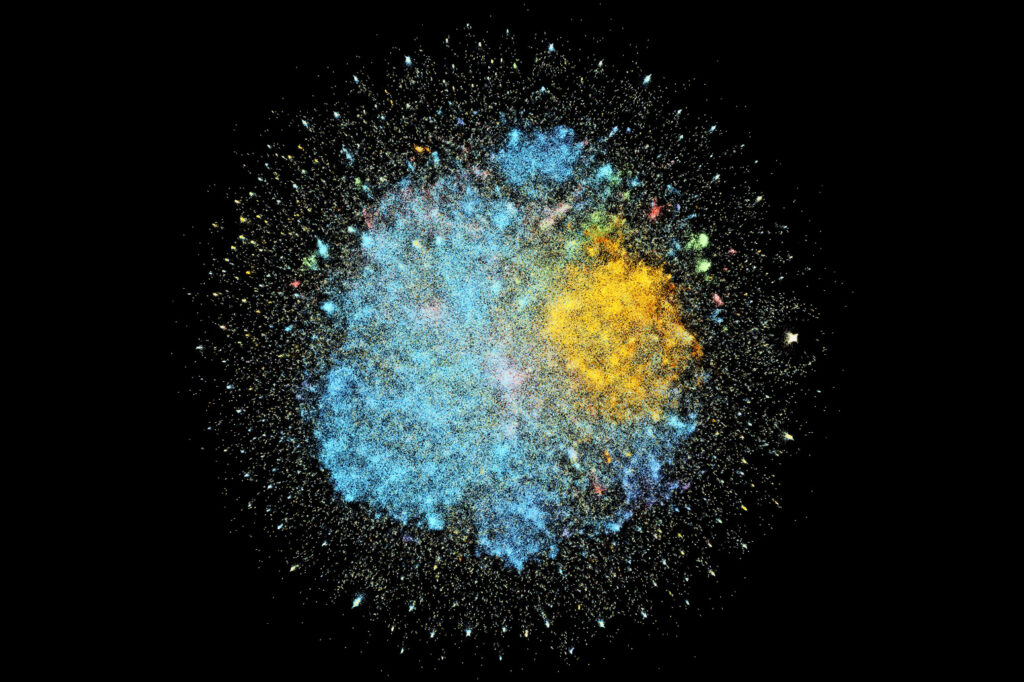
Every single publication in the Cosmos database is linked to at least one other through references. Visualising these links reveals a “galaxy” of references.
In the image above, each colour and cluster reveals different topics and densities of research. Explore the galaxy in an interactive map.
Cosmos 500
As part of an initial wave of preliminary analysis to demonstrate the scope of the Project Cosmos database, Carbon Brief has ranked the 500 most highly cited publications, authors and institutions in the database.
The most highly cited climate scientist is Prof Philippe Ciais, who has spent almost four decades researching the planet’s carbon cycle – and the ways in which humans have been impacting its balance. Carbon Brief recently interviewed Ciais in Paris.
The US tops the tables for the most highly cited authors and institutions. Almost half of the 500 most highly-cited authors are from US institutions. This raises particular concerns for the future of climate science, as US climate scientists and institutions are coming under attack under the Trump administration.
Experts from global south countries account for only 4% of all authors in the Cosmos 500. China stands out as the most highly-cited global south country. Meanwhile, only 10% of authors in the Cosmos 500 are women.
There are many possibilities for future avenues of research using the Cosmos database. Over time, the database could be used to reveal, for example, how interest in different areas of climate science has changed over time, plus identify potential knowledge gaps and, thus, opportunities for future research.
Carbon Brief invites researchers – including academics, journalists and analysts – to submit their own proposals for co-authored studies, literature reviews and analytical projects. Proposals should be sent to cosmos AT carbonbrief DOT org.
This spotlight first appeared in Cited, Carbon Brief’s new fortnightly newsletter focused on climate research. Sign up for free.
Watch, read, listen
‘DOOMSDAY CULT’: OpenDemocracy reported on a “religious cult” spreading climate misinformation in “parliaments” and at “COP summits”.
‘WEDGES’ EXAMINED: ProPublica and Drilled released an investigation into how oil executives worked to influence a climate research paper from Princeton University known as “wedges”.
‘1976 to 2056’: A 30-minute YouTube video from the Met Office had climate scientists explaining how current UK temperatures compare to the infamous 1976 heatwave, and how extremes could worsen by 2056.
Coming up
- 29-30 June: Hamburg sustainability conference, Hamburg, Germany
- 29-30 June: Seventh global conference on climate and sustainable development goals synergies, Bangkok, Thailand
- 29-30 June: 11th annual global conference on energy efficiency, Montreal, Canada
Pick of the jobs
- Drilled, series editor | Salary: $4,000 a month (six-month contract). Location: US
- Met Office, ocean climate science manager | Salary: £54,515-£58,582. Location: Exeter, UK
- Grantham Research Institute on Climate Change and the Environment, research officer (climate science and law) | Salary: £43,277-£55,497. Location: London
DeBriefed is edited by Daisy Dunne. Please send any tips or feedback to debriefed@carbonbrief.org.
This is an online version of Carbon Brief’s weekly DeBriefed email newsletter. Subscribe for free here.


The post DeBriefed 26 June 2026: Heat records broken across Europe | London climate action week | Introducing ‘Project Cosmos’ appeared first on Carbon Brief.

Next week, diplomats from around the world will descend on Yerevan, Armenia, to negotiate a series of decisions under the UN Convention on Biological Diversity (CBD).
Between 19 and 30 October, 196 parties will gather to hammer out the precise wording of the dozens of legal texts that make up the decisions under the Conference of the Parties (COP) to the CBD.
This year’s summit is particularly significant, as it marks the halfway point between the agreement of the Kunming-Montreal Global Biodiversity Framework and the deadline for achieving its targets.
The CBD has found that countries are currently not on track to meet 22 out of the framework’s 23 targets.
During the fortnight, delegates will also be negotiating decisions relating to the two supplemental protocols to the CBD: the Cartagena Protocol, which covers biosafety; and the Nagoya Protocol, which covers access and benefit-sharing for the use of genetic resources.
(The Cartagena and Nagoya Protocols, which are each governed by a “meeting of the parties”, or “MOP”, have fewer parties than the CBD as a whole, with 173 and 141, respectively.)
Carbon Brief is tracking the progress of countries towards consensus on dozens of negotiating texts using the interactive table below.
The tracker includes texts from the COP, as well as the MOPs for the Cartagena and Nagoya protocols. It also includes draft decisions from the most recent subsidiary body meetings, as these form the starting point for the negotiations in Yerevan.
The CBD has three subsidiary bodies: the subsidiary body on scientific, technical and technological advice (SBSTTA), the subsidiary body on implementation (SBI) and the subsidiary body on article 8(j) and other provisions (SB8J).
SB8J focuses on issues related to the Indigenous peoples and local communities. It was established at COP16 in Cali, Colombia, in 2024.
The first two columns of the interactive tracker list the topic of each agenda item and the relevant body, with subsequent columns including dates, page counts and links to the original documents.
The table is searchable and can be sorted using the arrows in the header.
Areas of disagreement in UN draft texts are denoted by square brackets. Counting the brackets in a particular iteration of a text therefore gives a sense of how far parties are from reaching consensus.
The bracket column is colour-coded, with dark green indicating a low number of brackets and red indicating a high number of brackets remaining.
Texts can also present parties with choices using “options” or alternatives (“alt”), which are counted together in the sixth column of the table.
The key discussions in Yerevan will centre around two agenda items in particular. The first is the global review, which will assess progress towards the GBF and make recommendations for accelerating action.
The second is finance, which can be separated into two parts: resource mobilisation and the financial mechanism. On resource mobilisation, biodiverse global south countries are likely to push for an increased amount of international finance for conservation.
Disagreement over the creation of the financial mechanism led to the suspension of COP16 in Cali in October 2024, as parties failed to find agreement on the mobilisation of finance before the end of the summit.
Global south countries want the establishment of a separate financial mechanism under the control of the CBD; global north countries largely prefer to maintain the existing mechanism, which sits under the Global Environment Facility.
At the resumed session of COP16 in Rome in early 2025, countries agreed on a roadmap that would lead to the establishment of a permanent mechanism.
related
Analysis: Lula presidency saved at least 20,000km2 of Brazilian Amazon since 2022
Why land-use emissions have fallen by a third this century – in six charts

Analysis: 84% of nations miss deadline to identify ‘nature-harming’ subsidies by 2025
UK withdraws millions in funding from world’s second-largest rainforest in Congo
The post Interactive: Tracking negotiating texts at the COP17 biodiversity summit appeared first on Carbon Brief.
Interactive: Tracking negotiating texts at the COP17 biodiversity summit
A beacon of love
On an outer island of Fiji, two thousand nautical miles from Sydney, is a shining light of hope and resilience for our troubled world.
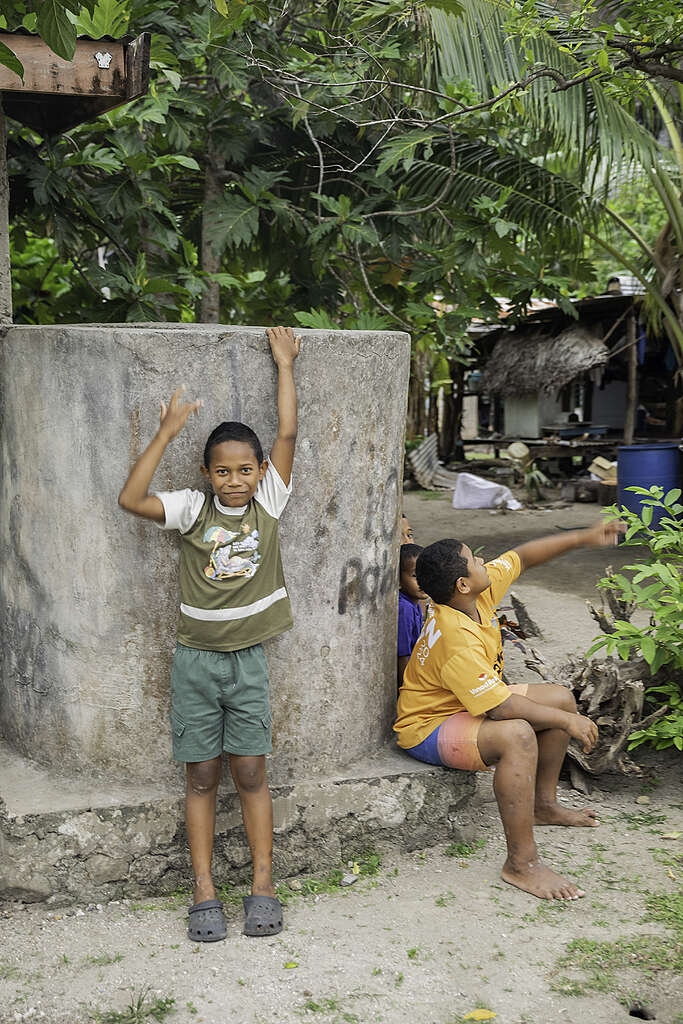
The island of Kioa is home to a Tuvaluan community who migrated from their atoll of Vaitupu in the late 1940s. It is a land of warm hearts, big smiles, and deep cultural roots; a place where the sound of a conch still summons the island together, where islanders paddle out to fish in carved outrigger canoes, and healthy happy children walk barefoot to school.
Here, culture is life. Kioans live sustainably through their traditional knowledge and practices. The island is alive with song, dance and the rhythms of a life tied to the tides, the winds, and the seasons.
Facing the future
Greenpeace has been lucky to have a relationship with Kioa for a number of years now, and we are continually learning from this remarkable community.
Last week, as part of our Voyaging Oceania project, we returned to the island. Our purpose was twofold —- to carry messages from the island to leaders gathering in Nadi this week for the Pacific Pre-COP, and to support the Kioa community in their efforts to improve water security for the island.
Unlike Tuvalu itself, with its eight atolls, Kioa is a mountainous, forested and richly fertile island. It will remain habitable far into the future. Kioans did not initially migrate from Vaitupu due to climate change, but the move was prophetic. They now have a lifeboat.
However, even Kioa faces challenges on our rapidly warming planet, in particular when it comes to water. Climate change is shifting once reliable rainfall patterns. On top of this, the island is already feeling the effect of this year’s intensifying El Niño event, which for Fiji means reduced rainfall and prolonged dry spells.
Right now, fresh water has to be carefully rationed, and is only available for a few hours a day. During last week’s visit aboard our campaigning ship Oceania, Greenpeace was privileged to work with the Kioa community on a new solar-powered water distribution project for the island.
Designed and led by the island, the project involves using a solar pump to move water from a reliable source to a storage tank and then using gravity to distribute the water around the village.
It was a lesson in how local knowledge and ingenuity can be the backbone of today’s climate solutions. To build a dam around the source, the local community knew the exact spot where they could gather gravel at low tide to mix with the cement. They took only what was needed, knowing that all resources must be carefully conserved. Kioa has no roads and no machinery, and it was an all-of-island effort to carry the materials up to the project site, including many heavy bags of sand and rock.
Such projects truly bring to life the vision of a resilient, locally-led, fossil fuel free Pacific.