

- Formal negotiations
- Turkish and Australian leadership
- Cover decision
- COP reform
- Adaptation
- Finance
- Just transition work programme
- Loss and damage
- Gender
- Article 6
- Agriculture and food security
- Mitigation work programme
- Response measures
- Action for climate empowerment
- Trade
- Second global stocktake
- Long-term goal review
- Around the COP
- Fossil fuels
- Action agenda
- Global leaders
- Electrification
- China at COP31
- Ocean
- Deforestation
- Methane
- New climate science
- Food and water
- NDCs
- Protests and access
- Road to COP32 and beyond

When governments fall short, ordinary people can spark extraordinary change. Nowhere is this more evident than in Denmark, where citizens and community groups took the lead in a wind energy revolution that helped set the country on a path to phase out fossil fuels entirely. Decades ago, while the Danish government was hesitating on clean energy, locals banded together to build wind turbines on their own. The result? Denmark today generates 84% of its electricity from renewables, with 54% being from wind. Denmark’s proved that the clean energy revolution can be powered by the people.
People-powered wind revolution
In the 1970s, Denmark faced an energy crossroads. The government was considering nuclear power, but ordinary Danes and NGOs had different ideas. A vibrant anti-nuclear movement emerged with the iconic slogan “Nuclear power? No thanks” and activists didn’t just protest, they offered a solution. Environmental groups and citizens began advocating for wind energy as the safe, clean alternative.
In fact, some communities simply went ahead and built turbines themselves. In 1978, a group of teachers and students constructed a then record-breaking wind turbine at Tvind, proving that local ingenuity could achieve what big utilities hadn’t. This DIY turbine, built by citizens on a shoestring, became a symbol of what grassroots innovation could do.
This early citizen leadership laid the foundation for Denmark’s wind power boom. By the late 1970s and early ’80s, rural communities and eco-minded cooperatives were installing wind turbines to power their towns and farms. Residents pooled funds to erect turbines, sharing both the electricity and the profits. By 1996 there were around 2,100 wind energy cooperatives across Denmark. These co-ops gave tens of thousands of people a direct stake in clean energy.
These citizen-led projects moved forward at a time when government support was modest. While officials slowly came around to renewables, communities were already proving wind power’s viability on the ground. By 2001, over 100,000 Danish families belonged to wind cooperatives that had installed 86% of all the nation’s turbines . In other words, regular people owned the majority of Denmark’s wind infrastructure, long before big energy companies jumped in. This bottom-up momentum not only built turbines, it built public pressure that pushed Denmark’s policies to be greener. Community and NGO leadership filled the gap when the government wasn’t doing enough and ultimately nudged the government to step up as well.
The Middelgrunden Model
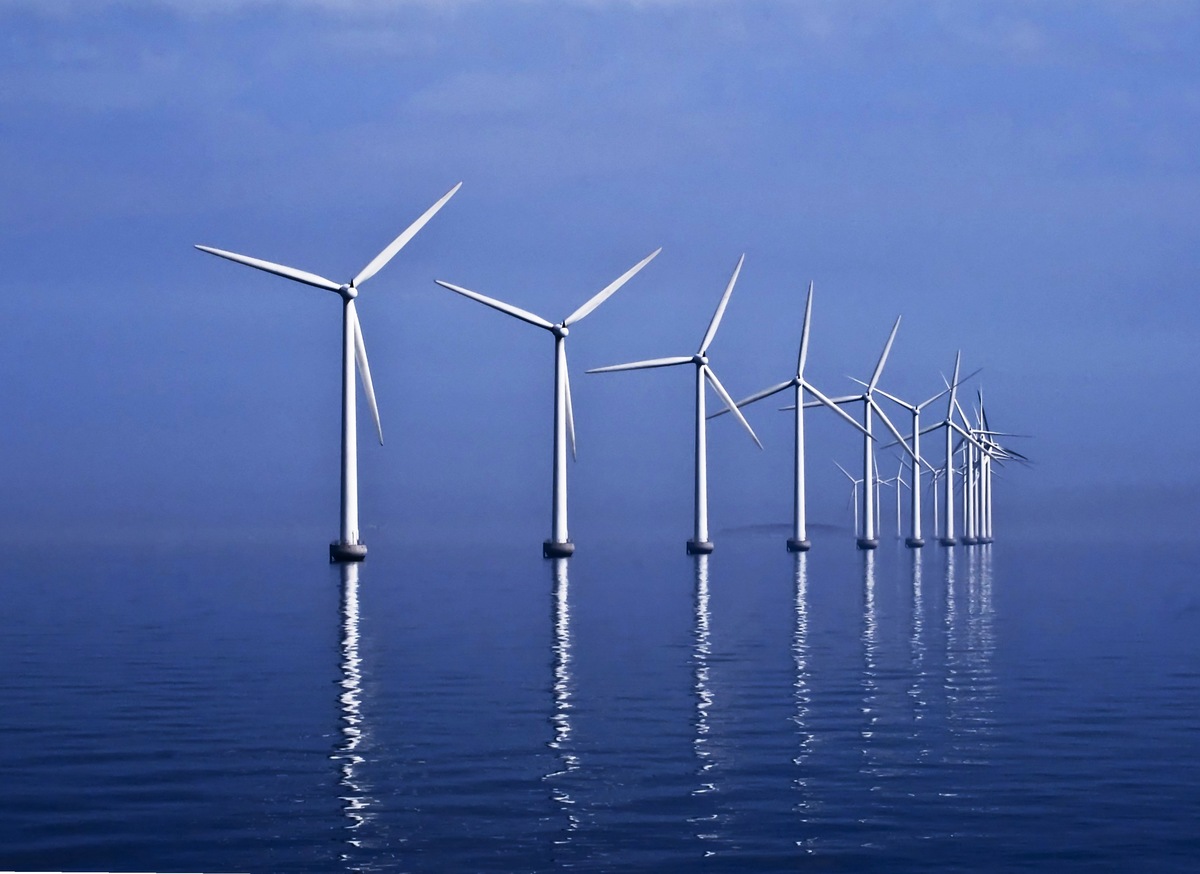
A shining example is the Middelgrunden offshore wind farm near Copenhagen. Commissioned in 2000, this 40 MW facility is co-owned by the city’s utility and a cooperative of over 8,500 locals. Citizens invested approximately €23 million, covering half the project’s cost. Through extensive public consultations, the project garnered widespread support, turning potential opposition into pride. Investors saw returns of 6-7% annually, recouping their investments within eight years.
When the people lead a fossil fuel phase out
Middelgrunden was not a one-off, it was a model. Inspired by its success, more community wind projects blossomed across Denmark in the 2000s. In fact, Denmark’s government eventually adopted policies to cement community ownership in all new projects. A 2008 renewable energy law (implemented around 2011) requires that at least 20% of any new wind farm be offered to local residents for purchase. This policy ensures that as wind power expands, communities get a slice of the benefits.
Thanks to decades of grassroots action, Denmark has transformed from a fossil-fuel dependent nation into a global renewable energy leader. Wind now generates over half of Denmark’s electricity and much of that power belongs to the people. By 2016, more than 50% of Denmark’s wind capacity was owned by citizens or co-ops, not corporations.

This people-powered approach also fueled economic prosperity. Denmark became a wind manufacturing giant, with renewables employing around 2% of its workforce and generating billions through exports. Denmark’s transition shows that when the clean energy revolution belongs to the people, climate action and community prosperity go hand in hand.
Australia: ready for a community energy revolution
Looking at Denmark, you might think Australia, with our endless sun, wind and wide-open spaces would be following a similar path. We certainly have the natural potential to be a renewable energy superpower. Yet Australia’s renewable journey has been slower and bumpier, often held back by the influence of fossil fuel interests. While Denmark races toward 100% green electricity, only a bit under 40% of Australia’s electricity currently comes from renewables. And we remain one of the largest exporters of coal and gas. In many ways, Australia today is where Denmark was decades ago: the government is talking about climate solutions, but not acting fast enough. This is where Aussies can learn from the Danish playbook.

The good news is Australians are already stepping up. In the absence of strong federal action in years past, communities, NGOs, and everyday families have taken initiative. Just look at our rooftops: as of 2024, nearly 1 in 4 of Australian households have installed solar panels on their homes, the highest uptake of rooftop solar in the world. That’s millions of Australian families who decided to generate clean power on their own, often long before governments provided any substantial incentives.
Community energy projects are also gaining momentum here. Just look at Hepburn Wind in Victoria, Australia’s first community-owned wind farm. In the late 2000s, locals near Daylesford didn’t wait around for big energy companies to act. They came together, formed a cooperative, and raised nearly $10 million from 2,000 members to make their vision real. By 2011, two turbines were spinning, generating enough clean electricity to power over 2,000 homes.
Hepburn Wind shows what’s possible when communities take the lead. Like Denmark’s early wind pioneers, these locals proved that people-powered renewables can thrive in Australia too.
The power of communities: from Denmark to Down Under

The protest sought to increase pressure on the Australian government to commit to a timeline for a fair and fast phase out away from all fossil fuels, starting with no more coal and gas.
Australia is the world’s third largest exporter of fossil fuels, and the Newcastle Port is the world’s largest coal export port. On the final day of the “protestival”, 170 people were arrested while out in their kayaks blocking the channel to prevent coal ships from passing, successfully forcing one coal ship to turn around.
Danish residents didn’t wait for permission or perfect policies, they organised, invested, and built the future they wanted to see. In doing so, they dragged their leaders along with them and reaped rewards for their communities. Australians have that same spirit. We’ve seen it in the rooftop solar boom, in grassroots campaigns to stop new coal mines, and in local renewable projects that put people and the planet first.
The climate crisis demands urgent action, but Denmark shows that action can begin at the grassroots and turn into a national triumph. It’s a hopeful reminder that even if our leaders are slow, we don’t have to be. When communities lead, politicians will follow. As the Danes have shown, a greener future is not just up to governments or big companies, it’s in our hands. It’s time for Australia’s own people-powered energy revolution.
Sign the petition to demand no new fossil fuels and help spark the change we need.
Can Australia catch up? Top lessons from Denmark’s people-powered energy revolution
Continue Reading
Climate Change
‘Ode to Scott Reef’: Indie-folk duo Hollow Coves performs at famous Australian reef in call for protection
SCOTT REEF, Tuesday 24 November 2026 — Released today, a new music video with Gold Coast duo Hollow Coves performing onboard the flagship Rainbow Warrior at Scott Reef calls for protection of the ancient ecosystem from oil and gas drilling proposed by multinational Woodside.
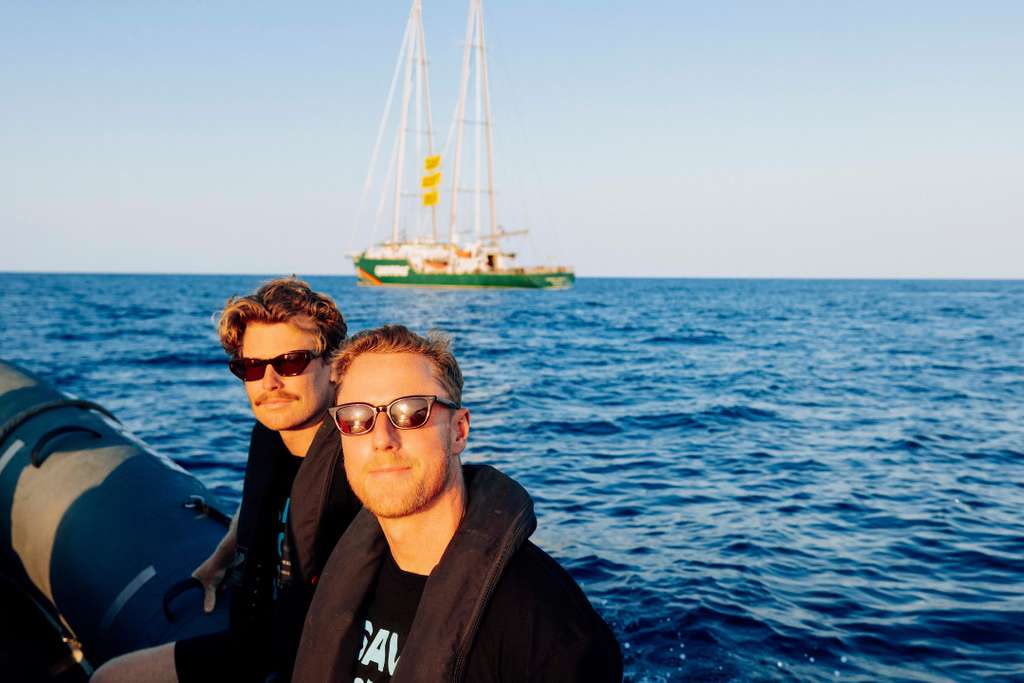
- Watch ‘Coastline’ shot at Scott Reef here and see visuals from the shoot at sea here
The new music video, in collaboration with Greenpeace Australia Pacific, captures a performance of Hollow Coves’ viral single ‘Coastline’, joining a nationwide push by Australian artists to protect heritage-nominated Scott Reef, located 270 kilometres off WA’s Kimberley coast. The video was shot on multiple cameras including a Bolex 16mm vintage movie camera, and boasts original underwater and aerial footage of Scott Reef.
Scott Reef is home to thousands of marine species, genetically unique green sea turtles and endangered pygmy blue whales but is threatened by oil and gas drilling proposed by multinational corporation Woodside, the Browse project.
Matt Carins, Hollow Coves musician, said: “It would be such a tragedy if gas drilling happened at Scott Reef. It’s such an incredible part of the world and is something that we want to pass on to future generations. Being a father myself, I want to share these places with my kids.
“There’s still hope in saving Scott Reef. I think it’s our time now to spread the word of how beautiful this place is. It may not have the same fame as other reef systems, but it’s just as amazing and just as important.”
Ryan Henderson, Hollow Coves musician, said: “Scott Reef is incredible. We were greeted by a pod of dolphins the first day we arrived. The whole place is brimming with wildlife.
“It would be such a shame to allow gas drilling to go ahead at Scott Reef. We wouldn’t allow drilling at the Great Barrier Reef so why should we allow it at Scott Reef which is also so beautiful and so precious. We want to preserve these places.
“There’s still hope. The Australian Government has an opportunity now to save Scott Reef and be on the right side of history.”
Hannah Schuch, Senior Campaigner at Greenpeace Australia Pacific, said: “It was a privilege to witness Hollow Coves playing their iconic single ‘Coastline’ live from Scott Reef, surrounded by wildlife and tranquil blue water.
“The ecological significance of Scott Reef to thousands of species, many of which are threatened, cannot be understated, but its surreal beauty is something that is so easy to capture and makes a perfect setting for a song like Coastline.
“Hollow Coves’ work is a perfect example of the symbiosis between Australian music and nature, and we are so excited to present this musical and cinematic ode to Scott Reef in collaboration with them.
“Drilling at Scott Reef is an unacceptable proposal, and Environment Minister Murray Watt has a generational opportunity to write a legacy of nature protection by putting a stop to Woodside’s plans and saving Scott Reef.”
Minister Watt is expected to decide if Woodside will be allowed to drill at Scott Reef for the Browse gas project in the coming months.
-ENDS-
Media contact
Emma Sangalli on 0431 513 465 or emma.sangalli@greenpeace.org
High res images and footage of Scott Reef can be found here
The COP31 climate talks in Antalya, Turkey, have failed to reach agreement on a “pact” that lacked clear references to curbing fossil fuels or scaling up climate finance.
The “Antalya pact”, proposed by the joint Turkish-Australian presidency, was rejected in the final hours by the EU, the UK and several climate-vulnerable nations.
Meanwhile, many developing countries criticised the lack of progress on climate finance and indecision on a proposed $120bn target for funding climate adaptation.
With stark divisions preventing agreement on the presidency-led pact, UNFCCC chief Simon Stiell expressed “deep disappointment”, speaking of “scope to improve, modernise and reform” the UN climate process.
Despite a chaotic endgame that saw the overrunning COP become the longest in history, it did not end in complete failure, with many items adopted in the closing plenary.
These included fairly limited or procedural outcomes on a new “mechanism” for global “just transitions”, plus support for countries struck by climate disasters.
There was some progress beyond the negotiations, though, with growing coalitions of nations championing “roadmaps” for “transitioning away” from fossil fuels.
With the presidency promoting “electrification” as a key theme, around 80 nations also signed up to a global target of securing 35% of final energy consumption from electricity by 2035.
Here, Carbon Brief provides in-depth analysis of all the key outcomes from Antalya, both inside and outside the COP31 negotiations.
(See Carbon Brief’s coverage of COP30, COP29, COP28, COP27, COP26, COP25, COP24, COP23, COP22, COP21 and COP20.)