

As data centre construction starts to gather pace in Africa, supporters say investment in AI infrastructure could help expand electricity access for the roughly 600 million Africans who lack it. But critics fear growing energy demand from the sector could strain already weak power systems and divert resources from communities and industries struggling to secure reliable electricity supplies.
On Monday at the UN climate summit in Antalya, three African countries – Somalia, Uganda and Sierra Leone – endorsed a new voluntary pledge proposed by the Turkish presidency which aims “to make AI part of the climate solution – sustainably powered, efficiently designed, transparently measured and available to all”.
The pledge’s signatories – so far just nine countries as well as over 40 companies and some civil society groups – commit to power and build AI infrastructure and hardware sustainably, for example by running data centres with zero- or low-emission energy, supporting their integration into electricity grids, and designing efficient cooling, energy and water systems.
The pledge also calls for stronger financial and technical support – including access to computing capacity – to help developing countries use AI to address climate challenges, including improving energy efficiency, optimising electricity systems, reducing emissions and meeting renewable energy needs. It does not, however, explicitly propose that they should be helped to build data centres for that purpose.
UN climate chief Simon Stiell told a high-level event on AI at COP31 that AI’s benefits “must outweigh its growing costs”. “And those benefits must reach every country,” he added.
Bashir Jama, Somalia’s minister of environment and climate change, said his country supports the pledge’s call to reduce AI’s environmental footprint “through cleaner energy, efficient use of electricity and water, transparent measurement and responsible management of electronic waste”.
However, he added that vulnerable countries need to be supported with “accessible finance, affordable computing, reliable data and technical support”, to translate AI’s potential into results.
-
UN adopts first-ever resolution on AI and environment, but omits lifecycle
The UN Environment Assembly in Nairobi gavelled the resolution on artificial intelligence and environment, but removed mentions to AI’s water and power use -
Explainer: Will AI data centres make or break the energy transition?
As grids struggle to meet soaring electricity demand for AI data-crunching, big tech is under pressure to cover the costs of boosting power supplies – which may be dirty or clean


Project tests data centres running on mini-grids
In Africa, a new project aims to find out whether data-crunching can help rural areas get the power they desperately need. In September, the Rockefeller Foundation launched an “Emergent Grid” initiative that will set up small-scale AI data centres running on solar mini-grids in African villages.
Funded through the Mission300 Accelerator, a World Bank-led programme to bring electricity to 300 million Africans by 2030, pilot projects are planned for Kenya, Democratic Republic of Congo (DRC), Sierra Leone and Djibouti. The idea is to test whether such a set-up could improve revenues for renewable energy developers and expand electricity access in underserved communities.
Mission 300 Accelerator CEO Andrew Herscowitz said global demand for more computing power doesn’t have to push electricity costs higher for people. “We think it can actually do the opposite,” he said in a statement announcing the initiative. “If we build it right, that same demand becomes the reason someone in a remote village finally gets reliable, affordable power,” he added.
Not everyone is convinced, however. Speaking at a Bloomberg Green panel during Climate Week NYC in September, World Bank Group President Ajay Banga warned that the demand for resources needed by data centres, including water and energy, might overburden developing countries.
Explainer: Will AI data centres make or break the energy transition?
Banga said the notion of sharing energy resources with AI would be out of place in those locations and argued there is little prospect of data centres proliferating there.
“You need computing power. Lots of it. You need electricity. Lots of it. More than what the developed world also has in some cases, let alone these developing countries,” he added.
Ketan Joshi, a climate analyst and senior research associate at The Australia Institute, told Climate Home News that data centres should not be seen as a solution for providing electricity access.
“It is demand like any other form of demand – like a steel plant or a household refrigerator – so if you add a data centre, you always need something to generate the energy for it,” he said, warning that without a clear plan to meet that demand, new facilities could divert electricity and investment from other priorities.
Boosting mini-grid economics
Odunayo Onafuye, head of demand partnerships at the Africa Minigrid Developers Association (AMDA), said initiatives like “Emergent Grid” could improve the economics of mini-grids by bringing in large, reliable customers for their power.

Mini-grid developers often struggle to generate enough revenue in underserved communities, where most demand comes from households using electricity mainly for lighting and other basic needs. Their low consumption and limited ability to pay makes it hard for developers to recover the costs of operating and maintaining their plants.
Data centres could help address this problem by providing a steady source of demand and revenue, he said. Developers could sign power purchase agreements with data centre operators, guaranteeing that they will buy a certain amount of electricity.
“It’s improving your consumption and also improving the revenue that will come as a result of that consumption. That improves the financing,” Onafuye said.
Comment: Using energy-hungry AI to detect climate tipping points is a paradox
AI build-out in Africa
While the advantages and disadvantages are still up for debate, Africa is emerging as a potential new frontier for AI and data centre investment, with several technology companies announcing plans to expand their infrastructure across the continent.
Amazon Web Services plans to invest $1.5 billion by 2029 to expand its cloud and AI capabilities across Africa, while California-based Equinix has announced a $438-million investment to tap into the continent’s growing demand for digital infrastructure, including data centres in Nigeria and South Africa.
In South Africa, Microsoft has committed $300 million by 2027 to expand its digital and AI infrastructure. Meanwhile, in Nigeria, energy company Tetracore Energy Group has announced plans to develop a $400-million data centre in Ogun State, in partnership with Chinese firm Huawei.
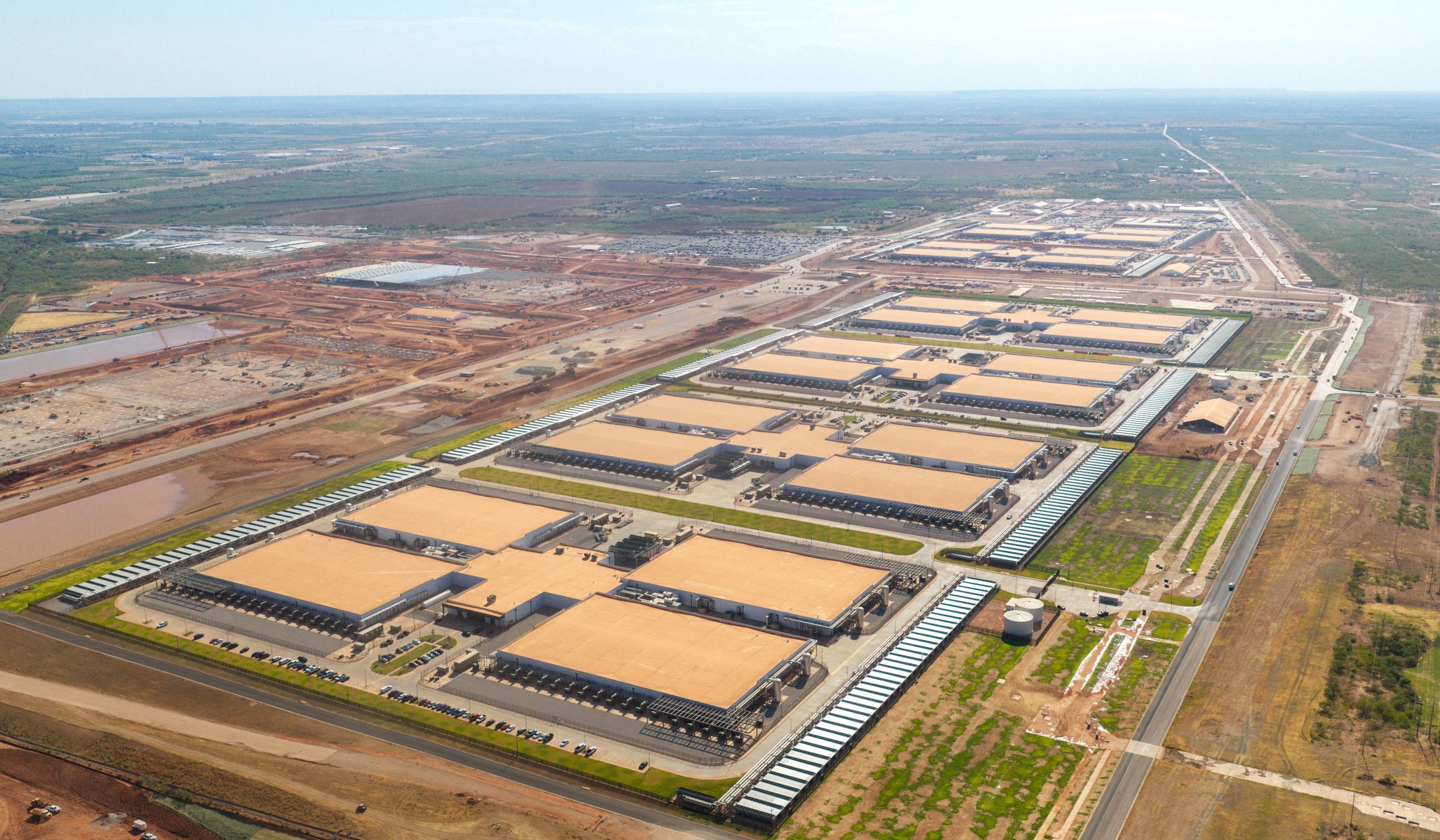
Globally, the rapid expansion of data centres has sparked growing scrutiny over their environmental and social costs, particularly their demands for electricity, water and land. In the United States, residents have organised protests against proposed and existing facilities in states including Virginia and California.
In June, New York introduced a proposal for a statewide pause of up to a year on new hyperscale data centre developments. Elsewhere, farmers in India and Indigenous communities in Brazil have protested over the impacts of data centre development.
Local concern is rising in Africa too. Citizens and campaigners in Cape Town, South Africa, have pushed back against the expansion of data centres in their communities. With support from the UK-based nonprofit Foxglove, communities filed a lawsuit against two planned data centres in the capital city.
Daniel Hartford, South Africa lead at Foxglove, said the campaigners are not opposed to data centre construction per se, but that “the conversation is just about how transparent these processes are, and really what’s in it for people and the planet”.
So far, communities are not being effectively consulted and there is a lack of information about the energy and water requirements of data centres, and their likely impacts on people’s utility bills, he said.
The climate risks
There are also concerns about the climate impact of AI infrastructure. The Australia Institute’s Joshi said some data centre developers are turning to on-site gas power generation while waiting for grid connections, as they race to bring facilities online. This could lock in fossil fuel infrastructure and increase emissions, he warned.
The African Energy Chamber, which lobbies for fossil fuels, has proposed AI as a way to create new demand for gas in Africa, arguing that “data centres require 24/7 baseload power with near-zero tolerance for interruption, making intermittent renewables alone insufficient without firm backup generation”.
The vote that stopped a data centre: US communities query resource-hungry AI
Many climate advocates – and increasingly politicians – say that additional energy demand for AI data centres should be met from new renewable power capacity – something Rockefeller Foundation’s Emergent Grid initiative hopes to trial in Africa.
The foundation says five sites in Kenya will test whether flexible computing can serve as an anchor customer for new solar-plus-storage systems serving communities of around 50,000 people. In DRC, computing will be added to an existing under-used solar plant that currently serves more than 30,000 people, as well as more than 350 small and medium-sized businesses and 30–40 social institutions.
Other demonstrations will test the model on existing mini-grids in Sierra Leone and through an integrated energy, compute and connectivity site in Djibouti.
But Joshi argued that rather than redirecting surplus mini-grid power in Africa to AI data centres, renewable energy should be used for economic activities more essential for local development such as agriculture and manufacturing, or stored in batteries for use when electricity demand is higher.
“There are always other alternatives. You have to think about all the other potential uses,” he said.
The post Can AI data centres help power underserved African communities? appeared first on Climate Home News.
Can AI data centres help power underserved African communities?

Dozens of countries – from big emerging economies to the world’s poorest nations – are calling for the UN’s new carbon market to reassess climate integrity rules, in a push that campaigners and researchers have blamed on industry lobbying.
At COP31 talks on the Paris Agreement Crediting Mechanism (PACM) this weekend, the Like-Minded Developing Countries – a group that includes Saudi Arabia, India and China – the Least Developed Countries (LDCs) and landlocked developing countries raised concerns about the requirements project developers must meet, according to sources familiar with the closed-door discussions.
They warned about the cumulative weight of those requirements developed under Article 6 of the Paris Agreement as barriers to implementation. Several countries, including Singapore and some Latin American states, said rules must keep projects financially viable, while South Korea asked for proportionate requirements, the sources said.
Their demands closely track arguments from carbon market industry groups, which claim PACM’s conservative approach to counting emission reductions is so strict that few projects will ever come to fruition.
Industry and NGOs lobby to weaken UN carbon credit rules in “coordinated” push
In a letter published ahead of COP31, the lobby groups asked governments to “raise implementation concerns” and to request that the Supervisory Body – the UN body that oversees the market – assess the “combined impact” of its rules on the feasibility of projects.
The letter was signed by the International Emissions Trading Association (IETA), a business group whose members include fossil fuel giants Shell, BP, Saudi Aramco and Chevron, along with the Project Developer Forum and the Wildlife Conservation Society, which develops forest conservation programmes.
Draft text reflects industry demands
Those demands are reflected in the first draft of the COP31 decision on the mechanism, published late on Saturday. To guard against over-crediting, PACM’s rules deliberately err on the side of issuing fewer credits when emissions cuts from projects are uncertain.
The document asks the Supervisory Body to look at how these cautious assumptions add up across its rules and what that means for the number of credits, project costs and prices. The aim, it says, is to avoid “excessive compounding of conservative adjustments”.
Other parts of the draft tell the body not to make its rules too cautious or too rigid. That includes efforts to guard against the risk that carbon captured by a project is later released. Most of these passages add that environmental integrity must be maintained.
Risk of another ‘failure’
“Weakening the rules is not climate ambition – it is a license to pollute,” said Erika Lennon, a senior attorney at the Center for International Environmental Law (CIEL). “As we are on the brink of permanently breaching 1.5C, we cannot afford to turn the carbon market into another loophole for polluters,” she added.
Axel Michaelowa, research director at Perspectives Climate Research, said that if attempts to weaken the rules succeed, it could lead to another failure of an international carbon market. Demand for credits rests on trust, he said, and the slightest doubt over integrity erodes buyers’ willingness to pay.
Calls to revise requirements “must be supported by scientific evidence, not unsupported claims of under-crediting – especially when these assumptions come from private actors whose revenues depend on the volume of transacted credits rather than real mitigation outcomes,” Michaelowa said.
The EU, Switzerland and Senegal are among a handful of countries pushing back against demands to re-assess the market rules, according to the sources, and are opposing requests to weigh up the profitability of projects or to lower standards.

Cookstove credits in focus
At the centre of the fight are new methodologies for projects that aim to cut emissions by distributing cleaner cookstoves – one of the carbon market’s most popular credit types and also one of its most criticised for overstating climate benefits. A 2024 study in Nature Sustainability found cookstove projects had been over-credited roughly tenfold.
Under the rules adopted by the Supervisory Body in October, cookstove project developers are required to set aside part of their credits in a buffer pool, in case the forests they claim to save later burn or are cleared.
The body rejected an exemption from this requirement sought by developers, corporate buyers, some conservation groups and the UN Environment Programme, in what critics called a coordinated lobbying campaign, as reported by Climate Home News.
Industry groups and some countries have seized on the cookstove methodologies to warn against excessively stringent requirements, which they say undercount emission reductions and deter developers. The LDCs told negotiators that developers had found some approved methodologies, including on clean cooking, difficult to apply.
Industry group calls for revisions
Industry representatives attacked the Supervisory Body’s approach in interventions that sources in the room described as very aggressive.
In a subsequent Linkedin post, IETA’s Andrea Bonzanni accused the regulator of following an unscientific approach that would deliver systematic under-crediting. He called on environmental integrity standards to be amended and rulebooks to be revised.
The mechanism “has had a false start”, he said, but countries in Antalya have a chance to agree on clear guidance that puts it back on track. “Unless the mechanism becomes workable across countries and activity types, its impact on the atmosphere risks remaining marginal,” he added.
IETA did not respond to a request for comment.
-
UN carbon market forces cookstove projects to protect against forest loss
Despite lobbying for an exemption, the UN regulator has for the first time made cookstove projects cover the risk that the trees they save are later destroyed -
Most “zombie credits” locked out of new UN carbon market after China and India snub
Fears of a flood of environmentally-dubious carbon credits have faded, with most old projects not able to transition to new UN market

Campaigners and researchers have pushed back on the claims. Arguing there is currently no evidence of under-crediting in the UN market, they stressed that more credits do not necessarily mean more emissions reductions if the rules underpinning them are not grounded on science.
“Having a Paris Agreement carbon crediting mechanism that cheats the atmosphere completely misses the point,” said Isa Mulder, a policy expert at Carbon Market Watch. “Countries should not allow Article 6 to become just another dangerous distraction from real, urgent climate action.”
The draft of the rules is an early version and will be negotiated during the COP31 summit’s final days. Under the Paris Agreement rules, the Supervisory Body must follow guidance that governments give through COP decisions.
The post Countries take up industry push to loosen UN carbon market rules at COP31 appeared first on Climate Home News.
Countries take up industry push to loosen UN carbon market rules at COP31