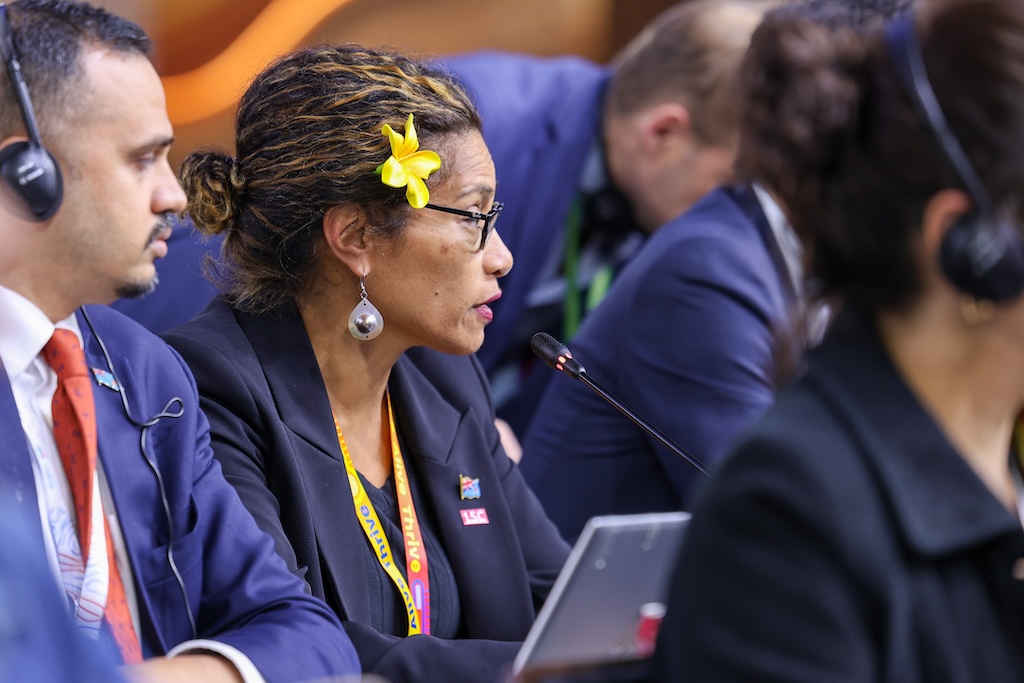
Joie Chowdhury is a senior attorney for the Center for International Environmental Law (CIEL)’s Climate & Energy Program. Lien Vandamme is a senior campaigner for CIEL’s Climate & Energy Program.
While major polluters at this year’s UN climate talks, COP29, brazenly failed to deliver the finance needed to remedy climate harm in yet another attempt to escape their obligations under international law, a key moment for climate justice is coming up. The historic hearings on climate change at the International Court of Justice (ICJ), scheduled for December 2-13, may help advance the case for climate reparations.
The hearings will inform the Court’s advisory opinion on the international legal obligations of states in relation to the climate crisis. The Court’s pronouncements can produce tangible impacts. While advisory opinions do not settle specific conflicts between states, they are definitive interpretations of binding law – and even considered instruments of preventive diplomacy.
One of the most contested issues at the heart of the ICJ climate advisory proceedings is the legal consequences that states face when they breach their climate-related obligations, and harm ensues. Those consequences may involve stopping harmful activities that damage the climate, ensuring they are not repeated, and providing full reparation, including restitution, compensation, rehabilitation, and satisfaction measures.
Specific measures are needed to remedy the wide range of harms caused by the climate crisis, both economic and non-economic. Measures beyond compensation could include phasing out fossil fuels or debt cancellation.
Loss and damage underfunded
In the face of rich countries’ avoidance and denial of their responsibility for having contributed the most cumulatively to the escalating climate crisis, clarity from the ICJ on states’ legal accountability is more urgent than ever. It took three long decades for states to agree on a fund to address climate harms, also known as loss and damage, under the UN climate negotiations.
Even now that the fund is in place, it remains woefully underfunded compared to the immense and rising need. Also, it is predicated on voluntary finance rather than obligatory contributions from states with a legal duty to pay for climate harm.
As the UN Secretary-General has emphasised, the UN Framework Convention on Climate Change (UNFCCC) loss and damage mechanisms are not currently structured to fulfill states’ obligations to provide effective remedies for climate-related harms.
EXPLAINER: What was decided at the COP29 climate summit in Baku?
And the UNFCCC process once again failed to address this massive funding gap: the latest summit, COP29, announced a new climate finance goal that is far too low and far too late, committing only to mobilise funds by 2035, without any guarantees the funding will be provided and grants-based – and without a designated sum for loss and damage.
This inaction reflects a pattern of powerful polluting countries evading their legal obligations and prioritising their own economic interests over the human rights of communities already bearing the brunt of the climate crisis.
Obligation, not charity
The ICJ now has a unique opportunity to affirm that accountability and reparations for climate damage are a matter of obligation and justice — not charity. Its opinion could shape global climate law and policy, empowering climate-vulnerable nations with legal tools to strengthen their positions in climate talks.
This could pave the way for holding polluters more accountable, particularly in areas like loss and damage and climate finance, inside the negotiation rooms and beyond. More practically, if the loss and damage fund continues to under-deliver, states and communities may well seek redress outside the UNFCCC and draw guidance from the forthcoming ICJ advisory opinion.
In its ongoing climate advisory proceedings, the Inter-American Court of Human Rights (IACtHR) is also considering a range of issues including state duties to guarantee the right to redress for climate harm. The IACtHR has a rich jurisprudence on remedy and reparation, including in the environmental context, such as in the La Oroya case. The IACtHR climate advisory opinion is expected in early 2025, before the ICJ advisory opinion, and could set the legal bar high for climate reparations.
People whose rights are harmed by climate impacts deserve remedy and reparation. The right to remedy and reparations is a long-standing fundamental tenet of international law, rooted in multiple frameworks such as the law of state responsibility and human rights law, and deeply anchored in ICJ jurisprudence. The legal frameworks to hold states accountable already exist. What is required now is their robust application in the context of climate change.
Legal first step
Without concrete remedy, climate justice and equitable multilateralism will remain hollow. International cooperation is crucial, yet it must be paired with tangible policies that explicitly address harm and hold those responsible to account. The time has come to halt the cycle of continuing harm and refusal to repair.
Most climate-vulnerable states and peoples have long emphasised the vital importance of redress for climate harm. The ICJ hearings will put all cards on the table. The world’s major polluters and the most climate-vulnerable nations will have their day in court. Civil society will closely monitor how states’ interventions in the courtroom align with claims of climate and human rights leadership.
All eyes now turn to the ICJ, but let’s be clear: the fight for climate accountability extends beyond the Court’s chambers. Legal clarity will serve as a first step, but law alone is not a solution for addressing climate harm, as the issue is deeply rooted in structural injustice.
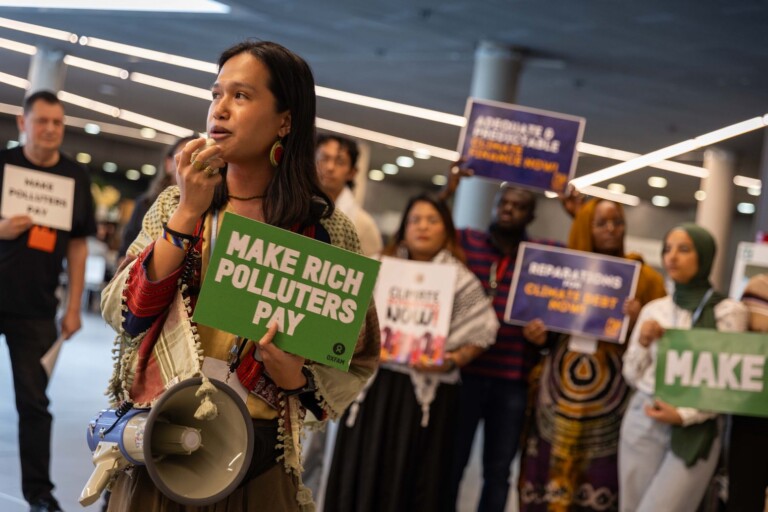
Our biggest hope lies in the upsurge of people coming together across generations, campaigns and negotiations, in the courts and the streets, demanding justice in defence of people and the planet.
The post Call for climate reparations at the ICJ even more urgent after COP29 falls short appeared first on Climate Home News.
Call for climate reparations at the ICJ even more urgent after COP29 falls short

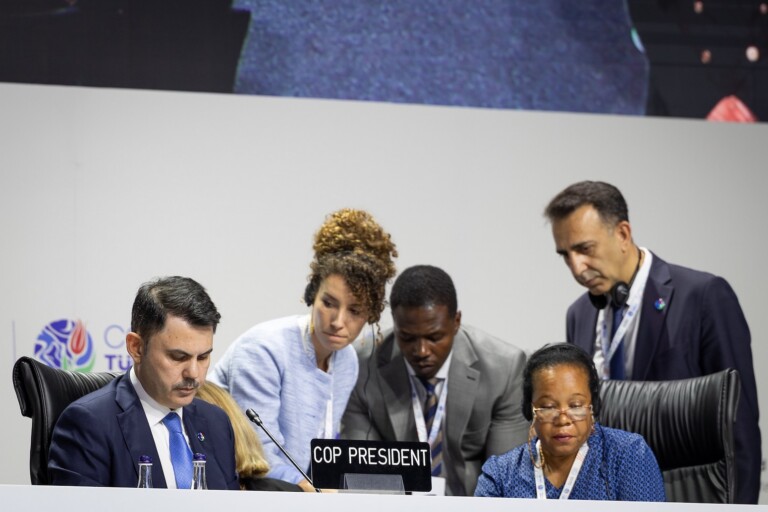
Following the close of COP31 in Antalya, Turkey, Carbon Brief’s journalists answered a range of questions in a CB Live panel discussion.
COP31 came to a dramatic conclusion nearly 50 hours after its scheduled close – making it the longest COP in history.
Less than 24 hours later, Carbon Brief published its 21,000-word summary, capturing everything that happened in the negotiations, the cover decision and more.
This includes the “Antalya pact”, proposed by the joint Turkish-Australian presidency, being rejected in the final hours of the summit by the EU, the UK and several climate-vulnerable nations.
There was some progress at COP31, including an agreement on the adaptation fund, as well as a raft of announcements within the “action agenda”.
Carbon Brief journalists – who followed every detail of the summit on the ground in Antalya and remotely answered a range of questions, including those sent ahead of time by CB+ members on CB Connect.
These covered climate finance, China, the “just transition mechanism”, the potential for COP reform and much more.
The discussion was moderated by Carbon Brief’s senior policy editor Dr Simon Evans and featured the following journalists:
- Daisy Dunne, associate editor
- Josh Gabbatiss, associate editor
- Aruna Chandrasekhar, policy journalist
- Molly Lempriere, policy section editor
- Anika Patel, China section editor
- Dr Giuliana Viglione, associate editor
A recording of the CB Live (below) is now available to watch on YouTube.
The post CB Live: Carbon Brief journalists discuss key COP31 outcomes appeared first on Carbon Brief.
CB Live: Carbon Brief journalists discuss key COP31 outcomes
Climate Change
COP31: Key outcomes for food, forests, oceans and nature at the UN climate talks in Antalya
The COP31 climate talks in Antalya, Turkey, failed to agree on a “pact” that – despite making no clear reference to fossil fuels or adaptation finance – had contained strong signals for oceans.
The “Antalya pact” took up much of the two weeks of negotiating time in Turkey, only to be rejected during the closing plenary by the EU, the UK and several climate-vulnerable countries.
Several countries expressed their regret during the plenary that significant work on advancing ocean-climate action would be lost.
The COP ran nearly 50 hours over time, but did not end with substantive outcomes on several key topics.
For the second year in a row, negotiations on agriculture and food security broke down and will now have to resume next year.
Food-systems advocates were, however, heartened by the explicit inclusion of “agroecology” in a decision within the “just transition work programme”.
Ocean-conservation groups noted an increased focus on ocean-climate links at this year’s COP, but said COP31 did not live up to its promise of being a “blue COP”.
There was also scant new funding for food systems and nature, with just a handful of small pledges to ocean initiatives and two newly announced contributions to the Tropical Forest Forever Facility.
Here, Carbon Brief analyses all of the key outcomes for food, forests, oceans and nature at COP31 – both inside and out of the negotiating rooms.
(See Carbon Brief’s coverage of food, forests, oceans and nature at COP30, COP29, COP28, COP27 and COP26.)
Formal negotiations
Cover decision
The final draft of a COP31 “cover decision” was rejected by at least 32 countries during a chaotic – and, at times, acrimonious – closing plenary in Antalya.
Other recent COPs have issued cover decisions, setting a firm precedent.
However, many parties remained unhappy about the existence of the cover decision, the process by which it was put together and the impact it had on time for other negotiations.
Ultimately, parties did not find consensus on the text, particularly around the removal of any reference to fossil fuels and the lack of concrete climate-finance targets.
The cover text was one of the places in the negotiations where ocean advocates were hoping to see ocean-climate linkages highlighted.
Marine Lecerf, head of international policy at Ocean & Climate Platform, told a press huddle:
“What we’re really asking for right now is to make sure we can recognise ocean-based interlinkages…We’re not asking for a new mandate. We are asking for acceleration of the work that is already undertaken.”
The first draft of the cover decision, published on 16 November, was a compilation of all the issues that parties had put forward for inclusion. It was accompanied by a short “presidency note” explaining that all elements were still in play, including whether or not they should appear in a final text.
This lengthy first draft had 21 references to the ocean, including recognising the impacts of climate change, support for ocean-observing systems, encouraging parties to strengthen ocean-climate action and a multi-year plan for the “ocean and climate change dialogue”, which occurs annually at the Bonn intersessional meetings in June.
Regarding that draft, Steven Guilbeault, former environment minister of Canada, told Carbon Brief:
“I don’t see why the elements that are in the cover decision right now on oceans should be controversial or problematic to any nations. If you’re serious about fighting climate change, there’s nothing in this text regarding oceans that should be problematic for you.”
(Earth Negotiations Bulletin reported that Russia opposed mentions of the ocean in the cover text during the ocean ministerial consultation.)
The next iteration of the text, on 19 November, retained many of the ocean elements, albeit with less detail than the first draft. The second text also removed references to post-2028 ocean work and a proposed high-level ministerial ocean dialogue.
In the end, oceans had 19 mentions in the rejected Antalya pact.