Connect with us

Published

on

Australia is the world’s third largest fossil fuel exporter, after only Russia and the US. Though often ignored in political discussions, these exports make up a whopping 80% of Australia’s global pollution. And who is responsible for all of those greenhouse gas emissions? A handful of Australian oil and gas companies.

What impact do Australian oil and gas companies have on greenhouse gas emissions?

Australia is a signatory to the Paris Agreement, a legally binding international treaty on climate change. In other words, we have committed to doing our bit to limit the increase in global average temperatures. As part of this commitment, Australia must report regularly on its emissions and how it’s tracking towards reducing them. But critically, Australia is not required to include the emissions from its fossil fuel exports in these figures. That pollution is attributed to the country where the fossil fuels are burned.

In reality, it’s just another way for Australian oil and gas companies to dodge responsibility for the pollution they create. Because while progress is being made to reduce domestic emissions, the federal government continues to support the expansion of the fossil fuel export industry.

Climate Analytics (2023). Australia’s global carbon footprint.

It doesn’t matter where the fossil fuels are burned. Whether it’s here or in another country, these fossil fuels produce greenhouse gasses that are warming our planet and causing more frequent and severe disasters around the world. Climate change knows no borders.

Despite what Australian oil and gas companies want you to think, climate change is not an individual problem

There are worthwhile actions we can all take to tackle climate change. But have you ever tried to calculate your own carbon footprint, only to feel guilty and confused about how you alone will solve this crisis? You have a fossil fuel company to thank for that sentiment, too. In the early 2000s, it was none other than British Petroleum that came up with the idea to shift the blame for climate change onto the individual with its ubiquitous carbon footprint PR campaign. This is a common tactic from the fossil fuel industry, which has been running ads to deny, seed doubt about, and shirk responsibility for climate change since the 1980s.

To put it in perspective, Woodside’s Burrup Hub project alone would emit over 73 times the annual emissions of all of New Zealand (and most of the gas Woodside extracts will be exported). In other words, it’s not you, babe – it’s them.

Crew aboard Greenpeace Australia Pacific's campaigning vessel the Oceania conducted a peaceful banner protest at the site of the Valaris DPS-1, the drill rig commissioned to build Woodside’s destructive Burrup Hub. The Oceania displayed a banner between the masts reading "Stop Woodside's Drill" at the Scarborough gas field, off the coast of Exmouth, Western Australia where the Valaris DPS-1 is drilling the first phase of the project. Woodside plans to drill up to 30 gas wells at the Scarborough gas field, and up to 50 more around the ecologically significant Scott Reef off the coast of Broome, Western Australia.
© Greenpeace / Jimmy Emms
Protest of Woodside and Drill Rig Valaris at Scarborough Gas Field in Western Australia

We all pay the price (unless you’re an oil and gas company)

Pacific Island nations account for only 0.03% of global pollution but are getting hit harder every year by cyclones, hurricanes, floods, droughts, and extreme temperatures – all made worse by climate change, driven by the burning of fossil fuels. Category 4 and 5 cyclones have doubled in the West Pacific since the 1970’s. The rise of sea levels in the Pacific is already threatening to destroy homes, communities, and culture.

Impacts of the Tropical Cyclone Donna in Port Vila. Extreme weather events are made more likely due to climate change, driven by the burning of fossil fuels produced by coal, oil and gas companies
© Pedro Armestre / Greenpeace
Impacts of the Tropical Cyclone Donna in Port Vila

People in Australia are feeling the impacts of climate change, too. Catastrophic bushfires, floods, and devastating storms are now annual events. On top of the unquantifiable personal and community cost of losing a loved one, a home, or a sacred place, there is an enormous economic cost for repair. New data from the Insurance Council of Australia shows that the impact of extreme weather on the Australian economy has more than tripled over the last 30 years.

Bushfire impacts in Australia. Eden residents prepare to take shelter aboard a tug boat at the town's wharf, rather than evacuating north, by road, as the vast majority of residents have, as the Border Fire, burning to the south of Eden, threatened the town.
© Andrew Quilty
Residents Shelter from Bushfires in Eden, Australia

But while everyday people, governments, and insurers bear the cost, Australian oil and gas companies continue to make massive profits from exporting fossil fuels, while paying almost zero tax. Chevron Australia made $12.5 billion in 2020-2021 while paying $30 dollars in company tax. Poor old Woodside made a measly $6.7 billion in this period while paying $0 in company tax. Does that seem fair to you?

What can the Australian Government do to reduce greenhouse gas emissions?

So what is the Australian Government doing to push oil, gas and coal companies to cut their emissions? Nowhere near enough. They’re still approving new coal and gas projects. And while talking a big game about reducing emissions at home, the government has given no indication its planning to do the obvious: wind back fossil fuel exports and ramp up clean energy exports instead. This isn’t climate action, it’s pouring fuel on the fire.

The good news is we know what to do, and we have the people power to make it happen. We must continue pressuring the Australian Government to commit to a fair, fast and funded fossil fuel phase out. (Hint hint, that means stop approving new coal projects and reject Woodside’s gas expansion plans!) And we need to put the onus back on the polluters to pay for the damage they’ve caused and clean up their mess.

Get started by signing our petition demanding the Australian Government stop new coal, oil and gas projects now.
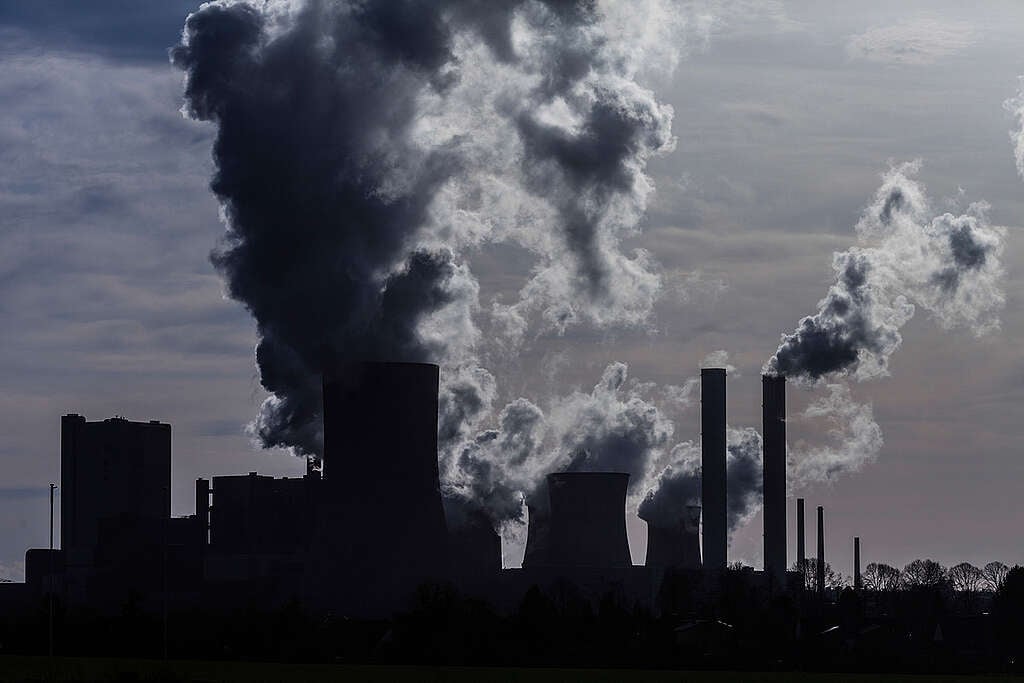


Coal Fired Power Plant


No new fossil fuels

Sign the petition to demand the Australian Government stop new coal, oil and gas projects now.


Sign petition

Australian coal, oil and gas companies are making climate change worse

Climate Change

UN chief warns climate crisis “in overdrive” as El Niño threatens to fuel the fire

Published

on

The United Nations Secretary-General and foreign ministers from the UK, France and Spain have blamed the deadly wildfires engulfing Europe on climate change, using the disaster to renew calls for faster cuts to greenhouse gas emissions.

António Guterres told journalists on Friday that the “climate crisis is in overdrive”, adding that global heat seen so far is just a “warm up act” as a phenomenon known as El Niño intensifies “adding fuel to a planet already on fire”.

A new World Meteorological Organisation (WMO) report published on Friday predicts that the weather pattern will grow into a “strong event” between now and October, increasing the risk of higher than normal temperatures across much of the world and disrupted rainfalls.

“That risks shattering every seasonal record – and driving even more severe effects worldwide,” Guterres said.

El Niño builds on top of an already warming world, driven primarily by the burning of fossil fuels. A WMO scientist, who did not want to be named, told journalists that all the heatwaves and other climate impacts seen so far this year are “before the effects of El Niño are really kicking in at a global scale”.

Fossil fuellling the fires

Fires have broken out across much of Europe but are threatening the most people in the south-west of France near Bordeaux and in Central Spain near Madrid. Nearly a quarter of a million people have been evacuated in France with hundreds of homes destroyed while in Spain 80,000 people have had to leave their homes and at least 13 died in one village.

A scientific study published on Friday by the World Weather Attribution group found that man-made climate change made deadly fires in France twice as likely and those in Spain twenty times more likely. Smaller fires in the UK were not analysed by the study.

UN Climate Change leader Simon Stiell blamed fossil fuels for the fires, as well as storms in Chile and heatwaves in North America and Japan in recent weeks. “The climate alarm is blaring”, he said on Wednesday.

Guterres criticised new fossil fuel production projects and fossil fuel subsidies for causing hardship across the world. Discussing his speech, a senior UN official – who did not want to be named – said the subsidies amounted to trillions of US dollars a year and criticised pension funds and institutional investors, including insurance companies, for continuing to invest in fossil fuel projects.

The head of the United Nations Antonio Guterres (right) with the head of the UN’s climate arm Simon Stiell (left) at COP30 (Photo: Kiara Worth/UNFCCC)

Asked why world leaders and the public are not prioritising climate action, Guterres said they are distracted by wars in Ukraine, the Middle East, Sudan and elsewhere and sometimes forget “other aspects that are a sometimes even more dangerous threat”.

Also the fossil fuel industry and “some countries” are campaigning to pretend that climate change does not exist, he said, adding that the UN should be more active in “naming the situations as they are and the responsibilties as they are and mobilising the public opinion”.

After meetings in Paris and Madrid earlier in the week, the UK’s new foreign minister Ed Miliband issued joint statements with his French and Spanish counterparts – Jean-Noël Barrot and José Manuel Albares Bueno – calling on the world to reduce its dependence on fossil fuels.

They promised to do more to reduce emissions and protect their people and encouraged other governments to do the same.

The UK-French statement called on governments to publish UN climate plans, known as nationally determined contributions (NDCs), which are aligned with the Paris Agreement’s goal to limit global average temperatures to 1.5C above pre-industrial levels.

According to Climate Action Tracker, only three countries – the UK, Nigeria and Norway – have submitted NDCs with 2035 emissions reduction targets which are compatible with 1.5C. Fifty-two countries – including Egypt, Vietnam and Argentina – have yet to submit an NDC at all.

Defending science

Beyond action on emissions, the ministers also intervened in an ongoing dispute over the timing of the Intergovernmental Panel on Climate Change’s (IPCC)’s next flagship assessment.

Miliband and Barrot’s statement said they “underline the importance” of scientific report feeding into governments’ next global stocktake of progress on climate action in two years’ time, calling it a “critical input” to that process.

The timing of this report has been a contentious issue in government negotiations at the IPCC and at June’s climate talks in Bonn. While a group of nations calling themselves the “friends of science” want the report before the stocktake, others like Saudi Arabia and India have argued that this would make the report of a worse quality and less inclusive of developing countries’ scientists.

Science ‘under attack’ from fossil fuel interests at UN climate talks

The UK-Spanish statement weighed in less explicitly on this issue but said that they “recall the importance of scientific evidence and acknowledge the work of the IPCC in this respect.”

The British and French ministers said they would seek to accelerate reductions of emissions in methane, a particularly potent greenhouse gas, at COP31 in November. They encouraged governments “to work jointly to develop a marketplace for fossil fuels with near-zero methane intensity.”

Methane leaks from oil, gas and coal production are a major contributor to global warming. Over a 20-year period, methane traps around 80 times more heat than carbon dioxide.

Ed Miliband meets José Manuel Albares Bueno in Madrid on 29 July 2026. (Picture by Ed Morris / FCDO)

The UK and Spanish statement emphasised the importance of supporting the Global South and underlined the need to mobilise sustainable financing “at scale with the challenge we face”. The previous UK government, in which Miliband was energy minister, cut climate finance to developing countries to pay for increases in military spending.

The UK government led by new Prime Minister Andy Burnham has yet to outline any major changes to climate finance in its two weeks in power but has announced it will convert some finance from grants to loans in order to free up money to subsidise bus travel in England.

More adaptation needed

Guterres said that “it is time to stop treating each disaster as an isolated tragedy and recognise the systemic risk that is unfolding before our eyes.” A recent study found that three-quarters of UK media reports about the British June heatwave did not mention climate change.

As well as reducing emissions, the UN Secretary-General called for measures to adapt vulnerable people to extreme heat. Specifically, he said that buildings should be built and retrofitted for extreme heat and that every city and country should have heat-health action plans and early warning systems. Over 250 cities have joined the UN’s ‘beat the heat’ initiative, he said.

The Portuguese diplomat called for governments and employers to do more to protect their workers from heat, criticising global fashion brands for not setting heat standards for the factories that supply them. “No one should have to risk their life to earn a living,” he said.

The post UN chief warns climate crisis “in overdrive” as El Niño threatens to fuel the fire appeared first on Climate Home News.

UN chief warns climate crisis “in overdrive” as El Niño threatens to fuel the fire

Continue Reading

Climate Change

‘Ride the wave of momentum’: Australia announces once-in-a-decade Marine Parks Network review

Published

on

In response to the federal government announcing its once-in-a-decade review of Australia’s Marine Parks Network, the following lines can be attributed to Elle Lawless, Senior Campaigner at Greenpeace Australia Pacific:

“Greenpeace Australia Pacific welcomes today’s announcement that the Albanese Government will review Australia’s Commonwealth Marine Parks Network. This is a rare, once-in-a-decade opportunity to strengthen our marine parks and ban industrial fishing in Australia’s marine protected areas.

“Australians would be appalled to know that more than half of Australia’s Marine Parks Network currently allows for extractive industries, like longlining, bottom trawling and oil and gas mining. These so-called ‘protected’ areas were designed to safeguard our beloved ocean wildlife and underwater ecosystems – that is what Australians expect. Damaging industrial industries should not be given a free pass to trawl, fish, drill or extract from our marine parks.”

“With the first Ocean COP just around the corner, and off the back of Australia’s move to ratify the Global Ocean Treaty earlier this year, the Australian government has a unique opportunity to ride the wave of this momentum and solidify itself as a true global ocean leader.

“Greenpeace Australia Pacific is calling for industrial activities to be banned from our protected waters and for at least 30% of Australia’s ocean to be protected as ocean sanctuaries. This review presents a rare opportunity to create more ocean sanctuaries, true blue havens where ocean life can recover, thrive and repopulate the surrounding waters.”

—ENDS—

‘Ride the wave of momentum’: Australia announces once-in-a-decade Marine Parks Network review

Continue Reading

Climate Change

Factcheck: No, Europe is not having its ‘quietest’ year for wildfires

Published

on

In recent days, prominent climate sceptics and rightwing commentators have shared charts on social media incorrectly implying that Europe is having its “quietest” year for wildfires in 2026.

These include Dr Matthew Wielicki, a former University of Alabama geochemist and self-described “professor in exile”, who was recently appointed by the Trump administration to lead the US Global Change Research Program.

However, these charts paint a misleading picture as they are skewed by encompassing the entirety of Russia in the data – including the vast plains of Siberia.

These charts also use data that include fires that are deliberately lit to manage cropland, which is a declining practice across much of Europe.

In this factcheck, Carbon Brief shows that the area burned by wildfires across the European Union in 2026 is second only to 2022 for this time of year.

The latest data from the European Forest Fire Information System (EFFIS) also shows that France has set a new modern record for area burned and Spain’s wildfire season is among the worst on record.

The fires have displaced more than a third of a million people across south-western Europe, while an impending heatwave has also raised fears of the fires worsening in the coming days.

‘Quietest year’

On 27 July, as wildfires raged across multiple European countries, former Conservative peer and climate-sceptic commentator Matt Ridley posted on Twitter that “2026 is the quietest year for wildfires in Europe by some distance”.

Misleading social media post by Mitt Ridley that says" er...2026 is the quietest year for wild fires un Europe by some distance."

Ridley, who sits on the academic advisory council of the Global Warming Policy Foundation (GWPF), a UK-based climate-sceptic lobby group that refuses to reveal the sources of its funding, was responding to an article by Daily Telegraph columnist Tim Stanley.

Stanley’s column, headlined: “Climate change is real – and the right needs to get serious about it”, warned:

“This is no longer a matter of speculation: the wildfires of Europe, pitiless and persistent, are the way we live now.”

Ridley included a chart from Our World In Data, showing the cumulative area burned by wildfires by week for Europe. The chart puts 2026 as having the smallest area for this time of year in a dataset going back to 2012.

Ridley’s post was widely shared by prominent rightwing figures – including Richard Tice, deputy leader of the hard-right, climate-sceptic Reform UK party, former Conservative cabinet minister Jacob Rees-Mogg and multiple commentators.

Separately, Wielicki also shared a chart on Twitter to imply that wildfires in Europe are declining. Wielicki has previously claimed that the “science is not settled on climate change”.

The charts posted by Ridley and Wielicki both use data from the Global Wildfire Information System (GWIS). The GWIS category for “Europe” encompasses all the countries on the continent and includes the whole of Russia.

As a result, Russia accounts for about 74% of the area included in the GWIS definition of “Europe”.

Wildfires in Russia typically account for 80-90% of the burned area in the GWIS Europe dataset. In 2026, fires in Russia are substantially below average. Therefore, including Russia in this comparison creates the false impression that wildfire activity across Europe is unusually low.

Dr Calum Cunningham, a research fellow at the University of Tasmania’s Fire Centre, says that such claims are “highly misleading”, noting that “they rely on aggregating fire activity across an enormous and climatically diverse region”. He tells Carbon Brief:

“A relatively quiet season in Russia can easily mask an exceptionally active season in France or Spain. If the analysis is focused on the regions actually experiencing the current fires, the picture is very different.

“The reality is that western Europe has experienced an extraordinary sequence of climate conditions this year.”

In contrast, the EFFIS provides a subset of wildfire data specifically for the area covered by the 27 nations of the EU, which, therefore, excludes Russia.

Another difference between the two datasets is that GWIS monitors all fires – including those on agricultural land that are intentionally set alight. The burned area as measured by GWIS contains significant cropland area.

By contrast, EFFIS uses land-cover data and other information to filter specifically for forest fires.

Looking at the EU-only data from EFFIS reveals that Europe is far from having its “quietest” year. The bloc’s burned area, as of 29 July, is almost 435,000 hectares (ha) – second only to 2022 for this time of year.

The area burned by wildfires in the EU in 2026 by end of July is second only to 2022. Weekly cumulative burned area (hectares). Line graph shows 2026 burned area reaching over 400,000 hectares by late July, far exceeding the 2006-2025 average. Source: EFFIS - (alt text generated by Google Gemini)

Notably, Wielicki has actually continued to post charts based on GWIS data, even after acknowledging that “includ[ing] all of Russia, including vast areas of Siberia…isn’t a good proxy for Europe”.

French fires

Even looking at EU-wide data misses the scale of this year’s wildfires for some individual countries.

The chart below shows the surge in burned area in France since mid-July.

For much of the first half of the year, the country was having a wildfire season that was only slightly above average in terms of total burned area. However, a notable uptick began in the first week of July.

The third week of the month saw France break its previous cumulative annual record by more than 19,000ha. That gap has widened as the fires continue to burn; as of 29 July, the cumulative burned area in France during 2026 was nearly 24,700ha above the previous record.

France's wildfires in 2026 are the most widespread in modern records. Weekly cumulative burned area (hectares). A line chart shows 2026 burned area sharply rising by August to over 90,000 hectares, well above the 2006-2025 range maximum of around 65,000 and average of 15,000. Source: EFFIS - (alt text generated by Google Gemini)

The fires in France follow a record-breaking June heatwave that “dried out vegetation across the region, allowing fires to spread quickly”, wrote the New York Times.

On 27 July, French president Emmanuel Macron called a “crisis cabinet meeting” in order to address the fires “ravaging several areas of south-west France”, said France 24.

More than 220,000 people have been evacuated due to the Gironde fire, west of Bordeaux, in “what may be France’s largest peacetime evacuation”, reported the Associated Press.

In the Conversation, Cunningham and two other University of Tasmania researchers write that evacuation orders “protec[t] human lives, but makes it more likely houses and other structures will burn if there’s no one to defend them”. They add:

“There is little doubt climate change has made France and Spain’s wildfires worse. They represent yet another reason to redouble our efforts to tackle climate change and stabilise our climate.”

Central Spain scorched

While Spain’s fire season has not broken records in the same way that France’s has, it is on track to be among the worst since EFFIS began reporting data in 2006.

The chart below shows the rapid increase in burned area in Spain since 8 July. The latest data from EFFIS reveal that, as of 29 July, Spain has almost matched its previous record at this point in the year. It is also nearly five times the average area burned for this time of year.

Line chart titled "Spain's 2026 wildfires are among the worst in modern records", subtitle "Weekly cumulative burned area (hectares)". By August, 2026 burned area surges past 200,000 hectares, rising far above the 2006-2025 average and near the upper historical range. Source: EFFIS - (alt text generated by Google Gemini)

In Spain, the wildfires have been concentrated in the central part of the country, near Madrid.

BBC News reported that the fires outside the capital have burned “an area more than twice as large as the city itself”.

Nearly 90,000 people were forced from their homes in central Spain by the fires, said the Associated Press.

Pedro Sánchez, Spain’s prime minister, called the fires a “painful expression” of climate change.

Meanwhile, the UK, French and Spanish governments have issued joint statements this week in response to the fires. The UK/Spain statement begins:

“This summer’s wildfires demonstrated that climate change was now a national security emergency facing Europe and threatening our way of life.”

The post Factcheck: No, Europe is not having its ‘quietest’ year for wildfires appeared first on Carbon Brief.

Factcheck: No, Europe is not having its ‘quietest’ year for wildfires

Continue Reading

Trending

Copyright © 2022 BreakingClimateChange.com