

Lawyers for the oil giant argued before the U.S. Supreme Court on Monday that the matter belongs in federal court. But the heavily Republican state responded that a $744.6 million jury award in state court should stand.
A jury in Plaquemines Parish, Louisiana, thought it had put the issue to rest.
After Losing a Climate Case in a Louisiana Courtroom, Chevron Wants a Change of Venue




Australia is looking to South Korea to help turn its vast renewable energy and mineral resources into new export industries supplying low-emissions materials to Korean manufacturers – a deal which campaigners hope will shift trade between the two nations away from fossil fuels.
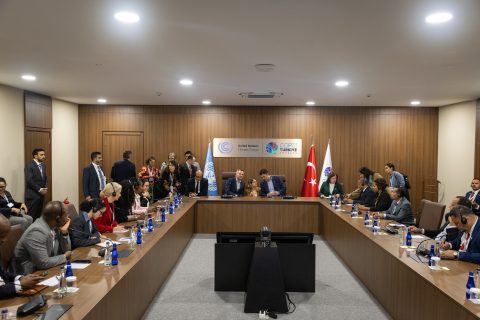
In an agreement signed on the sidelines of the COP31 climate summit in Antalya, Türkiye, the two countries established a cooperation framework to connect South Korea’s growing industrial power demand with Australia’s clean energy resources.
The deal also aims to support investment in power grids, clean energy supply chains, and greening industries to accelerate emissions cuts.
Analysts say the agreement can help build competitive clean energy supply chains and attract long-term investment into decarbonising industrial processes.
Richie Merzian, CEO of the Clean Energy Investor Group (CEIG), an Australian industry body representing institutional investors in clean energy, told Climate Home News this was “a great example” of a government-to-government agreement that would give investors confidence to invest in green technologies.
-
SE Asia speeds up plan for connected clean power grid after oil shock
Countries are redoubling efforts to link their grids to bolster energy security and reduce their dependence on fossil fuels – but many challenges remain -
As COP31 weighs 35×35 pledge, IEA says Hormuz crisis driving electrification
The report estimates that a planned transition away from fossil fuels and into renewables can add energy jobs and cut energy bills -
Southeast Asia’s fragile grids threaten billions in clean energy investment
Renewables developers need reliable electricity infrastructure and stable policies to help the region meet climate goals and surging demand for power
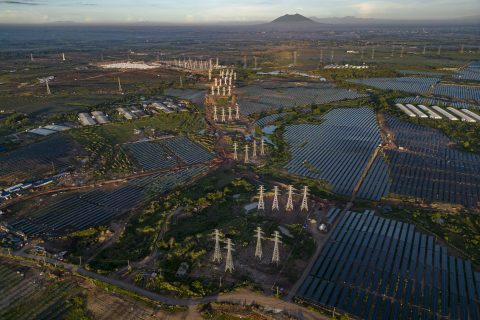

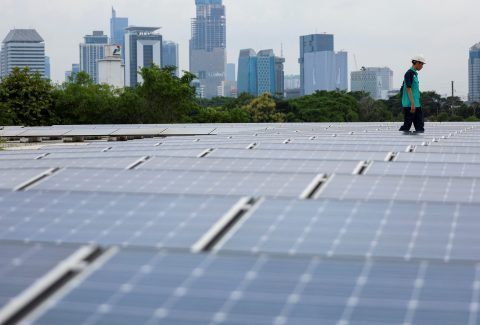
For example, the deal could support Australian exports of green iron and other low-emissions materials, while giving Korean manufacturers access to cleaner inputs for steelmaking, batteries and other industries.
That in turn could help attract investments in Australian renewable power projects, hydrogen production and industrial infrastructure if developers know Korean customers are willing to pay for greener products.
“The high levels of capital for green iron and steel need certainty on demand and a credible path to offtake before it commits,” said Merzian. The partnership, he added, “will help smooth out the path for Korea’s significant industrial policy and capital to come down under”.
A model for cooperation
The Australian government described the partnership with one of its largest trading partners as “a significant economic opportunity“, opening new markets for its energy and mineral resources.
The agreement will also support the delivery of South Korea’s $750 billion energy transition strategy through 2035 to expand renewable energy capacity by 100 GW by 2030, bolster clean industries and decarbonise high-emissions sectors, such as steel, petrochemicals and cement.
South Korea’s climate and energy minister Kim Sungwhan said in a statement: “This cooperation will serve as an important opportunity for our two countries to combine their respective strengths and jointly pursue industrial decarbonisation, energy security and economic growth.”
In addition, both parties submitted a joint proposal to UN Climate Change to share best practice and lessons learnt on how bilateral cooperation “can serve as a practical and replicable model for broader international cooperation and collective action in addressing the global crisis crisis”.
A group of five civil society groups across Australia and South Korea welcomed the partnership as an opportunity to accelerate the transition away from fossil fuels “in a bilateral relationship historically built on coal and gas”.
Australia was South Korea’s top supplier of liquefied natural gas (LNG) in 2025, while South Korean institutions have a record of financing Australian gas and coal projects. “Without a clear plan to reduce this dependence, the new partnership risks expanding clean energy cooperation without meaningful changes to the trade and reliance on fossil fuels,” the group said in a statement.
Greening iron production: a major opportunity
Greening iron production could offer one of the biggest opportunities for increasing the trade of low-carbon goods between two countries, according to analysts.
Using hydrogen produced with renewable electricity instead of coal to remove oxygen from iron ore for steel production could cut emissions by as much as 85% according to one study. If the resulting metallic iron is then melted in an electric arc furnace powered by green electricity, steel-making emissions can be further reduced.
Australia’s abundant iron ore and renewable energy resources could make it a competitive producer of green iron, while South Korea’s established steel industry offers a prospective market for the material.
A 2025 study, commissioned by CEIG and conducted by consultancy Baringa, identified green iron as one of Australia’s most promising green export industries.
-
We must strengthen trade cooperation to deliver on global climate goals
As governments turn to trade-related measures to deliver on their climate targets, cooperation is vital to reduce fragmentation, costs and build more resilient economies -
Minerals for the planet or for war and AI? COP31 must make clear what we prioritise
As demand for minerals soars, intensifying pressure for new mining, meeting demand for the energy transition must come first
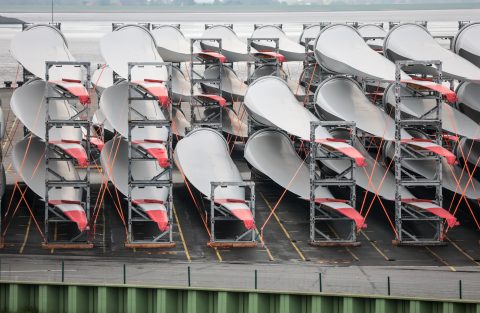

Under Baringa’s “renewables superpower” scenario, which assumes strong decarbonisation and that Australia leans into its green export potential, Australian green iron production could surge ninefold to 118 million tonnes between 2035 and 2050. Exports could be worth more than A$93 billion ($61 billion) annually by 2050, it estimated.
Producing the green hydrogen needed to power iron production of that scale would require roughly twice the current demand of Australia’s National Electricity Market, the modelling found.
Large-scale production would require substantial new renewable power generation, energy storage, transmission infrastructure, and hydrogen electrolysers – equipment which splits water into hydrogen and oxygen that could operate at times when renewable power is abundant and electricity is cheap.
Turning pledges into long-term deals
The agreement also identifies opportunities to strengthen cooperation on the critical minerals used in batteries, electric vehicles and other low-carbon technologies.
South Korea’s battery, automotive, electronics, and ship-building industries could provide markets for Australian lithium, nickel and other minerals. This could help Australian producers move up the value chain by processing minerals and producing higher-value products rather than exporting raw resources.
But the agreement is only a starting point, said Rebecca Mikula-Wright, CEO of the Asia Investor Group on Climate Change, an Asia-Pacific network of institutional investors focused on climate-related risks and opportunities. Its success will depend on whether governments and businesses can turn the commitments into viable projects and long-term supply deals, she said.
“Decarbonising critical global supply chains like steel and liquid fuels requires deep collaboration on the demand and supply side, and we hope this deal signposts further commitments between trade partners across the Asia Pacific,” she said.
The post Australia and South Korea’s clean energy deal could boost low-carbon trade appeared first on Climate Home News.
https://www.climatechangenews.com/2026/11/23/australia-and-south-koreas-clean-energy-deal-could-boost-low-carbon-trade/
Simon Kofe is Tuvalu’s Minister for Transport, Energy, Communication and Innovation
The just-wrapped COP31 has been called “the worst COP in history” for good reason.
What was billed as the “implementation summit”, translating previous climate promises into concrete progress for countries and people, collapsed without a deal. The meeting did not live up to the collective resolve to tackle the root cause of climate change: fossil fuels.
The fight is now moving to our next best opportunity to implement real action: at the UN’s International Maritime Organisation (IMO) decision summit starting on 30 November in London. The IMO’s 176 member states will debate the adoption of the world’s first global carbon pricing on any polluter, the Net-Zero Framework (NZF) for global shipping.
The IMO is different from the UNFCCC process in four key ways, which means it is much closer to actual implementation than any COP would ever be.
First, the talks focus on the climate impacts of international shipping, aiming to phase out around one gigatonne of greenhouse gas emissions a year. This is about the emissions share of major economies like Germany or Japan, a non-negligible chunk when science tells us every tonne of carbon and every degree of heating prevented matters.
Two, the IMO can set legally binding targets and enforceable measures to bring down shipping emissions. In other words, the IMO can regulate the entire global industry. This makes the outcomes of these negotiations far more consequential than big promises during COP announcements.
-
London talks raise hopes for green shipping deal
Despite fears of US wrecking tactics, the IMO says there have been “constructive discussions” over how to meet the industry’s green targets -
Ugandan oil official welcomes transition roadmap as nation gears up for exports
A senior Petroleum Authority official described the global roadmap as “fundamental” to Uganda’s transition planning as it prepares to become the world’s newest oil exporter


Three, the IMO member states have already approved the NZF. In April 2025, an overwhelming majority of countries in Africa, Europe, South America and Asia voted in favour of the agreement, against the opposition from the same blockers who sank the COP last week: Saudi Arabia, Russia and other largely Middle Eastern petrostates. Our coalition of Pacific Island states abstained in the vote, because we believed more ambition is necessary than the NZF compromise.
Four, while the IMO aims to find agreement by consensus, this is not strictly necessary. Failure to find consensus can lead to a vote. This stops climate blockers from delaying and derailing negotiations. Indeed, the NZF was “agreed” upon in a vote without their support.
Adopting the NZF next week will require a majority of countries to show up and stand firm. Our opponents will attempt to either water down the agreement to sheer meaninglessness or outright kill it completely. The latter is something they have been desperately trying to do since the agreement was reached.
But Antalya showed us 130 countries who are dead serious about climate action and who are united in their shared understanding that this unequivocally means phasing out fossil fuels. It’s on them now to show the same resolve and understanding in London.
Panama’s Environment Minister, Juan Carlos Navarro, made impassioned speeches demanding a transition away from oil, gas, and coal. Our hope is that the Panamaninian delegation will echo this message at the IMO and support adoption.
Germany’s Minister Carsten Schneider refused to accept the weak outcome text when it failed to mention fossil duels. Germany and the entire EU block need to maintain its climate leadership and not fall for weak compromises at the IMO.
-
COP31 Bulletin Day 13: Talks fail as many countries reject main deal
The EU, the AILAC group of Latin American states and the Least Developed Countries (LDCs) said they could not accept the draft “Antalya Pact” -
COP31 Bulletin Day 12: Divisions on fossil fuels, adaptation finance and trade set to delay deal until Sunday
A COP31 cover decision is not likely to be adopted before 9am on Sunday, with many negotiators complaining they had not yet seen the full text -
COP31 Bulletin Day 11: Countries decry cover text for omitting fossil fuels
Small island states and a group of Global North and South nations say the draft decision is too weak on issues ranging from the transition away from fossil fuels to finance provision
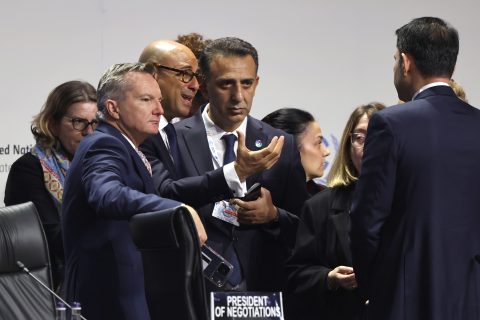

Tuvalu insisted that we need to keep the 1.5°C limit alive, despite recent warnings that we are certainly overshooting. We will continue to support the highest possible climate ambition across international fora to ensure a livable planet for everyone, including our citizens.
It’s easy to get on the stage at COP and ask for a phase out of fossil fuels. Luckily, next week, it’s equally easy to push for a concrete action that helps deliver just that. All the hard work at the IMO has been done over the past five years of negotiations, and the agreement is ripe for adoption.
To the industry, the NZF provides the certainty it is asking for to invest faster in green technology. To developing and most vulnerable countries, it generates up to $15 billion a year in revenues to help fund a just transition to clean energy in maritime and beyond. And it gives people hope that nations can still work together on the international stage to deliver meaningful progress against the climate crisis that threatens to overwhelm us all.
The coming fortnight at the IMO offers a unique chance to deliver a concrete first step to truly start moving away from fossil fuels. While we can expect petrostates to bring the same playbook to London as they did to Antalya, it’s up to us to seize the opportunity and show the laggards the tide is turning.
The post After COP31, our chance to save climate diplomacy lies in global shipping appeared first on Climate Home News.
https://www.climatechangenews.com/2026/11/23/after-cop31-our-chance-to-save-climate-diplomacy-lies-in-global-shipping/
Climate Change
‘COP-out’: COP31 fails to deliver the ambition needed to phase out fossil fuels and address climate breakdown