Connect with us

Published

on

Weather Guard Lightning Tech
ACP OM&S Falls Short, Vestas CEO Threatens Denmark Exit

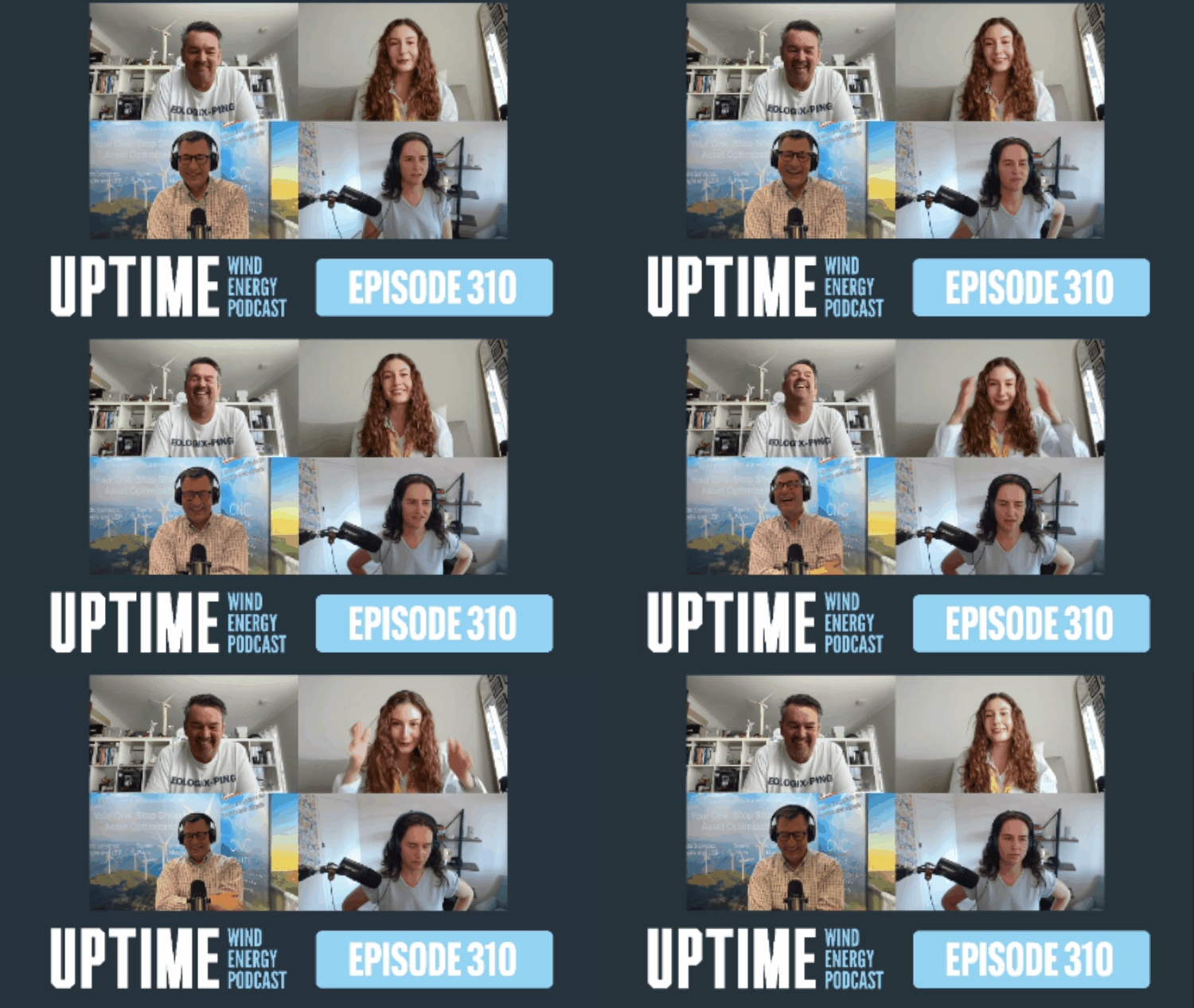
Allen reports live from ACP OM&S in Orlando, where the crew discusses high attendance costs, a pay-to-play model that shuts out newcomers, and how the event compares to WOMA. Plus, Vestas CEO Henrik Anderson says he’ll leave Denmark if proposed wealth taxes go through, sparking a debate on executive pay and Danish culture.

Sign up now for Uptime Tech News, our weekly newsletter on all things wind technology. This episode is sponsored by Weather Guard Lightning Tech. Learn more about Weather Guard’s StrikeTape Wind Turbine LPS retrofit. Follow the show on YouTubeLinkedin and visit Weather Guard on the web. And subscribe to Rosemary’s “Engineering with Rosie” YouTube channel here. Have a question we can answer on the show? Email us!

[00:00:00] The Uptime Wind Energy Podcast brought to you by Strike Tape, protecting thousands of wind turbines from lightning damage worldwide. Visit strike tape.com And now your hosts.

Allen Hall: Welcome to the Uptime Wind Energy Podcast. I’m your host Allen Hall, and I’m here with Yolanda Padron, Rosemary Barnes and Matthew Stead. I am at ACP OM&S in Orlando. Home of Mickey Mouse and we’ve had, uh, this is our second day at OM and S and this is the conference where all the operators and the maintenance and the ISPs and all the new technologies show up to, to discuss their products and try to get some work for the summertime.

Uh, so there’s a, a good number of vendors here. Solars here, not as much best as I would as expected, and obviously a lot to do with wind. [00:01:00] Uh, I know we’ve been talking internally on Slack and amongst one another. This is one of the, the most expensive conferences I have ever attended. It’s about $2,200 to attend just to get yourself into the door.

Rosemary Barnes: And that’s US dollars too.

Matthew Stead: Real dollars.

Allen Hall: Green backs.

Rosemary Barnes: That’s like three and a half times what our event cost. What warmer cost. If you do the conversion

Allen Hall: yes.

Rosemary Barnes: And you get access to what? An exhibition and all of a whole bunch, a variety of amazing, informative, technical topics included with that ticket price, right?

Allen Hall: No.

You get access to the exhibition, they will feed you some, uh, enchiladas and some, uh, free beer, but all the technical talks are extra. You have to pay. Uh, a couple hundred dollars

Rosemary Barnes: enchiladas and beer are a must have that everyone obviously wants, but talking about wind energy, totally optional. Nobody. Now, obviously not everybody is gonna wanna talk about wind energy, [00:02:00] so that’s, that’s an extra ticket that you need for that one.

Allen Hall: Well, in order to go to the, I would call them technical talks, you have to pay for those. They have an A space in the middle of the convention where they’re doing what they call powered cast. Which are kind of modeled on podcasts, uh, that are sort of a produced thing where they have a panel up there.

It’s similar what to where you’d done in Melbourne with Woma, but not with real technical people. The more polishing people. That’s what I saw. I don’t know a lot of the names and I’m pretty used to, to recognizing names of wind and it looks like to be a lot more policy people not. Blade experts or people like that.

Rosemary Barnes: I’m a little bit confused because it’s very different to, you know, I love to complain about the Australian wind energy events, but this sounds very different to the way that it’s run here. Like usually at the exhibitions, the exhibitors pay like a bunch of money to be there, and what they want is people to come see it.

So [00:03:00] usually here the exhibition is. Free to attend because you are there to be advertised to, you know, like it’s not some like amazing, valuable thing to you. It’s super valuable to the exhibitors. That’s why they have to pay, you know, $10,000 plus to, to be there. Right, but you are saying that they’re, they’re charging the, the attendees are, they’re giving the exhibition space away for free then?

Allen Hall: No, the exhibition space costs a tremendous amount of money for a little tiny space. I’m actually in our slot, we share. A slot because the prices are so high, we’re sharing it with AC 8 83 who we love and with C and C onsite, who also we love. So it’s a good combination ’cause we like one another. We’re fun to hang out with, but it’s probably a nine by nine space.

Uh, and then you have to pay for carpet and all the furniture that happens inside of that space, you can easily spend. $10,000 on a salon.

Matthew Stead: Question for you, Allen. So, um, how [00:04:00] does, how does the industry foster, you know, new, new technology, new companies, you know, growth of the industry, new ideas, so, you know, how does this event, um, foster those sorts of things?

Allen Hall: It doesn’t because it’s really, it’s pay to play as Rosemary has pointed out a number of times and is frustrated by. In order to get heard, you have to pay to one, have a booth, or if you want to get up on stage, it costs money. It’s, it’s not a small amount, by the way. So, uh, if you’re a new company, you got a great idea.

You even have traction. Say you’re TRL seven plus and you want to connect with operators, it’s hard to do that here. Uh, the operators tend to be a little gun shy and, and they’re. Off on the side. I, I know some of them obviously, ’cause I, I know who they are, but it isn’t like, uh, the operators are walking around necessarily talking to all the exhibitors.

That’s not how this [00:05:00] works. What generally is happening is the operators are talking, uh, to people that are selling products in these conference rooms on the side. So those things are completely off the show floor. It’s not the best situation. Like, I gotta admit, I’ve been to a lot of other conferences like in aerospace.

Those tend to be a little more free flowing.

Rosemary Barnes: It’s interesting ’cause it’s like, obviously you go to the events because everybody goes to the event and I’m sure you’ve had some great conversations. Um, however, you don’t need to go inside. Like when you go to one of these huge events, you’re trapped inside a windowless room for all day, every day for several days in a row.

Like, why does it need, why does it need to be there if they’re discourage, actively discouraging people from going to any presentations? Why couldn’t you just grab a bunch of friends, you know, put on an open invite, Hey, we’re all gonna the beach this week. Let’s go talk wind energy at the beach. Like, I, I don’t understand why we need to subject ourselves to this sort of, this sort of event.

Like I [00:06:00] just, it it’s gotten out outta control, don’t you think?

Allen Hall: It has. I would never talk wind energy while I’m at the beach. I go, that’s probably one place where I’m not talking wind energy, but there are other nice places you could be. To talk about what’s happening in the industry and, and that’s one of the frustrating pieces about this is, although I love a lot of the people that are here, it’s not a great place to share new ideas or to learn something new.

It’s, it’s mostly a, a meet and greet and catch up a reunion in a sense. Of, Hey, we’re the survivors. That’s it. Part of it is that feel right.

Rosemary Barnes: It’s pretty hard though if you are not like, you know, everybody you need to talk to. And I started doing the same thing, like at the um, one, one of the recent events or one of the events last year in, in Australia.

I was so fed up with it the year before. I’m like, I’m not giving them any money this year. I was at least allowed to go to the exhibition for free at that event. So, you know, at least that’s something, but I mean, I barely even did that. Anyway. What I did was I set up at a cafe near to the event and just, I just [00:07:00]scheduled meetings like back to back for two days.

Um, everyone just came to the cafe. But that’s ’cause I know everybody, right? Like, it’s like someone that’s new to the industry can get nothing out of these events. Now it seems like it’s just, it’s so, it’s so sad. Like where, how, how are you going? Like, you know, people brand new to the industry. You used to be able to go to an event and just be like, okay, I’m gonna just have information overload for two or three days, meet a bunch of great people and I’ll come away feeling like I’m part of this industry.

I just can’t imagine. That happening at the event that you are describing, that someone would, would show up and, you know, come away knowing a lot more about the industry and with, with a bunch of useful connections. Am I right?

Allen Hall: Uh, I think you’re right. There’s were a couple of people that I ran into that were new to the industry, trying to start a service provider or repair business, generally speaking that, or a drone business that we’re trying to get into the, the industry and we’re reaching out and talking to people and.

The thing about [00:08:00] wind is when you actually get ahold of somebody, they will help you. It’s, it’s very, uh, open. What do you do? What are you trying to do? Wherever you talk, who you talk to, here’s some names that will happen, but it is daunting because there’s a lot of people here. You don’t know anybody, and there’s no way to really introduce them.

I think that one of the things that, uh, American C Clean powered. Did, uh, that I noticed was they had like a first timers reunion space, so, or a meeting space so that it had some beach balls and a little Tahiti hut or whatever those tiki hut or whatever that was where you could kind of hang out because you knew.

But I’m not sure that’s the best way to do that. I think, you know, American clean power could do a much better job of knowing who’s first time and connecting them. If the industry’s gonna grow, you need to be taking in new people and new ideas. To it. The only way you’re gonna be able to do that is if you actively make it happen.

Matthew Stead: Did you learn anything new [00:09:00] so far?

Allen Hall: Not new. Uh, I, because we’re doing the podcast and we’re recorded several episodes in the last two days, I was able to ask specific questions like, what are you working on? What’s new? What’s coming out? And that’s the way to get to those answers. But if you’re walking the exhibit four, you would not see a lot of new technology and.

Three years ago, I think four years ago, especially like during COVID, there was some pretty cool technology out on the show floor, uh, but not so much Today, the industry’s matured and, and it’s a tough industry to, to survive in. So what you generally see is companies that have been around 3, 4, 5 years that have made it, that are profitable, that are making good and income, and are providing a service and have sustained businesses, that’s what’s here today.

Yolanda Padron: I think that a CP, the intent behind events like the one you’re, and Allen and the one we’ve, the ones we’ve all been to are, the intent is great, but the [00:10:00] execution isn’t super great. Not just from the the point of view of people coming in from new to the industry and wanting to start an ISP or something, but just from the owner operator.

Point of view, you know, you’re, if you have to pay to go to specific talks or to go to technical talks that you don’t really know how much they’ll benefit you until basically the end of it. Once you see the information that’s gone into it and the practicality of everything that they, they’re talking about, and then when you’re walking in the showroom like four, like it’s a little bit daunting sometimes.

There’s hundreds of companies. Sitting around in kind of like a maze, right? And it’s not always like, oh, you need lightning protection. Like that’s that area. Or you need better locks for your o and m buildings or for your towers or something. It’s that section like you’re just walking around everywhere.

And then just. It kind of turns [00:11:00] into, like sometimes it can turn into just a game of like, if you’re going with a lot of colleagues, like a kind of a drinking day or a day to just see who can collect more freebies. Like I remember one year we had a group chat of like, oh, like every time you saw something cool that was like a, a merchandise thing, like you would put it in the group chat, like E 46 has this.

And then we would all go and get it and it was. I don’t think that’s the intent behind what, what we wanted to do. It really wasn’t what we saw at oma if we’re being completely honest.

Matthew Stead: What I’m hearing is that there’s a really strong need in the US for another event. Is that, is that what I’m hearing?

Allen Hall: I think there needs to be a real technical event run by people who are technical experts.

I think that’s it because there are a lot of new solutions out there, but you’re not gonna find them at OMX. That’s just not the place. Now, I’m sure a CP would dispute that and that’s fine. They [00:12:00] have their own opinion. But I think having attended this for several years and a CP and a number of other, uh, conferences in wins, there’s a small subset that are sharing solutions.

It’s small and maybe there is need for one in America. It’s hard saying, Matthew, I. I think that maybe there’s is a time and place for it. I’m not sure America’s ready for it in, in a broader scope, but maybe something small. Maybe that’s the way to start off, is to do something small. Bring in the people we know and love from around the world have, go back to Rosemary’s point.

Maybe we do something by the, by the pool or by the ocean. Maybe we do talk wind energy for, for an afternoon.

Rosemary Barnes: I understand why you can’t, um, have an event at. A resort. And it was suggested actually to me a couple of times, like people when we were organizing Wilma, why is this in Melbourne? Why isn’t this in the Maldives?

Or you know, some, something like that. And the [00:13:00] one of the reasons like for us, ’cause in our Melbourne event it’s a, you know, it’s a very low cost event. We don’t make any money from it. It’s small. At least half of wind energy People in Australia are living in Melbourne, so it’s very, you know, easy for them to go to that it doesn’t, it doesn’t cost much or take much time.

So that was that reason. But I think that, you know, more broadly, like say we did a global event and we put it in the, in the malice or in Fiji or Hawaii or whatever, like, people aren’t gonna get that approved from their managers, right? So even though you know, you’ve spent, I don’t know how much the technical sessions were, but by the time that you’ve gotten to a CP, if you had to.

Even, you know, fly there in Australian hotel for a few nights, like it’s gonna be, you know, four grand or something. You can get to a nice location, probably an all-inclusive resort for a week, somewhere nice for similar money. Like you would spend more time having quality conversations and it would be, you know, nice and enjoyable, but [00:14:00] your manager is never gonna approve that.

So I think that’s the challenge. To find somewhere that’s like nice and conducive to being relaxed and open, but that doesn’t sound like. So obviously a junket that no one will get approval to go to it. That’s the, that’s the challenge.

Matthew Stead: Um, just this week we got the feedback from the WMA conference. So we got, um, some of the results from the survey and I think, uh, probably the key thing to me was that we achieved 4.6 out of five, um, star rating.

Um, everyone gave it a four or a five. And we know people that give things four out of five actually mean five. So I think we did really well. So, uh, and the feedback was also, um, you know, the technical content, but people want more, more and more, uh, technical content and, and the interaction with people.

Rosemary Barnes: That’s a really, a really key thing to get feedback on if there are. Experts or categories of information that you would like to see covered that haven’t been, because I think, like we talk a lot about how, what the [00:15:00]problems are with a pay to play kind of model where speakers pay and get up and give a sales pitch and you know, there’s a lot of problems with that.

But then when it’s the other way around and you know, we’re choosing speakers that we know are good, then you fall into the risk of having it become cliquey where it’s just, you know, like all our friends over and over again. It’s uh, like hard for us to both vet the quality and bring in people that we don’t know.

So that’s where the outside feedback is gonna make that a lot better. Um, and it takes a long time, you know, you do, ’cause you, you do need to get to know a speaker before you can decide whether they’re gonna get up in the acne. You don’t sell at you for half an hour when they were supposed to, you know, do something informative.

So, would love to hear that feedback.

Matthew Stead: I think the proof is in the pudding because, uh, at for woma, no one said that they were unlikely to attend.

Allen Hall: Oh, I, I would hate to see what the numbers are gonna be for OMS this year. Uh, ’cause you know, you know why I say that? Because a lot of people that have exhibited in the past do not have a booth this year, and they’re walking [00:16:00] around the show.

And to me that’s an alarm signal. They should have a booth. They have good things to talk about. They’re a successful company. They’re doing great things to win, but they feel like this is just too much. It’s too much. Eventually you reach too much. I think we’re there.

Rosemary Barnes: I think it’s been a really good, like, uh, a big event with an exhibition can be a real money maker.

And for, you know, like, uh, assuming that SAP uses this. The money that they make from this event to deliver services for the American Wind Industry. Uh, I mean, you, you know, you can probably argue about how well or not they do that. I don’t have an opinion ’cause I’m not in America. But, you know, like, I, I’m not saying that that’s not the, um, a, a noble goal and a good thing to, for the business to be doing.

However, I think that it, that you can overshoot and, you know, so you can make a, a bunch of money for a few years. You know, you’ve got a good reputation for your event. You’ve got everybody comes to it. You can charge squillions to exhibitors. You can charge squillions more to speakers. You can even start charging people to watch the speakers who have [00:17:00] paid to be there.

Probably, I don’t, I don’t actually know in this case, my assumption. Um, but at some point. Like you’ve cottoned on that, hey, it’s not actually worth paying extra for the, um, you know, to go watch the speakers. And the last one of these, you know, similar Australian events I was at, I was like, Hey, it’s not actually worth me paying to go into there because I can get all the benefits by just being near to it, like then.

Once you don’t have heaps and heaps of people moving through, then exhibitors don’t wanna pay $10,000 to be there. Um, and so like, it’s just, it’s not sustainable to run the event like that. And that’s what I don’t think that, um, a lot of these event organization companies, especially the ones that aren’t run by an industry body, um, the ones that are just run by a company who exist to make money off events.

You know, like they’re not, I don’t think that they’re planning these events to be sustainable in the long term and to improve the industry.

Matthew Stead: Can I ask, um, a question for Yolanda and Allen. Um, so assuming this money for a CP [00:18:00] ends up as lobbying money, do you think lobbying at the moment actually helps?

Allen Hall: Here’s the feeling about it on the floor, and I haven’t talked to everybody here clearly. But the significant percentage I had talked to thinks that the policy efforts have not borne fruit, and that in some aspects, uh, they have increased the tension. Whether they’ve intentionally have done that or not, I don’t know.

But I think the feeling on the floor here, the last two days has been the industry is in a quote unquote downturn or a pause, and they’re waiting till 2028 to see what happens. That’s not the answer I wanted to hear. And also at the state level, I think, uh, the amount of policy changes that are happening are not pro wind, pro solar or pro best, except maybe in a couple of states.

So, uh, you feel like although [00:19:00] American clean power is on a national level, you will also like them to be at a state level, helping move some things forward and stop some of the prohibitions that are happening, or to get some of the permits issued. That’s one of the things that popped up today, talking to someone in the know as that permits are hard to get hold of in some states.

Well, American Clean Power is supposed to be helping with that. I’m not sure that they are, at least if they are, you can’t see anything visible happening. From the outside, which is a shame. That’s really a shame. So, you know where we go from here? I, I, I’m kind of in Rosemary’s camp. I had no idea. Uh, next year gonna be really interesting.

I, I don’t know what the numbers of attendees are. Uh, I’m guessing a couple thousand people are here. I’m guessing, let’s just say it’s 2000 people. I may be off plus or minus. Well, not on the negative side. It’s more than a thousand people here, but it’s not 10,000. That’s for sure.

Yolanda Padron: I think that, uh, someone at Woma summed it up really [00:20:00] well when they said that, um, we need to shift the conversation from this is the right thing to do to this, is this, we should make this to be cost effective and it should be the obvious decision to make.

Right? Just from a financial standpoint. Uh, and I think, I think that’s right from my, uh. Personal interactions with a lot of people in dc I think that lobbying really helps regardless of the political party that one is affiliated to. Um, just, just the way that sometimes our, our system seems to. I not, not to say that anything’s negative, I think it’s, I mean, it’s just the, the way things pan out, uh, oftentimes in the [00:21:00] us.

Um, yeah, I mean, I’ve, I’ve heard from. From both sides.

Allen Hall: Well, to Yolanda’s point, I would say we don’t belong to American clean power because one, it’s expensive and as a small business, does it make sense as the changing policy that helps me? The answer to that historically has been no. It doesn’t mean it’s not gonna happen in the future.

I think a lot of. Companies of our size are saying the same thing. There are some that have been here a lot longer that have knew a CP before it was a CP when it was a, a slightly different organization and they’ve continued on on, on some level just I think because they’re familiar with it. But I think the newcomers are having a heart attack.

And I would consider me to be a newcomer that we’ve been in wind since about 2012 or 2013, so we’ve been in it quite a while at this point. But there’s some old guard here. The new. The new players though, I think are struggling. I think there’s very few new companies that are flashy. Like we saw in San Antonio a [00:22:00] couple of years ago at American Clean Power.

We’re like, wow, there are some boosts here. And man, there’s some firepower happening and some really good marketing and some new products and new ideas. That’s not. That’s not here. Not, not this year.

Delamination and bottom line, failures and blades are difficult problems to detect early. These hidden issues can cost you millions in repairs and lost energy production. C-I-C-N-D-T are specialists to detect these critical flaws before they become a. Expensive burdens. Their non-destructive test technology penetrates deep to blade materials to find voids and cracks.

Traditional inspections completely. Miss C-I-C-N-D-T Maps. Every critical defect delivers actionable reports and provides support to get your blades back in service. So visit cic ndt.com because catching blade problems early will save you millions.[00:23:00]

Denmark has long been the home of the wind industry, but now our proposed new wealth taxes threatening to push one of its most prominent executives out the door. And Henrik Anderson, chief executive officer of Vestas says he will leave Denmark rather than pay the new tax, even if it costs him tens of millions of Broner and exit fees.

Uh, Anderson earned 32 million Kroger last year, and estimates he pays an effective tax rate of 60% already. He argues Denmark already leads Europe in income taxation and adding a wealth tax crosses the line and he, if he goes, he warns senior leadership could follow. Now, that’s a pretty bold statement for someone who was seen as one of the leadership.

Uh, a group of Denmark on the industrial side. Of course,

Rosemary Barnes: I’d argue it’s also culturally, [00:24:00] culturally not a super Danish thing to, to say at least publicly. Um, yeah, I dunno how many Danish listeners we’ve got, but one thing that I learned when I lived there, they’ve got this thing called yte Long. I think it comes from an, an old book, like fictional book, but it does pretty.

Well, Danish people say it pretty accurately describes Danish culture. I’ve just, uh, looked it up. But, um, so it’s Y Y’s law and that has 10, there’s 10 rules in Y’s law and they are, one, you’re not to think that you are anything special. Two, you’re not to think you are as good as we are. Three, you’re not to think you are smarter than we are, or you’re not to imagine yourself better than we are.

You know, it can, it continues down like that. But I just wonder like, is the Danish wind industry, have they flown too close to the sun? Have they become too thought themselves too special? Is this an example of where Denmark Danish people would say, you know [00:25:00] what? Who do you think you are when dentistry, you think that you’re better than us?

You think you’re smarter than us? Do you think that you don’t deserve to contribute to society? Because that is one of the biggest cultural differences that I found in in Denmark, was that people genuinely think that they have the um, responsibility when they’re doing well to make sure that everybody else in society is doing well.

This is an interesting cultural moment for Denmark, is all I would try to say that this to me, I’m very interested to see how Danish people respond to this idea that. We’re gonna, we’re gonna leave now because we don’t wanna share our, uh, wealth with the Danish, with Danish society as a whole

Allen Hall: 32 million kroners, that’s actually extremely low and in the United States.

Uh, there are thousands of companies, much smaller than Vestas, where the CEO is making a lot more than that, and to give half of that, more than [00:26:00] half of that away, so the CEO is taking home a million and US dollars, like 1,000,002, that’s not a tremendous amount of money. I for the responsibility which are on that person’s shoulders.

I could see being a little upset about that. And obviously he travels in circles in which he meets a lot of people that are making a lot more money come to America, stop at a, I don’t know, there’s a lot of places, machine shops that’ll make more money than that. Uh, so I think there’s a right to be upset about it.

You know, the, everything that’s happening in Denmark at the moment, I’m trying to. I feel like Denmark is getting it together. And then these things happen and I start to worry again. Uh, there’s, there’s so many things that have happened in the United States. They’re pushing against Denmark, and I feel, I’m always apologizing to my people I know in Denmark and like, this is another one.

Like, oh, geez, yeah, we, you know, vest can move to America. Oh, no, no, no, no. I want buses to be where it is. Stay [00:27:00] there. But I think there’s opportunities for investors to move and you kind of get the feeling that they’re leaving Denmark slowly. Have you noticed that recently?

Rosemary Barnes: Maybe. I mean, uh, all of those Danish wind energy companies used to manufacture in Denmark and barely, there’s barely any Danish manufacturing now.

So I mean, to a certain extent this is, you know, started a long time ago, but I also think that the, what you described at the tax of the CEO income and the income not being high, it’s not just, uh. Top 1% kind of issue. That’s something that I, I definitely felt it when I worked there, but I think that like, would your average Danish person wish that CEOs were paid more like Americans and that Danish society became more like American with a huge wealth inequality?

I, I’m gonna go out in a limb and say. 90% plus of Danish people would absolutely abhor the idea of that happening there. And they will be very firmly on side of you should be, um, CEOs should not be [00:28:00] making that much money and people that are making a lot of money should be paying a lot of tax to support the rest of society at just, I, I, I’m.

Pretty sure that he is like a really core cultural value.

Matthew Stead: I think he is good at, I mean, things don’t change unless things change. And, um, uh, I think it’s good for him to be pushing and, you know, making this a, a public discussion and a public topic. I mean, if he hadn’t have come out talking about this problem, we wouldn’t have been talking about it.

So, uh, I think yeah. Good on him for raising it and for being brave. I mean, you, like you say, Rosie, um, is not traditional cultural. Values in, in, in Denmark, but, you know, good on him for, for pushing the, pushing the, the, the barrow.

Allen Hall: It’s, it’s hard, right? I think Vestas works in a global community and they see all different kinds of cultures and all kinds of economic systems, and they operate in all of ’em.

And, uh, the CEO of Vestus were in the United States and they have a large manufacturing presence in the United States. Let’s face it. [00:29:00] Uh, easily making 10 million in the United States, maybe more easy. And I don’t think they’re paying him nearly enough for the work that he has done and things that he has accomplished.

You have to admit, the CEO of Vestus has really put a lot of time and effort into that company and has improved it in ways that are somehow, uh, never discussed, but are, in my opinion, immeasurable. So for the long-term health of that company, they are seen as the preeminent wind turbine manufactured today.

That’s hard to do. That wraps up another episode of the Uptime Wind Energy Podcast. If today’s discussion sparked any questions or ideas, we’d love to hear from you. Reach out to us on LinkedIn and don’t forget to subscribe to you. Never miss an episode. And if you found value in today’s this conversation for.

Please leave us a review. It really helps other wind energy professionals discover the show for Rosie, Yolanda and Matthew. I’m Allen Hall, and we’ll see you here next week on the Uptime Wind Energy [00:30:00] Podcast.


ACP OM&S Falls Short, Vestas CEO Threatens Denmark Exit

Continue Reading

Renewable Energy

Pardalote Studies Australian Blade Erosion and Heat Fatigue

Published

on

Weather Guard Lightning Tech

Pardalote Studies Australian Blade Erosion and Heat Fatigue

Rosemary Barnes, CEO and founder of Pardalote Consulting, joins to discuss their new grant-funded study of blade erosion and heat fatigue in Australia.

Sign up now for Uptime Tech News, our weekly newsletter on all things wind technology. This episode is sponsored by Weather Guard Lightning Tech. Learn more about Weather Guard’s StrikeTape Wind Turbine LPS retrofit. Follow the show on YouTubeLinkedin and visit Weather Guard on the web. And subscribe to Rosemary’s “Engineering with Rosie” YouTube channel here. Have a question we can answer on the show? Email us!

Welcome to Uptime Spotlight, shining light on wind energy’s brightest innovators. This is the progress powering tomorrow

Allen Hall 2025: Well, Rosemary, welcome back to the show.

Rosemary Barnes: Thanks, Allen. Great to be here. For, it’s been a while since we did one of these one-on-one episodes, like a, yeah, a proper, proper guest. 

Allen Hall 2025: Well, this is kind of a celebratory episode because your company, Pardalote Consulting, has been awarded, uh, some funding from the Australian Capital Territory’s government for the Energy Innovation Fund.

Rosemary Barnes: It’s a really good program that the ACT government has to try and get energy innovation In the state. It’s not a state actually, it’s technically a territory. Little more than just Canberra, the city. Uh, but there are actually quite a few, like, really interesting energy-related companies here, partly ’cause of the, the fund I think helps, but also just tracing back like, [00:01:00] uh, y- you know, in the 20-teens, Australia had a really conservative government that hated renewable energy, and the ACT government had a commitment at that time to 100%, um, 100% renewable electricity for the, the government.

And that was one of the only programs that was resulting in a lot of, um, you know, clean energy projects being built, and one of the conditions that they put on that, uh, for people that would win PPAs with the ACT was that you had to have your headquarters in Canberra. So we’ve actually got quite a few, quite a few really cool, innovative companies out of here.

Um, like Neoen’s headquarters here. Windlab, uh, yeah, was, was founded here and still has a lot of people here. Pardalote obviously, and you know, a few other companies as well. So despite it being a small city of like, I don’t know, maybe it’s up to 400,000 or something people by now, um, yeah, there is actually quite a lot going on here for energy.

Allen Hall 2025: And the Energy Innovation Fund is funded by the wind and solar operators in the area, and your particular [00:02:00] effort has really global consequences. You’re focusing on two areas involving how wind turbines survive Australia, but more, uh, of relevance is to just really tough conditions which exist not just in Australia but around the world.

What two areas are you going to focus on?

Rosemary Barnes: Yeah. So the two focus areas are leading edge erosion and high temperature fatigue, which we can probably get into the definitions of those in a minute. But basically my, um– what led me to wanna have a project like this was that when I moved back to Australia in 2021, I– and I started working in O&M, uh, I noticed that the wind turbines that I would look at, the blades that I would look at here behaved really differently to the ones that I worked with overseas.

You know, es- especially with leading edge erosion, like often I would be doing a condition assessment of a, you know, a new wind farm. Um, might only have been operating for, you know, two years. That’s a pretty common time for people to get in and do a condition assessment [00:03:00] because their warranty period is about to end and they wanna, you know, make sure that everything is okay.

Um, and I would just notice that often, like 90, 100% of blades would already have bad erosion after just a couple of years, which is super-duper fast. And then there are some tools available to check, um, like what kind of erosion are you likely to experience on your site. Like is it a higher severity erosion site or a, a low severity one?

Um, and you basically, you know, the status quo globally is to just look at the annual rainfall, um, and the tip speed. And if you’ve got, you know, high for both of those, that’s a bad erosion site. And if you’ve got low for both of those, it’s a, a low erosion site. But when I plotted out the wind farms that I knew had really bad erosion problems onto, you know, a chart with those two axes, I just saw a random distribution of dots.

You know? Like, this was not– uh, this had no predictive value for Australian wind farms. And so that led me to believe that, okay, um, you know, things are a bit [00:04:00] different here. Makes sense, you know, most of the knowledge that we have about how wind turbines operate, it’s been developed and validated mostly in Northern Europe.

You know? Like it’s, it’s Denmark and the surrounding countries that had, like, the bulk of the early wind energy. First few decades of knowledge were, you know, were mostly there. Of course, there were some other, um, places that had wind turbines, but, you know, most of the The OEMs have been operating for decades, came from Denmark.

And I know when I lived in Denmark, the rain there is very different to the rain in Australia. So in Denmark, it’s basically always raining, right? Like, it’s just… Like, even if it’s not raining, you’re still gonna get wet when you go outside ’cause it’s just, like, the air has this just amazing ability to just hold onto moisture.

Um, but it’s very, very gentle. But, you know, over an entire year of most days having gentle rain, that adds up to a lot. Whereas in Australia, and especially if you go, like, north to Queensland, it rarely rains. It’s mostly just dry, and when it [00:05:00] does rain, it’s like a tap turns on, and I, I swear you will get bruised from the rain droplets hitting your skin.

You know, they just have so much energy in them. So I think that that i- you know, when you look at just the overall rainfall, you really hide something important about how erosion, um, can progress. Then, um, there’s other places in Australia that have very different characteristics. Again, they don’t have that kind of really intense rain but, you know, some of those sites are also having really bad erosion.

And so it just occurred to me, I did a lot of research, you know, into what’s going on and, you know, the academics are studying erosion a whole lot, and they’ve got, you know, a lot of standardized tests and, you know, products are developed according to these standardized tests. But the standardized tests don’t actually resemble reality, and especially they don’t resemble reality in Australia.

And so my client started asking me, “Okay, you know, the products that we have are, are terrible. We have to replace them every couple of years. It’s, um, causing big problems with also [00:06:00] the amount of energy that you’re losing.” One of the types of, um, leading-edge erosion or leading-edge problems that we have in Australia is that the, the coatings tend to peel off and make these, like, big flakes which will just massively disrupt the airflow, can cause y- you know, at least a few percent AEP loss, and maybe up to five.

And even worse than the AEP loss is the revenue loss because it affects it most at, you know, lower wind speeds. Um, you get a bigger hit than at rated wind speeds. So there’s a variety of problems going on with leading edges in Australia, which mean that I, I basically… My clients would ask, “What product should we put on to prevent having to, you know, constantly replace this?”

‘Cause it costs, like- you know, 30, $40,000 per turbine to replace the protection, not to mention, you know, one or two days of downtime. It’s expensive, and I basically, I didn’t have a good answer for them. What, what product should they put on? I don’t know. No, we, we don’t know. One, we don’t know what the [00:07:00] specific, um, characteristics are that are…

what the specific local environment, local conditions are that are accelerating leading-edge erosion, one. And two, all of the products tend to be tested around this, you know, there’s this protocol that academics have come up with, and they’ve kind of like assumed that this is representative of how things behave in the field, and it’s– I don’t think it’s particularly true anyway, but it’s especially not true in Australia.

There are a few companies that are testing to different standards. Um, definitely applaud them. But without knowing wha- what are the conditions truly like in Australia, uh, it’s really hard to advise, like, what kind of tests should you be demanding from a product you’re considering to be sure that you’re gonna put it on and not gonna be replacing it again in two years.

Allen Hall 2025: Because that’s really the trouble in Australia is when you get offered products They have been tested generally in somewhere in Europe and maybe in the United States, and then when they go to [00:08:00] Australia, it’s really unknown as to how those products will do, which is a huge risk for the Australian wind market as to what to choose, how to choose, is it– what’s real in terms of test data.

So now you’re gonna go out and do what? Are you gonna put sensors out by the wind farms? Are you gonna try to do more of a statistical summary of the actual environment around wind farms using existing data? What’s the approach here?

Rosemary Barnes: It’s all of the above, but the part that is supported by the grant is that we’re gonna have enough money to be able to buy some scientific-grade sensors and put them on, um, a sample of Australian wind farms.

So we’re gonna be looking at a lot more characteristics about the rain than simply is it raining now, you know, how many millimeters per hour. We’re also gonna be investigating, you know, every kind of characteristic of, of that, um, of that rain, um, including, yeah, like the, the energy that’s in it, for example.

A, a bunch of stuff. I won’t get into every single [00:09:00] parameter. Um, and you know, other things as well, like measuring UV, solar radiation, um, particles, because, you know, in Australia we have a lot of dirt roads, which I know is very common in wind farms around the world, but Australian dirt roa- roads are always dry and dusty, like 99% of the time, so that’s one of the things that y- you know, maybe that’s causing a difference.

Um, so basically putting sensors all over a bunch of wind turbines and then monitoring the erosion, um, a combination of some real-time monitoring and also looking at inspection, um, drone inspection images annually. We also have a- an option where we’ll just be using SCADA data and inspection images, so that’s like a lower cost version where we can combine that with the findings from the scientific-grade instrumented turbines to build up a picture of what types of conditions lead to accelerated erosion.[00:10:00]

Allen Hall 2025: So the SCADA data will, will have some information inside of it, you think, that, uh, will correlate to the weather outside?

Rosemary Barnes: It has some Additionally, we can look up, um, you know, just the weather data, like how many millimeters fell during which 15-minute interval throughout the day, what was the temperature.

SCADA will tell us also what the temperature was, um, what the speed of the turbine was, so you can calculate the tip speed, ’cause that’s an important thing. Um, yeah, so it’s, it’s two, it’s two tiers of data collection. The scientific grade sensors, as you can imagine, are, are really expensive and y- you know, the, the grant project has contributed a, a lot of funding, um, but it’s not enough to put those, yeah, put a little mini lab on top of every turbine across Australia, obviously.

So that we’re using s- doing selectively, and then we can increase the number of wind farms that are included in the study by just doing this, um, cheaper version of the SCADA [00:11:00] plus, uh, weather data that’s available.

Allen Hall 2025: So what are some of the risks on the temperature side for all the high-temperature regions of Australia that have wind turbines?

Clearly it’s generally warmer in Australia than it is in, in Scandinavia and Northern Europe. What kind of temperatures are we talking about on the ground?

Rosemary Barnes: Uh, well, temperatures here can get pretty close to 50 degrees. Um, and if you’ve ever been inside a wind turbine blade on a, even a mildly hot day, you’ll know that the temperature inside a wind turbine, and especially inside the blade, is much hotter than what it is, uh, what the ambient temperature is.

So this project is one– I’ve actually been talking about this project for, yeah, like over 10 years now. Ever since I started, I moved to Denmark, started working for a wind turbine manufacturer, I had done– I had just finished doing my PhD on composite materials, structural design, and analysis. So, um, yeah, very, very familiar with, [00:12:00] you know, how composite materials work and, in particular, the effect that temperature has on them.

I mean, like most materials, when composites get warmer, they get softer, and that is really important for a w- a wind turbine blade. You know, if it gets, um, less stiff, then you’re gonna get a lot more strain, and that is going to affect your fatigue behavior. Y- you know, fatigue is just the application of a little bit of, a small amount of strain.

It’s not gonna cause damage, but when you apply it millions, tens of millions of times, like you do in a, o- over a wind turbine’s operate, um, operating lifetime, then that builds up. And, you know, wind turbine blades are a very fatigue-driven design. Um, it’s one of the most important things to consider when you’re designing a wind turbine blade.

And so when I got to Denmark and I learned how materials are qualified and how the qualification is treated in the certification process, I just realized it’s not particularly conservative, and also that some of the assumptions that are made that [00:13:00] wo- again, they worked really well in more moderate climates where wind turbines have had most of their developmental history.

You know, it’s not such a big deal there if you test at room temperature. Your wind turbine blade is spending most of its operating lifetime at room temperature or below. It’s, it’s rarely, you know, above 30 degrees in Denmark and most of Northern Europe and, you know, also a lot of, um, a lot of America, not, not all of it But, um, in Australia it has just extended periods above that temperature and even exceeding the temperature where, you know, wind turbines have an operating limit and after that they will shut down.

But the operating limits are based on ambient temperature. It’s not based on what’s the temperature in the laminate, which is what really matters for blade lifetime. So anyway, I’ve been obsessed, like honestly obsessed about this issue for 10 years. Talked about it with anybody who would listen . But then when I started working in O&M in [00:14:00] Australia and I started seeing some wind farms with an abnormal number of cracks early…

again, early in their lifetime, you know, I think one of the wind farms I was looking at was maybe three years old or four at the time. I think it was three actually, and had a lot of cracks, and I looked at a few years in a row and it was more and more cracks every year and I’m like, “Oof, this really looks like end of life fatigue behavior.”

A- actually it’s not, y- you know, there’s this concept of a bathtub curve where, um, when you’re looking at failures in components, in, in anything, not just in, um, wind turbine blades, but you know, like you’d start– it’s called a bathtub because, you know, when it starts operating, you’ll get quite a lot of failures.

Anything big, any manufacturing defects or anything are gonna cause failures quite fast, and that kind of drops off over time as all of those, uh, get addressed. And then you have, you know, the bulk of your operating life, it’s like pretty low level, pretty, pretty constant for a long time and then as you get towards the end of the [00:15:00] life, you start to see failure rates rise up again.

That’s your fatigue failures, your end of life fatigue failures. And so when I saw the same types of cracks more and more each year, I’m like, “This looks like, you know, the foot end of the bathtub, not the head end.” And, uh, it made me worried and I’ve now seen that across a few wind farms in Australia at, um, hotter places.

There’s a few blade types that are more prone to it than others, but at this point it’s still a suspicion that that’s what’s going on. I mean, a suspicion backed by a lot of, a lot of theory and knowledge of how the certification process works. But this project now we’ve got some funding to actually go put some sensors onto wind turbines, actually learn what the temperatures are in the blades throughout the whole laminate, um, not just the, you know, on the outside surface or not just the ambient temperature, but actually, you know, develop a temperature gradient across the whole, um, the whole laminate in the blade shell.

Um, and [00:16:00] then we’re going to be doing a bunch of modeling basically to look at what is the effect of these different temperatures that blades are really seeing and how much would we expect to… that to decrease a lifetime. And then we should also be able to say, you know, if you have this issue in your wind farm, you might be able to change your operation a little bit and extend your lifetime a lot.

Because this one, it’s real– like, in contrast to leading edge erosion, leading edge erosion is just, it’s, you know, every wind turbine has it to a certain extent, and it, it’s always there, but it’s a relatively minor cost to fix it. You know, like it sounds like a lot, like 30, $40,000 per wind turbine, but, um, you know, compared to if you’ve got to replace every blade across your fleet because they’re all, you know, at the end of their life after five years, you know, that’s obviously shocking.

And, you know, that’s a bad example, but even in a y- you know, like a less extreme example, maybe [00:17:00] after 15 years you have to do a, you know, a f- a fleet-wide campaign to strengthen blades or something. It’s, you know, m- many millions of dollars for that, and so it c- could make sense to be able to learn, okay, what, what hours of operation should we be avoiding?

Additionally, because when it’s super-duper hot in Australia, usually you’ve got heaps of solar power and the electricity price is not that high. So I, I think that there– and I don’t, obviously, before we’ve done the project, I don’t know what the threshold is. But in both cases, we will be aiming to improve the knowledge of how you can operate to avoid these periods of accelerated damage.

Allen Hall 2025: Do you think you’re seeing more fatigue-like damage due to the blades operating when it’s hot or not operating when it’s hot, with maybe less airflow around the blade and maybe less cooling going on is just a temperature soak At rest? [00:18:00]

Rosemary Barnes: Yeah. It’s interesting because the temperature is higher if it’s not rotating, um, because you get a whole lot of, um, convective heat, heat transfer when the turbine is operating.

So your temperatures are not gonna get as hot when operating as when they’re standing still. However, if it’s standing still, they’re only very lightly loaded. Like, yes, they’re gonna get, um, blown by, by gusts and, um, have a little bit of bending, but it’s, it’s very, very small compared to, uh, if it is y- you know, operational loads.

Uh, assuming that you’re not in the middle of a s- a storm. But yeah, a storm probably doesn’t come with 50 degrees temperatures.

Allen Hall 2025: And what part of the blade is susceptible to these higher temperatures? Is it the resin? Is it the fiberglass or carbon fiber? Or is it the, the glue, the bond joints? What part are you focused on?

Rosemary Barnes: The resin is the main part that I’m focused on. It gl- it could be an issue for glue too, actually. I haven’t even looked into what the, um, yeah, temperature assumptions are with, with glue, with [00:19:00] bond lines. But the failures that I’m seeing in the field are not, are not bond line issues. It’s, it’s, um, a laminate problem.

Allen Hall 2025: What about balsa and foam inside of the blade? Are they affected by the temperatures or are they pretty temperature stable?

Rosemary Barnes: I don’t think they’re affected at these kinds of temperatures, no. They, they don’t really do much actually. The, the core materials, like it, it is very important that they’re, that they’re there, but their job is really to keep the fiberglass separated from its- itself to make it stiffer.

So, um, yeah, that’s, that’s unlikely to be a, a major source of problems.

Allen Hall 2025: So this study is gonna work over about three years, and you have a number of wind farms that are participating. Are you looking for more wind farms to participate in Australia?

Rosemary Barnes: Yeah. Yeah, definitely. I mean, we can, um, have as many as, as people want to join.

We’ve got quite a good selection so far. Definitely can always welcome more. A, a bit limited in how many can get the really, um, good sensor [00:20:00]package, because the grant funding is a, you know, a certain amount, and that’s paying the bulk of those sensors. So, um, those spots are limited. So if anybody wants to really zone in on what is specifically causing erosion on their site, you know, if you know that you have got leading edge protection that is not good enough and you have to replace it soon, but you don’t know what to replace it with, then, you know, that would be the kind of wind farm that might want to consider, yeah, joining this and, um, you know, getting these sensors on their, um…

We’re putting them on top of the nacelles, most of them. Um, yeah, so that would be a good match then. Um, and then, yeah, for the ones that are doing the SCADA data and, um, weather data- There’s not such a, a hard limit on how many we can have join like that. So yeah, we can have more, more like that.

Allen Hall 2025: In the temperature fatigue effort, i- is that still looking for participants or are there particular wind turbine types or manufacturers that you’re [00:21:00] looking for to participate?

Rosemary Barnes: Yeah, I think, um, I, I mean yes, we can have more of those. That’s a simpler, a, a simpler issue as well. The sensors are not so expensive and, um, it’s, yeah, it’s a, it’s a simpler project to join that one. We only need, you know, a couple of turbines per site, so it won’t be such a, uh, an involved process to get everything up on into the turbines.

And in terms of who might like to join that, I would say anybody that is in a really hot area where, you know, where they see a lot of days over 30 degrees, and if they see any days, you know, getting into the high 40s, then I would say that that’s worthwhile. Or even I have seen this issue in some milder sites, um, yeah, depending on the, on the blade type as well.

It is more common with polyester resins. They have a, a lower op- uh, maximum operating temperature than epoxy resins. But then also just anybody that has noticed just, hey, [00:22:00] we’ve got a lot of cracks, and it seems like we’re getting more and more cracks every year, which to be honest, can be hard to keep track of if you’re…

If you’ve got a full service agreement, uh, you know, an OEM managing your wind farm The early signs of this are gonna be category one and category two cracks. They’re not in exactly the same location. It’s, you know, it’s a tricky one. Normally, if you’re looking at a serial issue, then you’re going to have, uh, well, you know, your ideal pattern for a serial issue is the exact same thing happening over and over again.

And so it is harder to pull this out. It also really would be very rare for it to be happening in the first two years or three years, whatever your serial defect liability period is. So it’s quite hard. But, um, another group of wind farms that might like to consider it is if you know that in, you know, a certain number of years you have to renegotiate your service agreement or, you know, it ends and you might have to take over yourself, then this’ll be a really good way for you to [00:23:00] understand, you know, have I got a ticking time bomb here?

Um, because it’s not something that you’re gonna be aware of if you haven’t been, you know, doing some really, really in-depth shadow, shadow monitoring of your blades, you know, running your own inspections and looking at every single damage, not just category three, four, five, but lower ones. So yeah, I mean, there’s a, a wide variety of people that, that could be interested in joining.

Allen Hall 2025: Are you expecting a number of manufacturers that make leading-edge protection or involved in resin creation, some– there’s a number of resin companies and a variety of resins that are used globally, sort of interchangeably at times. Are you expecting some of those companies to participate in this effort just to learn about the Australian environment?

Rosemary Barnes: I think it would be a good opportunity to test out some products and see how they behave in the Australian context. I think that that would be a really good selling point, but I, I have to say that most of the companies doing that sort of thing that wanna enter Australia, they don’t [00:24:00] really consider…

Like, from the perspective of wind farm owners in Australia, if you can’t show us wind farms in Australia where this has worked and, you know, show us a before or after, you know, the old LEP lasted Two years and our LEP is going on four years now with no damage. It, you know, unless you’ve got a before and after like that, you can tell us however many turbines that you’ve got installed around the world, but, um, we don’t consider it validated, y- you know?

It’s not validated for Australian conditions yet. And I do have this same discussion over and over again with, you know, not just leading edge protection, but all kinds of, um, you know, manufacturers of whatever doodads that you put on to improve a, a wind turbine. It’s so different to Australia. Things break so fast.

And I’m talking everything, you know, like vortex generators fall off and, um, yeah, like, uh, you know, bits of lightning protection systems fall off, seals just [00:25:00] crumble and disintegrate. Um, and it, you know, we’re very wary of, of new products. So I, I do– I mean, I’m thinking of it more from my client’s point of view than from the product manufacturer’s point of view.

But one thing that I wanna get out of this pro- project is to be able to answer one of the most common questions that I get is, which is, what leading edge protection should I be putting on my turbine? And for now, I don’t know. I, I know a range of products that don’t work in Australia, and not much more than that.

So, um, yeah. And it’s also, you know, Australia’s a very varied place with lots of different kinds of climate too. So it’s not gonna be like, you know, the product that works in Queensland is the same one that’s gonna work in Tasmania, which is the same one that’s gonna work in Western Australia. You know, um, so it, this project is gonna really pull out what are the site specific issues you’ve got at your site and what kinds of, um, you know, tests would we need to see a product um, perform in order to know that this [00:26:00] is gonna last on your site.

Allen Hall 2025: W- what is the outcome of this project or these two projects? Are they gonna be reports or, uh, a, a continual monitoring system that’s designed for the Australian environment? How do you see this going?

Rosemary Barnes: Yeah, so one part of it is, um, developing a way to identify periods of accelerated damage and to know not to operate during that time.

So we call it protective operation. Uh, so that would, uh, help you if, yeah, you’re trying to extend the life of something or increase the amount of time before you have to repair, then y- you know, that would be useful to have that knowledge. And it will be as simple as just an alert saying, “Hey, accelerated damage conditions.

Consider, you know, if you wanna keep on operating.” And, you know, if the price of electricity is super high at that time, they may want to push through, and if it’s low, they probably won’t want to. So that’s one thing. Um, especially, you know, as wind turbines get to their, near the end of their life. I’ve got some clients whose wind farms only have, you know, [00:27:00] maybe five years operation left.

They just simply don’t wanna repair their leading edge protection again. They just, they, they don’t wanna do that. So they would be happy to, you know, reduce operation a bit and have their turbine limp through to the end of the period. Y- you know, you want everything to wear out at once. You don’t want brand-new leading edge protection on a turbine that’s going to come down in a couple of years.

Um, so, you know, that’s, that’s one part of it. And then the other thing is, you know, turbines earlier in their lifetime, how can we optimize the maintenance schedule with leading edge erosion? Um, so, you know, like it’s a lot cheaper to, uh, replace the LEP if you get– catch it early, but then you don’t wanna be catching it too early and replacing it, you know, constantly when you, you don’t need to.

So, um, yeah, it, this, having this knowledge will enable a site-by-site operations and maintenance strategy with respect to leading edge protection. We also have some sites who are having trouble. They’ve got a full service agreement, and the OEM is [00:28:00] responsible for, um, doing the leading edge erosion repairs and protection replacement, but the owner is on the hook for paying for it.

At the other end, we’ve got people with full service agreements where technically the, um, manufacturer is supposed to be doing the leading edge protection and paying for it, but they argue about what, when does it need to be done. Because, you know, um, the operator might think if there’s no structural risk, then we don’t need to be replacing it.

And in the meantime, you’ve got turbines spinning around for years and years and years with, you know, these huge flakes of leading edge protection s- you know, causing the flow at the tip of the turbine to, to detach and to stall, and horrible aerodynamics, huge losses in power generation and revenue. And they’re having a big fight about, you know, is this necessary to do or not?

And then, you know, they’re just gonna put the exact same product on again ’cause the [00:29:00] OEMs are re- all really, really wedded to their own particular brand. It’s like, “Well, last time we had this product and it was factory applied, it lasted one year before it s- it was worse than, you know, if it wasn’t there at all.

Uh, we don’t really want you to put that one on again.” And so, you know, having the information that they need to be able to, you know, really bring data to these discussions and, you know, makes a, yeah, data not drama. That’s a, a good approach I think, um, for any kind of negotiation and especially in the case of leading edge erosion.

And then for the high temperature fatigue part of the problem, aside from, you know, just wanting to know are your blades aging, should you be looking at remediation action or changing the operation, the other really big key thing is, uh, you might need to have a fight with y- your OEM about if this turbine has been designed and operated correctly.

And so then having the data from this, um, project is going to give you the information that you need to come into that [00:30:00] argument with, again, the data not the drama. Um, and to, you know, in- increase your chances of succeeding in that kind of really tricky negotiation.

Allen Hall 2025: So if you’re an OEM or a manufacturer of equipment, an ISP, an operator, pretty much all aspects of wind operations, you probably ought to be getting a hold of Pardalote Consulting and Rosemary to talk about the opportunity to participate in this study.

How do people get ahold of you to, to do that?

Rosemary Barnes: People can go to our website, pardaloteconsulting.com, and get in touch via the contact form there, or you can, uh, look me up on LinkedIn, Rosemary Barnes. That’s probably the easiest, fastest way to get ahold of me personally.

Allen Hall 2025: Well, Rosemary, congratulations on the Energy Innovation Fund Awards and the new three-year effort.

If you are interested in participating with Pardalote Consulting and working with Rosemary and her team [00:31:00] in Australia, reach out to her on LinkedIn and get that process started, because this report and the data from all this analysis that’ll happen over the next couple of years will be important to the wind industry.

So you need to spend some time and get ahold of Rosemary and get this process started now. So Rosemary, congratulations. Uh, thanks for being back on the podcast, and looking forward to, uh, the next couple of years. It sh- should be exciting.

Rosemary Barnes: Thanks so much, Allen.

Pardalote Studies Australian Blade Erosion and Heat Fatigue

Continue Reading

Renewable Energy

Artificial Stupidity?

Published

on

We all understand that there are ultra-conservatives living all around us, but does anyone truly believe that our schoolteachers are ruining our society by teaching children the truth about U.S. and world history? Science? Current events?

Slavery and Jim Crow laws were bad.  Fascism is bad.  Our scientists are telling us that CO2 emissions are causing world temperatures to rise, destroying our planet’s capacity to support life.

Whom do these concepts upset?

Artificial Stupidity?

Continue Reading

Renewable Energy

No Such Thing as a “Dumb Question”

Published

on

There is nothing dumb about the question posed at left.  Democracies fail, falling into “banana republics” constantly.  The rate at which democracies become tyrannies is so great that some of them never make the news. Can you tell me anything about the governments of Eritrea or Chad?

What makes the situation in the United States is, yes, that it’s happening here in the United States, the very last place anyone would have suspected it.

You might have thought that Americans wouldn’t have voted for their nation to become Russia or North Korea.

You would have been wrong.

No Such Thing as a “Dumb Question”

Continue Reading

Trending

Copyright © 2022 BreakingClimateChange.com