

Weather Guard Lightning Tech

Ørsted and Equinor NY offshore, HeliService Offshore Efficiency, Alberta Renewables Restrictions, Swedish Wind Farms Struggling, Avangrid Training Center
In this episode of the Uptime Wind Energy Podcast, we discuss the Philadelphia Phillies’ decision to replace their dollar dog night with a two-for-one deal, the latest developments in Equinor’s Empire Wind One and Ørsted’s Sunrise Wind projects in New York and the efficiency of HeliService’s transportation to offshore turbines. Alberta’s ban on renewable power projects on prime agricultural land is slowing renewable growth in Canada while the financial struggles of Sweden’s wind power industry are confounding. Avangrid is building a brand new wind and solar technician training center in Oregon to grow their technician base. Plus, Santa Rita East is our Wind Farm of the Week!. Join us as we explore these topics and more, diving into the challenges and opportunities facing the wind energy sector.
Sign up now for Uptime Tech News, our weekly email update on all things wind technology. This episode is sponsored by Weather Guard Lightning Tech. Learn more about Weather Guard’s StrikeTape Wind Turbine LPS retrofit. Follow the show on Facebook, YouTube, Twitter, Linkedin and visit Weather Guard on the web. And subscribe to Rosemary Barnes’ YouTube channel here. Have a question we can answer on the show? Email us!
Pardalote Consulting – https://www.pardaloteconsulting.com
Weather Guard Lightning Tech – www.weatherguardwind.com
Intelstor – https://www.intelstor.com
Allen Hall: So there’s a big change in Philadelphia, guys. The Philadelphia Phillies are dropping their dollar dog night. I know, and I know you’re all heartbroken by this, but they’ve had some recent outbursts at these games. So when you can buy a hot dog for a dollar, like hot dog is only a dollar. They tend to buy a couple extra hot dogs and start slinging them one another in the stands.
Joel Saxum: That’s Philadelphia. Stay out of Philadelphia sports games.
Allen Hall: But they’re not getting rid of it altogether. They’re just getting rid of the dollar dog night. Now they’re doing a two for one deal. So now the Phillies are going to make money while they sling these hot dogs at one another. And so they’re trying to increase profits without really changing the outcome.
I don’t think. And as we get closer to baseball season and spring training is going on right now in Arizona and down in Florida there’s a really odd set of changes happening this year, and this is one of them. It’s Phil, you remember Disco Demolition Night in Chicago way back when with a, Try to burn all those disco records.
And it went haywire. Those were the days. And for some of these marketing ideas never die, right?
Philip Totaro: It was in 1978. I wasn’t born yet.
Allen Hall: Was Rick James, right? We neighbor at that point?
Philip Totaro: Yes. Yes, he was.
Joel Saxum: Those were his records.
Allen Hall: Yeah. That was probably some of Rick James’s records and that disco demolition night.
But baseball has been notorious for having these wild promotions that end up to some sort of catastrophic outcome. But it’s like. The bats, wasn’t it the bats at the Mets game or the New York Yankees game? They handed out those small bats and everybody started beating each other up with them.
Yeah. It’s almost like the hooliganism and the quote unquote soccer matches or football matches that used to happen in the UK all the time.
Philip Totaro: Oh, it still happens.
Allen Hall: A little bit, but not nearly as much. But in the meantime, baseball tends to be one of the more rowdy sports. It’s and Philadelphia has been one of the more energetic fan bases, I’ll call it for a while.
Veterans Stadium in Philadelphia used to have, the football stadium used to have a jail on the bottom of it for rowdy Eagles fans.
Joel Saxum: The worst sporting event I’ve ever been to. A Eagles game in Philadelphia. It was horrible. People were throwing snowballs at us and like pouring beers on us and stuff. I was like, what is wrong with you people?
Allen Hall: Fly Eagless fly.
Joel Saxum: If you’re in Lambeau Field, I might give you a little bit pokin, but I’ll probably actually buy you a beer. And maybe a extra hot dog. I’m not going to pour it on you and throw it at you. Come on. I’ll invite you to my house sleep in my spare bedroom for the weekend.
Allen Hall: As Rosemary would point out, the hot dogs aren’t worth eating anyway, so it’s probably better that you throw them.
Joel Saxum: What did you say? What did you say, Phil? Inflationary pressures cause the Phillies to do away with dollar dog night. Exactly.
As you’re listening to this podcast on a Tuesday, hopefully you all listened to it on a Tuesday, the following day, Wednesday, there is a webinar with yours truly, and it’s with our friends from Eologix Ping.
And our friends from Vaisala and from Tucson Electric Power, and we’re going to be talking about lightning strikes and what you can do about them in this upcoming year, monitoring detection, planning ahead, because so far it’s February, early March right now. There’s been a lot of lightning strikes happening in the United States and there’s already a bunch of damaged wind turbines and operators are becoming keenly aware of what this year is going to add up to.
And Joel and I just talked to an operator earlier today who’s taking lightning damage and wow the lightning season is starting early. If you’re interested in that webinar, you just go visit Eologix and Ping website or just go to the Eologix and Ping LinkedIn page and that webinar will be there.
It’s free, just put your name in and then you can watch us. And if you miss it, there is a webinar, it will be posted after the event so you can watch the webinar. So something to look forward to. After you finish this podcast,
New York State Energy Research and Development Authority has announced Equinor’s Empire Wind One project as one of the conditional winners in its fourth offshore wind solicitation round. Equinor and NYSERDA will now negotiate an offshore wind renewable energy certificate always called an OREC.
This is a horrible name, by the way. Purchase and sale agreement expected to be executed in Q2 of this year. So Equinor is working towards an investment decision in Q3 and hopes to start delivering energy sometime later. So this is, this has been such a nightmare to get to this point for Equinor, Phil, that I’m sure everybody’s glad this is almost over when this rebid process is part of that quick turn when everybody got rejected and Equinor and Orsted walked away essentially.
Is this going to, is everything settled now? Are we all happy? Did they get good PPA? Are these projects going to move forward and probably one going to be moving ahead?
Philip Totaro: I think so, yes that’s the good news is, so New York put some rules in place that said once you make a bid, you can’t raise it anymore.
So they’re stuck with the price that they’ve now negotiated, which we believe to be around about 150 a megawatt hour. And average over the lifetime of the project. And they just secured Vestas as a turbine supplier for Umpire Wind 1. They announced that today that there’s a conditional agreement in place.
And, that’s going to allow things to move quickly to financial close. They’re saying it might not happen until Q3. Maybe they can get it done sooner considering the fact that they’ve got some of this stuff lined up now. They’re not still quite shovel ready because there’s still some BOEM and other environmental approvals that need to happen.
But they’re, they’re as far along as they can be with it. This is good news. And I think part of why Equinor wanted to split from BP was for this and some of the other projects was they, wanted to be able to. Move forward on a profitable project. So this is certainly allowing them the opportunity to do that, although one could also argue that had they just bothered to renegotiate, they probably would have come to the same conclusion, nine months ago instead of rebidding.
Joel Saxum: In the press release we’re reading through and talking about, they’re talking about equity returns 12 to 16%. So a few months ago, we, I mean we’ve been talking about offshore wind regularly when the news comes up, right? Of course. But we are looking at it going oh, inflation’s up 8% or 7%, this, that, like where we’re playing with these percentage models.
Because nobody wants to be up to course upside down on an investment, you’re not going to do it. That’s why Orsted walked away from some other things and those kinds of deals. But 12 to 16%, Phil, do you still think that is shaving it close on a margin? If some things start to change in a bad way, 12 to 16 percent gets eaten up pretty quick.
Philip Totaro: Yeah, that’s a good point because it’s thin and that’s probably one reason why BP wanted to split things was that it. It feels like BP was looking for higher margins, which frankly, they’re getting from. And their other investments. Yeah. But oil and gas investments, not just other offshore wind investments.
Yeah, exactly. Their focus was, and that’s, I think that’s what led to the divorce basically was they just couldn’t come to terms on, what is the definition of a profitable project in the current market environment. But. Equinor wants to build they want to build as much as quickly as they can because at the end of the day, the faster they build, you’ve seen what they’re doing with projects that they own or co own over in Europe is they’re selling off chunks of projects and getting additional equity investors in.
So the quicker they can get a project, spinning. And fully commissioned, then they can start bringing in additional investors because they can, there’s all kind of knobs that they can turn. They can, sell off a chunk of the project. They can do any all sorts of things where they can get cash advances against, future revenue generating revenue, et cetera, et cetera.
So this gets them what they need.
Joel Saxum: We talking. IRA bill, ITC, or PTC. And what we, I’ve been led to believe from reading and listening to people is a lot of these offshore wind farms are actually not taking the PTC credits like an onshore wind farm would. And they’re taking the ITC credits, which are the investment credits. So taking like the 30%.
very quickly right up front because of the massive amount of capital it takes to build one of these offshore wind farms. Do we know if Empire Wind is gonna go PTC or ITC? Does anybody know that?
Philip Totaro: I would assume that they would take an ITC for a couple of reasons. One, like you just said it’s a lot of upfront capital reduction to be able to have that.
However, the other thing is, again, in a, in an environment where interest rates and inflation are still high, you’re better off because you’re, you’re nominal project CapEx per megawatt is still going to be a lot more expensive than were it in a cheaper interest rate environment.
You’re also talking about the absolute value of that 30% being a lot bigger, and a lot more of a chunk than, I’m sure they’re doing the math and they’re just calculating, all right, if we get, PTC for 10 years what does that look like? Versus taking that upfront, 30% CapEx reduction, which I think a lot of companies prefer the CapEx reduction versus that, that, uh.
Extra revenue stream, especially when they’ve priced in some inflationary pressure into the PPA now, again, if, because what we’ve been told is that it’s around 150 or it’s like 150, 60, something per megawatt hour that more than buys them. Enough margin in the PPA to be able to absorb some of the inflationary pressures, if that were to come back especially when you consider that some of the other PPAs that have been recently executed were down closer to 110, 115.
Allen Hall: New York State has selected Orsted and Eversource to negotiate a new 25 year contract for their 924 megawatt Sunrise Wind offshore wind farm that Sunrise Wind is anticipated to be operational in 2026 with construction to begin once all permits are received, which should be sometime this summer, hopefully.
Final investment decision on Sunrise Wind is still on track for Q2 of this year. One thing I’ve noticed about Sunrise Wind is it is making some significant investments in New York’s offshore wind workforce and supply chain. including a 200 million supply chain award to Hogland Energy Group, LLC, and an 86 million supply chain contract with Riggs Distiller and Company, and a 10 million investment in the development of New York’s National Offshore Wind Training Center on Long Island.
So this has been an effort of Orsted is to put some money into the local communities and we had talked to them a while ago, Joel, about some of the efforts on the training. That’s a lot of money to be depositing in New York, but I guess that’s what I took to get this project signed. The other thing about Sunrise Wind, it’s going to be the first offshore wind project in the U.
S. to use high voltage DC technology. So the transmission line will be HVDC. So some unique things there. I’m sure Orsted is happy that this is wrapped up, Phil.
Philip Totaro: Yeah. They said a few months ago that if they did not When this rebid that it was going to be basically disastrous for the company because they would have been stuck with another multi billion dollar impairment based on how much has been sunk into this project.
Plus the fact that this is one where ever source is still a. Joint partner, obviously, now that they have secured the OREC Eversource is presumably gonna step out and they’ll be able to move forward. Again, good news for Orsted. This one, we believe the PPA was a little bit less than what we were just indicating for Empire Wind.
But again, it’s probably close to 145 to, 150 per megawatt hour, somewhere in that range.
Joel Saxum: We had talked with some people from Orsted a couple months ago. I actually was right, was back last summer, to be honest with you. And then the conversation was about the investments in training and then how they were going about it.
And we hope to have a kind of a special with Orsted here and not too much time to talk about this. But It was really impressive of their basically their vetting processes and bringing people over from Denmark to train these technicians in the US and how much money they were spending on each person to get them up to speed Before they even went out to the you know onto a vessel I mean it was in it was six figures to get these people up and moving, And they were pulling from the ranks of what’s out there for wind turbine technicians in the States right now But they were, so they were pulling some good ones and giving them a bunch of extra training.
But they were really making some moves. It was, I remember the conversation was very impressive to me of what they were doing.
Allen Hall: Yeah. They’re going to put a good bit of effort into New York and the surrounding areas for those wind farms. Good on Orsted. What is the next step for New York after this is over with Equinor and Orsted?
Where do they go now? They still have a lot of projects they need to develop.
Philip Totaro: But. It’s going super slow. The combined thing was only like 1. 7 gigawatts or something instead of the 6. 4 that they were originally contemplating. The rest of it still can theoretically bid into round five or whatever they’re going to, round four point whatever whatever they name the next thing.
Hopefully that happens and they can, cause look, keep in mind that. In spite of the investments that have been made and the commitments that have been made to the supply chain of New York, they were all anticipating that full, 10 plus gigawatts worth of pipeline between, the round 1, 2, 3.
Projects that were already, previously approved or are in process like South Fork of being built to commission the fact that they didn’t get, this whole 10 gigawatts meant that a lot of companies, including GE and some of their partners. With, blades and nacelle factories and stuff like that around the port of Albany.
They weren’t moving forward with all that because they didn’t see enough of a commitment from New York. I actually don’t know if this is gonna start unlocking all that capital investment in factories and domestication of production just yet. That’ll be fascinating to see. That could also, by the way, be one of the reasons why Empire Wind went with Vestas because they’re gonna probably have to produce the turbines over in Europe and ship them over here.
I don’t think they’re gonna domestically produce much of that content here. Maybe the transition pieces, maybe the towers But beyond that, I don’t know.
Lightning is an act of God, but lightning damage is not actually, is very predictable and very preventable. Strike tape is a lightning protection system upgrade for wind turbines made by weather guard.
It dramatically improves the effectiveness of the factory LPS so you can stop worrying about lightning damage. Visit weather guard wind.com to learn more. Read a case study and.
Allen Hall: The new edition of PES Wind Magazine will have just come out when this podcast releases. If you haven’t gotten your edition in the mail, just go to peswind.Com and check it out. There’s a lot of good articles in it. And we have some early insight into. Some of these articles, and one of them is about HeliService, and there’s a really good discussion about why helicopters are more efficient moving technicians and equipment around than CTVs.
And I think the U. S. is a perfect case here, and some parts of Europe, obviously, because the wind turbines are not close to shore and the ship runs, think about some of the ones off the east coast here, off of New York, where there are like 40. miles from shore. That’s a long time in a boat where you can make that run pretty quickly in a helicopter.
And the arguments and the discussion about from a heli service, which operates in Europe presently and is opening a place in the United States. is that for CO2 burns, the helicopters emit about five kilograms of CO2 per kilometer, while the CTVs emit about 26 kilograms per kilometer. It’s a big massive ship moving through the water.
It cannot be as efficient as a helicopter. But the item they pointed out in the North Sea, there’s an agreement that they’re going to try to reduce helicopter usage. Which is going to increase the carbon footprint, which makes no sense. And in particular because HeliService is using some really new, relatively new helicopters.
Augusta Westland 139 and 169 are some new helicopters they purchased in 2023. And they can use the synthetic aviation fuel. which is a reduced CO2 emissions kind of fuel. So they can cut emissions by roughly 25%. It’s starting to move towards helicopters, which makes sense, Phil. You work for Sikorsky for a while.
I’ve done some helicopter work, not as much as you have. I don’t understand why helicopters have a bad name here because they’re the most efficient way of moving people around.
Philip Totaro: Yeah, that’s a great question because originally they were thought to be just too expensive for European projects, but that’s back in the day, this was like 10 years ago or so, when European projects were, 200 megawatts and you couldn’t really justify the cost.
Of the helicopter to, get people out there. And then how do you move them from turbine to turbine you were going to have to send the thing out there, retether them, drag them all the way over to the other turbine and drop them off in the helicopter basket. So it was looked at as being not particularly cost efficient.
Now that said, those, that’s not really the case anymore. Obviously with projects that are, eight, 900 megawatts, one gigawatt in size plus where you’ve got, 200 or 250, maybe 300 turbines in a project site now, and you can have CTVs that’ll run people back and forth between the turbines, but getting people out to a turbine.
It’s a helicopter is definitely a faster way of accomplishing that. And like you mentioned, they’re also looking at either electric CTVs or methanol based CTVs, even hydrogen based CTVs now in Europe where the turbines could even generate the hydrogen, the ships could recharge at the site, but I still, I’m not entirely convinced that plus you’re, you’ve got an enormous fleet of.
CTVs now that don’t run on any kind of, alternative fuel. Whereas SAF, the whole point of it is it’s like a drop in thing. You don’t really have to change that much. In the engines and the components of a jet engine or, those used on helicopters either to accommodate the use of SAF.
So it makes a heck of a lot more sense now, especially with the scale that projects have gotten to and the, frankly, the density of projects. Now, if you look at the North sea, you’ve got tons more projects that can go service on a single run. You can load those helicopters up. I’m sure that they, the Augusta Westlands or the Sikorsky S 92s or whatever they’re using these days probably can’t even carry the amount of technicians they want to be able to send by helicopter.
So I think HeliService is going to be extremely busy.
Joel Saxum: I talked to a friend of mine that used to work for Vestas in the MHI Vestas days when they were commissioning offshore wind farms. And he was responsible for Hey, we’ve built it. Now we’re going to go into operation. So he was responsible for that handover.
And he’ll tell you all day long, up and down that the helicopter is way more efficient, right? Because there’s a lot of times that these things going on in these turbines, it’s not Hey, we need to go to that turbine and work all day. It’s one little task or one little part replacement or something like that.
And so you’re running out there, boom, dropping someone doing that. And then sometimes they’re doing transfers at the same time. Like the helipad on the either on an SOV or on the offshore substation because it’s just easier. But one of the things that people don’t realize as well is, okay, so all of these vessels that are in a wind farms, whether it’s a CTV or it’s a SOV.
When they’re in DP mode. Okay, so DP mode is dynamic positioning. So that means that they’re held in one spot and so either by satellites or multiple GPS systems or even sometimes there’s acoustic beams on the seafloor holding them in place Or if it’s a DP3 vessel, which can be really crazy, they have, they’ll have things on the turbines monitoring the location of the vessel so it doesn’t move.
But if you ever look at those vessels, you’ll see around them a bunch of whitewater. And why that is, is because to hold that position, all of the thrusters on these vessels are pushing against each other usually. So they’re not just sitting there like with no throttle on and going okay. We’re going to sit in this spot and if we move off we’ll hit the throttle a little bit.
No they’re jacked up sometimes to 70 percent throttle burn and fuel all day long cruising. Or if you see like a CTV pushing, pushing people onto the, or dropping people onto the transition piece. They’re 50 percent throttle with that thing and pushing that boat against the monopile.
So that’s the fuel burn is not minimal when it comes to those, any kind of offshore wind vessels, let alone wind, I’m just saying offshore work vessels in general, oil and gas, marine construction, whatever, they burn tons of fuel, sometimes 10, 000 gallons a day.
Allen Hall: It’s just a better ride, right? If you’re a technician and you got to be on the.
In the North Sea that’s a horrible place to ride in a boat. And if you can avoid an hour or two of that, why wouldn’t you? That’s why the offshore oil platforms have done it that way forever. It’s just more efficient.
Joel Saxum: Go to Houma, Louisiana. They have a heliport there. That go, that services all of the oil rigs.
There’s a hundred, there’s a hundred helicopters sitting there.
Allen Hall: It just, it’s a learned experience, right? I think the other thing that bothers me about the CTVs is, Any sort of rescue you do not necessarily want to be put on a ship and then towed to shore bounce back Yeah, you’re gonna need a helicopter out there or something serious were to happen You really need a helicopter.
And I guess the only question in my mind is when they’re going to get to like Phyllisane, something electric or something that’s a drone based system. We saw those in Hamburg, right? We saw the bigger drones. They can’t haul a person, but it wouldn’t take a heck of a lot to haul a person, honestly.
And. Yeah,
Philip Totaro: It’s just a matter of time.
It, that’s actually more of a regulatory issue than a technical one anyway. I’d do it. If they made a drone that was capable of taking me out to an offshore wind turbine, I’d do it.
Joel Saxum: It’s just a helicopter at that point. The first day I was on a helicopter, I pulled up to site and there was a helicopter on a flatbed behind a truck that was trashed.
It was wrecked. And I walked up past it and the guy that walked up behind it goes. He goes, yeah, key is when you get out of the helicopter, because this was working oil and gas up in Alaska, when you get out of the helicopter in the snow, you want to stand right next to it while they take off. I was like, why?
He’s because sometimes the skids will get hooked underneath a log in a clearcut and when they go to take off, it flips over. And he goes, you don’t want to be out within 10 to 100 meters of this thing when it flips over. You want to be right next to it. And that was my first. And then about an hour later, I was in a helicopter that was exact same model, make everything painted the same color taken off.
I was scared out of my mind.
Allen Hall: Hey, Uptime listeners. We know how difficult it is to keep track of the wind industry. That’s why we read PES Wind Magazine. PES Wind doesn’t summarize the news, it digs into the tough issues, and PES Wind is written by the experts, so you can get the in depth info you need.
Check out the wind industry’s leading trade publication, PES Wind at PES Wind dot com.
Alberta, Canada’s largest crude oil producing province, has announced a ban on renewable power projects in prime agricultural land and the establishment of a buffer zone to protect scenic views from wind turbines. The provincial government provided very few details when this was announced and we’re hearing trickles of it as we speak.
Last year, Alberta temporarily halted approvals of new projects renewable projects over concerns about the reliability of renewables and land use. Now, Alberta has been a leader in building a renewable capacity in Canada and is on track to eliminate coal combustion for power six years ahead of schedule.
So it isn’t like Alberta is not doing their share. They totally are. Joel, this is a really odd thing that’s happening in Canada. Each of the provinces is its own separate state and can tell the federal government to go pound sand, which is what they’re doing. And the federal government can really not have no influence on it, but it is limiting the number of renewable projects.
And Canada still goes to Calgary for all their events, which is in Alberta. Which again I’m really confused by all this and the premier of Alberta came to the Calgary event last October to talk to everybody about what’s happening in Alberta. And she did not back down one lick.
Joel Saxum: That was in the midst of a moratorium.
Yeah. This for me, like I looked at a couple of the maps of what this thing looks like and it basically shuts Alberta off and from new utility scale renewable energy projects. What this is again, one of the things I harp on all the time. In my opinion, this is a political argument. Okay, the majority of the money that flows through Alberta flows through Calgary and it comes straight from Fort Mac.
Fort Mac, if you don’t know this, is where all of the oil sands are. So Alberta produces a ton of gas and oil. And that’s where the most of the political influence and business influence and money is there. If you’ve never been to Calgary, Calgary is a beautiful city. And around it, it’s I say it’s the Denver of Canada, right?
You have mountains along the west, plains along the east. They’re building, they’re always building, growing, there’s housing is really expensive there it’s a nice place, but it’s a booming economy, but a booming economy is based on oil and gas. And so the money that’s there is, it’s a bipartisan political issue while they’re shutting these things down.
Because if you’re really going to tell me that a wind turbine, the problem is that it’s taking over good agricultural land, that’s a ridiculous argument. If you’ve ever been on a wind farm in the middle of a cornfield in Iowa or in the middle of a wheat field in South Dakota or Montana, it doesn’t matter.
The pad that the wind farm sits on is 40 feet across and the road that gets to it is 11 foot 6. There’s nothing You’re not taking food out of people’s mouths by putting these things in agricultural land.
Philip Totaro: It’s attracted since 2019, 6. 3 billion in capital investment to Alberta. The fact that they’ve had, this upsurge in renewables.
And keep in mind, this isn’t just a wind energy ban, they’re talking about banning hydro in a place like Canada that has thrived on, hydro. It’s full of mountains and rivers, yeah. Hydro solar, biomass, and wind, they’re all basically under this new permitting regime. If we can even call it that, that almost sounds laughable.
Joel Saxum: There’s better ways to do this, okay? One of the things that the Albertans, the conservative, the far right conservative side of Alberta, and I’m not getting political, I’m just stating facts, this is something that they say, oh, they’re not they’re, the generation is not there, they’re stopped in the wintertime.
Okay, they were stopped in the wintertime in Quebec as well for a while. What did the government of Quebec do instead of stopping renewables? They said, everything’s got to have a blade heating system to keep these things running in the wintertime because our grid relies on it. That seems like a better move to me than just saying you can’t install turbines anymore.
Allen Hall: What do you call someone from Calgary? What is the acronym or nickname or whatever we call? What is that? Calgaryan? I don’t think this is going to change unless Trudeau is tossed out and I’m not sure when that’s going to happen, but there is a lot of anti Trudeau feeling in Alberta right now.
Philip Totaro: But Trudeau can’t do anything about it.
It’s provincial. It’s a provincial thing. And I don’t know when Danielle Smith is coming up for reelection, but. The problem is this is so blatant and specific to basically banning renewable development that, you’ve got to, some journalist up there with the Global Mail or somebody is going to uncover how much oil money has gone into Danielle Smith’s reelection fund at some point.
Allen Hall: If you can’t do it in Alberta, do it in Quebec, do it in Manitoba, do it somewhere, right? Canada is a huge country.
Joel Saxum: Saskatchewan is a good wind resource to go right next door.
Allen Hall: That’s not the only game in town, figure it out. But Alberta does produce like 80 percent of the country’s crude oil. So it does matter what Alberta does.
If they decided to cut off parts of Canada on oil, that would be a big hurt. And I don’t want it to get to that, but that’s the feeling that there’s tension growing like that. amongst the provinces.
Joel Saxum: Go to the Maritimes. That’s where the best wind resource is.
Allen Hall: Swedish economists warn of imminent bankruptcies in the country’s wind power industry with significant financial losses revealed in annual reports.
The wind industry in Sweden has not made a profit since 2017 despite government support and 19 percent to 90 percent of turnover. Sweden’s largest wind farm is facing bankruptcy and many other alternative power companies are also in trouble. Now Phil, this has been a long drawn out process where, yeah, the largest wind farm in Sweden is in trouble and may have to, I think it has essentially shut down from my recollection.
This is a big problem because Sweden has tried to push into renewable energy and it just isn’t paying off. What is driving this dilemma for the wind industry?
Philip Totaro: It’s a really complicated question and the answer may actually be maintenance practices because we’ve looked at some data from operating wind farms in Sweden at Intel Store and it looks like their average capacity factor.
Is down around like 22%, which is just I can’t even, I can’t even fathom it like we, so in the United States, for instance, we have average for the entire installed base of 148 gigawatts is something like 34, 35 percent capacity factor on average. When you consider the wind resource by comparison in Sweden versus even the Midwest in the United States.
Sweden’s got way more wind and way more consistent and lower turbulence wind, particularly the further you go north. So what’s confounding about it is that they just can’t seem to get these things producing. And again, I don’t, we don’t unfortunately have data on availability and all this other stuff over there, but what we have seen from capacity factors just tells me that they’ve got some kind of a An operational problem, not necessarily a, their profitability problems would be resolved by resolving the operational problems that they seem to have.
Joel Saxum: One of the things that we’ve seen a lot over there is FSAs from the OEMs. There’s a lot of financial owners in Sweden that don’t have any, I’ve dealt with some the past. They don’t have any experience or engineering and then they get burned for so many years. On these FSAs. And then all of a sudden they step in and they’re like, all right, we got to figure something out, hire a consultant, hire this, hire that, bring this, bring some experts in to help us out.
And then it’s they’re too far gone. Like the problem is too exacerbated too much and they can’t really recover it. So then you start seeing them like, Oh, maybe we should just shop this. This thing.
Allen Hall: That’s a shame though. Is it because of the weather that’s driving the maintenance issues?
And I know they’re in remote locations. So there’s not easy to get to some of those turbines.
Joel Saxum: Winter up there is brutal right like brutal and they have bad icing issues I guess we talked about icing twice here.
Allen Hall: Is it worse than Quebec Canada?
Joel Saxum: I think it is because once you get an icing event in Sweden Depending on how far north you are in Quebec the icing events usually last a couple days If you get iced up bad in Sweden, you could be iced up for a couple weeks.
Because it’s, the temperature drops and it gets colder, right? Quebec doesn’t get that cold.
Allen Hall: Sounds like a good place for Borealis Wind.
Joel Saxum: Yeah, winter wind is in two weeks, right? So winter wind, so Borealis Wind will be up there, Ice Tek will be up there, everybody that has anything to do with icing or anything of that sort will be in winter wind, which is, you’ve been there before, Allen it’s northern Sweden, it’s cold.
Allen Hall: Are Sweden. It’s a ski resort. It’s beautiful there. But it is remote for sure.
We had quite that adventure.
Joel Saxum: I’d be interested to see, Phil, if you could look at the data, like you said, 20, 20 some odd percent average capacity factor. I’d be interested to see if you could compare it between the months of November to April.
And May to October and see what it is.
Allen Hall: Speaking of about another cold place, not terribly cold though, is Avangrid in Oregon. Avangrid has begun construction of its national training center in Oregon. The national training center will train and upskill. Run grid technicians in wind and solar technologies.
The facility will speed up training and onboarding and boost employee efficiency and all those good things. That’s a 10 million effort that’s going to go into this new training facility. It’s a great opportunity. Really a more common development where operators, particularly large operators, are building their own training centers.
And obviously, the Siemens Gamesa has one down in Florida for their employees and outside people to come into and get trained. It does look like that’s the future that if you’re a large operator, you probably need to train your own technicians, and particularly if they’re local to you, you need to put some money down and build a training facility.
Is that the way to go, Phil?
Philip Totaro: Yeah, and I think it makes more sense. And you may recall that for some of the offshore projects in the U. S. Northeast a lot of the owners and operators said that they weren’t actually going to rely as much on the the long term contracts, like an OEM long term maintenance contract.
The way that they have in other countries, and I think that a lot of that has to do with availability of techs and talent and the fact that they, as Joel was just mentioning with Sweden. The fact that they don’t feel like they always get good value for money as far as an asset owner and an operator goes there, there are obviously different operational reasons for that, but yeah, I, it’s, and it’s interesting because when we had our event a couple of weeks ago in San Diego We basically looked at data across all different types of maintenance.
And this is for onshore. But there was really no difference in terms of your asset performance or profitability or the revenue that you generate based on the type of maintenance that you have. And so what that basically tells me is that you can, you can move away from an OEM long term service contract if you don’t feel like it’s going to be good value for money.
A lot of companies use it when it’s like a brand new turbine because they don’t want to have the liability themselves, that’s one case where, The O& M theoretically knows the turban best, but if it’s something that’s been offered for sale for a few years now, you should be able to get some, techs that have experience with that particular model and just bring them on to your team and have them, training up the rest of your people.
Joel Saxum: That we’re just fresh out of a couple of conferences here. We just left the OMS conference. And in the last few weeks, I think I’ve talked with more people involved in training programs, whether it’s, like Blade Training Academy, looking at blades or different ISPs, Pierce just put up a new training center as well, different ISPs setting up their own things and independent trainings facilities, Tower Training Academy out in, or in Nevada.
You’ve seen a lot of activity in that space. People are starting to see, hey, we need to do things and they’re making it happen. Another one here, just to put a little cherry on the top, today I saw ACP announcing that they’re hiring for a Deputy Director of Safety Workforce Training and Operations. So ACP is hiring someone in a direct, director position to hopefully lead some of these efforts or drive some committees in the right way as well.
So you see a lot of interest in training in the industry in the last few weeks.
Allen Hall: I gave you the puppy dog look, Joel, just because it’s what? Maybe 10 years ago, that would have made sense, but it’s too late. Everybody’s going to be moving on. And then they have moved on. Avangrid is doing it.
There’s a lot of ISPs are doing their own thing. Rangel’s doing its own thing, right? So it’s Johnny come lately. I don’t, I’m not sure that’s a wise move. I get it. They’re trying to support the industry and that’s always good. But the timing, it’s a little low, a little slow.
We used to do a lot of things that ACP doesn’t.
Yeah, the times have changed dramatically. But I think Joel, you have really pointed out in the last couple of months, The technician demand has got, has grown tremendously and the training centers are trying to staff up and it’s going to be a wild ride.
Joel Saxum: So our wind farm of the week this week is Santa Rita East.
So Santa Rita East is 302. 4 megawatts. There’s 120 units of the GE 2. 5. 116 model. Each of those are rated at 2. 52 megawatts a piece. The wind farm is in 70 miles west of San Angelo, Texas. So it is right in the middle of all the wind farmers out there in West Texas. It was developed and constructed by Invenergy with enough electricity to power 120, 000 homes.
So during its peak, there was 300 people on the construction site and it created 14 permanent positions. So a couple of things I want to touch on here, and this is the interesting thing about Santa Rita, which is not every other wind farm is not immune from the same thing. The standard stuff happens in the background a lot, but when it was built, so AEP, when it was built, they own or Invenergy owned the whole thing.
Then they sold 75 percent of it to AEP, kept 25 percent for themselves. And then in that process, in that transaction, the Invenergy signed a 20 year service agreement with AEP to basically service the wind farm. Smart idea by Invenergy. Now, fast forward a few years, this wind farm is just barely out of its warranty period with GE.
AEP decides they’re going to have a switch of mind and focus on their regulated assets and sell their unregulated assets. So they ended up selling their unregulated assets in a one big deal that was about 1. 5 billion to a partnership called IRG Acquisition. This partnership was owned by CDPQ, which is some funds from Canada for pension funds.
And it was also owned by Blackstone Infrastructure and, surprise, Invenergy. So Invenergy developed, sold 75 percent back to AEP, ran a thing, and then it ended up with the project back. So that sale was 14, 14 different projects representing 1200 megawatts of wind and 165 megawatts of solar in 11 states all under long term agreements with other utilities, corporations, municipalities, and whatnot.
But what I wanted to focus on here with this Wind Farm of the Week, Is how things happen, how they change. Sometimes these wind farms are getting bought and sold like used cars. But it’s just happened in the background all the time. It’s the money play. So Santa Rita East, you are the wind farm of the week.
Allen Hall: That’s going to do it for this week’s Uptime Wind Energy Podcast. Thanks for listening and please give us a five star rating on your podcast platform and subscribe in the show notes below to Uptime Tech News, our weekly newsletter, and check out Rosemary’s YouTube channel, Engineering with Rosie. We’ll see you here next week on the Uptime Wind Energy Podcast.

 Some people may be, but, to a person, the foreigners I’ve met are deeply saddened, and terrified of the consequences of the Trump regime.
Their feeling is simply that America re-elected a convicted felon, rapist, and traitor who attempted to overthrow the U.S. federal government. If we’re willing to do that, we’re capable of anything, regardless of how depraved.
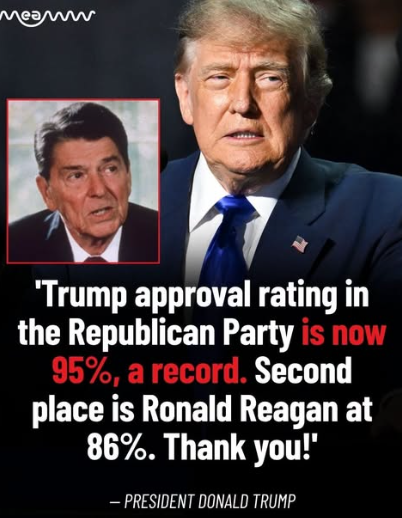 I’ve never understood why those who compose total bullshit like this don’t go for the gusto. Why 95% and not 99% or 100%?
Trump’s actual approval rating among Republicans is somewhere between 75% and 80%, as can be easily verified by anyone on Earth with a cell phone or computer. That number continues to dwindle, as he faces more pressure regarding the war, gas prices, child rape, etc.
Obviously, the president’s supporters are suckers for his lies, but isn’t this a bit over the top?
 I get a call every week or so from someone working for a start-up in oil exploration, hoping that I’ll invest. I guess my name and cell number got collected somehow from various online searches I’ve made.
I’m always quick to explain, “Oh, sorry, I don’t support wrecking the planet, even if I can profit from it. Neither should you. Bye now.”



-

 Greenhouse Gases2 years ago
嘉宾来稿:满足中国增长的用电需求 光伏加储能“比新建煤电更实惠”
-
Climate Change1 year ago
Guest post: Why China is still building new coal – and when it might stop
-
Greenhouse Gases1 year ago
Guest post: Why China is still building new coal – and when it might stop
-

 Climate Change2 years ago
嘉宾来稿:满足中国增长的用电需求 光伏加储能“比新建煤电更实惠”
-

 Renewable Energy11 months ago
Sending Progressive Philanthropist George Soros to Prison?
-
Climate Change2 years ago
Bill Discounting Climate Change in Florida’s Energy Policy Awaits DeSantis’ Approval
-
Greenhouse Gases1 year ago
嘉宾来稿:探究火山喷发如何影响气候预测
-

 Carbon Footprint2 years ago
US SEC’s Climate Disclosure Rules Spur Renewed Interest in Carbon Credits