

The US government is pushing back against measures to tackle the ever-growing production of plastics in a new global treaty as key talks this week failed to produce a breakthrough ahead of the upcoming final round of negotiations.
Following speculation on how the Trump administration would handle thorny discussions over an expected UN pact on plastic pollution, US officials finally spelled out their new position at a three-day informal gathering in Nairobi aimed at finding a way forward ahead of next month’s talks in Geneva.
In a statement seen by Climate Home, the US made clear it does not support provisions that would regulate the supply side of plastics or feedstocks used in its manufacturing, adding that for areas without a “level of convergence” – including production – action should be left to “country-level discretion”.
After China, the US is the world’s second-largest producer of plastic polymers – the basic building blocks of plastic products that are primarily derived from fossil fuels.
Under the Biden administration, the US had flip-flopped between different positions on the UN treaty. It first attempted to water down its ambition, then backed measures to limit plastic production and finally, following Trump’s election, largely sat on the fence during crunch talks in Busan, South Korea, last December.
Fossil-fuel producers unite
Now, in the statement issued in Nairobi, the US said it wants “to ensure that we will grow our economies, maintain jobs for our citizens, all while reducing plastic pollution through cost-effective and pragmatic solutions”.
“We support an agreement that focuses on efforts that will lead to reducing plastic pollution, not on stopping the use of plastics,” it added, echoing a talking point frequently trotted out by other major fossil fuel producers opposed to plastic production cuts like Saudi Arabia and Russia.
After countries dramatically failed to reach an agreement in Busan, the informal meeting in Nairobi was billed as a crucial opportunity to find potential solutions and lay a path toward landing a deal at the so-called “INC-5.2” negotiations in Geneva.
Over half of countries push for plastic production cuts in new UN pact
But, while this week’s discussions were described as “constructive” and resulted in some overall progress, countries were still far apart on the most divisive elements of the treaty, including how to deal with the ever-expanding supply of plastics, three negotiators told Climate Home.
Climate Home maintained the sources’ anonymity to allow them to speak freely about confidential discussions from which the media is excluded.
Long-standing fault lines remain largely unchanged. On the one hand, a coalition of nearly 100 countries across the developed and developing world wants an “ambitious” treaty that stems the rising flow of plastics, ideally with a global target to reduce production and consumption to “sustainable levels”.
On the other, most oil-and-gas producing nations, including Saudi Arabia, Russia, Iran, and petrochemical powerhouses like India, argue the pact should be limited to addressing consumption and recycling.
Seeking a way forward
David Azoulay, director of environmental health at the nonprofit Center for International Law (CIEL), said it was “concerning”, though not totally unexpected, that the meeting “did not provide the kind of breakthrough or radical changes in the negotiation dynamics that could unlock the negotiations ahead of INC-5.2 in Geneva”.
“We saw obstructive countries double-down on their proven, time-tested strategies that reject constructive approaches to addressing content,” he told Climate Home. He added that, while “ambitious developing countries continue to hold the line” on pushing for a plastics treaty that is “fit for purpose”, developed countries “were largely silent in defending ambition”.
Two negotiators from the self-described “high-ambition coalition” told Climate Home that the goal is to find language that could bring as many countries on board so that the treaty would meaningfully cover a significant proportion of the global plastics supply chain.
A potential landing zone on plastic production would be to acknowledge that business as usual is not working and introduce transparency measures without forcing strict reduction targets or quotas at first, they indicated.
In Nairobi, Japan put forward a proposal pointing in that direction. It states that countries “shall cooperate to promote sustainable production and consumption of plastics throughout their life cycle”, and report data on their supply chains as well as measures taken to address the treaty’s goals.
What will the US do in Geneva?
In the month before talks kick off on the shore of Lake Geneva, negotiators are expected to keep refining their strategies with one big unknown: how will the US behave?
The presence of a US delegation in Nairobi was seen as an indication of engagement with the plastics treaty, after the US government under Trump withdrew from most other multilateral talks on environmental and climate issues.
That could either be a blessing or a curse, one negotiator admitted. “They could be willing to do something, or let others do their thing and not ratify [the treaty] at this stage,” they said. “But if they want to hinder others, it will be very challenging.”
The post US comes out against plastic production limits in UN treaty at deadlocked talks appeared first on Climate Home News.
US comes out against plastic production limits in UN treaty at deadlocked talks

A milder winter can sound like welcome news. But for a community waiting for a winter road to carry fuel and building supplies, or a family relying on safe ice to reach harvesting areas, warmer conditions can bring difficult trade-offs. The significance of the coming El Niño is not simply how much temperatures might rise, but what changing winter conditions could mean for food, travel, health, and community life.
One of the strongest El Niño events in the modern record may be developing in the tropical Pacific. NOAA’s October 8 assessment placed an 83% probability on its October–December three-month Relative Oceanic Niño Index reaching at least +2.5°C—a threshold it identifies with an event stronger than previous El Niños in its record dating back to 1950.
For First Nations, Inuit, and Métis communities, the implications will depend on location, local conditions, and the systems people rely on. This is not a forecast of the same experience everywhere: it is an opportunity to consider how a large-scale climate event could interact with existing community priorities and risks.
El Niño, not La Niña
El Niño and La Niña are the warm and cool phases of the El Niño–Southern Oscillation, or ENSO. During El Niño, unusual warming in the central and eastern tropical Pacific changes atmospheric circulation, influencing weather far beyond the Pacific.
El Niño is a naturally occurring climate pattern, distinct from long-term human-caused climate change, although the two can combine to influence temperatures and extreme-weather risks. A strong event changes the odds of particular conditions; it does not determine the weather in any individual community.
What the forecasts suggest
NOAA’s October assessment indicated that a strong-to-very-strong El Niño was likely through January–March 2027. The World Meteorological Organization’s September update also anticipated a very strong event peaking near the end of 2026, with impacts continuing into 2027.
Environment and Climate Change Canada’s August assessment pointed toward a milder winter across much of Canada, with the possibility of drought and wildfire risks extending into the following spring and summer. Its August-issued winter outlook favoured above-normal temperatures across much of British Columbia, the Yukon, Manitoba, Ontario, Quebec, and Atlantic Canada, while parts of western Canada were more likely to be drier than normal.
These are seasonal outlooks, not predictions of conditions on a particular day or travel route. Cold spells, heavy snow, freezing rain, and other dangerous weather can still occur during an otherwise mild winter.
Winter roads, essential connections
For some remote First Nations, winter roads provide a limited seasonal window for moving heavy freight that supports daily life and planned construction. When conditions prevent trucks from carrying full loads, the consequences can reach well beyond transportation.
In February 2024, Nishnawbe Aski Nation Chiefs-in-Assembly declared a winter-roads state of emergency after unusually warm conditions restricted freight movement. NAN identified fuel and construction deliveries among the essential supplies at risk. That experience illustrates why another potentially warm winter deserves attention, although it does not establish what the 2026–27 road season will bring.
The practical planning question is therefore larger than whether a road will open: it includes how essential deliveries and community projects will be supported if the operating season is disrupted. Seasonal forecasts can inform contingency planning, but decisions about road access and load limits must remain grounded in actual local conditions.
Food, culture, and seasonal relationships
Changing winter conditions can also affect access to harvested foods and the relationships sustained through harvesting and sharing. Inuit Tapiriit Kanatami identifies country food as central to Inuit well-being and sharing practices, while highlighting climate-related pressures on access to locally harvested foods. Safe travel is therefore about more than reaching a destination; it also supports food systems and connections between generations.
These concerns take different forms elsewhere. Along the British Columbia coast, El Niño-associated ocean warming can affect fisheries and shellfish, creating another reason to monitor conditions important to harvesting and livelihoods. In Ontario, the Métis Nation of Ontario has identified increasingly unpredictable harvesting seasons among the climate changes affecting Métis citizens.
These are existing climate concerns, not proof that a particular harvest will fail in 2027. The connection to El Niño is the possibility that another season of unusual conditions could add pressure to food systems already adapting to environmental change.
Looking beyond winter
Some of the most consequential risks may emerge after the snow melts. Reduced snowpack, limited spring runoff, and warm, dry conditions can contribute to drought and a more favourable environment for wildfire. ECCC’s August-issued outlook for spring 2027 indicated a high probability of above-normal temperatures across much of western Canada.
For communities facing wildfire, preparedness involves more than protecting buildings. Fires can threaten harvesting areas and medicinal plants, while evacuations require continuity of health care, access to medications, mental-health support, and culturally safe services.
The First Nations Health Authority’s wildfire response resources reflect that broader understanding of safety through support for clean-air spaces, health-service access, counselling, and cultural supports. These considerations belong in early planning wherever local assessments identify elevated risk—not because El Niño guarantees a severe fire season, but because preparation takes time.
Different places, different risks
A national headline about a warmer winter can obscure important regional differences. ECCC’s review found that parts of Nunavut experienced colder-than-normal winters during previous very strong El Niño events, even while much of the country was warmer. The historical sample is small, so that pattern should be treated as a tendency rather than a community-level prediction.
Coastal communities may also face a different combination of concerns, including heavy rain, storm surge, and coastal flooding. Neither a warm national outlook nor an expectation of colder conditions elsewhere can establish whether local ice is safe: community observations and current conditions remain essential.
Indigenous leadership already at work
Indigenous communities are not approaching these risks without knowledge, experience, or solutions. First Nations, Inuit, and Métis climate strategies identify their own priorities for preparedness, food systems, infrastructure, and community well-being.
SmartICE provides one practical example of locally grounded adaptation. Its community-based services bring Indigenous and local ice knowledge together with monitoring technology to support travel decisions. Information is shared through tools including SIKU, as well as local communication channels. Monitoring supports knowledge and decision-making; it does not replace the judgement of experienced ice users.
Land stewardship offers another example. In spring 2026, Gitanyow Land Guardians and Firekeepers carried out cultural burns intended, in part, to support food and medicinal plants. Such initiatives should not be presented as responses to the coming El Niño; they demonstrate stewardship and adaptation work already underway.
The Assembly of First Nations’ National Climate Strategy places First Nations jurisdiction, knowledge systems, and self-determined priorities at the centre of climate action. Inuit Tapiriit Kanatami similarly calls for Inuit-led decisions and partnerships that support Inuit priorities. Preparing for the coming season should build on that leadership rather than treat communities only as recipients of emergency advice.
Preparing on community terms
A useful starting point is to connect updated forecasts with the decisions communities already make about transportation, harvesting, water, health, and emergency readiness. Depending on local priorities, planning could include:
- Reviewing essential deliveries. Identify supplies and projects exposed to winter-road disruption, and discuss contingency arrangements before shortages develop.
- Supporting local monitoring. Resource community-selected approaches to observing ice, snow, water, and travel conditions, alongside current weather information.
- Protecting food access. Consider support for harvesters, food sharing, storage, and alternative supplies where access may be disrupted.
- Preparing for smoke and evacuation. Review clean-air spaces, transportation, medication access, health-service continuity, and culturally safe supports.
- Following regional updates. Revisit plans as ECCC’s monthly seasonal forecasts and local assessments provide a clearer picture.
Planning also requires resources and clear responsibilities beyond the community itself. The AFN’s climate strategy calls for sustained funding and direct partnership with First Nations rights and title holders, including action on infrastructure and emergency-management capacity. Inuit climate priorities likewise identify infrastructure gaps and the need for partnerships shaped by Inuit decisions.
A very strong El Niño does not guarantee a particular winter-road season, harvest, drought, or wildfire outcome. Its value as an early warning lies in the time it provides to prepare—and in whether that time is matched with the resources and decision-making authority communities need to act on their own priorities.
By:Rye Karonhiowanen Barberstock
Photo by: Goran Vinko at Unsplash
The post A Supersized El Niño: What Winter 2026–27 and 2027 Could Mean for Canada appeared first on Indigenous Climate Hub.
A Supersized El Niño: What Winter 2026–27 and 2027 Could Mean for Canada
Australia is looking to South Korea to help turn its vast renewable energy and mineral resources into new export industries supplying low-emissions materials to Korean manufacturers – a deal which campaigners hope will shift trade between the two nations away from fossil fuels.
In an agreement signed on the sidelines of the COP31 climate summit in Antalya, Türkiye, the two countries established a cooperation framework to connect South Korea’s growing industrial power demand with Australia’s clean energy resources.
The deal also aims to support investment in power grids, clean energy supply chains, and greening industries to accelerate emissions cuts.
Analysts say the agreement can help build competitive clean energy supply chains and attract long-term investment into decarbonising industrial processes.
Richie Merzian, CEO of the Clean Energy Investor Group (CEIG), an Australian industry body representing institutional investors in clean energy, told Climate Home News this was “a great example” of a government-to-government agreement that would give investors confidence to invest in green technologies.
-
SE Asia speeds up plan for connected clean power grid after oil shock
Countries are redoubling efforts to link their grids to bolster energy security and reduce their dependence on fossil fuels – but many challenges remain -
As COP31 weighs 35×35 pledge, IEA says Hormuz crisis driving electrification
The report estimates that a planned transition away from fossil fuels and into renewables can add energy jobs and cut energy bills -
Southeast Asia’s fragile grids threaten billions in clean energy investment
Renewables developers need reliable electricity infrastructure and stable policies to help the region meet climate goals and surging demand for power
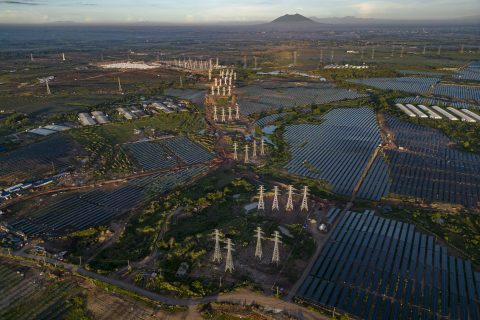

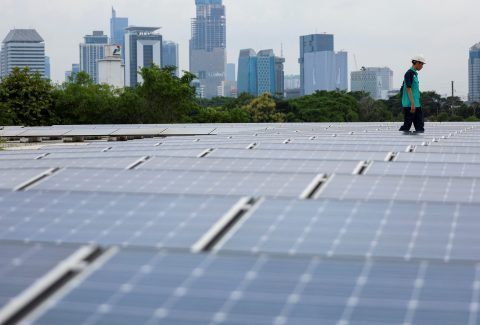
For example, the deal could support Australian exports of green iron and other low-emissions materials, while giving Korean manufacturers access to cleaner inputs for steelmaking, batteries and other industries.
That in turn could help attract investments in Australian renewable power projects, hydrogen production and industrial infrastructure if developers know Korean customers are willing to pay for greener products.
“The high levels of capital for green iron and steel need certainty on demand and a credible path to offtake before it commits,” said Merzian. The partnership, he added, “will help smooth out the path for Korea’s significant industrial policy and capital to come down under”.
A model for cooperation
The Australian government described the partnership with one of its largest trading partners as “a significant economic opportunity“, opening new markets for its energy and mineral resources.
The agreement will also support the delivery of South Korea’s $750 billion energy transition strategy through 2035 to expand renewable energy capacity by 100 GW by 2030, bolster clean industries and decarbonise high-emissions sectors, such as steel, petrochemicals and cement.
South Korea’s climate and energy minister Kim Sungwhan said in a statement: “This cooperation will serve as an important opportunity for our two countries to combine their respective strengths and jointly pursue industrial decarbonisation, energy security and economic growth.”
In addition, both parties submitted a joint proposal to UN Climate Change to share best practice and lessons learnt on how bilateral cooperation “can serve as a practical and replicable model for broader international cooperation and collective action in addressing the global crisis crisis”.
A group of five civil society groups across Australia and South Korea welcomed the partnership as an opportunity to accelerate the transition away from fossil fuels “in a bilateral relationship historically built on coal and gas”.
Australia was South Korea’s top supplier of liquefied natural gas (LNG) in 2025, while South Korean institutions have a record of financing Australian gas and coal projects. “Without a clear plan to reduce this dependence, the new partnership risks expanding clean energy cooperation without meaningful changes to the trade and reliance on fossil fuels,” the group said in a statement.
Greening iron production: a major opportunity
Greening iron production could offer one of the biggest opportunities for increasing the trade of low-carbon goods between two countries, according to analysts.
Using hydrogen produced with renewable electricity instead of coal to remove oxygen from iron ore for steel production could cut emissions by as much as 85% according to one study. If the resulting metallic iron is then melted in an electric arc furnace powered by green electricity, steel-making emissions can be further reduced.
Australia’s abundant iron ore and renewable energy resources could make it a competitive producer of green iron, while South Korea’s established steel industry offers a prospective market for the material.
A 2025 study, commissioned by CEIG and conducted by consultancy Baringa, identified green iron as one of Australia’s most promising green export industries.
-
We must strengthen trade cooperation to deliver on global climate goals
As governments turn to trade-related measures to deliver on their climate targets, cooperation is vital to reduce fragmentation, costs and build more resilient economies -
Minerals for the planet or for war and AI? COP31 must make clear what we prioritise
As demand for minerals soars, intensifying pressure for new mining, meeting demand for the energy transition must come first


Under Baringa’s “renewables superpower” scenario, which assumes strong decarbonisation and that Australia leans into its green export potential, Australian green iron production could surge ninefold to 118 million tonnes between 2035 and 2050. Exports could be worth more than A$93 billion ($61 billion) annually by 2050, it estimated.
Producing the green hydrogen needed to power iron production of that scale would require roughly twice the current demand of Australia’s National Electricity Market, the modelling found.
Large-scale production would require substantial new renewable power generation, energy storage, transmission infrastructure, and hydrogen electrolysers – equipment which splits water into hydrogen and oxygen that could operate at times when renewable power is abundant and electricity is cheap.
Turning pledges into long-term deals
The agreement also identifies opportunities to strengthen cooperation on the critical minerals used in batteries, electric vehicles and other low-carbon technologies.
South Korea’s battery, automotive, electronics, and ship-building industries could provide markets for Australian lithium, nickel and other minerals. This could help Australian producers move up the value chain by processing minerals and producing higher-value products rather than exporting raw resources.
But the agreement is only a starting point, said Rebecca Mikula-Wright, CEO of the Asia Investor Group on Climate Change, an Asia-Pacific network of institutional investors focused on climate-related risks and opportunities. Its success will depend on whether governments and businesses can turn the commitments into viable projects and long-term supply deals, she said.
“Decarbonising critical global supply chains like steel and liquid fuels requires deep collaboration on the demand and supply side, and we hope this deal signposts further commitments between trade partners across the Asia Pacific,” she said.
The post Australia and South Korea’s clean energy deal could boost low-carbon trade appeared first on Climate Home News.
https://www.climatechangenews.com/2026/11/23/australia-and-south-koreas-clean-energy-deal-could-boost-low-carbon-trade/
Simon Kofe is Tuvalu’s Minister for Transport, Energy, Communication and Innovation
The just-wrapped COP31 has been called “the worst COP in history” for good reason.
What was billed as the “implementation summit”, translating previous climate promises into concrete progress for countries and people, collapsed without a deal. The meeting did not live up to the collective resolve to tackle the root cause of climate change: fossil fuels.
The fight is now moving to our next best opportunity to implement real action: at the UN’s International Maritime Organisation (IMO) decision summit starting on 30 November in London. The IMO’s 176 member states will debate the adoption of the world’s first global carbon pricing on any pollute