Connect with us

Published

on


Agricultural Robots

Modern Agriculture: Rise of the Robot Farmers

The fields of our future might look a lot different than the ones we see today. Gone are the days of backbreaking manual labor and dependence on unpredictable weather patterns. 

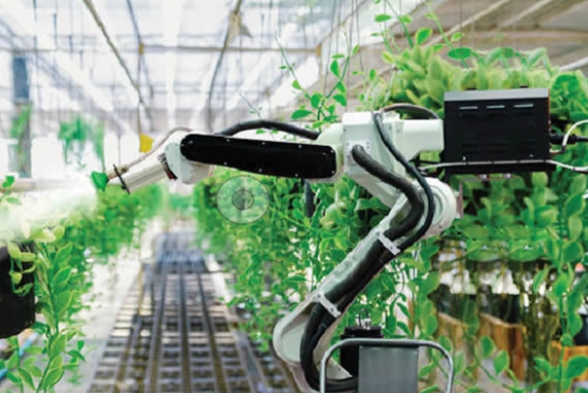
Modern agriculture is embracing a new era of automation, where robots are steadily replacing human hands in tending to our crops.

Planting the Seeds of Change

Imagine a fleet of autonomous tractors gliding across vast fields, meticulously planting seeds at precise intervals. This is no longer science fiction, but a reality rapidly transforming the agricultural landscape. Robotic planting machines equipped with GPS and AI can map fields, determine soil conditions, and plant seeds with optimal spacing and depth, leading to higher yields and reduced waste.

Weeding Out the Inefficiencies

One of the most tedious and time-consuming tasks in agriculture is weeding. But robots are coming to the rescue, armed with sophisticated computer vision and dexterous manipulators. These weed-seeking machines can identify and remove unwanted plants with laser precision, minimizing the need for herbicides and protecting the environment.

Harvesting the Rewards of Precision

The robots don’t stop at planting and weeding; they’re also revolutionizing harvesting. Imagine robotic arms, programmed with delicate movements, gently picking delicate fruits or meticulously selecting vegetables based on color and ripeness. This level of precision minimizes damage and ensures only the highest quality produce reaches our tables.

Beyond the Brawn: The Brains of the Operation

The rise of agricultural robots is not just about replacing muscle power; it’s about harnessing the power of data and artificial intelligence. These robots are equipped with a network of sensors that collect real-time data on soil moisture, temperature, and even plant health. This information is then fed into AI algorithms that analyze the data and make informed decisions about irrigation, fertilization, and pest control.

The Benefits of a Robotic Revolution

The integration of robots into agriculture promises a multitude of benefits:

  • Increased Productivity and Efficiency: Robots can work tirelessly 24/7, significantly boosting productivity and efficiency compared to traditional manual labor.
  • Reduced Labor Costs and Shortages: The aging farm workforce and the exodus from rural areas can be addressed by robots, alleviating labor shortages and reducing labor costs.
  • Improved Sustainability: Precision agriculture enabled by robots minimizes resource waste, reduces reliance on harmful chemicals, and promotes more sustainable farming practices.
  • Enhanced Food Security: By optimizing yields and reducing losses, robots can contribute to improved food security and stability, especially in areas facing challenges like climate change.

Challenges and Concerns

Despite the exciting possibilities, the rise of agricultural robots also raises concerns:

  • High Initial Investment Costs: The upfront cost of purchasing and maintaining robots can be a significant barrier for small-scale farmers.
  • Job Displacement: While robots create new opportunities, they may also lead to job losses in traditional agricultural roles.
  • Ethical Considerations: Questions arise about the ethical implications of relying on machines to manage our food production systems.

The Future of Farming: Humans and Robots in Harmony

The future of agriculture is not about robots replacing humans; it’s about humans and robots working together in harmony. Farmers will remain crucial for their knowledge, expertise, and ability to adapt to changing conditions. Robots will serve as powerful tools, augmenting human capabilities and enabling farmers to make data-driven decisions for optimal crop production.

As we embrace this new era of agricultural robotics, it’s essential to address the challenges and ensure that this technological advancement benefits both farmers and consumers, promoting a sustainable and food-secure future for all.

Agricultural Robots

Agricultural Robots: Statistics and Data Shaping the Future of Farming

The rise of agricultural robots is transforming the farming landscape, promising increased efficiency, sustainability, and food security. Let’s delve into the data and statistics that paint a picture of this burgeoning industry:

Market Growth:

  • The global agricultural robots market is estimated to reach USD 30.5 billion by 2028, growing at a CAGR of 17.7% from 2022 to 2028. (Source: Future Market Insights)
  • North America currently dominates the market, accounting for 38.9% of the global revenue share in 2022. (Source: Future Market Insights)
  • The Asia Pacific region is expected to witness the fastest growth in the coming years, driven by factors like rising labor costs and government initiatives promoting automation. (Source: Mordor Intelligence)

Robot Types and Applications:

  • The market is segmented into various robot types, including:

    • Field robots for planting, weeding, and harvesting.
    • Livestock robots for milking, feeding, and monitoring animal health.
    • Indoor farming robots for managing vertical farms and controlled environments.
  • Field robots currently hold the largest market share, followed by livestock robots and indoor farming robots. (Source: MarketsandMarkets)

  • Fruit and vegetable harvesting is the leading application for agricultural robots, followed by planting and weeding. (Source: Mordor Intelligence)

Impact and Benefits:

  • Agricultural robots can increase yields by up to 20% through precision planting, weed control, and optimized irrigation. (Source: World Economic Forum)
  • They can reduce labor costs by up to 50%, addressing labor shortages and increasing farm profitability. (Source: ABI Research)
  • These robots can minimize pesticide and herbicide use by targeting specific weeds and pests, promoting environmental sustainability. (Source: The Guardian)

Challenges and Concerns:

  • The high initial investment cost of robots can be a barrier for small-scale farmers.
  • Job displacement due to automation is a concern that needs to be addressed through reskilling and training programs.
  • Ethical considerations regarding the use of robots in food production need to be carefully evaluated and addressed.

The Future of Agricultural Robots:

  • Advancements in artificial intelligence, sensor technology, and machine learning will lead to more sophisticated and adaptable robots.
  • Increased collaboration between robotics companies, farmers, and policymakers is crucial for developing and implementing sustainable solutions.
  • The focus will shift towards human-robot partnerships, where robots augment human capabilities and enable data-driven decision-making for optimal crop production.

As the data suggests, agricultural robots are not just a futuristic trend; they are rapidly becoming a reality with the potential to revolutionize the way we grow food. By addressing the challenges and capitalizing on the opportunities, we can harness the power of these machines to build a more sustainable and food-secure future for all.

Agricultural Robots

Table of Agricultural Robots: Statistics

Statistic Dat Source
Global Market Value (2028) USD 30.5 billion
Future Market Insights
CAGR (2023-2028) 17.7%
Future Market Insights
Dominant Region (2022) North America (38.9% share)
Future Market Insights
Fastest Growing Region Asia Pacific
Mordor Intelligence
Market Segments Field robots, Livestock robots, Indoor farming robots
MarketsandMarkets
Leading Market Share Field robots
Mordor Intelligence
Leading Application Fruit and vegetable harvesting
Mordor Intelligence
Yield Increase Potential Up to 20%
World Economic Forum
Labor Cost Reduction Potential Up to 50%
ABI Research
Pesticide/Herbicide Use Reduction Potential Significant reduction
The Guardian
Main Challenge High initial investment cost
Other Challenges Job displacement, Ethical considerations
Future Trend Advancements in AI, sensor technology, and machine learning
Future Focus Human-robot partnerships

Note: This table is not exhaustive and can be further expanded based on your specific interests. If you have any particular data points or statistics you’d like to see included, please let me know!

Agricultural Robots

Agricultural Robots: The Companies Leading the Automation Revolution

The fields of the future are teeming with metallic life. Gone are the days of backbreaking manual labor; agriculture is entering a new era where robots are reshaping how we grow food. From planting and weeding to harvesting and data analysis, these tireless machines are transforming the industry, promising increased efficiency, sustainability, and food security. Let’s delve into the world of agricultural robots and meet some of the companies leading the charge:

1. Naïo Technologies (Japan)

Naïo Technologies is a pioneer in autonomous field robots, developing machines that navigate fields with precision and perform various tasks. Their flagship robot, the Scout™, is a weed-killing marvel that uses cameras and lasers to identify and eliminate unwanted plants, reducing herbicide use and protecting the environment.

2. Iron Ox (United States)

Iron Ox is redefining farming by bringing it indoors. Their robotic farms are controlled environments where AI-powered robots tend to crops with utmost precision. This vertical farming approach minimizes water and resource usage, making it ideal for urban areas and reducing reliance on unpredictable weather conditions.

3. Blue River Technology (United States)

Blue River Technology tackles the problem of weeds not in the field, but during harvest. Their LettuceBot™ is a marvel of engineering, gently guiding romaine lettuce heads through a vision system that identifies weeds and removes them with targeted bursts of air, ensuring pristine harvests without damaging delicate produce.

4. Abundant Robotics (United States)

Abundant Robotics is focused on automating the apple-picking process, a notoriously labor-intensive task. Their robots, affectionately called “ARMies,” use advanced perception systems and gentle grippers to navigate orchard trees and pick apples with remarkable dexterity, minimizing bruising and maximizing fruit quality.

5. Ecorobotix (Switzerland)

Ecorobotix focuses on developing robots for smaller farms and vineyards. Their Rosalie™ robot is a multi-talented assistant, capable of weeding, mowing, and even spraying, making it a versatile tool for organic farmers who prioritize sustainability and precision agriculture.

These are just a few examples of the many companies pushing the boundaries of agricultural robotics. With constant advancements in technology and AI, the future of farming promises even more sophisticated robots capable of performing complex tasks and adapting to diverse agricultural needs. As these innovations take root, the fields of tomorrow may not just be greener, but also filled with the whirring hum of robotic helpers, ensuring a bountiful harvest for generations to come.

Remember, the rise of agricultural robots is not about replacing farmers; it’s about empowering them with powerful tools to work smarter, not harder. The human touch and expertise will always be crucial in managing and adapting to changing conditions. The future of agriculture lies in a harmonious collaboration between humans and robots, working together to cultivate a sustainable and food-secure future for all.

https://www.exaputra.com/2024/01/modern-agriculture-rise-of-agricultural.html

Renewable Energy

FAQs: Your Most Common Commercial Solar Questions Answered 

Published

on

Currently, if you’re exploring solar energy for your business, you’re likely drowning in questions about solar panel installation costs, potential savings, government rebates, installation requirements, long-term value, and more.

At Cyanergy, we work with thousands of Australian businesses, ranging from small, family-run citrus farms to large industrial manufacturing facilities, that want cleaner, cheaper, and more reliable energy but aren’t sure where to begin.

Don’t worry!

To help you out, we’ve created the ultimate Commercial Solar FAQ guide, featuring straightforward answers drawn from Cyanergy’s extensive experience and expertise.

We’ve also added helpful sections that explain what commercial solar installation actually is, why it matters, its key benefits, and a complete walkthrough of the installation process so you understand the entire journey from start to finish.

So, let’s see how this Cyanergy guide answers the most common commercial solar FAQs, explaining them in simple, practical terms!

What Is Commercial Solar Installation?

Commercial solar installation refers to the design, engineering, and installation of solar power systems specifically tailored for businesses or commercial properties.

In Australia, large offices, manufacturing facilities, or retail buildings are equipped with photovoltaic (PV) systems to generate clean, renewable electricity.

By adopting solar energy, businesses can reduce their utility costs, lower their carbon footprint, and enhance long-term energy reliability. However, the process is complicated and requires professional installation to ensure efficiency and obtain necessary regulatory approvals.

The commercial solar PV systems are best as they:

  • Have higher power demands.
  • Use more advanced engineering.
  • Can range from 10 kW to multi-megawatt systems.
  • Often involves roof, ground, or carport mounting.
  • Require strategic planning around operating hours and energy patterns.

Cyanergy’s Commercial Solar Power Solutions

Switching to solar isn’t just an upgrade for Australians, it’s a strategic investment that transforms how your business powers its future.

At Cyanergy, our commercial solar installations go far beyond placing panels on a roof. We deliver a complete, long-term energy solution designed to slash your operating costs and maximise energy efficiency for decades.

Our comprehensive service includes:

  1. Full energy analysis
  2. Tailored system design
  3. Engineering approvals
  4. High-efficiency Tier-1 solar panels
  5. Premium, reliable inverters
  6. Installation by certified electricians
  7. Ongoing monitoring & maintenance for peak performance

Key Components of Commercial Solar Panel System

  • Solar panels (solar PV modules)
  • Inverters
  • Roof or ground-mounted racking systems
  • Electrical wiring and monitoring equipment
  • Additional Backups (Battery storage, Generators)

Your Answers to the Most Common Commercial Solar Questions| Get the Facts!

Before you go solar, it’s wise to know all the truth without any guesswork.

Why? This clear understanding of the most asked commercial solar FAQs can be the game-changer for your business that
needs to operate sustainably while reducing annual energy costs.

So, here are the 15 key answers every homeowner needs to know before investing in solar panel
technology:

1. Is commercial solar really worth it for my business?

Short answer: Absolutely yes, if you consume power.

Long answer: Undoubtedly, Commercial solar energy has become one of the smartest financial decisions
an Australian business owner can make.

At Cyanergy, we consistently see commercial clients slash their electricity bills by 40-80%, depending on system
size, energy usage patterns, and solar exposure. With power prices rising year after year, solar acts as a financial
shield.

Let’s see why it’s worth it:

  • Lower operational expenses, so the power bills drop dramatically
  • Offering fast ROI (many Cyanergy clients see payback in 2 to 4 years)
  • Government
    rebates
    reduce the upfront cost.

  • Protection against energy price volatility
  • Increased property value and aesthetics
  • Boosted sustainability credentials, grabbing the attention of eco-conscious buyers.

Remember! Solar isn’t just a cost; it’s an investment that pays you back in the long run.

2. How much does a commercial solar system cost?

The cost depends on the system, design, and equipment quality. At Cyanergy, systems are tailored based on estimates
from the site audit and other criteria. It’s not “one-size-fits-all”.

Typical price ranges in general we see are:

  • 30 kW commercial system: $25,000 – $40,000
  • 50 kW sized system: $45,000 – $70,000
  • 100 kW system: $90,000 – $150,000
  • 200–500 kW systems: highly customised, vary depending on installation complexity and many other
    factors.

Cyanergy installs Tier-1 solar panels and
uses premium inverters or high-efficiency
alternatives. However, you can always customise them to suit your preferences and goals.

Cyanergy’s every solar quote includes:

✔ Full energy assessment

✔ Custom ROI modelling

✔ Design, engineering & installation

✔ Government rebate calculation

✔ Monitoring setup

✔ Industry-leading warranties

3. What rebates or incentives are available for commercial solar?

Businesses and any C&I
properties in Australia
can take advantage of generous solar financial incentives that began on October 1,
2025.

Besides that, at Cyanergy, we assist our customers with all major schemes, including:

STCs (Small-scale Technology Certificates)

This rebate applies to systems up to 100 kW. The discount often saves commercial clients $10,000 to $40,000 off the
solar installation price.

LGCs (Large-scale Generation Certificates)

LGCs apply only to systems above 100 kW. These provide ongoing financial returns for the clean electricity you
generate.

State Grants & Industry Programs

Depending on your industry and location, extra funding and
other incentives
may be available. Cyanergy’s team stays updated to ensure you never miss a rebate you’re
eligible for.

We handle all the paperwork, from start to finish, so you get the maximum savings with zero hassle.

4. How long is the payback period?

The typical payback period for Cyanergy commercial clients is 2–5 years. However, it depends on:

  • Energy consumption pattern
  • Electricity rates
  • System size
  • Solar design & orientation
  • Your operating hours
  • Shading & roof structure

Businesses with high daytime usage, for example, manufacturing
facilities
, warehouses, retail, aged care, schools, etc, often recover their investment even faster.

And the best part? After payback, your system produces free power for 20+ years, which is a substantial competitive
advantage.

5. Can my roof support commercial solar panels?

In Australia, rooftop solar is a very common sight. Most commercial and residential buildings already have solar systems installed, and the number continues to grow rapidly each year.

In many cases, roofs can support solar panels, but an assessment is always essential for commercial setups.

What to look for? Here’s your checklist:

  • Roof age and condition
  • Structural integrity
  • Roofing material type
  • Weight load capability
  • Angle, orientation, and shading
  • Complexity for installation and maintenance

However, if your roof isn’t suitable for mounting solar panels, there are alternatives, such as ground-mounted solar, solar carports, and tilt-frame designs for flat roofs.

You can also use solar paints or window facades to generate solar power.

6. What’s the lifespan of a commercial solar system?

A high-quality commercial solar panel system installed by accredited professionals can last for 25 to 30 years or more.

Cyanergy uses equipment from reputable manufacturers with bankable warranties. We design systems to last well beyond the payback period, ensuring strong long-term ROI

7. Do commercial solar panels require regular maintenance?

Even though solar is low-maintenance, it is not maintenance-free. To make your system function efficiently, you might need to

  • Perform an Annual inspection.
  • Cleaning every 6–12 months, depending on dust and debris.
  • Monitoring system performance through the provided platform.

Remember, this routine maintenance helps prevent downtime, keeps panels efficient, protects your warranty, and lets you catch issues earlier.

8. Will solar affect my business operations during installation?

Based on our previous installation experience, disruptions are minimal or nonexistent in most cases. The reason is that Cyanergy schedules installations:

  • Outside peak business hours whenever possible.
  • For larger systems, we install the panels in stages.
  • With safety barriers that allow your operations to continue safely and smoothly.

Most commercial clients continue business as usual. We always keep communication clear so you know what’s happening.

9. What brands does Cyanergy use? Are they reliable?

Cyanergy only works with Tier-1 solar panel manufacturers and top-performing inverter brands that are trusted globally.

We choose equipment based on performance, warranty, availability, and your budget. Reliability and lifespan are our top priorities.

Our most used solar panels and inverters are:

Solar Panels

Inverters

  • Fronius
  • SMA
  • Sungrow
  • Huawei

10. How much energy will my business actually save?

After installing a solar panel, actual savings can range from 40 to 80% on electricity bills. However, the exact amount depends on:

  • When your business consumes power
  • Solar system size
  • Local weather conditions
  • Electricity tariffs
  • Whether battery storage is added for nighttime use

11. What if my energy usage increases in the future?

Expanding a system is not a problem for Cyanergy. The reason is that we always design systems with scalability in mind. We believe that as your businesses grow, your solar system should grow with you!

However, for the expansion, the options include extra roof space for the future, inverter oversizing, Upgradable circuit capacity, and an integrated battery-ready design.

12. Can I add batteries to a commercial solar system?

Yes, and it’s becoming increasingly popular not only in Australia but also worldwide.

Commercial batteries help to reduce peak demand charges, store excess solar for nighttime usage, improve power quality and provide backup protection during grid outages.

Cyanergy supplies commercial-grade battery solutions for business sizes ranging from small offices to large industrial facilities.

13. What if my business moves? Can I take the solar system with me?

Even though the answer is technically yes, practically, it depends!

Removing and reinstalling a large commercial solar system can be costly in most cases. Therefore, many businesses choose to leave the system and increase the property’s value or install a new, tailored system at the new site.

If you are still perplexed about what to do, Cyanergy helps you evaluate the ROI of both options before making a decision.

14. What warranties does Cyanergy offer?

At Cyanergy, we provide comprehensive warranty coverage on our solar panel system:

  • 25–30 year panel performance warranty
  • 10–25 year inverter warranty
  • 10–15 year product warranty on panels
  • 10+ year workmanship warranty
  • Full after-sales support

However, we also offer attractive warranties on heat pumps, air conditioners and other energy-efficiency upgrades throughout Victoria, New South Wales and Queensland.

So you can contact us for reliable products and outstanding services!

15. Why choose Cyanergy for commercial solar?

Because we don’t just “install” solar, we build long-term renewable energy solutions.

What sets us apart? Let’s see:

✔ Proven commercial expertise

Cyanergy has completed thousands of installations across small businesses, schools, warehouses, factories, councils, and national chains.

✔ End-to-end service

We handle everything:

  • Energy assessment
  • System design
  • Approvals and paperwork
  • Engineering
  • Installation
  • Monitoring setup
  • Maintenance

✔ Premium equipment only

At Cyanergy, there is no cutting corners, no cheap or unreliable products.

✔ Transparent ROI modelling

Our previous reports show actual savings, not inflated marketing numbers.

✔ Exceptional after-sales support

From the first consultation to post-installation monitoring, we stay with you every step of the way.

Have A Project In Mind? Let’s Talk Solar!

Contact us for a solar quote today!

Closing Remarks: Ready to Switch with Cyanergy’s Commercial Solar Solutions?

Well, if you’re running a business in
Australia
, chances are the answer is yes.

Whether you’re considering a 30 kW rooftop system or a multi-megawatt commercial solar farm, Cyanergy provides the
expertise, high-quality products, and customer support that you need to transition to clean, cost-effective energy
with confidence.

Also, if you have any questions that you’d like to add to the list, contact us today and talk with our solar expert team. We’re here to help you
make the switch!

Your Solution Is Just a Click Away

The post FAQs: Your Most Common Commercial Solar Questions Answered  appeared first on Cyanergy.

https://cyanergy.com.au/blog/faqs-your-most-common-commercial-solar-questions-answered/

Continue Reading

Renewable Energy

Socialism and Autocracy

Published

on

20th Century Austrian-American economist and devout anti-communist Ludwig von Mises clearly believed what he said at left, and there were plenty of examples in the 1900s to support his concept.

Now, 50 years after his death, we wonder what he would think about today’s United States.

The U.S. has an economy that’s as close to unadulterated capitalism as anyone could imagine, but we have a president who is most definitely an authoritarian, a would-be dictator.

Socialism and Autocracy

Continue Reading

Renewable Energy

Why Education Is Such a Low Priority

Published

on

What Karl Marx said here has been repeated by many dozens of people over the years, notably George Carlin (see below).

Why Education Is Such a Low Priority

Continue Reading

Trending

Copyright © 2022 BreakingClimateChange.com