

Later this month, China will mark the 10th anniversary of the “belt and road initiative” (BRI), its global infrastructure project, at a major international conference in Beijing.
The summit, set to be attended by more than 110 countries, according to Chinese state media, will include “green development” as the focus of one of three high-level forums.
Yet the BRI has faced significant criticism in its first decade for supporting the development of overseas fossil-fuel infrastructure, particularly coal-fired power stations.
Although Chinese president Xi Jinping has pledged to end support for overseas coal power – and his country has signalled an intention to pivot its infrastructure initiative towards “high quality”, signifying, among other values, low-carbon development – questions remain over the BRI’s direction in its second decade.
Carbon Brief has asked leading experts what impact the BRI might have on climate action in the years ahead.
Energy projects and the BRI
The BRI is a global infrastructure project that aims to develop trade routes between China and the rest of the world. It has been criticised for supporting development of overseas fossil fuel infrastructure, particularly coal-fired power.
China’s role in constructing BRI projects largely takes the form of Chinese commercial involvement in project development or loans provided by Chinese financial institutions.
China’s policy banks have reduced their lending, with financing now provided by a broader range of actors, from the state-owned Bank of China to HSBC.
China rarely owns the assets it develops, with Sri Lanka’s Hambantota Port being a well-known exception.
Energy and transport infrastructure are the most common types of BRI project. In 2023 to date, for example, energy projects made up 36% of BRI investment, while transport projects accounted for 28%, according to the Green Finance and Development Center (GFDC).
GFDC found that cumulative investment across projects in all sectors exceeded $1tn as of August 2023, according to its analysis of data compiled by the Chinese ministry of commerce, the American Enterprise Institute and by GFDC itself.
The Council for Foreign Relations found that “between 2014 and 2017, 91% of energy-sector loans made by six major Chinese banks to BRI countries were for fossil-fuel projects”.
From 2017, however, the Chinese government began encouraging the “greening” of the BRI. Then, in 2021, president Xi Jinping pledged that China “would not build new coal-fired power projects abroad”.
Recent BRI projects developed with the aim of reducing carbon emissions include Indonesia’s “Whoosh” high-speed railway, the Noor Abu Dhabi solar plant in the United Arab Emirates and Sri Lanka’s Colombo International Container Terminal (see more below).
Researchers also found that, in line with Xi’s pledge, “no new investments in coal power plants have been recorded under the BRI”, China Dialogue reports, although “loopholes” have allowed some coal projects to proceed.
Below, Carbon Brief asks four leading experts the same question: China has stated an intention to pivot the BRI towards low-carbon energy development. How do you think the BRI could affect climate action over the next decade?
Their responses have been edited for clarity and length.
Prof Kevin P Gallagher, director of the Boston University Global Development Policy Center:
As the BRI moves into its second decade, China can solidify its pivot toward low-carbon development in the global south. According to our research at the Boston University Global Development Policy Center, in the early stages of the BRI the majority of China’s overseas energy finance was…in fossil fuels in general and coal-fired power plants in particular.
Emissions from the operating Chinese-financed power plants around the world now emit upwards of 245m tonnes of carbon dioxide (CO2) annually, roughly the energy-related CO2 emissions from the entire country of Spain or Thailand annually.
In 2021, China announced it would not build new coal-fired power projects abroad and to step up support for low-carbon development. Moving forward, China could pledge to ramp up overseas financing for low carbon development and adopt a green project pipeline facility to ensure alignment with these directives.
Prof Lin Boqiang, dean of the China Institute for Studies in Energy Policy, Xiamen University:
In some countries along the “belt and road”, despite the rapid growth of energy demand, the development of green energy is limited due to their relatively backward economic and technological level and the lack of advanced clean-energy technology and facilities. Through the construction of renewable energy projects, such as wind and solar power, China can provide technical, financial and experience support to host countries to promote the development and upgrading of their renewable energy industries.
By providing more clean-energy supplies to these countries…China helps them reduce their dependence on traditional energy sources and promotes energy transformation and green development. At the same time, some countries along the belt and road have problems such as unstable energy supply, energy poverty and low energy efficiency…Cooperation to develop renewable energy projects…will help these countries improve their energy security and promote sustainable development along the belt and road.
Yasiru Ranaraja, founding director of the Belt and Road Initiative Sri Lanka (BRISL):
China’s commitment to shift the BRI towards low-carbon energy development has significant implications for climate action in the coming decade. When we delve into the context of global climate efforts, we encounter a historical divide between developed and developing nations regarding climate justice and the debate over the common but differentiated responsibilities principle in climate action.
While all parties to the United Nations Framework Convention on Climate Change (UNFCCC) acknowledge the importance of addressing climate change, the approach to climate action varies among member states. Many developing nations prioritise economic growth, poverty reduction, climate mitigation, and energy security over stringent top-down climate regulations.
China, through the BRI, has emerged as a crucial player in advocating a three-phase approach to low-carbon development: funding, construction and operation. Under the BRI umbrella, numerous infrastructure projects…are dedicated to green development…For example, in Sri Lanka, the Colombo International Container Terminal (CICT), which is an investment development project under BRI, has embraced green technology since its inception in 2014.
This terminal has witnessed a remarkable increase in cargo volumes over the years while prioritising environmental sustainability. The shift to electric cranes has resulted in a 45% reduction in CO2 emissions and a 95% decrease in diesel consumption…Additionally, more than 80% of the terminal’s electricity comes from solar technology. The terminal’s success story…exemplifies how commercial prosperity and environmental protection can coexist harmoniously.
Prof Christoph Nedopil Wang, director of the Griffith Asia Institute, Griffith University:
China controls almost all parts of the green-energy supply chain – from critical minerals for batteries to wafer production for solar, from manufacturing wind turbines to the necessary financing. Without China’s cooperation, a green-energy transition is hardly achievable – whether in the BRI or beyond…BRI countries, meanwhile, must improve their energy planning, energy policy and power markets to be able to attract sufficient Chinese investments in green energy. This should include a phase-down of fossil subsidies and better utilisation of blended finance to reduce financing cost for green energies, as well as longer-term green energy PPAs (power purchase agreements).
A big question remains on the accelerated phase-down of Chinese sponsored coal-fired power plants and replacement with green energy. A recent study by the Green Finance & Development Center and Climate Smart Ventures shows significant financial benefits for Chinese sponsors of plants in Vietnam and Pakistan when accelerating retirement and replacement.

The post Experts: How will the next decade of China’s ‘belt and road initiative’ impact climate action? appeared first on Carbon Brief.
Experts: How will the next decade of China’s ‘belt and road initiative’ impact climate action?

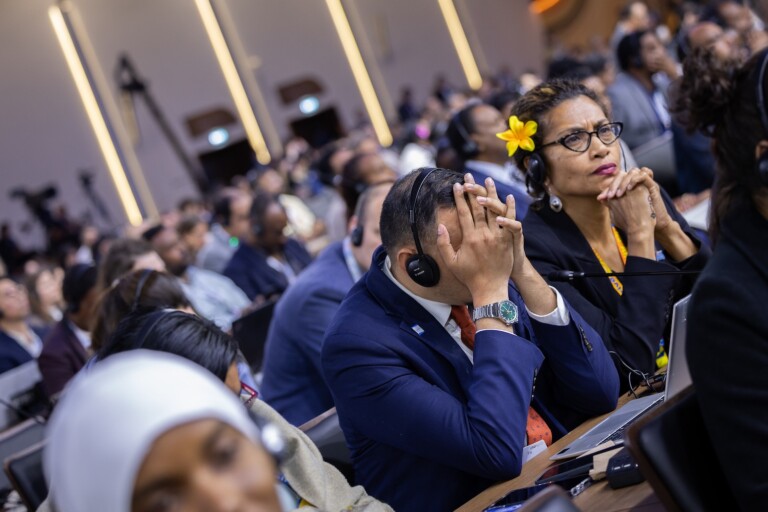
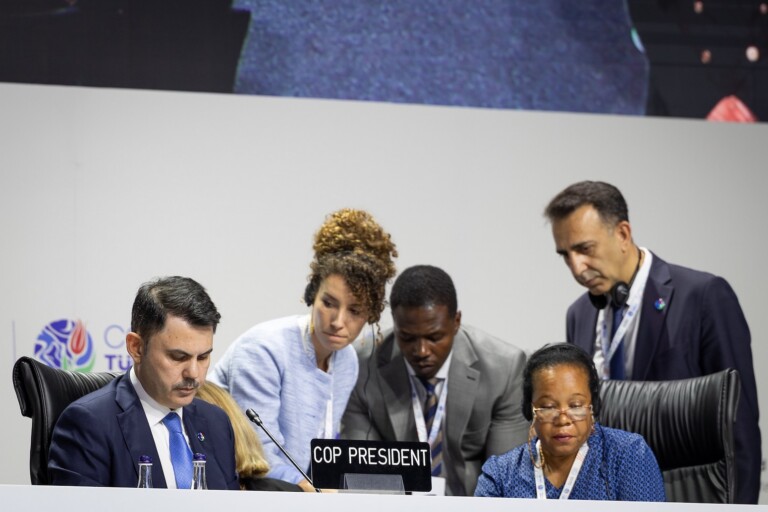
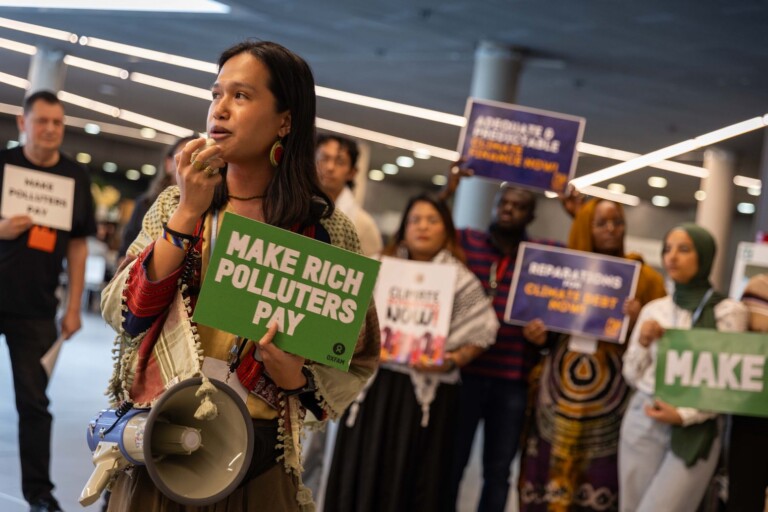
Following the close of COP31 in Antalya, Turkey, Carbon Brief’s journalists answered a range of questions in a CB Live panel discussion.
COP31 came to a dramatic conclusion nearly 50 hours after its scheduled close – making it the longest COP in history.
Less than 24 hours later, Carbon Brief published its 21,000-word summary, capturing everything that happened in the negotiations, the cover decision and more.
This includes the “Antalya pact”, proposed by the joint Turkish-Australian presidency, being rejected in the final hours of the summit by the EU, the UK and several climate-vulnerable nations.
There was some progress at COP31, including an agreement on the adaptation fund, as well as a raft of announcements within the “action agenda”.
Carbon Brief journalists – who followed every detail of the summit on the ground in Antalya and remotely answered a range of questions, including those sent ahead of time by CB+ members on CB Connect.
These covered climate finance, China, the “just transition mechanism”, the potential for COP reform and much more.
The discussion was moderated by Carbon Brief’s senior policy editor Dr Simon Evans and featured the following journalists:
- Daisy Dunne, associate editor
- Josh Gabbatiss, associate editor
- Aruna Chandrasekhar, policy journalist
- Molly Lempriere, policy section editor
- Anika Patel, China section editor
- Dr Giuliana Viglione, associate editor
A recording of the CB Live (below) is now available to watch on YouTube.
The post CB Live: Carbon Brief journalists discuss key COP31 outcomes appeared first on Carbon Brief.
CB Live: Carbon Brief journalists discuss key COP31 outcomes
Climate Change
COP31: Key outcomes for food, forests, oceans and nature at the UN climate talks in Antalya
The COP31 climate talks in Antalya, Turkey, failed to agree on a “pact” that – despite making no clear reference to fossil fuels or adaptation finance – had contained strong signals for oceans.
The “Antalya pact” took up much of the two weeks of negotiating time in Turkey, only to be rejected during the closing plenary by the EU, the UK and several climate-vulnerable countries.
Several countries expressed their regret during the plenary that significant work on advancing ocean-climate action would be lost.
The COP ran nearly 50 hours over time, but did not end with substantive outcomes on several key topics.
For the second year in a row, negotiations on agriculture and food security broke down and will now have to resume next year.
Food-systems advocates were, however, heartened by the explicit inclusion of “agroecology” in a decision within the “just transition work programme”.
Ocean-conservation groups noted an increased focus on ocean-climate links at this year’s COP, but said COP31 did not live up to its promise of being a “blue COP”.
There was also scant new funding for food systems and nature, with just a handful of small pledges to ocean initiatives and two newly announced contributions to the Tropical Forest Forever Facility.
Here, Carbon Brief analyses all of the key outcomes for food, forests, oceans and nature at COP31 – both inside and out of the negotiating rooms.
(See Carbon Brief’s coverage of food, forests, oceans and nature at COP30, COP29, COP28, COP27 and COP26.)